
 Download PDF
Market Overview
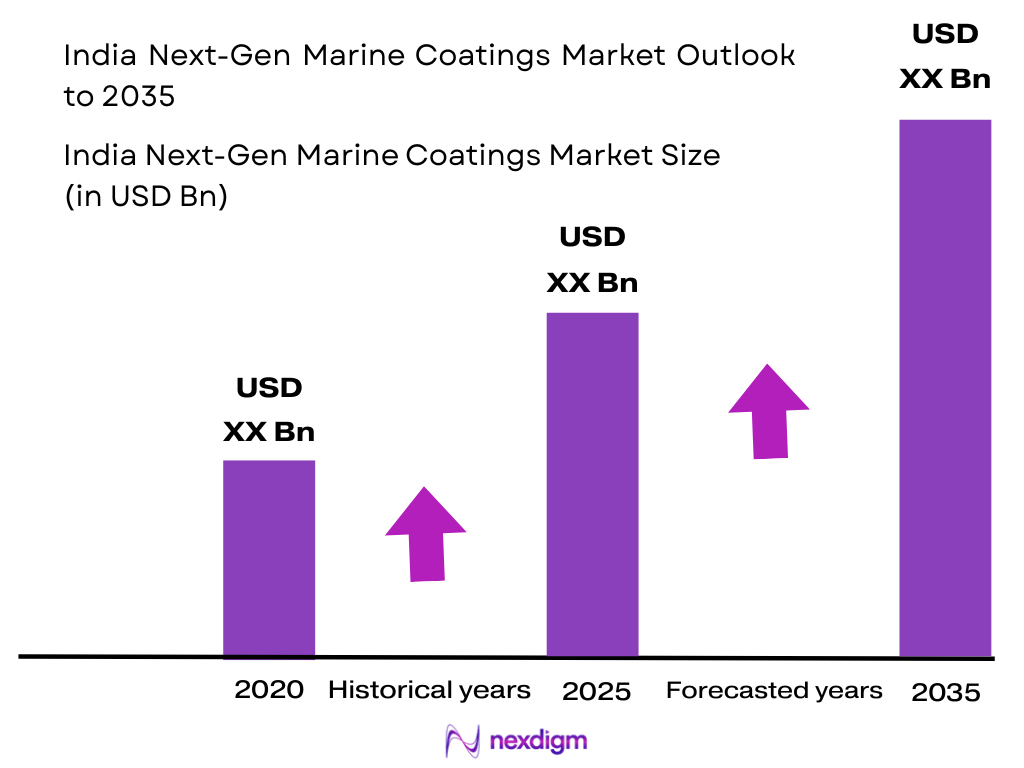
The India Next-Gen Marine Coatings Market is valued at approximately USD ~188 million in 2024 and is projected to grow at a CAGR of ~6–8% during 2026-2035. The market expansion is supported by increasing shipbuilding activities, modernization of naval assets, port infrastructure investments and rising adoption of advanced antifouling and corrosion-resistant coating systems. India’s growing maritime trade, coastal infrastructure development and demand for longer asset life cycles are accelerating the transition from conventional marine coatings toward smart, sustainable and high-performance coating technologies.
The Indian Next-Gen Marine Coatings Market is primarily concentrated around coastal industrial clusters including Mumbai, Chennai, Kochi, Visakhapatnam, Goa and Gujarat due to the presence of major ports, shipyards, naval facilities and offshore energy infrastructure. Western and southern coastal regions dominate demand because of high vessel movement, ship repair activities and commercial shipbuilding capacity. Gujarat and Maharashtra benefit from extensive port infrastructure, while Tamil Nadu, Kerala and Andhra Pradesh contribute through shipbuilding, offshore support activities and marine engineering ecosystems.
Market Segmentation
By Technology Type (In Value %)
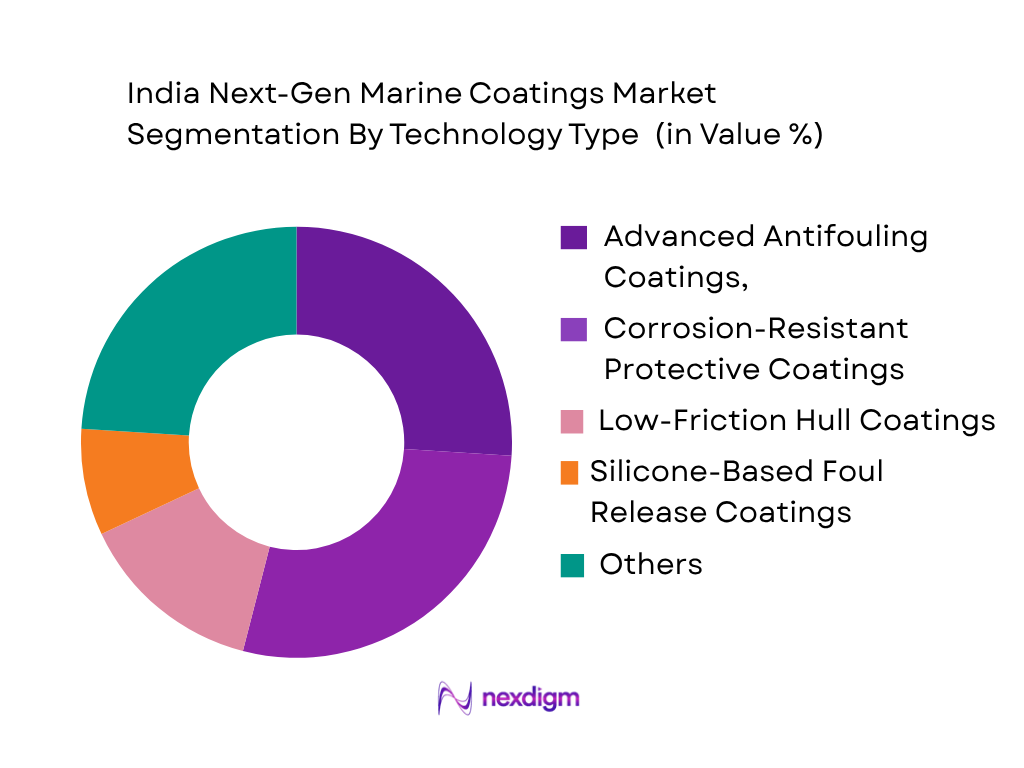
The India Next-Gen Marine Coatings Market is segmented by technology type into advanced antifouling coatings, corrosion-resistant protective coatings, low-friction hull coatings, silicone-based foul release coatings, bio-based marine coatings, smart marine coatings, self-healing coatings and nanotechnology-based coatings. Among these, corrosion-resistant protective coatings represent the leading technology segment due to their extensive application across commercial vessels, naval ships, offshore platforms and port infrastructure. India’s tropical marine environment, characterized by high humidity, saline exposure and accelerated corrosion conditions, creates continuous demand for advanced protective systems. Epoxy-based and hybrid protective coatings are widely adopted because they provide durability, chemical resistance and longer maintenance intervals. Increasing investments in naval modernization, offshore energy assets and ship repair facilities are further strengthening demand for advanced corrosion protection solutions.
By Application Industry (In Value %)
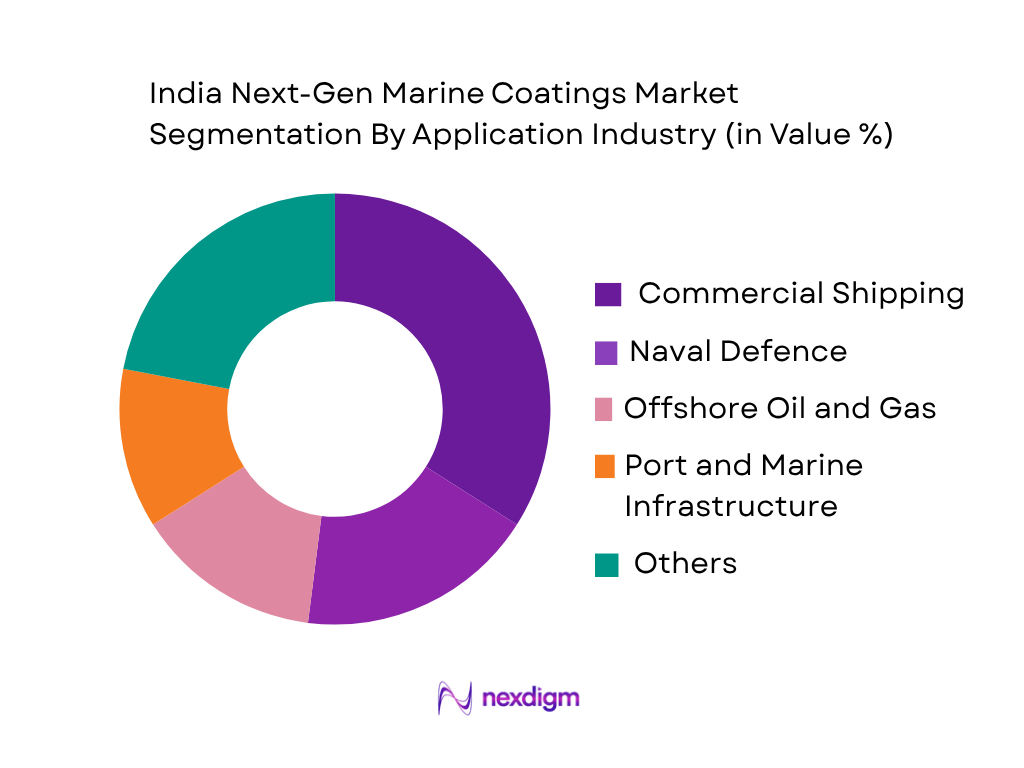
The India Next-Gen Marine Coatings Market is segmented by application industry into commercial shipping, naval defence, offshore oil and gas, port infrastructure, offshore wind energy, ship repair and recreational marine. Commercial shipping is expected to remain the dominant application segment due to India’s expanding maritime trade network, increasing vessel traffic and continuous requirement for hull maintenance. Commercial vessels including bulk carriers, container ships, tankers and LNG carriers require advanced antifouling and corrosion protection systems to improve operational efficiency and reduce maintenance downtime. The growth of Indian ports under maritime infrastructure development programs is increasing vessel servicing requirements. Additionally, shipowners are adopting fuel-saving coating technologies to improve hydrodynamic performance and reduce operational emissions.
Competitive Landscape
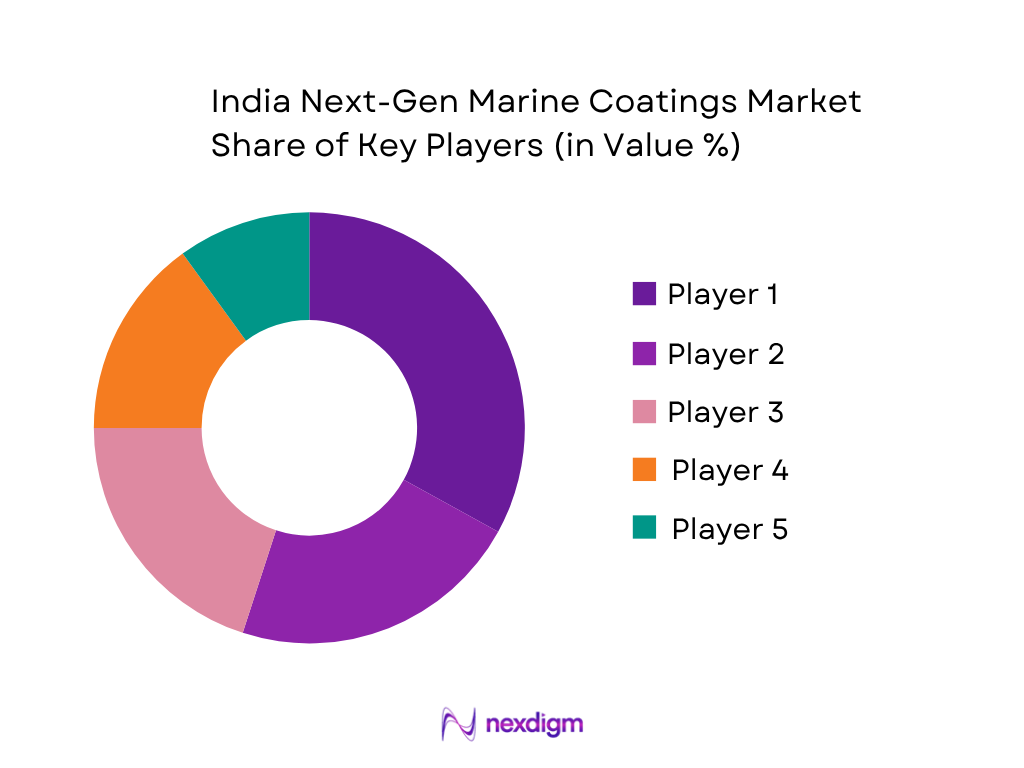
The India Next-Gen Marine Coatings Market is moderately consolidated with participation from multinational coating manufacturers, domestic industrial coating companies and specialized marine coating suppliers. Global players dominate advanced technology segments due to established R&D capabilities, while Indian companies are expanding marine coating portfolios through domestic manufacturing and partnerships. Competition is primarily based on coating performance, naval qualification capability, environmental compliance, product durability and application support networks.
| Company | Establishment Year | Headquarters | Key Marine Coating Technologies | Major Application Areas | Manufacturing Presence | Key Strength |
| AkzoNobel India | 1994 | Gurugram, India | ~ | ~ | ~ | ~ |
| PPG Asian Paints | 1997 | Mumbai, India | ~ | ~ | ~ | ~ |
| Jotun India | 1980 | Pune, India | ~ | ~ | ~ | ~ |
| Hempel India | 1915 | Denmark | ~ | ~ | ~ | ~ |
| Kansai Nerolac Paints | 1920 | Mumbai, India | ~ | ~ | ~ | ~ |
India Next-Gen Marine Coatings Market Analysis
Market Growth Drivers
Indian Navy Fleet Modernization and Defence Maritime Expansion
Indian Navy fleet modernization is a major demand driver for advanced marine coatings due to increasing requirements for corrosion protection, stealth performance and extended operational life of naval assets. India’s defence capital expenditure allocation reached approximately ₹1.72 trillion in the Union Budget 2024-25, supporting naval shipbuilding, fleet upgrades and indigenous defence manufacturing initiatives. The Indian Navy operates more than 290 ships and submarines, creating continuous demand for high-performance protective coatings used in warships, submarines, offshore patrol vessels and support vessels. Indigenous programs under the Atmanirbhar Bharat defence initiative are increasing domestic shipbuilding activities, requiring specialized coatings capable of withstanding saline environments, extreme temperatures and long deployment cycles. Advanced antifouling coatings, low-observable surface coatings and corrosion-resistant systems are increasingly important for reducing maintenance cycles and improving vessel readiness. The growth of naval infrastructure at major bases including Mumbai, Visakhapatnam, Kochi and Karwar is further supporting demand for specialized marine coating applications.
Commercial Vessel Fleet Expansion and Maritime Infrastructure Development
India’s commercial shipping growth and maritime infrastructure expansion are increasing demand for next-generation marine coatings across cargo vessels, tankers, offshore support vessels and port assets. India handled approximately 1,539 million tonnes of cargo traffic at major ports during FY 2023-24, reflecting increasing maritime activity and vessel movement. The Sagarmala Programme continues to drive port modernization, with more than 200 port-led development projects identified across coastal infrastructure, logistics and connectivity improvements. Growing vessel utilization increases requirements for antifouling coatings, corrosion protection systems and fuel-saving hull coatings that help reduce operational downtime. India’s coastline of approximately 7,516 km creates significant exposure of marine assets to saline corrosion, requiring durable protective coating technologies. Commercial ship repair facilities located in Gujarat, Maharashtra, Tamil Nadu and Kerala are adopting advanced coating solutions to improve vessel lifecycle performance. Increasing focus on fuel efficiency and emissions reduction is also encouraging adoption of low-friction hull coatings that improve hydrodynamic performance and reduce resistance during vessel operations.
Market Challenges
Dependence on Imported Specialty Raw Materials and Limited Domestic Advanced Coating Capability
The India Next-Gen Marine Coatings Market faces challenges due to dependence on imported specialty chemicals, advanced resins, additives and coating technologies required for high-performance marine applications. Advanced marine coatings require materials such as fluoropolymers, silicone polymers, specialty curing agents and nanomaterials, where domestic manufacturing capacity remains limited compared with conventional coating ingredients. India imported chemicals and related products worth approximately USD 54 billion during FY 2023-24, highlighting the continued importance of international supply chains for specialty chemical availability. Domestic coating manufacturers face challenges in developing advanced formulations that meet stringent marine performance requirements including long-term corrosion resistance, antifouling efficiency and environmental compliance. Naval and offshore applications require extensive testing and qualification procedures before adoption, increasing development timelines. Disruptions in global chemical supply chains can impact availability of critical raw materials used in specialized coating formulations. Building domestic capability in advanced marine coating technologies requires investments in research infrastructure, specialty chemical manufacturing and collaboration between coating producers, shipyards and defence organizations.
Regulatory Compliance Requirements and Technology Adoption Barriers
Marine coating manufacturers face increasing challenges related to environmental regulations, performance validation requirements and adoption barriers for advanced coating technologies. International maritime regulations are driving demand for environmentally safer antifouling systems and low-emission coating solutions. India’s maritime sector follows international standards established under the International Maritime Organization, including restrictions on harmful substances used in marine coatings. The Indian shipping sector includes more than 1,500 vessels registered under the Indian flag, requiring compliance with evolving environmental and safety requirements. Advanced coatings such as bio-based antifouling systems, smart coatings and self-healing technologies require extensive validation under real marine operating conditions before large-scale adoption. Ship operators often prioritize proven coating systems due to concerns regarding reliability, maintenance schedules and operational risks. Additionally, specialized coating application requires trained workforce capabilities because improper surface preparation or application methods can reduce coating performance. Harsh marine conditions including high salinity, humidity and temperature variations increase performance requirements for coating technologies, creating additional qualification challenges for manufacturers entering advanced marine applications.
Market Opportunities
Eco-Friendly Antifouling Systems and Bio-Based Marine Coatings
Growing environmental focus in the maritime sector is creating opportunities for eco-friendly antifouling technologies and bio-based marine coatings in India. Traditional antifouling systems are increasingly being replaced by environmentally compliant alternatives due to restrictions on harmful marine substances. India’s shipping sector is aligning with global maritime sustainability requirements, while domestic ports are adopting greener operational practices. India has more than 12 major ports and over 200 non-major ports, creating a large installed base of marine assets requiring environmentally sustainable protection systems. Bio-based coatings using renewable materials, non-toxic antifouling technologies and advanced foul-release systems provide opportunities to reduce ecological impact while maintaining vessel performance. Increasing investments in coastal infrastructure and offshore renewable energy projects are expected to increase demand for sustainable marine protection solutions. Manufacturers developing low-VOC, biodegradable and environmentally compliant coatings can benefit from growing preference among ship operators, ports and offshore asset owners for sustainable technologies. These coatings also support reduced maintenance requirements and improved asset lifecycle management in marine environments.
Smart Marine Monitoring Coatings and Advanced Naval Protection Systems
The adoption of smart marine coatings, self-healing technologies and advanced naval protection systems represents a significant opportunity in India’s marine coatings sector. Increasing digitalization of maritime operations is creating demand for coatings capable of monitoring corrosion, structural degradation and environmental exposure. India’s defence manufacturing ecosystem is expanding through indigenous naval programs, with defence production reaching approximately ₹1.27 trillion during FY 2023-24, supporting development of advanced defence technologies. Smart coatings integrated with sensors and monitoring capabilities can help improve predictive maintenance of naval vessels, offshore platforms and critical marine infrastructure. The expansion of offshore energy activities and modernization of shipbuilding facilities is increasing demand for high-performance coatings that provide longer protection cycles. Low-friction coatings designed to improve vessel fuel efficiency also align with maritime decarbonization objectives by reducing hydrodynamic resistance. Advanced self-healing coatings and nanotechnology-based systems offer opportunities for reducing maintenance frequency and improving protection of assets operating under extreme marine conditions.
Future Outlook
The India Next-Gen Marine Coatings Market is expected to witness sustained growth driven by increasing maritime infrastructure investment, naval fleet modernization, commercial shipbuilding expansion and demand for sustainable coating technologies. Future market development will be shaped by adoption of bio-based antifouling coatings, smart monitoring systems, low-friction hull technologies and advanced corrosion protection solutions. The transition toward environmentally compliant marine operations and improved vessel efficiency will encourage ship operators and infrastructure owners to adopt next-generation coating systems.
Major Players
- AkzoNobel India
- PPG Asian Paints
- Jotun India
- Hempel India
- Chugoku Marine Paints
- Nippon Paint India
- Kansai Nerolac Paints
- Sherwin-Williams Protective & Marine
- Axalta Coating Systems
- Berger Paints India
- Asian Paints Industrial Coatings
- RPM International
- Shalimar Paints
- BASF Coatings
- KCC Corporation
Key Target Audience
- Commercial Shipping Companies and Fleet Operators
- Shipbuilding and Ship Repair Organizations
- Indian Navy and Defence Procurement Authorities (Ministry of Defence, Defence Research and Development Organisation, Indian Navy)
- Port Authorities and Maritime Infrastructure Developers (Indian Ports Association, Major Port Authorities)
- Offshore Oil and Gas Operators
- Marine Coating Manufacturers and Specialty Chemical Producers
- Investments and Venture Capitalist Firms (Maritime Technology Investors, Clean Technology Funds, Industrial Technology Investors)
- Government and Regulatory Bodies (Ministry of Ports, Shipping and Waterways, Directorate General of Shipping, Central Pollution Control Board)
Research Methodology
Step 1: Identification of Key Variables
The initial phase involves developing a detailed ecosystem map covering marine coating manufacturers, shipbuilders, vessel operators, naval organizations, offshore asset owners and regulatory institutions. Secondary research is conducted to identify critical market variables including coating technologies, vessel demand patterns, raw material dynamics, environmental regulations and adoption barriers influencing the India Next-Gen Marine Coatings Market.
Step 2: Market Analysis and Construction
This stage involves analysing historical industry developments, marine infrastructure expansion, shipbuilding activities and coating consumption patterns. The assessment includes evaluation of commercial shipping requirements, naval modernization programs, offshore energy developments and port infrastructure investments. Supply-side analysis focuses on manufacturer capabilities, product portfolios, technology development and domestic production capacity.
Step 3: Hypothesis Validation and Expert Consultation
Market assumptions are validated through interactions with coating manufacturers, marine engineers, shipyard representatives, vessel operators and industry specialists. Expert discussions provide insights into coating performance requirements, application challenges, qualification processes, technology adoption and sustainability expectations within marine environments.
Step 4: Research Synthesis and Final Output
The final stage combines primary and secondary findings through data triangulation. Information from industry sources, regulatory publications and technical databases is integrated to provide a comprehensive assessment of market size, competitive landscape, technology evolution and future opportunities in the India Next-Gen Marine Coatings Market.

- Executive Summary
- Research Methodology (Market Definitions and Scope, Advanced Marine Coatings Classification Framework, Technology Mapping Approach, Market Sizing Methodology, Top-Down Analysis, Bottom-Up Analysis, Demand-Side Assessment, Supply-Side Assessment, Primary Industry Interviews, Vessel Fleet Assessment, Shipbuilding Capacity Analysis, Offshore Infrastructure Evaluation, Data Triangulation, Forecasting Framework, Research Limitations and Future Considerations)

- Definition and Scope
- Market Evolution and Industry Development Timeline
- Evolution of Conventional Marine Coatings to Next-Generation Coating Technologies
- India Maritime Industry Ecosystem Analysis
- Marine Coatings Value Chain Analysis

- Market Growth Drivers (Indian Navy Fleet Modernization, Commercial Vessel Fleet Expansion, Sagarmala Maritime Infrastructure Development, Port Capacity Expansion, Shipbuilding Growth, Offshore Energy Development, Maritime Decarbonization Requirements, Fuel Efficiency Improvement Demand)
- Market Challenges (Dependence on Imported Specialty Raw Materials, Limited Domestic Advanced Coating Technology Capability, High Qualification Requirements for Naval Applications, Marine Environmental Exposure Conditions, Skilled Coating Application Requirements, Regulatory Compliance Requirements, Technology Adoption Barriers)
- Market Opportunities (Eco-Friendly Antifouling Systems, Bio-Based Marine Coatings, Offshore Wind Protection Coatings, LNG Vessel Coatings, Smart Marine Monitoring Coatings, Self-Healing Surface Technologies, Low-Friction Fuel Saving Coatings, Naval Advanced Protection Systems)
- Market Trends (Sustainable Marine Coating Adoption, Development of Low-VOC Formulations, Digital Monitoring of Coating Performance, Advanced Antifouling Technologies, Lightweight Marine Protection Systems, Nanotechnology-Based Coatings, Decarbonization-Oriented Coating Solutions)
- Government Initiatives and Regulatory Framework (Ministry of Ports Shipping and Waterways Maritime Development Programs, Sagarmala Programme, Indian Register of Shipping Standards, International Maritime Organization Environmental Regulations, Anti-Fouling System Regulations, Green Shipping Guidelines)
- SWOT Analysis
- Porter’s Five Forces Analysis
- PESTLE Analysis

- By Market Value (2020-2025)
- By Coating Consumption Volume (2020-2025)
- By Average Selling Price (2020-2025)
- By Application Area Consumption (2020-2025)
- By Domestic Production and Import Contribution (2020-2025)

- By Technology Type (In Value %)
Advanced Antifouling Coatings
Low-Friction Hull Coatings
Corrosion-Resistant Protective Coatings
Silicone-Based Foul Release Coatings
Bio-Based Marine Coatings
Smart Marine Coatings
Self-Healing Marine Coatings
Nanotechnology-Based Marine Coatings - By Resin Chemistry (In Value %)
Epoxy Marine Coatings
Polyurethane Marine Coatings
Acrylic Marine Coatings
Fluoropolymer Marine Coatings
Silicone-Based Coatings
Hybrid Resin Coatings - By Application Industry (In Value %)
Commercial Shipping
Naval Defence
Offshore Oil and Gas
Offshore Wind Energy
Port and Marine Infrastructure
Ship Repair and Maintenance
Recreational Marine - By Vessel Type (In Value %)
Merchant Vessels
Naval Vessels
Offshore Support Vessels
Fishing Vessels
Passenger Vessels
High-Speed Marine Craft
Autonomous Marine Vehicles - By Coating Functionality (In Value %)
Anti-Corrosion Protection
Anti-Fouling Performance
Fuel Efficiency Enhancement
Thermal Resistance
Chemical Resistance
Fire Protection
Abrasion Resistance
Smart Monitoring Capability - By Distribution Channel (In Value %)
Direct Manufacturer Supply
Shipyard Procurement
Marine Coating Applicator Network
Industrial Distributors
Online Industrial Platforms

- Market Share Analysis of Major Players (By Value, Technology Category, Application Industry, Product Portfolio, Customer Segment)
- Cross Comparison Parameters (Product Portfolio Breadth, Marine Coating Technology Portfolio, Antifouling Product Capability, Smart Coating Development Capability, Naval Qualification Experience, Shipyard Partnership Network, Domestic Manufacturing Capability, Sustainability-Focused Product Portfolio)
- SWOT Analysis of Major Players
- Detailed Profiles of Major Companies
AkzoNobel India
PPG Asian Paints
Jotun India
Hempel India
Chugoku Marine Paints
Nippon Paint India
Kansai Nerolac Paints
Sherwin-Williams Protective & Marine
Berger Paints India
Asian Paints Industrial Coatings
Axalta Coating Systems
RPM International
Indigo Paints Industrial Coatings
Grauer & Weil (G.B. Industries)
Shalimar Paints

- Vessel Operator Requirement Assessment
- Shipyard Procurement Analysis
- Naval Defence Requirement Assessment
- Offshore Asset Owner Analysis
- Technology Adoption Assessment

- By Market Value (2026-2035)
- By Coating Consumption Volume (2026-2035)
- By Average Selling Price (2026-2035)
- By Application Area Consumption (2026-2035)
- By Domestic Production and Import Contribution (2026-2035)


 Request a Sample
 Ask for Customization
 Get a Quote
 Enquire Now