

 Download PDF
Market Overview
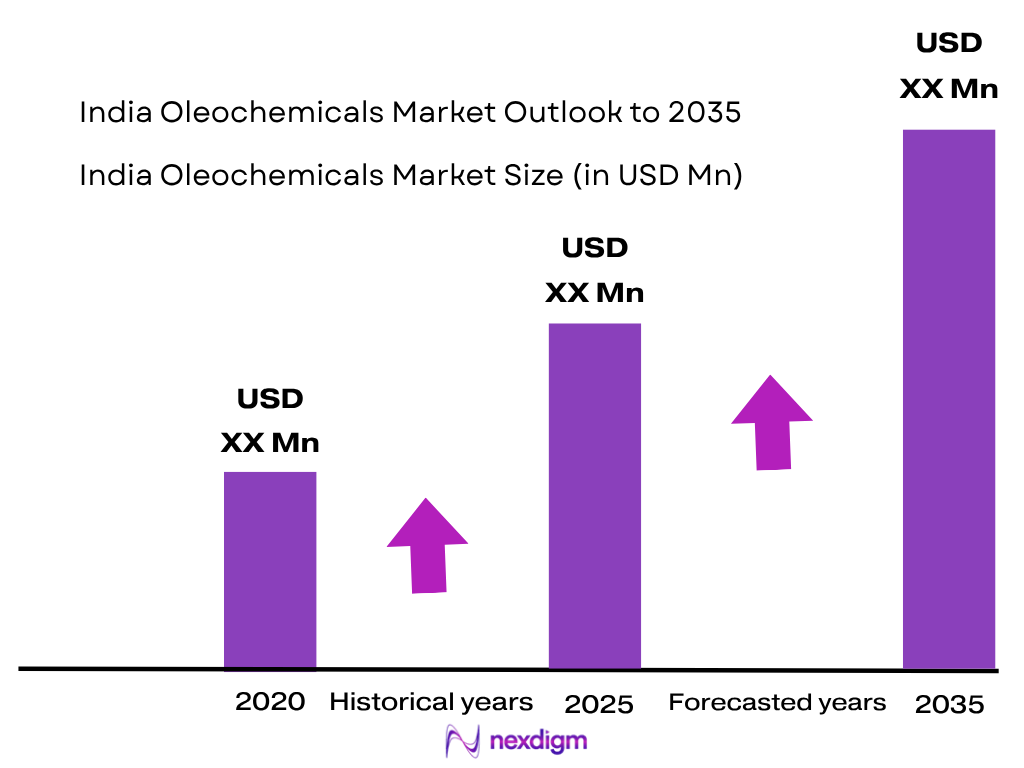
The India oleochemicals market is valued at approximately USD ~1.7 billion, supported by rising consumption of fatty acids, fatty alcohols, glycerin derivatives, and specialty esters across personal care, home care, pharmaceuticals, food ingredients, and industrial applications. The market expansion is driven by increasing preference for bio-based chemical ingredients, growth of domestic cosmetic manufacturing, expansion of detergent production, and increasing substitution of petrochemical-based ingredients with renewable oleochemical alternatives. The India oleochemicals ecosystem is concentrated around major industrial hubs including Mumbai, Gujarat, Chennai, Maharashtra, and Tamil Nadu, supported by chemical manufacturing infrastructure, ports, refining facilities, and downstream consumer industries. Globally, countries such as Malaysia and Indonesia influence India’s oleochemical supply chain due to their strong palm oil and palm kernel oil production base, while India maintains a strong downstream position through processing, formulation, and specialty chemical manufacturing capabilities.
Market Segmentation
By Product Type
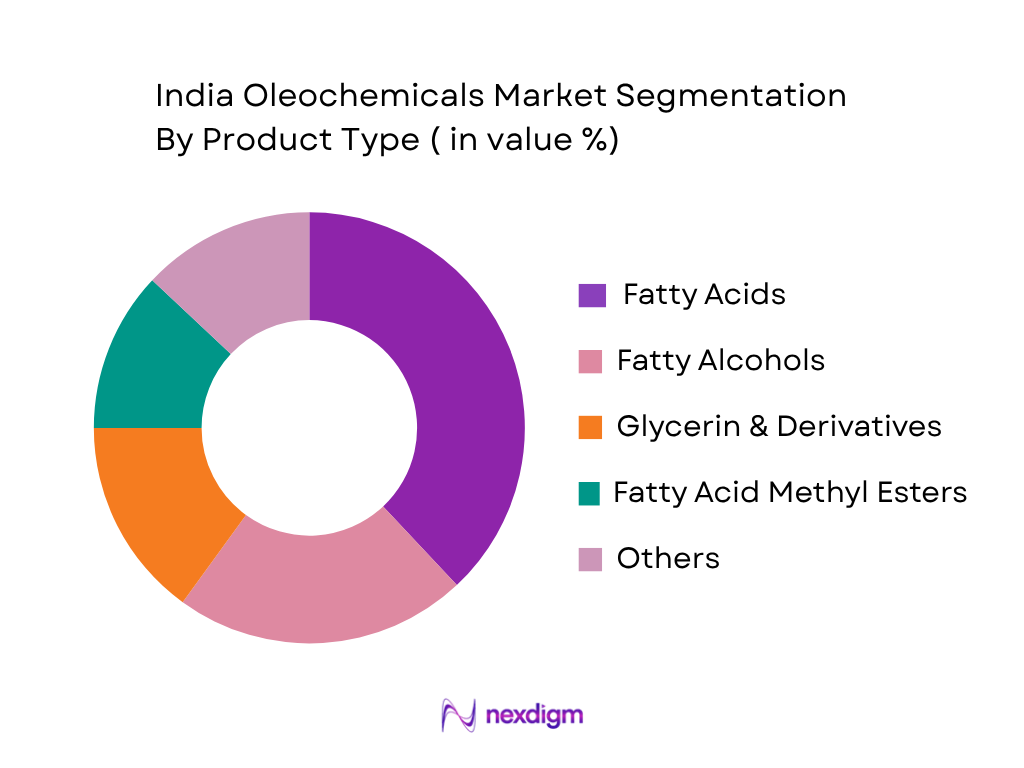
India oleochemicals market is segmented by product type into fatty acids, fatty alcohols, glycerin, fatty acid methyl esters, specialty esters, and other derivatives. Fatty acids represent the dominant product category due to their extensive utilization in soaps, detergents, surfactants, cosmetics, lubricants, and industrial formulations. The segment benefits from India’s large FMCG manufacturing base and increasing demand for natural ingredient-based formulations. Fatty acid derivatives such as stearic acid, oleic acid, and lauric acid are widely consumed by personal care manufacturers and chemical processors. Fatty alcohols are also witnessing strong adoption due to their role in surfactant manufacturing and premium cosmetic formulations.
By Application Industry
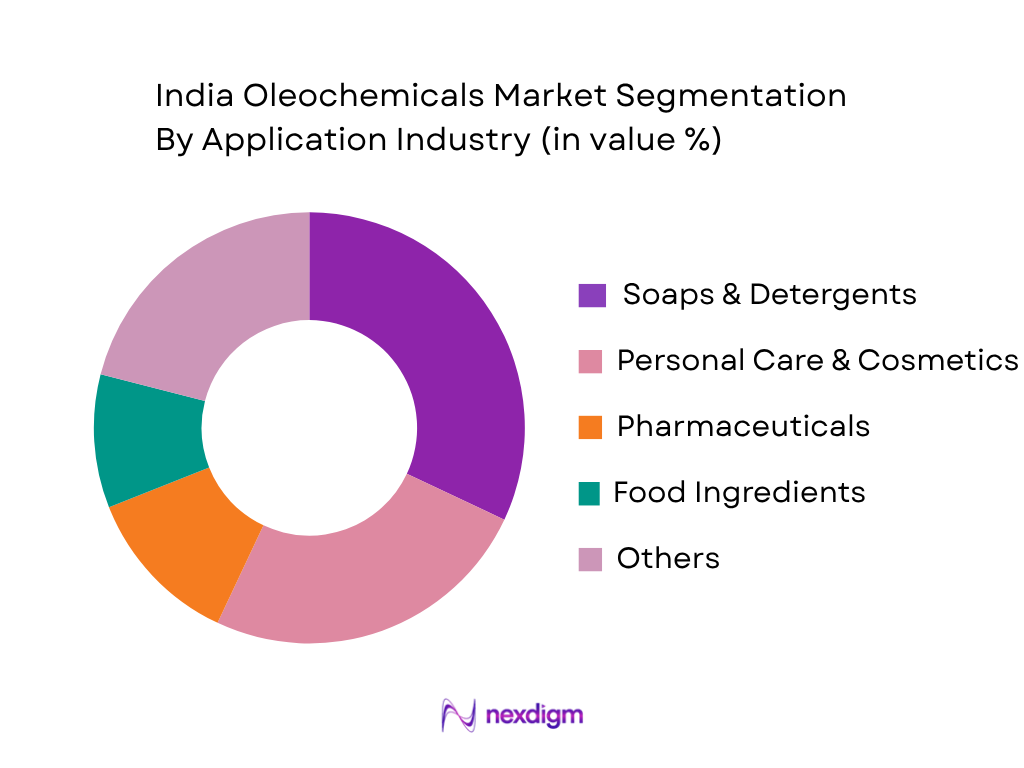
India oleochemicals market is segmented by application into soaps and detergents, personal care and cosmetics, pharmaceuticals, food processing, polymers, lubricants, and other industrial applications. Soap and detergent manufacturing represents the leading application segment due to high domestic consumption of cleaning products and the extensive use of fatty acids, fatty alcohols, and surfactants. Personal care and cosmetics is another significant application area supported by rising demand for natural skincare ingredients, emollients, and specialty formulations. Pharmaceutical applications are expanding due to increasing usage of glycerin and oleochemical derivatives as excipients and formulation ingredients.
Competitive Landscape
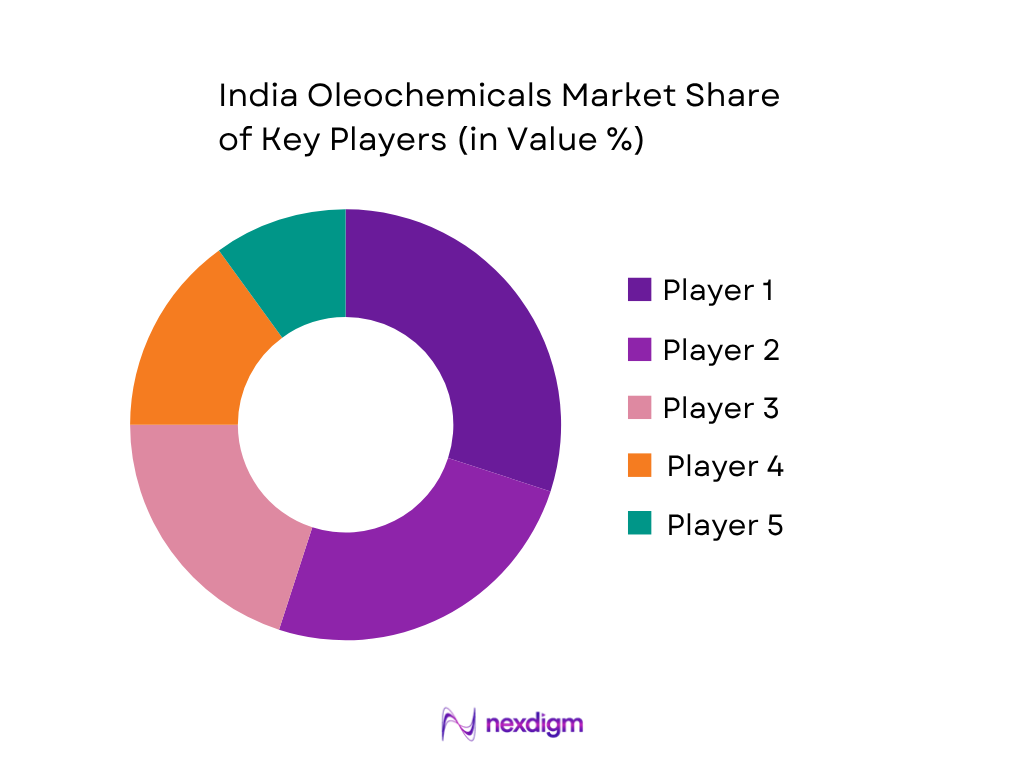
The India oleochemicals market consists of domestic manufacturers and global integrated oleochemical companies competing through feedstock access, manufacturing capacity, specialty product portfolios, and downstream customer relationships. Major participants include Godrej Industries, VVF India, 3F Industries, Galaxy Surfactants, and global companies supplying specialty oleochemical derivatives.
| Company | Establishment Year | Headquarters | Key Parameters |
| Godrej Industries | 1897 | Mumbai, India | ~ |
| VVF India Limited | 1939 | Mumbai, India | ~ |
| 3F Industries Limited | 1918 | Hyderabad, India | ~ |
| Galaxy Surfactants | 1980 | Mumbai, India | ~ |
| KLK OLEO | 1906 | Malaysia | ~ |
India Oleochemicals Market Analysis
Growth Drivers
Rising Demand from Personal Care, Home Care and FMCG Manufacturing Ecosystem
The expanding consumer goods manufacturing ecosystem in India is supporting increased consumption of oleochemical derivatives such as fatty acids, fatty alcohols, glycerin, and surfactants used in soaps, detergents, cosmetics, and personal care formulations. India’s domestic consumption environment is supported by a large manufacturing base, with the World Bank reporting that India’s GDP reached approximately USD 3.9 trillion, reflecting continued industrial and consumption expansion. The personal care and household products ecosystem benefits from India’s urban population reaching more than 518 million people, according to United Nations population estimates, creating stronger demand for hygiene products and cosmetic formulations that rely on oleochemical ingredients. The Government of India’s Department for Promotion of Industry and Internal Trade reported that the chemical and petrochemical sector continues to be a key industrial contributor, with India maintaining one of the largest chemical production bases globally. The increasing shift toward naturally derived ingredients is encouraging manufacturers to replace synthetic alternatives with renewable oleochemical inputs. Oleochemical suppliers are therefore benefiting from demand generated by downstream industries including FMCG, pharmaceuticals, food processing, and specialty chemicals.
Expansion of Bio-Based Chemical Adoption and Renewable Feedstock Availability
The transition toward sustainable chemical solutions is increasing the relevance of oleochemicals as renewable alternatives derived from vegetable oils and natural fats. India’s chemical manufacturing ecosystem is increasingly aligned with global sustainability initiatives, supported by government programs promoting renewable resources and reduced dependence on fossil-based raw materials. India remains one of the largest global consumers of vegetable oils, with total vegetable oil imports reaching approximately 16 million tonnes during the 2023-24 marketing season, highlighting the scale of oil-based raw material availability connected with oleochemical production. Palm oil represented a significant portion of India’s imported vegetable oil basket, with palm oil imports estimated at around 9.2 million tonnes during the same period, creating an important feedstock linkage for fatty acid and fatty alcohol manufacturing. India’s National Mission on Edible Oils – Oil Palm Expansion is also supporting domestic oil palm cultivation, with oil palm cultivation area reaching approximately 375,000 hectares, strengthening future feedstock security. These developments create opportunities for oleochemical producers to expand bio-based ingredient manufacturing across personal care, detergents, lubricants, and industrial applications..
Market Challenges
Dependence on Imported Vegetable Oil Feedstocks and Global Supply Chain Volatility
The India oleochemicals industry faces challenges due to its dependence on imported vegetable oils, particularly palm oil, which creates exposure to international supply fluctuations, geopolitical disruptions, and changes in global agricultural output. India imported approximately 16 million tonnes of vegetable oils during the 2023-24 period, demonstrating the country’s significant reliance on overseas supply sources for oil-based raw materials. Palm oil imports accounted for around 9.2 million tonnes, with Indonesia, Malaysia, and Thailand remaining important suppliers for India’s requirements. Since oleochemical manufacturing depends heavily on palm oil, palm kernel oil, and other vegetable oil derivatives, disruptions in international supply chains can impact raw material availability for fatty acid, glycerin, and surfactant production. The Government of India has been encouraging domestic oil palm cultivation through expansion programs; however, domestic production remains insufficient compared with industrial demand. The Solvent Extractors’ Association reported that India’s dependence on imported edible oils remains substantial, with total imports reaching nearly 16 million tonnes, creating continued vulnerability for oleochemical manufacturers relying on imported feedstocks.
Regulatory Compliance Requirements and Environmental Sustainability Pressure
Oleochemical manufacturers are facing increasing requirements related to environmental compliance, sustainable sourcing, waste management, and responsible chemical production practices. The Indian chemical industry operates under regulatory frameworks governed by agencies including the Ministry of Environment, Forest and Climate Change, Central Pollution Control Board, and Department of Chemicals and Petrochemicals, requiring manufacturers to comply with standards related to emissions, wastewater treatment, and hazardous material handling. India’s chemical sector has expanded significantly, with the World Bank identifying manufacturing as a major contributor to economic activity, increasing the need for stronger environmental management systems across industrial clusters. Oleochemical production processes involving hydrolysis, esterification, hydrogenation, and surfactant manufacturing require efficient resource management to reduce environmental impact. Growing demand from multinational consumer goods companies for sustainably sourced ingredients is also increasing the importance of certifications related to responsible palm oil sourcing and renewable content. Manufacturers must therefore invest in cleaner technologies, improved waste treatment infrastructure, and sustainable procurement practices to maintain competitiveness in domestic and export markets.
Market Opportunities
Growth of Specialty Oleochemicals for Cosmetics, Pharmaceuticals and High-Value Applications
Increasing demand for specialized ingredients in cosmetics, pharmaceuticals, and personal care products is creating opportunities for Indian oleochemical manufacturers to move beyond commodity products toward higher-value derivatives. India’s pharmaceutical sector remains one of the largest globally, with the country supplying medicines to more than 200 countries according to government pharmaceutical industry data. Oleochemical derivatives such as glycerin, fatty acid esters, emollients, and specialty surfactants are increasingly used in pharmaceutical formulations, skincare products, and cosmetic ingredients. India’s urban population exceeding 500 million people is supporting expansion of branded personal care consumption and increasing demand for premium formulations requiring functional ingredients. The growth of domestic manufacturing under initiatives such as Make in India and the expansion of specialty chemical production capabilities are encouraging companies to develop customized oleochemical solutions. The Department of Chemicals and Petrochemicals has identified specialty chemicals as an important growth area within India’s chemical manufacturing ecosystem, supporting investment in advanced chemical production. These trends create opportunities for companies developing application-specific oleochemical derivatives with improved performance characteristics.
Increasing Export Potential Through Integrated Chemical Manufacturing Capabilities
India’s established chemical manufacturing infrastructure and improving integration with global supply chains provide opportunities for oleochemical companies to expand exports of specialty derivatives and industrial ingredients. India exported approximately USD 29 billion worth of chemicals and related products during recent trade periods, highlighting the country’s growing participation in international chemical markets. The presence of major ports, chemical clusters in Gujarat, Maharashtra, Tamil Nadu, and Andhra Pradesh, and increasing investment in specialty chemical manufacturing supports export-oriented oleochemical production. India’s strategic location between major Asian markets provides logistical advantages for supplying downstream industries in Southeast Asia, the Middle East, and Africa. The government’s focus on improving manufacturing competitiveness through industrial corridors and chemical parks is expected to support infrastructure development for chemical producers. Additionally, global companies seeking diversified supply chains are increasingly evaluating India as an alternative manufacturing base due to its large industrial workforce and established chemical ecosystem. These factors create opportunities for Indian oleochemical producers to expand international sales of fatty acids, fatty alcohols, surfactants, and specialty esters.
Future Outlook
The India oleochemicals market is expected to demonstrate steady expansion supported by increasing demand for sustainable chemical ingredients, growth of personal care and home care industries, and rising adoption of renewable feedstocks. Expansion of specialty oleochemical production, increasing export opportunities, and investments in downstream chemical manufacturing are expected to strengthen market growth during the forecast period.
Major Players
- Godrej Industries Limited
- VVF India Limited
- Galaxy Surfactants Limited
- 3F Industries Limited
- KLK OLEO
- Wilmar International
- IOI Corporation
- Musim Mas
- Emery Oleochemicals
- BASF
- Evonik Industries
- Croda International
- Oleon
- Kao Corporation
- Sasol
Key Target Audience
- Oleochemical manufacturers and specialty chemical producers
- Personal care and cosmetics ingredient manufacturers
- Soap and detergent manufacturing companies
- Pharmaceutical formulation companies
- Food ingredient manufacturers
- Investments and venture capitalist firms (Chemical sector investment funds, private equity firms, industrial investment groups)
- Government and regulatory bodies (Ministry of Chemicals and Fertilizers, Department of Chemicals and Petrochemicals, Bureau of Indian Standards, Central Pollution Control Board)
- Industrial chemical distributors and trading companies
Research Methodology
Step 1: Identification of Key Variables
The research process begins with mapping the India oleochemicals ecosystem, including feedstock suppliers, oleochemical manufacturers, derivative producers, distributors, and end-use industries. Key variables such as production capacity, raw material availability, pricing trends, consumption patterns, and application demand are identified through secondary research and proprietary databases.
Step 2: Market Analysis and Construction
Historical market information is analyzed through production statistics, import-export data, company financial disclosures, industry publications, and application-level consumption assessment. Bottom-up calculations are performed by evaluating manufacturer revenues, production capacities, product categories, and downstream demand.
Step 3: Hypothesis Validation and Expert Consultation
Market assumptions are validated through discussions with industry participants including oleochemical producers, chemical distributors, personal care manufacturers, detergent companies, and raw material suppliers. These interactions provide insights into pricing behavior, capacity utilization, procurement trends, and competitive strategies.
Step 4: Research Synthesis and Final Output
The final analysis integrates primary and secondary findings through data triangulation. Market forecasts are developed by evaluating industry growth drivers, regulatory developments, investment activities, technology advancements, and future demand patterns across end-use industries.

- Executive Summary
- Research Methodology (Market Definitions and Scope, Oleochemicals Industry Classification, Fatty Acid and Fatty Alcohol Market Mapping, Market Sizing Framework, Revenue Estimation Approach, Volume Consumption Assessment, Production Capacity Analysis, Import-Export Data Analysis, Demand-Side Assessment, Supply-Side Assessment, Primary Industry Interviews, Manufacturer and Distributor Surveys, End-Use Industry Interviews, Data Triangulation, Bottom-Up Market Estimation, Top-Down Market Validation, Forecasting Framework, Assumptions and Limitations)

- Definition and Scope
- Oleochemicals Industry Evolution and Development Timeline
- India Oleochemicals Industry Structure
- Role of Oleochemicals in India’s Chemical and Specialty Chemical Ecosystem
- Oleochemicals Product Value Chain Analysis
- India Oleochemicals Supply Chain Analysis
- India Oleochemicals Manufacturing Landscape
- Raw Material Ecosystem Analysis

- Market Growth Drivers (Rising Demand for Bio-Based Chemicals, Expansion of Personal Care Manufacturing, Growth of Detergent and Surfactant Industry, Increasing Specialty Chemical Production, Import Substitution Initiatives, Growth of Pharmaceutical Manufacturing, Sustainable Chemical Adoption)
- Market Challenges (Raw Material Price Volatility, Dependence on Imported Palm-Based Feedstock, Fluctuating Crude Palm Oil Prices, High Energy Costs, Regulatory Compliance Burden, Competition from Petrochemical Alternatives, Supply Chain Disruptions)
- Market Opportunities (Growth of Green Chemistry Applications, Bio-Based Surfactants Expansion, Specialty Ester Development, Export Opportunity to Asia-Pacific Markets, Renewable Feedstock Innovation, Circular Economy-Based Oleochemical Production)
- Market Trends
- Government Regulations and Industry Standards
- India Oleochemicals Industry SWOT Analysis
- Porter’s Five Forces Analysis
- PESTLE Analysis
- Stakeholder Ecosystem Analysis
- Industry Investment Landscape

- By Market Value (2020-2025)
- By Production Volume (2020-2025)
- By Domestic Consumption Volume (2020-2025)
- By Import Volume (2020-2025)
- By Export Volume (2020-2025)
- By Average Selling Price (2020-2025)
- By Product Realization Margin (2020-2025)

- By Product Type (In Value %)
Fatty Acids
Stearic Acid
Oleic Acid
Lauric Acid
Palmitic Acid
Linoleic Acid
Other Specialty Fatty Acids
Fatty Alcohols
Short Chain Fatty Alcohols
Medium Chain Fatty Alcohols
Long Chain Fatty Alcohols
Glycerin and Glycerol Derivatives
Methyl Esters
Specialty Esters
Emollient Esters
Lubricant Esters
Plasticizer Esters
Surfactants and Surfactant Intermediates
Amides and Amine Derivatives
Other Oleochemical Derivatives - By Raw Material Feedstock (In Value %)
Palm Oil Based Oleochemicals
Palm Kernel Oil Based Oleochemicals
Coconut Oil Based Oleochemicals
Castor Oil Based Oleochemicals
Soybean Oil Based Oleochemicals
Animal Fat Based Oleochemicals
Bio-Based Waste Oil Feedstock Oleochemicals - By Application Industry (In Value %)
Personal Care and Cosmetics
Home Care and Household Cleaning Products
Soaps and Detergents
Pharmaceuticals and Nutraceuticals
Food Processing and Food Ingredients
Agrochemicals
Lubricants and Metalworking Fluids
Polymers, Plastics and Rubber Processing
Paints, Coatings and Adhesives
Textile Chemicals - By Derivative Chemistry (In Value %)
Esterification-Based Oleochemicals
Hydrogenated Oleochemicals
Ethoxylated Oleochemicals
Sulfonated Oleochemicals
Amidation-Based Oleochemicals
Glycerol-Based Derivatives - By End-User Segment (In Value %)
Large Industrial Manufacturers
Specialty Chemical Producers
FMCG Companies
Cosmetic and Personal Care Brands
Pharmaceutical Companies
Institutional Buyers - By Region (In Value %)
North India
West India
South India
East India
Central India

- Market Share Analysis of Major Players
- Cross Comparison Parameters (Product Portfolio Breadth, Installed Oleochemical Production Capacity, Fatty Acid Production Capability, Fatty Alcohol Manufacturing Capability, Specialty Derivative Portfolio, Feedstock Integration Level, Export Market Presence, Sustainability Certification Portfolio)
- Competitive Benchmarking Analysis
- Pricing Analysis
- Production Capacity Analysis
- Strategic Initiatives Analysis
- SWOT Analysis of Major Players
- Detailed Profiles of Major Companies
Godrej Industries
VVF India Limited
Emery Oleochemicals
Wilmar International
IOI Corporation
KLK OLEO
Musim Mas
BASF
Evonik Industries
Croda International
Kao Corporation
Sasol
Oleon
Nouryon
Galaxy Surfactants

- Industrial Consumption Assessment
- End-Use Industry Demand Analysis
- Customer Segmentation Analysis
- Procurement Decision Analysis
- Product Specification Preference Analysis
- Sustainability Preference Analysis
- Import Dependency and Supplier Switching Analysis

- By Market Value (2026-2035)
- By Production Volume (2026-2035)
- By Domestic Consumption Volume (2026-2035)
- By Import Volume (2026-2035)
- By Export Volume (2026-2035)
- By Average Selling Price (2026-2035)
- By Product Realization Margin (2026-2035)


 Request a Sample
 Ask for Customization
 Get a Quote
 Enquire Now