
 Download PDF
Market Overview
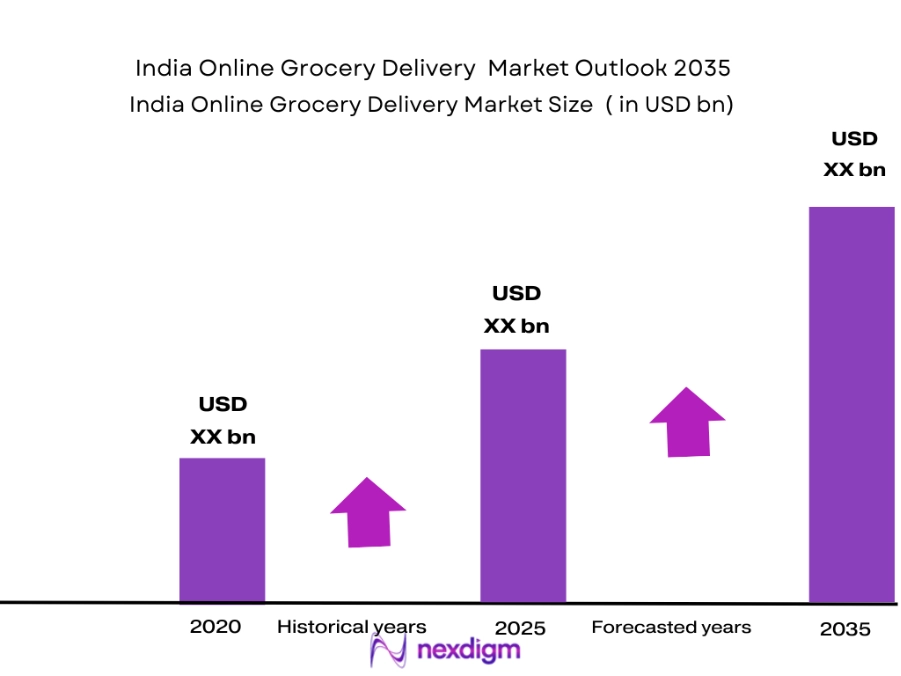
The India online grocery delivery market is valued at approximately USD ~ billion, based on the latest market analysis from credible sources. This market growth is largely driven by the increasing shift towards e-commerce, changing consumer preferences for convenience, and advancements in digital payment systems. Furthermore, the COVID-19 pandemic further accelerated the adoption of online grocery shopping, as consumers sought safe and efficient shopping experiences from home. The market is also being boosted by the growing number of internet users in India, with over 700 million internet users expected by the end of the year. This surge in consumer adoption is contributing to the market’s growth trajectory.
India’s online grocery delivery market is predominantly led by major urban cities such as Delhi, Mumbai, Bangalore, Hyderabad, and Chennai. These cities are the primary hubs for online grocery deliveries due to their dense population, higher disposable incomes, and significant adoption of e-commerce platforms. Additionally, cities with a higher penetration of smartphone users and internet connectivity continue to dominate the market. Urban consumers’ inclination towards convenience, along with the rapid development of digital infrastructure, makes these regions particularly attractive for online grocery platforms. Moreover, rural penetration is expected to grow as internet infrastructure improves in tier 2 and tier 3 cities.
Market Segmentation
By Product Type
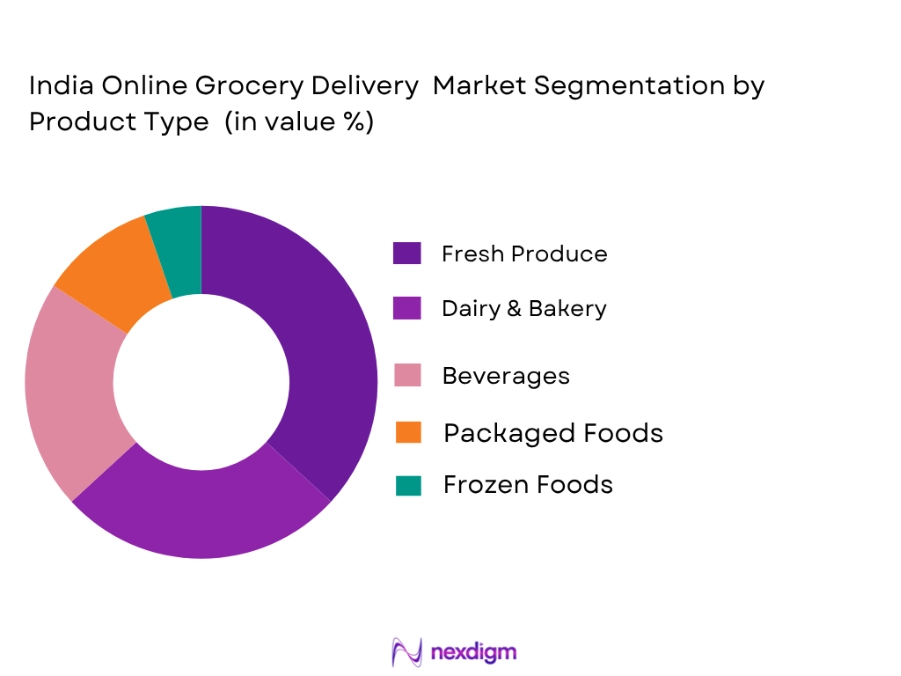
India’s online grocery delivery market is segmented by product type into categories such as fresh produce, dairy and bakery, beverages, packaged foods, frozen foods, household items, and personal care products. Among these, packaged foods have the dominant market share in India. This segment’s popularity is driven by the convenience it offers, particularly for working professionals and busy consumers. Packaged food items, including snacks, ready-to-eat meals, and other packaged essentials, are in high demand due to their long shelf life, ease of storage, and the wide variety of products available online. Major online platforms are continuously expanding their packaged food product offerings to cater to this growing demand. Additionally, e-commerce giants like BigBasket and Amazon India are investing heavily in this segment, contributing to its prominence.
By Delivery Model
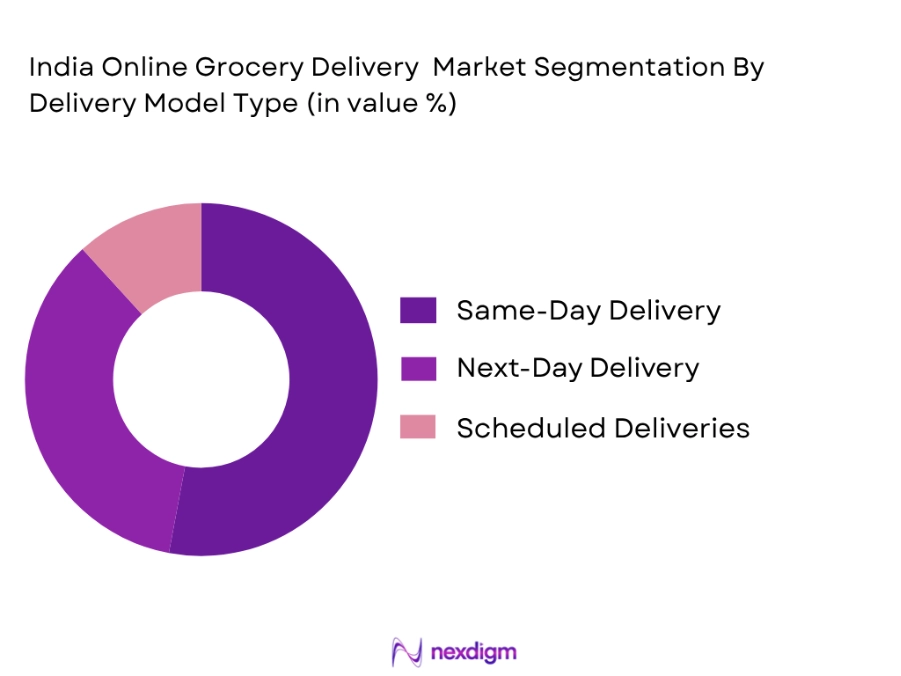
India’s online grocery delivery market is also segmented by delivery model, which includes same-day delivery, next-day delivery, scheduled deliveries, and subscription-based deliveries. The same-day delivery model currently holds the largest market share. This model is widely preferred by consumers as it offers quick and convenient access to groceries. With urban consumers leading the demand for faster deliveries, online platforms have been investing heavily in optimizing their logistics and expanding their delivery networks. The demand for same-day deliveries has also been amplified by the rise of mobile apps and advancements in last-mile delivery solutions. Furthermore, the convenience of getting products delivered on the same day aligns with the growing consumer expectation for immediate gratification, driving the dominance of this model in the market.
Competitive Landscape
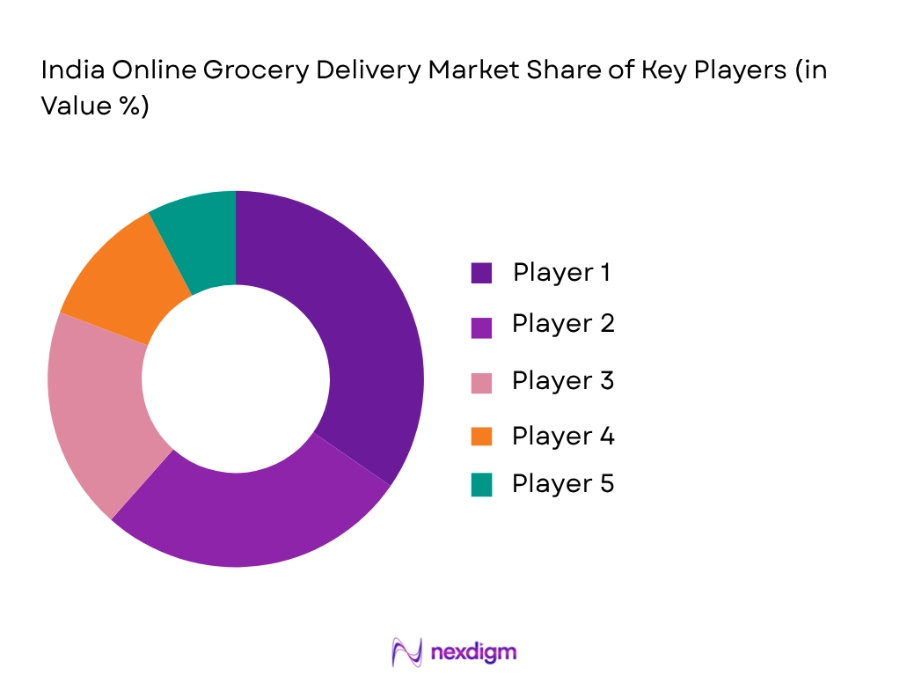
The India online grocery delivery market is dominated by a few major players, including local giants and international e-commerce platforms. Companies like BigBasket, Grofers, Amazon India, Flipkart, and JioMart lead the market. These players have a stronghold due to their extensive distribution networks, well-established brands, and strategic partnerships with local and national suppliers. Additionally, these companies have been focusing on optimizing their delivery logistics, expanding product ranges, and improving customer service to maintain their competitive edge. As the market matures, competition among these companies is expected to intensify, with more players entering the sector to tap into the growing consumer demand for online grocery services.
| Company Name | Establishment Year | Headquarters | Product Portfolio | Delivery Network | Revenue (2024) | Customer Base | Market Position |
| BigBasket | 2011 | Bangalore, India | ~ | ~ | ~ | ~ | ~ |
| Grofers | 2013 | Mumbai, India | ~ | ~ | ~ | ~ | ~ |
| Amazon India | 2013 | Bangalore, India | ~ | ~ | ~ | ~ | ~ |
| Flipkart Supermart | 2007 | Bangalore, India | ~ | ~ | ~ | ~ | ~ |
| JioMart | 2020 | Mumbai, India | ~ | ~ | ~ | ~ | ~ |
India Online Grocery Delivery Market Dynamics
Growth Drivers
Increasing Internet Penetration and Smartphone Adoption
India’s internet penetration has witnessed rapid growth, with over 700 million internet users expected by the end of the year. This increased access to the internet, especially in urban and semi-urban areas, has led to a surge in online grocery shopping. Smartphone adoption plays a critical role in this transformation, as more consumers use mobile apps to access online grocery services. With affordable data plans and the rising use of smartphones, more people are now able to access e-commerce platforms that offer grocery delivery services. This increased digital accessibility has expanded the potential customer base for online grocery platforms and fueled growth in the sector.
Changing Consumer Lifestyles and Preferences for Convenience
Indian consumers’ lifestyles are evolving rapidly due to increased working hours, urbanization, and a growing preference for convenience. With the rise of dual-income households and busy work schedules, more people are seeking easy and time-saving solutions, such as online grocery shopping. This shift towards e-commerce reflects a preference for convenience, as it eliminates the need to visit physical stores, especially during busy periods. The demand for time-sensitive services like same-day or next-day delivery has grown significantly as consumers prioritize efficiency. Online grocery platforms are thus well-positioned to meet these evolving preferences, ensuring further growth for the industry.
Market Challenges
Logistics and Supply Chain Issues in Tier 2 and Tier 3 Cities
Although the online grocery market is expanding, logistical and supply chain challenges remain a significant hurdle, especially in Tier 2 and Tier 3 cities. These cities often lack the robust infrastructure required to ensure fast and reliable delivery. Issues like traffic congestion, inadequate warehousing, and unreliable transportation systems can delay deliveries, leading to customer dissatisfaction. Additionally, fulfilling online grocery orders from remote areas requires investments in setting up distribution hubs, which can increase operational costs. These challenges hinder the overall growth potential of the market and require online grocery companies to innovate their logistics strategies.
Regulatory and Quality Control Concerns
Regulatory concerns and quality control issues present significant challenges for the online grocery delivery market in India. As the market grows, there is an increasing need to ensure that products meet safety and quality standards, especially for perishable goods like fresh produce, dairy, and meat. The lack of standardized regulations and oversight can lead to inconsistencies in product quality, affecting consumer trust and brand loyalty. Additionally, the regulatory environment surrounding e-commerce in India is still evolving, with new laws around food safety, packaging, and online sales potentially impacting operations. These concerns require companies to ensure strict compliance with regulations.
Market Opportunities
Rural Market Expansion and Tier 2/3 City Penetration
The rural and Tier 2/3 cities present an exciting growth opportunity for the online grocery delivery market. As internet penetration and smartphone adoption rise in these areas, the demand for online grocery services is expected to increase. Rural areas, which traditionally rely on local kirana stores, are now gradually embracing online platforms due to better internet connectivity and improved logistics networks. E-commerce companies are expanding their reach into smaller cities by establishing warehouses and local partnerships, offering consumers in these areas easy access to a wide variety of products. This untapped market is projected to be a major driver of the industry’s expansion.
Introduction of Hyperlocal Delivery Solutions
Hyperlocal delivery solutions represent a growing opportunity in the online grocery delivery market. By providing ultra-fast deliveries from local stores to consumers’ doorsteps, this model is particularly appealing to time-conscious consumers. Companies are increasingly adopting hyperlocal delivery strategies, using local networks and smaller warehouses, which enables them to reduce delivery times and enhance customer satisfaction. The integration of hyperlocal delivery models with advanced technologies like AI and data analytics also allows companies to optimize routes and improve efficiency. This trend is expected to significantly improve the customer experience and increase market share for online grocery platforms, particularly in urban areas.
Future Outlook
Over the next five years, the India online grocery delivery market is expected to experience significant growth driven by continued technological advancements, government support, and rising consumer demand for convenient and contactless shopping. The increasing focus on improving the digital payment infrastructure, expanding delivery networks, and enhancing the customer experience will further bolster market expansion. Additionally, the evolving consumer preferences for healthy and organic products, along with the growing trend of subscription-based services, will present new opportunities for online grocery players to innovate and diversify their offerings. The rise of hyperlocal delivery solutions and greater penetration into tier 2 and tier 3 cities will also contribute to the market’s robust growth.
Key Players
- BigBasket
- Grofers
- Amazon India
- Flipkart Supermart
- JioMart
- Reliance Fresh
- DMart Ready
- Snapdeal Groceries
- Spencer’s Retail
- Nature’s Basket
- Supermart (Tata Group)
- Metro Cash and Carry
- Udaan
- BigBasket’s competitor startups
- ZappFresh
Key Target Audience
- Investments and Venture Capitalist Firms
- Government and Regulatory Bodies
- Private Equity Firms
- Retail and E-commerce Industry Leaders
- Online Grocery Retailers
- Logistics and Delivery Service Providers
- Manufacturers of Packaged and Fresh Foods
- Consumer Goods Brands
Research Methodology
Step 1: Identification of Key Variables
The initial phase involves constructing an ecosystem map that includes major stakeholders within the India online grocery delivery market. This is supported by secondary research and proprietary data sources to gather market insights and define the most influential variables.
Step 2: Market Analysis and Construction
In this phase, historical data is collected to evaluate market penetration and revenue generation. The analysis includes assessing online grocery penetration, the ratio of different marketplaces, and service provider performance metrics.
Step 3: Hypothesis Validation and Expert Consultation
Market hypotheses will be tested through in-depth interviews with industry experts from top grocery delivery platforms and e-commerce companies. These consultations are essential for verifying assumptions and gaining deeper insights into the operational and financial aspects of the market.
Step 4: Research Synthesis and Final Output
The final phase involves synthesizing all the data and consulting with online grocery industry leaders to refine and validate insights regarding product segments, customer preferences, and future market trends.

- Executive Summary
- Research Methodology (Definitions and Scope of Online Grocery Delivery Market Data Sources and Database Calibration, India Regulatory Data Collection Framework, Healthcare Provider & Distributor Primary Interviews, Forecasting Model Limitations, Bias Controls, Forecast Confidence Intervals)

- Overview Genesis and Market Evolution
- Healthcare Delivery Models in India
- Adoption of Online Grocery Platforms
- Technological Advancements in Online Grocery Services

- Growth Drivers
Increasing Internet Penetration and Smartphone Adoption
Changing Consumer Lifestyles and Preferences for Convenience
Expansion of E-commerce and Digital Payment Systems
Increasing Adoption of Subscription Models - Market Challenges
Logistics and Supply Chain Issues in Tier 2 and Tier 3 Cities
Regulatory and Quality Control Concerns
High Competition with Local Kirana Stores
Price Sensitivity and Cost Pressure - Market Opportunities
Rural Market Expansion and Tier 2/3 City Penetration
Introduction of Hyperlocal Delivery Solutions
Innovations in Packaging and Delivery Logistics
Collaborations with Local Farmers and Producers - Trends
Increase in Demand for Eco-Friendly Packaging
Shift Towards Subscription Models and Customization
Integration of Artificial Intelligence for Personalization
Government Regulations and Support for E-commerce
- Government Regulations
- SWOT Analysis of Key Competitors
- Porter’s Five Forces

- By Value, 2020-2025
- By Unit Shipments, 2020-2025
- By Average Selling Price Trends, 2020-2025
- Market Share by Product Category, 2020-2025

- By Product Type (In Value%)
Fresh Produce
Dairy & Bakery
Beverages
Packaged Foods
Frozen Foods - By End-User Segment (In Value%)
Urban Consumers
Rural Consumers
Small and Medium Enterprises (SMEs)
Institutional Buyers (Hotels, Restaurants, etc.) - By Platform Type (In Value%)
Direct Online Stores
Mobile Applications
Third-Party Delivery Platforms - By Delivery Model (In Value%)
Same-Day Delivery
Next-Day Delivery
Scheduled Deliveries

- Market Share Analysis
- Cross-Comparison Parameters (Market Size, Product Segment, End-User Adoption, Competitive Positioning, Technological Drivers, Platform Portfolio Breadth, Regional Penetration, Pricing Matrix, Delivery Speed, Customer Support)
- Competitive Benchmarks & Profiles
- SWOT Analysis of Key Competitors
- Pricing & Procurement Analysis
- Porter’s Five Forces
- Key Players
BigBasket (now owned by Tata Group)
Grofers (now part of Zomato)
Amazon India
Flipkart Supermart
Reliance Fresh
DMart Ready
Snapdeal Groceries
Spencer’s Retail
Nature’s Basket
JioMart

- Urban Consumers’ Shift Towards Online Grocery Shopping
- Impact of Rural Population on Online Grocery Growth
- Growth of Subscription-Based Models
- Influence of Institutional Buyers on Market Expansion

- By Value, 2026-2035
- By Unit Shipments, 2026-2035
- By Average Selling Price Trends, 2026-2035
- Market Share by Product Category, 2026-2035


 Request a Sample
 Ask for Customization
 Get a Quote
 Enquire Now