

 Download PDF
Market Overview
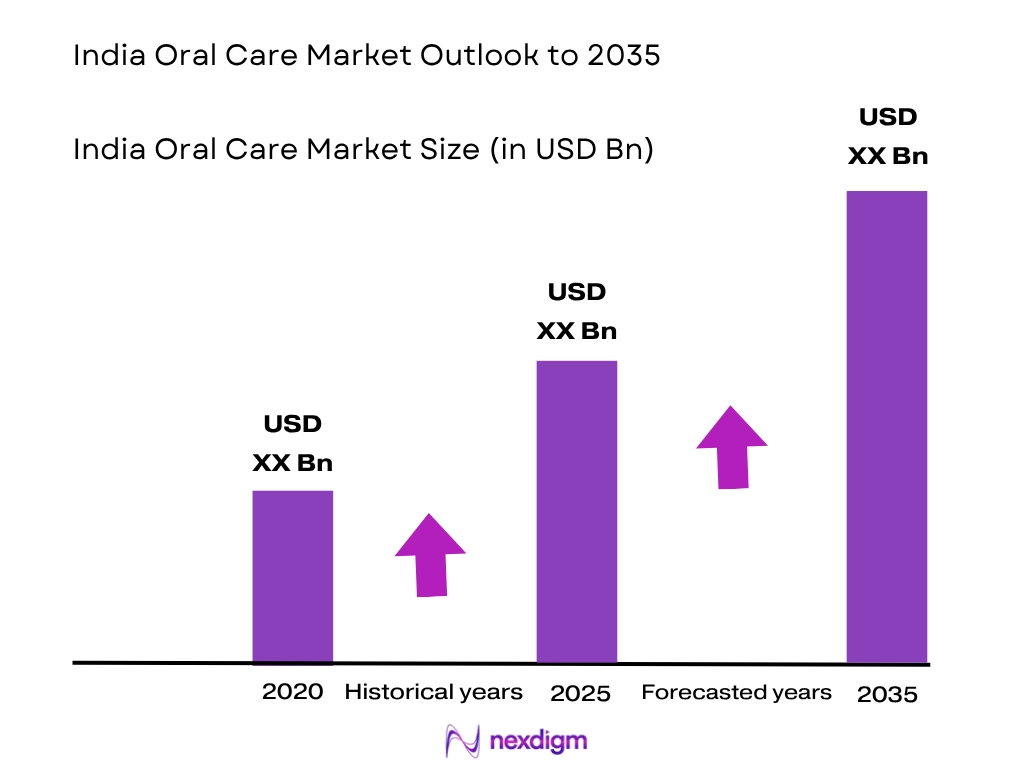
The India oral care market is valued at approximately USD ~ billion, supported by steady growth from around USD ~ billion in the preceding year, based on compiled data from industry sources. The expansion is driven by high toothpaste penetration, increasing sensitivity-related product demand, and rapid growth in premium categories such as mouthwash and electric toothbrushes. Rising per capita consumption, increasing dental awareness campaigns, and the strong presence of FMCG distribution networks continue to support consistent volume and value growth.
The India oral care market is primarily dominated by urban consumption hubs such as Mumbai, Delhi NCR, Bengaluru, Chennai, and Hyderabad due to higher awareness levels, better access to modern retail, and higher disposable income. Additionally, southern and western regions show stronger adoption of premium oral care products due to higher literacy and healthcare awareness. Rural markets, while lower in per capita consumption, contribute significantly to volume growth due to population density and the increasing availability of low-unit packs and herbal alternatives.
Market Segmentation
By Product Category
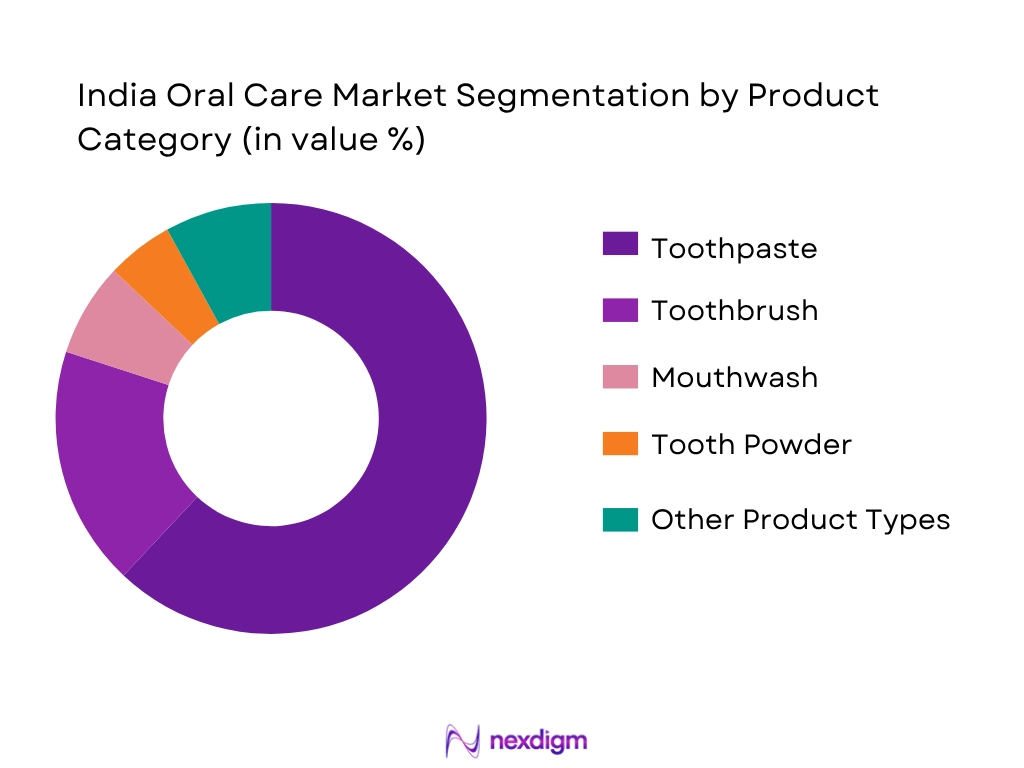
The India oral care market is segmented by product category into toothpaste, toothbrush, mouthwash, tooth powder, dental floss, denture care, teeth whitening products, and electric oral care devices. Toothpaste dominates the India oral care market due to its essential daily usage and deep penetration across both urban and rural households. The category benefits from high frequency of use, strong brand loyalty, and continuous innovation across benefit platforms such as sensitivity, herbal, and whitening. Major players have expanded toothpaste portfolios to include specialized variants, further driving premiumization. Additionally, the availability of small sachets and low-price SKUs has significantly increased rural penetration, making toothpaste the backbone of the overall oral care industry.
By Distribution Channel
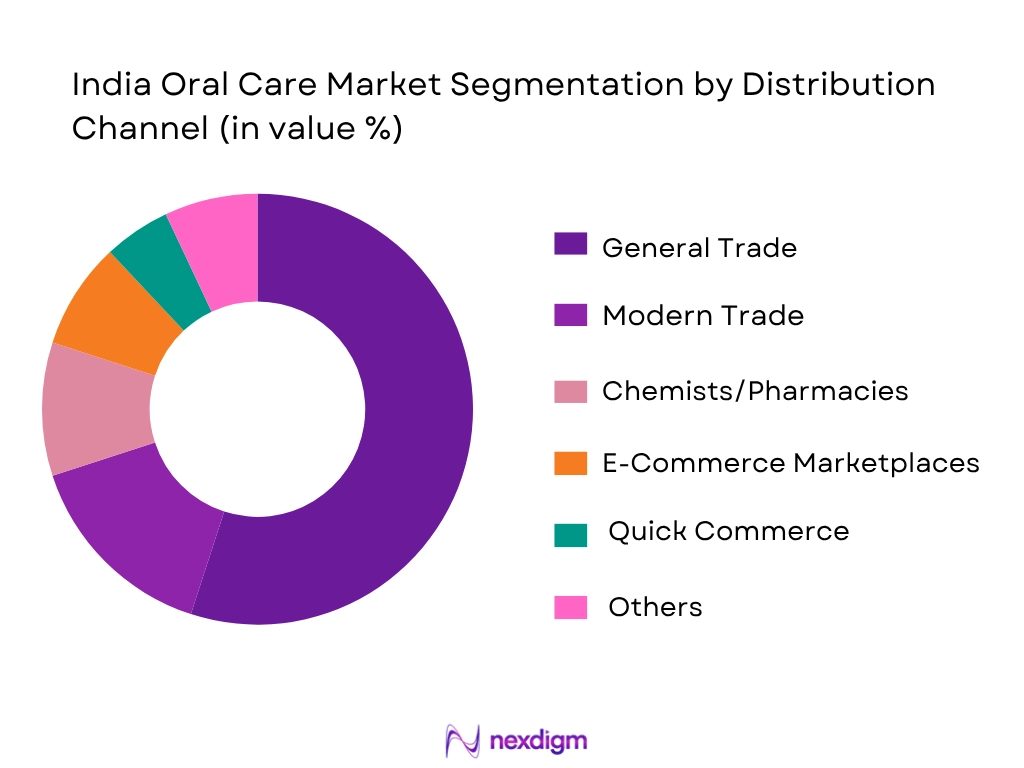
The India oral care market is segmented by distribution channel into general trade, modern trade, chemists/pharmacies, e-commerce marketplaces, quick commerce, D2C websites, and dental clinics. General trade dominates the distribution channel landscape due to its extensive reach across urban and rural India. Kirana stores and local retailers serve as the primary touchpoints for oral care purchases, particularly for mass and popular price segments. The dominance is reinforced by high-frequency purchases, strong distributor networks, and consumer preference for nearby convenience. While e-commerce and quick commerce are growing rapidly in urban areas, general trade continues to account for the majority of sales due to affordability, accessibility, and strong brand visibility at the point of purchase.
Competitive Landscape
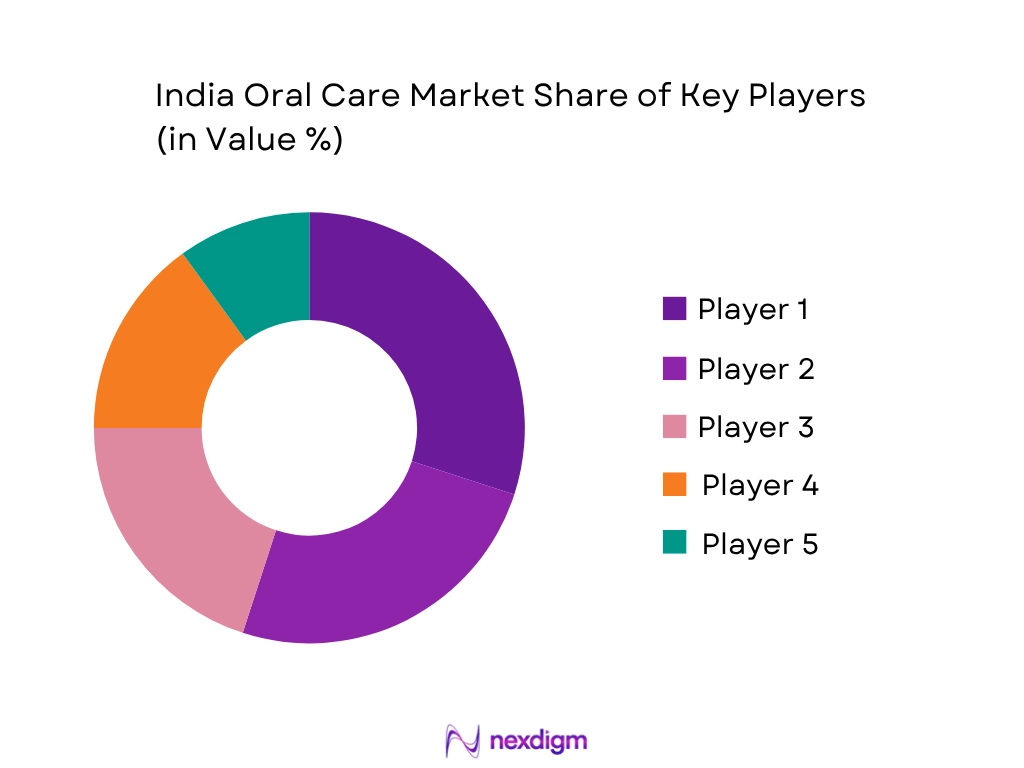
The India oral care market is dominated by a mix of multinational FMCG companies and strong domestic players, particularly those leveraging herbal and Ayurvedic positioning. The market is relatively consolidated in the toothpaste segment, with a few key players commanding significant influence due to their brand equity, extensive distribution networks, and continuous product innovation. However, emerging D2C brands are increasingly disrupting niche segments such as premium oral care and electric devices.
| Company | Establishment Year | Headquarters | Oral Care Revenue Contribution | Product Portfolio Depth | Distribution Reach | Key Strength | Pricing Strategy | Innovation Focus |
| Colgate-Palmolive India | 1937 | Mumbai, India | ~ | ~ | ~ | ~ | ~ | ~ |
| Hindustan Unilever | 1933 | Mumbai, India | ~ | ~ | ~ | ~ | ~ | ~ |
| Dabur India | 1884 | Ghaziabad, India | ~ | ~ | ~ | ~ | ~ | ~ |
| Patanjali Ayurved | 2006 | Haridwar, India | ~ | ~ | ~ | ~ | ~ | ~ |
| Haleon India | 2000 | Gurgaon, India | ~ | ~ | ~ | ~ | ~ | ~ |
India Oral Care Market Analysis
Growth Drivers
Oral Hygiene Awareness
Oral hygiene awareness is a core growth driver for the India oral care market because public-health infrastructure and digital access are expanding the reach of preventive oral-care messaging. India has a population base of 1.45 billion people and an urban population share of 36.87 in 2024, creating a large addressable base for daily-use products such as toothpaste, toothbrushes, mouthwash, gum-care products, and tongue cleaners. Digital channels also strengthen education-led demand, with 70 internet users per 100 people reported for India in 2025, supporting brand communication around cavity protection, sensitivity relief, and gum health. The Government of India’s National Oral Health Programme states that oral healthcare is being integrated into existing healthcare facilities, which supports category awareness beyond metro cities. For oral care companies, these indicators justify higher investment in school outreach, dentist-led campaigns, rural hygiene messaging, and digital content explaining twice-daily brushing, toothbrush replacement, and preventive gum care.
Premiumization
Premiumization in the India oral care market is supported by stronger household consumption capacity, expanding urban demand pools, and rising exposure to differentiated product claims. India’s GDP stood at USD 3.91 trillion in 2024, GDP per capita reached USD 2,694.7, and household final consumption expenditure was USD 2,405,795,557,862 in 2024, according to World Bank data. These indicators support trade-up from basic cavity-protection toothpaste to sensitivity, whitening, gum-care, herbal premium, alcohol-free mouthwash, and electric oral-care devices. Premiumization is also supported by organized retail and online channels because urban consumers can compare formats, ingredients, and dentist-backed claims. World Bank data showing 70 internet users per 100 people in 2025 strengthens the role of digital discovery for premium SKUs, especially among young adults and family households. In oral care, this supports larger baskets containing specialized toothpaste, soft-bristle brushes, mouthwash, whitening strips, floss, and interdental products rather than a single basic toothpaste purchase.
Market Challenges
Urban Demand Stress
Urban demand stress affects the India oral care market because premium oral care relies heavily on discretionary urban spending, while household sentiment has shown caution. The RBI’s urban Consumer Confidence Survey reported a Current Situation Index of 94.0 in November 2024, down from 94.7 in September 2024, indicating restrained sentiment in large cities. This matters for oral care because urban consumers drive faster adoption of mouthwash, electric toothbrushes, whitening products, and dentist-recommended sensitivity formats. At the same time, India’s consumer inflation was 5.0 in 2024, while GDP per capita was USD 2,694.7, meaning households may prioritize essentials and delay premium add-ons. For oral care brands, this creates pressure to balance premium innovation with affordable pack architecture, combo packs, trial packs, and value-led propositions. Urban stress does not eliminate demand for toothpaste and toothbrushes, but it can slow category expansion in non-essential sub-segments such as whitening, floss, premium mouthwash, and electric devices.
Brand Switching
Brand switching is a key challenge in the India oral care market because the category has high product substitutability across toothpaste, toothbrush, herbal, sensitivity, and whitening claims. India’s household final consumption expenditure reached USD 2,405,795,557,862 in 2024, creating a large FMCG opportunity, but the same consumption base attracts many national, regional, Ayurvedic, pharmacy-led, and digital-first brands. The presence of 1.45 billion people and 70 internet users per 100 people in 2025 increases product visibility and comparison, making consumers more exposed to competing claims such as natural ingredients, enamel protection, gum repair, dentist recommendation, and chemical-free formulations. Brand switching is especially relevant in toothpaste because shoppers can easily move between similar SKUs during promotions or online discount events. For established players, retention depends on repeat efficacy claims, dentist credibility, taste familiarity, household-pack availability, and strong general-trade visibility. For challengers, the same macro base enables rapid sampling-led entry, particularly in herbal, sensitivity, and premium urban niches.
Opportunities
Sensitivity Toothpaste
Sensitivity toothpaste is a major opportunity in the India oral care market because India’s population scale, ageing profile, and oral disease burden create a strong need for therapeutic daily-use products. WHO describes oral diseases as among the most common noncommunicable diseases globally, affecting 3.5 billion people, while India’s population stood at 1.45 billion people in 2024. The opportunity is also supported by rising digital health information access, with 70 internet users per 100 people in 2025, allowing consumers to learn about symptoms such as pain from cold drinks, enamel wear, exposed dentin, gum recession, and post-dental-treatment discomfort. Sensitivity toothpaste sits between FMCG and healthcare, making it suitable for chemists, dental clinics, modern trade, e-commerce, and quick commerce. India’s GDP per capita of USD 2,694.7 in 2024 supports gradual consumer trade-up from basic toothpaste to need-based formulations when pain or discomfort is recurring. Brands can grow this opportunity through dentist partnerships, trial packs, family packs, and education around sustained usage rather than one-time relief.
Gum Care
Gum care represents a future-facing opportunity in the India oral care market because gum-related problems link directly to preventive toothpaste, soft-bristle toothbrushes, mouthwash, floss, and interdental products. WHO identifies periodontal disease as a major oral condition, and recent peer-reviewed evidence notes that India recorded the highest case numbers for periodontal disease incidence, prevalence, and DALYs in 2021, mainly because of its large population base. The opportunity is reinforced by India’s 1.45 billion population in 2024, 36.87 urban population indicator in 2024, and 70 internet users per 100 people in 2025, which together support mass education around bleeding gums, plaque control, tobacco-linked oral risk, and dentist consultation. Gum care can move beyond treatment positioning into daily prevention through antibacterial mouthwash, gum-strengthening toothpaste, ultra-soft brushes, and flossing aids. The Government of India’s National Oral Health Programme objective of integrating oral healthcare into existing health facilities further supports gum-health awareness. For brands, gum care offers cross-selling potential across toothpaste, toothbrush, mouthwash, and clinic-led recommendation channels.
Future Outlook
The India oral care market is expected to witness steady expansion driven by increasing awareness of oral hygiene, rising disposable incomes, and growing penetration of premium products. The market is projected to grow at a CAGR of approximately 6.5% during the 2026–2035 period. Growth will be supported by increased adoption of specialized products such as sensitivity toothpaste, gum care solutions, and mouthwash. Urban markets will continue to drive premiumization, while rural markets will contribute to volume growth through increased penetration of affordable SKUs. Additionally, the expansion of quick commerce and e-commerce platforms will reshape distribution dynamics, enabling faster product accessibility. The emergence of electric oral care devices and D2C brands will further diversify the competitive landscape.
Major Players
- Colgate-Palmolive India Limited
- Hindustan Unilever Limited
- Dabur India Limited
- Patanjali Ayurved Limited
- Haleon India
- The Himalaya Drug Company
- Vicco Laboratories
- Procter & Gamble Hygiene and Health Care
- Johnson & Johnson India
- Amway India Enterprises
- Anchor Health & Beauty Care
- JHS Svendgaard Laboratories
- Perfora
- Bentodent
- GlaxoSmithKline Consumer Healthcare Portfolio
Key Target Audience
- FMCG manufacturers and oral care product companies
- Investments and venture capitalist firms
- Retail chains and supermarket operators
- E-commerce and quick commerce platforms
- Government and regulatory bodies (FSSAI, Ministry of Health and Family Welfare, BIS)
- Dental associations and clinics (Indian Dental Association)
- Pharmaceutical distributors and chemist networks
- Private label and contract manufacturers
Research Methodology
Step 1: Identification of Key Variables
The initial phase involves mapping the ecosystem of the India oral care market, identifying stakeholders such as manufacturers, distributors, retailers, and dental professionals. Extensive desk research is conducted using industry reports, company filings, and government databases. The objective is to identify key variables such as product penetration, pricing, and consumer behavior.
Step 2: Market Analysis and Construction
Historical data related to oral care consumption, product sales, and distribution trends is compiled and analyzed. This includes evaluating per capita consumption, SKU pricing variations, and channel performance. Market size estimation is derived using both top-down and bottom-up approaches to ensure accuracy.
Step 3: Hypothesis Validation and Expert Consultation
Market hypotheses are validated through interviews with industry experts, including executives from FMCG companies, distributors, and dental professionals. These interactions provide insights into market trends, demand patterns, and competitive strategies, helping refine the data.
Step 4: Research Synthesis and Final Output
The final phase involves synthesizing all collected data into a structured format. Cross-verification is conducted using multiple sources to ensure reliability. The output is a comprehensive report covering market size, segmentation, competitive landscape, and future outlook.

- Executive Summary
- Research Methodology (Market Definitions and Assumptions, Oral Care Category Mapping, Toothpaste and Toothbrush Sizing Approach, Retail Audit Calibration, Dental Professional Interviews, Consumer Usage and Attitude Survey, SKU Basket Benchmarking, Channel Margin Validation, Limitations and Future Conclusions)

- Definition and Scope
- Market Genesis
- Timeline of Major Players
- Business Cycle
- Supply Chain and Value Chain Analysis

- Growth Drivers (Oral Hygiene Awareness, Premiumization, Rural Penetration, Dental Sensitivity Incidence, Herbal/Ayurvedic Preference, Quick Commerce Expansion)
- Market Challenges (Urban Demand Stress, Brand Switching, Price Elasticity, Low Mouthwash Penetration, Counterfeit SKUs, Dentist Visit Gaps)
- Opportunities (Sensitivity Toothpaste, Gum Care, Kids Oral Care, Electric Toothbrushes, Whitening, Alcohol-Free Mouthwash, D2C Subscription Packs)
- Trends (Swadeshi Positioning, Natural Ingredients, Dentist-Recommended Claims, Small Pack Affordability, Multi-Benefit Formulations, Premium SKU Launches)
- Government Regulation (BIS Standards, FSSAI Interface for Herbal Claims, Legal Metrology, Advertising Claims, GST Classification, Import Compliance)
- SWOT Analysis (Category Strengths, Category Weaknesses, Market Opportunities, Market Threats)
- Stakeholder Ecosystem (FMCG Brands, Contract Manufacturers, Distributors, Dentists, Pharmacies, Modern Retailers, E-Commerce Platforms, Quick Commerce Players)
- Porter’s Five Forces (Supplier Power, Buyer Power, Competitive Rivalry, Threat of Substitutes, Threat of New Entrants)
- Competition Ecosystem (MNC Leaders, Ayurveda-Led Challengers, Consumer Health Specialists, D2C Oral Care Brands, Private Labels)

- By Value (2020-2025)
- By Volume (2020-2025)
- By Average Selling Price (2020-2025)
- By Per Capita Oral Care Spend (2020-2025)
- By Urban and Rural Consumption Split (2020-2025)

- By Product Category (In Value%)
Toothpaste
Toothbrush
Mouthwash
Tooth Powder
Dental Floss
Denture Care
Teeth Whitening Products
Electric Oral Care Devices - By Toothpaste Benefit Platform (In Value%)
Cavity Protection
Sensitivity Relief
Gum Care
Whitening
Fresh Breath
Herbal/Ayurvedic
Kids Oral Care
Total Care - By Toothbrush Type (In Value%)
Manual Toothbrush
Electric Toothbrush
Kids Toothbrush
Sensitive/Gum Care Toothbrush
Tongue Cleaner Integrated Toothbrush
Premium Bristle Toothbrush - By Price Positioning (In Value%)
Mass
Popular
Premium
Super Premium
Sachet/Trial Pack
Family Value Pack - By Distribution Channel (In Value%)
General Trade
Modern Trade
Chemists/Pharmacies
E-Commerce Marketplaces
Quick Commerce
D2C Brand Websites
Dental Clinics - By Consumer Cohort (In Value%)
Kids
Teenagers
Young Adults
Family Households
Seniors
Denture Users
Sensitivity Sufferers
Natural/Herbal Seekers - By Region and City Tier (In Value%)
North India
South India
West India
East India
Metro Cities
Tier-I Cities
Tier-II Cities
Rural Markets

- Market Share of Major Players (Value Share, Volume Share, Toothpaste Share, Toothbrush Share, Mouthwash Share, Herbal Segment Share, Premium Segment Share)
- Cross Comparison Parameters (Oral Care Revenue Mix, Toothpaste Value Share, Herbal/Ayurvedic Portfolio Depth, Sensitivity and Therapeutic SKU Strength, General Trade Reach, Quick Commerce Availability, Dentist Endorsement Strategy, Average SKU Price Index)
- SWOT Analysis of Major Players (Brand Equity, Channel Strength, Innovation Pipeline, Price Ladder, Regional Penetration, Claim Credibility)
- Pricing Analysis Basis SKUs (Toothpaste Gram Price, Toothbrush Unit Price, Mouthwash ML Price, Small Pack Pricing, Family Pack Pricing, Premium SKU Pricing)
- Detailed Profiles of Major Companies
Colgate-Palmolive India Limited
Hindustan Unilever Limited
Dabur India Limited
Patanjali Ayurved Limited
Haleon India
The Himalaya Drug Company
Vicco Laboratories
Procter & Gamble Hygiene and Health Care Limited
Johnson & Johnson Private Limited
Amway India Enterprises
GlaxoSmithKline Consumer Healthcare Legacy Portfolio
Anchor Health & Beauty Care
JHS Svendgaard Laboratories
Perfora
Bentodent

- Demand and Utilization (Brushing Frequency, Mouthwash Adoption, Toothbrush Replacement Cycle, Family Pack Usage, Sensitivity Treatment Usage)
- Purchasing Power and Budget Allocation (Monthly Oral Care Spend, SKU Trade-Up, Promo Sensitivity, Pack Size Preference, Channel Discount Dependence)
- Needs and Pain Points (Cavity Prevention, Gum Bleeding, Tooth Sensitivity, Bad Breath, Yellow Teeth, Kids Compliance, Denture Hygiene)
- Consumer Decision Journey (Brand Recall, Dentist Recommendation, TV/Digital Influence, Retail Visibility, Quick Commerce Availability, Claims Validation)
- B2B and Institutional Demand (Dental Clinics, Hospitals, Schools, Hotels, Airlines, Corporate Wellness, Government Oral Health Campaigns)

- By Value (2026-2035)
- By Volume (2026-2035)
- By Average Selling Price (2026-2035)
- By Premiumization Index (2026-2035)
- By Channel Expansion Potential (2026-2035)


 Request a Sample
 Ask for Customization
 Get a Quote
 Enquire Now