

 Download PDF
Market Overview
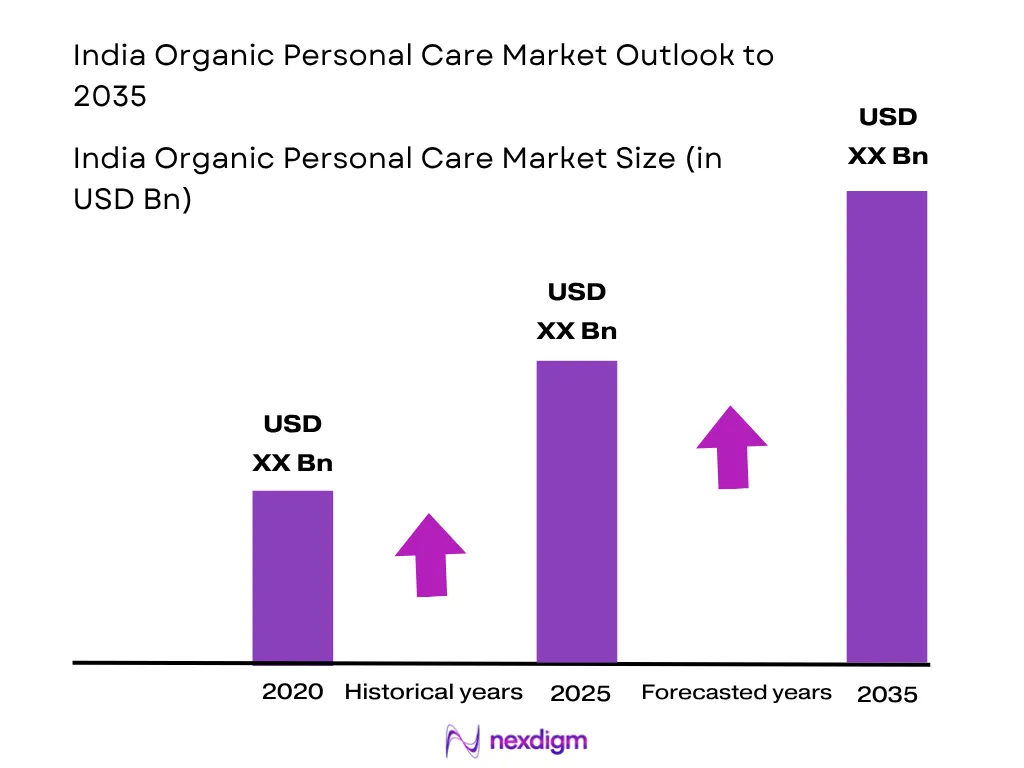
The India Organic Personal Care Market is valued at approximately USD ~ billion. This growth trajectory is supported by the rising awareness regarding the harmful effects of synthetic chemicals, a significant increase in health-conscious consumers, and a booming demand for natural and organic beauty products. Furthermore, the surge in the adoption of organic beauty standards and certifications like COSMOS is strengthening the industry’s growth. Consumer interest in sustainable, eco-friendly, and ethical product choices continues to fuel the expansion of this market. The growing preference for natural ingredients like Ayurvedic botanicals and organic oils in skincare and personal care products is a key market driver.
The organic personal care market in India is largely concentrated in urban regions such as Delhi NCR, Mumbai, Bangalore, and Hyderabad, with these cities leading the charge due to their high disposable incomes, increasing awareness of health and sustainability, and the presence of key players in the retail landscape. Major metropolitan areas also exhibit higher penetration of e-commerce platforms and modern retail channels, which drive demand. Additionally, growing interest in Ayurvedic and herbal products has led to strong growth in regions like Kerala, which is known for its rich botanical heritage, further cementing the dominance of these urban areas in the Indian organic personal care market.
Market Segmentation
By Product Category
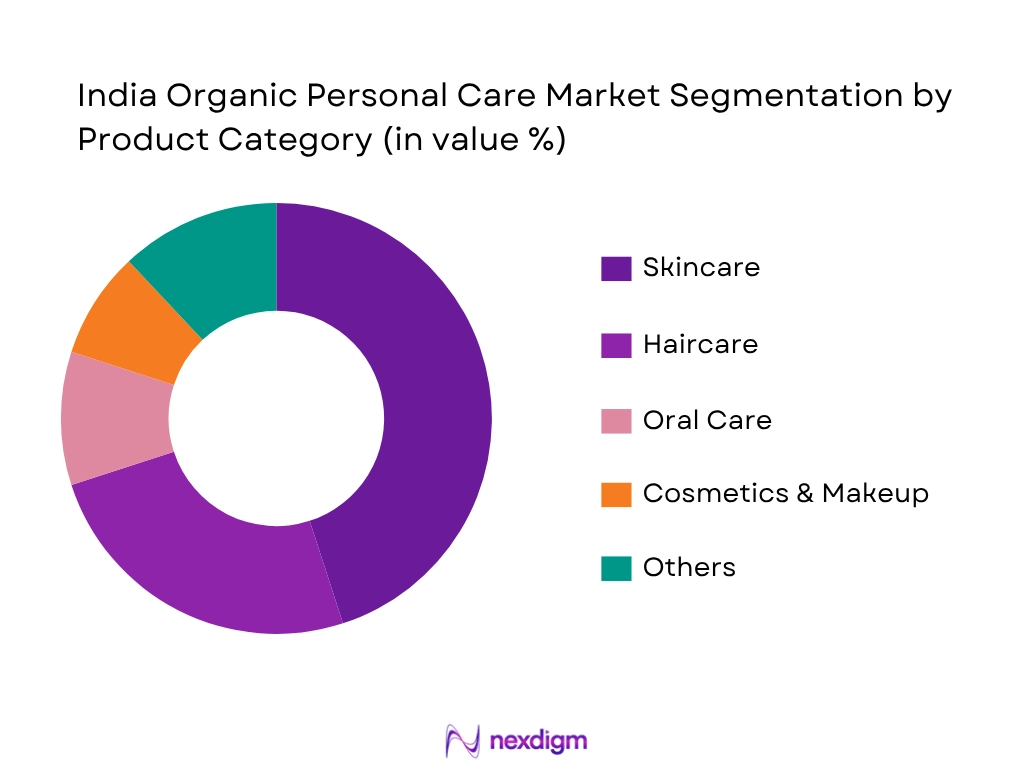
India’s organic personal care market is segmented into several product categories, including skincare, haircare, oral care, cosmetics, body care, and baby care products. Among these, skincare products currently dominate the market share. The growing trend of chemical-free skincare products, combined with increasing awareness of natural ingredients, has made skincare the most sought-after category in India’s organic personal care market. With brands like Forest Essentials and Biotique leading the charge, consumers are increasingly gravitating toward moisturizers, cleansers, and serums enriched with organic ingredients like aloe vera, honey, and various botanical extracts.
By Distribution Channel
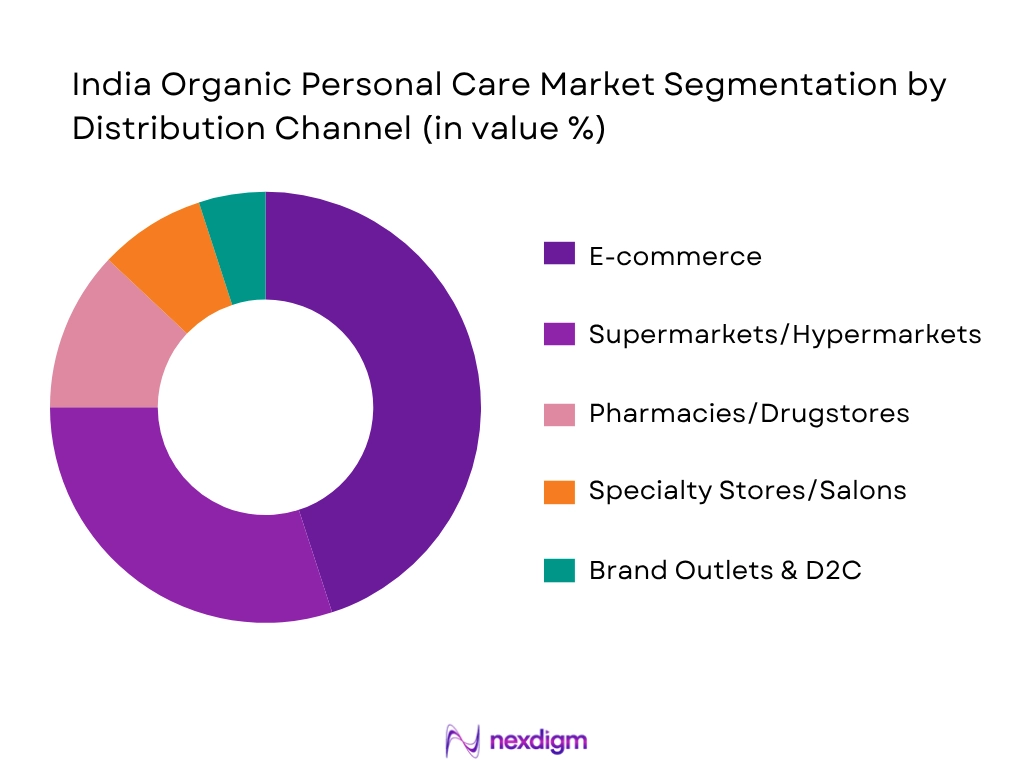
The market is also segmented by distribution channel, which includes online retail, supermarkets/hypermarkets, pharmacies, specialty stores, and direct-to-consumer outlets. Online retail continues to be the dominant distribution channel due to the convenience it offers and the rapid growth of e-commerce platforms like Nykaa, Amazon, and BigBasket. The online segment is expected to maintain its leadership in the coming years as more consumers turn to e-commerce for both purchasing and researching organic products. Moreover, the digital-first approach adopted by many brands has significantly contributed to the growth of the online retail segment.
Competitive Landscape
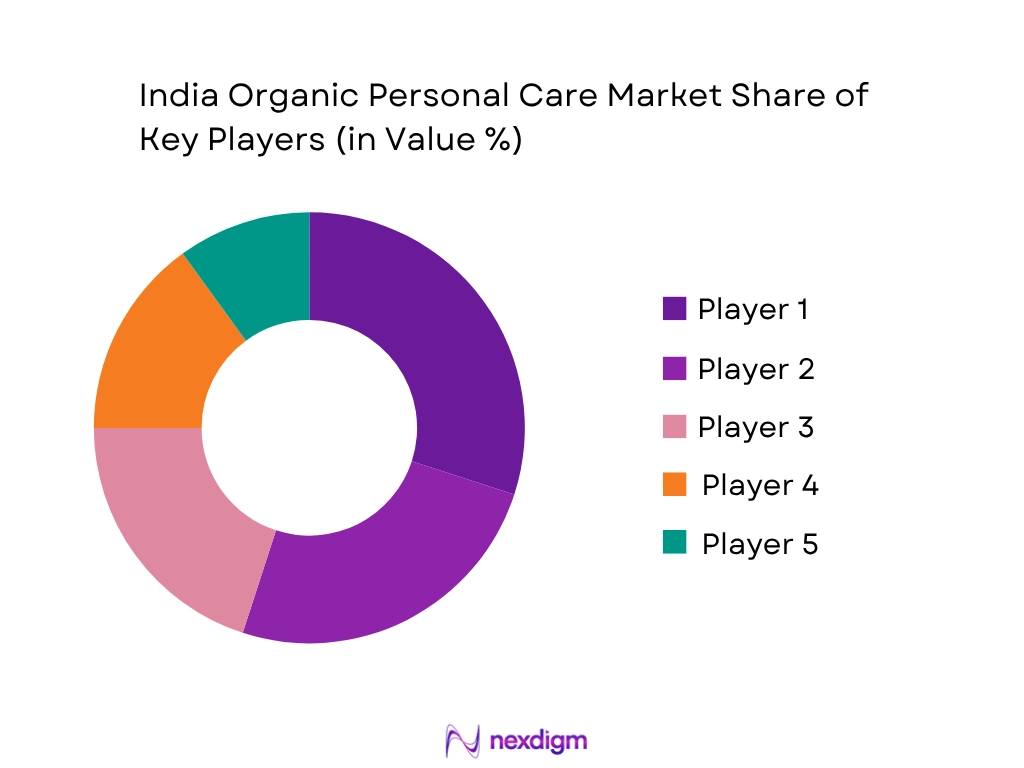
The India Organic Personal Care Market is becoming increasingly competitive, with several established players driving growth. Leading brands such as Forest Essentials, Kama Ayurveda, Biotique, and Lotus Herbals have established strong brand equity in the market. These companies benefit from their long-standing presence, consumer trust, and a deep connection with Ayurvedic and organic wellness traditions, positioning them as the market leaders. As more consumers seek natural, eco-friendly, and ethically sourced products, competition intensifies, with new players continuously entering the market to cater to this growing demand.
| Company Name | Establishment Year | Headquarters | Product Portfolio | Distribution Channels | Certifications | Sustainability Initiatives | Financials |
| Forest Essentials | 2000 | New Delhi | ~ | ~ | ~ | ~ | ~ |
| Kama Ayurveda | 2002 | New Delhi | ~ | ~ | ~ | ~ | ~ |
| Biotique | 1992 | New Delhi | ~ | ~ | ~ | ~ | ~ |
| Lotus Herbals | 1993 | Noida | ~ | ~ | ~ | ~ | ~ |
| Khadi Naturals | 1963 | New Delhi | ~ | ~ | ~ | ~ | ~ |
India Organic Personal Care Market Analysis
Growth Drivers
Rising health consciousness
India’s urban and peri‑urban populations are increasingly prioritizing health and wellness, influencing consumer product choices such as organic personal care items formulated without synthetic additives. Macroeconomic indicators reflect this shift: India’s GDP per capita reached USD 2,694.7 in 2024, indicating rising household affluence and discretionary spending capacity, according to World Bank data. Urbanization continues to expand, with over 35% of the population living in urban areas, creating concentrated demand hubs for health‑oriented consumer goods. Additionally, rising non‑communicable diseases like diabetes and obesity have heightened consumer focus on preventive wellness choices, leading individuals to favor natural, plant‑based personal care solutions over conventional alternatives. These socio‑economic dynamics are strong drivers of demand for organic personal care products in India.
Expanding middle‑class incomes and urbanization
India’s evolving socio‑economic landscape is characterized by a growing middle segment with greater purchasing power and shifting consumption preferences. As per World Bank figures, India’s GDP in 2024 was approximately USD 3.91 trillion, underscoring broad economic growth that supports rising household expenditure on quality lifestyle products. At the same time, the urban population share of total population increased above 35%, concentrating consumer demand in major cities where organic and premium personal care brands are more visible and accessible. Urban households are also increasingly allocating a higher portion of consumer expenditure to non‑food goods, including personal care and wellness products, as shown by official consumption surveys highlighting rising spending on non‑food items. This combination of rising incomes and accelerated urbanization underpins sustained growth in the organic personal care market in India.
Market Challenges
Certification complexity and compliance costs
Organic certification in India involves navigating multiple regulatory standards and accreditation processes, which can be burdensome and costly for brands. India’s certification infrastructure includes marks governed by agencies like the Agricultural and Processed Food Products Export Development Authority (APEDA) under the National Program for Organic Production (NPOP) and other voluntary standards. Although these frameworks exist, product certification for organic personal care often requires extensive documentation, testing, and compliance checks, which increase operational costs for producers. The complexity of certification requirements can discourage smaller manufacturers from entering the market or scaling product lines, restricting overall supply growth. This challenge is compounded by limited harmonization between global and domestic organic standards, requiring additional compliance efforts for brands targeting both domestic and export markets.
Supply chain volatility for botanicals
The organic personal care segment’s reliance on plant‑based and botanical ingredients exposes it to agricultural supply chain risks in India. Natural ingredient availability depends on seasonal agricultural yields, weather variability, and farm labour dynamics. With India’s rural labour market transitioning and agricultural workforce availability fluctuating, consistent supply of quality botanicals such as aloe vera, neem, turmeric, and other herbs — essential inputs for organic personal care formulations can be unstable. These farm and supply dynamics increase input cost volatility and risk of seasonal shortages, complicating production scheduling and inventory management for personal care brands. Moreover, disruptions in transportation logistics or crop yields due to environmental factors can further strain supply chain continuity for organic ingredient sourcing.
Market Opportunities
Regional Brand expansion into Tier 2/3 districts
India’s consumption landscape shows significant shifts into smaller cities and towns, driven by broader household spending patterns where non‑food consumption is rising in both urban and rural areas. Official household expenditure data indicates that non‑food expenditure in rural areas now accounts for over 50% of total consumption, highlighting broader discretionary spending outside essentials. This trend suggests that demand for lifestyle and wellness product categories like organic personal care is emerging beyond major metros. As awareness of chemical‑free formulations and wellness products increases, brands have an opportunity to establish footprints in Tier 2 and Tier 3 districts, where organic offerings have historically been underrepresented. Focused regional marketing, localized distribution partnerships, and education on the benefits of organic personal care can unlock new demand segments, broadening market penetration and consumer base.
Ingredient innovation
Innovation in natural and plant‑derived ingredients presents a key opportunity for differentiation and premiumization within the India organic personal care market. The industry is positioned to leverage India’s rich biodiversity and traditional knowledge of botanical therapeutics to formulate differentiated products that resonate with health‑conscious consumers. For example, using high‑value extracts like turmeric, neem, aloe vera, and sandalwood ingredients with deep cultural and wellness associations can cater to consumer preferences for efficacious, safe, and natural formulations. Moreover, ingredient innovation including sustainable extraction methods and formulation enhancements allows brands to develop products with enhanced performance attributes such as antioxidant, anti‑inflammatory, and moisturizing effects. This ability to innovate at the ingredient level not only reinforces product quality narratives but also supports premium pricing strategies in an increasingly competitive marketplace, enhancing brand differentiation and consumer appeal.
Future Outlook
Over the next decade, the India Organic Personal Care Market is expected to continue its upward trajectory, driven by increasing consumer awareness around health and sustainability. As urbanization continues and disposable income rises, the demand for premium organic products will likely expand. The popularity of Ayurvedic and organic products is set to rise due to their perceived health benefits and the growing global trend toward clean beauty. Additionally, with continuous innovations in packaging, the market will see greater shifts toward eco-friendly and biodegradable solutions.
Major Players
- Forest Essentials
- Kama Ayurveda
- Biotique
- Lotus Herbals
- Khadi Naturals
- Arata
- The Moms Co.
- Just Herbs
- Juicy Chemistry
- Vaadi Herbals
- Patanjali Ayurveda
- Dabur India Ltd.
- Shahnaz Ayurveda
- Shree Baidyanath Ayurved Bhawan
- Himalaya Drug Company
Key Target Audience
- Investments and Venture Capitalist Firms
- Government and Regulatory Bodies (Ministry of AYUSH, Ministry of Health and Family Welfare)
- Retailers (Supermarkets, E-commerce platforms)
- E-commerce Platforms (Nykaa, Amazon, Flipkart)
- Organic Certification Bodies (ECOCERT, NPOP, COSMOS)
- Private Label Brands
- Manufacturers (Organic Ingredient Suppliers)
- Ayurvedic Practitioners and Wellness Professionals
Research Methodology
Step 1: Identification of Key Variables
The first phase involves creating an ecosystem map of the India Organic Personal Care Market, focusing on all the critical stakeholders. Desk research is used to gather comprehensive industry-level information, and the objective is to define key factors like product segmentation, distribution channels, and consumer demographics that influence market dynamics.
Step 2: Market Analysis and Construction
This phase consolidates historical data and insights about organic personal care trends, focusing on retail performance, channel penetration, and consumption patterns. The analysis identifies key metrics like the share of organic skincare, haircare, and body care products.
Step 3: Hypothesis Validation and Expert Consultation
Market hypotheses are validated through consultations with industry experts and key players in the market. These consultations provide deep insights into consumer preferences, retail strategies, and challenges faced by market leaders.
Step 4: Research Synthesis and Final Output
Final insights are synthesized from multiple sources, including direct engagement with major manufacturers and retailers, ensuring that the report provides a well-rounded, accurate, and validated view of the India Organic Personal Care Market.

- Executive Summary
- Research Methodology (Market Definitions and Boundary Conditions, Secondary Research Architecture, Research Framework, Top-to-Bottom Market Sizing Approach, Bottom-to-Top Market Sizing Approach, Forecasting Framework, Data Triangulation and Reconciliation, Assumptions, Limitations, and Validation Notes)

- Definition and Scope of Organic Personal Care
- Industry Genesis and Evolution
- Certification and Labeling Architecture
- Timeline of Key Milestones and Regulatory Boundary Between Organic Claims and Cosmetic Compliance
- Business Cycle and Market Structure
- Supply Chain and Value Chain Analysis

- Growth Drivers (Rising health consciousness, chemical-awareness among consumers, Expanding middle-class incomes and urbanization, Growth of e-commerce and digital marketing channels)
- Market Challenges (Certification complexity and compliance costs, Supply chain volatility for botanicals, Price sensitivity in price‑competitive mass market, Limited rural penetration)
- Market Opportunities(Regional Brand expansion into Tier 2/3 districts, Ingredient innovation (adaptogens, adaptogenic herbs), Private label and co‑brand programs with retailers)
- Key Trends (Rise of “green beauty” and sustainable/eco-friendly packaging, D2C subscription growth models, Clean beauty and traceability metrics, Retailer loyalty & omnichannel integration)
- Regulatory Environment (NPOP “India Organic” certification, Labeling and compliance (FSSAI plus Export norms), Regulatory implications on imports and exports)
- SWOT Analysis (Market-level) (Strong traditional herbal knowledge; growing “clean beauty” demand, High price sensitivity; consumer awareness gaps, Untapped demographic segments (youth, men’s grooming), Entry of large FMCG players; supply chain constraints)
- Stakeholder Ecosystem (Industry value chain) (Organic raw material suppliers, Regulatory & Certification bodies (APEDA/NPOP, ECOCERT),Distributors & Retailers (modern trade, e-tailers), End Consumers)
Porter’s Five Forces (Industry Competitiveness)

- By Value (2020-2025)
- By Volume (2020-2025)
- By Average Selling Price (2020-2025)

- By Product Category (In Value %)
Skincare
Haircare
Oral Care
Cosmetics and Color Makeup
Body Care
Baby and Kids Care
Specialty segments (Fragrances, etc.) - By End User (In Value %)
Women’s Personal Care
Men’s Grooming
Children/Kids Care
Unisex
Elderly - By Distribution Channel (In Value %)
Online Retail
Supermarkets/Hypermarkets (Modern trade)
Pharmacies/Drugstores (Specialty retail)
Specialty Stores & Spas (Beauty chains, Salons)
Brand Outlets & Direct-to-Consumer
General Trade
Departmental Stores - By Region (In Value %)
North India (Delhi NCR, Punjab, etc.)
West India (Maharashtra, Gujarat, etc.)
South India (Karnataka, Tamil Nadu, etc.)
East India (West Bengal, Odisha, Bihar, etc.)
Central/North-East India (MP, Assam, etc.) - By Packaging Type (In Value %)
Bottles
Tubes
Jars & Pots
Sachets & Pouches
Aerosol cans
Roll-ons

- Market Share of Major Players (by Value/Volume, by Leading Companies (Forest Essentials, Biotique, Kama Ayurveda, etc.), Product Segment)
- Cross Comparison Parameters (Company overview; Product Portfolio; Certifications; Distribution Network; Online Presence; Retail Footprint; Financials & Margins; Sustainability Initiatives)
- Pack Architecture Analysis (Promo depth, assortment ladder, size normalization)
Category-Claim Benchmarking (baby-safe, sensitive-skin, lip care, soap, scalp care, deodorant, oral care, sun care) - SWOT Analysis of Major Players (Company-level)
- Pricing Analysis (SKU-level price benchmarking)
- Detailed Profiles of Major Companies
Forest Essentials
Kama Ayurveda
Biotique (Bio Veda Action Research)
Lotus Herbals
Khadi Naturals
Arata
The Moms Co.
Just Herbs
Juicy Chemistry
Vaadi Herbals
Patanjali Ayurveda
Dabur India Ltd.
Shahnaz Ayurveda
Shree Baidyanath Ayurved Bhawan
Himalaya Drug Company

- Demographic Profile (Urban vs Rural, Gender & Age Segments)
- Consumer Purchasing Patterns (Shopping frequency, channel preference)
- Shopper Journey and Decision Funnel (awareness source, trial trigger, review influence, conversion friction, repurchase trigger)
- Motivations & Pain Points (Preference for “chemical-free”; sensitivity to harmful ingredients)
- Brand Perception & Loyalty Factors (Influencer impact, trust in certifications)
- Price Sensitivity & Budget Allocation (Willingness to pay premium for organic)
- Retailer and Practitioner Influence (buyer gatekeeping, shelf standards, dermatologist/esthetician/pediatric endorsement)

- By Value (2026-2035)
- By Volume (2026-2035)
- By Average Selling Price (2026-2035)
- By Category Growth Contribution (2026-2035)
- By Channel Growth Contribution (2026-2035)


 Request a Sample
 Ask for Customization
 Get a Quote
 Enquire Now