
 Download PDF
 Download PDF
Market Overview
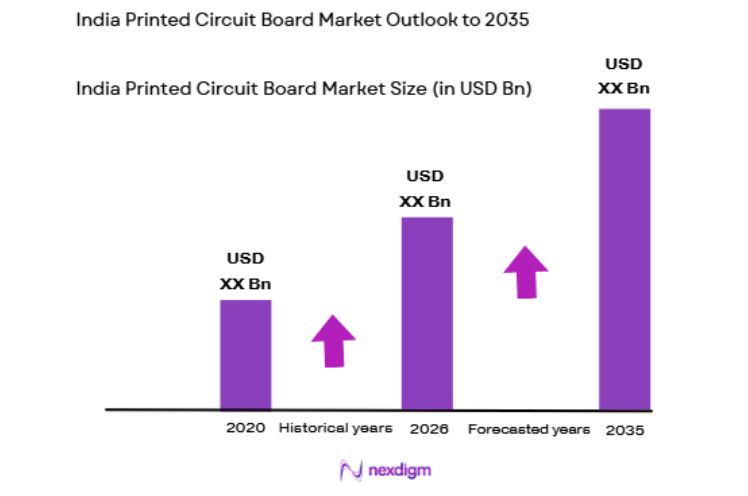
The India Printed Circuit Board (PCB) market is valued at approximately USD ~ billion, with growth driven by advancements in electronics and increasing demand for consumer electronics. This market is influenced by factors such as the rise in mobile devices, automotive electronics, and the expansion of IoT. The market’s expansion is bolstered by technological advancements, increased investments, and a thriving electronics manufacturing sector.
India’s PCB market is mainly concentrated in cities such as Bangalore, Chennai, and Delhi, where a robust electronics manufacturing ecosystem thrives. These cities dominate due to the presence of major electronics and automotive manufacturers, strong supply chain infrastructure, and favorable government policies that support electronic production. Factors such as skilled labor availability, competitive cost structure, and proximity to key international markets further fuel the growth of these cities in the PCB industry.
Market Segmentation
By Product Type
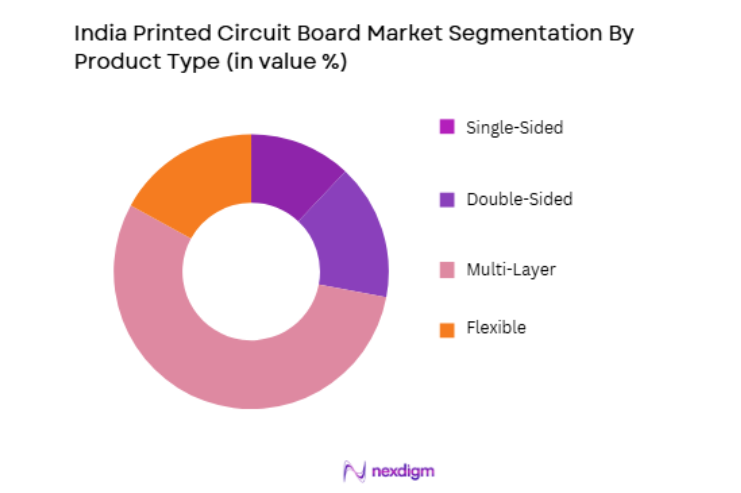
The India Printed Circuit Board market is segmented by product type into single-sided, double-sided, multi-layer, and flexible PCBs. The multi-layer PCB segment has a dominant market share due to its widespread use in advanced electronic applications such as smartphones, computers, and medical devices. With technological advancements and increased demand for high-performance electronics, multi-layer PCBs are preferred for their reliability and higher circuit density. As electronic devices continue to become more complex, multi-layer PCBs are seen as the solution for compact and efficient electronic systems, thus driving their dominance in the market.
By End-Use Industry
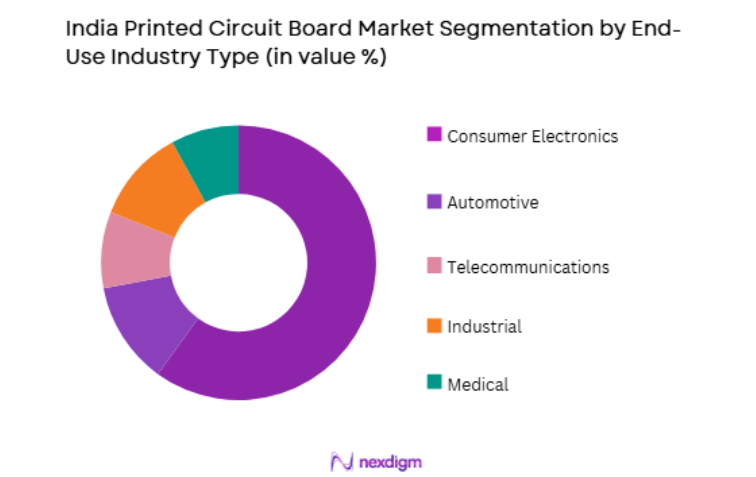
The market is segmented by end-use industry into consumer electronics, automotive, telecommunications, industrial, and medical. Consumer electronics dominate the market share, primarily due to the continuous demand for smartphones, laptops, and other personal electronic devices. The rapid adoption of smart technologies, increasing disposable incomes, and a large consumer base in India contribute significantly to the dominance of this sector. Moreover, as India becomes a hub for global electronics manufacturing, the consumer electronics sector will continue to drive the growth of the PCB market.
Competitive Landscape
The competitive landscape of India’s PCB market is characterized by a mix of local and international players, with consolidation increasing due to strategic acquisitions and partnerships. Major players leverage technological innovation and economies of scale to cater to the growing demand from industries like consumer electronics, automotive, and telecommunications. As the market matures, there is a greater emphasis on product diversification, quality, and cost optimization, with leading companies adopting advanced manufacturing techniques to maintain their competitive edge.
| Company Name | Establishment Year | Headquarters | Technology Focus | Market Reach | Key Products | Revenue | Additional Parameter |
| Atotech India Ltd. | 1995 | India | ~ | ~ | ~ | ~ | ~ |
| Eltek Ltd. | 1975 | India | ~ | ~ | ~ | ~ | ~ |
| TTM Technologies | 1978 | USA | ~ | ~ | ~ | ~ | ~ |
| PCB Technologies Pvt. | 2002 | India | ~ | ~ | ~ | ~ | ~ |
| Shenzen Kexin | 2003 | China | ~ | ~ | ~ | ~ | ~ |
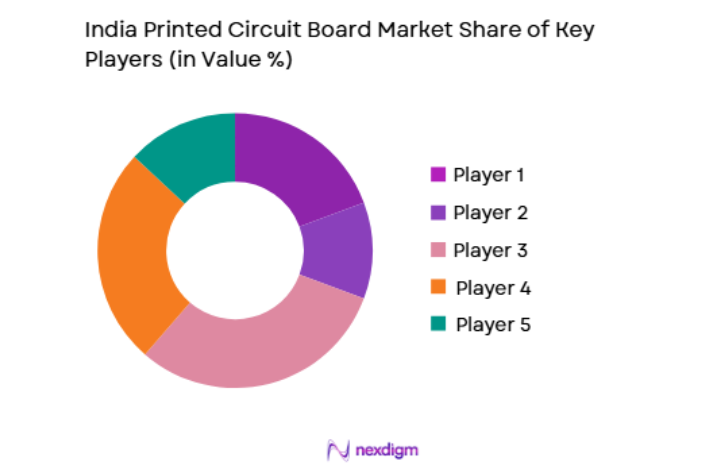
India Printed Circuit Board Market Analysis
Growth Drivers
Rising Demand for Consumer Electronics
The growth in India’s consumer electronics sector is a key driver for the PCB market, with increasing sales of smartphones, laptops, and wearables. The shift toward smart and connected devices has amplified the need for more advanced PCBs. This rise is also fueled by India’s growing middle class and higher disposable income, driving demand for technology adoption. Government initiatives such as “Make in India” further bolster domestic manufacturing of consumer electronics, contributing to the expansion of the PCB market. As the adoption of 5G, IoT, and AI-based technologies increases, the need for high-performance PCBs is expected to grow, positioning consumer electronics as a long-term growth driver in the PCB industry.
Automotive Electronics
The automotive sector’s increasing demand for electronic components is a significant growth driver for the PCB market. The trend toward electric vehicles (EVs), autonomous driving technologies, and the integration of advanced infotainment systems requires high-quality PCBs. India’s automotive market is expanding with rising demand for EVs and smart automotive systems. This shift towards more electronic-dependent vehicles drives the PCB market as automakers rely on durable, reliable, and high-density PCBs for their electronic systems. With continued investment in electric mobility and smart vehicle technologies, the automotive sector will contribute significantly to the growth of India’s PCB market.
Market Challenges
Raw Material Price Fluctuations
The volatility of raw material prices, particularly copper, gold, and silver, is a significant challenge faced by PCB manufacturers. These materials are essential for the manufacturing of printed circuit boards, and their price fluctuations can negatively impact the overall cost structure of PCB production. The instability in raw material costs increases operational expenses, leading to higher production costs for PCBs. As global supply chains experience disruptions, companies are forced to absorb additional costs, which can negatively affect profitability and market competitiveness. Manufacturers must look for alternative materials or more efficient production methods to mitigate these challenges.
Technology Integration in Manufacturing
The rapid pace of technological advancements, such as the demand for miniaturization and increased circuit density, poses challenges for PCB manufacturers. Integrating these technologies into production processes requires significant capital investment in research and development, as well as in upgrading machinery and infrastructure. Companies need to continuously innovate to meet the complex requirements of industries like automotive, telecommunications, and consumer electronics. Small and medium enterprises (SMEs) may find it particularly challenging to keep up with the fast-changing technological landscape, which could lead to delays in meeting market demand and loss of competitiveness.
Opportunities
Growth in Electric Vehicle Market
The increasing adoption of electric vehicles (EVs) presents a substantial opportunity for the PCB market in India. As automakers and technology companies shift their focus toward EV production, the demand for electronic components, particularly PCBs, will rise significantly. EVs require advanced PCBs for battery management systems, electric powertrains, and infotainment systems. India’s push toward electric mobility, backed by government policies and incentives, creates a lucrative opportunity for PCB manufacturers to supply critical components for the EV industry. This market growth is expected to drive significant expansion in the PCB sector, particularly in automotive-related applications.
Expansion of 5G Network Infrastructure
The rollout of 5G networks in India presents another key opportunity for PCB manufacturers. 5G technology demands high-performance PCBs capable of supporting faster data transmission and higher frequency signals. With telecom companies investing heavily in the deployment of 5G infrastructure across the country, the need for specialized PCBs in telecom equipment will surge. As 5G technology is integrated into a wide range of consumer electronics, such as smartphones and IoT devices, the PCB market will see continued growth. The expansion of 5G network infrastructure represents a significant opportunity for PCB manufacturers to cater to this emerging demand.
Future Outlook
The future of the India Printed Circuit Board market looks promising with anticipated growth driven by technological advancements, particularly in the consumer electronics, automotive, and telecommunications sectors. The increasing adoption of 5G technology and electric vehicles, along with supportive government initiatives, will further fuel demand. The shift toward miniaturization and higher circuit density will lead to more sophisticated manufacturing techniques, enabling PCBs to support next-generation electronic devices. With continued investment in infrastructure and R&D, the PCB market is poised for strong expansion.
Major Players
- Atotech India Ltd.
- Eltek Ltd.
- TTM Technologies
- PCB Technologies Pvt.
- Shenzen Kexin
- Interflex Co. Ltd.
- Nippon Mektron Ltd.
- Viasystems Group, Inc.
- Jabil Circuit
- Compeq Manufacturing Co. Ltd.
- Unimicron Technology Corporation
- Zhen Ding Technology Holding Limited
- Advanced Circuits
- Shenzhen Jinmin Electronics
- Taiwan Union Technology Co. Ltd.
Key Target Audience
- Investments and venture capitalist firms
- Government and regulatory bodies
- Automotive manufacturers
- Consumer electronics manufacturers
- Telecom service providers
- Electronics contract manufacturers
- Component suppliers
- EV manufacturers
Research Methodology
Step 1: Identification of Key Variables
Key market drivers, trends, and challenges are identified based on secondary research and industry reports.
Step 2: Market Analysis and Construction
Market segmentation and sizing are done through primary data collection, interviews with industry experts, and secondary research.
Step 3: Hypothesis Validation and Expert Consultation
The hypotheses about growth drivers and market challenges are validated through expert consultations and further industry research.
Step 4: Research Synthesis and Final Output
The final report is synthesized with a comprehensive analysis of data points, offering actionable insights for industry stakeholders.

- Executive Summary
- Research Methodology (Definitions, Scope, Industry Assumptions, Market Sizing Approach, Primary & Secondary Research Framework, Data Collection & Verification Protocol, Analytic Models & Forecast Methodology, Limitations & Research Validity Checks)

- Market Definition and Scope
- Value Chain & Stakeholder Ecosystem
- Regulatory / Certification Landscape
- Sector Dynamics Affecting Demand

- Growth Drivers
Increasing demand for consumer electronics
Growth in automotive and electric vehicle applications
Technological advancements in PCB manufacturing processes - Market Challenges
Supply chain disruptions in PCB materials
High manufacturing costs of advanced PCBs
Environmental and sustainability regulations - Market Opportunities
Expansion in 5G and IoT technologies
Rising demand for electric vehicles
Adoption of PCBs in renewable energy sectors - Trends
Miniaturization of PCBs for compact electronics
Advancements in flexible and wearable electronics
Increased use of AI and automation in PCB design and manufacturing - Government regulations
Regulations on electronic waste disposal
Environmental compliance standards for PCB materials
Electromagnetic compatibility (EMC) regulations for PCBs - SWOT analysis
- Porters 5 forces

- By Market Value, 2020-2025
- By Installed Units, 2020-2025
- By Average System Price, 2020-2025
- By System Complexity Tier, 2020-2025

- By System Type (In Value%)
Rigid PCBs
Flexible PCBs
Rigid-Flexible PCBs
High-Frequency PCBs
Multilayer PCBs - By Platform Type (In Value%)
Consumer Electronics
Automotive
Industrial
Telecommunications
Medical Devices - By Fitment Type (In Value%)
Surface Mount Technology (SMT)
Through-Hole Technology (THT)
Hybrid Technology
Embedded Components
Flex-Rigid Integration - By EndUser Segment (In Value%)
Automotive Industry
Consumer Electronics Manufacturers
Telecommunications Companies
Medical Device Manufacturers
Industrial Equipment Manufacturers - By Procurement Channel (In Value%)
Direct Procurement
Third-party Suppliers
Online Marketplaces

- Market Share Analysis
- Cross Comparison Parameters (System Type, Platform Type, Procurement Channel, End User Segment, Fitment Type, Production Scale, Material Type, Technology Complexity, Environmental Impact, Supply Chain Reliability, Geographic Reach, Customization Capability, Lead Time, Cost Structure, Compliance Standards)
- SWOT Analysis of Key Competitors
- Pricing & Procurement Analysis
- Key Players
Advanced Circuits
Unimicron Technology
TTM Technologies
Nippon Mektron
Zhen Ding Technology
AT&S
Shenzhen Kinwong Electronics
CMK Corporation
Multek
Shenzhen Fastprint
Suntak Technology
Viasystems Group
Eltek Ltd
PCBWay
Young Poong Electronics

- High demand from the automotive and electric vehicle sectors
- Increased adoption of PCBs in medical devices
- Consumer electronics driving innovation in PCB design
- Telecommunications growth driving the need for high-frequency PCBs

- Forecast Market Value, 2026-2035
- Forecast Installed Units, 2026-2035
- Price Forecast by System Tier, 2026-2035
- Future Demand by Platform, 2026-2035


 Request a Sample
 Ask for Customization
 Get a Quote
 Enquire Now