

 Download PDF
 Download PDF
Market Overview
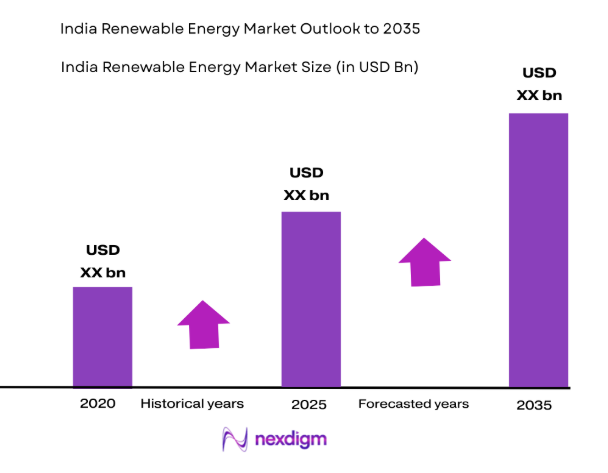
The India renewable energy market is valued at USD ~ billion based on a recent historical assessment, driven by a strong push from the government to diversify energy sources and reduce dependency on fossil fuels. The renewable energy sector in India is expanding rapidly due to favorable policies, including the National Action Plan on Climate Change and renewable energy targets. The government’s increasing investment in solar, wind, and other green energy technologies further drives market growth, creating opportunities for both local and international players.
India has emerged as one of the dominant countries in the renewable energy sector due to its large-scale implementation of solar and wind energy projects. The government’s support for renewable energy infrastructure, alongside major developments in cities like Delhi, Mumbai, and Bengaluru, has paved the way for India’s energy transition. The country’s focus on reducing emissions and increasing energy security has led to significant investments in green energy, making India a major player in the global renewable energy market.
Market Segmentation
By Product Type
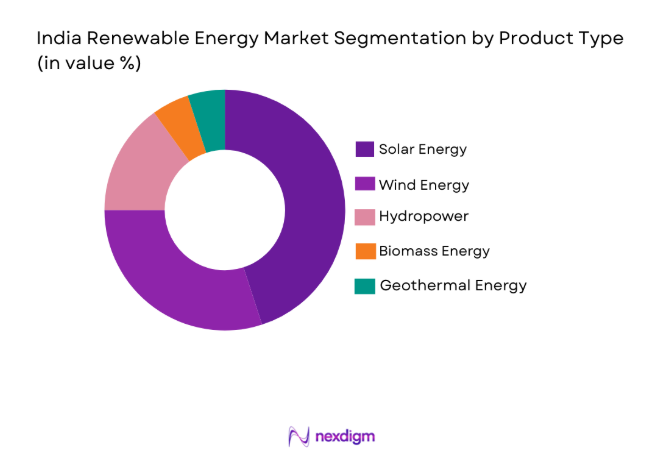
India renewable energy market is segmented by product type into solar, wind, hydropower, biomass, and geothermal energy. Recently, solar energy has a dominant market share due to factors such as rapid cost reductions in solar panel installations, favorable government policies, and technological advancements in solar photovoltaic systems. Solar power’s growing affordability and high efficiency compared to other forms of renewable energy have solidified its position as the leading energy source for the country’s renewable energy generation.
By Platform Type
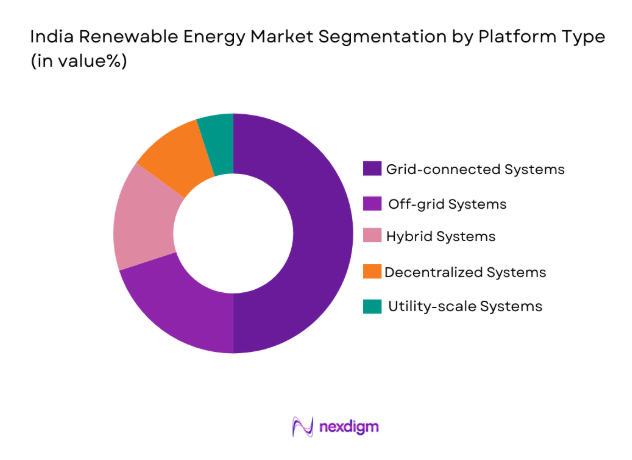
India’s renewable energy market is segmented by platform type into grid-connected systems, off-grid systems, hybrid systems, decentralized systems, and utility-scale systems. The grid-connected system dominates due to its ability to integrate renewable energy into the national grid, supported by favorable government policies and incentives. This platform’s widespread adoption is crucial for India’s renewable energy goals, ensuring large-scale energy generation and distribution.
Competitive Landscape
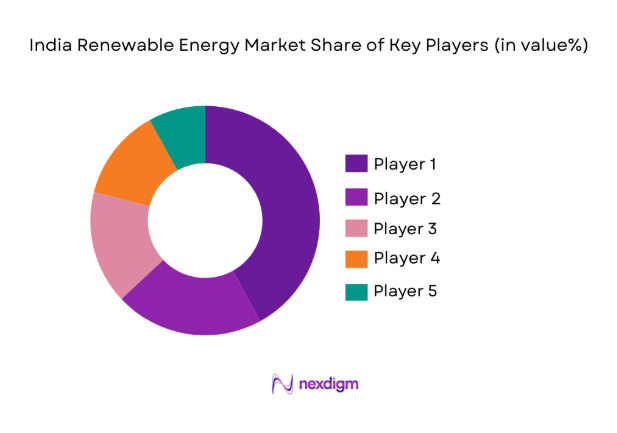
The competitive landscape of the India renewable energy market is highly dynamic, with significant involvement from both domestic and international players. The market is witnessing a trend toward consolidation, as larger players merge or acquire smaller firms to strengthen their position in the growing market. The influence of major players such as NTPC, ReNew Power, and Adani Green Energy is evident in their strategic investments in renewable projects across India. These companies are shaping the market through technological advancements, substantial capital investments, and their extensive portfolios of operational and upcoming projects.
| Company Name | Establishment Year | Headquarters | Technology Focus | Market Reach | Key Products | Revenue (USD) | Key Investment Area |
| NTPC Limited | 1975 | New Delhi, India | ~ | ~ | ~ | ~ | ~ |
| ReNew Power | 2011 | Gurgaon, India | ~ | ~ | ~ | ~ | ~ |
| Adani Green Energy | 2015 | Ahmedabad, India | ~ | ~ | ~ | ~ | ~ |
| Suzlon Energy | 1995 | Pune, India | ~ | ~ | ~ | ~ | ~ |
| Vestas India | 1991 | Chennai, India | ~ | ~ | ~ | ~ | ~ |
India Renewable Energy Market Analysis
Growth Drivers
Government Support for Renewable Energy
Government support for renewable energy is a key driver of market growth in India, with policies such as the National Solar Mission and various state-level incentives creating a favorable environment for renewable energy projects. The Indian government has set ambitious renewable energy capacity targets, particularly in solar and wind, as part of its commitment to reducing the carbon footprint and achieving sustainable energy goals. The government is offering subsidies, tax breaks, and a comprehensive policy framework that encourages both domestic and international players to invest in renewable energy infrastructure. Additionally, government-funded schemes and financing options are providing vital support to renewable energy developers, particularly those focusing on solar, wind, and biomass energy. The Indian government’s ongoing commitment to reducing emissions through clean energy sources is instrumental in boosting market confidence and attracting significant investments from both private and public sectors. Furthermore, the government’s focus on energy security, reducing dependence on fossil fuels, and improving energy access in rural areas are driving rapid market expansion. With a robust policy framework in place, the Indian renewable energy market is well-positioned for sustained growth in the coming years.
Technological Advancements in Renewable Energy
Technological advancements in renewable energy systems, including solar panels, wind turbines, and energy storage, are pivotal in propelling the growth of the market. Innovations in manufacturing processes, coupled with decreasing production costs, have made renewable energy systems more affordable and efficient. These advancements have significantly reduced the price of solar and wind energy, bringing it closer to parity with traditional energy sources. Additionally, improvements in the design of solar panels and wind turbines have increased their energy conversion efficiency, which has led to better economic viability for large-scale projects. Energy storage technologies, such as lithium-ion batteries and advanced grid storage systems, have also seen considerable innovation, improving the reliability and performance of renewable energy systems. The integration of technologies such as artificial intelligence (AI), Internet of Things (IoT), and machine learning in energy systems is enhancing monitoring, grid management, and performance optimization. These innovations are enabling renewable energy companies to offer smarter, more reliable, and efficient systems that can better meet the demands of both urban and rural consumers. Furthermore, as research and development continue to drive technological breakthroughs, India is expected to witness even greater reductions in costs and improvements in system performance, thereby accelerating the adoption of renewable energy across the country.
Market Challenges
High Initial Capital Investment
One of the key challenges hindering the growth of the renewable energy market in India is the high initial capital investment required for large-scale renewable energy projects. While renewable energy systems offer long-term cost savings, the upfront financial burden associated with infrastructure development, installation, and grid integration remains significant. This financial barrier is particularly challenging for smaller players and local investors, who may struggle to secure the necessary funding. Additionally, the high capital costs can delay the development and commissioning of renewable energy projects, slowing the overall growth of the sector. The cost of advanced technologies such as solar panels, wind turbines, and energy storage systems remains high despite falling prices, and many investors are wary of the lengthy payback periods associated with these capital-intensive projects. While some financing options are available, such as loans and tax incentives, access to affordable financing remains a critical hurdle for new entrants and smaller renewable energy firms. Reducing capital costs and making financing more accessible through government-backed initiatives, lower interest rates, and public-private partnerships will be essential to overcoming this challenge. By addressing these financial barriers, India can unlock the full potential of its renewable energy resources and expedite the transition to a sustainable energy future.
Grid Integration and Storage Issues
Grid integration and energy storage are significant challenges facing the renewable energy sector in India. Renewable energy sources like solar and wind are intermittent by nature, meaning that their generation is dependent on external conditions such as sunlight and wind speeds, which can vary throughout the day and across seasons. This intermittency makes it difficult to maintain a consistent energy supply without proper grid integration solutions. India’s existing power grid infrastructure, which was originally designed to accommodate centralized, fossil fuel-based power generation, struggles to handle the variability and decentralization of renewable energy production. This mismatch leads to inefficiencies and challenges in maintaining grid stability, particularly when renewable energy sources constitute a larger share of the total generation capacity. Furthermore, without sufficient energy storage systems, excess renewable energy produced during peak generation times cannot be stored for use during periods of low production, exacerbating the issue of intermittency. The lack of advanced grid management technologies also complicates the balancing of supply and demand. To address this challenge, significant investments in smart grid technologies, energy storage systems, and grid modernization are needed. Developing energy storage solutions such as batteries and pumped hydro storage will be crucial to enabling the reliable integration of renewable energy into the grid. As storage technology improves and becomes more cost-effective, it will help mitigate the intermittency issues and enhance grid stability, ensuring that renewable energy can be consistently delivered to consumers.
Opportunities
Rural Electrification through Renewable Energy
Rural electrification represents a significant opportunity for the renewable energy market in India. Despite the country’s overall progress in electrification, many rural areas remain underserved by the national grid, facing challenges related to inadequate infrastructure and limited access to reliable electricity. Off-grid and decentralized renewable energy systems, particularly solar power solutions, provide a cost-effective and sustainable solution to these energy access issues. Off-grid solar technologies, including solar home systems, mini-grids, and community solar projects, are emerging as key solutions for electrifying rural India, where the central grid may be difficult or too costly to extend. Government programs such as the Pradhan Mantri Sahaj Bijli Har Ghar Yojana (Saubhagya Scheme) and private-sector initiatives are focused on promoting decentralized renewable energy installations, which are expected to increase demand for solar panels, batteries, and inverters. These off-grid solutions not only provide a reliable and environmentally friendly power source but also create job opportunities and support the socio-economic development of rural communities. As the cost of renewable energy technologies continues to decrease and the government prioritizes rural electrification, renewable energy will play an increasingly important role in meeting the energy needs of rural India. This represents a major opportunity for both domestic and international renewable energy companies to expand their operations and contribute to India’s energy access goals.
Private Sector Participation in Renewable Energy
The growing interest of private sector players in the renewable energy market offers new opportunities for both domestic and international firms. As India continues to focus on sustainability and reducing its carbon footprint, there has been a significant shift among private companies towards adopting renewable energy solutions. Corporations are increasingly investing in renewable energy projects to meet their sustainability goals, with many large corporations opting to install solar panels on their facilities or entering into power purchase agreements (PPAs) with renewable energy developers. Additionally, as renewable energy becomes more cost-competitive, private investors are looking to capitalize on the growth potential of the sector, contributing substantial funding to renewable projects. This surge in private sector participation is fostering technological innovation, reducing the cost of renewable energy solutions, and increasing market competition. Public-private partnerships (PPPs) are also expected to accelerate the development of large-scale renewable energy infrastructure, including solar farms, wind farms, and energy storage systems. As the private sector becomes more involved in renewable energy generation, India will benefit from the influx of capital, innovation, and expertise needed to meet its ambitious renewable energy targets. These developments present a significant opportunity for private investors, renewable energy developers, and technology providers to capitalize on the expanding market.
Future Outlook
The future of the India renewable energy market looks promising, with significant growth expected in the next five years. Technological advancements, increased government support, and the shift towards sustainable energy are key factors contributing to the anticipated market expansion. By 2026, the renewable energy sector is expected to witness substantial increases in capacity due to improved grid integration, energy storage solutions, and greater private sector participation. With ongoing policy support and investments, India is poised to become a global leader in renewable energy, further driving the transition towards a greener and more sustainable energy future.
Major Players
- NTPC Limited
- ReNew Power
- Adani Green Energy
- Suzlon Energy
- Vestas India
- Tata Power Solar
- Greenko Group
- Sembcorp Energy
- PowerGrid Corporation of India
- Siemens Gamesa Renewable Energy
- First Solar
- Brookfield Renewable Partners
- Gamesa India
- Azure Power
- Trina Solar
Key Target Audience
- Investments and venture capitalist firms
- Government and regulatory bodies
- Renewable energy developers
- Energy-focused private equity firms
- Large-scale corporate buyers of renewable energy
- Infrastructure and energy consultants
- Solar and wind energy equipment manufacturers
Research Methodology
Step 1: Identification of Key Variables
We identify the key variables affecting the renewable energy market, including government policies, technological trends, and market dynamics.
Step 2: Market Analysis and Construction
Data collection from primary and secondary sources is conducted to understand market trends, segmentations, and future prospects.
Step 3: Hypothesis Validation and Expert Consultation
We validate the market hypotheses through consultations with industry experts, ensuring the accuracy of collected data and insights.
Step 4: Research Synthesis and Final Output
After analyzing and validating the data, we synthesize it into comprehensive reports with actionable insights for stakeholders.

- Executive Summary
- Research Methodology (Definitions, Scope, Industry Assumptions, Market Sizing Approach, Primary & Secondary Research Framework, Data Collection & Verification Protocol, Analytic Models & Forecast Methodology, Limitations & Research Validity Checks)

- Market Definition and Scope
- Value Chain & Stakeholder Ecosystem
- Regulatory / Certification Landscape
- Sector Dynamics Affecting Demand
- Strategic Initiatives & Infrastructure Growth

- Growth Drivers
Government Support & Subsidies
Technological Advancements in Renewable Systems
Increasing Environmental Awareness - Market Challenges
High Initial Capital Investment
Grid Integration Issues
Regulatory Bottlenecks - Market Opportunities
Expansion in Rural Electrification
Private Sector Participation in Renewable Projects
Development of Smart Grid Technologies - Trends
Adoption of Solar & Wind Hybrid Solutions
Growth in Distributed Energy Resources - Government Regulations
Renewable Purchase Obligations (RPO)
Incentive Policies for Solar & Wind Energy
Emission Reduction Targets - SWOT Analysis
- Porter’s Five Forces

- By Market Value, 2020-2025
- By Installed Units, 2020-2025
- By Average System Price, 2020-2025
- By System Complexity Tier, 2020-2025

- By System Type (In Value%)
Solar Energy
Wind Energy
Hydropower
Biomass Energy
Geothermal Energy - By Platform Type (In Value%)
Grid-connected Systems
Off-grid Systems
Hybrid Systems
Decentralized Systems
Utility-scale Systems - By Fitment Type (In Value%)
Onshore Solutions
Offshore Solutions
Rooftop Solutions
Ground-mounted Solutions - By End User Segment (In Value%)
Government & Public Sector
Residential Sector
Industrial Sector

- Market Share Analysis
- Cross Comparison Parameters (System Type, Platform Type, End User Segment, Fitment Type, Market Value, Installed Units, Growth Drivers)
- SWOT Analysis of Key Competitors
- Pricing & Procurement Analysis
- Key Players
NTPC Limited
Adani Green Energy Limited
Tata Power Solar
ReNew Power
Suzlon Energy
Larsen & Toubro Limited
Sembcorp Energy
Greenko Group
PowerGrid Corporation of India
Vestas India
Siemens Gamesa Renewable Energy
Indian Energy Exchange
First Solar
Brookfield Renewable Partners
Gamesa India

- Government’s Increasing Demand for Renewable Energy
- Rural Electrification and Off-grid Solutions
- Corporate Shift Towards Sustainable Power Solutions
- Residential Sector’s Growing Adoption of Solar Energy

- Forecast Market Value, 2026-2035
- Forecast Installed Units, 2026-2035
- Price Forecast by System Tier, 2026-2035
- Future Demand by Platform, 2026-2035


 Request a Sample
 Ask for Customization
 Get a Quote
 Enquire Now