
 Download PDF
Market Overview
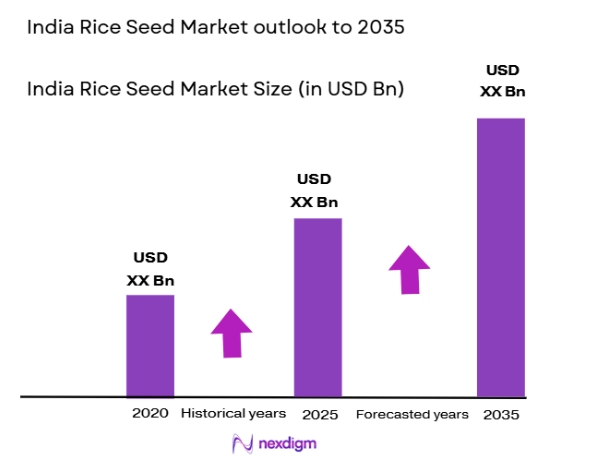
The India Rice Seed market is valued at approximately USD ~ billion based on recent assessments. The market is driven by the growing demand for high-yield rice varieties, increased adoption of hybrid seeds, and favorable government policies supporting agricultural development. The rice sector in India continues to expand due to technological advancements in seed production, with the market supported by both large-scale farmers and commercial seed producers. The increasing adoption of organic farming and advancements in biotech-driven rice seed production also contribute significantly to market growth.
The market is dominated by key agricultural regions such as Punjab, Uttar Pradesh, and West Bengal due to favorable climatic conditions, robust irrigation systems, and a long-standing tradition of rice cultivation. These regions are central to India’s rice production, with their infrastructure, research facilities, and availability of skilled labor contributing to their market dominance. Additionally, states like Andhra Pradesh and Bihar have also seen a rise in demand due to improved farming techniques and government incentives.
Market Segmentation
By Product Type:
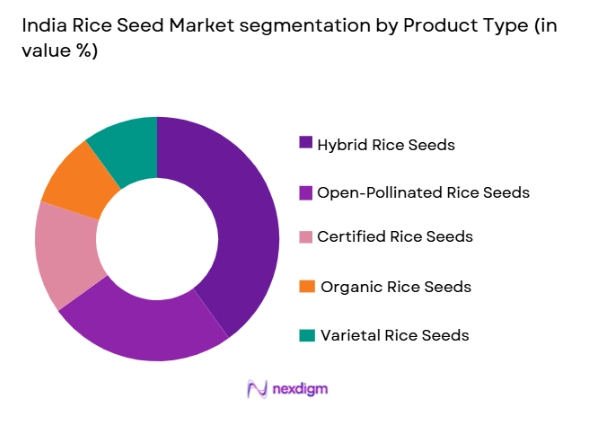
The India Rice Seed market is segmented by product type into hybrid rice seeds, open-pollinated rice seeds, certified rice seeds, organic rice seeds, and varietal rice seeds. Recently, hybrid rice seeds have a dominant market share due to their superior yield potential and better resistance to pests and diseases. The demand for hybrid seeds is driven by farmers seeking to increase productivity amidst shrinking arable land and water scarcity. Government initiatives and research support for hybrid rice seed development further bolster the growth of this segment.
By Region:
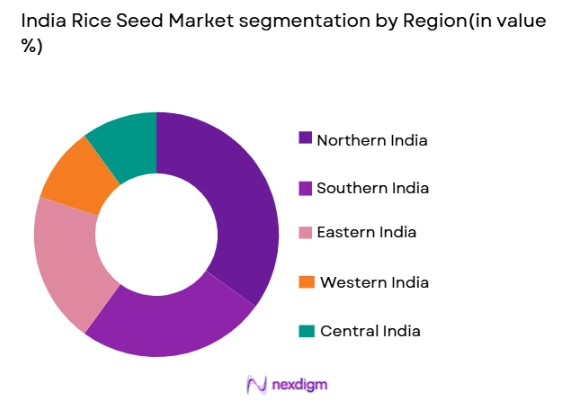
The India Rice Seed market is segmented by region into Northern India, Southern India, Eastern India, Western India, and Central India. Northern India, including Punjab and Uttar Pradesh, dominates the market share due to the region’s large-scale rice cultivation and established agricultural infrastructure. The northern states benefit from favorable climatic conditions, government support for agricultural initiatives, and advanced farming practices. These regions also host significant research institutions and seed production units, contributing to the dominance of Northern India in the market.
Competitive Landscape
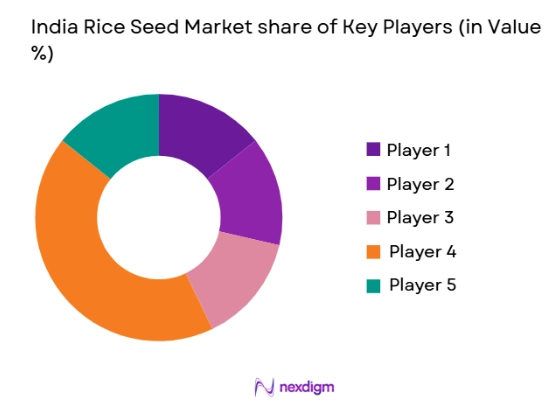
The competitive landscape in the India Rice Seed market is characterized by a mix of established seed companies and newer entrants focusing on advanced seed technologies. Key players are increasingly focusing on consolidation, mergers, and strategic collaborations with research institutions to enhance their product offerings and expand their market presence. The influence of major players is prominent, especially those that offer a wide range of rice seed varieties and focus on improving yields through technological innovations.
| Company Name | Establishment Year | Headquarters | Technology Focus | Market Reach | Key Products | Revenue (USD Billion) | Additional Parameter |
| Nuziveedu Seeds | 2000 | Hyderabad | ~ | ~ | ~ | ~ | ~ |
| Kaveri Seed Company | 1986 | Hyderabad | ~ | ~ | ~ | ~ | ~ |
| Mahyco | 1964 | Mumbai | ~ | ~ | ~ | ~ | ~ |
| Syngenta India | 2000 | Pune | ~ | ~ | ~ | ~ | ~ |
| Rasi Seeds | 1990 | Chennai | ~ | ~ | ~ | ~ | ~ |
India Rice Seed Market Analysis
Growth Drivers
Increasing Government Support for Rice Farming:
The Indian government has consistently supported the agriculture sector, especially rice farming, through subsidies, loan waivers, and the promotion of new technologies. This includes the promotion of hybrid rice seeds and organic farming practices to improve productivity and yield. Government-backed programs such as the National Food Security Mission (NFSM) have been instrumental in boosting rice seed adoption. These policies not only provide financial assistance but also foster innovation within the rice seed sector by encouraging research and development in seed technology. As a result, the demand for high-quality rice seeds has significantly increased, driving growth in the market.
Technological Advancements in Seed Production:
Advances in biotechnology, including genetic engineering and hybridization, have revolutionized rice seed production. The use of genetically modified (GM) seeds and advanced hybrid seeds has enabled rice farmers to increase yields, reduce pesticide use, and improve resistance to diseases and pests. These technologies ensure better crop productivity, addressing challenges like water scarcity and soil depletion, which further fuel the demand for modern rice seeds. These technological advancements have made it possible to grow rice in regions with varying climatic conditions, contributing significantly to the overall growth of the market.
Market Challenges
Supply Chain Disruptions:
The Indian rice seed market faces significant challenges due to disruptions in the supply chain, particularly in the procurement and distribution of quality seeds. The delay in seed production and transportation due to logistics issues or natural disasters can lead to a shortage of quality rice seeds during the planting season. Additionally, the fragmentation of the distribution system and lack of adequate infrastructure in rural areas further complicate the availability of seeds. These disruptions can cause delays in sowing, resulting in decreased yields and significant economic losses for farmers, hampering market growth.
Price Volatility in Seed Production:
Rice seed production in India faces volatility in seed prices, primarily driven by fluctuations in input costs, including labor, raw materials, and agricultural inputs. This price instability can lead to a mismatch between the cost of seed production and its selling price, thereby affecting the profit margins for seed producers. Small and medium-sized seed producers are especially vulnerable to price volatility, as they may lack the financial stability to absorb cost increases. Additionally, external factors such as changes in government policies or international market conditions may impact seed pricing, further complicating the situation.
Opportunities
Growth of Organic Rice Farming:
Organic farming is gaining traction in India due to the growing awareness of environmental sustainability and consumer preference for chemical-free produce. As more farmers adopt organic rice farming, the demand for organic rice seeds has surged. This presents a significant opportunity for seed producers to tap into the organic rice seed market, offering specialized seeds that cater to organic farming requirements. Government incentives and certifications for organic farming further support this trend, providing a favorable environment for seed producers to focus on organic rice seed development and distribution.
Expansion in Rural Markets:
The rural regions of India, where rice farming is prevalent, present a significant opportunity for growth in the rice seed market. With the increasing adoption of modern farming techniques and the introduction of government schemes promoting high-yield rice seeds, there is a growing demand for quality rice seeds in these areas. Expanding distribution networks and increasing awareness about new seed varieties in rural markets will open new avenues for growth. Additionally, local seed producers can explore partnerships with national and international companies to meet the rising demand for quality rice seeds in underserved regions.
Future Outlook
The India Rice Seed market is expected to continue its upward trajectory in the coming years, driven by ongoing advancements in seed technology, favorable government policies, and the increasing adoption of high-yield hybrid varieties. The demand for organic rice seeds is likely to rise as consumers become more health-conscious and environmentally aware. Additionally, continued investments in infrastructure and supply chain improvements are anticipated to address current market challenges, such as seed availability and distribution inefficiencies. The next five years will see significant technological developments in rice breeding and seed production, making India’s rice seed market a key contributor to global rice supply.
Major Players
- Nuziveedu Seeds
- Kaveri Seed Company
- Mahyco
- Syngenta India
- Rasi Seeds
- BASF India
- Monsanto
- Bayer CropScience
- Pioneer Seeds India
- Indo American Hybrid Seeds
- Kohinoor Seeds
- Shri Lal Mahal Group
- GrainPro India
- Limagrain India
- Krishidhan Seeds
Key Target Audience
- Investments and venture capitalist firms
- Government and regulatory bodies
- Large-scale rice farming operations
- Seed distributors and retailers
- Agribusiness companies
- Agricultural cooperatives
- Crop protection companies
- Rice exporters
Research Methodology
Step 1: Identification of Key Variables
The first step involves defining the key market variables that influence the rice seed industry, such as product type, region, and technological innovations.
Step 2: Market Analysis and Construction
In this phase, secondary research is conducted to analyze the current state of the rice seed market, including historical data and trends.
Step 3: Hypothesis Validation and Expert Consultation
Hypotheses formed from secondary data are validated through interviews with industry experts, farmers, and government officials.
Step 4: Research Synthesis and Final Output
The final report is synthesized from the data collected and analyzed, ensuring that all variables are addressed, and actionable insights are provided

- Executive Summary
- Research Methodology(Definitions, Scope, Industry Assumptions, Market Sizing Approach, Primary & Secondary Research Framework, Data Collection & Verification Protocol, Analytic Models & Forecast Methodology, Limitations & Research Validity Checks)

- Market Definition and Scope
- Value Chain & Stakeholder Ecosystem
- Regulatory / Certification Landscape
- Sector Dynamics Affecting Demand
- Strategic Initiatives & Infrastructure Growth

- Growth Drivers
Increasing demand for high-yield varieties
Government support for rice cultivation
Advancements in hybrid seed technology
Growth in the organic farming sector
Rising export opportunities - Market Challenges
Price volatility in seed production
Supply chain disruptions
Lack of proper storage facilities
Inadequate awareness of hybrid seeds
Climate change impact on crop production - Market Opportunities
Emerging demand for organic rice seeds
Integration of technology in seed production
Strategic partnerships between government and private firms - Trends
Shift towards precision agriculture
Increased adoption of smart farming tools
Rising focus on sustainable agriculture
Expansion of government seed distribution programs
Collaborations between seed companies and research institutions - Government Regulations & Defense Policy
Seed certification and regulation laws
Government subsidies for seed production
Import/export regulations for rice seeds - SWOT Analysis
- Stakeholder and Ecosystem Analysis
- Porter’s Five Forces Analysis
- Competition Intensity and Ecosystem Mapping

- By Market Value, 2020-2025
- By Installed Units, 2020-2025
- By Average System Price, 2020-2025
- By System Complexity Tier, 2020-2025

- By System Type (In Value%)
Hybrid Rice Seeds
Open Pollinated Rice Seeds
Certified Rice Seeds
Organic Rice Seeds
Varietal Rice Seeds - By Platform Type (In Value%)
Agricultural Fields
Greenhouses
Contract Farming
Research Stations
Seed Banks - By Fitment Type (In Value%)
On-field Application
Pre-sowing Treatment
Post-sowing Treatment
Hybridization
Seed Coating - By EndUser Segment (In Value%)
Farmers
Seed Companies
Agricultural Cooperatives
Government Agencies
Exporters - By Procurement Channel (In Value%)
Direct Purchase
Distributors
Online Platforms
Agri-tech Platforms
Government Tenders - By Material / Technology (In Value%)
Genetic Engineering
Organic Farming
Biological Seed Treatment
Smart Farming Technology
Crop Protection Technologies

- Market structure and competitive positioning
- Market share snapshot of major players
- CrossComparison Parameters (Market Value, Production Capacity, Seed Quality, Distribution Reach, Brand Recognition, Pricing Strategy, Technological Innovations, Customer Loyalty, Supply Chain Efficiency, Regulatory Compliance)
- SWOT Analysis of Key Players
- Pricing & Procurement Analysis
- Key Players
Nuziveedu Seeds
Kaveri Seed Company
Rasi Seeds
Sahuwala Seeds
Shri Lal Mahal Group
Mahyco
BASF India
Syngenta India
Monsanto
Bayer CropScience
Pioneer Seeds India
Indo American Hybrid Seeds
Kohinoor Seeds
Nandan Seed
GrainPro India

- Farmers’ preference for high-yield and hybrid varieties
- Seed companies’ role in ensuring seed quality and availability
- Agricultural cooperatives’ focus on seed distribution
- Government’s involvement in seed regulation and support

- Forecast Market Value, 2026-2035
- Forecast Installed Units, 2026-2035
- Price Forecast by System Tier, 2026-2035
- Future Demand by Platform, 2026-2035


 Request a Sample
 Ask for Customization
 Get a Quote
 Enquire Now