
 Download PDF
Market Overview
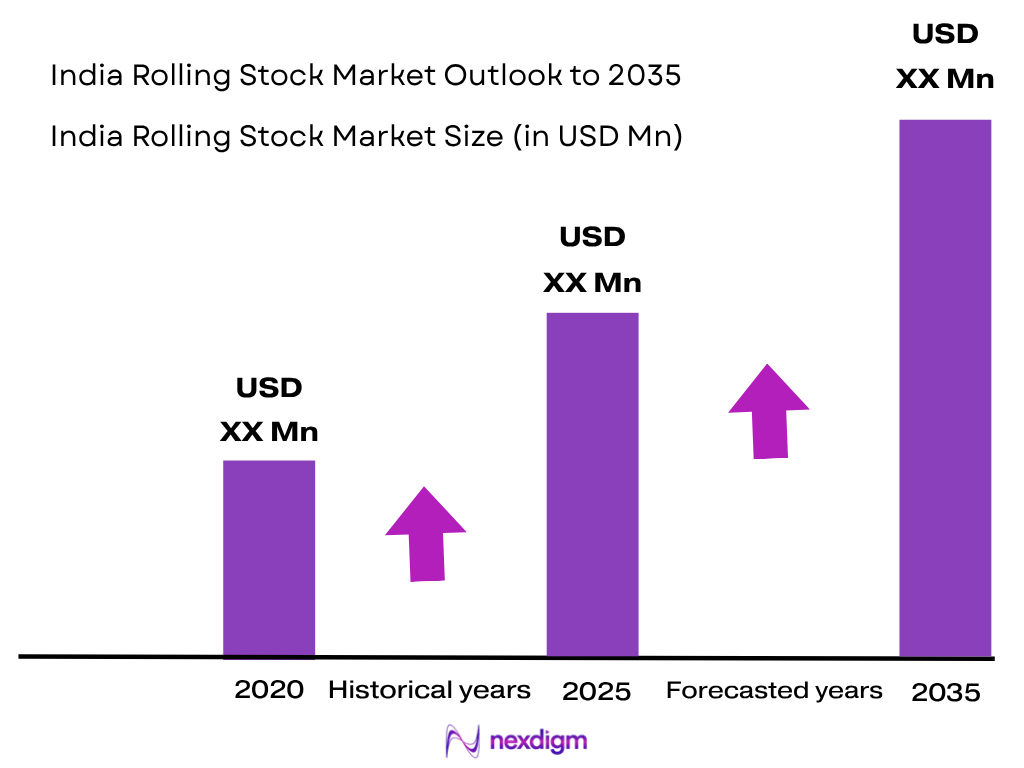
The India rolling stock market is valued at ~USD XX billion in 2024 and is expected to grow at a CAGR of XX% during 2026-2035, supported by railway modernization programs, metro expansion, freight corridor development, and electrification initiatives. The market includes locomotives, passenger coaches, freight wagons, metro vehicles, and specialized rail vehicles. Indian Railways operated a rolling stock base of approximately 327,991 freight wagons and 91,948 passenger coaches, reflecting the large installed fleet requiring replacement, upgrades, and maintenance support.
The India rolling stock market is primarily concentrated around major railway manufacturing and transit hubs including Chennai, Kapurthala, Raebareli, Bengaluru, Hyderabad, Mumbai, and Delhi NCR due to the presence of manufacturing facilities, metro rail networks, freight corridors, and railway infrastructure ecosystems. Chennai remains a key hub due to Integral Coach Factory operations, while cities such as Delhi, Mumbai, Bengaluru, and Hyderabad drive metro rolling stock demand because of expanding urban transportation networks. India’s railway network modernization and electrification programs continue to support demand for advanced rolling stock solutions.
Market Segmentation
By Rolling Stock Type
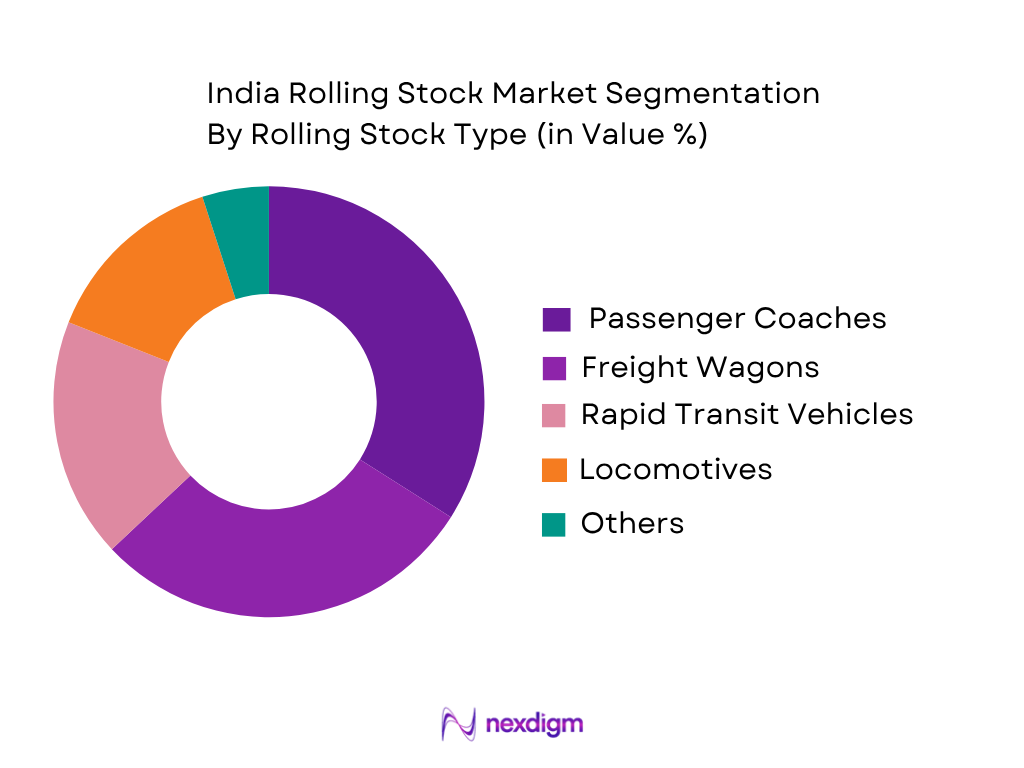
India rolling stock market is segmented by rolling stock type into freight wagons, locomotives, rapid transit vehicles, passenger coaches, and light rail vehicles. Passenger coaches represent the dominant segment due to the extensive passenger rail network, replacement requirements of conventional coaches, and increasing adoption of modern trainsets such as Vande Bharat. Freight wagons also represent a significant demand category due to dedicated freight corridor development and rising rail-based logistics movement. Indian Railways manages a large passenger and freight fleet, creating continuous demand for new production, refurbishment, and lifecycle maintenance.
By Propulsion Type
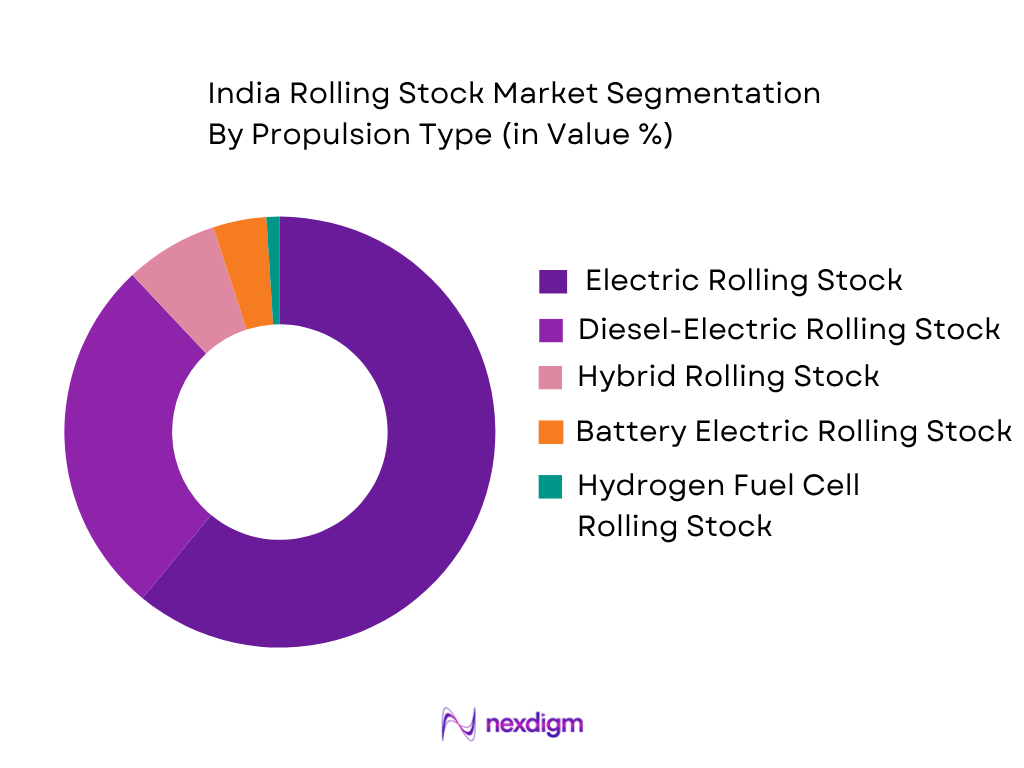
India rolling stock market is segmented by propulsion type into diesel-electric rolling stock, electric rolling stock, hybrid rolling stock, battery electric rolling stock, and hydrogen fuel cell rolling stock. Electric rolling stock dominates due to large-scale railway electrification, lower operational emissions, and government focus on reducing diesel dependency. Indian Railways has rapidly expanded electrification coverage, creating strong demand for electric locomotives and electric multiple units. Emerging propulsion technologies including battery-electric and hydrogen trains are gaining attention for low-carbon operations on non-electrified routes.
Competitive Landscape
The India rolling stock market is characterized by the presence of domestic manufacturers, public sector enterprises, and global rail technology companies. Competition is shaped by manufacturing capacity, technology capabilities, railway tender participation, localization strategies, and lifecycle maintenance capabilities. Major companies are focusing on metro projects, high-speed rail, freight locomotives, electric propulsion systems, and digital railway solutions.
| Company | Establishment Year | Headquarters | Key Products | Manufacturing Capability | Major Focus Area | Technology Strength | Market Position |
| Alstom India | 1992 | New Delhi, India | ~ | ~ | ~ | ~ | ~ |
| Siemens Mobility India | 1996 | Mumbai, India | ~ | ~ | ~ | ~ | ~ |
| Titagarh Rail Systems | 1997 | Kolkata, India | ~ | ~ | ~ | ~ | ~ |
| BEML Limited | 1964 | Bengaluru, India | ~ | ~ | ~ | ~ | ~ |
| Bharat Heavy Electricals Limited (BHEL) | 1956 | New Delhi, India | ~ | ~ | ~ | ~ | ~ |
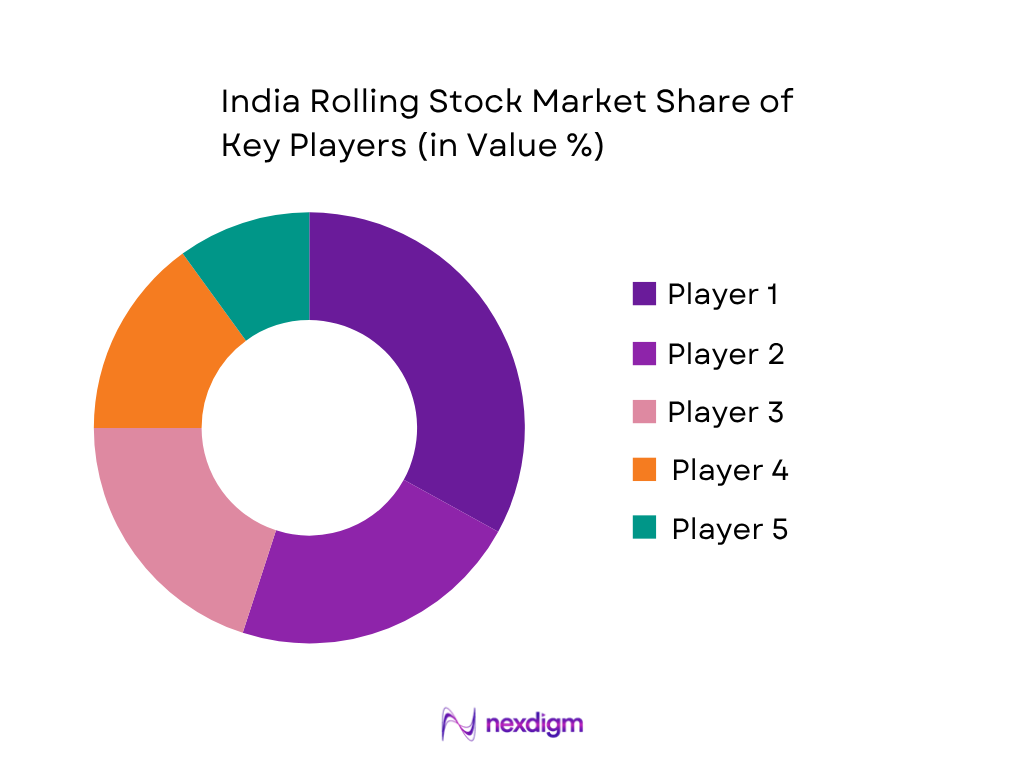
India Rolling Stock Market Analysis
Growth Drivers
Fleet Modernization Programs
Fleet modernization programs are a major growth driver for the India rolling stock market as Indian Railways continues replacing aging coaches, locomotives, and freight wagons with advanced, energy-efficient systems. Indian Railways operates one of the world’s largest rail networks, with approximately 68,584 route kilometres of railway network and more than 22,000 train services operating daily. The modernization initiative is supported by replacement of conventional ICF coaches with safer LHB coaches, deployment of semi-high-speed Vande Bharat trainsets, and adoption of digitally enabled maintenance systems. Indian Railways allocated approximately ₹2.55 lakh crore in the Union Budget 2024-25 for railway infrastructure development, supporting rolling stock procurement and modernization activities. The introduction of advanced trainsets requires domestic manufacturing capacity, propulsion systems, safety equipment, and lifecycle support services. Programs focused on improving passenger experience, operational efficiency, and asset reliability are increasing demand for technologically advanced rolling stock across passenger, freight, and urban transit applications.
Railway Electrification Expansion
Railway electrification expansion is significantly supporting demand for electric locomotives, electric multiple units, and associated propulsion technologies in India. Indian Railways has accelerated electrification as part of its objective to reduce diesel dependency and achieve a lower-carbon transportation system. The network had achieved electrification of more than 62,000 route kilometres by 2024, representing a substantial transformation from diesel-based operations toward electric traction. Electrification supports increased procurement of electric locomotives, high-power freight locomotives, and energy-efficient passenger trains. The country’s electricity generation capacity exceeded 450 GW in 2024, providing a broader energy ecosystem supporting railway electrification initiatives. Electrified rail operations provide benefits including reduced operating emissions, improved locomotive efficiency, and lower dependence on imported fossil fuels. Expansion of electrified corridors, Dedicated Freight Corridors, and metro rail networks continues to create demand for electric rolling stock manufacturers, propulsion suppliers, and railway technology providers.
Market Challenges
High Manufacturing Complexity
High manufacturing complexity remains a major challenge in the India rolling stock market due to the technical requirements involved in producing locomotives, passenger coaches, metro trains, and specialized freight vehicles. Rolling stock manufacturing requires integration of advanced propulsion systems, braking technologies, signaling equipment, safety systems, and lightweight structural materials. India’s railway ecosystem involves strict compliance requirements under organizations such as Research Designs and Standards Organisation (RDSO), increasing the time and technical resources required for product development. Modern trainsets such as Vande Bharat require integration of multiple systems including distributed propulsion, automatic doors, advanced suspension systems, and passenger information technology. India imported approximately USD 187 billion worth of engineering goods in 2023-24, highlighting continued dependence on advanced engineering components across industries. Rolling stock manufacturers face challenges related to technology localization, precision manufacturing capabilities, and maintaining international quality standards while increasing domestic production.
Long Procurement Cycles
Long procurement cycles represent a significant challenge for rolling stock manufacturers because railway projects involve extensive planning, tendering, approvals, testing, and commissioning processes. Government railway procurement generally requires multiple stages including technical evaluation, financial assessment, prototype development, and operational validation before large-scale deployment. Indian Railways operates through a structured procurement framework where rolling stock orders are typically planned several years in advance based on passenger demand, freight requirements, and infrastructure availability. India’s railway infrastructure development involves large-scale public investment, with railway capital expenditure reaching approximately ₹2.55 lakh crore in 2024-25, but project execution requires coordination among multiple government agencies. Long procurement timelines create uncertainty for manufacturers regarding production schedules, capacity utilization, and investment planning. Companies must maintain manufacturing capabilities and skilled resources while waiting for order finalization, impacting operational efficiency and supply chain management.
Market Opportunities
High-Speed Rail Development
High-speed rail development presents a significant opportunity for the India rolling stock market as the country moves toward advanced passenger transportation systems. The Mumbai-Ahmedabad High-Speed Rail project represents India’s first bullet train initiative, involving approximately 508 kilometres of high-speed railway corridor. The project is expected to introduce advanced rolling stock technologies including high-speed trainsets, specialized signaling systems, and dedicated railway infrastructure. India’s urban population reached more than 518 million people in 2024, increasing the requirement for faster intercity transportation solutions. High-speed rail development will create opportunities for global and domestic rolling stock manufacturers in train production, maintenance services, propulsion systems, and railway technology integration. Future expansion of high-speed rail corridors between major economic regions could increase demand for specialized rolling stock capable of operating at higher speeds while maintaining safety and passenger comfort standards.
Smart Maintenance Technologies
Smart maintenance technologies provide an emerging opportunity for the India rolling stock market through adoption of predictive analytics, Internet of Things (IoT), artificial intelligence, and digital asset monitoring solutions. Indian Railways manages a large rolling stock fleet requiring continuous inspection, repair, and lifecycle management. Digital maintenance solutions enable real-time monitoring of components such as wheel systems, braking equipment, propulsion units, and electrical systems, reducing downtime and improving operational reliability. India had more than 1.4 billion mobile broadband connections in 2024, supporting the digital infrastructure required for connected railway systems and data-driven operations. Smart maintenance platforms can help railway operators optimize asset utilization, reduce unexpected failures, and improve maintenance scheduling. Increasing focus on railway digitalization, automated inspection systems, and intelligent transportation management is expected to create opportunities for technology providers and rolling stock manufacturers developing connected railway solutions.
Future Outlook
The India rolling stock market is expected to witness sustained expansion due to railway infrastructure modernization, metro rail development, freight transportation growth, and decarbonization initiatives. Demand will increasingly shift toward energy-efficient trains, digital monitoring systems, automated maintenance technologies, and advanced propulsion solutions. Government investment in high-speed rail, dedicated freight corridors, and urban transit networks will remain key contributors to future market development.
Major Players
- Alstom India
- Siemens Mobility India
- Titagarh Rail Systems
- BEML Limited
- Bharat Heavy Electricals Limited (BHEL)
- Integral Coach Factory (ICF)
- Rail Coach Factory (RCF)
- Modern Coach Factory (MCF)
- Wabtec India
- ABB India
- Hitachi Rail India
- CRRC Corporation
- Hyundai Rotem
- Stadler Rail
- Kawasaki Heavy Industries
Key Target Audience
- Railway Operators (Indian Railways, Konkan Railway Corporation, Dedicated Freight Corridor Corporation of India)
- Metro Rail Corporations (Delhi Metro Rail Corporation, Mumbai Metro Rail Corporation, Bangalore Metro Rail Corporation, Chennai Metro Rail Limited)
- Rolling Stock Manufacturers (Integral Coach Factory, Rail Coach Factory, Modern Coach Factory, BEML Limited)
- Rail Infrastructure Companies and EPC Contractors
- Freight Logistics Operators and Industrial Transportation Companies
- Investments and venture capitalist firms (Infrastructure investment funds, transportation-focused investment firms)
- Government and regulatory bodies (Ministry of Railways, Railway Board, Research Designs and Standards Organisation)
- Rail Component Manufacturers and Technology Providers
Research Methodology
Step 1: Identification of Key Variables
The initial phase involves developing a comprehensive ecosystem map covering rolling stock manufacturers, railway operators, metro authorities, component suppliers, government agencies, and technology providers. Secondary research is conducted through railway databases, government publications, industry documents, and infrastructure reports to identify major market variables affecting demand and supply.
Step 2: Market Analysis and Construction
This phase involves analyzing historical rolling stock production, procurement trends, fleet composition, railway modernization programs, metro expansion activities, and freight transportation requirements. The analysis includes assessment of locomotive production, passenger coach manufacturing, freight wagon demand, and urban transit vehicle deployment.
Step 3: Hypothesis Validation and Expert Consultation
Market assumptions are validated through discussions with industry stakeholders including rolling stock manufacturers, railway suppliers, metro operators, and technology providers. Expert interactions provide insights regarding procurement cycles, manufacturing capacity, technology adoption, and future investment priorities.
Step 4: Research Synthesis and Final Output
The final stage integrates primary and secondary findings to develop a comprehensive India Rolling Stock Market analysis. Data from manufacturers, railway authorities, and infrastructure stakeholders is evaluated to validate market trends, competitive positioning, segmentation analysis, and future growth opportunities.

- Executive Summary
- Research Methodology (Market Definition and Scope, Rolling Stock Ecosystem Mapping, Market Sizing Framework, Top-Down Analysis, Bottom-Up Analysis, Demand-Side Assessment, Supply-Side Assessment, Primary Interviews, Government Data Validation, Data Triangulation, Forecasting Methodology, Research Limitations)

- Definition and Scope
- Evolution of Indian Railways Rolling Stock Ecosystem
- Historical Development Timeline of Rolling Stock Manufacturing in India
- Major Industry Developments
- India Rolling Stock Value Chain Analysis
- India Rolling Stock Supply Chain Analysis

- Growth Drivers (Fleet Modernization Programs, Railway Electrification Expansion, Vande Bharat Train Deployment, Dedicated Freight Corridor Development, Metro Rail Expansion, Passenger Mobility Demand)
- Market Challenges (High Manufacturing Complexity, Long Procurement Cycles, Infrastructure Compatibility Issues, Component Supply Chain Dependence, Skilled Workforce Requirements)
- Market Opportunities (High-Speed Rail Development, Hydrogen Train Deployment, Battery Electric Train Adoption, Freight Rail Automation, Smart Maintenance Technologies, Railway Digitalization)
- Market Trends (Indigenous Rolling Stock Manufacturing, Trainset Technology Adoption, Lightweight Coach Development, Digital Train Monitoring, Sustainable Propulsion Systems)
- Government Initiatives and Regulations (Mission Electrification, National Rail Plan, Make in India Railway Manufacturing, PM Gati Shakti, Kavach Train Protection System, Railway Safety Standards)
- SWOT Analysis
- Porter’s Five Forces Analysis
- PESTLE Analysis
- Stakeholder Ecosystem Analysis

- By Market Value (2020-2025)
- By Rolling Stock Production Volume (2020-2025)
- By Fleet Addition Volume (2020-2025)
- By Average Vehicle Replacement Cycle (2020-2025)
- By Passenger Rail Rolling Stock Demand (2020-2025)
- By Metro and Urban Transit Rolling Stock Demand (2020-2025)

- By Rolling Stock Type (In Value %)
Locomotives
Electric Locomotives
Diesel Locomotives
Dual Mode Locomotives
High Horsepower Freight Locomotives
Passenger Coaches
Conventional Passenger Coaches
LHB Coaches
Vande Bharat Trainsets
Premium Passenger Trainset
Freight Wagons
Covered Wagons
Open Wagons
Tank Wagons
Automobile Carrier Wagons
Container Freight Wagons
Rapid Transit Vehicles
Metro Coaches
Regional Rapid Transit System (RRTS) Coaches
Suburban Rail Coaches
Light Rail Vehicles
Tram Systems
Urban Light Rail Vehicles - By Propulsion Type (In Value %)
Electric Rolling Stock
AC Electric Locomotives
DC Electric Rolling Stock
Electric Multiple Units
Diesel Rolling Stock
Diesel-Electric Locomotives
Diesel Hydraulic Locomotives
Hybrid Rolling Stock
Diesel-Battery Hybrid Trains
Regenerative Braking Systems
Battery Electric Rolling Stock
Battery Powered Passenger Trains
Battery Powered Shunting Locomotives
Hydrogen Fuel Cell Rolling Stock
Hydrogen Trainsets
Hydrogen Freight Locomotives - By Application Type (In Value %)
Passenger Transportation
Intercity Rail
High-Speed Rail
Semi High-Speed Rail
Regional Rail
Suburban Rail
Freight Transportation
Coal Transportation
Container Freight
Automobile Freight
Agricultural Freight
Industrial Goods Transportation
Urban Mobility
Metro Rail
RRTS
Airport Connectivity Rail - By End User (In Value %)
Indian Railways
Metro Rail Corporations
State Railway Authorities
Private Freight Operators
Industrial Railway Operators - By Component Type (In Value %)
Propulsion Systems
Traction Motors
Converter Systems
Battery Systems
Rolling Stock Body Components
Car Bodies
Bogies
Suspension Systems
Electrical Systems
Control Systems
Communication Systems
Signaling Equipment
Interior Components
Seating Systems
HVAC Systems - By Region (In Value %)
North India
Delhi NCR Railway Network
Northern Railway Zone
West India
Mumbai Suburban Railway
Western Railway Zone
South India
Chennai Railway Network
Southern Railway Zone
East India
Freight Rail Corridors
Eastern Railway Zone
Central India
Freight Transportation Corridors
Central Railway Zone

- Market Share Analysis of Major Players (By Rolling Stock Type, Product Category, Railway Segment, Metro Segment, Freight Segment)
- Cross Comparison Parameters (Product Portfolio Coverage, Manufacturing Capacity, Railway Production Capability, Indigenous Component Integration, Rolling Stock Technology Portfolio, Maintenance Service Network, Export Capability, Digital Rail Technology Integration)
- SWOT Analysis of Major Players
- Detailed Profiles of Major Companies
Alstom India
Siemens Mobility India
Titagarh Rail Systems
BEML Limited
Bharat Earth Movers Limited
Integral Coach Factory
Rail Coach Factory Kapurthala
Modern Coach Factory Rae Bareli
Medha Servo Drives
Texmaco Rail & Engineering
Hind Rectifiers
Jupiter Wagons
CAF India
CRRC Corporation
Wabtec India

- Railway Operator Demand Assessment
- Passenger Rail Consumption Analysis
- Freight Operator Requirement Analysis
- Metro Passenger Mobility Analysis
- Rolling Stock Purchase Decision Analysis
- Fleet Management Analysis
- Technology Preference Analysis

- By Market Value (2026-2035)
- By Rolling Stock Production Volume (2026-2035)
- By Fleet Addition Volume (2026-2035)
- By Average Vehicle Replacement Cycle (2026-2035)
- By Passenger Rail Rolling Stock Demand (2026-2035)
- By Metro and Urban Transit Rolling Stock Demand (2026-2035)


 Request a Sample
 Ask for Customization
 Get a Quote
 Enquire Now