
 Download PDF
Market Overview
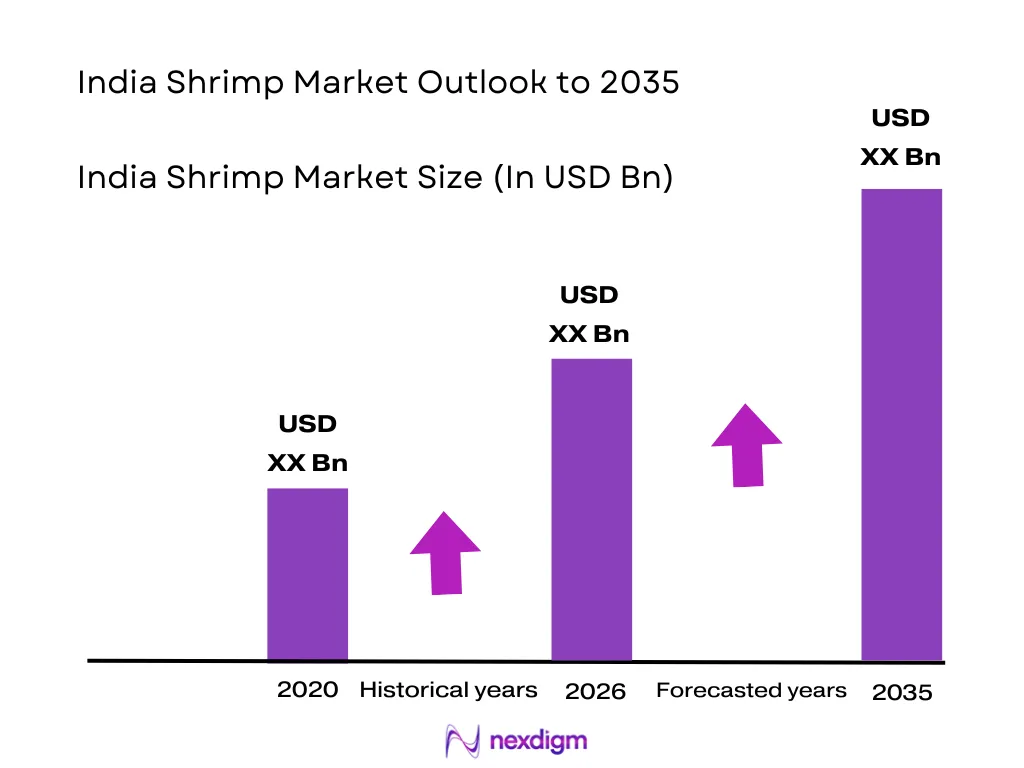
The India Shrimp Market is supported by expanding frozen seafood exports, increasing aquaculture infrastructure development, and rising global seafood consumption. India exported more than 716 thousand metric tons of shrimp during FY2023-24 according to government marine export statistics, while frozen shrimp remained the largest contributor to marine product exports. The market is valued at approximately USD ~ billion, supported by increasing Vannamei shrimp cultivation, expansion of seafood processing infrastructure, and strong international demand from retail and foodservice sectors. Increasing adoption of intensive farming systems and higher productivity per hectare continue to strengthen India’s export competitiveness within the global shrimp industry.
Andhra Pradesh, Gujarat, Odisha, Tamil Nadu, and West Bengal dominate the India Shrimp Market because of extensive coastline access, favorable brackish water conditions, and advanced aquaculture infrastructure. Andhra Pradesh remains the largest shrimp-producing region due to strong hatchery density, integrated processing facilities, and high Vannamei farming penetration. Internationally, the United States, China, Japan, and the European Union dominate shrimp imports due to high seafood consumption and strong demand for frozen and value-added shrimp products. Coastal processing hubs continue to expand because of improving cold-chain infrastructure and export-oriented seafood manufacturing capabilities.
Market Segmentation
By Shrimp Species
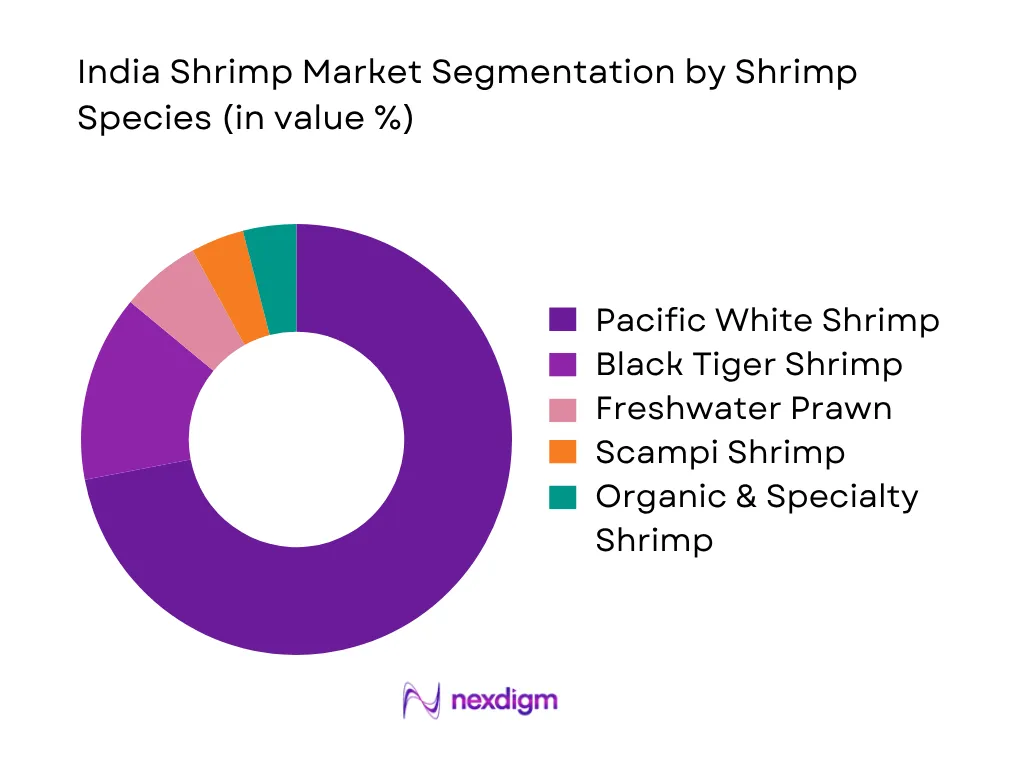
The India Shrimp Market is segmented by shrimp species into Pacific White Shrimp (Vannamei), Black Tiger Shrimp, Freshwater Prawn, Scampi Shrimp, and Organic & Specialty Shrimp. Pacific White Shrimp dominates the India Shrimp Market under the shrimp species segmentation due to its higher survival rates, faster growth cycle, and superior feed conversion efficiency. Farmers increasingly prefer Vannamei shrimp because it enables multiple harvest cycles annually and provides better export acceptance across the United States and China. The segment also benefits from established hatchery infrastructure and increasing adoption of intensive farming practices across Andhra Pradesh and Gujarat. While Black Tiger Shrimp maintains premium export demand in Japan and the European Union due to larger shrimp size and premium pricing, Vannamei continues to dominate because of higher productivity and lower operational risk for aquaculture operators.
By Product Form
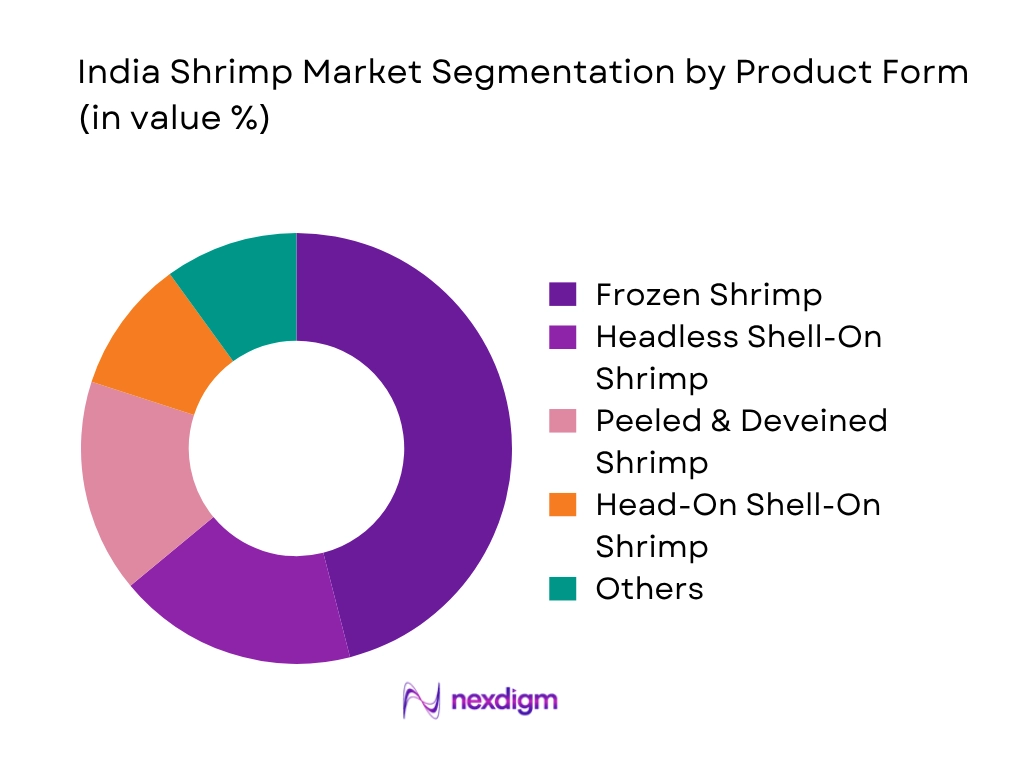
The India Shrimp Market is segmented by product form into Frozen Shrimp, Headless Shell-On Shrimp, Peeled & Deveined Shrimp, Head-On Shell-On Shrimp, Cooked Shrimp, and Breaded & Value-Added Shrimp. Frozen Shrimp dominates the India Shrimp Market because it remains the preferred export category across major international seafood-importing countries. The segment benefits from extended shelf life, lower transportation losses, and stronger compatibility with global cold-chain logistics systems. Seafood processors continue to expand freezing and storage capacities to support growing overseas demand from supermarkets, quick-service restaurants, and foodservice distributors. Additionally, retailers increasingly prefer frozen shrimp due to standardized quality and easier inventory management. Peeled and deveined shrimp products are also witnessing rising adoption due to increasing demand for convenience seafood products. However, frozen shrimp maintains category dominance because of stronger export dependency and higher shipment volumes across global trade channels.
Competitive Landscape
The India Shrimp Market is moderately consolidated, with major seafood processors and aquaculture companies dominating exports, hatchery operations, and frozen seafood processing infrastructure. Leading market participants focus on expanding processing capacities, strengthening cold-chain logistics, and increasing value-added seafood product offerings. Companies are also investing heavily in sustainable aquaculture certifications, traceability systems, and biosecurity infrastructure to strengthen export competitiveness and meet international food safety regulations.
| Company | Establishment Year | Headquarters | Processing Capacity | Export Presence | Hatchery Integration | Feed Manufacturing | Cold Storage Infrastructure | Sustainability Certifications |
| Avanti Feeds Limited | 1993 | Hyderabad, India | ~ | ~ | ~ | ~ | ~ | ~ |
| Apex Frozen Foods Limited | 1995 | Andhra Pradesh, India | ~ | ~ | ~ | ~ | ~ | ~ |
| Devi Sea Foods Limited | 1992 | Andhra Pradesh, India | ~ | ~ | ~ | ~ | ~ | ~ |
| Waterbase Limited | 1993 | Chennai, India | ~ | ~ | ~ | ~ | ~ | ~ |
| Nekkanti Sea Foods Limited | 1979 | Andhra Pradesh, India | ~ | ~ | ~ | ~ | ~ | ~ |
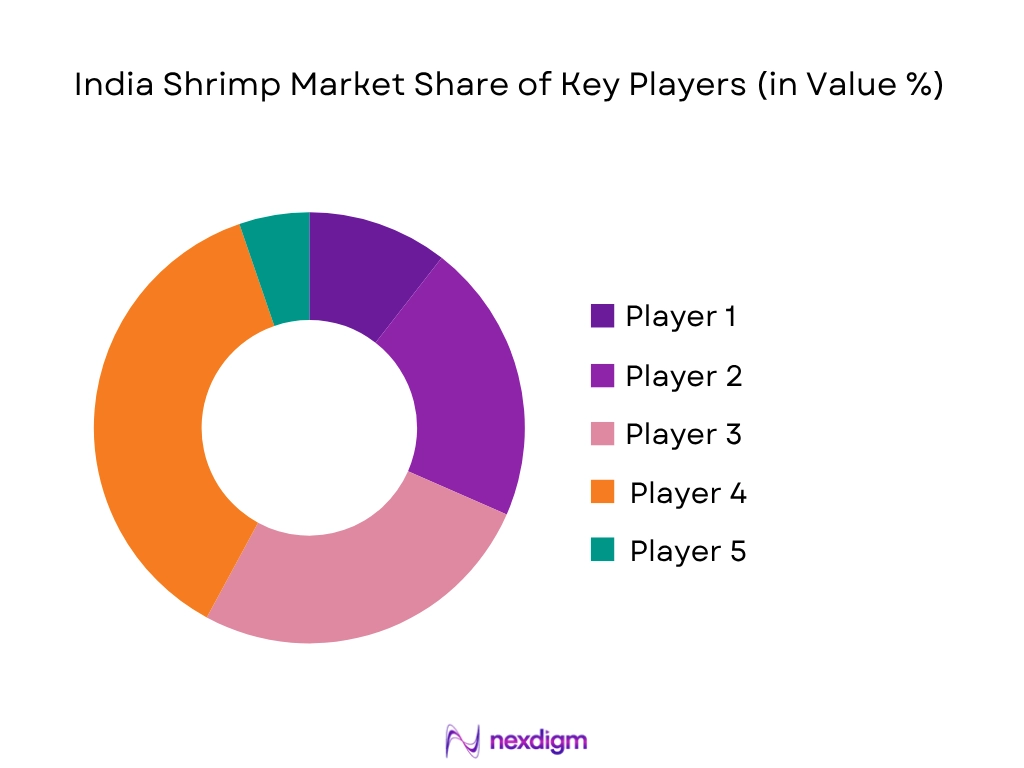
India Shrimp Market Analysis
Growth Drivers
Rising Global Demand for Frozen Shrimp Exports
India’s shrimp industry continues to benefit from expanding seafood consumption across major importing countries including the United States, China, Japan, and the European Union. India exported more than 716 thousand metric tons of shrimp during FY2023-24 according to marine export authority statistics, making frozen shrimp the country’s largest marine export category. The United States remained the largest importer of Indian shrimp because of rising retail and foodservice seafood demand. Expanding urban seafood consumption and increasing cold-chain penetration across international markets continue to support higher import dependency for frozen shrimp products. India’s extensive coastline, favorable aquaculture environment, and large-scale processing infrastructure continue to strengthen export competitiveness within the global seafood trade ecosystem.
Expansion of Intensive Vannamei Shrimp Farming
The increasing adoption of Pacific White Shrimp farming has significantly improved India’s aquaculture productivity and export competitiveness. Registered shrimp farming operations across coastal states continue to expand due to higher productivity per hectare and improved feed conversion efficiency associated with intensive Vannamei farming systems. The aquaculture sector plays an important role in supporting rural employment and export-oriented agricultural income generation across India’s coastal regions. Increasing adoption of aeration systems, automatic feeders, and water quality monitoring technologies has improved shrimp survival rates and farm output. Expansion of hatchery infrastructure and biosecurity-focused aquaculture practices continues to support the growth of intensive shrimp farming operations across Andhra Pradesh, Gujarat, Odisha, and Tamil Nadu.
Market Challenges
Disease Outbreaks and Biosecurity Risks
Disease outbreaks remain a major challenge impacting shrimp survival rates and pond productivity across India’s aquaculture industry. Viral diseases including White Spot Syndrome Virus and Early Mortality Syndrome continue to affect shrimp farming operations across key coastal states. Climate variability, water quality fluctuations, and salinity imbalances increase disease susceptibility within intensive farming systems. Farmers continue to invest heavily in probiotics, water treatment systems, and biosecurity infrastructure to minimize operational disruptions. Disease outbreaks not only impact production volumes but also increase operational costs associated with pond management and quality monitoring. The dependence on disease-free broodstock and consistent water quality management remains critical for maintaining export-oriented shrimp production.
Stringent Import Regulations and Food Safety Compliance
India’s shrimp exporters face increasing regulatory scrutiny regarding antibiotic residues, traceability standards, and food safety compliance across major export destinations. International seafood-importing regions continue to strengthen inspection protocols and certification requirements for imported seafood products. Exporters are required to comply with multiple certification standards related to sustainability, traceability, and residue monitoring. Maintaining international compliance standards requires significant investment in laboratory testing, processing infrastructure, and digital traceability systems. Smaller seafood processors often face operational difficulties in meeting evolving regulatory requirements. Increasing global focus on food safety and sustainable seafood sourcing continues to raise compliance complexity for India’s export-oriented shrimp industry.
Market Opportunities
Increasing Demand for Value-Added Seafood Products
The growing international demand for ready-to-cook and convenience seafood products is creating major opportunities for India’s shrimp processing industry. Retail chains, frozen food distributors, and foodservice operators increasingly prefer peeled, deveined, cooked, and breaded shrimp products due to changing consumer lifestyles and rising urbanization. Seafood processors are expanding value-added product portfolios to improve realization margins and reduce dependence on raw frozen shrimp exports. Increasing cold-chain infrastructure investments and rising penetration of organized retail channels are further supporting the growth of branded frozen seafood products. Metropolitan cities across India are also witnessing increasing online seafood retail demand, strengthening domestic opportunities for packaged and processed shrimp products.
Adoption of Sustainable Aquaculture and Traceability Systems
Growing international preference for sustainably sourced seafood products presents a strong opportunity for India’s shrimp exporters. Importers increasingly prioritize antibiotic-free shrimp production, traceability systems, and sustainability certifications while selecting suppliers. Government-backed fisheries and aquaculture infrastructure programs are supporting modernization of hatcheries, processing facilities, and monitoring systems. Export-oriented seafood companies are investing in blockchain traceability, water quality monitoring technologies, and certified aquaculture systems to strengthen export acceptance across premium markets. The increasing focus on sustainable aquaculture practices and responsible seafood sourcing is expected to improve India’s long-term competitiveness within global shrimp trade networks.
Future Outlook
The India Shrimp Market is expected to witness substantial growth over the coming years due to increasing international seafood consumption and rising investments in aquaculture modernization. Expansion of intensive farming systems, biofloc technology, and sustainable aquaculture practices is expected to improve productivity and export competitiveness across India’s coastal regions. Seafood processors are likely to increase focus on value-added shrimp products, traceability infrastructure, and international food safety compliance to strengthen export opportunities. Increasing domestic seafood consumption and expansion of organized frozen food retail channels are also expected to support long-term market growth. Technological advancements in feed management, water quality monitoring, and automated farming solutions are anticipated to improve operational efficiency and reduce disease-related risks across the aquaculture industry.
Major Players
- Avanti Feeds Limited
- Apex Frozen Foods Limited
- Devi Sea Foods Limited
- Nekkanti Sea Foods Limited
- Waterbase Limited
- Coastal Corporation Limited
- Sandhya Aqua Exports Private Limited
- Falcon Marine Exports Limited
- Baby Marine Group
- Zeal Aqua Limited
- Kings Infra Ventures Limited
- CP Aquaculture India Private Limited
- Choice Canning Company
- BMR Industries Limited
- IFB Agro Industries Limited
Key Target Audience
- Shrimp Farming and Aquaculture Companies
- Frozen Seafood Processing Companies
- Seafood Exporters and Importers
- Cold Chain and Logistics Service Providers
- Feed Manufacturing Companies
- Investments and Venture Capitalist Firms
- Government and Regulatory Bodies
- Retail and Foodservice Seafood Procurement Companies
Research Methodology
Step 1: Identification of Key Variables
The initial stage involved identifying critical variables influencing the India Shrimp Market, including aquaculture production trends, hatchery infrastructure, export demand, processing capacity, and cold-chain logistics development. Extensive secondary research was conducted using government publications, seafood trade databases, industry reports, and company disclosures to understand the complete aquaculture ecosystem and value chain dynamics.
Step 2: Market Analysis and Construction
Historical market analysis was conducted using shrimp production volumes, export shipment data, processing statistics, and aquaculture farming trends across India’s coastal states. Market estimations were developed using bottom-up calculations based on shrimp farming output, export realizations, and seafood processing infrastructure. Additional analysis of product forms and export destinations was also incorporated into the market assessment framework.
Step 3: Hypothesis Validation and Expert Consultation
The preliminary market findings were validated through interviews with aquaculture operators, hatchery managers, seafood processors, exporters, and industry experts. These consultations provided operational insights regarding disease management, export compliance, processing capacity utilization, and future investment trends across India’s shrimp aquaculture and seafood export ecosystem.
Step 4: Research Synthesis and Final Output
The final stage involved consolidating quantitative and qualitative findings to produce a comprehensive assessment of the India Shrimp Market. Cross-validation was conducted using trade statistics, production databases, and company disclosures to ensure consistency and reliability of market estimates, segmentation analysis, competitive benchmarking, and future outlook projections.

- Executive Summary
- Research Methodology (Market Definitions and Assumptions, Abbreviations, Research Framework, Bottom-Up Market Estimation, Top-Down Validation, Aquaculture Production Mapping, Export Trade Flow Assessment, Processing Capacity Analysis, Primary Interviews with Hatcheries and Exporters, Forecasting Model, Limitations and Assumptions)

- Definition and Scope
- Evolution of India’s Shrimp Aquaculture Industry
- Industry Ecosystem and Stakeholder Mapping
- Supply Chain and Value Chain Analysis
- Hatchery and Broodstock Ecosystem
- Feed Manufacturing and Procurement Landscape

- Growth Drivers
Rising Global Demand for Frozen Shrimp Exports
Expansion of Intensive Vannamei Shrimp Farming
Growth in Value-Added Seafood Consumption
Increasing Aquaculture Infrastructure Investments
Technology Adoption in Feed and Water Management - Market Challenges
Disease Outbreaks and Biosecurity Risks
Stringent Import Regulations and Food Safety Compliance
Feed Cost Volatility and Fishmeal Dependency
Climate Change and Water Salinity Variations
Export Dependency on Limited Markets - Market Opportunities
Increasing Demand for Value-Added Seafood Products
Adoption of Sustainable Aquaculture and Traceability Systems
Expansion of Ready-to-Cook Seafood Consumption
Growth in Domestic Seafood Retail Channels
Investment in Biofloc and Recirculatory Aquaculture Systems - Market Trends
Adoption of Biofloc Farming Technology
Shift Toward Antibiotic-Free Shrimp Production
Increasing Traceability and Blockchain Integration
Automation in Water Quality Monitoring
Expansion of Premium Frozen Seafood SKUs - Government Regulations
Marine Products Export Development Authority Regulations
Coastal Aquaculture Authority Compliance Standards
Antibiotic Residue and Food Safety Regulations
Export Certification and Traceability Standards
Environmental and Sustainability Compliance - Porter’s Five Forces Analysis
- PESTLE Analysis
- Pricing Analysis
- Competition Ecosystem
- India Shrimp Market Consumer Analysis

- By Value, 2020-2025
- By Volume, 2020-2025
- By Export Revenue, 2020-2025
- By Domestic Consumption, 2020-2025
- By Average Export Realization, 2020-2025

- By Shrimp Species (in Value %)
Production Volume
Export Demand
Survival Rate
Feed Conversion Efficiency
Harvest Yield - By Farming System (in Value %)
Stocking Density
Productivity per Hectare
Aeration Usage
Mortality Rate
Water Management Efficiency - By Product Form (in Value %)
Processing Yield
Shelf Life
Export Acceptance
Value Addition Margin
SKU Penetration - By Distribution Channel (in Value %)
Export Procurement Volume
Cold Storage Dependence
Retail Penetration
Inventory Turnover
Procurement Cycle - By End User (in Value %)
Consumption Frequency
Bulk Procurement
Product Specifications
Margin Profile
Purchase Volume - By Export Destination (in Value %)
Import Demand
Trade Compliance
Average Realization
Consumption Preference
Logistics Dependency - By State (in Value %)
Aquaculture Area
Processing Capacity
Export Contribution
Hatchery Density
Production Efficiency

- Market Share Analysis of Major Players on the Basis of Revenue and Export Volume
- Cross Comparison Parameters(Processing Capacity, Export Reach, Hatchery Integration, Feed Manufacturing Presence, Cold Storage Infrastructure, Sustainability Certifications, Product Portfolio Breadth, Value-Added Product Presence, Procurement Network Strength, Traceability Systems, Distribution Reach, Processing Facilities, Innovation Capability, Packaging Infrastructure, Operational Integration, Strategic Partnerships)
- Competitive Benchmarking Matrix
- SWOT Analysis of Major Players
- Pricing Analysis by Product Form and Count Size
- Detailed Profiles of Major Companies
Avanti Feeds Limited
Apex Frozen Foods Limited
Devi Sea Foods Limited
Nekkanti Sea Foods Limited
Waterbase Limited
Coastal Corporation Limited
Sandhya Aqua Exports Private Limited
Falcon Marine Exports Limited
Baby Marine Group
Zeal Aqua Limited
Kings Infra Ventures Limited
CP Aquaculture India Private Limited
Choice Canning Company
BMR Industries Limited
IFB Agro Industries Limited

- Consumption Frequency Analysis
- Procurement and Sourcing Behavior
- Buyer Preference Mapping
- Institutional Purchase Parameters
- Domestic vs Export Consumption Analysis

- By Value, 2026-2035
- By Volume, 2026-2035
- By Export Revenue, 2026-2035
- By Domestic Consumption, 2026-2035
- By Average Export Realization, 2026-2035


 Request a Sample
 Ask for Customization
 Get a Quote
 Enquire Now