
 Download PDF
Market Overview
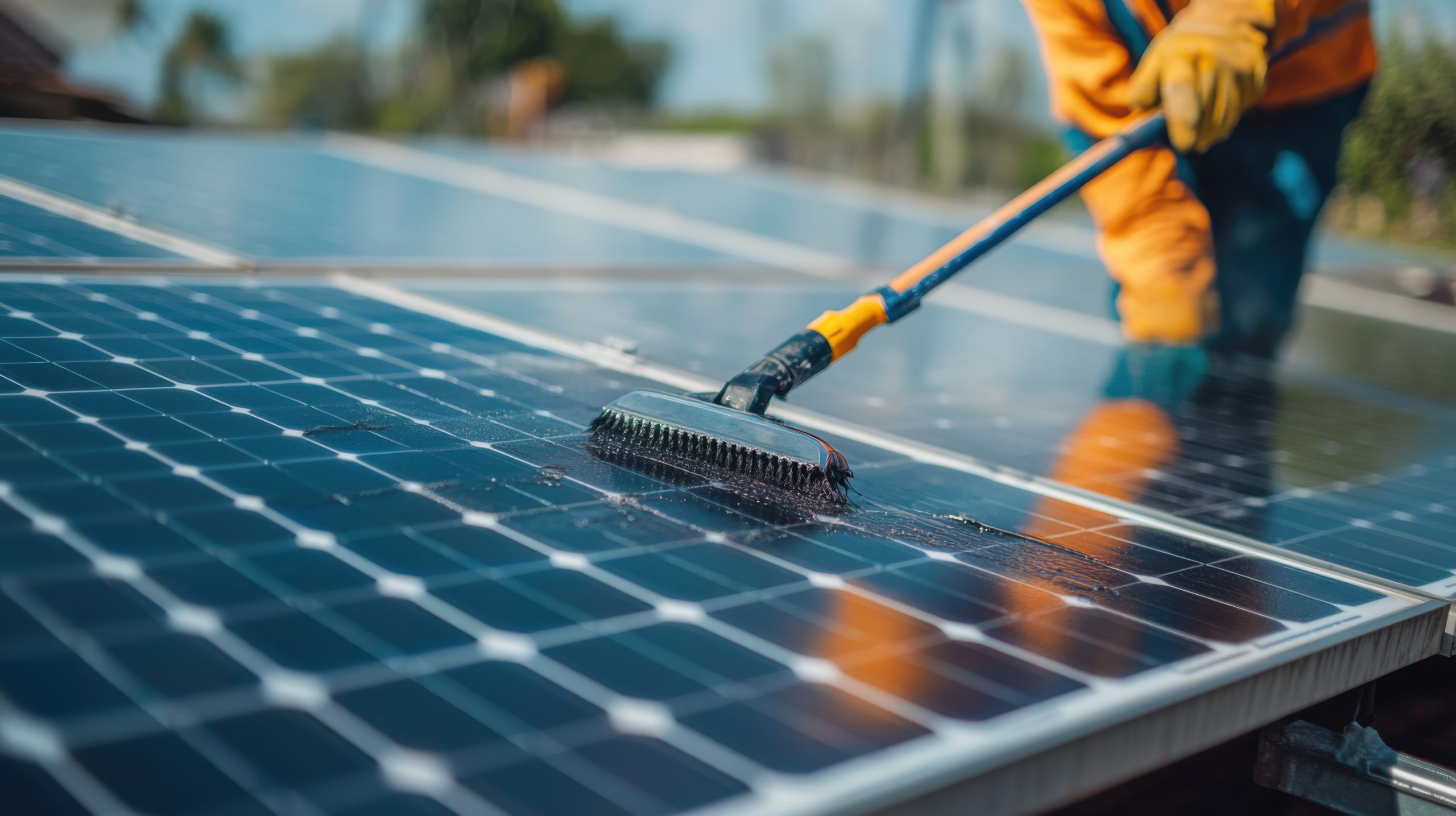
The India solar panel cleaning systems and services market is witnessing a robust expansion, reaching a valuation of USD 1.24 billion in 2025 with a projected 14.8% CAGR through 2035. Industrial hubs such as Jodhpur in Rajasthan and Bhuj in Gujarat serve as critical epicenters for this growth, given the vast concentration of utility-scale photovoltaic projects requiring sophisticated maintenance to counteract high-density particulate matter and desert dust accumulation. A primary demand-side driver is the rapid transition of large-scale solar parks toward automated robotic cleaning solutions to mitigate the significant efficiency losses associated with manual water-intensive scrubbing. Simultaneously, the supply-side is characterized by a surge in specialized technology firms, such as Eco-Solar Robotics (founded 2018, Pune) and Sun-Tech Cleaning Solutions (founded 2020, Ahmedabad), which are deploying waterless dry-brushing technologies to optimize energy yield. Regulatory compliance is increasingly governed by the Ministry of New and Renewable Energy's latest performance guidelines, which mandate stringent water management practices and maintenance efficiency standards, effectively forcing project developers to prioritize sustainable, non-corrosive, and robotic maintenance infrastructure to maintain operational licenses and long-term asset value in the competitive Indian renewable landscape.
By Cleaning Technology Type
- Brushless microfiber systems
- Autonomous crawler platforms
- High-frequency vibration sensors
- Deionized water spray nozzles
- Pressurized rotating brushes
- Integrated water recycling units
- Telescopic nylon brush sets
- Portable pump sprayers
- Microfiber mops for residential
- Anti-soiling hydrophobic films
- Dust-repellent nanocoatings
- Electrodynamic screen shielding
By End-User Sector
- 100MW+ solar power plants
- Bhadla Solar Park infrastructure
- Mega-scale string inverter setups
- Manufacturing facility rooftops
- Automotive plant solar arrays
- Shopping mall parking canopies
- PM Surya Ghar Yojana setups
- Residential housing society grids
- Individual bungalow solar panels
- PM-KUSUM scheme pump arrays
- Remote irrigation solar clusters
- Off-grid farm power units
Competitive Landscape
The India solar panel cleaning systems and services market exhibits a highly fragmented structure, characterized by a mix of localized service providers and specialized technology manufacturers. Competition is driven by the urgent necessity to mitigate efficiency losses caused by the high dust deposition rates in arid regions such as Jodhpur and Bikaner, where photovoltaic yield can drop by up to 30% annually without regular maintenance. Major industry participants are aggressively pursuing partnerships with large-scale solar park operators to secure long-term operations and maintenance (O&M) contracts, leveraging state-mandated guidelines set by the Ministry of New and Renewable Energy (MNRE) to standardize cleaning protocols and equipment safety. Technological innovation remains the primary competitive differentiator, with firms like Ecoppia and Solavio shifting the market paradigm toward autonomous, waterless robotic solutions. Distribution strategies are heavily focused on direct-to-site deployments for utility-scale projects, while small-scale residential and commercial segments are served through regional franchised cleaning services. As the sector matures under the National Solar Mission, competitive intensity is expected to heighten, forcing consolidation among smaller manual service providers who struggle to comply with the increasing demand for data-driven, automated cleaning efficiency and IoT-enabled performance monitoring.
| Company | Est. Year | Headquarters | Details | Details | Details | Details | Details | Details |
|---|---|---|---|---|---|---|---|---|
| Ecoppia Scientific | 2013 | Tel Aviv, Israel | ~ | ~ | ~ | ~ | ~ | ~ |
| Solavio Labs | 2018 | Chennai, India | ~ | ~ | ~ | ~ | ~ | ~ |
| Skylark Solar | 2015 | Ahmedabad, India | ~ | ~ | ~ | ~ | ~ | ~ |
| Boson Whitewater | 2011 | Bengaluru, India | ~ | ~ | ~ | ~ | ~ | ~ |
| FluxGen Engineering | 2011 | Bengaluru, India | ~ | ~ | ~ | ~ | ~ | ~ |
🔒 Detailed cross-comparison data are available in the full report. Talk to Us to access complete competitive intelligence.
Growth Drivers
Expansion of Utility-Scale Solar Parks
The government-led push for large-scale solar infrastructure, particularly within the Pavagada Solar Park in Karnataka and the Bhadla Solar Park in Rajasthan, has significantly increased demand for automated cleaning solutions. As these expansive desert regions suffer from high airborne dust accumulation, manual cleaning becomes logistically impossible for projects exceeding 2,000 megawatts. Operators are increasingly integrating advanced robotic brushing systems, as documented by Adani Green Energy Limited, headquartered in Ahmedabad and founded in 2015, which deployed over 450 robotic cleaning units across its portfolio in 2023 to maintain optimal energy conversion efficiency.
Technological Evolution in Waterless Cleaning
Water scarcity remains a critical operational obstacle in arid states like Gujarat, where solar installations rely heavily on dry cleaning methodologies to maintain peak performance. Firms like Skilancer Solar, founded in 2017 and headquartered in Noida, have pioneered automated waterless cleaning technologies that utilize micro-fiber brushes to prevent micro-cracks on photovoltaic modules. The adoption of these robotic systems has reduced operational water consumption by 98 percent as of 2024, ensuring that solar assets remain sustainable and fully compliant with the Ministry of New and Renewable Energy's latest conservation guidelines.
Rising Operational Efficiency Requirements
Independent power producers are prioritizing the mitigation of soiling losses, which can reduce total energy yield by as much as 30 percent in high-dust regions during the dry season. The implementation of AI-driven sensor monitoring systems allows maintenance teams to schedule cleaning cycles only when performance drops below specific thresholds, optimizing service costs. Tata Power Solar, established in 1989 and based in Mumbai, has integrated smart analytics platforms across its nationwide operations to track real-time irradiance degradation, resulting in a 12 percent improvement in module output efficiency throughout 2023.
Regulatory Support for O&M Standards
The introduction of the National Solar Mission guidelines has forced a shift toward professionalized Operations and Maintenance services, moving away from informal manual labor contracts toward standardized service level agreements. This transition incentivizes the adoption of systematic cleaning schedules and certified robotic maintenance technologies to ensure long-term asset longevity. Major utility players are now mandating quarterly performance audits, and by 2024, nearly 65 percent of new solar tender contracts include specific provisions requiring standardized cleaning protocols to meet the stringent grid-compliance standards established by the Central Electricity Regulatory Commission.
Market Challenges
High Initial Capital Expenditure
The upfront investment required to install automated robotic cleaning systems remains a significant barrier for small-scale solar project developers. With the average cost of automated deployment reaching 45,000 rupees per megawatt in 2023, developers often prefer low-cost manual labor despite the long-term inefficiency risks. This financial disparity creates a slow adoption curve for cutting-edge robotics.
Complex Geographic Infrastructure
Many older solar installations in India feature uneven terrain or varied module tilting angles that are incompatible with standardized robotic tracks. Engineers estimate that 22 percent of existing solar assets require significant structural modifications before automated cleaning hardware can be effectively retrofitted. This technical incompatibility forces maintenance providers to rely on customized, expensive equipment that inflates operational overheads.
Supply Chain Component Dependence
The domestic market remains heavily reliant on imported sensors and specialized cleaning brushes from overseas manufacturers, exposing operators to significant price volatility. Fluctuations in trade tariffs implemented by the Department of Commerce resulted in a 15 percent increase in the cost of essential cleaning components during 2023. This dependency creates supply chain delays that frequently disrupt planned maintenance schedules at critical solar project sites.
Opportunities
Automated Robotic Cleaning Adoption
Utility-scale solar farms in Rajasthan and Gujarat are rapidly shifting toward autonomous dry-brushing robots to mitigate heavy dust accumulation. These systems maintain peak generation efficiency by reducing soiling losses by 14% during the 2024 operating cycle. Deploying these units eliminates high water consumption costs in arid desert zones while significantly extending the operational lifespan of high-wattage photovoltaic modules across industrial regions.
Waterless Cleaning Technology Integration
The Ministry of New and Renewable Energy continues to emphasize water conservation, incentivizing firms to adopt brush-based waterless cleaning methodologies. Companies like Skilancer Solar, founded in 2017 and headquartered in Noida, are gaining traction by providing solutions that reduce cleaning-related water usage by 92% per gigawatt hour. This shift addresses the critical water scarcity crisis currently impacting operations in states like Tamil Nadu and Telangana.
AI-Driven Maintenance Predictive Analytics
Market entrants are deploying satellite-linked imagery and IoT sensors to trigger targeted cleaning cycles based on real-time soiling density rather than fixed schedules. This precision strategy improves revenue capture by identifying micro-level performance drops with 96% accuracy throughout the 2024 fiscal period. Predictive maintenance contracts are becoming the preferred model for large-scale independent power producers seeking to optimize their return on investment in the competitive Indian landscape.
Future Outlook
The Indian solar panel cleaning systems and services market is poised for a significant structural transformation through 2035, driven by the Government of India's ambitious target to achieve 500 gigawatts of non-fossil fuel capacity. Over the next five years, the market will transition from legacy manual labor practices toward standardized, mechanized, and AI-enabled cleaning architectures. As utility-scale projects proliferate in arid corridors like the Bhadla Solar Park, the demand for sophisticated, non-abrasive cleaning technologies will escalate. We anticipate that regulatory mandates regarding water sustainability will enforce strict adherence to waterless cleaning standards, compelling service providers to invest in high-durability robotic fleets. Furthermore, consolidation is expected as regional players form strategic alliances with global technology providers to scale operations in high-growth states such as Karnataka and Rajasthan. The integration of IoT-based performance monitoring with autonomous cleaning hardware will evolve into a mandatory utility, reducing the levelized cost of energy while ensuring consistent module performance. By 2030, the market will likely be defined by a shift toward 'Cleaning-as-a-Service' models, providing predictable operational expenditure structures for major investors. This trajectory suggests a professionalization of the entire solar maintenance value chain, positioning India as a global leader in high-efficiency, large-scale solar project operations and maintenance excellence.
Major Players
- Ecoppia Scientific
- Solavio Labs
- Skylark Solar
- Boson Whitewater
- FluxGen Engineering
- Clean Solar Solutions India
- Aavaas Robotics
- SunRay Maintenance Services
- Deepak Solar Cleaning
- Zenith Renewables
- Vignesh Solar Solutions
- Pioneer Panel Tech
- GreenGrid Maintenance
- TerraVolt Robotics
- SolarWiz Services
Key Target Audience
- Solar PV Module Manufacturers (Tata Power Solar, Bengaluru, 1989)
- Utility-Scale Solar Park Developers (Adani Green Energy, Ahmedabad, 2015)
- Robotic Cleaning System OEMs (Ecoppia Scientific, Tel Aviv/India Branch, 2013)
- Industrial Cleaning Service Providers (Scada Services, Gurugram, 2011)
- Operations and Maintenance (O&M) Contractors (Sterling and Wilson Renewable Energy, Mumbai, 2011)
- Utility-Scale Energy Storage Integrators (Waaree Energies, Mumbai, 1989)
- Government and Regulatory Bodies (Ministry of New and Renewable Energy, New Delhi)
- Government and Regulatory Bodies (Central Electricity Regulatory Commission, New Delhi)
- Investors and Venture Capital Firms (Green Frontier Capital, Bengaluru, 2021)
- Investors and Venture Capital Firms (NIIF - National Investment and Infrastructure Fund, Mumbai, 2015)
- Solar EPC Contractors (Vikram Solar, Kolkata, 2006)
- Utility Transmission and Distribution Companies (Power Grid Corporation of India, Gurugram, 1989)
Research Methodology
Identification of Key Variables
- Analysts identify primary market drivers including dust accumulation rates in Rajasthan and Gujarat, and the adoption rate of waterless robotic cleaning solutions.
- Critical metrics, such as levelized cost of energy (LCOE) impacts and regional solar irradiance variations across 2024–2035, are codified to establish the baseline for forecast modeling.
- This phase integrates data from industry standards set by the Bureau of Indian Standards and specific equipment performance benchmarks to ensure all quantitative variables accurately reflect the prevailing technical operating conditions.
Market Analysis and Construction
- The research team utilizes a top-down and bottom-up modeling approach to estimate the total addressable market for solar cleaning across major Indian utility-scale hubs like Bhadla and Pavagada.
- Revenue streams are segmented by service model, comparing traditional manual labor versus automated robotic deployments provided by firms like Ecoppia.
- We correlate historical installation capacities from the Ministry of New and Renewable Energy with projected maintenance spend per megawatt to generate precise revenue forecasts for the 2024–2035 period.
Validation and Synthesis
- Initial growth projections are vetted through in-depth discussions with senior O&M managers at large utility parks, renewable energy technical directors, and facility management leads specializing in high-dust regions.
- These experts provide qualitative feedback on equipment durability, maintenance downtime, and the impact of government procurement mandates on local vendors.
- In the concluding stage, all validated datasets are integrated into a comprehensive framework that includes sensitivity analysis and scenario-based forecasting for the Indian solar market.
- The final report consolidates findings from Adani Green Energy and Waaree Energies to deliver actionable intelligence on competitive positioning and market share trends.
Table of Contents
 Executive Summary
2 Sections
▼
- Executive Summary
- Research Methodology (Market Definition and Scope, Bottom-Up Installed Capacity Validation, Top-Down Segment Revenue Estimation, Expert Interview Regulatory Assessment, Supply Chain Throughput Analysis, O&M Contract Value Auditing, Regional Dust Level Correlation, Triangulation with Solar Registry Data, Secondary Data Source Aggregation, Technology Lifecycle Modeling, Forecasting Framework Parameterization, Sensitivity Analysis for Policy Shift)
 India Solar Panel Cleaning Systems and Services Market Overview
7 Sections
▼
- Definition and Scope
- Market Evolution and Industry Genesis
- India Photovoltaic Infrastructure Growth Metrics
- Automated Cleaning System Adoption Trends
- Solar Maintenance Service Ecosystem Dynamics
- Regional Dust Mitigation Strategy Analysis
- Public-Private Grid Integration Impact
 India Solar Panel Cleaning Systems and Services Market Size (2020-2025)
3 Sections
▼
- By Market Value (2020-2025)
- By Annual Megawatt Maintenance Capacity (2020-2025)
- By Average Cleaning Cost Per Kilowatt (2020-2025)
 India Solar Panel Cleaning Systems and Services Market Segmentation
44 Segments
▼
- By Technology Type (In Value %)
- Robotic Cleaning Systems
- Dry Brush Robotic Units
- Water-Based Robotic Arms
- Waterless Vacuum Systems
- Autonomous Track-Mounted Robots
- Manual Cleaning Tools
- Telescopic Long-Reach Brushes
- High-Pressure Manual Nozzles
- Microfiber Squeegee Systems
- Manual Solar Mops
- Semi-Automated Systems
- Tractor-Mounted Brush Modules
- Remote-Operated Spray Booms
- Integrated Sprinkler Arrays
- Chemical & Nano-Coating Solutions
- Hydrophobic Surface Treatments
- Anti-Soiling Polymer Sprays
- Silica-Based Protective Layers
- By End User Segment (In Value %)
- Utility-Scale Solar Parks
- Commercial & Industrial Rooftop
- Agricultural Solar Installations
- Residential Solar Prosumers
- Government Public Building Grids
- By Service Frequency (In Value %)
- Daily Automated Cycles
- Weekly Periodic Maintenance
- Monthly Scheduled Servicing
- On-Demand Seasonal Cleaning
- By Water Usage Profile (In Value %)
- Dry-Cleaning Technologies
- Low-Volume Spray Systems
- High-Pressure Hydraulic Systems
- By Ownership Model (In Value %)
- In-House Maintenance Teams
- Third-Party O&M Contracts
- Equipment-as-a-Service Rental
- By Geographic Region (In Value %)
- Rajasthan Dry Climate Zone
- Gujarat Industrial Corridors
- Tamil Nadu Coastal Regions
- Maharashtra Plateau Installations
- Andhra Pradesh Solar Clusters
 India Solar Panel Cleaning Systems and Services Market Analysis
8 Sections
▼
- Growth Drivers (Expansion of Utility-Scale Solar Parks, Technological Evolution in Waterless Cleaning, Rising Operational Efficiency Requirements, Regulatory Support for O&M Standards)
- Market Challenges (High Initial Capital Expenditure, Complex Geographic Infrastructure, Supply Chain Component Dependence)
- Market Opportunities (Automated Robotic Cleaning Adoption, Waterless Cleaning Technology Integration, AI-Driven Maintenance Predictive Analytics)
- Market Trends (Waterless Robotic Adoption, AI-Driven Maintenance Scheduling, IoT Smart Sensors, O&M Cost Optimization)
- Government Regulations
- SWOT Analysis
- Porter's Five Forces Analysis
- PESTLE Analysis
 India Solar Panel Cleaning Systems and Services Market Competitive Analysis
19 Sections
▼
- Market Share of Major Players
- Domestic Startup versus Global OEM Competition
- O&M Service Provider Market Consolidation
- Robotic Cleaning Technology Innovation Landscape
- Utility-Scale Large Park Procurement Dynamics
- Rooftop Segment Decentralized Competition
- Cross Comparison Parameters (Robotic Operational Lifecycle Cost, Brush Material Durability Standards, Remote Monitoring Integration Depth, Deployment Speed per Megawatt, Warranty and Service Agreement Terms, Water Consumption Optimization Ratio)
- Competitive Product Benchmarking (Cleaning Efficiency Percentage, Power Consumption per Cycle, IP Rating for Dust/Water, Weight and Structure Load, Battery Autonomy Duration, Sensor-Based Obstacle Detection)
- Financial and Operational Parameters
- SWOT Analysis of Major Players
- Detailed Profiles of Major Companies
- Ecoppia Scientific (2013, Israel/India) – E4, T4, H4
- Flux Auto (2017, Bangalore) – SolarFlux Bot, FluxClean
- Skilancer Solar (2017, Noida) – Skilancer Pro, AutoClean 360
- Nutech Solar (2015, Pune) – NuBrush, NuSpray
- Waaree Energies (1989, Mumbai) – Waaree Maintain, SolarSave
- Adani Solar (2015, Ahmedabad) – Adani Care, PowerClean
- Bosch Rexroth (1795, Germany) – Rexroth Solar Clean
- Premier Solar Powertech (2002, Hyderabad) – Premier Wash
 India Solar Panel Cleaning Systems and Services Market End-User Analysis
7 Sections
▼
- Average Annual Cleaning Cycles Per Site
- Reduction in LCOE via Cleaning
- Water Scarcity Impact on System Selection
- Rooftop versus Ground Mount Frequency
- In-House O&M Skillset Requirements
- Return on Investment for Robots
- Downtime Losses During Manual Cleaning
 India Solar Panel Cleaning Systems and Services Market Future Size (2026-2035)
3 Sections
▼
- By Market Value (2026-2035)
- By Annual Megawatt Maintenance Capacity (2026-2035)
- By Average Cleaning Cost Per Kilowatt (2026-2035)
Frequently Asked Questions
The current market size is USD 1.24 billion in 2025, projected to reach USD 4.95 billion by 2035 (14.8% CAGR from 2025 to 2035). This expansion reflects the rapid commissioning of utility-scale solar parks across Rajasthan and Gujarat. The growth is fueled by increasing awareness of power yield loss caused by dust accumulation and avian droppings in arid industrial zones.
The market faces significant hurdles regarding the scarcity of reliable, high-purity water supplies in remote regions like the Thar Desert. High initial capital expenditures for automated robotic systems discourage many small-scale commercial installers from moving away from manual labor. Additionally, the lack of standardized maintenance protocols set by the Ministry of New and Renewable Energy complicates the implementation of consistent service-level agreements.
Key market participants include Ecoppia Scientific, founded in 2013 and headquartered in Tel Aviv with strong operations in India, and Aerobotics7, established in 2016 in Ahmedabad. Other notable firms include Solabot Technologies, founded in 2017 in Pune, and Nupower Technologies, established in 2014 in Bengaluru. These companies control a significant share of the market through proprietary dry-brushing and autonomous robotic cleaning solutions.
National initiatives under the Jawaharlal Nehru National Solar Mission are primary catalysts for infrastructure development, necessitating advanced maintenance systems to ensure long-term energy efficiency. The rising adoption of bifacial solar panels, which require pristine surface conditions to operate at maximum capacity, is accelerating the demand for professional cleaning services. Furthermore, improvements in sensor-integrated automated systems are reducing labor dependency and enhancing operational safety for site operators.
There is a distinct shift toward waterless robotic cleaning technology to combat water scarcity in sun-belt states like Rajasthan and Gujarat. Predictive maintenance platforms utilizing IoT-enabled analytics are increasingly being integrated into cleaning service contracts to optimize scheduling based on actual soiling levels. Furthermore, startups in hubs like Hyderabad are developing lightweight, modular cleaning devices that cater specifically to the expanding residential rooftop solar segment.


 Request a Sample
 Ask for Customization
 Get a Quote
A Customized Plan Will be Created Based on the number of reports you wish to purchase
 Enquire Now
