
 Download PDF
Market Overview
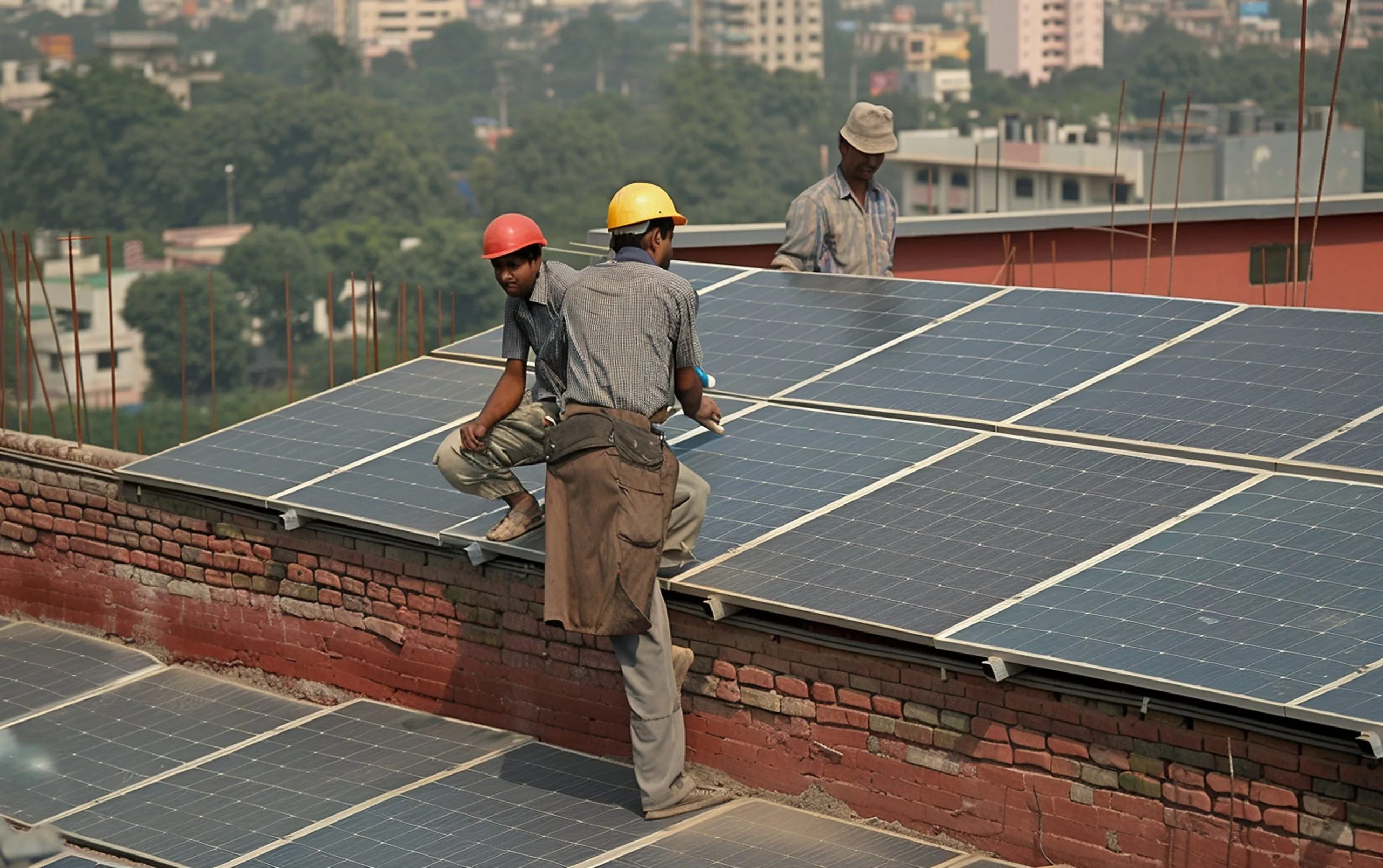
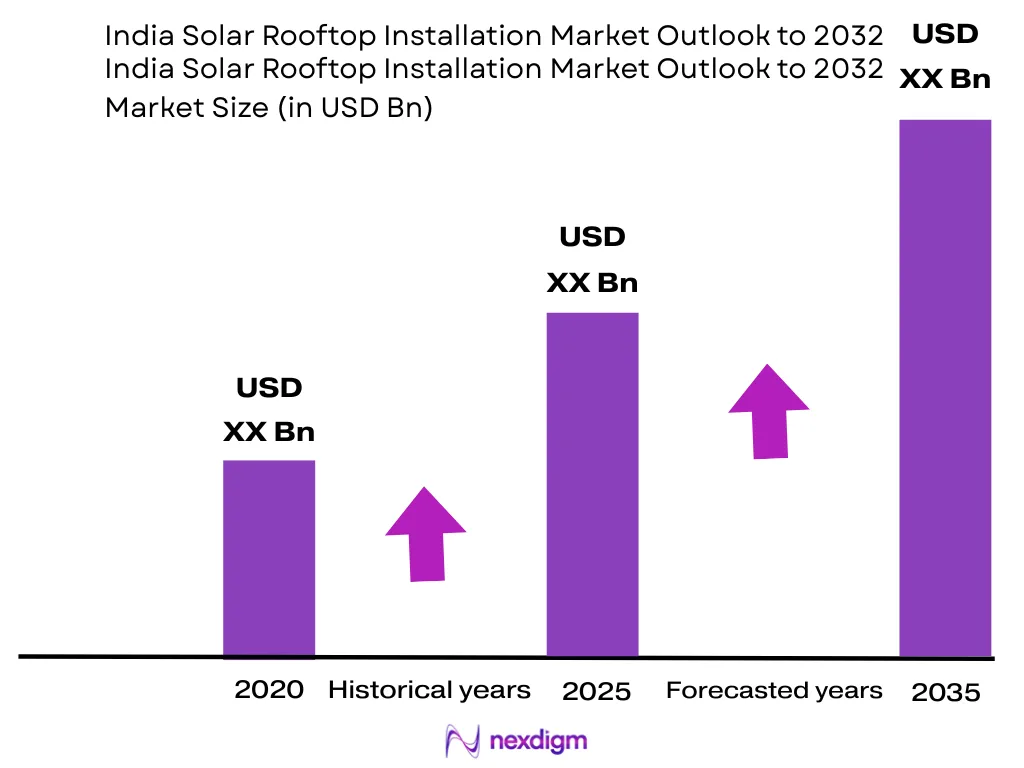
The India Solar Rooftop Installation Market has emerged as one of the most attractive renewable energy segments due to rising industrial electricity tariffs, growing corporate sustainability commitments, and favorable net-metering policies. According to the Ministry of New and Renewable Energy (MNRE), India’s cumulative rooftop solar capacity exceeded 13 GW, while total solar power capacity surpassed 90 GW. Commercial and industrial consumers account for a significant portion of rooftop solar demand because of higher grid tariffs and faster payback periods. The market size is estimated at USD ~ Billion, supported by increasing adoption among manufacturing facilities, warehouses, logistics parks, educational institutions, commercial complexes, and data centers seeking long-term energy cost optimization.
Market Segmentation
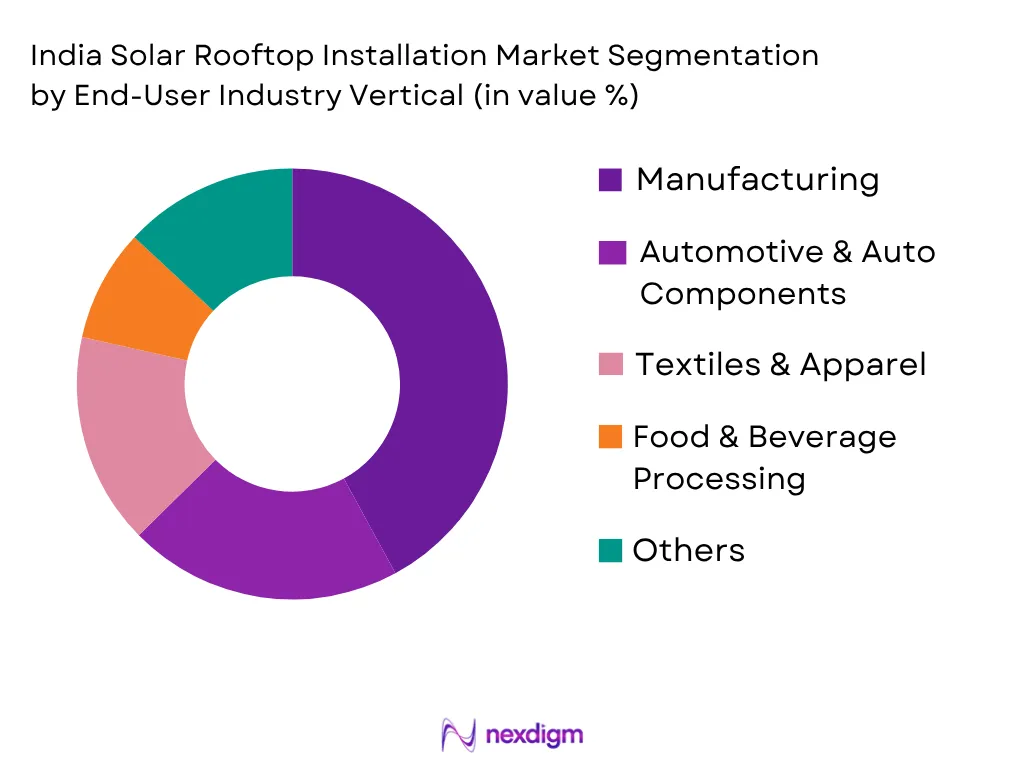
By End-User Industry Vertical
The manufacturing segment dominates the India Commercial & Industrial Rooftop Solar Installation Market due to its substantial electricity consumption and continuous operational requirements. Manufacturing facilities often operate multiple production lines, machinery systems, and utility equipment, resulting in significant energy expenditure. Rooftop solar installations provide manufacturers with an effective mechanism to reduce electricity costs, improve operational efficiency, and enhance sustainability performance. Industrial clusters across Gujarat, Maharashtra, Tamil Nadu, and Karnataka have been particularly active adopters due to favorable policy environments and rising grid power costs. Furthermore, export-oriented manufacturers increasingly face sustainability compliance requirements from global buyers, encouraging investment in renewable energy assets. The combination of high power demand, attractive project payback periods, and corporate decarbonization targets continues to reinforce manufacturing’s leadership position within the C&I rooftop solar market.
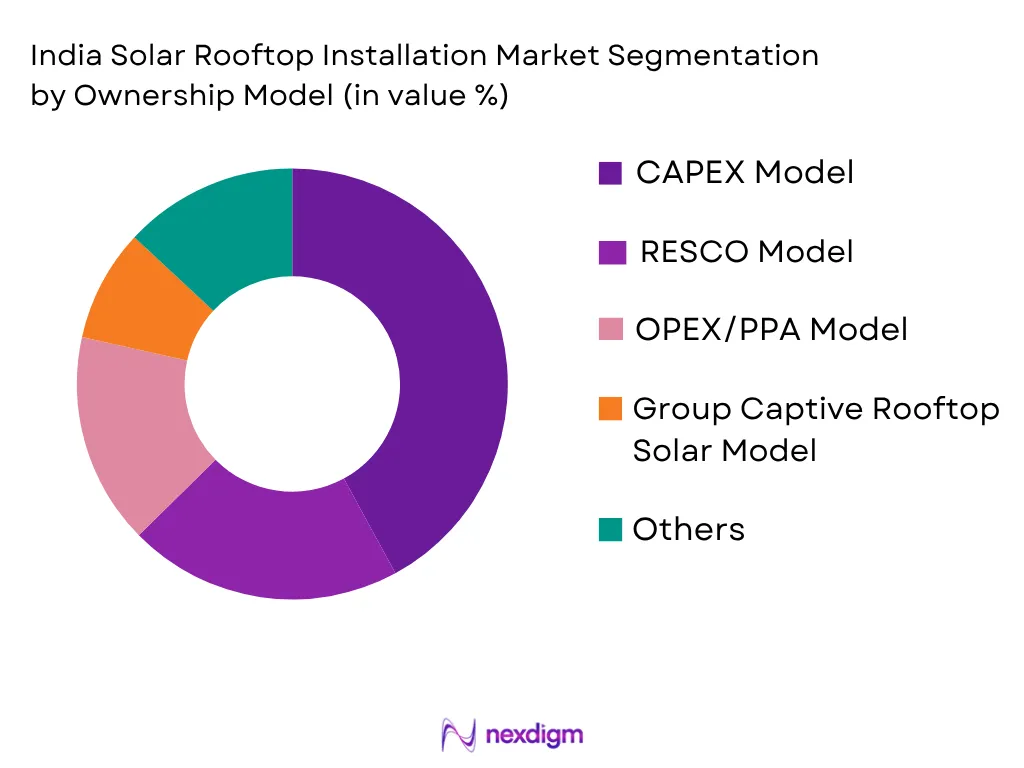
By Ownership Model
The CAPEX model continues to dominate the India Commercial & Industrial Rooftop Solar Installation Market due to its superior long-term financial benefits and asset ownership advantages. Under this model, commercial and industrial entities directly invest in rooftop solar systems and realize complete savings generated from reduced electricity purchases. Large manufacturing companies, logistics operators, pharmaceutical firms, and commercial real estate developers often prefer CAPEX investments because of their stronger financial capabilities and focus on maximizing lifecycle returns. The declining cost of solar modules and financing availability has further enhanced project viability. In addition, organizations pursuing sustainability goals increasingly view rooftop solar infrastructure as a strategic energy asset rather than a utility expense. These factors have collectively enabled the CAPEX model to maintain its dominant position despite growing adoption of third-party ownership structures.
Competitive Landscape
The India Commercial & Industrial Rooftop Solar Installation Market is characterized by the presence of established EPC contractors, renewable energy developers, and specialized rooftop solar service providers. Competition is driven by project execution capabilities, financing solutions, geographical reach, O&M expertise, and long-term client relationships. Companies increasingly compete through integrated energy solutions, digital monitoring platforms, and hybrid solar-storage offerings. The market remains moderately consolidated, with leading firms securing large commercial and industrial contracts across manufacturing facilities, logistics parks, IT campuses, educational institutions, and commercial real estate projects.
| Company | Establishment Year | Headquarters | Installed Capacity Portfolio | Ownership Models Offered
|
Geographic Presence | EPC Capability | O&M Services | Key Industry Focus |
| Tata Power Solar | 1989 | ~ | ~ | ~ | ~ | ~ | ~ | ~ |
| CleanMax | 2011 | ~ | ~ | ~ | ~ | ~ | ~ | ~ |
| Fourth Partner Energy | 2010 | ~ | ~ | ~ | ~ | ~ | ~ | ~ |
| Amplus Solar | 2013 | ~ | ~ | ~ | ~ | ~ | ~ | ~ |
| Mahindra Susten | 2010 | ~ | ~ | ~ | ~ | ~ | ~ | ~ |
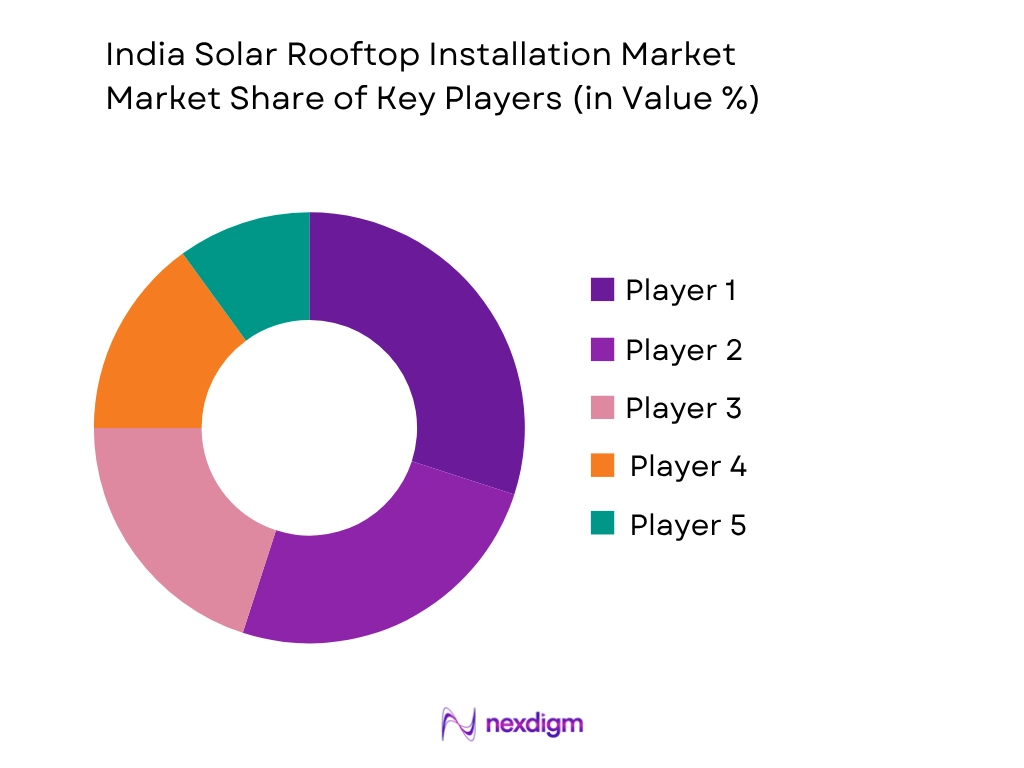
India Solar Rooftop Installation Market Analysis
Growth Drivers
Rising Industrial Electricity Tariffs and Commercial Energy Demand
India’s commercial and industrial (C&I) sector remains the largest consumer of electricity, creating strong demand for rooftop solar installations as enterprises seek to reduce long-term energy expenditure. According to the Ministry of Power, India’s total electricity generation exceeded 1,950 billion units during FY 2024-25, reflecting sustained growth in industrial and commercial electricity consumption. The Index of Industrial Production (IIP) reported by the Ministry of Statistics and Programme Implementation reached 158.4 in March 2025 compared to 151.3 in March 2024, indicating continued industrial expansion and higher power requirements. The World Bank reported India’s GDP at approximately USD 3.9 trillion in 2024, supported by robust manufacturing and service-sector activities that depend heavily on reliable electricity supply. Additionally, the Ministry of Commerce reported merchandise exports exceeding USD 437 billion in FY 2024-25, reflecting strong production activity across sectors such as automotive, pharmaceuticals, chemicals, textiles, and engineering goods. These industries increasingly utilize rooftop solar systems to hedge against grid power costs and improve energy security. The growing scale of industrial operations, coupled with increasing electricity demand from warehouses, logistics parks, IT campuses, and commercial buildings, continues to strengthen the business case for C&I rooftop solar adoption across India.
Government Renewable Energy Targets and Corporate Decarbonization Commitments
Government-led renewable energy expansion and corporate sustainability initiatives continue to accelerate rooftop solar adoption among commercial and industrial consumers. According to the Ministry of New and Renewable Energy (MNRE), India’s total installed renewable energy capacity exceeded 220 GW in 2025, while solar power capacity crossed 108 GW. The Government of India has maintained its commitment to achieving 500 GW of non-fossil fuel capacity, creating a supportive regulatory environment for distributed solar deployment. Simultaneously, the Bureau of Energy Efficiency reported increasing participation from industrial facilities under energy-efficiency and carbon-reduction programs. India’s manufacturing sector remains a major contributor to economic output, with the Reserve Bank of India reporting sustained growth in industrial production and capacity utilization above 74% during 2024. Furthermore, the Department for Promotion of Industry and Internal Trade recorded FDI inflows exceeding USD 81 billion during FY 2024-25, much of which supports manufacturing, industrial parks, logistics infrastructure, and commercial developments. Many multinational corporations operating in India have established net-zero and renewable energy procurement targets, encouraging investment in rooftop solar assets. These developments collectively create a favorable environment for the continued growth of the commercial and industrial rooftop solar installation market.
Market Challenges
Grid Integration Constraints and Regulatory Variations Across States
Despite favorable growth prospects, the India commercial and industrial rooftop solar market faces challenges associated with grid infrastructure limitations and regulatory inconsistencies. According to the Central Electricity Authority, India’s peak power demand crossed 250 GW during 2025, placing increasing pressure on transmission and distribution networks. Several industrialized states continue to experience constraints related to feeder capacity, grid stability, and renewable energy integration. The Ministry of Power reported aggregate technical and commercial losses of approximately 15% across distribution utilities, highlighting ongoing infrastructure inefficiencies. Furthermore, state-specific net metering regulations, banking policies, and approval procedures vary considerably across jurisdictions, creating uncertainty for project developers and commercial consumers. India operates through more than 30 state electricity regulatory commissions and utilities, each with distinct compliance requirements affecting rooftop solar implementation timelines. The World Bank’s logistics and infrastructure assessments continue to identify regional disparities in electricity distribution efficiency. Industrial consumers seeking multi-state solar deployment often face additional administrative burdens related to approvals, interconnection processes, and compliance requirements. These operational and regulatory complexities can delay project execution and increase transaction costs for rooftop solar developers serving commercial and industrial customers.
Financing Constraints Among Small and Medium Commercial Enterprises
Although rooftop solar systems offer attractive long-term economic benefits, financing remains a significant challenge for small and medium-sized commercial and industrial enterprises. According to the Ministry of Micro, Small and Medium Enterprises, India hosts over 63 million MSMEs, many of which operate in manufacturing, processing, warehousing, and commercial activities with substantial electricity requirements. However, access to affordable long-term financing remains limited for a large proportion of these enterprises. The Reserve Bank of India reported that credit demand from MSMEs continued to rise during 2024, reflecting ongoing capital requirements for business expansion and modernization. Simultaneously, the International Monetary Fund noted that private sector investment remains concentrated among larger corporate entities with stronger balance sheets and easier access to institutional financing. Commercial rooftop solar projects often require significant upfront capital expenditure, particularly for facilities requiring higher-capacity systems. While third-party ownership models such as RESCO and power purchase agreements are expanding, many enterprises still face challenges related to creditworthiness assessments and financing approvals. As a result, adoption rates among smaller industrial facilities, commercial buildings, and regional manufacturing units remain lower than among large corporate and multinational organizations.
Market Opportunities
Expansion of Industrial Manufacturing Corridors and Logistics Infrastructure
India’s ongoing industrialization and infrastructure development present substantial opportunities for commercial and industrial rooftop solar deployment. The Government of India continues to expand major industrial corridors including the Delhi-Mumbai Industrial Corridor, Chennai-Bengaluru Industrial Corridor, and other manufacturing clusters that require significant electricity infrastructure. According to the Department for Promotion of Industry and Internal Trade, manufacturing-related investments continued to increase during 2024 and 2025 under initiatives such as Make in India and Production Linked Incentive schemes. The Ministry of Commerce reported that warehousing demand across major logistics hubs exceeded 50 million square feet annually, driven by e-commerce, third-party logistics, and supply-chain modernization. Additionally, India’s commercial real estate sector recorded strong office and industrial space absorption across cities such as Bengaluru, Hyderabad, Pune, Chennai, and Gurugram. These facilities typically possess large rooftop areas suitable for solar installations and operate during daylight hours, maximizing solar power utilization. As industrial parks, logistics centers, warehouses, and manufacturing facilities continue expanding, rooftop solar systems are increasingly viewed as strategic infrastructure investments that improve energy efficiency, reduce operating costs, and support sustainability objectives.
Adoption of Solar Plus Storage and Smart Energy Management Solutions
The growing emphasis on energy reliability and operational efficiency is creating new opportunities for integrated rooftop solar solutions across commercial and industrial facilities. According to the Central Electricity Authority, battery energy storage deployment is becoming increasingly important for balancing renewable energy generation and supporting grid stability. India’s electricity consumption exceeded 1,700 billion units during FY 2024-25, reflecting growing energy requirements across industrial and commercial sectors. Simultaneously, the Ministry of Electronics and Information Technology reported continued growth in digital infrastructure investments, including data centers, industrial automation systems, and smart manufacturing facilities. These developments are increasing demand for uninterrupted power supply and advanced energy management capabilities. Commercial facilities such as data centers, IT parks, pharmaceutical plants, and precision manufacturing units increasingly require reliable electricity alongside sustainability improvements. The Bureau of Energy Efficiency continues promoting energy management technologies that improve operational performance and resource utilization. Consequently, the integration of rooftop solar systems with battery storage, smart monitoring platforms, AI-enabled energy analytics, and demand-response technologies presents a significant growth opportunity for market participants seeking to provide comprehensive energy solutions to India’s expanding commercial and industrial customer base.
Future Outlook
The India Commercial & Industrial Rooftop Solar Installation Market is expected to witness robust expansion over the forecast period due to increasing electricity prices, strengthening ESG commitments, and continued industrial growth. Rising investments in domestic manufacturing, warehousing infrastructure, logistics parks, and commercial real estate developments are expected to create significant opportunities for rooftop solar deployment. Technological advancements in high-efficiency solar modules, energy storage systems, and digital energy management platforms will further improve project economics. Additionally, growing carbon neutrality targets among corporations and increasing access to green financing are likely to accelerate market penetration across diverse industrial sectors. The integration of battery storage and smart energy optimization solutions is expected to become a key growth catalyst during the forecast period.
Major Players
- Tata Power Solar
- CleanMax
- Fourth Partner Energy
- Amplus Solar
- Mahindra Susten
- Sterling and Wilson Renewable Energy
- Jakson Group
- Vikram Solar
- Azure Power
- Sunsure Energy
- Hero Future Energies
- Avaada Energy
- Orb Energy
- Radiance Renewables
- KPI Green Energy
Key Target Audience
- Commercial and Industrial Facility Owners
- Manufacturing Companies
- Commercial Real Estate Developers and Operators
- Data Center Operators
- Warehousing and Logistics Infrastructure Companies
- Renewable Energy Developers and EPC Contractors
- Investment and Venture Capitalist Firms
- Government and Regulatory Bodies (Ministry of New and Renewable Energy (MNRE), Central Electricity Authority (CEA), Solar Energy Corporation of India (SECI), State Electricity Regulatory Commissions (SERCs), Central Electricity Regulatory Commission (CERC))
Research Methodology
Step 1: Identification of Key Variables
The research process begins with the development of a comprehensive ecosystem map covering rooftop solar developers, EPC providers, component manufacturers, financiers, regulators, and commercial and industrial consumers. Extensive secondary research is conducted using industry publications, government databases, company reports, and renewable energy associations. The objective is to identify key market variables influencing demand, supply, investment, and technology adoption.
Step 2: Market Analysis and Construction
Historical market data relating to installed rooftop solar capacity, project volume, investment activity, and commercial electricity consumption patterns are compiled and analyzed. Market sizing is performed using both top-down and bottom-up approaches. State-level adoption trends, ownership models, and industry-wise deployment statistics are evaluated to establish a robust market framework.
Step 3: Hypothesis Validation and Expert Consultation
Research findings and market assumptions are validated through structured interviews with industry stakeholders including EPC contractors, renewable energy developers, facility managers, technology providers, financiers, and regulatory experts. These consultations provide operational insights, pricing intelligence, project economics data, and demand-side perspectives that enhance the accuracy of market estimates.
Step 4: Research Synthesis and Final Output
The final stage involves triangulating information obtained from primary interviews, secondary sources, financial disclosures, policy documents, and industry databases. Data inconsistencies are reconciled and validated through multiple verification rounds. The resulting analysis provides a comprehensive assessment of market dynamics, competitive positioning, growth opportunities, and future outlook for the India Commercial & Industrial Rooftop Solar Installation Market.

- Executive Summary
- Research Methodology (Market Definitions and Assumptions, Abbreviations, Market Sizing Approach, Top-Down Analysis, Bottom-Up Analysis, EPC Industry Assessment, Demand-Side Assessment, Supply-Side Assessment, Primary Industry Interviews, Capacity Mapping Framework, Financial Modeling Approach, Data Triangulation, Forecasting Framework, Limitations and Future Conclusions)

- Definition and Scope
- Market Evolution and Industry Genesis
- Timeline of Key Industry Developments
- Business Cycle Analysis
- Commercial & Industrial Solar Ecosystem Structure

- Growth Drivers (Rising Industrial Power Tariffs, Accelerated Renewable Energy Targets, Corporate ESG Commitments, Attractive Rooftop Solar IRR, Manufacturing Sector Expansion, Increasing Grid Electricity Costs, Decarbonization Initiatives, Green Financing Availability)
- Market Challenges (DISCOM Resistance, Net Metering Restrictions, Roof Space Limitations, Policy Uncertainty Across States, Financing Constraints for SMEs, Grid Integration Issues, Landlord-Tenant Ownership Complexities)
- Market Opportunities (Battery Energy Storage Integration, Green Hydrogen Linked Installations, Data Center Solar Adoption, Industrial Cluster Solarization, Solar for Logistics Parks, Commercial Real Estate Decarbonization, Carbon Credit Monetization, AI-Driven Energy Management Solutions)
- Market Trends (High-Efficiency TOPCon Modules Adoption, Bifacial Module Deployment, Smart Monitoring Platforms, Hybrid Solar + Storage Systems, Digital O&M Solutions, AI-Based Energy Analytics, Corporate Renewable Procurement Growth, Domestic Module Sourcing)
- Regulatory and Policy Landscape (ALMM Compliance, Net Metering Policies, Grid Connectivity Regulations, Renewable Purchase Obligations, Open Access Regulations, ISTS Benefits, Approved EPC Standards, Rooftop Solar Subsidy Exclusions for C&I Sector)
- Financial Feasibility Analysis (Project IRR, Payback Period, Levelized Cost of Electricity, Debt-Equity Structure, PPA Pricing Benchmarks, OPEX vs CAPEX Comparison)
- State-wise Policy Attractiveness Index
- Rooftop Solar Adoption Maturity Assessment
- ESG and Sustainability Impact Assessment
- SWOT Analysis
- Porter’s Five Forces Analysis
- PESTLE Analysis
- Stakeholder Ecosystem
- Competition Ecosystem

- By Market Value (2020-2025)
- By Installed Capacity (2020-2025)
- By Number of Projects (2020-2025)

- By End User Industry Vertical (In Value %)
Manufacturing
Automotive and Auto Components
Food & Beverage Processing
Pharmaceuticals
Textiles and Apparel
Chemicals and Petrochemicals
Cement and Building Materials
Warehousing and Logistics
Data Centers
Commercial Real Estate and Business Parks
Retail and Shopping Complexes
Hospitality
Healthcare Facilities
Educational Institutions
Airports and Transportation Infrastructure - By System Capacity (In Value %)
Up to 100 kW
100 kW–500 kW
500 kW–1 MW
1 MW–5 MW
Above 5 MW - By Installation Type (In Value %)
Metal Sheet Roof Installations
RCC Roof Installations
Elevated Rooftop Systems
Carport Solar Installations
Hybrid Rooftop Systems with Storage - By Component Type (In Value %)
Solar Modules
Inverters
Mounting Structures
Energy Storage Systems
Monitoring and Control Systems
Balance of System Components - By Region (In Installed Capacity %)
North India
South India
West India
East India
Central India

- Market Share Analysis of Major Players(By Revenue, By Installed Capacity, By Number of Projects, By Industry Vertical, By State Presence, By Ownership Model)
- Cross Comparison Parameters (Installed Rooftop Capacity, Number of C&I Projects Executed, EPC Execution Capability, Geographic Presence Across States, O&M Portfolio Size, Average Project Ticket Size, Solar Module Procurement Partnerships, RESCO/PPA Portfolio Strength)
- Competitive Benchmarking Matrix
- SWOT Analysis of Major Players
- Detailed Profiles of Major Companies
Tata Power Solar
Fourth Partner Energy
Amplus Solar
Mahindra Susten
CleanMax
Sterling and Wilson Renewable Energy
Jakson Group
Vikram Solar
Azure Power
Sunsure Energy
Hero Future Energies
Avaada Energy
Orb Energy
Radiance Renewables
KPI Green Energy

- Commercial and Industrial Power Consumption Analysis
- Electricity Cost Benchmarking Across Industry Verticals
- Renewable Energy Procurement Assessment
- Energy Demand Profile Analysis (Peak Load, Base Load, Daytime Consumption, Load Factor)
- Investment Decision Framework

- By Market Value (2026-2032)
- By Production Volume (2026-2032)
- By Average Selling Price (2026-2032)


 Request a Sample
 Ask for Customization
 Get a Quote
 Enquire Now