
 Download PDF
Market Overview
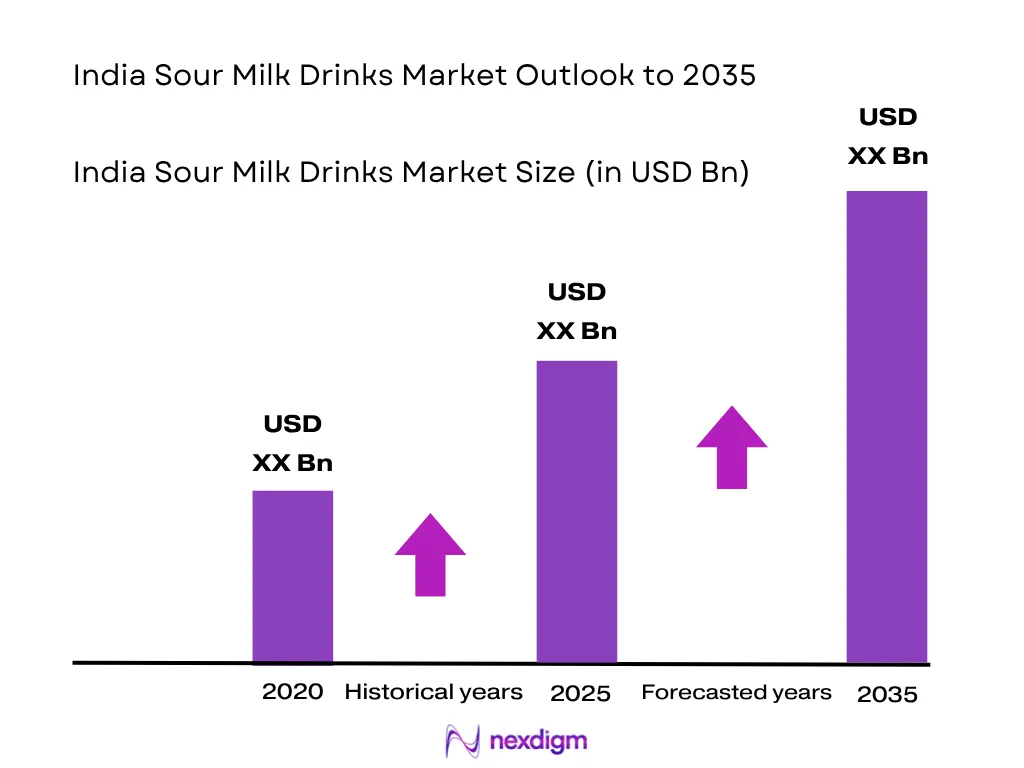
The India Sour Milk Drinks Market, covering packaged buttermilk/chaas and lassi, is valued at USD ~ billion, based on the combined published India buttermilk value of USD ~ billion and India lassi value of USD ~ million. The category is driven by digestive wellness, summer refreshment occasions, ready-to-drink dairy adoption and India’s expanding milk base, with official milk production moving from 230.6 million tonnes to 239.3 million tonnes in the latest annual series.
Delhi NCR, Mumbai, Bengaluru, Hyderabad, Chennai, Ahmedabad, Pune, Kolkata, Jaipur and Chandigarh dominate India Sour Milk Drinks consumption because they combine high dairy retail density, organized grocery access, office-led impulse consumption, quick-commerce penetration and strong regional taste fit. Gujarat and North India support chaas and lassi depth, while South India has buttermilk drinking traditions. Quick commerce accounted for over two-thirds of India e-grocery orders and scaled to USD ~ billion, improving chilled dairy availability.
Market Segmentation
By Product Type
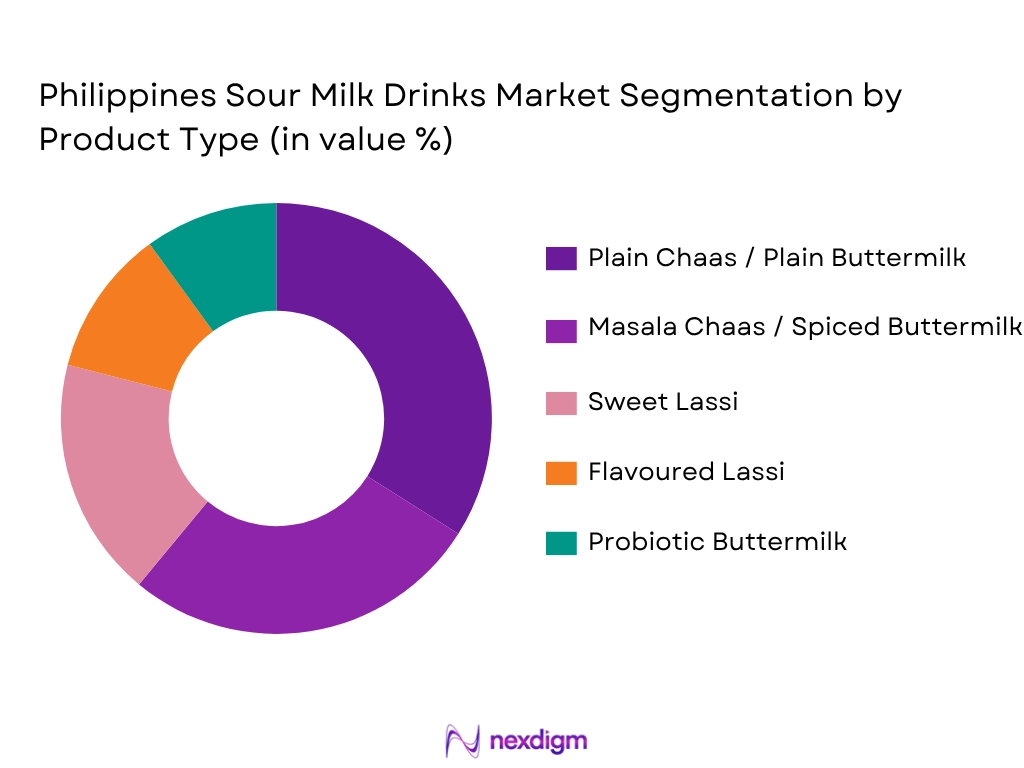
India Sour Milk Drinks Market is segmented by product type into plain chaas/buttermilk, masala chaas, probiotic buttermilk, sweet lassi, flavoured lassi and functional fermented milk drinks. Plain and masala chaas/buttermilk dominate the market because they operate at a low unit price, fit daily meal accompaniment, and are consumed across homes, offices, canteens, highway outlets and kirana-led impulse occasions. Chaas has stronger repeat frequency than lassi because it is lighter, salted, digestive and compatible with Indian lunch and dinner occasions. Branded players such as Amul, Mother Dairy, Nandini and Verka have scaled this segment through pouches, Tetra Pak cartons and bottles. Lassi remains important but is more occasion-led, thicker, sweeter and relatively premium, making it stronger in North India, modern trade and foodservice.
By Packaging Format
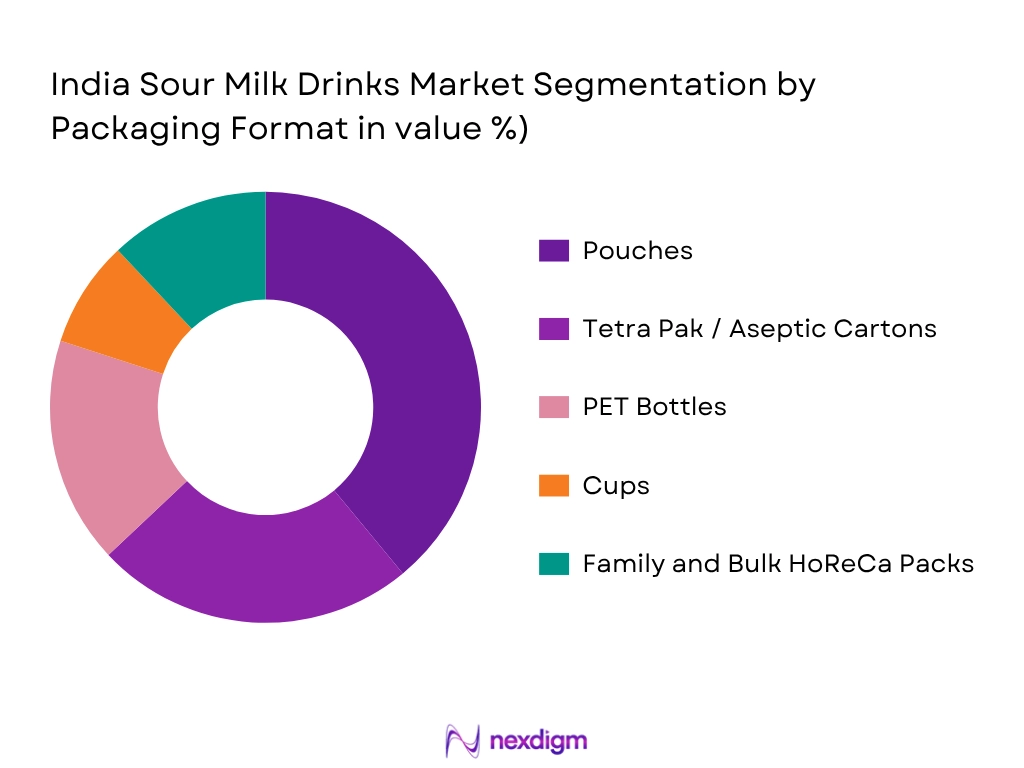
India Sour Milk Drinks Market is segmented by packaging format into pouches, Tetra Pak/aseptic cartons, PET bottles, cups, family packs and bulk HoReCa packs. Pouches dominate because they support mass pricing, daily milk-route distribution and high-frequency household consumption, particularly for buttermilk and chaas. The pouch format aligns with India’s dairy infrastructure, where cooperatives and regional processors already distribute milk and curd through chilled routes. Tetra Pak/aseptic cartons are gaining importance in travel retail, modern trade and quick commerce because of longer shelf life and easier inventory handling. PET bottles are preferred for lassi and premium chaas because they improve on-the-go usability and shelf visibility. Bulk packs remain relevant for restaurants, thali chains, industrial canteens and catering buyers.
Competitive Landscape
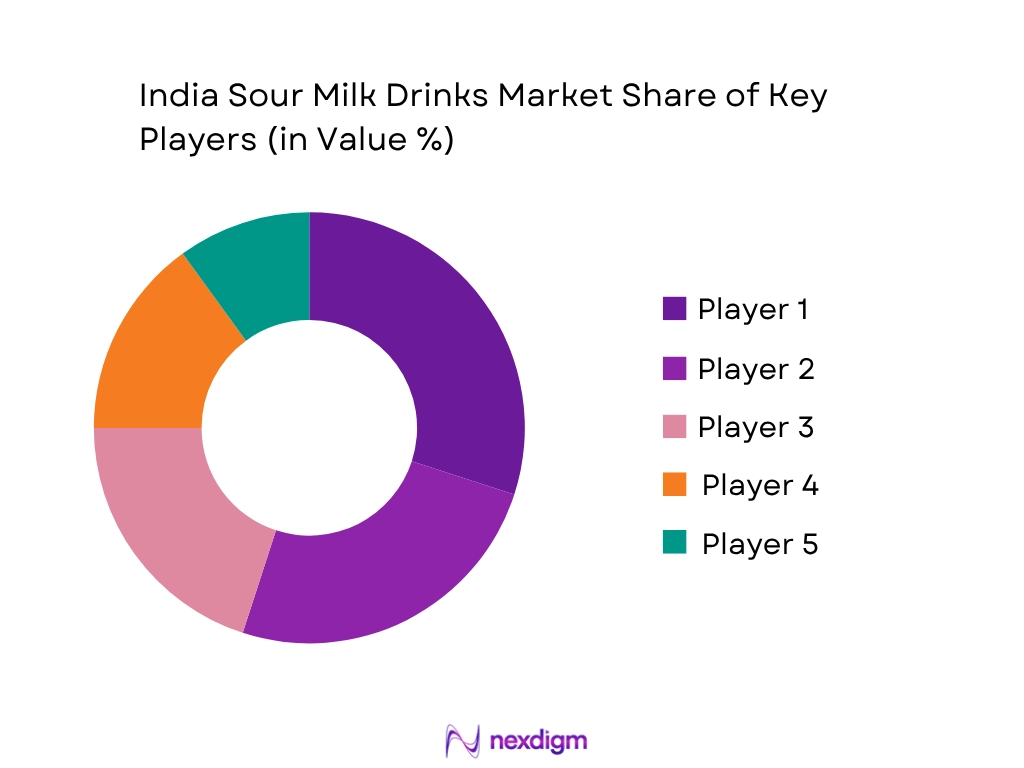
The India Sour Milk Drinks Market is led by dairy cooperatives, national packaged dairy companies, regional private dairies and emerging fresh dairy beverage chains. Competition is concentrated around Amul, Mother Dairy, Nandini, Verka and regional dairy brands because sour milk drinks require reliable milk procurement, fermentation capability, cold-chain reach, retailer trust and high-frequency distribution. Private players compete through premium lassi, PET bottles, probiotics, high-protein SKUs and quick-commerce visibility, while cooperatives dominate value packs and mass distribution.
| Company | Establishment Year | Headquarters | Key Sour Milk Drink Portfolio | Core Pack Formats | Storage Focus | Route-to-Market Strength | Regional Stronghold | Innovation Focus |
| Gujarat Cooperative Milk Marketing Federation — Amul | 1946 | Anand, Gujarat | ~ | ~ | ~ | ~ | ~ | ~ |
| Mother Dairy | 1974 | New Delhi | ~ | ~ | ~ | ~ | ~ | ~ |
| Karnataka Milk Federation — Nandini | 1974 | Bengaluru, Karnataka | ~ | ~ | ~ | ~ | ~ | ~ |
| Punjab State Cooperative Milk Producers’ Federation — Verka | 1973 | Chandigarh | ~ | ~ | ~ | ~ | ~ | ~ |
| Hatsun Agro Product — Arokya | 1970 | Chennai, Tamil Nadu | ~ | ~ | ~ | ~ | ~ | ~ |
India Sour Milk Drinks Market Analysis
Growth Drivers
Digestive Wellness
Digestive wellness is a core driver for India Sour Milk Drinks Market because chaas, buttermilk and lassi sit inside an officially recognized fermented dairy category rather than being positioned only as refreshment beverages. FSSAI defines drinks based on fermented milk as products containing a minimum of 40 grams of fermented milk per 100 grams and specifically includes lassi, chhaach and buttermilk within this category; it also permits starter cultures, salt, sugar, fruits, vegetables, spices, condiments, culinary herbs, prebiotics and probiotics in such drinks. This regulatory structure gives brands a direct basis to build digestive, cultured and traditional dairy propositions around chaas and lassi. The demand base is supported by India’s large dairy supply system: official DAHD data places India’s milk production at 239.30 million tonnes and per-capita milk availability at 471 grams per day, while India remains the world’s largest milk producer and contributes about 25 units out of every 100 units of global milk output. The consumer foundation is also broad, with the World Bank placing India’s population at about 1.45 billion people and GDP per capita at USD 2,694.7, supporting wider packaged dairy penetration through affordability-led single-serve packs. For sour milk drinks, these numbers matter because digestive positioning requires both regular consumption occasions and reliable milk input availability; chaas fits lunch and post-meal occasions, while lassi extends the same fermented dairy base into thicker, more indulgent usage occasions.
Heat-Led Consumption
Heat-led consumption strongly supports India Sour Milk Drinks Market because chaas and lassi are culturally embedded summer beverages with a practical role in hydration, satiety and meal accompaniment. IMD’s annual climate summary states that India’s mean land surface air temperature was 0.65°C above the 1991–2020 average, making it the warmest year recorded since 1901; the same IMD-backed summary records 54 heatwave days within the 92-day pre-monsoon season. Southern India also recorded unusually high temperatures, with maximum temperature at 35.2°C and minimum temperature at 23.3°C, strengthening demand for chilled, salted and fermented dairy beverages across states where buttermilk consumption is already habitual. This weather backdrop interacts with urbanization and formal grocery access. The World Bank records India’s GDP at USD 3.91 trillion and urban population at 35 units per 100 people, while quick-service retail, dairy booths, kirana refrigeration and app-led grocery delivery have improved access to chilled dairy beverages in metro and tier-I consumption pockets. For sour milk drinks, heat intensity converts chaas from a regional food habit into a mass-market summer refreshment category, especially in Delhi NCR, Gujarat, Rajasthan, Maharashtra, Karnataka and Tamil Nadu. Unlike carbonated soft drinks, chaas and lassi draw from the milk ecosystem and local taste codes, making heat spikes directly relevant for consumption frequency, chilled shelf visibility and impulse pack movement.
Market Challenges
Shelf-Life Sensitivity
Shelf-life sensitivity is a structural challenge in India Sour Milk Drinks Market because chaas, buttermilk and lassi depend on live or processed fermented milk bases, refrigerated storage, acidity control, microbial safety and rapid retail rotation. FSSAI’s standard requires fermented milk drinks to contain at least 40 grams of fermented milk per 100 grams, and it permits viable starter microorganisms, salt, sugar, spices, fruit preparations, prebiotics and probiotics; these ingredients expand product variety but also raise formulation, stability and quality-control requirements. Unlike shelf-stable beverages with simpler chemistry, sour milk drinks can face texture separation, sourness drift, sedimentation, spoilage and consumer rejection if cold-chain discipline is weak. The challenge is magnified by the scale of India’s dairy movement. NDDB reports cooperative milk procurement of 676 lakh kilograms per day and average liquid milk sales of 444 lakh litres per day, while DAHD records private dairy processing capacity of 1,164 lakh litres per day under FSSAI-licensed milk processing units. This enormous daily flow helps supply chaas and lassi but also increases complexity in route planning, temperature control, quality checks and expiry management. Food processing infrastructure is improving, with MoFPI reporting 399 cold-chain projects, 41 mega food parks, 76 agro-processing clusters and 588 food processing units approved under PMKSY as of June 2024. However, sour milk drinks still remain more operationally sensitive than many dry, ambient or long-shelf-life packaged foods because pack movement, chiller reliability and retailer handling directly affect drink quality.
Milk Procurement Volatility
Milk procurement volatility affects India Sour Milk Drinks Market because chaas and lassi production depends on continuous availability of milk, curd base, skim milk solids and standardized dairy inputs. DAHD records India’s milk production at 239.30 million tonnes and per-capita milk availability at 471 grams per day, while BAHS 2025 places total milk output at 247.87 million tonnes and per-capita availability at 485 grams per day. This large base supports value-added sour milk drinks, but procurement remains operationally exposed to seasonality, animal yield variation, regional production concentration and competition between fluid milk, curd, paneer, butter, powder and fermented beverages. DAHD’s yield table shows material productivity differences: exotic cows yield 9.82 kilograms per animal per day, crossbred cows 8.35 kilograms, indigenous cows 4.20 kilograms, non-descript cows 3.00 kilograms, indigenous buffalo 6.63 kilograms, non-descript buffalo 4.73 kilograms and goats 0.48 kilograms. These gaps matter because milk composition and availability affect the consistency of lassi thickness, chaas dilution, fat/SNF balance and fermentation performance. Procurement systems are expanding but remain regionally uneven. NDDB reports cooperative procurement at 676 lakh kilograms per day, while White Revolution 2.0 was formally rolled out in December 2024 to strengthen dairy cooperatives and organized collection. For sour milk drink companies, procurement volatility creates pressure on production planning, plant utilization, curd base standardization and channel-level continuity, especially during high-heat periods when demand spikes and raw milk must also serve liquid milk and other fresh dairy priorities.
Market Opportunities
High-Protein Cultured Dairy
High-protein cultured dairy is a credible opportunity for India Sour Milk Drinks Market because the existing fermented milk framework can accommodate functional extensions without moving away from the category’s traditional base. FSSAI permits prebiotics, probiotics, milk products, fruits, cereals, nuts and other safe non-dairy ingredients in drinks based on fermented milk, creating regulatory room for protein-enhanced chaas, active-culture buttermilk and thicker lassi-style functional beverages. The opportunity is supported by India’s expanding dairy availability: BAHS 2025 records 247.87 million tonnes of milk production and 485 grams per day of per-capita milk availability, while DAHD records India as the world’s largest milk producer. The macroeconomic base also supports premium functionalization: World Bank data places India’s GDP at USD 3.91 trillion, GDP per capita at USD 2,694.7, and population at about 1.45 billion people, giving manufacturers a large addressable pool for affordable functional dairy packs as well as premium urban SKUs. MoFPI also reports that food processing GVA reached Rs 2.24 lakh crore, and the sector attracted USD 7.33 billion in FDI equity inflow across April 2014–March 2025, indicating a stronger investment environment for value-added food manufacturing. For sour milk drink brands, this supports extensions such as protein chaas, gym-oriented cultured beverages, probiotic lassi, low-fat buttermilk and office-snacking dairy drinks. The category can grow by converting traditional consumption into functional, packaged, shelf-visible formats without disconnecting from Indian taste habits.
Regional Flavor Portfolios
Regional flavor portfolios represent a strong future growth opportunity for India Sour Milk Drinks Market because India’s sour dairy consumption is not uniform: chaas, chhaach, majjige, neer mor, salted lassi and sweet lassi differ by state, spice profile, texture and consumption occasion. FSSAI permits spices, condiments, culinary herbs, fruits, vegetables, cereals, nuts, honey and other safe ingredients in drinks based on fermented milk, allowing companies to build localized portfolios around jeera, mint, curry leaves, ginger, green chilli, black salt, mango, rose, kesar and rabri-style flavours. Supply-side regionalization is also supported by the dairy base. BAHS 2025 identifies Uttar Pradesh, Rajasthan, Madhya Pradesh, Gujarat and Maharashtra as the top five milk-producing states, while total national milk production stands at 247.87 million tonnes and per-capita availability at 485 grams per day. On the distribution side, NDDB reports cooperative milk procurement of 676 lakh kilograms per day and average liquid milk sales of 444 lakh litres per day, giving regional cooperatives and private dairies a strong platform to localize sour milk drink SKUs. Government-backed food processing infrastructure also strengthens regional portfolio development: MoFPI reported 41 mega food parks, 399 cold-chain projects, 76 agro-processing clusters, 588 food processing units, 61 backward and forward linkage projects and 52 Operation Greens projects approved under PMKSY as of June 2024. For brands, this creates room to move beyond plain chaas into state-specific masala chaas, North-style thick lassi, South-style spiced buttermilk and premium festive lassi variants.
Future Outlook
The India Sour Milk Drinks Market is expected to expand at a forecasted CAGR of about 17.7% for the 2026–2035 period, based on a consolidated outlook built from published India buttermilk and lassi forward values. NEXDIGM places India buttermilk at INR 228.4 billion and forecasts INR 1,011.8 billion by 2034, while India lassi is placed at INR 65.5 billion and forecast at INR 264.9 billion by 2034.
Growth will be driven by the shift from homemade and loose chaas to branded packaged formats, expansion of quick commerce, wider availability of ambient packs, and product premiumization in lassi. Chaas will continue to lead because of affordability and daily consumption frequency, while lassi will expand through flavour-led premiumization, dessert positioning and North Indian consumption strength. Functional fermented dairy drinks are expected to scale from a small base as brands introduce probiotic, high-protein, low-fat and digestive wellness variants.
Major Players
- Amul
- Mother Dairy Fruit & Vegetable
- Nandini
- Verka
- Aavin
- Saras
- Arokya
- Heritage Foods
- Milky Mist Dairy Food
- Dodla Dairy
- Jersey
- Gowardhan / Go
- Britannia Dairy
- Epigamia
- Chhaswala
Key Target Audience
- Packaged dairy manufacturers
- Dairy cooperatives and state milk federations
- Quick commerce and online grocery platforms
- Supermarket, hypermarket and convenience retail chains
- HoReCa operators and institutional foodservice buyers
- Packaging, aseptic filling and cold-chain infrastructure providers
- Investments and venture capitalist firms
- Government and regulatory bodies (FSSAI, Department of Animal Husbandry and Dairying, National Dairy Development Board, Ministry of Food Processing Industries, APEDA)
Research Methodology
Step 1: Identification of Key Variables
The initial phase involves constructing an ecosystem map of India Sour Milk Drinks Market stakeholders, including dairy cooperatives, private dairies, milk unions, cold-chain operators, retailers, HoReCa buyers and quick-commerce platforms. Core variables include milk procurement, fermentation capacity, SKU mix, regional taste preference, packaging type, retail offtake and average selling price.
Step 2: Market Analysis and Construction
Historical data is compiled from published market reports, dairy production statistics, company product portfolios, retail SKU mapping and channel-level availability. The market is constructed by combining buttermilk/chaas and lassi values, then validating the build-up against product-level pricing, pack-size distribution and organized versus unorganized conversion.
Step 3: Hypothesis Validation and Expert Consultation
Market hypotheses are validated through structured discussions with dairy processors, distributors, modern trade category managers, quick-commerce dairy buyers, institutional caterers and HoReCa purchase heads. These consultations help assess actual shelf movement, spoilage rates, regional flavour demand, channel margins and branded conversion from homemade or loose sour milk drinks.
Step 4: Research Synthesis and Final Output
The final phase integrates secondary research, company mapping, trade interviews and bottom-up SKU assessment into a unified market view. Segmentation shares are synthesized by product type and packaging format, while future outlook is developed using category-specific growth indicators such as ambient packaging, probiotic launches, quick-commerce penetration and regional dairy expansion.

- Executive Summary
- Research Methodology (Market definitions and assumptions for chaas, buttermilk, lassi and fermented milk drinks; abbreviations; top-down dairy beverage market sizing; bottom-up SKU-level retail build-up; primary interviews with dairy processors, distributors, kirana owners, modern trade buyers, HoReCa operators and institutional buyers; demand triangulation through household consumption, retail offtake and foodservice pull; price-pack architecture analysis; cold-chain and ambient channel validation; limitations and future conclusions)

- Definition and Scope
- Market Genesis and Evolution
- Timeline of Major Branded and Cooperative Players
- Business Cycle and Seasonality
- Supply Chain and Value Chain Analysis
- Consumption Culture and Regional Drink Mapping
- Organized versus Unorganized Market Structure
- Retail Shelf Architecture and Cold-Chain Dependency
- B2C, HoReCa and Institutional Consumption Flow

- Growth Drivers (Digestive wellness, heat-led consumption, low-sugar beverage substitution, traditional drink modernization, branded dairy trust, quick commerce expansion, aseptic packaging adoption)
- Market Challenges (Shelf-life sensitivity, milk procurement volatility, cold-chain breaks, curd solids consistency, seasonal demand swings, low-margin pouch economics)
- Market Opportunities (Kefir commercialization, zero-lactose sour milk, high-protein cultured dairy, regional flavor portfolios, subscription multipacks, pharmacy-wellness channel)
- Market Trends (High-protein buttermilk, probiotic chaas, regional masala variants, aseptic mini packs, dairy franchise formats, quick-commerce chilled dairy baskets)
- Regulatory Landscape (FSSAI fermented milk drink standards, dairy hygiene, permitted additives, labelling, probiotic claims, packaging and storage declaration)
- Porter’s Five Forces (Milk sourcing power, retailer bargaining, local dairy substitution, branded rivalry, new entrant cold-chain barriers)
- SWOT Analysis (Traditional relevance, affordability, short shelf life, health positioning, flavour innovation, unorganized competition)

- By Value (2020-2025)
- By Volume (2020-2025)
- By Average Selling Price (2020-2025)
- By Branded versus Loose/Local Consumption (2020-2025)
- By Retail Pack Equivalent Consumption (2020-2025)

- By Product Type (In Value%)
Plain Chaas / Plain Buttermilk
Masala Chaas / Spiced Buttermilk
Probiotic Buttermilk
Sweet Lassi
Mango Lassi
Rose, Kesar, Rabri and Premium Lassi
Salted Lassi
High-Protein / Functional Fermented Milk Drinks - By Packaging Format (In Value%)
Pouches
Tetra Pak / Aseptic Cartons
PET Bottles
Cups
Family Packs
Bulk HoReCa Packs - By Storage Type (In Value%)
Chilled Sour Milk Drinks
Ambient / Shelf-Stable Sour Milk Drinks
Fresh Outlet-Served Sour Milk Drinks
Institutional Short-Shelf-Life Packs - By Distribution Channel (In Value%)
Kirana and General Trade
Milk Booths and Cooperative Parlours
Supermarkets and Hypermarkets
Convenience Stores
Quick Commerce
Online Grocery Platforms
Dairy QSR and Franchise Outlets
HoReCa
Institutional Canteens and Corporate Cafeterias - By End User (In Value%)
Households
Working Professionals and Students
HoReCa Operators
Institutional Buyers
Travel, Transit and Highway Retail
Fitness and Health-Focused Consumers - By Price Positioning (In Value%)
Economy
Mainstream
Premium
Functional / High-Protein
Fresh Premium Outlet-Served - By Region (In Value%)
North India
West India
South India
East India
Central India
Tier-I Cities
Tier-II and Tier-III Cities
Rural and Semi-Urban Markets - By Flavour Profile (In Value%)
Plain / Natural
Jeera and Masala
Mint and Digestive Spice
Ginger and Green Chilli
Mango
Rose
Kesar / Saffron
Rabri / Malai
Salted
Regional Spice Blends

- Market Share of Major Players (Value share, volume share, branded chaas share, lassi share, regional dominance, channel reach)
- Competition Ecosystem (National cooperatives, state milk federations, regional private dairies, premium cultured dairy brands, franchise beverage chains)
- Cross Comparison Parameters (Chaas and lassi SKU depth; cold-chain reach; Tetra Pak/ambient capability; regional milk procurement strength; probiotic/high-protein innovation; average price per ml; quick-commerce and modern trade visibility; flavour localization capability)
- Pricing Analysis by SKU and Pack Size (Pouch pricing, 180–200 ml single serve, 270–450 ml chilled packs, 1 litre family packs, outlet-served glass and bottle pricing)
- SWOT Analysis of Major Players (Brand trust, procurement network, product innovation, regional dependence, shelf-life capability, channel margins)
- Detailed Profiles of Major Companies
Amul
Mother Dairy Fruit & Vegetable
Nandini
Verka
Aavin
Saras
Arokya
Heritage Foods
Milky Mist Dairy Food
Dodla Dairy
Jersey
Gowardhan / Go
Britannia Dairy
Epigamia
Chhaswala

- Consumer Cohort Analysis (Children, students, working professionals, homemakers, elderly consumers, fitness consumers)
- Occasion-Based Demand (Breakfast accompaniment, lunch thali, post-meal digestion, summer refreshment, travel consumption, office snacking)
- Purchase Decision Journey (Brand trust, price, pack size, flavour, availability, expiry date, refrigeration confidence)
- Needs, Desires and Pain Points (Refreshing taste, digestive comfort, hygiene assurance, convenient pack, consistent sourness, low sugar)
- Urban versus Rural Demand Behaviour (Modern retail access, milk booth dependence, local dairy preference, home preparation intensity)
- Institutional Buying Criteria (Shelf life, bulk pricing, supply reliability, cold-chain compliance, menu compatibility)

- By Value (2026-2035)
- By Volume (2026-2035)
- By Average Selling Price (2026-2035)
- By Branded Penetration (2026-2035)
- By Organized Retail and Quick-Commerce Contribution (2026-2035)


 Request a Sample
 Ask for Customization
 Get a Quote
 Enquire Now