
 Download PDF
Market Overview
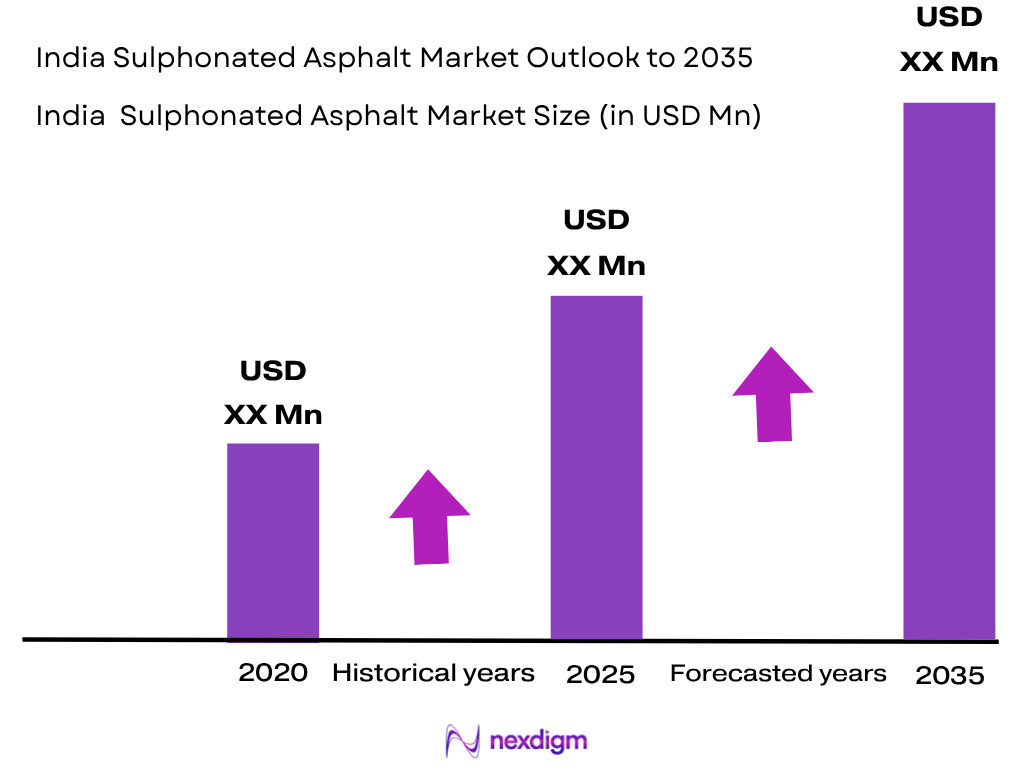
The India Sulphonated Asphalt Market is valued at ~USD XX million, supported by increasing oil and gas exploration activities and rising adoption of specialized drilling fluid additives. The market is driven by India’s requirement to improve domestic hydrocarbon production capabilities and reduce dependence on energy imports. India recorded crude oil production of approximately 29.4 million tonnes in FY2023-24, while natural gas production reached around 36.4 billion cubic meters, supporting continued drilling and exploration activity. Sulphonated asphalt demand is increasing due to its application in water-based and oil-based drilling mud systems for shale stabilization and filtration control.
The India Sulphonated Asphalt Market is concentrated around major oil and gas producing regions including Mumbai Offshore, Gujarat, Rajasthan, Assam and Andhra Pradesh due to their established exploration infrastructure and active drilling operations. The Mumbai Offshore basin remains one of India’s largest hydrocarbon-producing regions, while Rajasthan’s Barmer basin has become a significant onshore production centre. Gujarat and Assam continue to support exploration activities due to mature oilfields and refinery-linked infrastructure. The presence of oilfield service providers, drilling contractors and chemical suppliers in these regions supports greater consumption of sulphonated asphalt-based drilling additives.
Market Segmentation
By Product Type
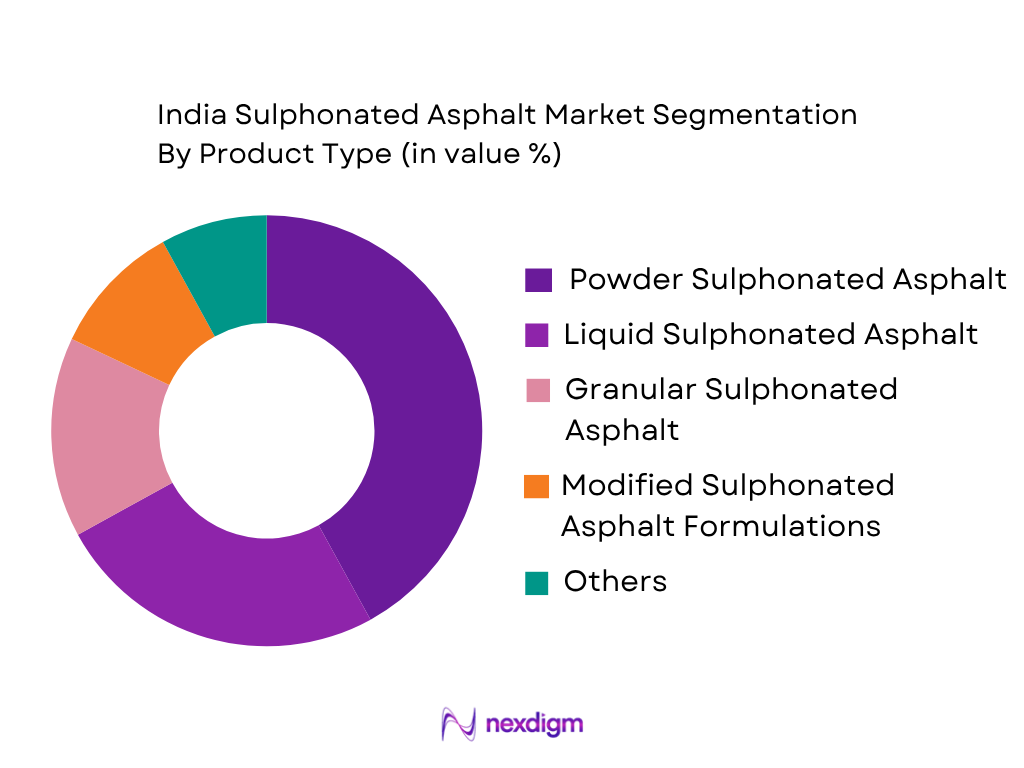
The India Sulphonated Asphalt Market is segmented by product type into powder sulphonated asphalt, liquid sulphonated asphalt, granular sulphonated asphalt, modified sulphonated asphalt formulations and specialty drilling fluid grade sulphonated asphalt. Powder sulphonated asphalt is expected to represent the dominant segment due to its extensive application in oilfield drilling operations, ease of transportation and longer storage stability. Powder grades are widely preferred by drilling contractors because they can be easily blended into drilling mud systems and provide effective filtration control and shale stabilization properties. Liquid formulations are gaining adoption where rapid dispersion and simplified chemical handling are required. Modified formulations are increasingly used in technically demanding wells requiring improved temperature resistance and enhanced rheological performance.
By Application Type
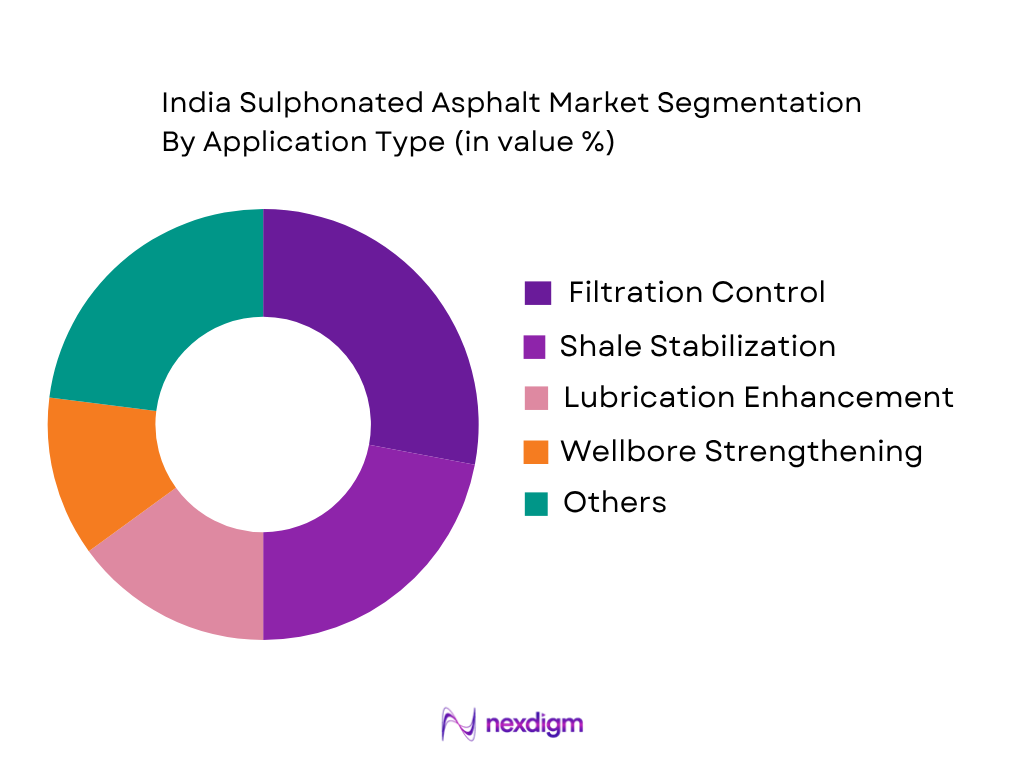
The India Sulphonated Asphalt Market is segmented by application type into shale stabilization, filtration control, lubrication enhancement, wellbore strengthening, clay inhibition, drilling fluid conditioning, lost circulation control and high-temperature high-pressure drilling applications. Filtration control is expected to dominate the application segment because maintaining drilling fluid stability is essential for efficient well construction. Sulphonated asphalt additives help create improved filter cakes, reduce fluid invasion into formations and maintain drilling performance under challenging geological conditions. The increasing complexity of horizontal and directional wells has increased demand for additives capable of controlling filtration losses while improving wellbore stability. Shale stabilization applications are also expanding due to the growing requirement for preventing formation swelling and instability during drilling operations.
Competitive Landscape
The India Sulphonated Asphalt Market is characterized by the presence of global oilfield chemical suppliers, drilling fluid technology providers, specialty chemical manufacturers and regional formulation companies. Competition is influenced by product performance, drilling fluid compatibility, technical support capabilities, manufacturing capabilities and relationships with oilfield service providers. Sulphonated asphalt products are primarily positioned as multifunctional drilling additives used for shale stabilization, filtration control, lubricity improvement and wellbore conditioning in water-based and oil-based mud systems.
| Company | Establishment Year | Headquarters | Product Portfolio | Drilling Application Coverage | Technical Capability | Manufacturing/Supply Network | Key Competitive Strength |
| Halliburton Company | 1919 | Houston, USA | ~ | ~ | ~ | ~ | ~ |
| Chevron Phillips Chemical Company | 2000 | The Woodlands, USA | ~ | ~ | ~ | ~ | ~ |
| Baker Hughes Company | 1907 | Houston, USA | ~ | ~ | ~ | ~ | ~ |
| SLB (Schlumberger Limited) | 1926 | Houston, USA | ~ | ~ | ~ | ~ | ~ |
| Newpark Resources Inc. | 1932 | The Woodlands, USA | ~ | ~ | ~ | ~ | ~ |
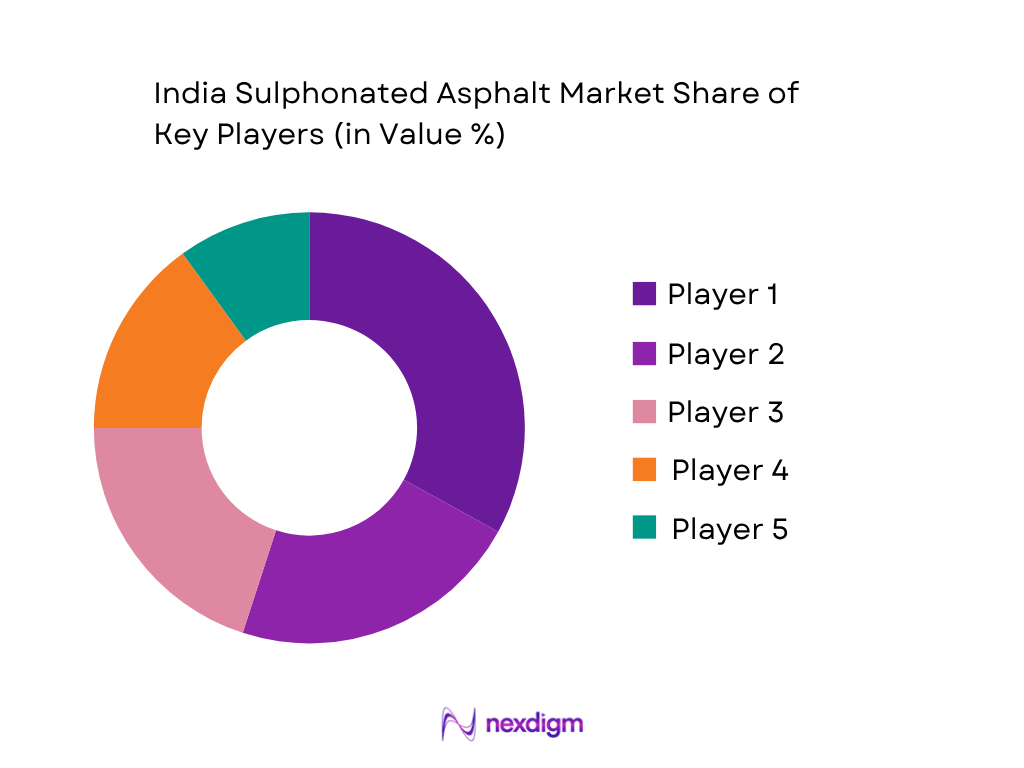
India Sulphonated Asphalt Market Analysis
Growth Drivers
Expansion of Onshore Oil and Gas Exploration Activities
The expansion of onshore oil and gas exploration activities is supporting demand for sulphonated asphalt additives in India as drilling operators increasingly require high-performance fluid systems for complex geological formations. India continues to focus on strengthening domestic hydrocarbon production, with crude oil production reaching approximately 29.4 million tonnes during FY2023-24 and natural gas production reaching around 36.4 billion cubic meters. Increased exploration activities across regions such as Rajasthan, Gujarat, Assam and the Krishna Godavari Basin are creating demand for drilling fluid additives that improve borehole stability, filtration control and shale inhibition. Sulphonated asphalt is widely used in water-based mud systems due to its ability to reduce fluid loss, improve lubricity and prevent formation damage during drilling operations. The country had approximately 92,000 square kilometres of active exploration area under the Open Acreage Licensing Policy framework, supporting continued upstream activity. Expansion of exploration blocks, increased participation of private operators and focus on improving domestic energy availability are encouraging greater consumption of specialized oilfield chemicals. These factors are strengthening the role of sulphonated asphalt as an important additive for maintaining drilling efficiency in Indian onshore exploration projects.
Growth of Horizontal and Directional Drilling Operations
The growth of horizontal and directional drilling operations is creating increased demand for sulphonated asphalt formulations as Indian operators adopt advanced drilling techniques to improve reservoir access and production efficiency. Horizontal and directional wells require drilling fluids with enhanced lubrication, filtration control and wellbore stabilization capabilities because they involve longer drilling sections and more complex geological conditions. India has expanded exploration activities across mature and emerging hydrocarbon basins, including Rajasthan, Gujarat and offshore areas, increasing the requirement for technically advanced drilling solutions. The country consumed approximately 256 million tonnes of crude oil in 2023-24, highlighting the continued importance of maintaining domestic exploration and production capacity. Sulphonated asphalt additives help drilling fluids manage reactive shale formations, reduce torque and drag, and maintain filter cake quality during extended drilling operations. The increasing adoption of polymer-based and water-based mud systems among drilling contractors is further supporting demand for multifunctional additives. As exploration companies focus on improving recovery rates and reducing drilling complications, the requirement for specialized additives capable of supporting directional and horizontal wells is expected to increase across India’s upstream oil and gas sector.
Market Challenges
Volatility in Exploration and Production Investments
Volatility in exploration and production investments remains a significant challenge for the India Sulphonated Asphalt Market because demand for drilling additives is directly linked with upstream drilling activity and operator spending patterns. Oil and gas exploration investments are influenced by crude oil price movements, government policies, global energy market conditions and production strategies of exploration companies. India imported approximately 232.5 million tonnes of crude oil during FY2023-24, reflecting continued dependence on international supplies and the importance of maintaining domestic exploration activities. However, fluctuations in global crude prices can affect drilling project approvals and capital allocation decisions by oil and gas companies. Sulphonated asphalt consumption depends on drilling intensity, number of active wells and demand for drilling fluid systems. Periods of reduced exploration spending can delay new drilling programs and impact chemical consumption. Additionally, upstream operators increasingly focus on cost optimization, which may create pressure on specialty chemical suppliers to demonstrate improved operational value. Manufacturers of sulphonated asphalt products need to maintain product efficiency, technical support capabilities and customized formulations to address changing procurement priorities within India’s oilfield sector.
Dependence on Imported Specialty Chemical Raw Materials
Dependence on imported specialty chemical raw materials creates supply chain challenges for the India Sulphonated Asphalt Market as manufacturers rely on global sources for certain chemical inputs required for advanced drilling additive production. Specialty oilfield chemicals often require specific feedstocks and formulation technologies that are not fully available through domestic supply networks. India’s chemical industry continues to expand, but several high-value specialty chemical categories remain dependent on imports. The country recorded chemical imports exceeding USD 60 billion during FY2023-24, reflecting the importance of international supply chains for advanced chemical materials. Sulphonated asphalt manufacturers may face challenges related to raw material availability, foreign exchange fluctuations, transportation delays and global supply disruptions. These factors can affect production planning and inventory management for suppliers serving oilfield customers. Increasing demand for reliable drilling fluid additives requires manufacturers to strengthen domestic sourcing capabilities and develop alternative supply arrangements. Investment in local specialty chemical production and technology development can help reduce dependency on imported materials while improving supply reliability for India’s growing exploration and drilling activities.
Market Opportunities
Environmentally Improved Sulphonated Asphalt Formulations
The development of environmentally improved sulphonated asphalt formulations represents a significant opportunity for manufacturers as oil and gas operators increasingly evaluate drilling additives based on performance, regulatory compliance and environmental impact. India is strengthening environmental monitoring across industrial activities, increasing the need for chemical solutions with improved safety and sustainability characteristics. The country’s crude oil processing capacity exceeded 250 million tonnes per year in 2024, supporting continued demand for advanced oilfield technologies across the petroleum value chain. Manufacturers are focusing on optimized sulphonated asphalt formulations that provide effective shale stabilization and filtration control while reducing environmental concerns associated with conventional petroleum-based additives. Improved formulations can support operators using water-based mud systems, which are increasingly preferred due to operational and environmental considerations. The integration of lower-impact chemical technologies provides opportunities for suppliers to differentiate products through improved biodegradability, reduced toxicity and better drilling performance. As exploration companies continue adopting responsible drilling practices, environmentally improved sulphonated asphalt products can gain wider acceptance across domestic drilling operations.
Expansion of Deep and Complex Well Drilling
Expansion of deep and complex well drilling activities creates opportunities for sulphonated asphalt suppliers as challenging reservoirs require advanced drilling fluid technologies capable of maintaining performance under high pressure and temperature conditions. Deep wells, directional wells and offshore drilling operations require additives that improve lubrication, control filtration losses and maintain wellbore integrity. India continues to develop complex hydrocarbon resources, including offshore fields in the Mumbai Offshore Basin and deep-water projects in the Krishna Godavari Basin. The country had approximately 7,600 kilometres of coastline, supporting offshore exploration potential and increasing interest in marine hydrocarbon resources. Sulphonated asphalt additives provide advantages in difficult drilling environments by improving fluid stability and reducing formation-related problems. Oilfield service companies are increasingly developing customized chemical packages designed for specific geological conditions, creating opportunities for specialty additive manufacturers. Growth in complex drilling projects, combined with increasing focus on production efficiency and reservoir access, is expected to encourage adoption of high-performance sulphonated asphalt solutions in India’s upstream oil and gas sector.
Future Outlook
The India Sulphonated Asphalt Market is expected to witness steady development during the forecast period, supported by increasing drilling activities, rising demand for advanced oilfield chemicals and growing complexity of hydrocarbon extraction operations. The adoption of high-performance drilling fluid systems is expected to increase as operators focus on improving drilling efficiency, reducing non-productive time and maintaining wellbore stability in challenging formations. Sulphonated asphalt products are expected to gain importance due to their multifunctional properties in filtration control, shale inhibition and lubrication enhancement. The expansion of offshore exploration, deep drilling projects and unconventional resource evaluation will further support demand for specialized drilling additives.
Major Players
- Halliburton
- SLB (Schlumberger)
- Baker Hughes
- Newpark Resources
- Chevron Phillips Chemical Company
- BASF India Limited
- Clariant India Limited
- Solvay India
- Lubrizol India
- Ashland India
- Croda India
- Thermax Limited
- Indian Oil Corporation Limited
- Reliance Industries Limited
- Gujarat Alkalies and Chemicals Limited
Key Target Audience
- Oil and Gas Exploration and Production Companies
- Oilfield Service Companies
- Drilling Fluid Manufacturers and Suppliers
- Specialty Chemical Manufacturers
- Petroleum Refining and Petrochemical Companies
- Investments and Venture Capitalist Firms
- Government and Regulatory Bodies (Ministry of Petroleum and Natural Gas, Directorate General of Hydrocarbons, Petroleum and Natural Gas Regulatory Board)
- Industrial Chemical Distribution Companies
Research Methodology
Step 1: Identification of Key Variables
The initial phase involves developing an ecosystem map covering major stakeholders operating within the India Sulphonated Asphalt Market. This includes analysis of oilfield chemical manufacturers, drilling fluid suppliers, exploration companies, service providers and raw material suppliers. Key market variables such as product applications, drilling activity, chemical consumption patterns, supply structure and demand drivers are identified through extensive secondary research.
Step 2: Market Analysis and Construction
This phase involves analysing historical market trends, drilling activity patterns, application demand and supply-side developments related to sulphonated asphalt products. Market assessment includes evaluation of product categories, drilling fluid applications, regional demand patterns, manufacturing capabilities and import dependency. Demand from onshore and offshore exploration activities is analysed to understand consumption behaviour.
Step 3: Hypothesis Validation and Expert Consultation
Market assumptions are validated through discussions with industry participants including drilling fluid specialists, oilfield chemical suppliers, manufacturers and technical experts. These interactions provide insights into product performance requirements, procurement practices, customer preferences and competitive dynamics. Expert inputs are used to refine market understanding and validate industry trends.
Step 4: Research Synthesis and Final Output
The final stage involves consolidating primary and secondary research findings to develop a comprehensive market assessment. Data collected from industry participants, operational analysis and supply-chain evaluation is integrated to provide insights regarding market size, competitive landscape, growth opportunities and future market development.

- Executive Summary
- Research Methodology (Market Definitions and Assumptions, India Sulphonated Asphalt Market Classification, Product Category Mapping, Sulphonated Asphalt Chemistry Assessment, Asphalt Sulphonation Process Analysis, Oilfield Chemical Application Mapping, Drilling Fluid Additive Assessment, Water-Based Mud System Analysis, Oil-Based Mud Compatibility Assessment, Shale Stabilization Requirement Analysis, Filtration Control Performance Assessment, Wellbore Stability Analysis, End-User Industry Assessment, Domestic Manufacturing Assessment, Import Dependency Analysis, Raw Material Supply Assessment, Demand-Side Assessment, Supply-Side Assessment, Top-Down Market Sizing, Bottom-Up Market Sizing, Primary Industry Interviews, Data Triangulation, Forecasting Framework, Market Share Validation, Limitations and Future Conclusions)

- Definition and Scope
- India Sulphonated Asphalt Industry Evolution
- Sulphonated Asphalt Value Chain Analysis
- Sulphonated Asphalt Supply Chain Analysis

- Growth Drivers (Expansion of Onshore Oil and Gas Exploration Activities, Increasing Drilling Fluid Additive Consumption, Growth of Horizontal and Directional Drilling Operations, Rising Domestic Hydrocarbon Production Requirements, Expansion of Oilfield Service Activities, Increasing Wellbore Stability Requirements, Growth of High-Performance Water-Based Mud Systems, Increasing Demand for Filtration Control Additives)
- Market Challenges (Volatility in Exploration and Production Investments, Dependence on Imported Specialty Chemical Raw Materials, Fluctuation in Crude Oil Prices, Environmental Concerns Related to Petroleum-Based Additives, Stringent Oilfield Chemical Regulations, Limited Domestic Sulphonated Asphalt Manufacturing Capacity, Competition from Alternative Drilling Additives, Complex Product Qualification Requirements)
- Market Opportunities (Environmentally Improved Sulphonated Asphalt Formulations, Expansion of Deep and Complex Well Drilling, Advanced Shale Stabilization Technologies, Growth in Offshore Exploration Activities, Customized Oilfield Chemical Solutions, Development of High-Performance Drilling Fluid Systems, Integration with Digital Drilling Optimization Platforms, Sustainable Asphalt-Based Additive Development)
- Market Trends (Advanced Drilling Fluid Additives, Increasing Use of Polymer-Compatible Mud Systems, High-Temperature Resistant Sulphonated Asphalt Formulations, Customized Oilfield Chemical Packages, Digital Monitoring of Drilling Performance, Sustainable Oilfield Chemical Development, Increased Use in Horizontal Wells, Localized Specialty Chemical Manufacturing)
- Government Regulations and Standards (Ministry of Petroleum and Natural Gas Regulations, Directorate General of Hydrocarbons Guidelines, Oilfield Chemical Safety Requirements, Environmental Protection Standards, Hazardous Chemical Management Regulations, Offshore Drilling Environmental Compliance, Industrial Waste Management Standards)
- SWOT Analysis
- Porter’s Five Forces Analysis
- PESTLE Analysis
- Stakeholder Ecosystem
- Competition Ecosystem

- By Market Value (2020-2025)
- By Consumption Volume (2020-2025)
- By Sulphonated Asphalt Consumption Volume (2020-2025)
- By Oilfield Drilling Fluid Additive Consumption Volume (2020-2025)

- By Product Type (In Value %)
Sulphonated Asphalt Powder
Liquid Sulphonated Asphalt
Granular Sulphonated Asphalt
Modified Sulphonated Asphalt Formulations
Specialty Drilling Fluid Grade Sulphonated Asphalt - By Application Type (In Value %)
Shale Stabilization
Filtration Control
Lubrication Enhancement
Wellbore Strengthening
Clay Inhibition
Drilling Fluid Conditioning
Lost Circulation Control
High Temperature High Pressure Drilling Applications - By Drilling Fluid System (In Value %)
Water-Based Mud Systems
Oil-Based Mud Systems
Synthetic-Based Mud Systems
Invert Emulsion Systems
Polymer-Based Drilling Fluid Systems - By End-Use Industry (In Value %)
Onshore Oil and Gas Exploration
Offshore Oil and Gas Exploration
Oilfield Services Industry
Refining and Petrochemical Applications
Geothermal Drilling Applications
Mining and Mineral Exploration - By Well Type (In Value %)
Vertical Wells
Horizontal Wells
Directional Wells
Extended Reach Wells
Deep Wells
High Temperature High Pressure Wells

- Market Share of Major Players (By Revenue, Product Portfolio, Sulphonated Asphalt Production Capacity, Drilling Fluid Application Coverage, Oilfield Customer Base, Distribution Network, Domestic Manufacturing Capability, Import Presence, Technical Support Capability, Regional Presence)
- Cross Comparison Parameters (Sulphonated Asphalt Product Portfolio Breadth, Drilling Fluid Application Coverage, Oilfield Chemical Manufacturing Capacity, Water-Based Mud Compatibility, High Temperature High Pressure Drilling Capability, Shale Stabilization Technology Coverage, Distribution Network Reach, Technical Service and Formulation Support Capability)
- SWOT Analysis of Major Players
- Detailed Profiles of Major Companies
Halliburton India
SLB India
Baker Hughes India
Newpark Resources India
BASF India Limited
Solvay India
Clariant India
Thermax Limited
Indian Oil Corporation Limited
Reliance Industries Limited
Gujarat Alkalies and Chemicals Limited
Lubrizol India
Ashland India
Kemira India
Croda India

- Onshore Drilling Contractor Requirement Analysis
- Offshore Drilling Operator Chemical Requirement Assessment
- Oilfield Service Company Drilling Fluid Demand Assessment
- Drilling Fluid Engineer Requirement Analysis
- Petroleum Refinery and Petrochemical Industry Requirement Analysis
- Mining and Geothermal Drilling Application Assessment

- By Market Value (2026-2035)
- By Consumption Volume (2026-2035)
- By Sulphonated Asphalt Consumption Volume (2026-2035)
- By Oilfield Drilling Fluid Additive Consumption Volume (2026-2035)


 Request a Sample
 Ask for Customization
 Get a Quote
 Enquire Now