

 Download PDF
Market Overview
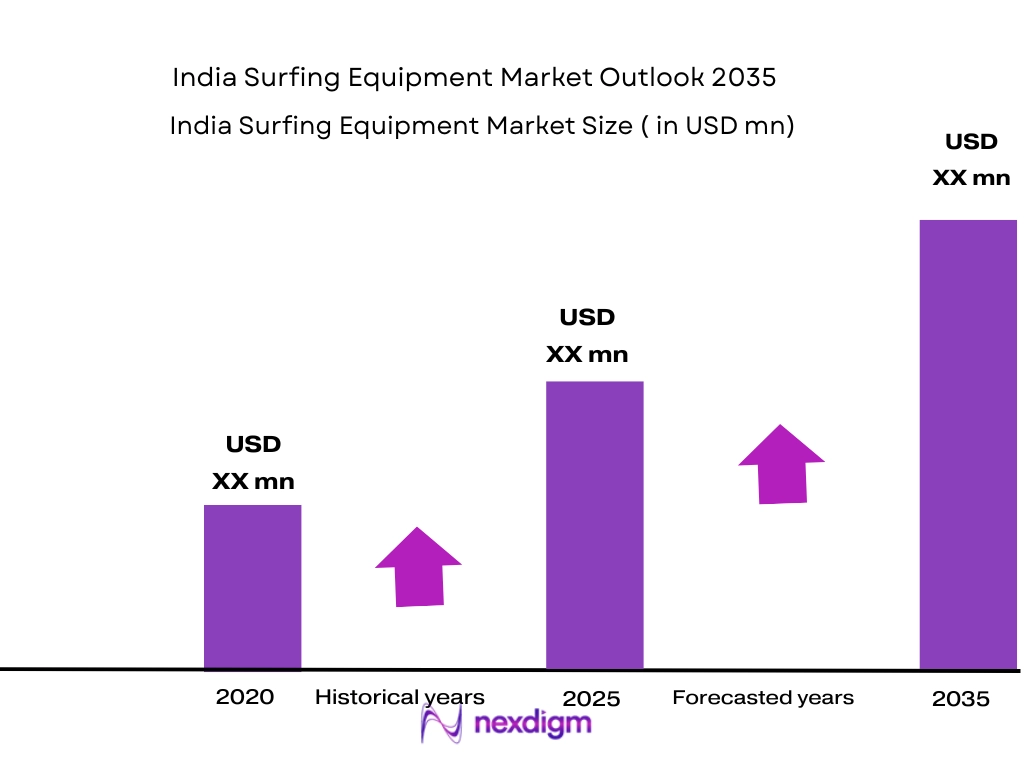
The India Surfing Equipment Market is valued at approximately USD ~ million, with continued growth expected. The demand for surfing equipment is primarily driven by a combination of rising interest in water sports, particularly surfing, and a growing number of surfing enthusiasts across India’s coastlines. Tourism, especially in regions like Goa, Kerala, and Karnataka, is a significant driver of this growth. Additionally, government initiatives supporting beach tourism and the development of surfing infrastructure are helping expand the market. The increasing preference for eco-friendly products is also shaping consumer behavior and fueling demand for sustainable surfing equipment.
The market is largely driven by coastal cities in India such as Goa, Kerala, and Karnataka, where surfing has seen significant growth in popularity. Goa, with its vibrant tourism industry, serves as a central hub for both professional surfers and recreational enthusiasts. Kerala, known for its scenic beaches, is becoming a destination for surf tourism. Karnataka, especially around Mangalore and Gokarna, is witnessing a rise in surf schools and surf-friendly infrastructure. These regions dominate due to the ideal surf conditions, well-developed tourism infrastructure, and growing local communities involved in surfing.
Market Segmentation
By Product Type
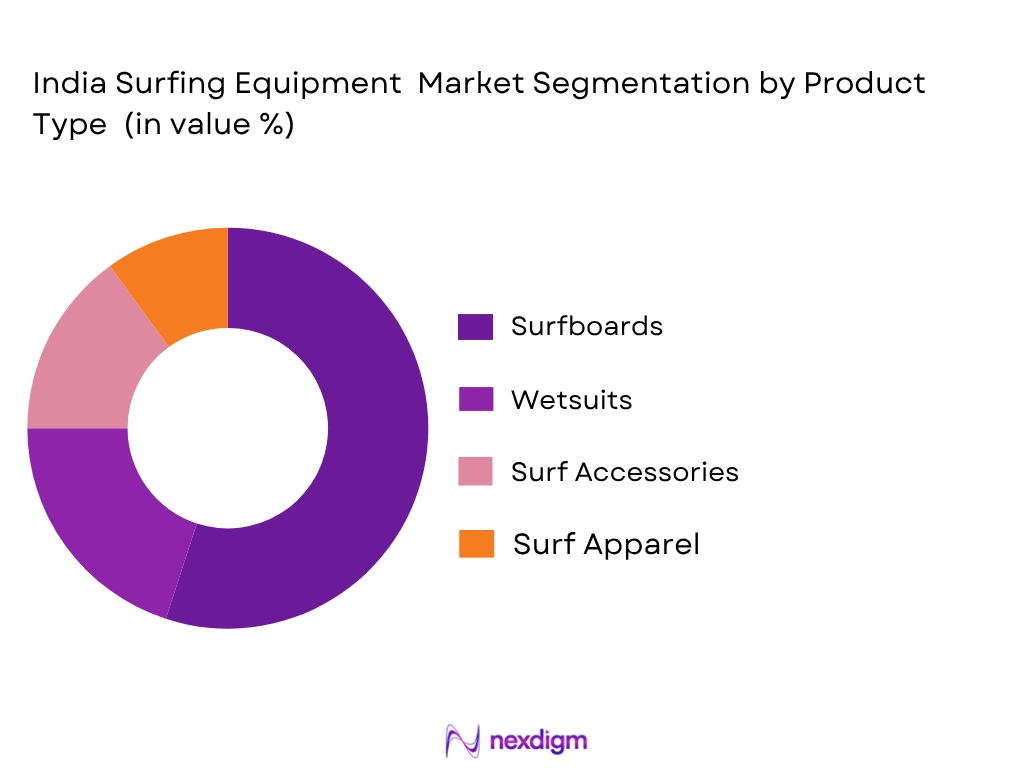
The India Surfing Equipment Market is segmented by product type into surfboards, wetsuits, surf accessories (such as leashes, fins, etc.), and surf apparel. Recently, surfboards have emerged as the dominant segment, accounting for the largest share of the market. This is primarily due to their central role in surfing, as a high-quality surfboard is the most essential piece of equipment for any surfer. Additionally, the increasing participation in both recreational and competitive surfing has driven demand for various types of boards, such as longboards, shortboards, and eco-friendly surfboards made from sustainable materials. The innovation in surfboard designs to cater to diverse surf conditions and consumer preferences further contributes to their dominance.
By Usage Type
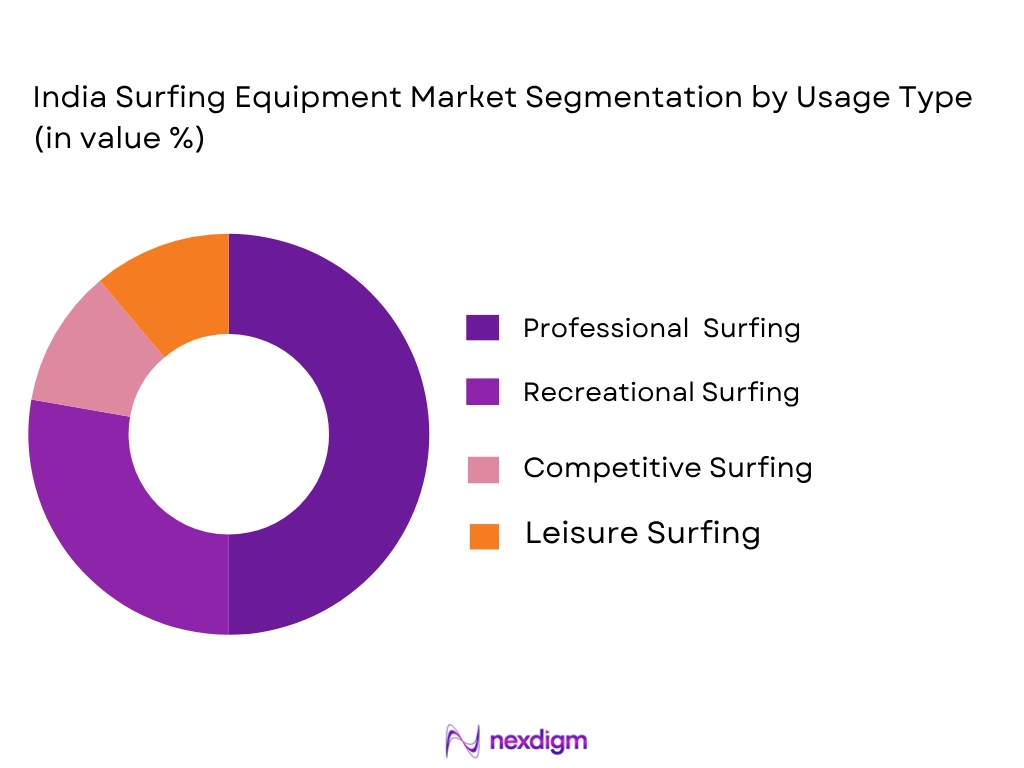
The market is segmented by usage type into professional surfing, recreational surfing, competitive surfing, and leisure surfing. Recreational surfing holds the largest market share, primarily because a significant number of consumers engage in surfing for leisure and fitness rather than competition. As more Indians embrace surfing as a recreational activity, the demand for affordable, durable, and beginner-friendly surfing equipment has risen. The growth of surf schools and rental services has also contributed to the expansion of the recreational segment. This segment is further bolstered by the increasing accessibility of surfing locations across India.
Competitive Landscape
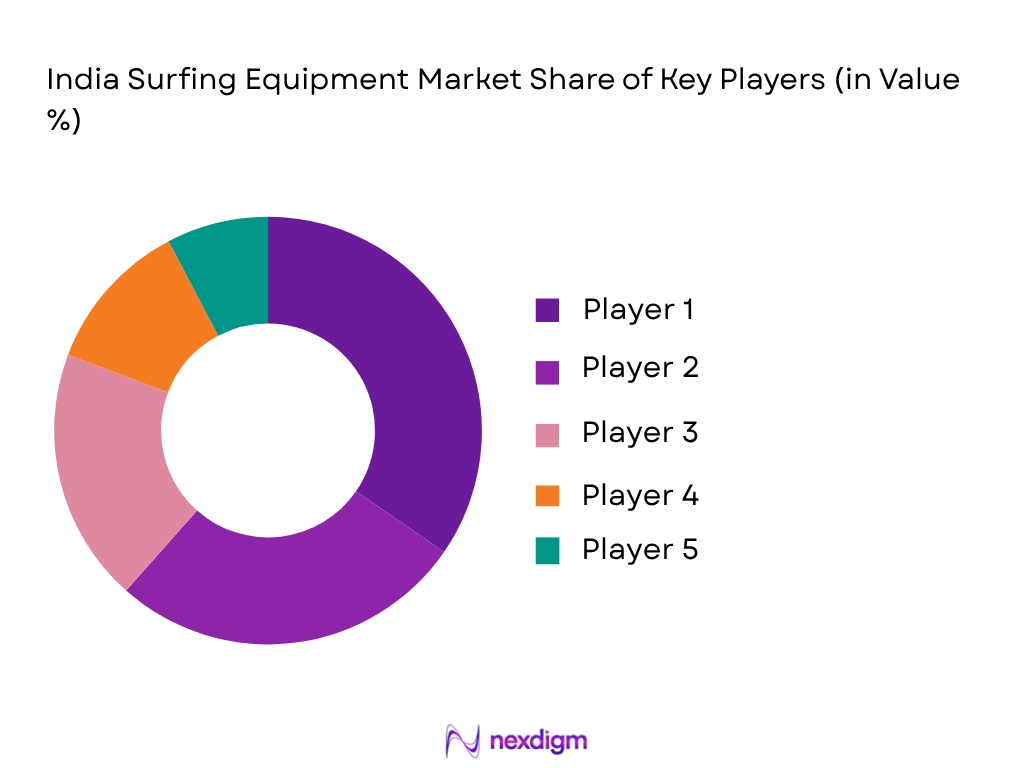
The India Surfing Equipment Market is characterized by the presence of both global and local brands. Global giants such as Quiksilver, Rip Curl, and Billabong have a strong presence due to their extensive distribution networks and brand recognition. However, the market also sees the rise of local brands such as Rebel Surf and Rukus which cater to the growing demand for affordable and eco-friendly surfing equipment. The competitive landscape is highly dynamic, with companies constantly innovating to meet the diverse needs of surfers across different regions. Additionally, e-commerce platforms are playing a pivotal role in driving the market, making surfing equipment more accessible to a wider audience.
| Company Name | Establishment Year | Headquarters | Product Range | Market Focus | Distribution Channels | Brand Strength |
| Quiksilver | 1969 | Huntington Beach, US | ~ | ~ | ~ | ~ |
| Rip Curl | 1969 | Torquay, Australia | ~ | ~ | ~ | ~ |
| Billabong | 1973 | Gold Coast, Australia | ~ | ~ | ~ | ~ |
| Rebel Surf | 2010 | Goa, India | ~ | ~ | ~ | ~ |
| Rukus Surf | 2015 | Karnataka, India | ~ | ~ | ~ | ~ |
India Surfing Equipment Market Analysis
Growth Drivers
Rising Popularity of Surfing as a Recreational Sport
Surfing in India is becoming increasingly popular as more people seek outdoor activities for fitness and relaxation. Coastal states like Goa, Kerala, and Karnataka are seeing a surge in interest, driven by the younger population’s focus on adventure sports. Surfing has transitioned from being a niche activity to a mainstream recreational sport, aided by the rise of surf schools and local events. This trend is attracting a growing number of recreational surfers who are eager to try the sport, contributing to higher demand for surfing equipment such as boards, wetsuits, and accessories.
Government Support for Surf Tourism
The Indian government has recognized the potential of surf tourism, leading to various initiatives to promote the activity. Investment in infrastructure such as improved beach access, surf parks, and training centers is helping establish India as a growing surf destination. Additionally, the promotion of coastal tourism and the development of surf events like national and international competitions in key surfing hotspots are attracting tourists, boosting demand for surfing gear. This governmental support is making surfing more accessible, thus expanding the market for related equipment.
Market Challenges
High Import Dependency
The Indian surfing equipment market is highly dependent on imports for premium-quality surfboards, wetsuits, and accessories. Most high-end surfing gear is sourced from countries like the United States, Australia, and Europe, leading to high costs. This import dependency makes the market vulnerable to exchange rate fluctuations, import tariffs, and shipping delays. The lack of local production for specialized surfing equipment, such as performance surfboards, also limits the availability of affordable options for Indian consumers. The need for domestic manufacturing is critical to reduce reliance on imports and lower prices for the growing surfing community.
Limited Surfing Infrastructure
While coastal regions in India are becoming more popular for surfing, the infrastructure required to support the sport remains limited. Surfing schools, rental shops, and surf-friendly accommodations are not yet widespread outside key hotspots like Goa and Kerala. Many regions with potential for surfing lack the proper facilities to support the growing demand, which restricts access to the sport for many interested individuals. Additionally, a lack of consistent investment in beach safety and infrastructure development hinders the growth of the market in less-developed regions.
Opportunities
Increasing Investment in Surfing Infrastructure
India’s surfing infrastructure is expected to expand significantly, creating new opportunities for the market. As local governments and private investors focus on building surf-friendly facilities, such as better-equipped surf parks, improved surf schools, and tourist accommodations, demand for surfing equipment will rise. Not only will this development encourage more people to take up surfing, but it will also foster a stronger surf tourism industry. As new surfing locations emerge across India’s vast coastline, infrastructure improvements will contribute to sustained growth in the surfing equipment market.
Development of Eco-Friendly and Sustainable Surfing Equipment
Sustainability is becoming a key driver in the global surfing industry, and India is no exception. As environmental awareness increases, Indian consumers are increasingly seeking eco-friendly surfing products made from sustainable materials such as recycled plastics and bamboo. The demand for eco-friendly surfboards, wetsuits, and accessories is growing, especially among younger, environmentally-conscious surfers. This shift presents an opportunity for manufacturers to develop and promote sustainable products, providing a competitive advantage in a market that values eco-friendly practices. Brands that prioritize sustainability will likely attract a larger consumer base.
Future Outlook
Over the next 5 years, the India Surfing Equipment Market is expected to see significant growth, primarily driven by the increasing interest in surfing as a recreational sport and the expansion of surf tourism. With more consumers looking for sustainable and eco-friendly products, there will be greater demand for innovative surfing equipment made from recyclable and sustainable materials. Additionally, the growing number of surfing events and competitions in India will help promote the sport, further boosting the demand for high-quality equipment. Increased investment in surfing infrastructure and the expansion of surf schools across the country will also support market growth.
Major Players in the Market
- Quiksilver Inc.
- Rip Curl
- Billabong International Ltd.
- O’Neill
- Channel Islands Surfboards
- Lost Enterprises
- Hurley International LLC
- Firewire Surfboards
- JS Industries
- Roxy
- Patagonia
- Vissla
- Reef
- Dakine
- Sun Bum
Key Target Audience
- Investments and Venture Capitalist Firms
- Government and Regulatory Bodies
- Surf Tourism Companies
- Major Retail Chains
- Surfing Product Manufacturers
- E-commerce Platforms
- Sports Equipment Distributors
- Eco-Friendly Product Advocates
Research Methodology
Step 1: Identification of Key Variables
This phase focuses on identifying the key factors influencing the India Surfing Equipment Market, including product demand, emerging trends, and consumer preferences. Secondary research helps gather data from industry reports, trade publications, and online sources.
Step 2: Market Analysis and Construction
This phase involves analyzing historical data to determine market trends and growth patterns. Sales data, surf tourism statistics, and product demand trends are examined to create a comprehensive market overview.
Step 3: Hypothesis Validation and Expert Consultation
Market hypotheses are validated through consultations with industry experts, including manufacturers, retailers, and surfing event organizers. These consultations provide valuable insights into the current state of the market and help refine projections.
Step 4: Research Synthesis and Final Output
The final phase involves synthesizing all data and insights gathered into a cohesive market report. Findings are cross-verified to ensure accuracy and provide actionable insights for businesses looking to enter or expand in the India Surfing Equipment Market.

- Executive Summary
- Research Methodology (Market Definitions and Assumptions, Abbreviations, Market Sizing Approach, Consolidated Research Approach, Understanding Market PotentialThrough In-Depth Industry Interviews, Primary Research Approach, Limitations and Future Conclusions)

- Definition and Scope
- Market Dynamics Overview
- Market Genesis
- Major Players and Market Timeline
- Business Cycle and Trends
- Supply Chain and Value Chain Analysis

- Growth Drivers
Rising Popularity of Surfing as a Recreational Sport
Government Support for Surf Tourism
Increasing Demand for Eco-Friendly Surf Products
Technological Advancements in Surfing Equipment
Growing Surfing Events and Competitions - Market Challenges
High Import Dependency
Limited Surfing Infrastructure
Seasonality of Surfing Demand
Competition from Other Water Sports
Economic Factors Affecting Consumer Spending - Opportunities
Increasing Investment in Surfing Infrastructure
Development of Eco-Friendly and Sustainable Surfing Equipment
Expanding Surfing Events and Competitions
Growth of Surf Tourism in India - Trends
Expansion of Electric Surfboard Market
Focus on Sustainability and Eco-Friendly Products
Smart Surfing Equipment Adoption
Rise in Direct-to-Consumer Online Sales Models
Growth of Surfing Schools and Schools for Beginners - Government Regulations
Import and Product Quality Regulations
Surfing Safety Standards and Guidelines
Transport and Mobility Policies
Environmental Regulations for Surfing Equipment
Health and Fitness Promotion Policies - SWOT Analysis
- Porter’s Five Forces Analysis

- By Value, 2020-2025
- By Volume, 2020-2025
- By Average Price, 2020-2025

- By Product Type (In Value %)
Surfboards
Wetsuits
Surf Accessories
Surf Apparel - By Usage Type (In Value %)
Professional Surfing
Recreational Surfing
Competitive Surfing
Leisure Surfing - By Distribution Channel (In Value %)
Direct Sales
Online Retailers
Specialty Surf Shops
Department Stores
Other Retail Channels - By Price Tier (In Value %)
Economy / Entry-Level
Mid-Tier
Premium / High-End

- Market Share of Major Players by Value/Volume
- Market Share of Major Players by Product Type
- Market Share of Major Players by Distribution Channel
- Cross Comparison Parameters (Company Overview, Business Strategies, Recent Developments, Strengths, Weaknesses, Organizational Structure, Revenues, Revenues by Product Type, Number of Retail Outlets, Distribution Channels, Margins, Production Capabilities, Unique Value Offering)
- SWOT Analysis of Major Players
- Pricing Analysis Based on Surfing Equipment Categories for Major Players
- Detailed Profiles of Major Companies
Quiksilver Inc.
Rip Curl
Billabong International Ltd.
O’Neill
Channel Islands Surfboards
Lost Enterprises
Hurley International LLC
Firewire Surfboards
JS Industries
Roxy
Patagonia
Vissla
Reef
Dakine
Sun Bum

- Seasonal Usage Patterns
- Coastal Vacation Home Owners
- Rental Service Customers
- Event and Competition Organizers
- Eco-Conscious Consumers

- By Value, 2026-2035
- By Volume, 2026-2035
- By Average Price, 2026-2035


 Request a Sample
 Ask for Customization
 Get a Quote
 Enquire Now