
 Download PDF
Market Overview
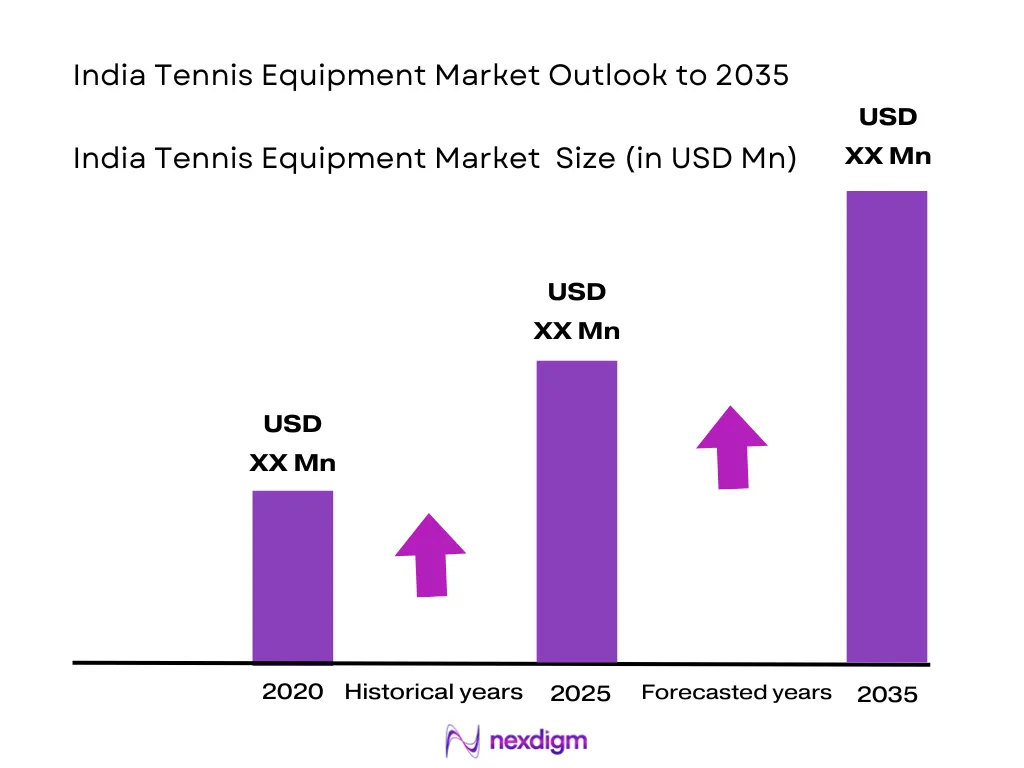
The India Tennis Equipment Market is valued at approximately USD ~ million. The market has been driven by growing interest in tennis as a sport and the increasing number of recreational and professional players. Government initiatives to promote sports, along with the rise in disposable income, have further fueled the demand for quality tennis equipment. The growth of e-commerce platforms offering a wide range of tennis products has also expanded consumer access. The demand is also supported by rising participation in tennis events, tournaments, and social leagues across the country.
In India, cities like Delhi, Mumbai, Bangalore, and Chennai dominate the tennis equipment market due to their high-income levels, active sports culture, and established infrastructure for tennis. The demand in these urban areas is primarily driven by a growing middle class that is increasingly inclined to engage in fitness and recreational sports like tennis. Additionally, the presence of major sporting events and tennis academies in these regions boosts the consumption of tennis gear. Countries like the United States, Germany, and Japan also influence the market, as they are known for manufacturing high-quality tennis equipment and dominating the global sports industry.
Market Segmentation
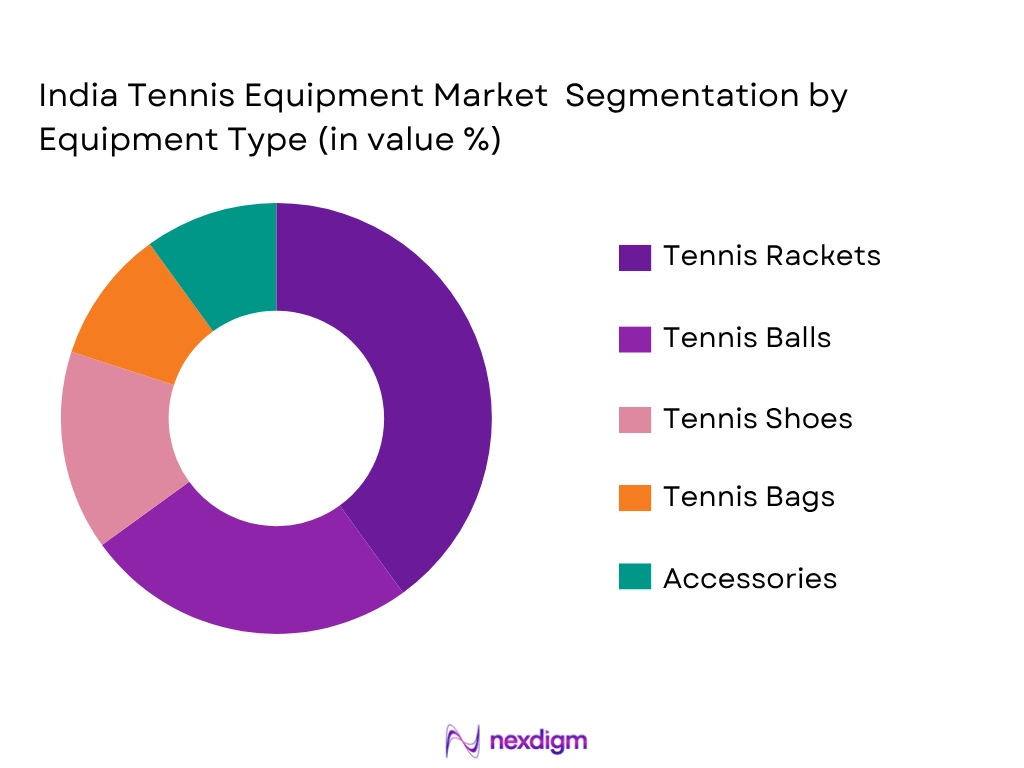
By Equipment Type
India’s tennis equipment market is segmented by product type into tennis rackets, tennis balls, tennis shoes, tennis bags, and accessories (such as grips, strings, and dampeners). Among these, tennis rackets hold a dominant market share. This is attributed to their high turnover and essential nature in tennis matches, both for professionals and amateur players. Leading brands like Wilson, Head, and Babolat have reinforced their market dominance with innovation in racket technology, appealing to players of all skill levels. The focus on performance-enhancing features, such as frame material and string tension, has helped maintain the racket’s position as the most sought-after tennis equipment.
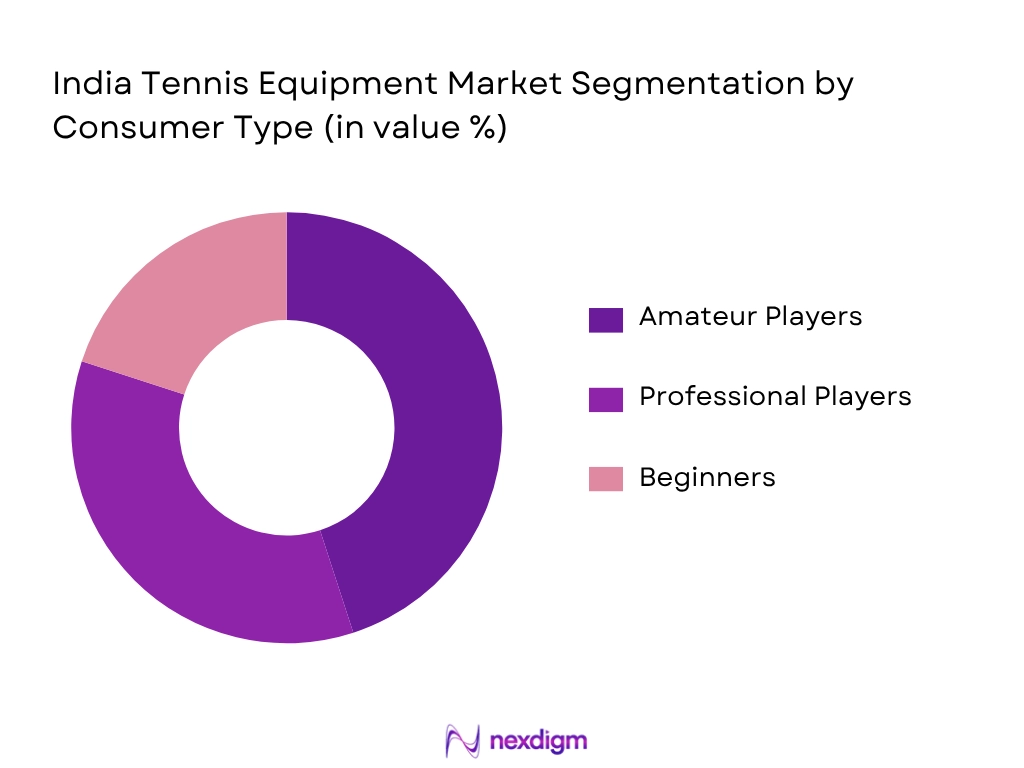
By Consumer Type
India’s tennis equipment market is segmented into professional players, amateur players, and beginners. Amateur players dominate this segment. This is due to the increasing participation of the general public in tennis, spurred by growing awareness of the health benefits of sports and fitness. Additionally, more accessible and affordable tennis equipment is being marketed to this segment, with an increasing number of recreational players opting for branded equipment. Amateur players also benefit from the availability of mid-range priced products that offer good quality and durability, which further boosts their demand.
Competitive Landscape
The India Tennis Equipment Market is highly competitive, with a blend of international and local brands competing for market share. The market is dominated by leading global brands such as Wilson, Babolat, and Head, which are recognized for their innovative products and strong brand presence. The growing number of regional sports stores and online platforms like Amazon and Flipkart is also intensifying the competition in the market. The dominance of these players highlights the significant influence of product quality, brand recognition, and availability of a wide range of equipment to cater to different consumer segments.
| Company | Establishment Year | Headquarters | Market Segment | Product Range | Revenue (2024) | Online Presence |
| Wilson Sporting Goods | 1914 | USA | ~ | ~ | ~ | ~ |
| Babolat | 1875 | France | ~ | ~ | ~ | ~ |
| Head N.V. | 1950 | Austria | ~ | ~ | ~ | ~ |
| Yonex Co., Ltd. | 1946 | Japan | ~ | ~ | ~ | ~ |
| Prince Sports | 1970 | USA | ~ | ~ | ~ | ~ |
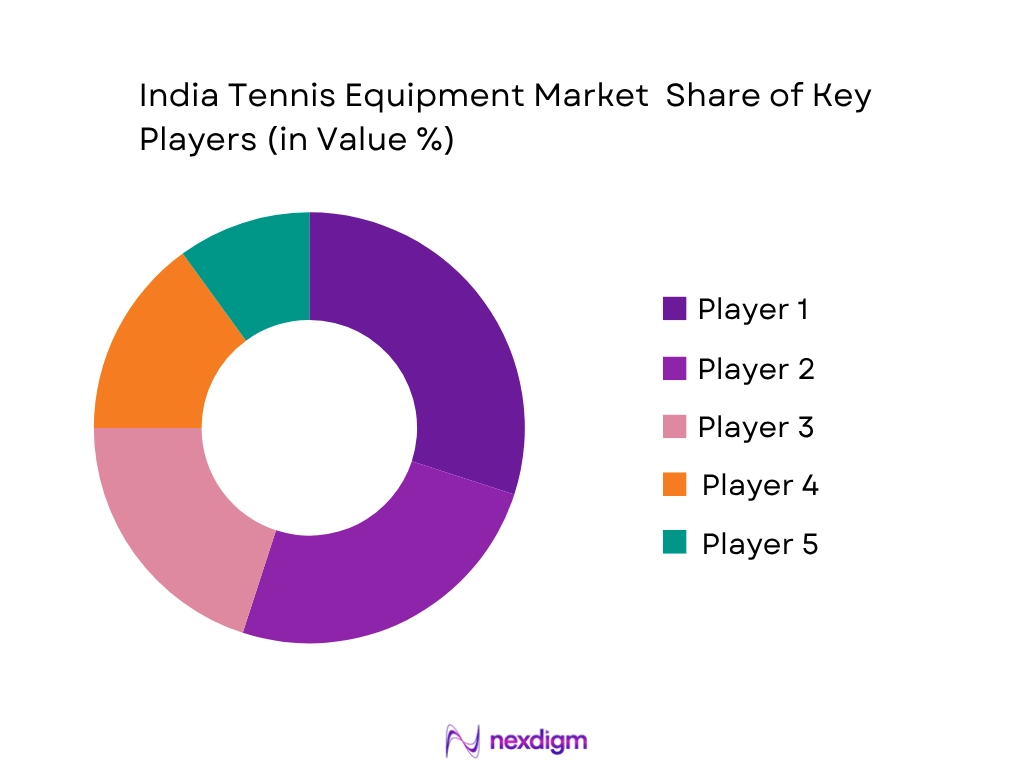
India Tennis Equipment Market Analysis
Growth Drivers
Increasing Popularity of Tennis in India
Tennis is gaining significant traction in India due to increased media exposure, national success in international tournaments, and a growing middle-class population becoming more interested in sports. The rise in the number of tennis academies and grassroots programs is also contributing to the growing interest in tennis. According to the Ministry of Youth Affairs and Sports, India’s participation in international tennis events like the Davis Cup and Indian Open has surged, and the country has produced rising stars such as Sumit Nagal and Sania Mirza, inspiring the younger generation. The government’s initiatives to improve sports infrastructure and promote tennis at the grassroots level are also key drivers of the sport’s popularity. In addition, initiatives like the Khelo India program, aimed at improving sports participation across the country, has seen an increase in tennis participation, especially in metropolitan areas. This movement reflects the growing interest in tennis, which is expected to reflect in the growing demand for tennis equipment as more players enter the market. The growing media presence of tennis events, coupled with increasing access to international tournaments via digital platforms, has positively affected the perception of tennis as a sport in India, further driving demand for tennis gear.
Rising Disposable Income
India’s rising disposable income is one of the main drivers for the tennis equipment market. The country’s nominal GDP per capita has shown a steady increase over recent years. According to the International Monetary Fund (IMF), India’s per capita income reached USD 2,500 in 2024, up from USD 2,100 in 2020. This increase in disposable income has enabled a growing segment of the population to invest in recreational sports, including tennis. With a large proportion of the population falling under the middle-income bracket, more people are shifting towards health and fitness, further driving the demand for sports equipment, including tennis gear. The rise of the fitness-conscious population and the growing inclination towards recreational activities among urban dwellers, especially in cities like Delhi, Mumbai, Bangalore, and Chennai, is influencing the purchase of quality tennis equipment. In addition, the emergence of premium brands and international companies in the Indian market has led to greater access to advanced tennis gear for middle-class consumers. These trends, backed by increasing purchasing power, are contributing to the growth of the tennis equipment market in India.
Market Challenges
High Import Taxes on Equipment
India imposes significant import duties on foreign-made sports equipment, including tennis gear. For instance, the import duty on tennis rackets and other sports equipment is approximately 10-15% as per the latest customs notifications by the Indian government. This results in higher prices for imported products, impacting the affordability and accessibility of premium tennis equipment in India. The increasing cost of imported goods has made it difficult for many consumers, particularly in smaller cities and rural areas, to afford high-quality international tennis brands. Moreover, the relatively higher customs duties have led to a growing demand for domestic alternatives, which may not always match the quality of foreign brands. However, while the Indian government’s “Atmanirbhar Bharat” initiative promotes the growth of local manufacturing, it still has not fully addressed the supply and demand imbalance for high-end tennis gear. These taxes also discourage foreign manufacturers from directly importing and distributing their products in India, further limiting consumer choice in the market. The issue of import taxes remains a challenge for the tennis equipment sector, especially as the demand for premium, imported goods continues to rise among the expanding middle class.
Lack of Standardization in Retail Channels
The India tennis equipment market faces the challenge of a lack of standardization in retail channels. This inconsistency in retail formats, ranging from local sports shops to large multi-brand retailers and online marketplaces, creates confusion and disrupts the seamless shopping experience for consumers. Many retailers lack uniform pricing policies, which results in price disparities for similar products across different retail formats. Furthermore, offline retail stores in Tier 2 and Tier 3 cities have limited access to international brands, restricting consumers from purchasing high-quality products without traveling to larger cities or using online platforms. The fragmented distribution system hinders brand penetration and makes it challenging for consumers to compare products from different manufacturers in one location. This challenge is further amplified by the rising popularity of e-commerce, where consumers experience a different shopping experience compared to physical stores. As a result, tennis equipment manufacturers and brands struggle with establishing a standardized retail presence across both online and offline platforms, which is crucial for building consumer trust and offering competitive pricing.
Opportunities
Growth of Online Retail Platforms
The growth of online retail platforms is a significant opportunity for the India tennis equipment market. E-commerce has grown rapidly in India, with platforms like Amazon, Flipkart, and specialty sports retailers like Decathlon seeing a massive rise in consumer traffic. In 2024, India’s e-commerce market is expected to reach USD 110 billion, which is a substantial increase from previous years. Online shopping offers convenience, broader access to international brands, and competitive pricing, which has led to increased sales of tennis equipment. Moreover, online platforms provide an easy and accessible shopping experience for tennis players in smaller cities and rural areas, where traditional sports retailers may not have a significant presence. Online retailers also offer the opportunity to showcase a wider range of products, including niche items such as tennis accessories, tennis balls, and custom-designed rackets. Additionally, the growing trend of online fitness and sports communities is driving consumers towards purchasing tennis equipment from digital platforms. The shift in consumer behavior towards digital shopping is expected to propel the market further as more consumers increasingly prefer the comfort and variety that online retail platforms offer.
Emerging Demand for Eco-Friendly Tennis Equipment
Eco-conscious consumers are increasingly influencing the sports equipment market in India. This growing awareness around sustainability has driven the demand for eco-friendly tennis equipment, including rackets, tennis balls, and accessories made from recycled materials and sustainable production methods. As part of global sustainability trends, many international brands are launching eco-friendly products in the Indian market, targeting consumers who are interested in reducing their carbon footprint. According to a 2024 study by the World Economic Forum, India has seen an uptick in consumer spending on sustainable products, especially in urban markets like Delhi, Mumbai, and Bangalore. This reflects a broader societal shift toward eco-conscious purchasing decisions. As awareness of climate change and environmental issues increases, tennis brands are focusing on incorporating eco-friendly practices into their product lines. The growing demand for sustainable tennis equipment presents an opportunity for brands to innovate and cater to a new generation of consumers who prioritize both performance and environmental impact. This eco-friendly movement in the tennis equipment market is expected to continue expanding, with more players emphasizing sustainable products in their marketing strategies.
Future Outlook
The future of the India Tennis Equipment Market is expected to witness robust growth over the next decade. Driven by government sports initiatives, expanding urbanization, and a growing interest in fitness, the market is poised to expand further. The increasing focus on sports infrastructure, along with advancements in tennis equipment technology, will continue to fuel demand. As more amateur players take up tennis, the demand for mid-range equipment is expected to rise, alongside increasing investments in e-commerce platforms. The popularity of tennis as a recreational sport is expected to significantly drive market growth.
Major Players in the Market
- Wilson Sporting Goods
- Babolat
- Head N.V.
- Yonex Co., Ltd.
- Prince Sports
- Tecnifibre
- Dunlop Sport
- Asics
- Nike Inc.
- Adidas AG
- Li Ning
- Puma SE
- Slazenger
- Spalding Sports Worldwide, Inc.
- Volkl
Key Target Audience
- Investments and Venture Capitalist Firms
- Government and Regulatory Bodies (e.g., Ministry of Youth Affairs and Sports, Government of India)
- Sports Federations and Associations
- Tennis Academies and Sports Clubs
- Major Sports Retailers and E-Commerce Platforms
- Distributors and Wholesalers of Sports Equipment
- Athletes and Professional Tennis Players
- Tennis Tournament Organizers
Research Methodology
Step 1: Identification of Key Variables
In this step, we identify key market variables that influence the dynamics of the India Tennis Equipment Market. This is achieved through an extensive review of secondary and proprietary databases, interviews with industry stakeholders, and analysis of historical data to capture important factors such as product demand, consumer preferences, and brand penetration.
Step 2: Market Analysis and Construction
We analyze the current and historical market data, focusing on consumer behavior trends, segment performance, and pricing models. Market size, growth trends, and the impact of governmental policies and international standards on tennis equipment in India will be thoroughly assessed.
Step 3: Hypothesis Validation and Expert Consultation
Market hypotheses will be developed and tested through consultations with experts in the tennis equipment sector. We will conduct detailed discussions with manufacturers, distributors, and professional players to gain a better understanding of the product lifecycle, pricing strategy, and technological advancements.
Step 4: Research Synthesis and Final Output
In the final phase, insights gathered from multiple industry players will be synthesized to create a cohesive market model. We will engage with tennis gear manufacturers to refine the market data, ensuring that all findings are well-supported by real-time information from industry practitioners.

- Executive Summary
- Research Methodology (Market Definitions and Assumptions, Abbreviations and Acronyms, Market Sizing Approach(Value Estimation, Volume Estimation), Consolidated Research Approach, Secondary Data Sources, Primary Data Collection, In-Depth Industry Interviews, Primary Research Approach (Survey Design, Interview Guidelines), Limitations and Future Conclusions)

- Definition and Scope
- Market Genesis and Evolution
- Timeline of Major Players
- Business Cycle and Life Cycle Analysis
- Supply Chain and Value Chain Analysis
- Trends in Consumer Behavior
- Influence of Government Initiatives

- Growth Drivers (Increasing Popularity of Tennis in India, Rising Disposable Income, Growing Support for Grassroots Sports Initiatives, Brand Endorsements and Partnerships)
- Market Challenges (High Import Taxes on Equipment, Lack of Standardization in Retail Channels, Competition from Local Manufacturers)
- Opportunities (Growth of Online Retail Platforms, Emerging Demand for Eco-Friendly Tennis Equipment, Rising Fitness Consciousness)
- Trends (Smart Tennis Equipment Integration, Customization in Tennis Gear, Athleisure Trend Impact on Tennis Apparel)
- Government Regulation (Import Tariffs and Duties, Safety Standards for Tennis Equipment) SWOT Analysis (Strengths, Weaknesses, Opportunities, Threats of the India tennis equipment market)
- Stakeholder Ecosystem (Relationships among manufacturers, distributors, retail chains, sports federations, tennis clubs and coaches)
- Porter’s Five Forces (Competitive rivalry, supplier power (e.g. material suppliers), buyer power, threat of new entrants (niche sports tech startups), threat of substitutes)
- Competitive Landscape and Strategic Alliances

- By Value (2020-2025)
- By Volume (2020-2025)
- By Average Price (2020-2025)
- By Segment Contribution to Market Size (2020-2025)
- By Year-on-Year Growth (2020-2025)

- By Equipment Type (In Value %)
Tennis Rackets
Tennis Balls
Tennis Shoes
Tennis Bags
Accessories - By Consumer Type (In Value %)
Professional Players
Amateur Players
Beginners - By Distribution Channel (In Value %)
Online Retail
Specialty Sports Stores
Supermarkets/Hypermarkets
Direct Sales (Brand Stores) - By Region (In Value %)
North India
South India
East India
West India - By Price Range (In Value %)
Budget (Under ₹2,000)
Mid-Range (₹2,000 – ₹10,000)
Premium (Above ₹10,000)

- Market Share of Major Players by Value, Volume and Equipment Type)
- Cross Comparison Parameters (Company Overview, Business Strategies, Recent Developments, Strengths and Weaknesses, Revenue Streams by Product Category, Market Reach and Distribution Network, Product Pricing and Margins, Manufacturing Capabilities)
- SWOT of Major Players (Strengths, Weaknesses, Opportunities, Threats for key companies)
- Pricing Analysis (Average selling prices and SKU-level pricing for major brands, premium vs standard product lines)
- Detailed Profiles of Major Companies
Wilson Sporting Goods Co.
Babolat
Head N.V.
Yonex Co., Ltd.
Prince Sports
Dunlop Sport
Tecnifibre
Asics
Nike Inc.
Adidas AG
Li Ning
Puma SE
Slazenger
Spalding Sports Worldwide, Inc.
Volkl

- Market Demand and Utilization (Demand Trends in Different Consumer Segments, Regional Preferences and Growth Patterns)
- Purchasing Power and Budget Allocations (Expenditure Trends by Segment: Amateurs, Professionals, Beginners)
- Regulatory and Compliance Requirements (Certification of Materials and Standards
Needs, Desires, and Pain Point Analysis (Price Sensitivity, Quality Expectations, Comfort, performance, desire for brand/image, issues like gear availability or fitting) - Decision-Making Process (Influencers in purchase decisions: coaches’ recommendations, peer reviews, online research, role of professional endorsements and demo clinics)

- By Value (2026-2035)
- By Volume (2026-2035)
- By Average Price (2026-2035)
- By Future Growth Areas based on Product Type (2026-2035)


 Request a Sample
 Ask for Customization
 Get a Quote
 Enquire Now