
 Download PDF
Market Overview
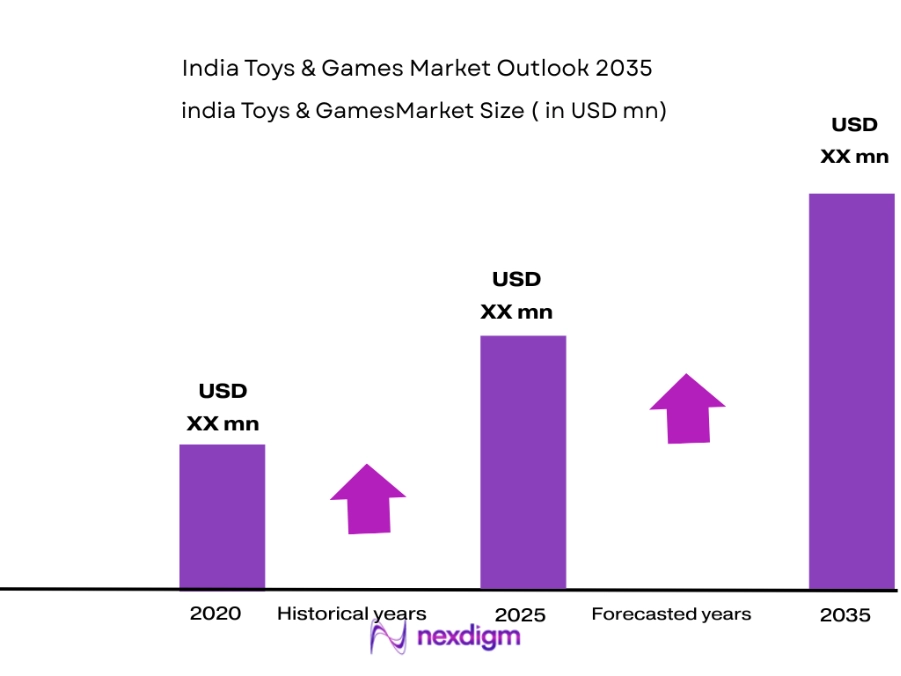
The India Toys & Games market is valued at approximately USD ~ million, based on a five‑year historical analysis of industry production and consumer demand in traditional and digital toy categories. Household spending accounted for over half of total market demand, reflecting increasing disposable incomes and a broader shift toward branded and educational toys in urban and semi‑urban regions. This valuation incorporates reported industry output and retail off‑take across major toy segmentts.
Major consumer hubs such as Delhi‑NCR, Maharashtra, and Karnataka dominate the India Toys & Games market due to higher population density, greater retail and digital distribution infrastructure, and stronger purchasing capacity. These regions have well‑developed organized retail networks, extensive e‑commerce penetration, and significant middle‑class growth, which consistently drive higher sales volumes of both mass‑market and premium toys. Retail expansion and organized supply chains further reinforce their dominance.
Market Segmentation
By Toy Type
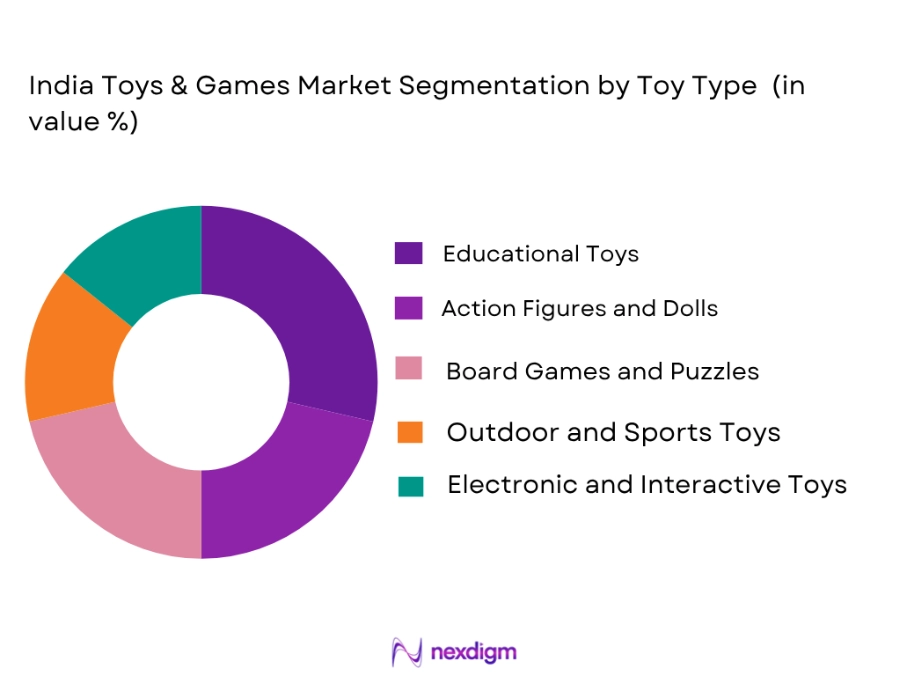
India Toys & Games market is segmented by Toy type into plush toys, electronic toys, games & puzzles, educational toys, dolls, outdoor & sports toys, preschool toys and other categories. Plush toys hold a dominant market share, supported by their broad appeal across age groups and occasions. These toys serve as comfort products for young children, popular gifting options during festivals and celebrations, and maintain strong consumer affinity due to character licensing from media franchises. The visibility of plush products through both offline retail and online marketplaces enhances consumer access. Growth in electronic and educational toys is driven by rising interest in STEM‑oriented and interactive playthings that combine learning with entertainment, reflecting evolving preferences among parents who prioritize developmental value.
By Distribution Channel
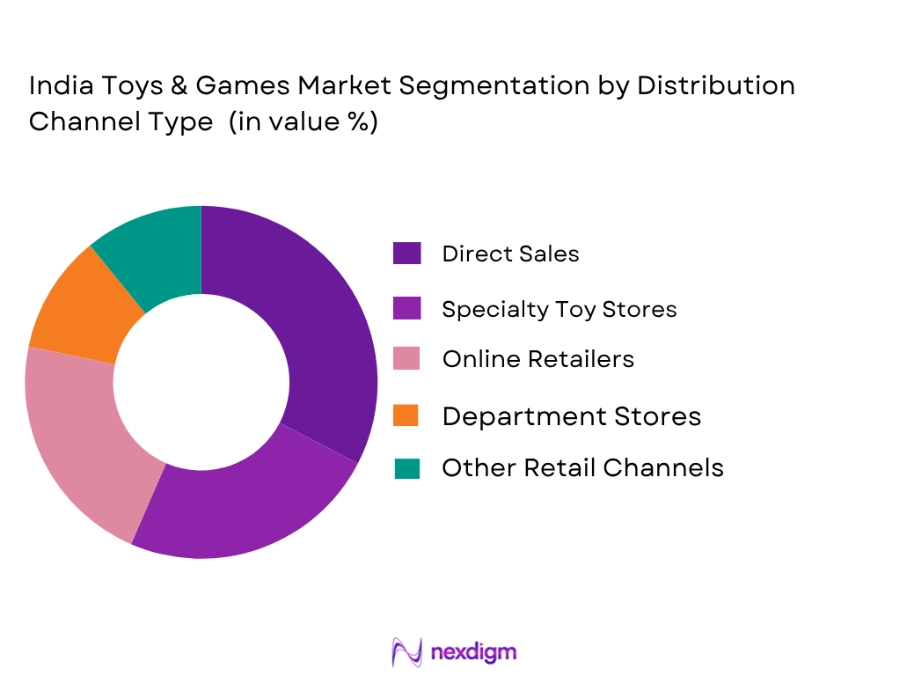
The India Toys & Games market includes online retailers, specialty toy stores, department stores, hypermarkets/supermarkets and other retail channels. Online retailing leads the market as consumers increasingly prefer the convenience of doorstep delivery, broader product selection and competitive pricing offered by e‑commerce platforms. The rapid expansion of internet access in tier II and III cities, along with accelerated logistics network development by major marketplaces, has made online channels a primary point of purchase for toys. Specialty toy stores remain relevant in urban centres, providing curated selections and premium offerings. Traditional retail channels, while still significant, face pressure from the convenience and reach of digital channels.
Competitive Landscape
The India Toys & Games market is consolidated around several multinational and domestic players, including Funskool India Ltd., Mattel, LEGO Group, Hasbro and Simba Toys India Pvt. Ltd. These companies leverage extensive distribution networks, diversified product portfolios and strong brand recognition to secure customer trust and leadership positions. Domestic brands often focus on locally relevant content and manufacturing, while global players use licensing agreements and technological innovation to differentiate products.
| Company | Year Established | Headquarters | Product Range | Distribution Reach | Brand Licensing | Digital Presence | Manufacturing Footprint | Market Position |
| Funskool India Ltd. | 1987 | Kolkata, India | ~ | ~ | ~ | ~ | ~ | ~ |
| Mattel, Inc. | 1945 | El Segundo, USA | ~ | ~ | ~ | ~ | ~ | ~ |
| LEGO Group | 1932 | Billund, Denmark | ~ | ~ | ~ | ~ | ~ | ~ |
| Hasbro, Inc. | 1923 | Pawtucket, USA | ~ | ~ | ~ | ~ | ~ | ~ |
| Simba Toys India Pvt. Ltd. | 1982 | Mumbai, India | ~ | ~ | ~ | ~ | ~ | ~ |
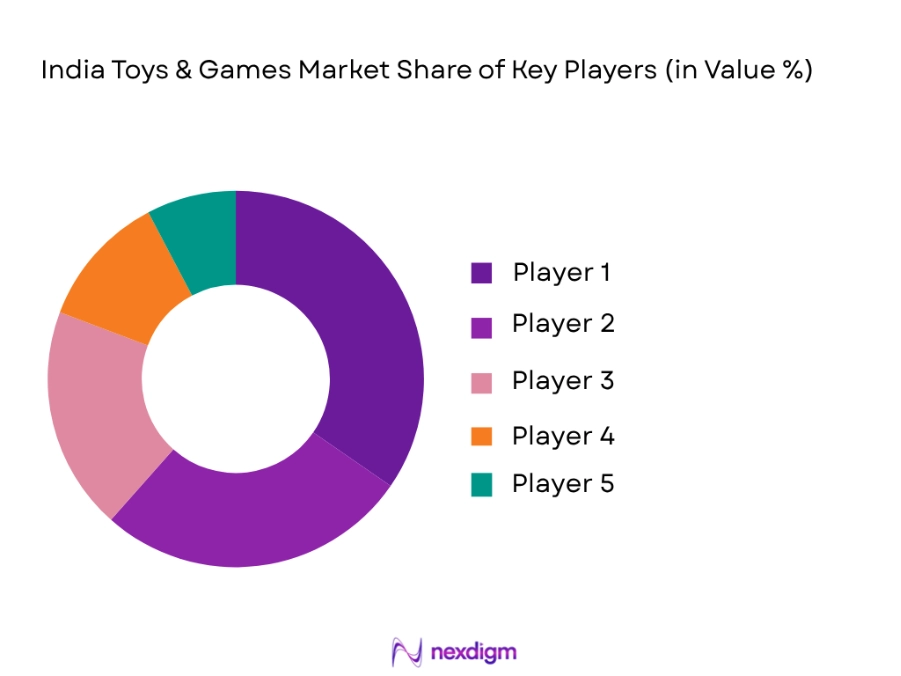
India Toys & Games Market Analysis
Growth Drivers
Rising Disposable Income and Middle-Class Expansion
The India Toys & Games market is significantly fueled by the expansion of the middle-class population and increasing disposable income levels across urban and semi-urban regions. Rising household earnings have allowed parents to spend more on children’s entertainment and educational products, moving beyond basic toys to branded, interactive, and premium segments. Urban centers such as Delhi-NCR, Mumbai, and Bengaluru have witnessed heightened retail activity, while tier II cities are emerging as key consumption hubs due to improved purchasing capacity. This trend is further supported by increased awareness of child development and recreation, leading to higher adoption of toys that offer learning, skill enhancement, and play value, directly driving revenue growth in the sector.
Increasing Awareness of Educational and Skill-Building Toys
Consumer focus on early childhood education and skill development is a major growth driver for the India Toys & Games market. Parents are increasingly prioritizing educational toys that enhance cognitive, creative, and motor skills, rather than solely traditional play items. STEM-based kits, puzzle games, and interactive learning products have gained traction as they combine fun with learning outcomes. E-commerce platforms and organized retail chains actively promote these segments, making them accessible to a wider audience. Rising awareness of the benefits of structured play in schools, nurseries, and homes has accelerated demand, particularly among middle and upper-middle-class households seeking products that contribute to holistic child development, fostering long-term market expansion.
Market Challenges
High Import Dependence for Certain Toy Categories
The India Toys & Games market faces challenges due to heavy reliance on imports for certain segments, including electronic toys, branded dolls, and licensed merchandise. This dependence exposes manufacturers and retailers to supply chain disruptions, foreign exchange fluctuations, and customs delays, which can impact product availability and pricing. Limited domestic manufacturing of sophisticated toys also restricts cost control and local adaptation. Additionally, imported products often incur higher tariffs, making them less accessible to price-sensitive consumers in smaller cities and towns. The challenge is compounded by regulatory scrutiny on imported good’s safety and compliance, requiring brands to meet stringent quality standards while maintaining competitive pricing, which can limit market penetration for premium products.
Safety and Regulatory Compliance Concerns
Stringent safety regulations and compliance requirements present another key challenge for the India Toys & Games market. Products must meet the Bureau of Indian Standards (BIS) norms and other safety guidelines to ensure they are free from harmful chemicals, choking hazards, and electrical risks. Non-compliance can lead to recalls, reputational damage, and penalties, discouraging new entrants and complicating supply chain operations. Smaller manufacturers and importers often struggle to align with these regulations due to limited testing infrastructure and technical expertise. Consumer vigilance regarding product safety is also rising, with parents actively seeking certified and high-quality toys, making adherence to regulatory standards a critical factor for maintaining trust and sustaining long-term market growth.
Opportunities
Expansion of Online Retail Penetration
The rapid growth of online retail channels provides significant opportunity for the India Toys & Games market. E-commerce platforms offer extensive reach, allowing both domestic and international brands to penetrate tier II and tier III cities that traditional retail cannot easily access. Online marketplaces provide detailed product information, customer reviews, and convenient delivery options, enhancing purchase confidence and driving adoption. The COVID-19 pandemic accelerated digital adoption among consumers, creating long- term behavioral shifts toward online shopping. Moreover, data-driven targeting and marketing allow brands to promote educational, interactive, and niche toy segments effectively, while subscription and bundled offerings further expand revenue streams. Online retail penetration represents a scalable and cost-efficient growth avenue for the industry.
Growth of Educational and STEM-Based Toys
Educational and STEM-based toys present a promising growth opportunity in India due to increasing parental awareness of cognitive development and skill-building. Products such as coding kits, robotics sets, and puzzle games combine entertainment with learning, aligning with contemporary educational priorities. Schools and tutoring centers are increasingly integrating these products into curriculum and extracurricular activities, further expanding their market reach. Licensing partnerships with global brands and content providers enhance the appeal of these toys by associating them with popular characters or educational themes. With a growing middle-class population prioritizing child development, these products are likely to witness strong adoption, offering companies a sustainable and differentiated growth avenue in an otherwise competitive toys market.
Future Outlook
Over the next decade, the India Toys & Games market is expected to demonstrate steady expansion driven by rising disposable incomes, the increasing importance of early childhood learning products and continued growth of e‑commerce channels. Demand will be supported by demographic trends favoring a large youth population, coupled with increasing parental emphasis on educational and interactive toys. Technological integration and growth of premium product segments are also likely to shape future demand dynamics.
Major Players
- Funskool India Ltd.
- Mattel, Inc.
- LEGO Group
- Hasbro, Inc.
- Simba Toys India Pvt. Ltd.
- Hamleys (India operations)
- VTech Holdings Ltd.
- Spin Master Ltd.
- Bandai Namco Holdings Inc.
- Ravensburger AG
- Playmobil (Brand in India)
- Fisher‑Price (Mattel subsidiary)
- Smartivity
- Intelliskills
- Little Genius Toys
Key Target Audience
- Toy and game manufacturers
- Retail chains and e‑commerce platforms
- Consumer goods distributors
- Investments & venture capitalist firms
- Toy product design and development companies
- Government and regulatory bodies
- Private equity firms evaluating consumer product portfolios
- Strategic planners within retail & FMCG sectors
Research Methodology
Step 1: Identification of Key Variables
The initial phase involved mapping all major stakeholders within the India Toys & Games market, including manufacturers, distributors, retail channels, and regulatory entities. Comprehensive desk research was conducted using secondary databases and industry reports to define and benchmark critical variables influencing market dynamics.
Step 2: Market Analysis and Construction
Historical market data for revenue, product sales, and channel performance were compiled and analyzed. Trends in consumer spending, retail penetration, and pricing structures were assessed to ensure that revenue estimates reflected realistic market behaviour.
Step 3: Hypothesis Validation and Expert Consultation
Market hypotheses were validated through interviews with industry professionals, including product managers and retail executives. These consultations provided operational insights and contextualised data trends, supporting more accurate analysis and projections.
Step 4: Research Synthesis and Final Output
Direct engagement with toys and games producers and retail partners helped verify segmented data and strengthen the reliability of forecasts. Insights from this iterative approach were synthesised to produce the final market outlook, segmentation, competitive analysis, and projections.

- Executive Summary
- Research Methodology (Market Definitions and Assumptions, Abbreviations, Market Sizing Approach, Consolidated Research Approach, Understanding Market Potential Through In-Depth Industry Interviews, Primary Research Approach, Limitations and Future Conclusions)

- Definition and Scope
- Market Dynamics Overview
- Market Genesis
- Major Players and Market Timeline
- Business Cycle and Trends
- Supply Chain and Value Chain Analysis

- Growth Drivers
Rising Disposable Income and Middle-Class Expansion
Increasing Awareness of Educational and Skill-Building Toys
Growth of Online Retail and E-Commerce Channels
Rising Popularity of Interactive and Electronic Toys - Market Challenges
High Import Dependence for Certain Toy Categories
Safety and Regulatory Compliance Concerns
Price Sensitivity Among Consumers
Competition from Digital Entertainment Alternatives - Opportunities
Expansion of Online Retail Penetration
Growth of Educational and STEM-Based Toys
Increasing Licensing Agreements with Popular Media Franchises
Rising Demand for Eco-Friendly and Sustainable Toys - Trends
Digital and Smart Toys Adoption
Personalization and Customization of Toys
Integration of AR/VR Technologies in Games
Growth of Subscription-Based and Rental Toy Models - Government Regulations
Import and Product Safety Regulations
Standards for Toy Safety and Quality
Policies Promoting Domestic Toy Manufacturing
Environmental and Sustainability Regulations - SWOT Analysis
- Porter’s Five Forces Analysis

- By Value, 2020-2025
- By Volume, 2020-2025
- By Average Price, 2020-2025

- By Toy Type (In Value %)
Educational Toys
Action Figures and Dolls
Board Games and Puzzles
Electronic and Interactive Toys
Outdoor and Sports Toys - By Age Group (In Value %)
Infants & Toddlers
Kids (3-7 Years)
Children (8-12 Years)
Teenagers (13-18 Years)
Adults - By Distribution Channel (In Value %)
Direct Sales
Online Retailers
Specialty Toy Stores
Department Stores
Hypermarkets and Supermarkets
Other Retail Channels - By Price Tier (In Value %)
Economy / Entry-Level
Mid-Tier
Premium / High-End

- Market Share of Major Players by Value/Volume
- Market Share of Major Players by Toy Type
- Market Share of Major Players by Distribution Channel
- Cross Comparison Parameters (Company Overview, Business Strategies, Recent Developments, Strength, Weakness, Organizational Structure, Revenues, Revenues by Toy Type, Number of Retail Outlets, Distribution Channels, Number of Dealers and Distributors, Margins, Production Capabilities, Unique Value Offering)
- SWOT Analysis of Major Players
- Pricing Analysis Based on Toy Categories for Major Players
- Detailed Profiles of Major Companies
Mattel, Inc.
Hasbro, Inc.
LEGO Group
Spin Master Ltd.
Funskool India Ltd.
Fisher-Price
VTech Holdings Ltd.
Ravensburger AG
Bandai Namco Holdings Inc.
Playmobil
Other Key Players

- Market Demand and Utilization
- Purchasing Power and Budget Allocations
- Regulatory and Compliance Requirements
- Needs, Desires, and Pain Point Analysis
- Decision-Making Process

- By Value, 2026-2035
- By Volume, 2026-2035
- By Average Price, 2026-2035


 Request a Sample
 Ask for Customization
 Get a Quote
 Enquire Now