
 Download PDF
 Download PDF
Market Overview
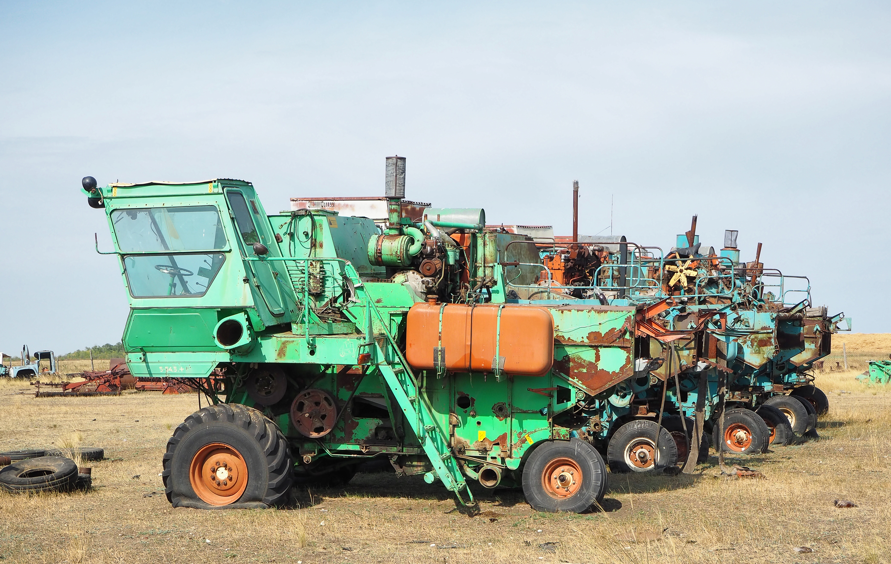
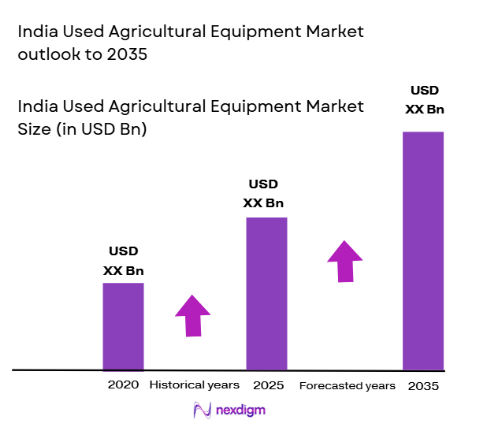
The India Used Agricultural Equipment Market is valued at approximately USD ~ billion. This market is driven by the growing adoption of mechanized farming solutions, which improves agricultural productivity. With an increasing focus on cost-effective solutions, the demand for used agricultural equipment continues to rise, especially in rural areas where farmers are looking for affordable ways to enhance farming efficiency. The market is further bolstered by government initiatives aimed at promoting agricultural mechanization and providing subsidies for equipment purchases.
Dominant cities like New Delhi, Mumbai, and Bangalore lead the market due to their robust agricultural industries and infrastructure. These cities benefit from strong agricultural economies, where mechanization is vital to meet the rising food production demands. Additionally, regions with a high concentration of agriculture, such as Punjab, Uttar Pradesh, and Maharashtra, are key drivers of used agricultural equipment sales, as local farmers seek to upgrade their equipment in a cost-effective manner.
Market Segmentation
By Product Type:
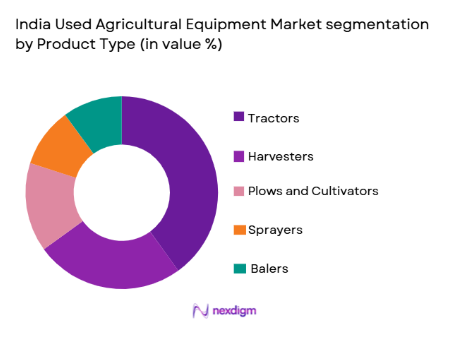
The India Used Agricultural Equipment Market is segmented by product type into tractors, harvesters, plows and cultivators, sprayers, and balers. Tractors hold the dominant market share due to their versatility in various farming applications, including tilling, plowing, and harvesting. The high demand for tractors stems from their ability to enhance productivity while reducing manual labor. As mechanization increases in rural areas, tractors remain a priority investment for farmers looking to maximize efficiency and reduce costs.
By Platform Type:
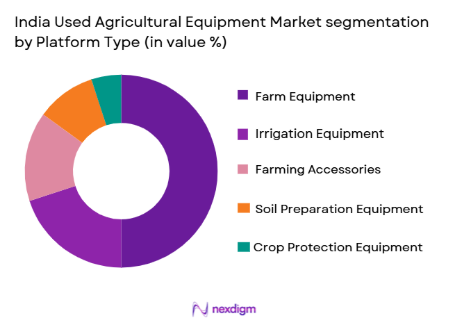
The India Used Agricultural Equipment Market is segmented by platform type into farm equipment, irrigation equipment, farming accessories, soil preparation equipment, and crop protection equipment. Farm equipment commands the largest share due to the essential role it plays in day-to-day farming operations. With growing demand for mechanization, farm equipment offers greater productivity, better yields, and reduced operational costs, making it highly sought after by farmers aiming to modernize their operations.
Competitive Landscape
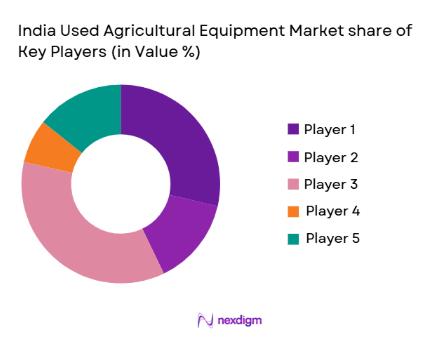
The India Used Agricultural Equipment Market has a highly competitive landscape, with consolidation occurring among major players aiming to enhance their market reach and offer value-added services such as financing and equipment leasing. Large companies dominate the market, while smaller, regional players continue to thrive by focusing on specific niches or geographical areas. Major players hold a strong influence due to their ability to provide high-quality products and strong after-sales support. The market is characterized by the growing trend of digitalization, which allows for improved equipment sourcing and financing options.
| Company Name | Establishment Year | Headquarters | Technology Focus | Market Reach | Key Products | Revenue (USD Billion) | Additional Market-Specific Parameter |
| Mahindra & Mahindra | 1945 | Mumbai, India | ~ | ~ | ~ | ~ | ~ |
| Tafe Motors | 1960 | Chennai, India | ~ | ~ | ~ | ~ | ~ |
| John Deere India | 1998 | Pune, India | ~ | ~ | ~ | ~ | ~ |
| Sonalika International | 1996 | Hoshiarpur, India | ~ | ~ | ~ | ~ | ~ |
| Escorts Group | 1948 | Faridabad, India | ~ | ~ | ~ | ~ | ~ |
India Used Agricultural Equipment Market Analysis
Growth Drivers
Government Support for Agricultural Mechanization:
The Indian government has been actively promoting agricultural mechanization through various schemes and subsidies, which has played a crucial role in the growth of the used agricultural equipment market. The government recognizes the need to increase agricultural productivity, and mechanization is a key element in achieving this goal. With financial assistance and support for equipment purchase, farmers are increasingly adopting mechanized farming practices. This has particularly benefited smallholder farmers who might otherwise be unable to afford new equipment. As a result, the used agricultural equipment market has seen a significant rise in demand, driven by both government incentives and the increasing need for efficiency in agricultural practices. Additionally, the government’s push for mechanization, particularly in states with high agricultural output like Punjab and Uttar Pradesh, has increased the penetration of used agricultural equipment in these regions. This government-driven growth is expected to continue over the coming years, providing long-term stability to the used equipment market.
Technological Advancements in Agricultural Equipment:
The rapid advancements in agricultural equipment technology, including automation and precision farming tools, have significantly enhanced the demand for used agricultural equipment. As new technologies emerge, farmers are becoming increasingly interested in upgrading their machinery to benefit from better performance, fuel efficiency, and ease of use. For example, the introduction of GPS systems and automated tractors has changed the landscape of modern farming. Farmers who have already invested in older models are now looking for ways to adopt these new technologies affordably, leading to a strong demand for used equipment that offers a blend of advanced features and cost efficiency. Additionally, the rise of electric and hybrid farming equipment is spurring interest in second-hand models, as these technologies often come with a higher initial price. The trend of technological advancements is expected to continue driving the used agricultural equipment market, as farmers seek to modernize their operations without the heavy financial burden of purchasing new machinery.
Market Challenges
High Initial Cost of Equipment:
One of the key challenges facing the used agricultural equipment market in India is the high initial cost of acquiring even second-hand machinery. While used equipment offers significant savings compared to new models, the cost of purchasing any agricultural machinery, even second-hand, remains prohibitively expensive for many smallholder farmers. Despite government subsidies and financing options, the initial financial burden can be overwhelming. For many farmers, accessing affordable financing and credit is still a challenge, particularly in rural areas where banking infrastructure is less developed. This financial barrier limits the adoption of used agricultural equipment, especially among farmers who have limited access to capital or credit. As a result, even with the availability of more affordable second-hand options, the market continues to be constrained by the high upfront costs involved, which hinders widespread adoption.
Lack of Standardized Equipment Regulations:
Another significant challenge in the used agricultural equipment market is the lack of standardized regulations governing the sale and quality of second-hand machinery. Unlike new equipment, which is subject to stringent regulatory and safety standards, used agricultural machinery often lacks uniformity in quality and condition. This inconsistency poses a risk for buyers, as there is no guarantee of the equipment’s performance or reliability. Many buyers in rural regions are unfamiliar with the inspection processes necessary to determine the quality of used machinery, which can result in the purchase of substandard equipment. Additionally, the lack of regulatory oversight on the import and sale of used equipment creates a market that is prone to unscrupulous sellers offering defective or low-quality products. This challenge undermines consumer confidence and slows market growth, as farmers are hesitant to invest in used equipment without clear assurance of its quality and reliability.
Opportunities
Expansion of Online Marketplaces for Used Equipment:
The growing trend of digitalization offers a significant opportunity for the used agricultural equipment market in India. Online platforms are increasingly becoming a preferred avenue for farmers to buy and sell used equipment. These platforms provide a convenient and transparent way for farmers to access a wide range of machinery, compare prices, and review seller ratings. The ability to browse equipment online and access detailed information about its condition and specifications empowers farmers to make informed purchasing decisions. Additionally, these platforms often offer financing options and after-sales services, further enhancing their appeal. As internet penetration increases in rural areas, the use of online marketplaces is expected to grow, creating new avenues for both buyers and sellers of used agricultural equipment. This digital shift is poised to revolutionize the market by making it more accessible and efficient, with reduced reliance on traditional dealerships and intermediaries.
Partnerships Between Dealers and Financial Institutions:
One of the key opportunities in the India Used Agricultural Equipment Market is the growing trend of partnerships between dealers and financial institutions to offer financing solutions tailored to farmers. These partnerships can help mitigate the high initial cost of equipment by providing more accessible credit options for rural farmers who may not have access to traditional banking services. By collaborating with financial institutions, dealers can offer financing options such as low-interest loans or installment plans, which make it easier for farmers to purchase used equipment. This not only expands the customer base for dealers but also facilitates the entry of more farmers into the market for used machinery. The rise of these financing partnerships will play a pivotal role in expanding the market and improving the accessibility of mechanized farming solutions for smallholder farmers who otherwise would not have the financial means to purchase new or even used equipment.
Future Outlook
The India Used Agricultural Equipment Market is expected to grow steadily over the next five years, driven by continued agricultural mechanization, technological advancements, and government support. As more farmers adopt modern farming techniques, the demand for affordable used equipment will continue to rise. Additionally, digital platforms and enhanced financing options will make it easier for farmers to access high-quality used machinery. The market will likely witness the entry of new players and an increase in online transactions, providing consumers with more options and competitive pricing.
Major Players
- Mahindra & Mahindra
- Tafe Motors
- John Deere India
- Sonalika International
- Escorts Group
- VST Tillers Tractors
- Kubota India
- SDF India
- Force Motors
- Same Deutz-Fahr
- Swaraj Tractors
- L&T Limited
- Bharat Earth Movers Limited (BEML)
- New Holland Agriculture
- CLAAS India
Key Target Audience
- Farmers looking to upgrade their machinery
- Agricultural contractors seeking cost-effective solutions
- Government agricultural agencies
- Financial institutions offering agricultural loans
- Equipment dealers and distributors
- Online marketplace platforms
- Agricultural cooperatives
- Investors in the agriculture sector
Research Methodology
Step 1: Identification of Key Variables
In this step, key variables influencing the used agricultural equipment market are identified, including demand drivers, government policies, consumer preferences, and technological trends.
Step 2: Market Analysis and Construction
This step involves analyzing the current market landscape, historical trends, and growth drivers to build a comprehensive model that forecasts the market’s trajectory.
Step 3: Hypothesis Validation and Expert Consultation
Expert consultations and industry interviews are conducted to validate hypotheses and gather real-world insights into market dynamics.
Step 4: Research Synthesis and Final Output
The final output synthesizes data from various sources to create a cohesive, detailed report that outlines key findings, conclusions, and recommendations for stakeholders.

- Executive Summary
- Research Methodology(Definitions, Scope, Industry Assumptions, Market Sizing Approach, Primary & Secondary Research Framework, Data Collection & Verification Protocol, Analytic Models & Forecast Methodology, Limitations & Research Validity Checks)

- Market Definition and Scope
- Value Chain & Stakeholder Ecosystem
- Regulatory / Certification Landscape
- Sector Dynamics Affecting Demand
- Strategic Initiatives & Infrastructure Growth

- Growth Drivers
Growing Demand for Cost-Effective Agricultural Solutions
Rise in Agricultural Mechanization in India
Government Incentives for Equipment Purchase
Increasing Crop Yield Targets
Technological Advancements in Equipment - Market Challenges
High Initial Investment in Equipment
Lack of Standardized Equipment Regulations
Limited Financing Options for Small-Scale Farmers
Import Tariffs and Trade Barriers
Limited Awareness of Used Equipment Availability - Market Opportunities
Expansion of Online Marketplaces for Used Equipment
Increase in Agricultural Exports Driving Equipment Demand
Partnerships Between Dealers and Financial Institutions - Trends
Rise in Equipment Sharing Models
Growth in Precision Farming Technologies
Integration of IoT in Agricultural Equipment
Emergence of Smart Equipment Solutions
Sustainability Focus in Equipment Design - Government Regulations & Defense Policy
Government Initiatives for Mechanization in Agriculture
Regulations on Used Equipment Importation
Incentives for Sustainable Agricultural Practices - SWOT Analysis
- Stakeholder and Ecosystem Analysis
- Porter’s Five Forces Analysis
- Competition Intensity and Ecosystem Mapping

- By Market Value, 2020-2025
- By Installed Units, 2020-2025
- By Average System Price, 2020-2025
- By System Complexity Tier, 2020-2025

- By System Type (In Value%)
Tractors
Harvesters
Plows and Cultivators
Sprayers
Balers - By Platform Type (In Value%)
Farm Equipment
Irrigation Equipment
Farming Accessories
Soil Preparation Equipment
Crop Protection Equipment - By Fitment Type (In Value%)
Manual Fitment
Automated Fitment
Modular Fitment
Integrated Fitment
Customized Fitment - By EndUser Segment (In Value%)
Commercial Farmers
Smallholder Farmers
Agricultural Contractors
Farm Cooperatives
Government Agricultural Programs - By Procurement Channel (In Value%)
Direct Procurement
Online Platforms
Government Tenders
Dealers and Distributors
Auction Houses - By Material / Technology (In Value%)
Steel
Plastic
Rubber
Electric Technology
Hydraulic Technology

- Market structure and competitive positioning
- Market share snapshot of major players
- CrossComparison Parameters (System Type, Platform Type, Procurement Channel, EndUser Segment, Fitment Type, Material/Technology, Market Value, Installed Units, Average System Price, System Complexity Tier)
- SWOT Analysis of Key Players
- Pricing & Procurement Analysis
- Key Players
Mahindra & Mahindra
Tafe Motors
John Deere India
Escorts Group
Sonalika International
New Holland Agriculture
Kubota India
SDF India
VST Tillers Tractors
Bharat Earth Movers Limited (BEML)
Same Deutz-Fahr
Swaraj Tractors
L&T Limited
Force Motors
Kubota Corporation

- Increased Adoption by Smallholder Farmers
- Role of Government Programs in Market Growth
- Rising Demand from Private Agricultural Contractors
- Growing Market for Equipment Leasing

- Forecast Market Value, 2026-2035
- Forecast Installed Units, 2026-2035
- Price Forecast by System Tier, 2026-2035
- Future Demand by Platform, 2026-2035


 Request a Sample
 Ask for Customization
 Get a Quote
 Enquire Now