
 Download PDF
Market Overview
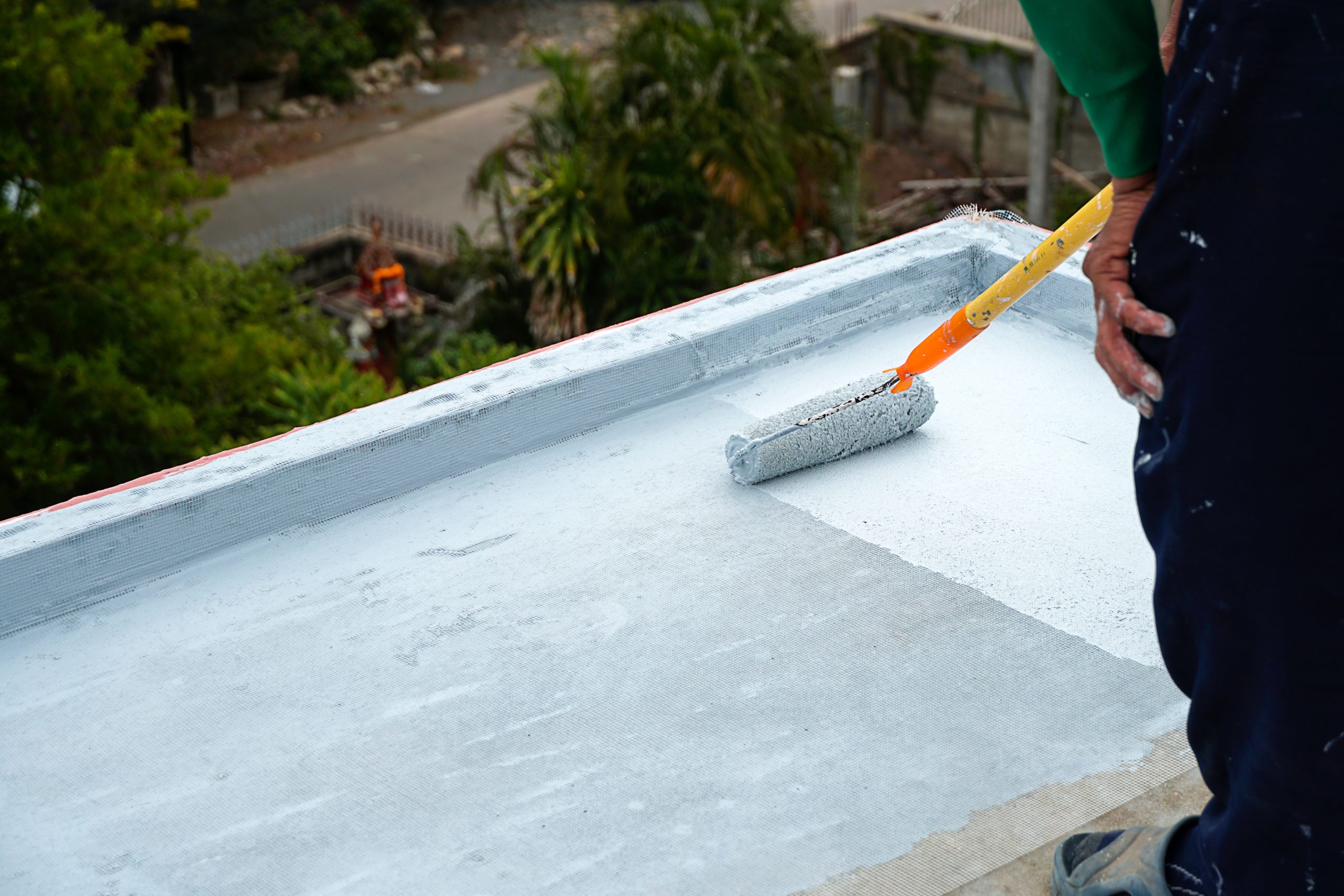
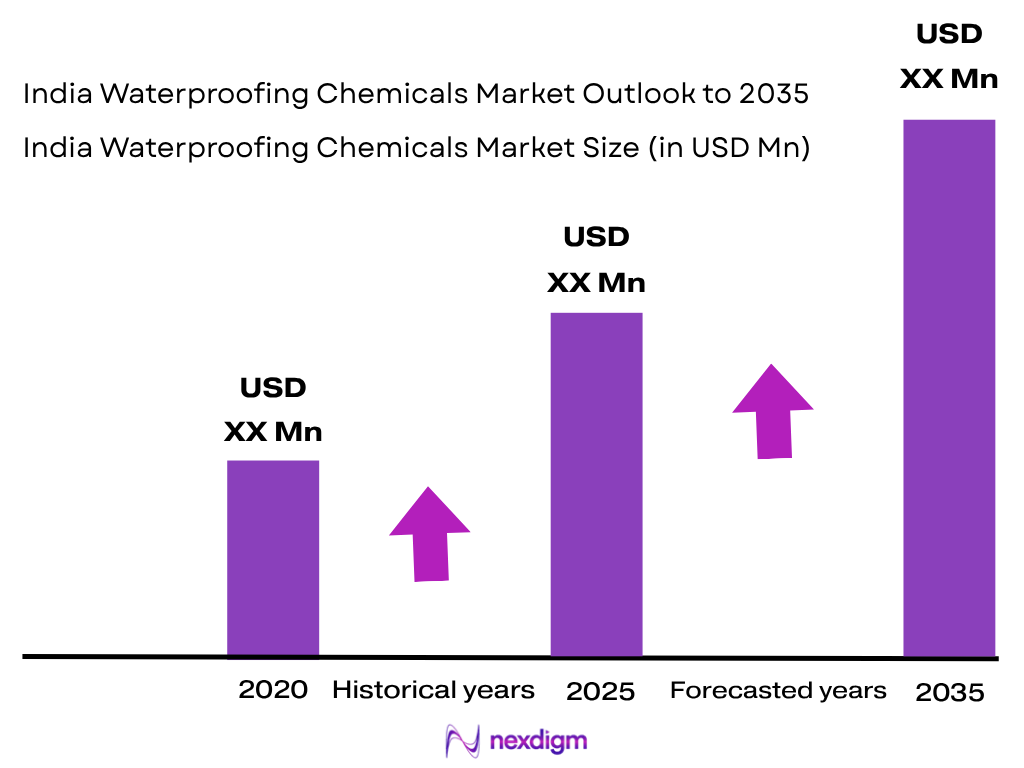
The India Waterproofing Chemicals Market is valued at approximately ~ USD ~ billion in 2024, supported by increasing construction activity, infrastructure development, building renovation, urbanization and the growing adoption of specialized construction chemicals. Demand is generated across residential buildings, commercial properties, industrial facilities, transportation infrastructure, water-retaining structures and below-grade construction. Waterproofing chemicals are increasingly incorporated into construction specifications to protect concrete and masonry from moisture ingress, leakage, corrosion and deterioration. The expansion of organized construction practices and increasing emphasis on building durability are also supporting the transition from conventional waterproofing methods toward specialized chemical systems.
The India Waterproofing Chemicals Market is concentrated around major construction and infrastructure centers including Mumbai, Delhi-NCR, Bengaluru, Hyderabad, Chennai, Pune, Ahmedabad and Kolkata. These locations combine large residential and commercial construction pipelines with infrastructure development, industrial expansion and redevelopment activity. Mumbai and Delhi-NCR provide substantial demand from high-density residential and commercial projects, while Bengaluru and Hyderabad benefit from technology, office and industrial development. Chennai and Pune provide important automotive, industrial and residential applications, while Ahmedabad and surrounding Gujarat markets are supported by industrial and infrastructure development. The concentration of contractors, developers, architects, distributors and construction-chemical applicators in these cities strengthens market accessibility and product specification.
Market Segmentation
By Chemistry Type
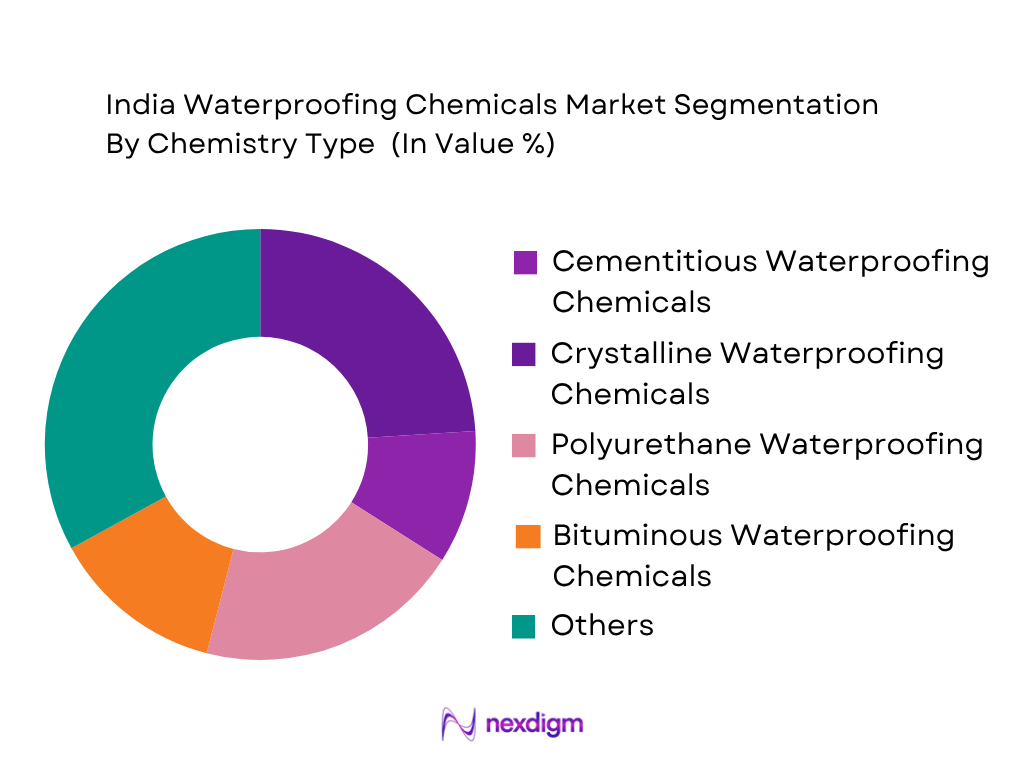
The India Waterproofing Chemicals Market is segmented by chemistry type into cementitious waterproofing chemicals, crystalline waterproofing chemicals, polyurethane waterproofing chemicals, polyurea waterproofing chemicals, acrylic waterproofing chemicals, bituminous waterproofing chemicals, epoxy waterproofing chemicals, silane and siloxane water-repellent chemicals, integral waterproofing admixtures and hybrid waterproofing formulations. Cementitious waterproofing chemicals represent the dominant modeled segment because of their compatibility with concrete and masonry substrates and their applicability across foundations, basements, terraces, bathrooms, water tanks, swimming pools and other cement-based structures. Their relatively straightforward integration with conventional construction practices makes them suitable for both new construction and repair applications. Crystalline technologies provide additional penetration-based protection for concrete structures, while polyurethane and polyurea systems address applications requiring flexibility, crack bridging and rapid curing. Bituminous systems remain relevant for selected below-grade and roofing applications, whereas acrylic, epoxy and silane-based products serve specialized surface-protection requirements. The chemistry landscape therefore reflects India’s varied climatic conditions, construction methods, substrate requirements and project specifications. Increasing professionalization of construction practices is also encouraging developers and contractors to evaluate waterproofing systems according to durability, substrate compatibility, application method and expected service performance rather than relying solely on conventional materials.
By Application
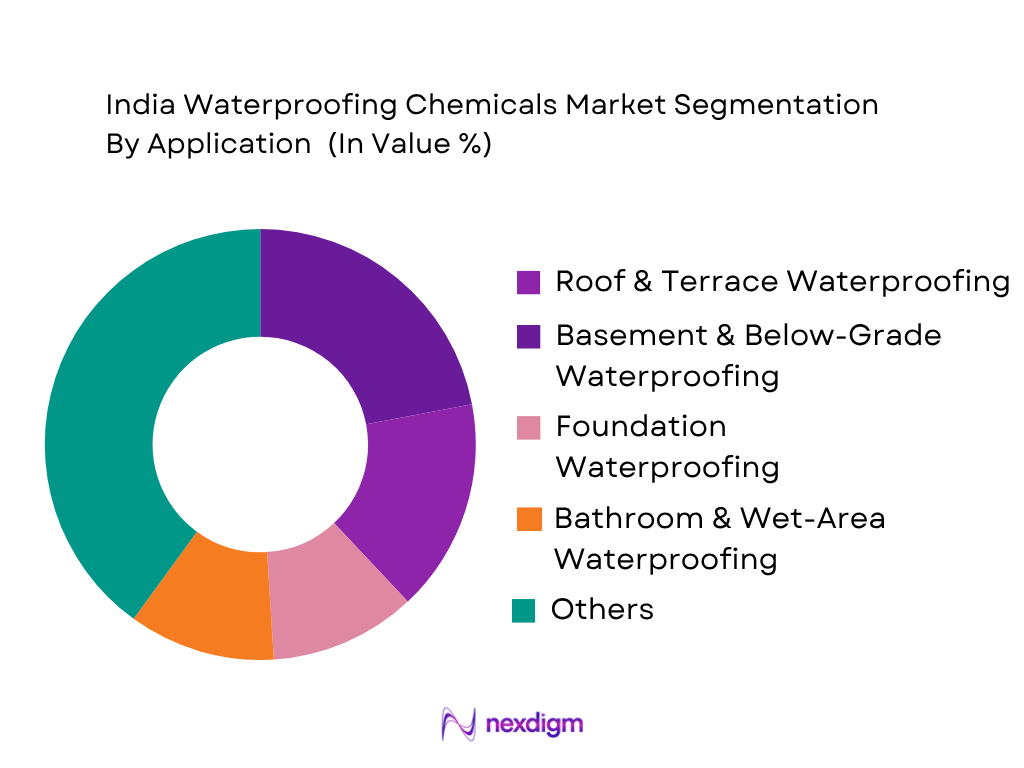
The India Waterproofing Chemicals Market is segmented by application into roof and terrace waterproofing, basement and below-grade waterproofing, foundation waterproofing, bathroom and wet-area waterproofing, water tank and swimming-pool waterproofing, concrete deck and slab waterproofing, bridge and infrastructure waterproofing, tunnel and underground-structure waterproofing, water and wastewater infrastructure waterproofing, industrial-floor waterproofing and podium and parking-structure waterproofing. Roof and terrace waterproofing represent a leading modeled application because exposed horizontal surfaces are particularly vulnerable to rainfall, water accumulation, thermal movement and recurring leakage. India’s diverse climatic conditions create waterproofing requirements across residential, commercial, institutional and industrial buildings. Basement and foundation systems provide another major application because below-grade structures encounter soil moisture and groundwater. Infrastructure projects further require waterproofing for bridges, tunnels, metro structures, water facilities and other concrete assets. Specialized waterproofing chemicals are increasingly used in renovation and repair projects where conventional systems may be difficult to install or where concrete requires additional protection. The application structure consequently reflects the country’s broad construction base, varied climatic exposure, expanding infrastructure requirements and increasing focus on asset durability. Demand is also influenced by contractor capability, substrate condition, project specifications and the need to minimize future leakage and repair requirements.
Competitive Landscape
The India Waterproofing Chemicals Market includes diversified construction-chemical manufacturers, specialized waterproofing companies and large building-material companies competing through chemistry portfolios, technical performance, distribution reach, contractor networks and project-specification capabilities. Major participants include Pidilite Industries, Sika India, Fosroc India, MAPEI India and Saint-Gobain Weber India. Competition is shaped by the ability to supply cementitious, polyurethane, crystalline, acrylic, admixture and other waterproofing technologies across residential, commercial, industrial and infrastructure applications. Companies with strong dealer networks, technical teams and applicator relationships have an advantage in reaching fragmented construction markets, while project-oriented suppliers compete through specification support and customized system solutions.
| Major Player | Establishment Year | Headquarters | Core Waterproofing Technology | Primary Product Form | Roof & Terrace Capability | Below-Grade Capability | Concrete Protection Capability | Infrastructure Capability |
| Pidilite Industries | 1959 | Mumbai, India | ~ | ~ | ~ | ~ | ~ | ~ |
| Sika India | 1986 | Mumbai, India | ~ | ~ | ~ | ~ | ~ | ~ |
| Fosroc India | 1982 | Bengaluru, India | ~ | ~ | ~ | ~ | ~ | ~ |
| MAPEI India | 2004 | Mumbai, India | ~ | ~ | ~ | ~ | ~ | ~ |
| Saint-Gobain Weber India | 2004 | Chennai, India | ~ | ~ | ~ | ~ | ~ | ~ |
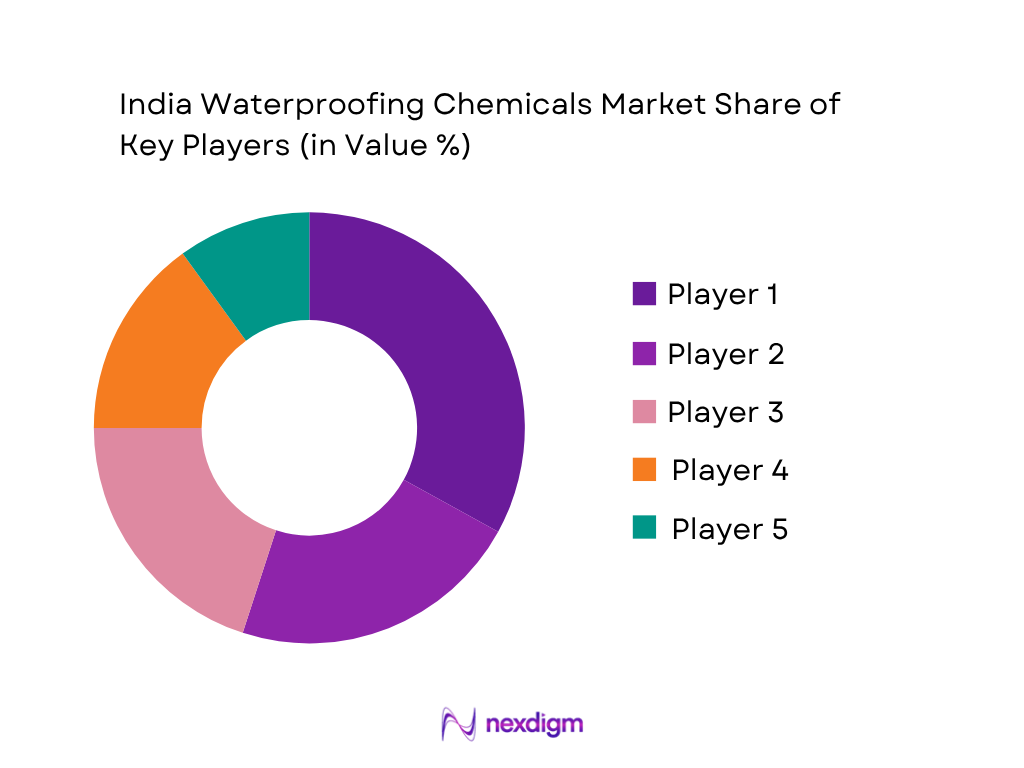
India Waterproofing Chemicals Market Analysis
Growth Drivers
Expansion of Urban Construction
The expansion of urban construction is strengthening demand for waterproofing chemicals across residential, commercial and mixed-use structures in India. The World Bank records India’s 2024 GDP at USD 3.91 trillion, while industry including construction represented 24.6 of GDP, providing a broad economic base for construction-related chemical applications. India’s urban population reached about 36 of the total population in the latest World Bank data, reinforcing demand for high-density buildings and redevelopment projects. The Union Government’s Economic Survey reports that national highway construction reached approximately 34 km per day in FY24, compared with 11.7 km per day in FY14, demonstrating sustained infrastructure execution. The same survey records around ₹3.01 lakh crore of capital investment by government and private participants in road transport during FY24. These construction activities require protection of concrete foundations, basements, roofs, decks, retaining structures and service areas against water ingress. Increasing construction intensity therefore expands the addressable application base for cementitious, polyurethane, acrylic, crystalline and other waterproofing chemistries. Urban development, infrastructure construction and concrete-intensive projects collectively support continued specification of waterproofing systems where durability and protection of structural assets are important.
Increasing Infrastructure Development
Increasing infrastructure development is a major demand driver because waterproofing chemicals are required across roads, bridges, tunnels, metro systems, water infrastructure and other concrete-intensive assets. India’s Economic Survey records 9,666 National Infrastructure Pipeline projects and schemes across 37 sub-sectors as of April 2024, with 4,413 projects under implementation and 2,062 completed. Transportation accounted for 58 of NIP capital outlay, while water and sanitation accounted for 12, demonstrating the scale of infrastructure categories where waterproofing and concrete-protection systems can be specified. Road-sector capital investment reached approximately ₹3.01 lakh crore in FY24, while national highway construction averaged about 34 km per day. The infrastructure pipeline creates recurring requirements for waterproofing of bridge decks, underground structures, foundations, expansion joints, water-retaining structures and concrete interfaces. The Economic Survey also reports that the Project Monitoring Group had facilitated resolution of 6,867 issues across 1,443 projects valued at ₹46.1 lakh crore. Such project execution supports demand for specialized construction chemicals because infrastructure owners increasingly need materials capable of extending concrete service performance and limiting moisture-related deterioration. These conditions provide a broad project base for waterproofing chemical suppliers serving infrastructure contractors and precast applications.
Market Challenges
Raw Material Price Volatility
Raw-material volatility presents a significant challenge for India’s waterproofing chemicals market because several formulations depend on polymers, resins, additives, solvents, cementitious binders and specialty chemicals. India’s consumer-price inflation was recorded at 5.0 in 2024 by the World Bank, illustrating continued movement in the broader input-cost environment. The country’s GDP reached USD 3.91 trillion in the same period, but construction and infrastructure activity also creates strong demand for industrial materials, potentially increasing competition for chemical inputs. Waterproofing formulations based on polyurethane, acrylic, epoxy, polyurea and polymer-modified cementitious systems can have different exposure to imported and domestically produced feedstocks. Exchange-rate movements can further influence the landed cost of specialized chemical intermediates and equipment. The challenge is particularly relevant for manufacturers supplying project-specific formulations because changes in raw-material availability can affect production planning, inventory requirements and formulation consistency. Government infrastructure data show substantial ongoing project activity, including ₹3.01 lakh crore of road-sector capital investment in FY24 and 9,666 NIP projects and schemes recorded in April 2024. This large construction pipeline increases the importance of reliable material supply. Manufacturers therefore need resilient procurement networks, diversified suppliers and formulation strategies capable of maintaining product performance despite changing input conditions.
Skilled Applicator Shortages and Application Quality
Waterproofing performance depends heavily on substrate preparation, mixing, thickness control, curing, detailing and correct installation, making skilled application an important market challenge. India’s large infrastructure pipeline increases the number of projects requiring technically correct waterproofing installation across roofs, basements, foundations, bridges, tunnels and water-retaining structures. The Economic Survey recorded 9,666 National Infrastructure Pipeline projects and schemes across 37 sub-sectors in April 2024, creating a wide geographic requirement for specialized construction activities. Road infrastructure alone attracted approximately ₹3.01 lakh crore of capital investment in FY24, while highway construction reached approximately 34 km per day. These figures indicate a substantial volume of concrete-intensive construction where waterproofing failures can result from inadequate surface preparation, incorrect application thickness, poor joint treatment or unsuitable curing conditions. India’s construction ecosystem also spans very different climatic environments, increasing the technical requirement for product selection and installation practices. Waterproofing chemical suppliers therefore face the challenge of developing installer training, technical supervision and standardized application procedures alongside product sales. The issue is particularly important for advanced polyurethane, polyurea, crystalline and hybrid systems, where application parameters can materially influence final performance. Improving installer capability and project-level quality control is consequently essential for reducing failures and supporting wider adoption.
Market Opportunities
Infrastructure Rehabilitation
Infrastructure rehabilitation presents a strong opportunity for waterproofing chemical suppliers because existing concrete assets require protection, repair and moisture management throughout their operating life. India’s Economic Survey reports that national highways increased 1.6 times between 2014 and 2024, while the average construction pace reached approximately 34 km per day in FY24. The road sector also recorded around ₹3.01 lakh crore of capital investment during FY24. Alongside roads, the National Infrastructure Pipeline contained 9,666 projects and schemes across 37 sub-sectors as of April 2024, including substantial transportation, water and sanitation infrastructure. Rehabilitation of bridge decks, tunnels, elevated structures, parking structures, retaining walls and water facilities creates opportunities for waterproofing systems that can be applied during repair rather than only during new construction. Crystalline waterproofing, polyurethane coatings, polyurea systems, cementitious barriers and protective surface treatments can address different substrate and exposure conditions. The opportunity is particularly relevant where infrastructure owners seek to extend asset service life and reduce recurring deterioration associated with water ingress. Government infrastructure spending provides the current project base, while the existing stock of concrete structures provides recurring rehabilitation requirements. Suppliers that combine waterproofing with concrete repair, corrosion protection and crack treatment can address broader rehabilitation specifications and strengthen their role in infrastructure maintenance projects across India.
Water and Wastewater Infrastructure Modernization
Modernization of water and wastewater infrastructure creates an opportunity for specialized waterproofing chemicals because tanks, treatment structures, reservoirs, pumping facilities and underground systems require durable protection against continuous moisture exposure. The Government of India’s Economic Survey identifies water and sanitation as accounting for 12 of National Infrastructure Pipeline capital outlay, while 9,666 NIP projects and schemes across 37 sub-sectors were recorded as of April 2024. The government’s sanitation program also reported 4,576 urban local bodies with ODF certification, 3,913 with ODF+ certification and 1,429 with ODF++ certification by December 2024. These infrastructure systems require concrete structures capable of handling prolonged exposure to water, wastewater, humidity and chemically aggressive environments. Waterproofing chemicals can therefore be incorporated into rehabilitation and new construction specifications for treatment tanks, sewage infrastructure, underground chambers, reservoirs and other water-retaining structures. Crystalline systems can provide integral concrete protection, while polyurethane, epoxy, cementitious and hybrid coatings can address different exposure and substrate requirements. The opportunity is also supported by India’s broader infrastructure investment environment, with GDP reaching USD 3.91 trillion in 2024. Suppliers capable of offering compatible waterproofing, crack-bridging and concrete-protection solutions can target municipal infrastructure, industrial water facilities and large public-sector projects where long-term structural protection is a critical specification requirement.
Future Outlook
Over the next decade, the India Waterproofing Chemicals Market is expected to develop through increasing construction quality requirements, infrastructure rehabilitation, urban redevelopment and greater adoption of specialized construction chemicals. The market is expected to move toward higher-performance systems that combine waterproofing with concrete protection, crack treatment and durability enhancement. Liquid-applied coatings, crystalline systems, polyurethane, polyurea and integral waterproofing admixtures are expected to remain important technologies across different application environments. Growing professionalization among developers, contractors and applicators is also expected to increase emphasis on product specifications, substrate preparation, application quality and long-term performance.
Major Players
- Pidilite Industries
- Sika India
- Fosroc India
- MAPEI India
- Saint-Gobain Weber India
- MYK Arment
- MC-Bauchemie India
- CICO Technologies
- Asian Paints
- BASF India / Master Builders Solutions
- Chryso India
- Chembond Chemicals
- Kryton Buildmat
- Dow India
- Dr. Fixit
Key Target Audience
- Waterproofing Chemical Manufacturers and Formulators
- Construction Chemical Distributors and Building-Material Suppliers
- Waterproofing Contractors and Applicators
- Real-Estate Developers and Property Owners
- Infrastructure Developers and EPC Contractors
- Investments and Venture Capitalist Firms
- Government and Regulatory Bodies (Bureau of Indian Standards, Central Public Works Department, Ministry of Road Transport and Highways)
- Roofing, Building-Envelope and Concrete-Protection Solution Providers
Research Methodology
Step 1: Identification of Key Variables
The initial phase involves constructing an ecosystem map covering waterproofing chemical manufacturers, raw-material suppliers, distributors, contractors, applicators, architects, developers and infrastructure organizations. The assessment identifies chemistry types, application categories, construction activities, substrate requirements and project specifications influencing demand.
Step 2: Market Analysis and Construction
In this phase, historical market information is compiled and analyzed across chemistry, product form, application, end-use sector, construction activity and regional markets. Both demand-side and supply-side variables are evaluated to establish the market baseline and identify differences between new construction, renovation and infrastructure applications.
Step 3: Hypothesis Validation and Expert Consultation
Market hypotheses are developed and validated through discussions with waterproofing manufacturers, distributors, contractors, applicators, engineers and construction-material specialists. These consultations assess technology adoption, purchasing criteria, application practices, competitive positioning, distribution structures and product-selection factors.
Step 4: Research Synthesis and Final Output
The final phase integrates top-down and bottom-up market assessment with company-level information and construction-sector indicators. The findings are triangulated across applications, technologies, end-use sectors and competitive evidence to produce a structured assessment of the India Waterproofing Chemicals Market and its future development potential.

- Executive Summary
- Research Methodology (Market Definitions and Assumptions, India Waterproofing Chemicals Market Classification, Waterproofing Chemistry Mapping, Cementitious Waterproofing Assessment, Crystalline Waterproofing Evaluation, Polyurethane Waterproofing Analysis, Polyurea Waterproofing Assessment, Acrylic Waterproofing Evaluation, Bituminous Waterproofing Analysis, Epoxy Waterproofing Assessment, Silane and Siloxane Treatment Evaluation, Integral Waterproofing Admixture Assessment, Hybrid Waterproofing System Analysis, Waterproofing Performance Assessment, Water Penetration Resistance Analysis, Crack Bridging Capability Assessment, Bond Strength Evaluation, Chemical Resistance Assessment, UV and Weather Resistance Assessment, Hydrostatic Pressure Resistance Assessment, Substrate Compatibility Assessment, Application Method Mapping, New Construction Demand Assessment, Building Renovation Demand Assessment, Infrastructure Rehabilitation Assessment, Supply-Side Assessment, Demand-Side Assessment, Top-Down Market Sizing, Bottom-Up Market Sizing, Primary Industry Interviews, Data Triangulation, Forecasting Framework)

- Definition and Scope
- India Waterproofing Chemicals Industry Evolution and Development of Cementitious Waterproofing Systems, Crystalline Waterproofing Technologies, Polyurethane Coatings, Polyurea Systems, Acrylic Waterproofing Solutions, Bituminous Waterproofing Chemicals, Epoxy Waterproofing Systems, Silane and Siloxane Water Repellents, Integral Concrete Waterproofing Admixtures, Hybrid Waterproofing Systems, Liquid-Applied Membranes, Concrete Protection Chemicals, Roof Waterproofing Systems, Below-Grade Waterproofing Solutions, Bridge Deck Waterproofing, Water Infrastructure Waterproofing, Digital Moisture Monitoring and Advanced Waterproofing Application Technologies
- Waterproofing Chemicals Value Chain Analysis
- Waterproofing Chemicals Supply Chain Analysis
- Cement and Binder Suppliers, Polymer and Resin Suppliers, Bitumen Suppliers, Silica and Mineral Additive Suppliers, Chemical Admixture Manufacturers, Specialty Chemical Manufacturers, Waterproofing Chemical Formulators, Construction Chemical Manufacturers, Waterproofing System Developers, Applicator and Contractor Networks, Building Material Distributors, Construction Material Dealers, Infrastructure Contractors, Real Estate Developers, Architects, Structural Consultants, Civil Engineers, Government Infrastructure Agencies and Building Owners

- Growth Drivers (Expansion of Urban Construction, Increasing Infrastructure Development, Rising Building Renovation Activity, Growth of Residential Construction, Expansion of Commercial Real Estate, Increasing Metro and Transportation Infrastructure Development, Growth of Industrial and Logistics Facilities, Expansion of Water and Wastewater Infrastructure, Rising Demand for Concrete Durability, Increasing Adoption of Specialized Construction Chemicals)
- Market Challenges (Raw Material Price Volatility, Polymer and Resin Feedstock Dependence, Skilled Applicator Shortages, Inconsistent Surface Preparation, Limited Awareness of Advanced Waterproofing Technologies, Unorganized Applicator Market, Application Quality Variability, Regional Distribution Constraints, Product Compatibility Issues, Climate-Specific Performance Requirements)
- Market Opportunities (Infrastructure Rehabilitation, Below-Grade Waterproofing Expansion, Urban Redevelopment, Water and Wastewater Infrastructure Modernization, Low-VOC Waterproofing Formulations, Crystalline Waterproofing Technologies, High-Performance Polyurethane Systems, Polyurea Spray Applications, Integrated Waterproofing and Concrete Protection Systems, Roof Restoration, Smart Waterproofing Systems, Long-Life Bridge and Tunnel Protection)
- Market Trends (Shift Toward High-Performance Waterproofing Systems, Increasing Use of Liquid-Applied Technologies, Growth of Crystalline Waterproofing, Expansion of Polyurethane and Polyurea Systems, Increasing Waterproofing in Infrastructure Projects, Adoption of Integral Concrete Waterproofing Admixtures, Growing Demand for Low-VOC Formulations, Expansion of Preventive Waterproofing, Increasing Use of Hybrid Systems, Growth of Advanced Concrete Protection Technologies)
- Government Regulations and Standards (Bureau of Indian Standards Requirements, IS 2645 Integral Cement Waterproofing Compounds, IS 3067 Waterproofing of Underground Structures, IS 6494 Cement Grouting for Water Retaining Structures, IS 12027 Waterproofing of Concrete Structures, IS 3370 Concrete Structures for Storage of Liquids, National Building Code Requirements, Central Public Works Department Specifications, Ministry of Road Transport and Highways Specifications, Water Infrastructure Standards, Environmental and Chemical Handling Requirements)
- SWOT Analysis
- Porter’s Five Forces Analysis
- PESTLE Analysis
- Stakeholder Ecosystem
- Competition Ecosystem

- By Market Value (2020-2025)
- By Volume Consumption (2020-2025)
- By Waterproofing Chemical Consumption Volume (2020-2025)
- By Waterproofed Surface Area (2020-2025)
- By Construction and Infrastructure Application Volume (2020-2025)
- By New Construction Waterproofing Volume (2020-2025)

- By Chemistry Type (In Value %)
Cementitious Waterproofing Chemicals
Crystalline Waterproofing Chemicals
Polyurethane Waterproofing Chemicals
Polyurea Waterproofing Chemicals
Acrylic Waterproofing Chemicals
Bituminous Waterproofing Chemicals
Epoxy Waterproofing Chemicals
Silane and Siloxane Water-Repellent Chemicals
Integral Waterproofing Admixtures
Hybrid Waterproofing Formulations - By Application (In Value %)
Roof Waterproofing
Terrace and Balcony Waterproofing
Basement and Below-Grade Waterproofing
Foundation Waterproofing
Bathroom and Wet-Area Waterproofing
Water Tank and Swimming Pool Waterproofing
Concrete Deck and Slab Waterproofing
Bridge and Infrastructure Waterproofing
Tunnel and Underground Structure Waterproofing
Water and Wastewater Infrastructure Waterproofing
Industrial Floor and Process-Area Waterproofing
Podium and Parking Structure Waterproofing - By End-Use Sector (In Value %)
Residential Buildings
Commercial Buildings
Industrial Facilities
Infrastructure Projects
Government and Institutional Buildings
Hotels and Hospitality Buildings
Healthcare Facilities
Educational Buildings
Retail and Shopping Centers
Data Centers and Technology Facilities
Warehouses and Logistics Facilities - By Product Form (In Value %)
Liquid-Applied Waterproofing Chemicals
Powder-Based Waterproofing Compounds
Waterproofing Coatings
Waterproofing Admixtures
Sealants and Joint Treatment Chemicals
Crack Injection Chemicals
Primers and Bonding Agents
Water-Repellent Treatments
Repair and Rehabilitation Compounds - By Region (In Value %)
North India
South India
West India
East India
Central India
Northeast India

- Market Share of Major Players (By India Revenue, Chemistry Portfolio, Waterproofing Product Portfolio, Application Coverage, Residential Product Coverage, Commercial Product Coverage, Infrastructure Product Coverage, Distribution Network, Applicator Network, Manufacturing Capacity, Regional Presence, Technical Support Capability, Project Specification Reach, New Product Development Capability, Construction Chemical Portfolio)
- Cross Comparison Parameters (Chemistry Portfolio Breadth, Waterproofing Product Form Coverage, Below-Grade Waterproofing Capability, Roof and Terrace Waterproofing Capability, Concrete Protection and Admixture Capability, Infrastructure Waterproofing Capability, Applicator and Distribution Network Reach, Technical Specification and Project Support Capability)
- SWOT Analysis of Major Players
- Detailed Profiles of Major Companies
Sika India
Pidilite Industries
Fosroc India
Dr. Fixit
MYK Arment
Saint-Gobain Weber India
MC-Bauchemie India
BASF India / Master Builders Solutions
Mapei India
Asian Paints
CICO Technologies
Kryton Buildmat
Chryso India
Chembond Chemicals
Dow India

- Residential Building Waterproofing Requirement Assessment
- Commercial Building Waterproofing Requirement Analysis
- Industrial Facility Waterproofing Demand Assessment
- Roof and Terrace Waterproofing Requirement Assessment
- Basement and Below-Grade Waterproofing Demand Analysis
- Water Tank and Swimming Pool Waterproofing Assessment
- Metro and Transportation Infrastructure Waterproofing Analysis
- Bridge and Highway Waterproofing Requirement Assessment
- Water and Wastewater Infrastructure Waterproofing Demand Analysis

- By Market Value (2026-2035)
- By Volume Consumption (2026-2035)
- By Waterproofing Chemical Consumption Volume (2026-2035)
- By Waterproofed Surface Area (2026-2035)
- By Construction and Infrastructure Application Volume (2026-2035)
- By New Construction Waterproofing Volume (2026-2035)


 Request a Sample
 Ask for Customization
 Get a Quote
 Enquire Now