

 Download PDF
 Download PDF
Market Overview
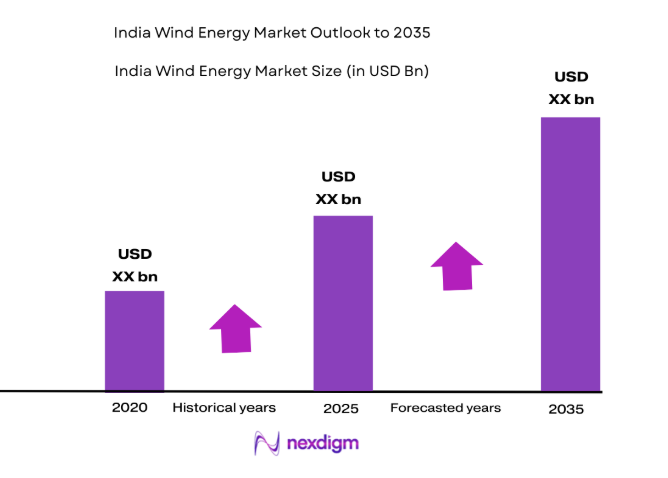
The India wind energy market is valued at approximately USD ~ billion, driven by increased investments, government incentives, and a rising focus on renewable energy. The rapid expansion of wind energy installations is supported by favorable policies like the National Wind-Solar Hybrid Policy and Renewable Purchase Obligation (RPO), which aim to increase the country’s share of green energy. Government-backed incentives, tax breaks, and subsidies for renewable energy players are further propelling the growth of the wind energy sector.
Several regions across India, including Tamil Nadu, Gujarat, Maharashtra, and Rajasthan, dominate the wind energy market due to their favorable wind resources, infrastructure, and investment incentives. These states have developed strong wind farms, making them key players in India’s energy transition. Tamil Nadu, in particular, leads the nation in wind capacity, while other states benefit from improved grid infrastructure and government support, facilitating continued expansion.
Market Segmentation
By Product Type
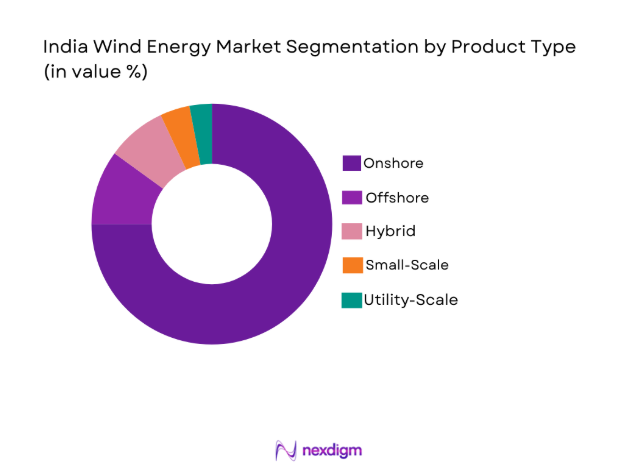
India’s wind energy market is segmented by product type into onshore, offshore, hybrid, small-scale, and utility-scale systems. The onshore wind energy systems currently dominate the market due to their proven technology, cost-effectiveness, and established infrastructure. Onshore systems offer scalability and faster implementation compared to offshore setups, which require higher capital investments and longer timelines. Small-scale systems are gaining popularity in rural and decentralized applications, while utility-scale systems are often used for large, grid-connected wind farms. Hybrid systems, combining both wind and solar power, are emerging as a competitive solution for providing reliable energy supply.
By Platform Type
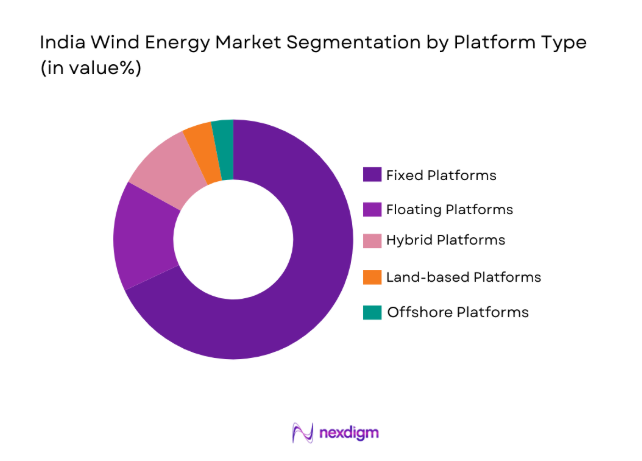
India’s wind energy market is segmented by platform type into fixed platforms, floating platforms, hybrid platforms, land-based platforms, and offshore platforms. Fixed platforms are the dominant sub-segment due to their cost-efficiency and widespread deployment in onshore wind farms. These platforms offer reliable performance and are preferred for large-scale installations. Offshore platforms are emerging due to India’s extensive coastline and favorable wind conditions. Floating platforms, though still in early development stages, are gaining traction for offshore installations due to their ability to reach deeper waters where conventional fixed platforms are not feasible. Hybrid platforms offer a combination of different renewable energy systems, enhancing energy reliability.
Competitive Landscape
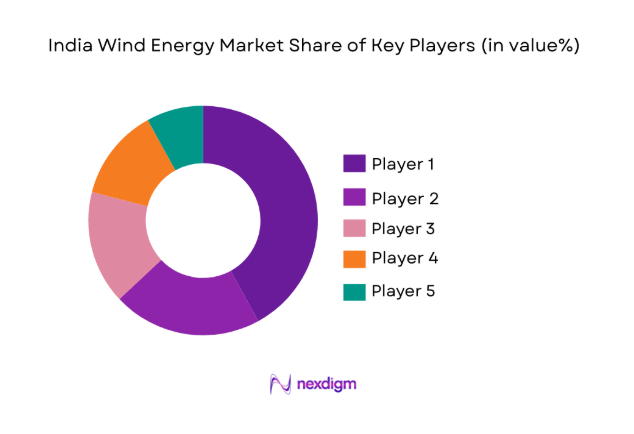
The competitive landscape of India’s wind energy market is marked by consolidation, with several large players dominating the space. The market is highly influenced by global companies that bring advanced technology and significant financial resources. Major players like Siemens Gamesa, Suzlon, and GE Renewable Energy lead the market, while new entrants focus on technological innovation and cost reduction. These players also actively collaborate with the government to meet the renewable energy targets and leverage subsidies.
| Company Name | Establishment Year | Headquarters | Technology Focus | Market Reach | Key Products | Revenue | Installation Capacity (MW) |
| Siemens Gamesa | 1976 | Spain | ~ | ~ | ~ | ~ | ~ |
| Suzlon Energy | 1995 | India | ~ | ~ | ~ | ~ | ~ |
| GE Renewable Energy | 1892 | USA | ~ | ~ | ~ | ~ | ~ |
| Vestas | 1945 | Denmark | ~ | ~ | ~ | ~ | ~ |
| Inox Wind | 2009 | India | ~ | ~ | ~ | ~ | ~ |
India Wind Energy Market Analysis
Growth Drivers
Government Policy and Support
Government policy is a major driver of India’s wind energy market. The Indian government has introduced various incentives, such as the National Wind Energy Mission and wind energy auctions, to encourage the private sector to invest in wind energy projects. These initiatives offer financial incentives, tax breaks, and favorable pricing for energy producers. The government’s commitment to renewable energy through national programs such as the Renewable Energy Development Program (REDP) and the National Action Plan on Climate Change (NAPCC) has led to a significant increase in wind energy installations. Furthermore, the government’s ambitious renewable energy targets, such as achieving 175 GW of renewable energy capacity by 2022 and 450 GW by 2030, are key drivers for this market. The integration of wind energy into the renewable energy targets is also expected to lead to higher investments and capacity additions over the coming years. These favorable policies provide companies with the confidence to build and expand their wind farms, boosting market growth significantly. As the demand for clean energy sources continues to rise globally, India’s government support for wind energy is poised to play a crucial role in achieving the country’s long-term sustainability goals.
Technological Advancements
Technological advancements in wind turbines and grid integration technologies are playing a vital role in driving the growth of India’s wind energy sector. The increasing efficiency of wind turbines, improved materials, and design innovations have lowered operational costs, making wind energy more competitive with traditional fossil fuels. Modern turbines with larger blades and higher capacities are enabling wind energy producers to generate more power from the same amount of wind, reducing the cost per unit of electricity generated. The development of larger turbines and offshore wind technologies is also enhancing the potential of India’s wind energy market. Offshore wind farms, which take advantage of stronger and more consistent winds, present significant opportunities for expansion. Furthermore, innovations in energy storage and grid management solutions are addressing the intermittency issues associated with renewable energy sources, increasing the reliability of wind energy and spurring growth. Energy storage systems such as batteries, and hybrid systems that combine wind, solar, and storage technologies, are helping balance supply and demand and improve grid stability. The integration of advanced forecasting systems and smart grids further optimizes wind energy generation and distribution, making it a more viable and sustainable solution for India’s energy needs.
Market Challenges
High Initial Investment
One of the significant challenges faced by the Indian wind energy market is the high initial capital investment required for the construction and installation of wind turbines and infrastructure. While wind energy projects have long-term benefits, the upfront cost of purchasing turbines, land acquisition, and grid connection remains a barrier for many developers. The large-scale deployment of wind turbines involves substantial financial outlay for the procurement of land, installation of infrastructure, and connection to the national grid. This challenge is particularly prominent for offshore wind projects, where the cost of developing offshore farms and building the necessary infrastructure is much higher compared to onshore projects. In addition, the capital-intensive nature of wind energy projects requires long-term financing options, which are often challenging to secure for smaller developers. This high capital expenditure makes it difficult for smaller players and developers to enter the market, restricting overall market growth. In many cases, the need for foreign investments and the risk of delayed returns on investments make it more difficult for domestic players to scale operations. As a result, securing funds for large-scale wind projects remains a key challenge for accelerating the market’s expansion.
Land Acquisition and Environmental Concerns
Land acquisition for wind farms is another major challenge in India’s wind energy market. Securing land for large-scale wind farms in regions with high wind potential can be difficult due to competing land use, regulatory hurdles, and local opposition. Rural communities often oppose land acquisitions for wind farms, raising concerns about the impact on local livelihoods and the environment. Additionally, obtaining land in regions with strong winds, such as Rajasthan and Tamil Nadu, can lead to conflicts with agricultural and urban land uses, which further complicates the process. Environmental concerns related to land use, wildlife preservation, and the impact of large wind farms on local ecosystems have led to delays in project approvals. Projects often require extensive environmental impact assessments and public consultations, which can extend timelines and increase costs. These challenges in land acquisition and environmental regulation often slow down the deployment of new wind energy projects, impacting the overall market’s ability to meet the ambitious renewable energy targets. Moreover, the lack of adequate infrastructure and transportation networks to support large wind turbine installations in remote areas further hinders the progress of wind energy projects in these regions.
Opportunities
Hybrid Wind-Solar Projects
The development of hybrid wind-solar projects offers significant opportunities for growth in India’s wind energy market. Hybrid systems combine wind and solar power, providing a more consistent and reliable energy supply, reducing the intermittency issues commonly associated with renewable energy. By integrating these two renewable sources, hybrid systems can provide round-the-clock electricity generation, making them a more dependable energy solution than relying on a single source. This synergy enables power generation during both day and night, enhancing grid stability and reducing the need for backup power sources. The government’s focus on promoting hybrid renewable energy systems through auctions and policy incentives further strengthens this opportunity. The Ministry of New and Renewable Energy (MNRE) has already introduced a policy to promote hybrid wind-solar power plants, which offers financial support and creates a market for these combined solutions. Hybrid systems are expected to play a pivotal role in achieving India’s renewable energy goals while providing a competitive alternative to traditional power generation. As renewable energy installations increase and the energy grid becomes more reliant on intermittent power sources, hybrid solutions will help optimize resource utilization and reduce reliance on conventional energy sources like coal and natural gas. These projects are also expected to lower overall system costs, further enhancing their attractiveness to developers and investors.
Offshore Wind Development
Offshore wind energy presents a promising opportunity for the Indian market. India’s coastline stretches over 7,500 kilometers, with significant potential for offshore wind energy. The country’s geographical advantage, combined with advances in offshore wind technology, is expected to drive the development of offshore wind farms in the coming years. Offshore wind projects are expected to provide more consistent and higher-capacity generation compared to onshore projects, owing to the stronger and more reliable wind resources at sea. The government’s focus on expanding renewable energy capacity, coupled with its support for offshore wind projects through favorable policies and international collaborations, will accelerate growth in this segment. The Indian government has already identified several potential offshore wind zones along its eastern and western coasts, and pilot projects are underway to assess their viability. As the technology matures and the costs decrease, offshore wind projects are likely to become a significant contributor to India’s renewable energy capacity. The development of offshore wind energy will also help diversify India’s energy mix and enhance its energy security by reducing dependence on fossil fuels. Given the country’s vast coastal resources, the offshore wind market in India holds considerable promise for long-term growth and investment. Additionally, the collaboration with global players and adoption of international best practices will accelerate the development of the offshore wind sector.
Future Outlook
The future of India’s wind energy market looks promising, with expected growth driven by government incentives, technological advancements, and the need to meet renewable energy targets. Key trends include the rise of hybrid wind-solar projects, increased investments in offshore wind capacity, and innovations in turbine technology. With significant demand for clean energy, India’s wind energy market is set to expand rapidly, providing a stable and reliable source of power. Regulatory support and the reduction in the cost of technology will further fuel this growth, ensuring a strong future outlook for the sector.
Major Players
- Siemens Gamesa
- Suzlon Energy
- GE Renewable Energy
- Vestas
- Inox Wind
- Nordex
- Senvion
- Mitsubishi Power
- Adani Green Energy
- ReNew Power
- TATA Power
- Greenko Group
- Mytrah Energy
- Brookfield Renewable Partners
- Power Grid Corporation of India
Key Target Audience
- Investments and venture capitalist firms
- Government and regulatory bodies
- Energy companies
- Wind turbine manufacturers
- Renewable energy developers
- Environmental organizations
- Industrial consumers
Research Methodology
Step 1: Identification of Key Variables
Identify key market variables such as technological advancements, government policies, and the competitive landscape that impact the wind energy market.
Step 2: Market Analysis and Construction
Analyze the data from primary and secondary sources, constructing a model to assess current and future market dynamics.
Step 3: Hypothesis Validation and Expert Consultation
Consult with industry experts to validate the findings and refine hypotheses based on their insights.
Step 4: Research Synthesis and Final Output
Synthesize the research findings into a comprehensive market report with actionable insights and forecasts.

- Executive Summary
- Research Methodology (Definitions, Scope, Industry Assumptions, Market Sizing Approach, Primary & Secondary Research Framework, Data Collection & Verification Protocol, Analytic Models & Forecast Methodology, Limitations & Research Validity Checks)

- Market Definition and Scope
- Value Chain & Stakeholder Ecosystem
- Regulatory / Certification Landscape
- Sector Dynamics Affecting Demand
- Strategic Initiatives & Infrastructure Growth

- Growth Drivers
Government Support for Renewable Energy
Technological Advancements in Wind Turbine Efficiency
Rising Energy Demand and Sustainability Goals - Market Challenges
Land Acquisition and Environmental Concerns
Grid Integration and Intermittency Issues
High Initial Capital Investment - Market Opportunities
Offshore Wind Energy Development
Hybrid Wind-Solar Systems
Technological Innovations in Energy Storage - Trends
Increase in Use of Offshore Wind Energy
Adoption of Hybrid Energy Systems - Government Regulations
Wind Energy Policy Support
Renewable Energy Targets
Environmental Impact Regulations - SWOT Analysis
- Porter’s Five Forces

- By Market Value, 2020-2025
- By Installed Units, 2020-2025
- By Average System Price, 2020-2025
- By System Complexity Tier, 2020-2025

- By System Type (In Value%)
Onshore Wind Systems
Offshore Wind Systems
Hybrid Wind Systems
Vertical Axis Wind Turbines
Distributed Wind Systems - By Platform Type (In Value%)
Land-based Platforms
Hybrid Platforms
Floating Platforms
Fixed Platforms
Offshore Platforms - By Fitment Type (In Value%)
On-premise Solutions
Cloud-based Solutions
Hybrid Solutions
Integrated Solutions - By End User Segment (In Value%)
Residential Sector
Commercial Sector
Industrial Sector

- Market Share Analysis
- Cross Comparison Parameters (System Type, Platform Type, End User Segment, Fitment Type, Procurement Channel, Material / Technology, Region)
- SWOT Analysis of Key Competitors
- Pricing & Procurement Analysis
- Key Players
Siemens Gamesa
Suzlon Energy
GE Renewable Energy
Nordex Group
Vestas Wind Systems
Gamesa Electric
Senvion
Envision Energy
Adani Green Energy
Tata Power Renewable Energy
Ørsted
ReNew Power
Inox Wind
GE Wind Energy
L&T Renewable Energy

- Residential Demand for Wind Energy
- Commercial and Industrial Wind Power Usage
- Policy Influence on End User Decisions
- Cost-Effectiveness and Technological Advancements

- Forecast Market Value, 2026-2035
- Forecast Installed Units, 2026-2035
- Price Forecast by System Tier, 2026-2035
- Future Demand by Platform, 2026-2035


 Request a Sample
 Ask for Customization
 Get a Quote
 Enquire Now