
 Download PDF
Market Overview
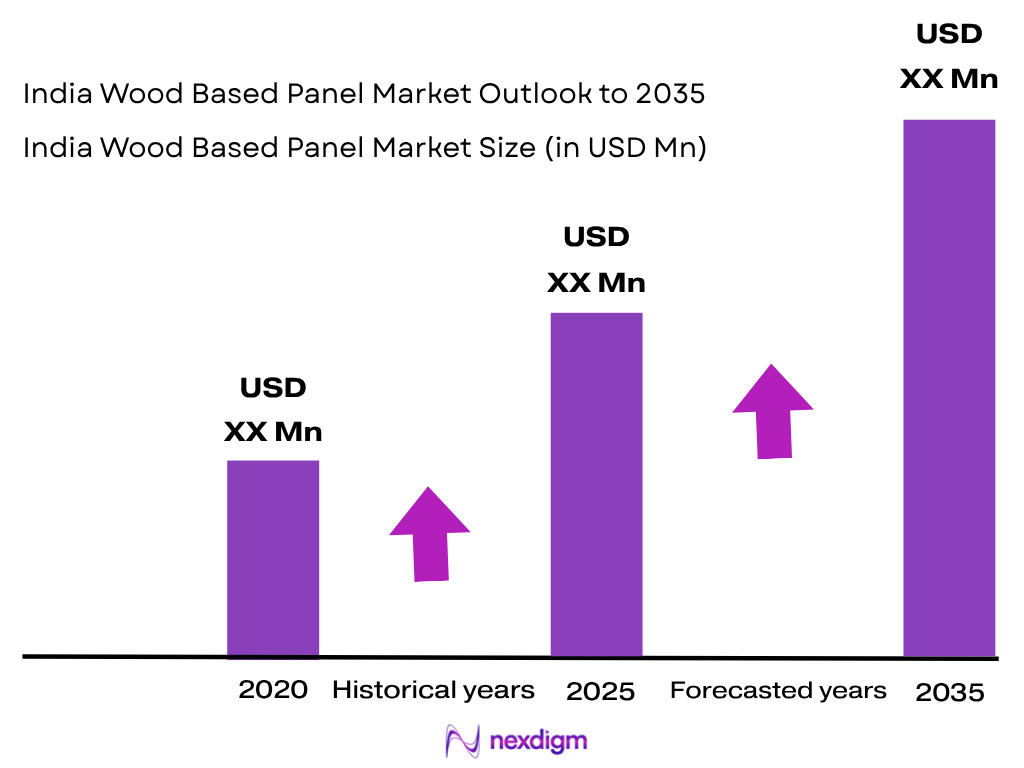
The India Wood Based Panel Market was valued at approximately USD 1.57 billion in the latest published base-period assessment, supported by increasing consumption of plywood, MDF, particleboard and other engineered panels. Plywood generated the largest revenue contribution, while MDF demand is being strengthened by modular furniture, cabinetry and interior applications. Industry assessments place India’s broader wood-panel industry at approximately INR 550 billion on a wider product-definition basis, reflecting substantial domestic manufacturing and consumption.
North, South and West India constitute important wood-panel consumption and manufacturing clusters, supported by furniture production, construction, interior fit-outs and extensive dealer networks. Delhi NCR benefits from residential and commercial interior demand; Bengaluru, Hyderabad and Chennai support modular furniture and technology-office fit-outs; while Mumbai, Pune and Ahmedabad generate demand from housing and commercial projects. India also sources wood-based panels from countries including Thailand, Bhutan, China, Germany and Malaysia, supplementing domestic supply.
Market Segmentation
By Product Type
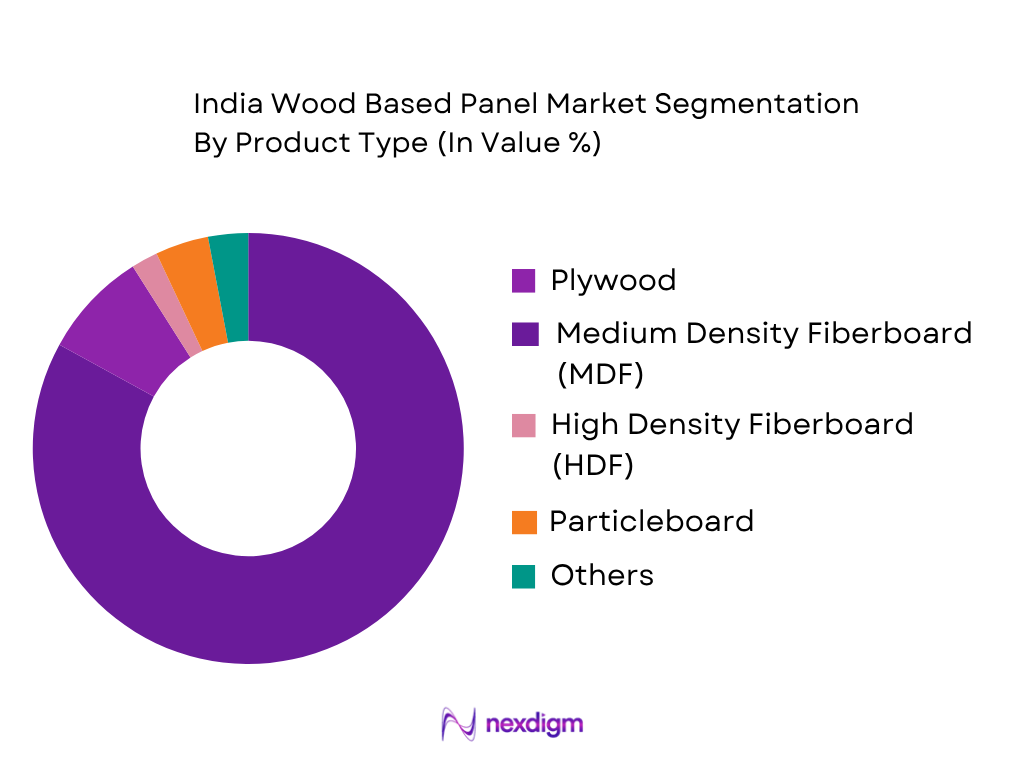
India Wood Based Panel Market is segmented by product type into plywood, medium-density fibreboard (MDF), high-density fibreboard (HDF), particleboard, oriented strand board (OSB), softboard and hardboard. Plywood dominates this segmentation because of its established use in residential furniture, wardrobes, kitchens, doors, partitions and construction applications. Its strength, moisture resistance, familiarity among carpenters and extensive dealer availability support widespread adoption. Published India-specific industry data identifies plywood as the largest revenue-generating product category. MDF is developing rapidly as factory-produced and modular furniture manufacturers increasingly require smooth surfaces, dimensional consistency, CNC machinability and compatibility with decorative laminates. The expansion of organized furniture production therefore creates a gradual structural shift toward engineered fibreboards without eliminating plywood’s strong position in conventional furniture and construction.
By Application
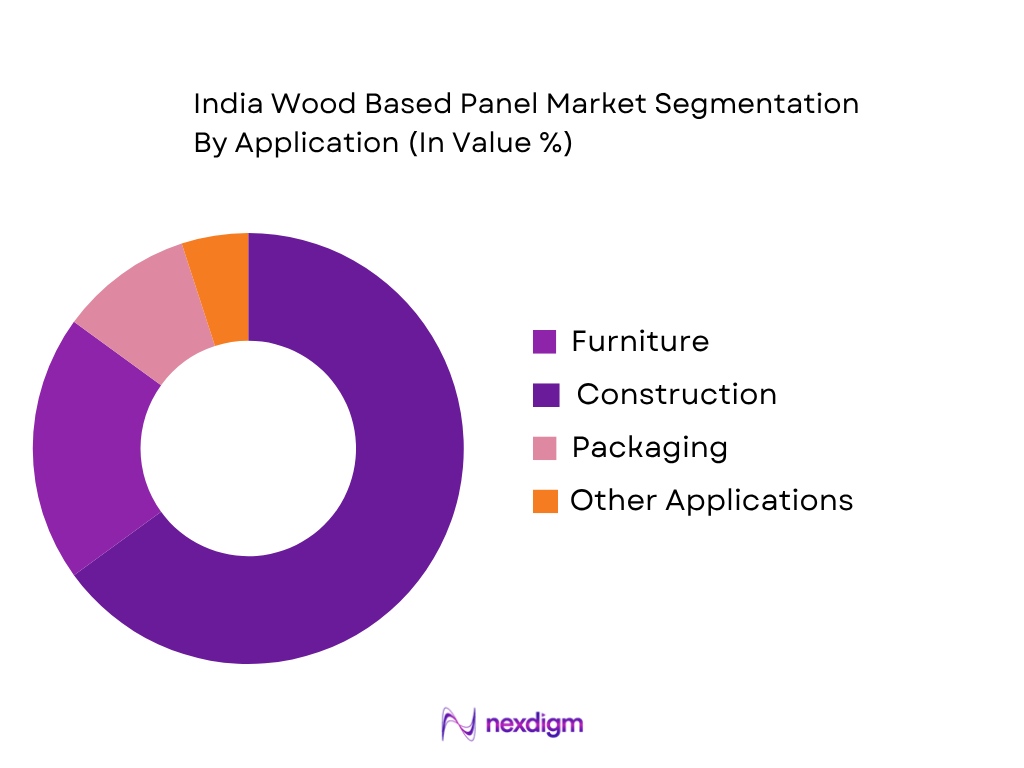
India Wood Based Panel Market is segmented by application into furniture, construction and packaging. Furniture represents the principal application because wood panels form core substrates for wardrobes, modular kitchens, beds, office workstations, storage systems, cabinets and ready-to-assemble furniture. MDF and particleboard are particularly suited to factory furniture because their consistent surfaces facilitate CNC routing, lamination, edge finishing and standardized production. Plywood remains important where structural strength, moisture resistance and screw-holding performance are critical. Construction generates additional consumption through shuttering plywood, partitions, doors, wall systems and interior fit-outs, while packaging uses panels for crates and industrial transportation applications. The increasing industrialization of furniture manufacturing and transition from conventional carpenter-led fabrication toward standardized modular systems reinforce furniture’s leading position in panel consumption. Published India-focused market assessments also identify furniture as the dominant application.
Competitive Landscape
The India Wood Based Panel Market combines large organized manufacturers with numerous regional plywood producers. Competition increasingly extends beyond brand recognition into installed capacity, access to plantation timber, MDF manufacturing technology, decorative panel capabilities, distribution reach, moisture-resistant grades and relationships with furniture OEMs. Plywood-focused manufacturers face increasing competitive interaction with MDF and particleboard producers as organized furniture manufacturing expands. Regulatory standardization and mandatory conformity requirements can further support manufacturers capable of maintaining consistent panel quality.
| Company | Established | Headquarters | Key Products | Manufacturing Focus | Raw Material Strategy | Decorative Capability | Distribution Strength | Key Application |
| Century Plyboards | 1986 | Kolkata, India | ||||||
| Greenply Industries | 1990 | Kolkata, India | ||||||
| Greenpanel Industries | 2017 | Kolkata, India | ||||||
| Action TESA | 2009* | New Delhi, India | ||||||
| Rushil Décor | 1993 | Ahmedabad, India |
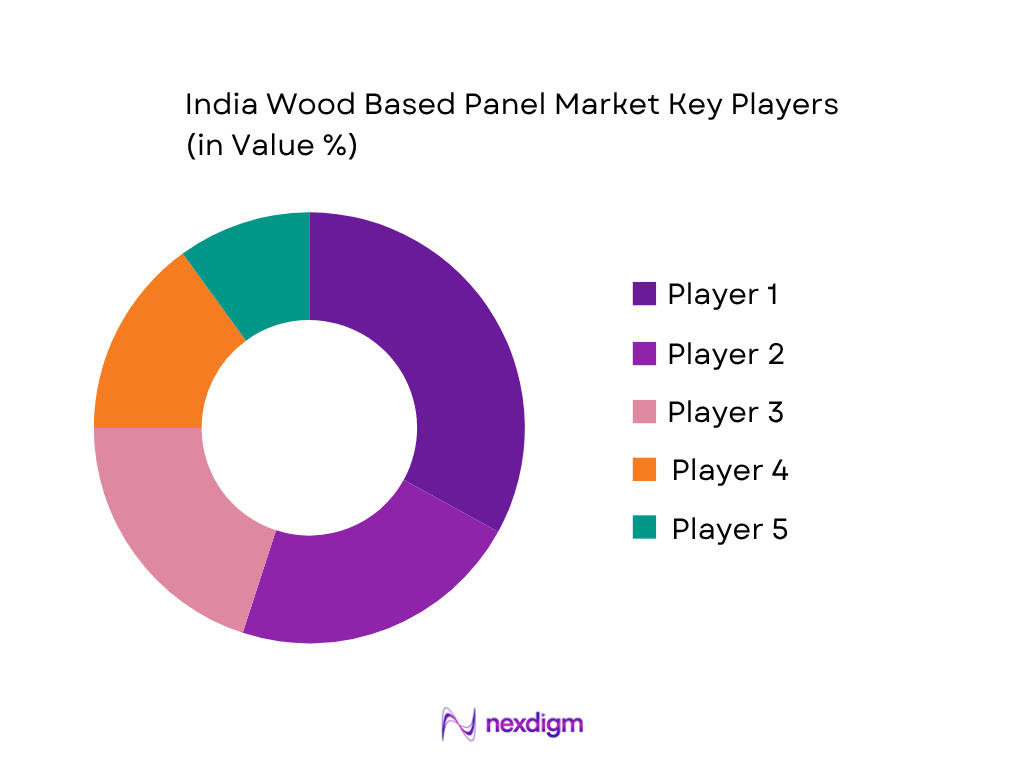
India Wood Based Panel Market Analysis
Growth Drivers
Expansion of Residential Construction and Urban Housing Development
India’s expanding residential construction pipeline is strengthening demand for plywood, MDF, particleboard, pre-laminated boards and other wood-based panels used in wardrobes, modular kitchens, doors, partitions and interior furniture. During 2024, Pradhan Mantri Awas Yojana–Urban recorded 118.64 lakh sanctioned houses, 115.23 lakh grounded houses and 87.12 lakh completed houses, alongside an approved investment of ₹8.07 lakh crore. The programme’s physical scale provides a substantial downstream addressable base for interior finishing and furniture materials. India’s population also exceeded 1.4 billion people, while continued urban household formation has intensified requirements for residential floor space and associated interior products. The construction sector remained one of the important contributors to domestic economic activity during 2024, reinforcing consumption of building materials beyond structural products. Wood-based panels benefit at the fit-out stage because new apartments require kitchens, wardrobes, storage systems, doors and furniture. PMAY-U 2.0, launched in September 2024, further extended the affordable-housing ecosystem, strengthening the longer-term pipeline for standardized, factory-manufactured interior components and consequently plywood and engineered panel consumption.
Growth of Modular and Organized Furniture Manufacturing
India’s transition toward modular kitchens, factory-manufactured wardrobes, office workstations and ready-to-assemble furniture is increasing the relevance of MDF, particleboard and pre-laminated wood panels. The macroeconomic base supporting this transition is substantial: India had a population exceeding 1.4 billion in 2024, creating a large residential furniture replacement and new-household base, while the country’s nominal economic output was approximately USD 3.9 trillion according to World Bank data. Organized panel processing benefits from CNC cutting, automated drilling, edge banding and standardized component manufacturing because MDF and particleboard offer uniform dimensions and surfaces. Housing activity provides another direct demand channel: PMAY-U reported 118.64 lakh houses sanctioned and 87.12 lakh houses completed during 2024 reporting, while ₹1.65 lakh crore of central assistance had been released. This physical housing stock creates demand for doors, cabinets, beds, wardrobes and storage products. As Indian furniture production moves from carpenter-led fabrication toward factory-controlled manufacturing, engineered panels become more compatible with standardized dimensions, repeatable finishes, laminates and large-volume furniture production than many traditional solid-wood applications.
Market Challenges
Plantation Timber Availability and Dependence on Wood Inputs
Reliable timber and wood-fibre availability remains a structural challenge for Indian plywood, MDF, particleboard and veneer manufacturers because manufacturing capacity requires continuous supplies of eucalyptus, poplar, rubberwood and other plantation species. India’s population exceeded 1.4 billion in 2024, creating competing requirements for land across housing, agriculture, infrastructure and forestry. At the same time, PMAY-U recorded 115.23 lakh houses grounded and 87.12 lakh completed, demonstrating the scale of construction activity ultimately feeding demand for furniture and panel products. Supply-side constraints become more important when panel capacity expands faster than commercially harvestable plantation timber availability. Manufacturers must maintain procurement networks extending across multiple states and, for certain timber and specialty inputs, international supply chains. The challenge also affects consistency: MDF production requires predictable fibre characteristics, while plywood manufacturing depends on veneer quality and log dimensions. India’s large construction pipeline therefore creates a mismatch risk between downstream panel requirements and upstream fibre availability. Greater utilization of plantation forestry, wood residues, recycled fibres and geographically diversified sourcing will consequently be important for maintaining dependable panel manufacturing operations.
Product Quality, Formaldehyde Compliance and Unorganized Competition
Quality standardization is becoming a more important competitive constraint as Indian wood-panel producers transition toward regulated, performance-defined products. The IS 303:2024 specification for general-purpose plywood covers MR, BWR and BWP grades and incorporates formaldehyde-content requirements, while IS 710:2024 governs marine plywood. The regulatory framework also includes IS 4990:2024 for plywood used in concrete shuttering, illustrating the widening technical differentiation across end uses. Formaldehyde classifications such as E1 and E2 require manufacturers to exercise greater control over resins, adhesives, pressing parameters and finished-panel testing. This requirement matters in an industry where production ranges from large automated factories to smaller regional plywood operations. Compliance capabilities require laboratory infrastructure, process documentation and repeatable manufacturing quality. Simultaneously, India’s housing ecosystem remains large, with 118.64 lakh PMAY-U houses sanctioned and 113.33 lakh houses grounded in the January 2025 government progress assessment. Such large downstream demand can attract suppliers with varying quality standards, intensifying the challenge for organized manufacturers competing against lower-specification panels while maintaining certified performance and emission requirements.
Market Opportunities
MDF, Pre-Laminated Boards and Modular Furniture Components
MDF substitution represents a significant development opportunity as furniture production increasingly shifts toward standardized cabinets, wardrobes, modular kitchens, office systems and ready-to-assemble components. India’s underlying consumption platform includes more than 1.4 billion residents and an economy of approximately USD 3.9 trillion in 2024, providing substantial household and commercial demand for furniture and interior products. The housing pipeline further strengthens this opportunity: PMAY-U recorded 118.64 lakh sanctioned houses, while 87.12 lakh units had been completed during the 2024 reporting period. Every completed housing unit potentially generates requirements for storage, kitchens, wardrobes, doors and furniture, applications where MDF and pre-laminated panels can substitute traditional materials. MDF’s uniform surface supports CNC machining, routing, membrane pressing and decorative lamination, making it particularly suitable for industrial furniture production. Manufacturers can therefore move beyond commodity boards into pre-laminated MDF, moisture-resistant panels, calibrated boards and furniture-ready components. The opportunity is ultimately linked to converting India’s expanding housing stock into higher consumption of standardized engineered panels per completed dwelling.
Low-Emission, Moisture-Resistant and Fire-Retardant Value-Added Panels
India’s tightening product-standard framework creates room for manufacturers to differentiate through higher-performance panels rather than relying predominantly on commodity plywood and basic MDF. IS 303:2024 recognizes multiple general-purpose plywood grades and formaldehyde requirements, while IS 710:2024 establishes specifications for marine plywood and IS 5509:2021 covers fire-retardant plywood. The availability of separate standards demonstrates established demand conditions for panels engineered around moisture resistance, bonding strength, emissions and fire performance. This opportunity is reinforced by a large construction base: PMAY-U reported ₹8.07 lakh crore of approved investment and 87.12 lakh completed urban houses during the 2024 reporting period. Commercial interiors, kitchens, bathrooms, hospitality facilities and institutional buildings can similarly require application-specific panel performance. Manufacturers capable of producing E1/E2-compliant products, BWR/BWP plywood, moisture-resistant MDF, fire-retardant boards and decorative surfaces can address applications where certification and performance consistency matter more than basic board availability. Value-added manufacturing also creates opportunities for integrated lamination, surface finishing, calibrated panels and application-specific engineered board portfolios.
Future Outlook
Over the next decade, the India aluminum composite panels market is expected to witness steady growth driven by urban infrastructure expansion, commercial real estate development, façade modernization, and increasing demand for lightweight construction materials. Adoption of fire-retardant ACP products, sustainable façade systems, and premium architectural finishes is expected to influence future market development. Increasing investments in smart cities, transportation infrastructure, and commercial buildings will create additional opportunities for ACP manufacturers.
Major Players
- Century Plyboards (India) Limited
- Greenply Industries Limited
- Greenpanel Industries Limited
- Action TESA
- Rushil Décor Limited
- Archidply Industries Limited
- Duroply Industries Limited
- Kitply Industries Limited
- Merino Industries Limited
- National Plywood Industries Limited
- Austin Plywood
- Sylvan Plyboard
- Century MDF
- Greenlam Industries Limited
- VIR MDF
Key Target Audience
- Wood Based Panel Manufacturers
- Plywood, MDF and Particleboard Manufacturers
- Furniture and Modular Furniture Manufacturers
- Real Estate Developers and Interior Fit-Out Companies
- Timber, Wood Fibre, Resin and Adhesive Suppliers
- Investments and Venture Capitalist Firms
- Government and Regulatory Bodies (Bureau of Indian Standards, Ministry of Commerce and Industry, Ministry of Environment, Forest and Climate Change)
- Building Material Distributors and Institutional Procurement Companies
Research Methodology
Step 1: Identification of Key Variables
The initial phase involves developing an ecosystem map covering plywood, MDF, HDF, particleboard, OSB and other engineered wood panels. Key variables include installed manufacturing capacity, production, capacity utilization, raw-material availability, imports, distribution networks, furniture demand, construction demand and product standards. These variables establish the boundaries and analytical framework of the India Wood Based Panel Market.
Step 2: Market Analysis and Construction
Historical information is compiled for domestic production, wood-panel consumption, manufacturer capacities, trade flows and major applications. Top-down analysis evaluates furniture, construction and interior demand, while bottom-up analysis assesses manufacturer production and sales. Product-level data are reconciled across plywood, MDF, particleboard and other panel categories to establish the overall market structure.
Step 3: Hypothesis Validation and Expert Consultation
Market hypotheses are validated through discussions with panel manufacturers, distributors, timber suppliers, furniture manufacturers, architects, interior contractors and institutional buyers. Interviews examine product substitution, MDF adoption, dealer inventories, raw-material sourcing, capacity utilization and regional demand patterns. Findings are triangulated against secondary datasets to identify and resolve material discrepancies.
Step 4: Research Synthesis and Final Output
The final stage integrates supply-side and demand-side findings to construct the historical and forecast market model. Company-level capacity, product portfolios, application demand and distribution structures are reconciled with industry-level indicators. The resulting analysis provides market sizing, segmentation, competitive positioning, future demand scenarios and strategic opportunities across India’s wood-based panel ecosystem.

- Executive Summary
- Research Methodology (Market Definition and Scope, Wood Based Panel Classification, Plywood Grade Mapping, MDF Grade Assessment, Particle Board Assessment, Pre-Laminated Board Evaluation, Veneer and Block Board Assessment, Raw Timber and Plantation Wood Assessment, Wood Fiber and Lignocellulosic Feedstock Analysis, Resin and Adhesive Consumption Assessment, Formaldehyde Emission Classification, Panel Density Mapping, Thickness and Dimension Assessment, Moisture Resistance Classification, Manufacturing Capacity Assessment, Capacity Utilization Analysis, Domestic Production Assessment, Import-Export Assessment, Organized and Unorganized Manufacturer Mapping, Dealer and Distributor Assessment, Carpenter and Contractor Demand Assessment, Furniture Manufacturing Demand Mapping, Construction and Interior Fit-Out Demand Assessment, Supply-Side Assessment, Demand-Side Assessment, Top-Down Market Sizing, Bottom-Up Market Sizing, Primary Industry Interviews, Data Triangulation, Forecasting Framework, Limitations and Future Conclusions)

- Definition and Scope
- India Wood Based Panel Industry Evolution and Development of Commercial Plywood, Marine Plywood, Decorative Plywood, Fire-Retardant Plywood, Shuttering Plywood, Medium Density Fibreboard, High-Density Moisture-Resistant Boards, Particle Boards, Pre-Laminated Boards, Block Boards, Veneered Panels, Engineered Wood Panels and Value-Added Decorative Panels
- Wood Based Panel Value Chain Analysis
- Wood Based Panel Supply Chain Analysis
- Plantation Timber Growers, Agroforestry Suppliers, Imported Timber Suppliers, Wood Chip Suppliers, Wood Fiber Suppliers, Veneer Manufacturers, Resin and Adhesive Suppliers, Decorative Paper Suppliers, Melamine Suppliers, Panel Manufacturers, Lamination Facilities, Furniture Manufacturers, Modular Furniture Companies, Interior Contractors, Dealers, Distributors, Carpenters, Architects, Builders and Institutional Buyers

- Growth Drivers (Expansion of Residential Construction, Growth of Modular Furniture Manufacturing, Shift from Solid Wood toward Engineered Panels, MDF Capacity Expansion, Organized Furniture Manufacturing, Urban Housing Development, Commercial Interior Fit-Out Demand, Growth of Ready-to-Assemble Furniture, Increasing Adoption of Pre-Laminated Panels)
- Market Challenges (Plantation Timber Availability, Timber Price Volatility, Dependence on Imported Wood and Specialty Inputs, Competition from Unorganized Plywood Manufacturers, Formaldehyde Emission Compliance, Resin and Adhesive Input Volatility, Capacity Utilization Pressure, Product Quality Variation, Dealer Credit Exposure)
- Market Opportunities (MDF Substitution for Conventional Plywood Applications, High-Moisture-Resistant Boards, Pre-Laminated Panel Expansion, Low-Emission Wood Panels, Fire-Retardant Panels, Modular Furniture Components, Ready-to-Assemble Furniture, Engineered Panels for Commercial Interiors, OSB Adoption, Value-Added Decorative Surfaces)
- Market Trends (MDF Capacity Addition, Pre-Laminated Panel Adoption, Shift toward Branded Plywood, High-Density Moisture-Resistant Board Adoption, Low-Formaldehyde Product Development, Digital Printing and Decorative Surfaces, Automated Continuous Press Manufacturing, Agroforestry-Based Timber Procurement, Furniture OEM Integration)
- Government Regulations and Standards (IS 303 General-Purpose Plywood, IS 710 Marine Plywood, IS 5509 Fire-Retardant Plywood, IS 4990 Shuttering Plywood, IS 12406 MDF, IS 3087 Medium-Density Particle Board, IS 12823 Pre-Laminated Particle Board, IS 14587 Pre-Laminated MDF, Formaldehyde Emission Testing, BIS Product Certification, Plywood and Wooden Flush Door Shutters Quality Control Requirements) BIS
- SWOT Analysis (Domestic Manufacturing Base, Dealer Network Strength, Timber Dependency, Engineered Panel Substitution Potential)
- Porter’s Five Forces Analysis (Raw Material Supplier Power, Dealer and OEM Buyer Power,
- Competitive Rivalry, Substitute Material Threat, Manufacturing Entry Barriers)
- PESTLE Analysis (Housing and Construction Policy, Manufacturing Economics, Furniture Consumption, Panel Manufacturing Technology, Forestry and Sustainability Requirements, BIS Compliance)
- Stakeholder Ecosystem (Timber Suppliers, Resin Producers, Panel Manufacturers, Furniture OEMs, Dealers, Contractors, Architects, Builders, End Users)
- Competition Ecosystem (Integrated Panel Manufacturers, Plywood Specialists, MDF Manufacturers, Regional Manufacturers, Importers, Decorative Surface Providers)

- By Market Value (2020-2025)
- By Production Volume (2020-2025)
- By Domestic Consumption Volume (2020-2025)
- By Installed Manufacturing Capacity (2020-2025)
- By Capacity Utilization (2020-2025)
- By Plywood Consumption Volume (2020-2025)
- By MDF Consumption Volume (2020-2025)

- By Product Type (In Value %)
Plywood
Medium Density Fibreboard (MDF)
Particle Board
High-Density Fibreboard (HDF)
Block Board
Pre-Laminated MDF
Pre-Laminated Particle Board
Veneered Panels
Oriented Strand Board (OSB)
Other Engineered Wood Panels - By Plywood Grade and Performance (In Value %)
Commercial/MR Grade Plywood
Boiling Water Resistant Plywood
Boiling Water Proof Plywood
Marine Plywood
Fire-Retardant Plywood
Shuttering Plywood
Structural Plywood
Decorative Veneered Plywood
Flexible Plywood - By MDF and Particle Board Grade (In Value %)
Regular Grade MDF
Moisture-Resistant MDF
High-Moisture-Resistant MDF
High-Density Moisture-Resistant Board
Pre-Laminated MDF
Raw Particle Board
Pre-Laminated Particle Board
Moisture-Resistant Particle Board
Veneered Particle Board - By Raw Material Type (In Value %)
Plantation Timber
Poplar Wood
Eucalyptus Wood
Agroforestry Timber
Imported Timber
Wood Chips and Fibers
Sawmill Residues
Other Lignocellulosic Materials
Recycled Wood Feedstock - By Application (In Value %)
Residential Furniture
Modular Furniture
Office Furniture
Kitchen Cabinets
Wardrobes and Storage Systems
Doors and Door Components
Wall Paneling and Decorative Interiors
Flooring Substrates
Construction and Shuttering
Retail and Commercial Interiors
Institutional Furniture
Packaging and Industrial Applications - By End-User Industry (In Value %)
Residential Construction
Commercial Construction
Furniture Manufacturing
Interior Design and Fit-Out
Hospitality
Retail
Office and Corporate Infrastructure
Institutional Buildings
Real Estate Developers
Industrial Users

- Market Share of Major Players (By Revenue, Product Category, Production Volume, Installed Capacity, Region, Distribution Channel, End-Use Application)
- Cross Comparison Parameters (Installed Panel Manufacturing Capacity, Plywood-MDF-Particle Board Portfolio Breadth, MDF Thickness and Density Range, Moisture-Resistant and Specialty Grade Capability, Pre-Laminated and Decorative Surface Capability, Plantation Timber and Raw Material Integration, Dealer and Distributor Network Reach, Furniture OEM and Institutional Customer Presence)
- SWOT Analysis of Major Players (Manufacturing Footprint, Product Portfolio, Raw Material Access, Brand Presence, Distribution Reach)
- Detailed Profiles of Major Companies
Century Plyboards (India) Limited
Greenply Industries Limited
Greenpanel Industries Limited
Action TESA
Rushil Décor Limited
Archidply Industries Limited
Duroply Industries Limited
Kitply Industries Limited
Merino Industries Limited
National Plywood Industries Limited
Austin Plywood
Sylvan Plyboard
Century MDF
Greenlam Industries Limited
Vir MDF

- Purchase Behavior Assessment
- Furniture Manufacturer Requirement Assessment
- Modular Furniture Manufacturer Demand Analysis
- Carpenter and Contractor Preference Assessment
- Architect and Interior Designer Specification Analysis
- Residential Customer Requirement Assessment
- Commercial Interior Requirement Assessment
- Branded vs Unorganized Product Purchase Behavior

- By Market Value (2026-2035)
- By Production Volume (2026-2035)
- By Domestic Consumption Volume (2026-2035)
- By Installed Manufacturing Capacity (2026-2035)
- By Capacity Utilization (2026-2035)
- By Plywood Consumption Volume (2026-2035)
- By MDF Consumption Volume (2026-2035)


 Request a Sample
 Ask for Customization
 Get a Quote
 Enquire Now