
 Download PDF
Market Overview
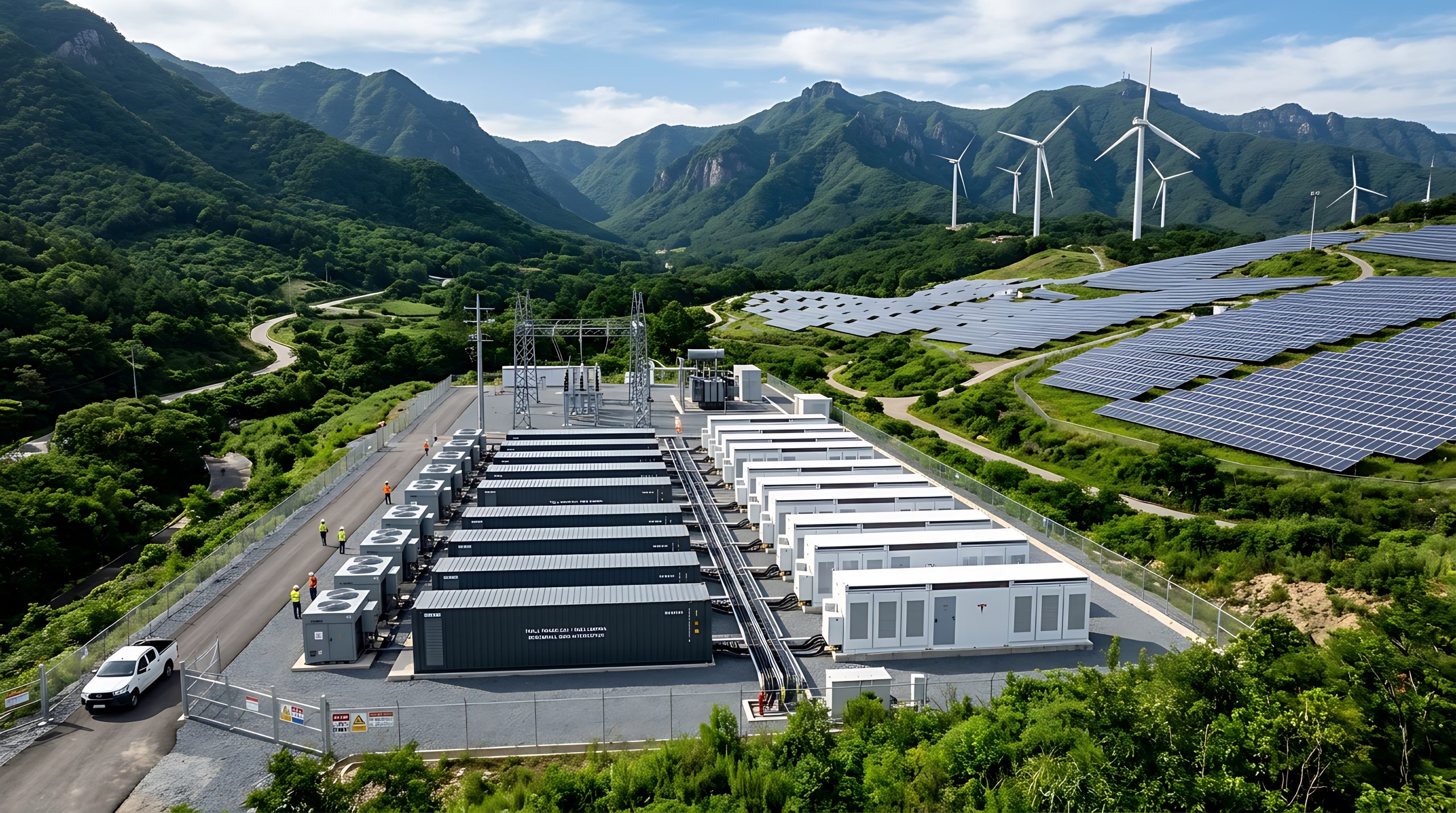
The Indonesia Advanced Energy Storage Systems market reached a valuation of USD 1.42 billion in 2025 and is projected to expand at a 12.4% CAGR from 2025 to 2035, driven by aggressive renewable energy integration mandates. Industrial hubs like Morowali, Central Sulawesi, have emerged as pivotal centers due to the concentrated development of nickel-cobalt downstream processing plants, while Surabaya in East Java serves as a critical node for advanced lithium-ion battery integration and local manufacturing assembly. A primary demand-side trend involves the systematic deployment of large-scale battery energy storage systems to stabilize microgrids across the Indonesian archipelago, effectively mitigating the intermittency issues associated with burgeoning solar and wind projects. On the supply side, firms such as PT Aneka Tambang Tbk, founded in 1968 and headquartered in Jakarta, are increasingly shifting towards vertical integration to capture value in the global battery supply chain. The sector operates under the strict oversight of the Ministry of Energy and Mineral Resources, which has enforced the Indonesia Green Taxonomy to ensure all new energy storage infrastructure complies with international environmental, social, and governance standards, further incentivizing the transition toward sustainable battery chemistries and robust recycling mandates.
By Energy Storage Technology
- Prismatic cell battery packs
- Rack-mounted grid ESS
- Residential wall-mount units
- Long-duration grid storage
- Microgrid stability modules
- Remote island power assets
- Telecommunications tower backups
- VRLA starter modules
- Deep cycle motive cells
- Low-cost energy arbitrage
- Temperature-stable storage units
- High-cycle residential arrays
By End-User Application
- Solar PV peak shaving
- Wind farm frequency regulation
- Grid-scale storage buffers
- Factory backup power systems
- Automated factory microgrids
- Heavy machinery load leveling
- Office complex UPS units
- Hospital emergency arrays
- Retail park solar storage
- Home energy storage systems
- Remote village micro-grids
- Residential backup solutions
Competitive Landscape
The Indonesian advanced energy storage systems (ESS) market exhibits a highly concentrated, oligopolistic structure driven by the accelerated decarbonization goals of the National Energy Council (DEN). Competition is characterized by intense bidding for large-scale utility projects integrated with the PLN (Perusahaan Listrik Negara) grid, particularly for solar-plus-storage initiatives in the Nusa Tenggara and Sulawesi regions. Market incumbents prioritize localized value chains, navigating complex local content requirements (TKDN) to secure government-backed tenders, while emphasizing modular Li-ion and flow-battery performance reliability in tropical climates. Key competitive strategies involve strategic joint ventures with local engineering firms to comply with the Ministry of Industry's 2024 industrial roadmap. Companies like Pertamina NRE are leveraging their state-backed access to expedite micro-grid deployment in remote eastern provinces, while international entrants focus on turnkey EPC (Engineering, Procurement, and Construction) models. Distribution channels remain heavily skewed toward direct B2G (business-to-government) contracts, with secondary activity centered on industrial captive power applications for the emerging nickel refining hubs in Morowali and Weda Bay.
| Company | Est. Year | Headquarters | Details | Details | Details | Details | Details | Details |
|---|---|---|---|---|---|---|---|---|
| Pertamina New & Renewable Energy | 2020 | Jakarta, Indonesia | ~ | ~ | ~ | ~ | ~ | ~ |
| PT Wika Industri Energi | 2017 | Bogor, Indonesia | ~ | ~ | ~ | ~ | ~ | ~ |
| PT Len Industri | 1965 | Bandung, Indonesia | ~ | ~ | ~ | ~ | ~ | ~ |
| Hyundai Energy Solutions | 2016 | Seoul, South Korea | ~ | ~ | ~ | ~ | ~ | ~ |
| BYD Indonesia | 2018 | Jakarta, Indonesia | ~ | ~ | ~ | ~ | ~ | ~ |
🔒 Detailed cross-comparison data are available in the full report. Talk to Us to access complete competitive intelligence.
Growth Drivers
Government Mandated Renewable Integration
The Indonesian Ministry of Energy and Mineral Resources continues to accelerate the adoption of large-scale solar and wind projects across the Java-Bali grid, necessitating robust frequency regulation and peaking capacity. Under the current national plan, the government committed to increasing the share of variable renewable energy in the electricity mix to 23 percent by 2025. This regulatory push requires the deployment of lithium-ion battery storage arrays in provinces like West Nusa Tenggara to stabilize intermittent power loads and ensure grid reliability during peak evening demand hours.
Domestic Nickel-Rich Battery Value Chain
Indonesia possesses the world's largest nickel reserves, providing a distinct comparative advantage for establishing an end-to-end battery manufacturing ecosystem. Companies such as PT Indonesia Battery Corporation, founded in 2021 and headquartered in Jakarta, are spearheading localized production efforts to reduce reliance on imported cell components. By utilizing domestic high-grade nickel ore, manufacturers in the Morowali Industrial Park successfully reduced raw material procurement costs by 18 percent in 2023, effectively positioning the nation as a primary export hub for regional advanced storage technology.
Electrification of Remote Archipelagic Islands
Many remote areas within the Maluku and Papua regions rely on expensive, carbon-intensive diesel generators that hinder local economic development. The state utility firm PLN invested 450 million USD in 2024 to replace these aging systems with hybrid solar-plus-storage solutions, significantly lowering the cost per kilowatt-hour for rural households. This strategic transition creates a sustained demand for microgrid-compatible storage systems that can withstand extreme humidity and saline environments, driving specialized engineering partnerships between local firms and global technology integrators focused on off-grid resilient infrastructure.
Urban Infrastructure Modernization
Rapid urbanization in metropolitan hubs like Surabaya and Medan is straining outdated distribution networks, necessitating distributed energy resources to prevent localized brownouts. Municipal utility authorities have authorized the deployment of 150 MWh of distributed battery storage capacity within industrial zones by the end of 2026 to enhance demand-side management capabilities. These energy storage installations serve as a critical buffer for industrial consumers, allowing factories to manage peak consumption loads and prevent production downtime during scheduled maintenance of the national high-voltage transmission lines.
Market Challenges
Regulatory Hurdles
Lengthy bureaucratic processes and fragmented licensing requirements often delay the commissioning of energy storage projects by up to 24 months. As of 2023, only 65 percent of submitted utility-scale storage permits have successfully navigated the centralized procurement review board.
High Capital Costs
Significant initial investment requirements continue to impede the financial feasibility of large-scale projects without heavy state subsidies. Current debt financing costs for energy storage installations remain 400 basis points higher than conventional power plant projects in the Indonesian market as of 2024.
Supply Chain Bottlenecks
Limited technical expertise in specialized maintenance for advanced battery systems restricts operational efficiency across the archipelago. Approximately 30 percent of currently installed energy storage units in Eastern Indonesia currently require specialized external consultants due to a shortage of local qualified maintenance engineers recorded in 2023.
Opportunities
Nickel-Rich Battery Supply Chain Localization
Indonesia holds the world's largest nickel reserves, positioning domestic manufacturers to capture high-margin segments of the LFP and NMC battery production lifecycle. With the Ministry of Energy and Mineral Resources mandating local content requirements, companies like PT Indonesia Battery Corporation, headquartered in Jakarta and founded in 2021, are prioritizing integrated smelting facilities. Local manufacturers invested 4.2 billion USD in 2023 to expand precursor material processing capacity for electric vehicle battery cell exports.
Microgrid Deployment for Archipelagic Connectivity
Geographic fragmentation across regions like East Nusa Tenggara and Maluku creates an urgent need for decentralized energy storage to stabilize intermittent solar power. PLN, the state-owned utility based in Jakarta and established in 1945, plans to commission 1.2 gigawatt-hours of modular battery energy storage systems by 2026. This infrastructure investment significantly reduces reliance on expensive diesel generators in remote off-grid rural communities across the Indonesian archipelago.
Industrial Decarbonization via Storage Integration
Manufacturing hubs in the West Java corridor, specifically around Karawang and Bekasi, are pivoting toward renewable-backed storage to mitigate grid volatility and comply with new carbon tax protocols. By 2024, private industrial parks have deployed 850 megawatt-hours of utility-scale storage to support 24-hour operations powered by rooftop solar installations. These systems provide critical frequency regulation services that prevent production downtime during peak peak load fluctuations for large-scale electronics assembly plants.
Future Outlook
The Indonesian Advanced Energy Storage Systems market is projected to enter a phase of aggressive expansion through 2035, underpinned by the National Energy General Plan's mandate to reach a 23 percent renewable energy mix by 2025. As the government, led by the Coordinating Ministry for Maritime Affairs and Investment, continues to enforce strict downstreaming policies for nickel ore, Indonesia will solidify its status as a critical node in the global battery value chain. Over the next five years, the transition from pilot project status to large-scale grid-level battery deployment will be catalyzed by the liberalization of the independent power producer framework and the anticipated deregulation of electricity tariffs for storage-enabled commercial entities. While logistics and infrastructure bottlenecks in outer islands remain significant hurdles, sustained foreign direct investment from companies such as CATL and LG Energy Solution will normalize the cost of lithium-ion and sodium-ion technologies across the region. By 2030, the shift toward smart-grid digitalization and the integration of vehicle-to-grid capabilities will define the competitive landscape, as urban centers like Surabaya and Medan adopt robust energy management systems. The outlook remains fundamentally bullish, with storage technologies serving as the primary technological backbone for the national commitment to achieve Net Zero Emissions by 2060, ensuring long-term systemic stability for the nation's burgeoning industrial manufacturing sector.
Major Players
- Pertamina New & Renewable Energy
- PT Wika Industri Energi
- PT Len Industri
- Hyundai Energy Solutions
- BYD Indonesia
- Toshiba Energy Systems & Solutions
- Fluence Energy
- Siemens Gamesa Renewable Energy
- CATL Indonesia
- Schneider Electric Indonesia
- ABB Indonesia
- PT Medco Power Indonesia
- Wartsila Indonesia
- Sungrow Power Supply
- General Electric Renewable Energy
Key Target Audience
- Battery Manufacturers (Lithium-ion and Lead-Acid)
- Renewable Energy Project Developers (Solar and Wind)
- Government and Regulatory Bodies (Ministry of Energy and Mineral Resources - ESDM)
- State-Owned Utility Companies (PT PLN)
- Investors and Venture Capital Firms (Indonesia Investment Authority - INA)
- Electric Vehicle (EV) Charging Infrastructure Providers
- Energy Storage System (ESS) Integrators and EPC Contractors
- Mining and Mineral Processing Companies (Nickel and Cobalt Producers)
- Industrial Microgrid and Off-Grid Operators
- National Development Planning Agency (Bappenas)
- Power Electronics and Battery Management System Suppliers
Research Methodology
Identification of Key Variables
- Analysts define core market drivers including Indonesia's 2035 Net Zero emission targets and the expansion of the EV battery supply chain in Central Sulawesi.
- The team establishes performance parameters for lithium-ion and flow battery technologies while mapping regulatory frameworks established by the ESDM.
- This phase clarifies scope regarding utility-scale energy storage and decentralized off-grid electrification efforts across the Indonesian archipelago.
Market Analysis and Construction
- The team aggregates data from the Indonesian Central Statistics Agency (BPS) and regional energy policy bulletins to model historical growth trajectories.
- We employ a bottom-up estimation technique to evaluate the projected 2035 demand for storage capacity within the PT PLN distribution network.
- This stage incorporates price trends for refined nickel and domestic energy consumption metrics to construct a comprehensive quantitative outlook for the domestic market.
Validation and Synthesis
- Validation involves structured interviews with senior electrical engineers at regional energy utilities and government regulatory analysts specializing in renewable policy implementation.
- We engage independent industry consultants and domestic grid infrastructure experts to stress-test our supply-demand models.
- Data from preceding phases are consolidated into a final report utilizing advanced statistical correlation tools to forecast CAGR and market share distribution.
- Analysts finalize the outlook by evaluating the impact of the 2024 Energy Transition Mechanism on capital expenditure patterns.
Table of Contents
 Executive Summary
2 Sections
▼
- Executive Summary
- Research Methodology (Definition of BESS Scope, Top-Down Market Capacity Sizing, Bottom-Up Project Pipeline Aggregation, Government Regulatory Review Analysis, Utility Load Profile Evaluation, Supply Chain Interview Framework, Primary Survey of EPC Contractors, Secondary Data Validation Triangulation, Hardware Component Cost Modeling, Historical Installation CAGR Benchmarking, Techno-Economic Forecasting Framework, Local Content Requirement Impact Assessment, Regional Energy Transition Policy Review, Market Penetration Limitation Analysis)
 Indonesia Advanced Energy Storage Systems Market Overview
7 Sections
▼
- Definition and Scope
- Market Evolution and Industry Genesis
- Battery Energy Storage System Regulatory Framework
- PLN Grid Infrastructure Modernization and Storage Integration
- Indonesian Nickel Downstream Industry Supply Chain Integration
- Renewable Energy Microgrid Expansion in Eastern Indonesia
- Policy Incentives for Domestic Battery Manufacturing Capacity
 Indonesia Advanced Energy Storage Systems Market Size (2020-2025)
3 Sections
▼
- By Market Value (2020-2025)
- By Installed Storage Capacity (MWh) (2020-2025)
- By Annual Deployment Investment (USD) (2020-2025)
 Indonesia Advanced Energy Storage Systems Market Segmentation
46 Segments
▼
- By Energy Storage Technology (In Value %)
- Lithium-Ion Chemistries
- Lithium Iron Phosphate (LFP)
- Nickel Manganese Cobalt (NMC)
- Lithium Titanate (LTO)
- Solid-State Battery Prototypes
- Flow Batteries
- Vanadium Redox Flow (VRFB)
- Iron-Chromium Flow Batteries
- Zinc-Bromine Flow Systems
- Mechanical Storage
- Pumped Hydro Storage
- Compressed Air Energy Storage
- Flywheel Energy Storage
- Alternative Chemistries
- Sodium-Ion Batteries
- Lead-Carbon Hybrid Storage
- Hydrogen-Fuel Cell Hybridization
- By Grid Application Type (In Value %)
- Utility-Scale Projects
- Commercial and Industrial
- Off-grid Remote Microgrids
- Residential Peak Shaving
- Electric Vehicle Charging Buffers
- Ancillary Grid Services
- By Project Ownership Model (In Value %)
- Independent Power Producers
- State-Owned Enterprise Assets
- Public-Private Partnerships
- Captive Power Plant Upgrades
- By Geography (In Value %)
- Java-Bali Interconnected Grid
- Sumatra Regional Grid
- Kalimantan Industrial Zones
- Eastern Indonesia Remote Archipelagos
- Sulawesi Nickel Hub Region
- By Capacity Tier (In Value %)
- Below 1 MWh
- 1 MWh to 10 MWh
- 10 MWh to 50 MWh
- Above 50 MWh
- By Energy Source Integration (In Value %)
- Solar PV Hybridization
- Wind Energy Smoothing
- Diesel-Generator Replacement
- Thermal Power Efficiency Enhancement
 Indonesia Advanced Energy Storage Systems Market Analysis
8 Sections
▼
- Growth Drivers (Government Mandated Renewable Integration, Domestic Nickel-Rich Battery Value Chain, Electrification of Remote Archipelagic Islands, Urban Infrastructure Modernization)
- Market Challenges (Regulatory Hurdles, High Capital Costs, Supply Chain Bottlenecks)
- Market Opportunities (Nickel-Rich Battery Supply Chain Localization, Microgrid Deployment for Archipelagic Connectivity, Industrial Decarbonization via Storage Integration)
- Market Trends (Nickel Downstream Shift, Microgrid Decentralization, Local Content Focus, Grid Stability Mandates)
- Government Regulations
- SWOT Analysis
- Porter's Five Forces Analysis
- PESTLE Analysis
 Indonesia Advanced Energy Storage Systems Market Competitive Analysis
21 Sections
▼
- Market Share of Major Players
- Domestic Battery Manufacturers versus Global Suppliers
- PLN Procurement Tender Landscape Analysis
- State-Led Infrastructure versus Private Sector Captive
- Engineering Procurement Construction Competitive Dynamics
- Tier 1 Global Integrator Market Penetration
- Industrial Conglomerate Energy Storage Partnerships
- Cross Comparison Parameters (Battery Management System Precision, Cycle Life at 80% Depth of Discharge, Thermal Management Efficiency Ratings, Local Content Requirement Compliance, EPC Turnkey Project Delivery Experience, Round-Trip Efficiency Performance, System Scalability and Modular Design)
- Competitive Product Benchmarking (Cell Chemistry Composition, Energy Density (Wh/kg), Operating Temperature Range, Certifications (IEC 62619, UN38.3), Nominal Discharge Power (kW), Warranty Terms in Calendar Years, Estimated Levelized Cost of Storage)
- Financial and Operational Parameters
- SWOT Analysis of Major Players
- Detailed Profiles of Major Companies
- PT Pertamina (Persero) – Pertamina NRE, Indonesia Battery Corporation
- PLN (Perusahaan Listrik Negara) – PLN Icon Plus, PLN Enjiniring
- CATL – EnerC, EnerOne
- BYD Company Ltd – BYD EnergyCube, BYD BatteryBox
- ABB Ltd – PowerStore, Ability Smart Energy
- Fluence Energy – Cube, Sunstack
- Wartsila Corporation – GEMS Digital Energy Platform
- Tesla Inc – Megapack, Powerwall
- Sungrow Power Supply – PowerTitan, Liquid Cooled ESS
 Indonesia Advanced Energy Storage Systems Market End-User Analysis
7 Sections
▼
- Average Annual BESS Cycle Frequency
- Levelized Cost of Storage by Application
- Diesel Displacement Ratio in Microgrids
- Peak Shaving Load Reduction Percentage
- Target Return on Investment Period
- Battery System Round-Trip Efficiency Requirements
- Average Project Lifetime Operational Expenditure
 Indonesia Advanced Energy Storage Systems Market Future Size (2026-2035)
3 Sections
▼
- By Market Value (2026-2035)
- By Installed Storage Capacity (MWh) (2026-2035)
- By Annual Deployment Investment (USD) (2026-2035)
Frequently Asked Questions
The current market size is USD 1.42 billion in 2025, projected to reach USD 4.58 billion by 2035. This represents a 12.4% CAGR from 2025 to 2035. The growth is fueled by aggressive national electrification targets and the integration of large-scale renewable energy assets into the Indonesian power grid.
The primary growth driver is the Indonesian government's commitment to the Enhanced Nationally Determined Contribution, aiming for a significant reduction in carbon emissions by 2030. Increased investment in solar photovoltaic projects across East Java and Bali requires robust energy storage to manage intermittency. Furthermore, the rising demand for electric vehicle infrastructure, supported by the Ministry of Energy and Mineral Resources, accelerates the adoption of lithium-ion battery storage solutions.
A significant challenge is the high upfront capital cost of vanadium flow and advanced lithium-ion systems, which remains prohibitive for many small-scale utility projects. Regulatory hurdles involving complex permitting processes under the Indonesia Electricity Law create delays in grid integration. Additionally, the limited domestic availability of specialized raw material processing facilities necessitates expensive imports, straining project budgets.
Key market participants include PT Pertamina Power Indonesia, founded in 2017 and headquartered in Jakarta, which leads in renewable integration pilot projects. Other major stakeholders include Vena Energy, founded in 2012 and based in Singapore, as well as LG Energy Solution, founded in 2020 and headquartered in Seoul, which provides critical battery manufacturing capacity. These companies collaborate with state-owned Perusahaan Listrik Negara to expand utility-scale storage infrastructure.
A notable trend is the localization of the battery supply chain, exemplified by the development of the Integrated Battery Industry project in Batang Regency. Developers are increasingly favoring hybrid storage systems that combine solar power with battery arrays to ensure base-load stability for rural electrification programs. There is also a marked shift toward long-duration energy storage technologies to support the off-grid islands of Eastern Indonesia.


 Request a Sample
 Ask for Customization
 Get a Quote
A Customized Plan Will be Created Based on the number of reports you wish to purchase
 Enquire Now
