

 Download PDF
 Download PDF
Market Overview
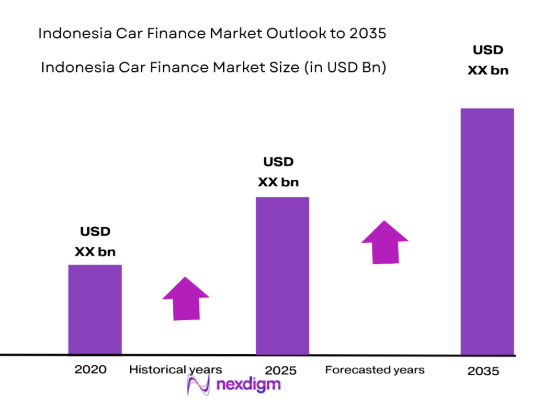
The Indonesia car finance market has witnessed substantial growth in recent years, driven by the increasing demand for vehicle purchases across both urban and rural areas. With an expanding middle class, more consumers are seeking car loans, which has led to a significant rise in the overall market size. Based on a recent historical assessment, the market is valued at several billion ~ USD, with a growing emphasis on financing options that cater to both new and used cars. Technological advancements, such as online loan platforms and better credit scoring systems, have further boosted the market’s expansion by making financing more accessible to a broader range of consumers.
Key cities such as Jakarta, Surabaya, and Bandung have emerged as dominant players in the market, primarily due to their higher urbanization rates, larger population base, and better infrastructure. Jakarta, as the capital, plays a central role in driving vehicle sales and financing, supported by a strong presence of financial institutions offering various car loan products. Surabaya and Bandung benefit from a rising demand for vehicles, backed by both regional economic development and favorable government policies, which contribute to a thriving automotive finance landscape in these locations.
Market Segmentation
By Product Type:
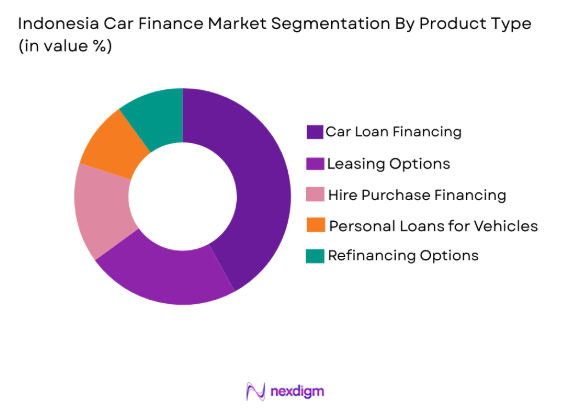
The Indonesia car finance market is segmented by product type into car loans, leasing options, hire purchase financing, personal loans for vehicles, and refinancing options. Car loans have a dominant market share due to the widespread preference for this traditional form of financing. The ease of obtaining car loans through both banks and non-banking financial institutions (NBFCs), along with competitive interest rates and flexible terms, has positioned it as the go-to option for consumers. The affordability and straightforward nature of car loans have allowed this product to dominate the market, especially among first-time car buyers and individuals looking to purchase both new and used vehicles.
By Platform Type:
The market is segmented by platform type into online platforms, traditional banks, non-banking financial companies (NBFCs), automotive dealership financing, and peer-to-peer lending platforms. Online platforms have seen a surge in popularity, driven by the ease and convenience they offer to consumers seeking quick loan approvals. These platforms allow consumers to apply for financing from the comfort of their homes, compare interest rates, and receive instant feedback. Additionally, the rise of digital banking and e-commerce ecosystems has made online platforms a dominant force in the market, surpassing traditional methods such as bank branches and physical dealerships.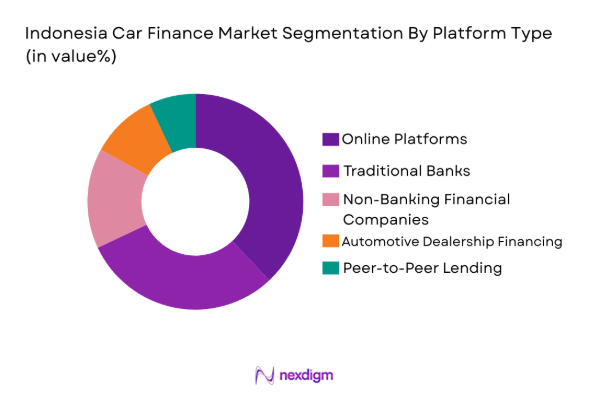
Competitive Landscape
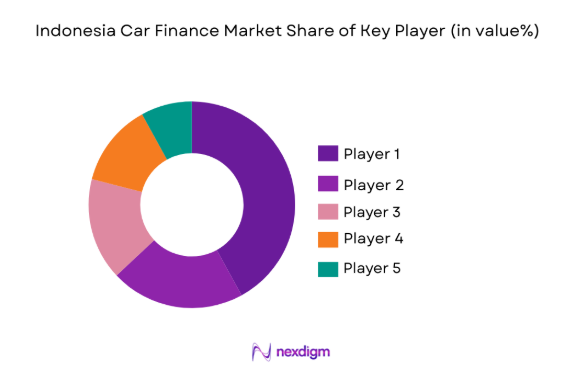
The competitive landscape of the Indonesia car finance market is evolving with a mix of traditional banking institutions and emerging non-banking financial companies. Consolidation in the industry is likely as both local and international players seek to capitalize on the growing demand for automotive financing. Major banks dominate the market, but new entrants from the fintech sector are offering innovative digital solutions, challenging traditional players by providing more accessible and flexible financing options. These developments highlight a competitive shift, where customer-centric solutions are becoming the key to maintaining a strong market presence.
| Company Name | Establishment Year | Headquarters | Technology Focus | Market Reach | Key Products | Revenue (USD) |
| Bank Negara Indonesia | 1946 | Jakarta | ~ | ~ | ~ | ~ |
| Mandiri Bank | 1998 | Jakarta | ~ | ~ | ~ | ~ |
| Toyota Financial Services | 1998 | Jakarta | ~ | ~ | ~ | ~ |
| FIFGROUP | 1989 | Jakarta | ~ | ~ | ~ | ~ |
| BCA Finance | 1981 | Jakarta | ~ | ~ | ~ | ~ |
Indonesia Car Finance Market Analysis
Growth Drivers
Rising Middle-Class Population:
The growing middle class in Indonesia is one of the primary drivers of the car finance market. With an increasing number of consumers entering the middle-income bracket, the demand for personal vehicles is on the rise. As disposable income grows, many individuals seek affordable financing options to purchase cars, thus contributing to the market’s expansion. The government’s focus on stimulating economic growth and providing incentives for vehicle purchases has also facilitated this growth. Car financing allows consumers to enjoy the convenience of private transportation without having to pay the full cost upfront, making car ownership more attainable for a wider demographic. Furthermore, the rise in urbanization in major cities like Jakarta and Surabaya has increased the need for personal vehicles, further driving the demand for financing options.
Government Initiatives and Policies:
Government initiatives, including tax breaks, reduced import duties, and various subsidies for electric vehicles (EVs), have significantly boosted the car finance market. These policies aim to make car ownership more accessible to the general population and encourage the adoption of environmentally friendly vehicles. Additionally, regulatory reforms aimed at simplifying the loan application process and ensuring transparency in interest rates have created a more favorable lending environment. The government’s push to improve infrastructure, such as road networks and urban development projects, has made car ownership more practical for individuals living in rural and suburban areas. These combined factors have spurred increased vehicle sales and have had a direct impact on the growth of the car finance market.
Market Challenges
High-Interest Rates on Car Loans:
Despite the demand for car financing, high-interest rates remain a significant challenge in the Indonesia car finance market. Many consumers struggle with the affordability of car loans due to interest rates that are considerably higher than other types of loans. This has led to concerns regarding the long-term financial burden on borrowers, especially those in lower-income brackets. Although competition among banks and non-banking financial institutions (NBFCs) has led to more attractive loan terms in some cases, interest rates remain relatively high, particularly for individuals with lower credit scores. These financial barriers prevent a large portion of the population from accessing car loans and have limited the market’s full growth potential. Additionally, the complexities involved in securing a car loan, such as lengthy paperwork and a lengthy approval process, further discourage potential customers from pursuing financing options.
Limited Financing Options for Used Cars:
While new car financing has flourished, financing for used cars remains a significant challenge in the Indonesian market. This segment is underdeveloped due to the lack of structured financing solutions tailored to used vehicles. Many financial institutions are hesitant to offer loans for used cars because of concerns over depreciation rates, resale value, and the risk of non-performing loans. As a result, many potential buyers are left with limited financing options, especially for lower-priced vehicles. This lack of accessible financing has hindered the growth of the used car market, which could otherwise represent a large segment of car sales. With used cars being more affordable, they attract a larger pool of potential buyers, but the absence of suitable financing options continues to restrict market growth in this area.
Opportunities
Expansion of Electric Vehicle Financing:
The increasing adoption of electric vehicles (EVs) in Indonesia presents a significant opportunity for the car finance market. As consumers become more environmentally conscious and the government introduces incentives to encourage the purchase of EVs, there is an emerging demand for financing solutions tailored to electric vehicles. Financial institutions have the chance to capitalize on this by offering specific loan products for EVs, which typically require different financing structures due to their higher upfront costs. The Indonesian government has supported this transition with various tax exemptions, subsidies, and EV infrastructure investments. These efforts have fostered a favorable environment for the expansion of EV financing products, allowing car finance companies to target a growing customer segment. The rise of green financing options also aligns with global trends towards sustainability, positioning the market for future growth.
Digitization of Financing Platforms:
The rapid digitalization of financial services in Indonesia offers a significant opportunity for the car finance market. As more consumers turn to digital platforms for various services, including banking, e-commerce, and loan applications, the car finance market can benefit from embracing digital channels. Online financing platforms and mobile apps provide customers with a seamless experience, allowing them to apply for car loans, compare rates, and receive approval quickly. This shift towards digital financing is especially attractive to younger generations, who are more likely to engage with technology. Furthermore, digital platforms reduce overhead costs for financial institutions and make the loan process more efficient, enabling companies to serve a larger customer base. The growth of e-commerce in Indonesia also supports this shift, as many consumers are comfortable with online transactions and prefer the convenience of accessing financial products from their smartphones. As digital adoption continues to rise, the car finance market can expect significant growth opportunities.
Future Outlook
The future of Indonesia’s car finance market looks promising, with expected growth driven by both technological advancements and government support. The digitalization of loan platforms will enhance consumer access to financing, while rising demand for electric vehicles presents new opportunities for lenders to diversify their offerings. Additionally, regulatory changes aimed at simplifying loan processes and supporting sustainable vehicle purchases will play a key role in market expansion. The ongoing development of infrastructure and urbanization trends further reinforce the positive outlook, ensuring the market remains dynamic and adaptable to evolving consumer needs.
Major Players
- Bank Negara Indonesia (BNI)
- Mandiri Bank
- Toyota Financial Services
- FIFGROUP
- BCA Finance
- Citibank Indonesia
- HSBC Indonesia
- Adira Finance
- Bank Rakyat Indonesia (BRI)
- Bank Danamon
- Bank Central Asia (BCA)
- Bank Tabungan Negara (BTN)
- Mizuho Bank
- OCBC NISP
- Standard Chartered Bank
Key Target Audience
- Investments and venture capitalist firms
- Government and regulatory bodies
- Car manufacturers
- Banks and financial institutions
- Non-banking financial companies (NBFCs)
- Automotive dealerships
- Digital platform developers
- Car leasing companies
Research Methodology
Step 1: Identification of Key Variables
Key variables such as vehicle sales, loan approval rates, consumer income levels, and regulatory impacts are identified for market analysis.
Step 2: Market Analysis and Construction
Market sizing and segmentation are determined based on historical data, trends, and consumer preferences in the automotive and financial sectors.
Step 3: Hypothesis Validation and Expert Consultation
Industry experts and stakeholders are consulted to validate hypotheses and refine market models based on insights.
Step 4: Research Synthesis and Final Output
Data is synthesized into a comprehensive market report, ensuring the accuracy and reliability of the final output.

- Executive Summary
- Research Methodology (Definitions, Scope, Industry Assumptions, Market Sizing Approach, Primary & Secondary Research Framework, Data Collection & Verification Protocol, Analytic Models & Forecast Methodology, Limitations & Research Validity Checks)

- Market Definition and Scope
- Value Chain & Stakeholder Ecosystem
- Regulatory / Certification Landscape
- Sector Dynamics Affecting Demand
- Strategic Initiatives & Infrastructure Growth

- Growth Drivers
Growing Middle-Class Population
Increase in Vehicle Sales
Favorable Government Policies for Car Purchases
Technological Advancements in Financing Platforms
Improving Credit Access for Consumers - Market Challenges
High-interest Rates in Car Financing
Regulatory Constraints in the Automotive Finance Sector
Lack of Consumer Awareness in Financing Options
Limited Financing for Used Cars
Complex Documentation and Approval Process - Market Opportunities
Expansion of Electric Vehicle Financing
Growing Adoption of Online Financing Platforms
Increased Corporate and Fleet Financing - Trends
Rise in Online and Mobile-based Financing Platforms
Shift Toward Sustainable and Green Car Financing
Growth in Cross-border Financing Options for Cars - Government Regulations & Defense Policy
Government Incentives for Vehicle Purchase
Regulatory Reforms in Auto Financing
Policies Promoting EV Financing and Adoption - SWOT Analysis
- Stakeholder and Ecosystem Analysis
- Porter’s Five Forces Analysis
- Competition Intensity and Ecosystem Mapping

- By Market Value, 2020-2025
- By Installed Units, 2020-2025
- By Average System Price, 2020-2025
- By System Complexity Tier, 2020-2025

- By System Type (In Value%)
Car Loans
Leasing Options
Hire Purchase Financing
Personal Loans for Vehicles
Refinancing Options - By Platform Type (In Value%)
Online Platforms
Traditional Banks
Non-Banking Financial Companies (NBFCs)
Automotive Dealership Financing
Peer-to-Peer Lending Platforms - By Fitment Type (In Value%)
New Car Financing
Used Car Financing
Electric Vehicle Financing
Luxury Car Financing
Commercial Vehicle Financing - By EndUser Segment (In Value%)
Individual Buyers
Corporate Clients
Automotive Dealerships
Car Rental Companies
Government & Public Sector Organizations - By Procurement Channel (In Value%)
Direct Bank Loans
Dealership Financing
Online Financing Platforms
Non-Banking Financial Institutions (NBFCs)
Peer-to-Peer Platforms - By Material / Technology (in Value%)
Financing Software Solutions
Blockchain-enabled Car Financing
Artificial Intelligence (AI) for Credit Scoring
Cloud-based Platforms for Car Finance
Mobile Payment Technology for Financing

- Market structure and competitive positioning
- Market share snapshot of major players
- CrossComparison Parameters (Platform Type, Procurement Channel, System Type, EndUser Segment, Fitment Type)
- SWOT Analysis of Key Competitors
- Pricing & Procurement Analysis
- Key Players
Bank Negara Indonesia (BNI)
PT Bank Central Asia
Mandiri Bank
Citi Bank
HSBC
Toyota Financial Services
Adira Finance
Otosolutions
Bank Rakyat Indonesia
Bank Danamon
BCA Finance
FIFGROUP
Indo Multi Finance
Mizuho Bank
RAC Finance

- Increase in Consumer Demand for Car Loans
- Corporate Fleet Financing Trends
- Increasing Involvement of Non-Banking Financial Institutions
- Evolving Preferences in Car Ownership vs. Leasing

- Forecast Market Value, 2026-2035
- Forecast Installed Units, 2026-2035
- Price Forecast by System Tier, 2026-2035
- Future Demand by Platform, 2026-2035


 Request a Sample
 Ask for Customization
 Get a Quote
 Enquire Now