

 Download PDF
 Download PDF
Market Overview
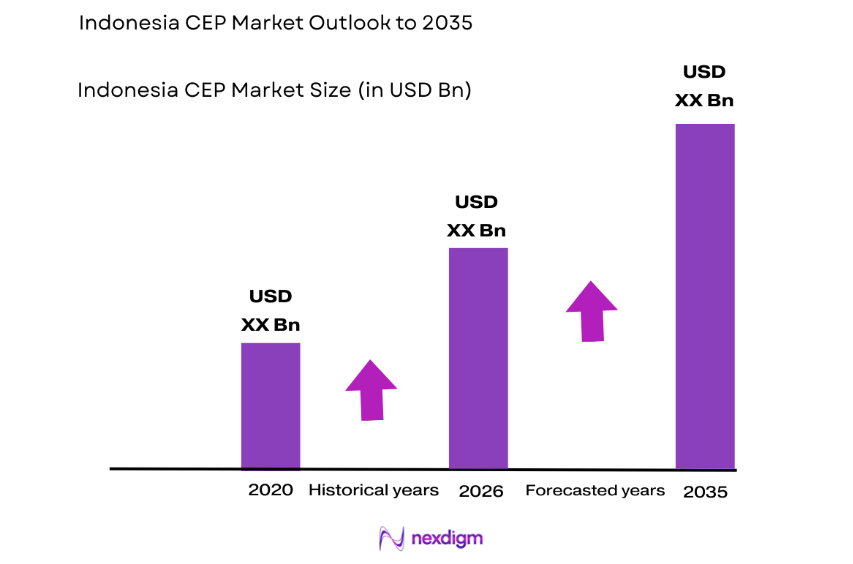
Indonesia’s CEP market is valued at approximately USD ~ billion based on a recent historical assessment, driven by rapid growth in e commerce, rising consumer demand for fast delivery services, and increasing digital retail adoption. Government logistics development programs and expanding transportation infrastructure, including urban distribution networks and last-mile delivery hubs, continue to strengthen market growth. The proliferation of smartphones and online retail platforms has further accelerated parcel volumes, supporting the expansion of courier, express, and parcel services across metropolitan and regional areas.
Major CEP operations are concentrated in Jakarta, Surabaya, and Bandung due to dense urban populations, advanced transportation infrastructure, and proximity to large consumer markets. Jakarta serves as the primary logistics hub with extensive road networks and access to major airports facilitating rapid parcel movement. Surabaya functions as a critical distribution gateway for eastern Indonesia, supporting both domestic and regional delivery networks. Bandung’s role as a tech and e commerce hub strengthens demand for courier and express services. These cities attract major CEP operators due to logistical efficiency, commercial density, and access to high-volume e commerce shipments.
Market Segmentation
By Service Type
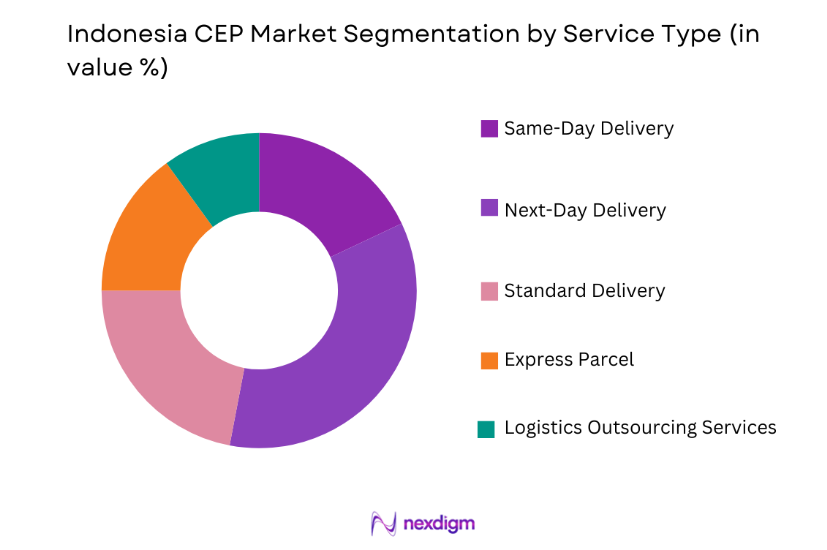
Indonesia CEP Market is segmented by product type into same-day delivery, next-day delivery, standard delivery, express parcel, and logistics outsourcing services. Recently, next-day delivery has a dominant market share due to factors such as demand patterns, brand presence, infrastructure availability, or consumer preference. The growing expectations of e commerce customers for rapid and reliable delivery services drive significant demand for next-day options. Major urban centers have dense networks of warehouses and distribution hubs enabling high-volume processing and timely delivery. Leading CEP providers prioritize next-day logistics solutions to enhance service levels, maintain competitive differentiation, and support brand loyalty. Investments in route optimization, digital tracking systems, and automated sorting facilities further strengthen next-day delivery capabilities, making it the most widely adopted service type in Indonesia’s CEP ecosystem.
By Customer Segment
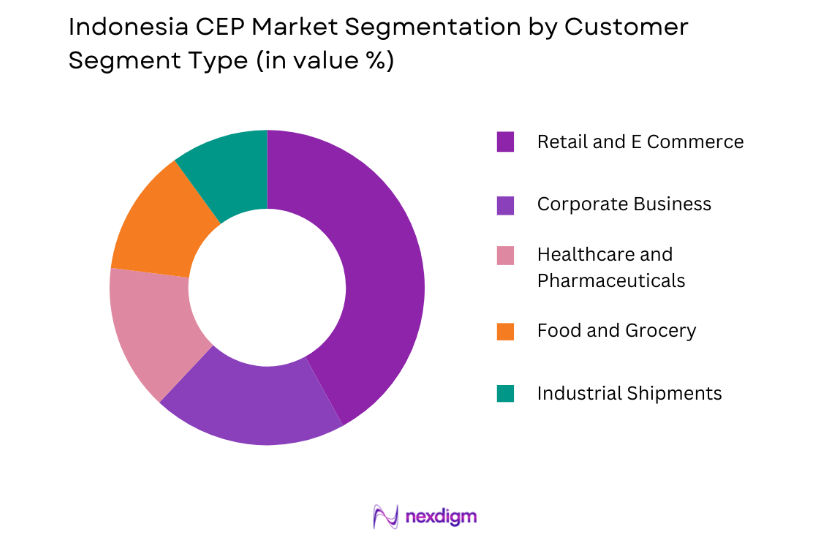
Indonesia CEP Market is segmented by product type into retail and e commerce, corporate business, healthcare and pharmaceuticals, food and grocery, and industrial shipments. Recently, retail and e commerce has a dominant market share due to factors such as demand patterns, brand presence, infrastructure availability, or consumer preference. Indonesia’s rapidly expanding online retail ecosystem drives high parcel volumes requiring robust CEP services for timely delivery. Consumer electronics, fashion, and daily essentials create consistent shipment demand across major cities. CEP providers leverage advanced tracking, delivery management, and route optimization technologies to serve retail and e commerce efficiently. Investments in micro fulfillment centers near urban clusters enhance next-day and same-day delivery capabilities, making retail and e commerce the primary customer segment driving market growth.
Competitive Landscape
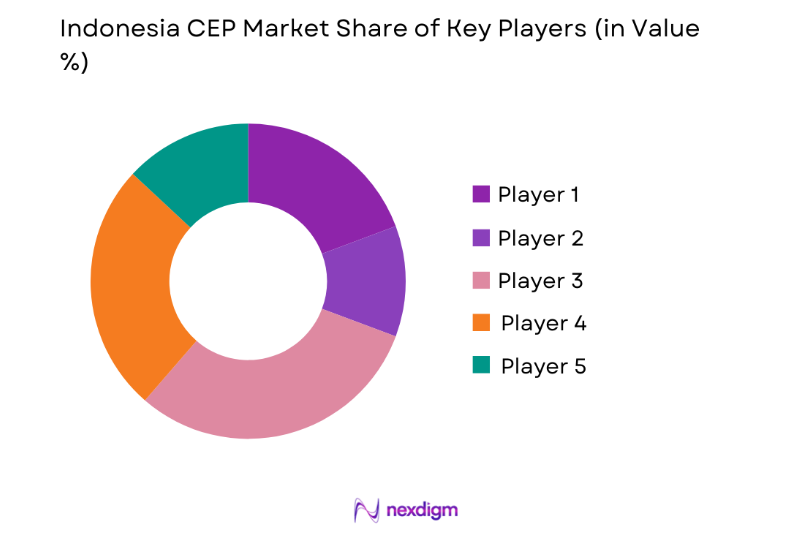
The Indonesia CEP market is moderately consolidated with a combination of multinational operators and strong domestic players. Major CEP companies compete through service differentiation, digital logistics platforms, delivery speed, and extensive distribution networks. Strategic partnerships with e commerce platforms and investments in last-mile infrastructure strengthen market positioning. Companies continuously expand technology integration to improve tracking, sorting, and route optimization to maintain competitive advantage in urban and regional delivery markets.
| Company Name | Establishment Year | Headquarters | Technology Focus | Market Reach | Key Products | Revenue | Delivery Fleet Size |
| J&T Express | 2015 | Indonesia | ~ | ~ | ~ | ~ | ~ |
| Ninja Van | 2014 | Singapore | ~ | ~ | ~ | ~ | ~ |
| Pos Indonesia | 1746 | Indonesia | ~ | ~ | ~ | ~ | ~ |
| SiCepat Ekspres | 2004 | Indonesia | ~ | ~ | ~ | ~ | ~ |
| Lalamove | 2013 | Hong Kong | ~ | ~ | ~ | ~ | ~ |
Indonesia CEP Market Analysis
Growth Drivers
Rapid E Commerce Adoption and Rising Online Retail Transactions
Indonesia CEP Market experiences significant growth driven by the rapid adoption of online retail platforms, mobile commerce applications, and digital payment systems. Consumers increasingly demand fast, reliable, and trackable delivery services, creating sustained growth for CEP providers. Expansion of online marketplaces and omnichannel retail models generates high daily parcel volumes requiring extensive urban and regional distribution networks. Investment in technology platforms, automated sorting, and delivery management systems supports scalability and operational efficiency. Government initiatives promoting digital economy growth further accelerate e commerce penetration, increasing delivery service demand. Urban population density enables efficient last-mile logistics networks capable of supporting same-day and next-day delivery. CEP companies develop partnerships with e commerce operators to streamline fulfillment and optimize delivery routes. Rising consumer expectations for convenience drive continuous innovation in delivery speed, tracking, and service reliability across Indonesia’s CEP ecosystem. Digital marketing, loyalty programs, and real-time tracking enhance customer engagement and increase demand for courier and express services. The combination of digital retail growth, infrastructure improvements, and technology adoption sustains robust market expansion for next-day and same-day delivery services. Strong logistics coordination between warehouses, distribution hubs, and courier networks ensures high service quality and responsiveness. The growing trend of impulse purchasing and online shopping across urban centers further fuels parcel volume growth in Indonesia’s CEP market. Last-mile delivery optimization using AI and real-time route planning enhances operational efficiency. Investments in automated parcel sorting facilities increase throughput and reduce operational bottlenecks. Expansion of regional coverage to emerging urban clusters broadens market access and drives further revenue growth. Industry collaborations and strategic partnerships enable CEP providers to enhance capacity while managing costs. Enhanced delivery network reliability and speed increase overall market competitiveness. Integration of mobile applications with logistics systems provides customers real-time updates, further increasing demand. Infrastructure development, including urban micro hubs, complements CEP operations by reducing transit times. The convergence of e commerce growth, technological advancement, and urban logistics efficiency forms the core driver of Indonesia CEP Market expansion.
Expansion of Urban Logistics Infrastructure and Last-Mile Delivery Capabilities
Indonesia CEP Market benefits from substantial investment in urban logistics infrastructure, distribution centers, and last-mile delivery capabilities. Urban population density in cities such as Jakarta, Surabaya, and Bandung supports efficient delivery networks capable of handling large daily parcel volumes. Logistics hubs, sorting centers, and micro fulfillment facilities enable rapid processing and dispatch of same-day and next-day deliveries. CEP providers invest in fleet expansion, digital route optimization, and mobile delivery management systems to improve service speed and accuracy. Public infrastructure improvements, including road expansion and traffic management systems, enhance operational efficiency. Technology integration in tracking, inventory management, and customer notifications strengthens service reliability and transparency. Partnerships with e commerce companies and retailers further extend last-mile coverage and operational capacity. Investments in micro fulfillment centers reduce delivery time and improve customer satisfaction across urban regions. The growth of urban logistics infrastructure attracts new entrants and encourages competition, enhancing service quality. Adoption of electric and eco-friendly delivery vehicles aligns with sustainability initiatives while lowering operating costs. Integration of warehouse management systems with delivery platforms improves workflow efficiency. CEP providers leverage urban hubs to optimize delivery schedules and reduce transit delays. Investments in urban logistics technology, infrastructure, and operational capacity directly enhance market growth. Fleet management, real-time tracking, and AI-based route planning improve delivery efficiency and customer experience. Expansion of urban logistics networks supports regional distribution and enhances market penetration. Digital tools facilitate better resource allocation and performance monitoring across delivery networks. Investment in automated parcel handling and sorting systems increases throughput capacity. The combination of urban density, logistics infrastructure, and technology integration drives Indonesia CEP Market growth. Strategic deployment of last-mile hubs in high-density areas reduces operational cost and accelerates delivery timelines.
Market Challenges
High Traffic Congestion and Urban Delivery Bottlenecks
Indonesia CEP Market faces challenges due to heavy traffic congestion in metropolitan areas, which significantly delays last-mile delivery operations. Urban road networks in Jakarta and Surabaya are frequently congested, impacting vehicle turnaround times and delivery scheduling. CEP providers must deploy advanced route optimization, dynamic delivery scheduling, and real-time traffic monitoring to mitigate delays. Operational inefficiencies increase fuel consumption, reduce delivery frequency, and affect service reliability. Limited urban parking and loading zones further constrain courier efficiency. Investments in micro hubs and alternative delivery methods partially alleviate congestion effects. CEP operators must coordinate deliveries to minimize overlap and optimize fleet utilization. Adverse traffic conditions also increase labor and operational costs, affecting overall profitability. Collaboration with local authorities and urban planning agencies can improve urban logistics efficiency. Implementation of flexible delivery time windows and parcel lockers reduces congestion impact on delivery networks. CEP providers may need to adopt bicycle or electric vehicle fleets for dense urban zones. Delivery performance metrics and real-time monitoring tools are critical for managing congestion challenges. Traffic congestion remains a structural challenge affecting service quality and market growth. Expansion into secondary cities requires strategic planning to manage urban logistics constraints. Integration of predictive analytics helps anticipate peak traffic periods for efficient dispatch. Coordination with warehouse and hub operations enhances delivery scheduling under traffic conditions. Traffic management and infrastructure planning are critical to ensure timely deliveries and maintain customer satisfaction. Congestion impacts overall service scalability and operational efficiency, affecting growth potential in urban CEP networks.
Intense Market Competition and Price Pressure
Indonesia CEP Market experiences high competition among both multinational operators and local CEP providers, leading to significant price pressure. Aggressive pricing strategies are adopted to attract customers in retail and e commerce segments, affecting profit margins. New entrants offering low-cost delivery options intensify competition in urban and regional markets. CEP providers invest in digital platforms, tracking technology, and operational efficiency to differentiate services beyond price. Brand reputation, speed, and reliability become critical competitive factors. Price competition also drives innovation in delivery methods, route optimization, and customer engagement. Companies must balance service quality with cost efficiency to maintain market position. Technology adoption in route planning and fleet management reduces operational costs while maintaining delivery standards. Collaboration with e commerce platforms enhances visibility and increases parcel volumes. Differentiation through premium services, guaranteed delivery times, and value-added logistics offerings helps mitigate price pressures. Strategic alliances with retailers improve economies of scale and delivery efficiency. Providers continuously monitor market rates and adjust pricing strategies to remain competitive. Marketing and customer loyalty programs strengthen retention amidst price-sensitive customers. Competitive intensity drives operational improvements and encourages technology integration. Market competition requires investment in fleet, infrastructure, and human resources. Providers must develop scalable delivery models to compete effectively while managing operational costs. Regulatory compliance and service standardization influence competitive positioning. Price pressure necessitates continuous operational optimization and cost management across the CEP network. Market players must balance aggressive expansion with sustainable profitability in a highly competitive environment.
Opportunities
Integration of Technology-Driven Delivery Solutions and Smart Logistics Platforms
Indonesia CEP Market benefits from the growing adoption of technology-driven delivery solutions including AI-based route optimization, automated sorting, and real-time tracking platforms. Integration of digital logistics platforms improves delivery efficiency, reduces operational costs, and enhances customer experience. Mobile applications and customer notification systems allow real-time monitoring of parcel status and estimated delivery times. CEP providers can leverage predictive analytics for demand forecasting, route planning, and resource allocation across urban and regional networks. Investment in warehouse management systems and automated fulfillment centers supports high-volume parcel processing. Integration of smart logistics platforms with e commerce ecosystems strengthens service quality and operational scalability. Expansion of cloud-based platforms facilitates centralized management of deliveries across multiple cities. Technology integration enables faster response to market demand fluctuations and seasonal peak volumes. Automated parcel handling reduces human error and increases throughput capacity. Data analytics supports continuous improvement in delivery performance and resource utilization. CEP operators can implement digital payment and cashless systems to enhance convenience and customer satisfaction. Advanced tracking and digital customer engagement tools strengthen market reputation and retention. Technology-driven solutions allow providers to offer premium services and flexible delivery options. Digital logistics solutions enhance operational transparency and efficiency. Integration of AI and machine learning improves routing, resource optimization, and delivery accuracy. Real-time monitoring systems support proactive exception management and operational responsiveness. Expansion of automated micro fulfillment hubs reduces transit time and increases delivery density. Technology adoption provides a scalable framework to support Indonesia CEP Market growth. Investment in smart logistics and digital infrastructure positions providers for competitive advantage.
Expansion of E Commerce Partnerships and Omnichannel Retail Logistics Networks
Indonesia CEP Market presents significant opportunities through strategic partnerships with e commerce platforms, online marketplaces, and omnichannel retailers. Collaborative agreements allow CEP providers to secure high parcel volumes and streamline delivery operations across urban and regional areas. Integration of CEP services into retailer fulfillment strategies enables faster delivery, improved order accuracy, and enhanced customer satisfaction. Retailers increasingly outsource last-mile delivery to specialized CEP providers with expertise in urban logistics and high-frequency shipments. Partnerships enable providers to optimize resource allocation, route planning, and operational capacity across metropolitan networks. CEP companies benefit from co-located fulfillment centers within retail warehouses to reduce handling time and increase delivery speed. Expansion into regional urban clusters ensures broader market coverage and strengthens competitive positioning. Joint initiatives with e commerce platforms allow testing of innovative delivery solutions including same-day and scheduled deliveries. Collaborative networks improve operational efficiency and reduce logistics cost per parcel. Integration of omnichannel strategies supports seamless inventory visibility and tracking. Partnerships with retailers encourage investment in digital tools and infrastructure for faster order processing. CEP providers can enhance customer experience through coordinated delivery, real-time updates, and flexible delivery options. Retail collaboration ensures consistent parcel volumes, reducing idle fleet and resource underutilization. Omnichannel integration allows CEP companies to tap into growing online shopping demand while maintaining service reliability. Strategic partnerships also improve market intelligence, demand forecasting, and operational planning. Retail collaborations facilitate expansion of micro hubs and urban delivery networks. CEP providers can leverage data insights from retailers to optimize operations and enhance delivery performance. These partnerships create long-term growth opportunities in Indonesia CEP Market by aligning logistics capacity with consumer demand and retailer requirements.
Future Outlook
Indonesia CEP Market is projected to expand steadily over the next five years due to continued e commerce growth, urban logistics development, and technology adoption. CEP providers are expected to invest in automated sorting facilities, last-mile distribution hubs, and digital tracking platforms to meet rising demand. Regulatory support for urban logistics and digital commerce will facilitate operational efficiency. Increasing consumer expectations for rapid delivery and expanding online retail adoption will remain key drivers shaping market growth. Partnerships with e commerce platforms will further enhance service coverage and operational scalability.
Major Players
- J&T Express
- Ninja Van
- Pos Indonesia
- SiCepat Ekspres
- Lalamove
- GrabExpress
- DHL eCommerce
- FedEx
- UPS
- Amazon Logistics
- Shopee Xpress
- Aramex
- Kerry Logistics
- Qxpress
- TIKI
Key Target Audience
- E commerce retailers
- Logistics and supply chain companies
- Food and grocery delivery platforms
- Retail and supermarket chains
- Pharmaceutical distribution companies
- Investments and venture capitalist firms
- Government and regulatory bodies
Research Methodology
Step 1: Identification of Key Variables
Key variables influencing the Indonesia CEP Market are identified, including e commerce growth, urban population density, consumer delivery expectations, last-mile infrastructure, digital platform adoption, and logistics network efficiency.
Step 2: Market Analysis and Construction
The market is analyzed using shipment volume data, operator revenues, urban logistics capacity, technology adoption rates, and government transportation infrastructure developments to construct the market framework.
Step 3: Hypothesis Validation and Expert Consultation
Industry hypotheses are validated through consultations with CEP providers, logistics managers, e commerce supply chain analysts, and infrastructure experts to confirm assumptions and refine market estimates.
Step 4: Research Synthesis and Final Output
Data collected from secondary research, expert consultations, and industry reports is synthesized into a comprehensive analysis providing insights into market size, segmentation, competitive landscape, and growth opportunities within the Indonesia CEP Market.

- Executive Summary
- Research Methodology (Definitions, Scope, Industry Assumptions, Market Sizing Approach, Primary & Secondary Research Framework, Data Collection & Verification Protocol, Analytic Models & Forecast Methodology, Limitations & Research Validity Checks)

- Market Definition and Scope
- Value Chain & Stakeholder Ecosystem
- Regulatory / Certification Landscape
- Sector Dynamics Affecting Demand

- Growth Drivers
Rapid Expansion of E-commerce and Online Retail Networks
Government Initiatives Supporting Digital Logistics Infrastructure
Integration of Technology for Real-Time Tracking and Delivery Optimization - Market Challenges
High Initial Investment in Automation and Infrastructure
Fragmented Logistics Landscape Across Islands
Regulatory and Compliance Barriers for Cross-Border Deliveries - Market Opportunities
Adoption of AI-Driven Last-Mile Delivery Solutions
Expansion of Cold Chain Logistics for Perishable Goods
Partnerships Between Logistics Providers and E-commerce Platforms - Trends
Rising Use of Autonomous Delivery Vehicles
Integration of IoT and Advanced Tracking Solutions - Government Regulations
Data Protection and Privacy Regulations
Transportation Licensing and Compliance
Supportive Public-Private Logistics Initiatives - SWOT Analysis
- Porter’s Five Forces

- By Market Value, 2020-2025
- By Installed Units, 2020-2025
- By Average System Price, 2020-2025
- By System Complexity Tier, 2020-2025

- By System Type (In Value%)
Parcel Sorting Systems
Automated Guided Vehicles
Conveyor and Handling Systems
Cold Chain Management Systems
Tracking and Monitoring Systems - By Platform Type (In Value%)
Land Transportation Platforms
Air Freight Platforms
Maritime Freight Platforms
Integrated Multimodal Platforms - By Fitment Type (In Value%)
On-premise CEP Solutions
Cloud-based CEP Solutions
Hybrid CEP Solutions
Modular CEP Solutions - By End User Segment (In Value%)
E-commerce Retailers
Logistics Service Providers
Food and Beverage Companies

- Market Share Analysis
- Cross Comparison Parameters (System Type, Platform Type, Fitment Type, End User Segment, Technology Adoption, Automation Level, Geographic Coverage)
- SWOT Analysis of Key Competitors
- Pricing & Procurement Analysis
- Key Players
JNE Express
TIKI
POS Indonesia
SiCepat Ekspres
J&T Express
Lion Parcel
Ninja Xpress
Anteraja
SAP Express
Wahana Prestasi Logistik
Sicepat Ekspres
Lalamove Indonesia
GrabExpress Indonesia
FedEx Indonesia
DHL Express Indonesia

- Growing Demand for Same-Day Delivery Services
- Urban Consumers’ Preference for E-commerce Platforms
- Retailers Expanding Direct-to-Consumer Logistics
- Food and Perishable Goods Companies Requiring Temperature-Controlled Delivery

- Forecast Market Value, 2026-2035
- Forecast Installed Units, 2026-2035
- Price Forecast by System Tier, 2026-2035
- Future Demand by Platform, 2026-2035


 Request a Sample
 Ask for Customization
 Get a Quote
 Enquire Now