

 Download PDF
 Download PDF
Market Overview
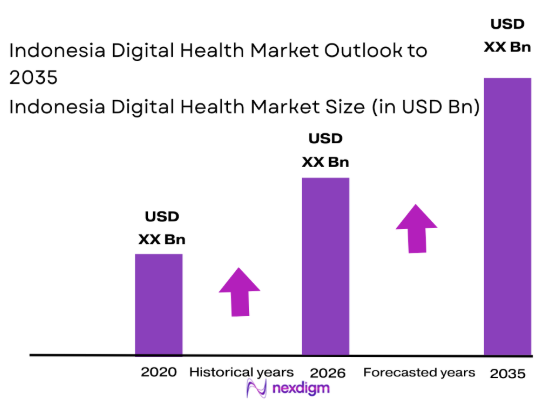
The Indonesia Digital Health market is valued at USD ~ billion based on a recent historical assessment. This growth is driven by significant investments in healthcare infrastructure, government support, and the increasing adoption of telemedicine and mobile health platforms. As the country moves towards modernizing its healthcare system, digital health technologies are increasingly being integrated to improve patient care, streamline medical services, and enhance healthcare accessibility across urban and rural regions.
Major urban centers like Jakarta, Surabaya, and Bandung are leading the way in digital health adoption. These cities benefit from advanced infrastructure, a tech-savvy population, and strong government initiatives aimed at boosting healthcare access. Additionally, the expansion of digital health platforms in rural areas is gaining momentum, driven by efforts to provide healthcare services to underserved populations and bridge gaps in healthcare accessibility.
Market Segmentation
By System Type
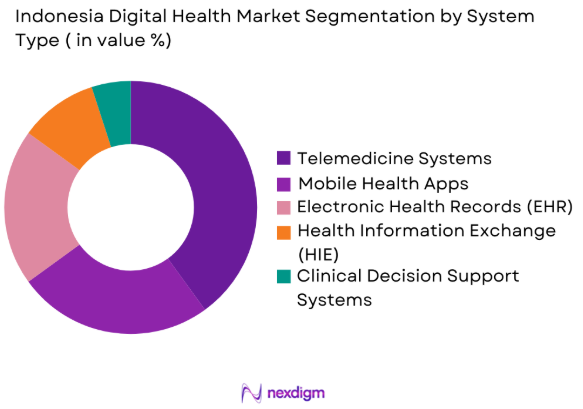
The Indonesia Digital Health market is segmented by system type into Electronic Health Records (EHR), Telemedicine Systems, Mobile Health Apps, Health Information Exchange (HIE) Systems, and Clinical Decision Support Systems (CDSS). Telemedicine Systems have a dominant market share due to the increasing demand for remote consultations, especially in rural and underserved areas. The expansion of internet infrastructure and mobile connectivity has played a key role in driving this segment. As the government promotes telemedicine through various initiatives and policies, this segment is expected to continue its dominance in the coming years.
By Platform Type
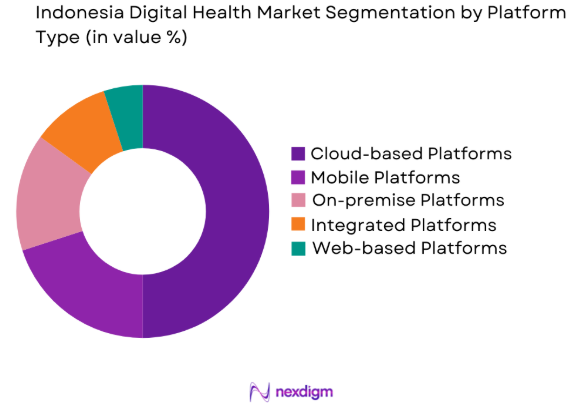
The market is segmented by platform type into Mobile Platforms, Cloud-based Platforms, On-premise Platforms, Integrated Platforms, and Web-based Platforms. Cloud-based Platforms have a dominant market share due to their scalability, ease of use, and cost-effectiveness. With the increasing digital transformation of healthcare, cloud platforms enable healthcare providers to store vast amounts of patient data securely and access it from any location. The growing acceptance of cloud-based systems by healthcare providers looking to optimize costs and improve patient care is a major factor contributing to the dominance of this sub-segment.
Competitive Landscape
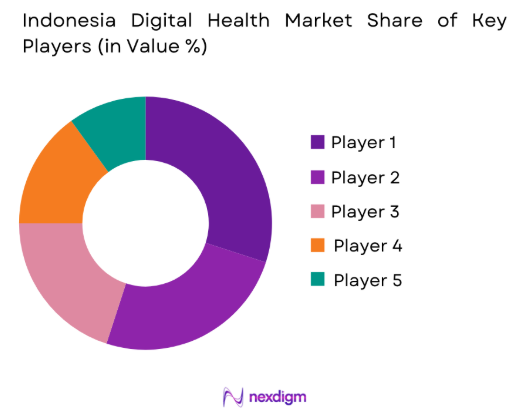
The competitive landscape of the Indonesia Digital Health market is characterized by a mix of established healthcare providers, tech giants, and innovative startups. Major players are investing heavily in R&D and forming strategic partnerships to enhance their service offerings. Consolidation is expected as larger players acquire smaller, more agile companies to expand their market presence. Leading companies focus on providing integrated digital health solutions and expanding their geographic reach across Indonesia’s urban and rural areas.
| Company Name | Establishment Year | Headquarters | Technology Focus | Market Reach | Key Products | Revenue (USD) | Additional Parameter |
| Telkom Indonesia | 1965 | Jakarta, Indonesia | ~ | ~ | ~ | ~ | ~ |
| Halodoc | 2016 | Jakarta, Indonesia | ~ | ~ | ~ | ~ | ~ |
| Alodokter | 2014 | Jakarta, Indonesia | ~ | ~ | ~ | ~ | ~ |
| Medco Group | 1980 | Jakarta, Indonesia | ~ | ~ | ~ | ~ | ~ |
| BPJS Kesehatan | 1992 | Jakarta, Indonesia | ~ | ~ | ~ | ~ | ~ |
Indonesia Digital Health Market Analysis
Growth Drivers
Increased Government Investment
The Indonesian government’s commitment to improving healthcare access has significantly driven the growth of the digital health market. The government’s policies, including initiatives to promote telemedicine, are aimed at ensuring equitable healthcare access across the country. These policies support healthcare providers in integrating digital health technologies to serve rural and underserved populations, ensuring widespread adoption. The government’s financial incentives and support for infrastructure development, such as high-speed internet in remote areas, further boost the adoption of digital health solutions.
Technological Advancements
Rapid advancements in digital health technologies have significantly driven market growth. Innovations in telemedicine, electronic health records (EHR), and mobile health apps have enabled healthcare providers to deliver more efficient care to a broader population. The integration of AI and big data analytics has further enhanced the effectiveness of healthcare platforms, improving decision-making and patient outcomes. Additionally, the growing adoption of mobile health apps and wearable devices is making healthcare more accessible and affordable. These technologies not only streamline healthcare delivery but also empower individuals to manage their health more proactively, contributing to the overall expansion of Indonesia’s digital health market.
Market Challenges
Regulatory Challenges
Indonesia’s digital health market encounters challenges due to a complex regulatory environment. Despite initiatives to support digital health solutions, navigating the regulatory landscape remains time-consuming for healthcare providers. The fragmented regulations across regions and sectors complicate the adoption of digital health technologies, hindering their seamless integration. In addition, inconsistent standards for data security and patient privacy regulations add further uncertainty among stakeholders. This lack of regulatory clarity creates barriers to widespread implementation and adoption, slowing the market’s growth. As digital health solutions evolve, the regulatory environment must adapt to foster innovation while ensuring the protection of patient information and maintaining industry standards.
Infrastructure Constraints
Although Indonesia is advancing its healthcare infrastructure, significant gaps remain, particularly in rural and remote areas. The shortage of healthcare facilities and trained personnel in these regions poses a major barrier to the widespread adoption of digital health solutions. Many healthcare providers also struggle to upgrade their existing infrastructure to accommodate advanced digital health technologies. This limitation hampers the ability to scale digital health solutions effectively, slowing their adoption. As a result, despite ongoing efforts to modernize the healthcare system, the progress of digital health technologies remains uneven across the country, particularly in underserved regions where the need for such solutions is most critical.
Opportunities
Mobile Health Growth
The widespread use of mobile phones in Indonesia presents a major opportunity for mobile health (mHealth) solutions to thrive. Mobile health apps enable individuals to access healthcare services remotely, allowing patients to consult doctors, book appointments, and monitor their health conveniently. As smartphone and mobile internet adoption continues to grow, mHealth solutions can reach a wider audience, especially in rural areas where healthcare access is often limited. This trend provides significant potential for mobile health platforms to expand, offering cost-effective and accessible healthcare options to diverse demographics across the country. The increasing smartphone penetration ensures a solid foundation for the growth of mHealth services.
Telemedicine Expansion
The demand for telemedicine services in Indonesia is expected to rise significantly due to its convenience and cost-effectiveness. The country’s large, geographically dispersed population creates a strong need for remote consultations, making telemedicine an ideal solution for expanding healthcare access. The government’s ongoing support for telemedicine through regulatory frameworks and initiatives has further fueled this trend. Additionally, as more patients and healthcare providers embrace virtual healthcare, telemedicine is becoming an essential component of Indonesia’s healthcare system. This growing acceptance is expected to drive continued investment in telemedicine, positioning it as a key area for market expansion and growth in the digital health sector.
Future Outlook
The future of the Indonesia Digital Health market is expected to witness strong growth, fueled by advancements in technology, government initiatives, and the increasing adoption of mobile health solutions. As digital health platforms become more integrated into the healthcare ecosystem, the demand for telemedicine, EHR systems, and mobile health apps will rise. Innovations in AI, big data, and IoT will also revolutionize healthcare delivery, offering better patient outcomes and more efficient healthcare management. Regulatory support and investments in infrastructure will further enhance the scalability and reach of digital health solutions across Indonesia, particularly in underserved areas.
Major Players
- Telkom Indonesia
- Halodoc
- Alodokter
- Medco Group
- BPJS Kesehatan
- Gojek
- Aetna Indonesia
- Cigna Indonesia
- Prudential Indonesia
- SehatQ
- Indosat Ooredoo
- AstraZeneca Indonesia
- PT GlobalMed
- Global Health Tech
- Lion Digital Health
Key Target Audience
- Investments and venture capitalist firms
- Government and regulatory bodies
- Healthcare providers
- Insurance companies
- Telemedicine platforms
- Pharmaceutical companies
- Technology solution providers
- Healthcare consultants
Research Methodology
Step 1: Identification of Key Variables
The research focuses on identifying the key variables that influence the digital health market, such as government policies, technological advancements, and market dynamics.
Step 2: Market Analysis and Construction
Comprehensive market analysis is conducted, assessing trends, market drivers, challenges, and growth prospects for the digital health sector in Indonesia.
Step 3: Hypothesis Validation and Expert Consultation
Hypotheses about the market trends are validated through expert interviews and consultations with industry stakeholders.
Step 4: Research Synthesis and Final Output
The findings are synthesized into a comprehensive report that outlines the market’s current state and future outlook, providing actionable insights for stakeholders.

- Executive Summary
- Research Methodology (Definitions, Scope, Industry Assumptions, Market Sizing Approach, Primary & Secondary Research Framework, Data Collection & Verification Protocol, Analytic Models & Forecast Methodology, Limitations & Research Validity Checks)

- Market Definition and Scope
- Value Chain & Stakeholder Ecosystem
- Regulatory / Certification Landscape
- Sector Dynamics Affecting Demand
- Strategic Initiatives & Infrastructure Growth

- Growth Drivers
Increase in Government Investments in Healthcare
Adoption of Telemedicine in Rural Areas
Rising Healthcare IT Spending - Market Challenges
High Implementation Costs
Data Privacy Concerns
Lack of Infrastructure in Rural Areas - Market Opportunities
Growth of Mobile Health Apps
Advancements in AI for Healthcare
Partnerships with Tech Firms - Trends
Rise in Remote Patient Monitoring
Integration of AI in Healthcare
Increase in Wearable Devices - Government Regulations
- SWOT Analysis of Key Competitors
- Porter’s Five Forces

- By Market Value, 2020-2025
- By Installed Units, 2020-2025
- By Average System Price, 2020-2025
- By System Complexity Tier, 2020-2025

- By System Type (In Value%)
Electronic Health Records
Telemedicine Systems
Mobile Health Apps
Health Information Exchange Systems
Clinical Decision Support Systems - By Platform Type (In Value%)
Mobile Platforms
Cloud-based Platforms
On-premise Platforms
Integrated Platforms
Web-based Platforms - By Fitment Type (In Value%)
On-premise Solutions
Cloud-based Solutions
Hybrid Solutions
Modular Solutions
Integrated Solutions - By End User Segment (In Value%)
Hospitals
Clinics
Healthcare Providers
Government Agencies
Pharmaceutical Companies - By Procurement Channel (In Value%)
Direct Procurement
Government Tenders
Private Sector Procurement
Online Bidding Platforms
Third-party Distributors

- Market Share Analysis
- Cross Comparison Parameters (System Type, Platform Type, Procurement Channel, End User Segment, Fitment Type, Regulatory Compliance, Technological Integration, Market Penetration, Investment in R&D, Geographic Reach)
- SWOT Analysis of Key Competitors
- Pricing & Procurement Analysis
- Key Players
Telkom Indonesia
Medco Group
Gojek
Halodoc
Alodokter
KlikDokter
Cigna Indonesia
BPJS Kesehatan
Indofood
Astra International
Prudential Indonesia
Siloam Hospitals
SehatQ
Elabram Systems
Mitra Keluarga
FitWell

- Growth in Digital Health Adoption among Hospitals
- Government’s Role in Regulating Digital Health
- Healthcare Providers Investing in Digital Solutions
- Pharmaceutical Companies Integrating Digital Platforms

- Forecast Market Value, 2026-2035
- Forecast Installed Units, 2026-2035
- Price Forecast by System Tier, 2026-2035
- Future Demand by Platform, 2026-2035


 Request a Sample
 Ask for Customization
 Get a Quote
 Enquire Now