
 Download PDF
 Download PDF
Market Overview
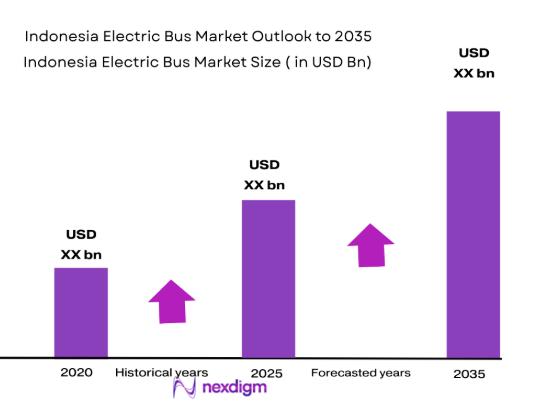
The Indonesia Electric Bus market is expected to grow significantly based on a recent historical assessment, with increasing adoption driven by government incentives, environmental policies, and the growing demand for sustainable transport solutions. In USD terms, the market size is projected to reach approximately USD ~ million, reflecting the accelerated shift towards electric mobility. Key drivers include substantial investments in electric vehicle infrastructure and advancements in electric bus technologies, which have made them a viable alternative to traditional diesel-powered buses.
Indonesia’s dominant cities, such as Jakarta and Surabaya, lead the electric bus market due to their high population density, government-backed initiatives, and the critical need for cleaner urban transportation systems. These cities are investing heavily in electric bus fleets to meet environmental goals and reduce air pollution. The country’s urbanization and infrastructure development in key metropolitan areas further accelerate the adoption of electric buses, creating a robust market for their growth.
Market Segmentation
By Product Type:
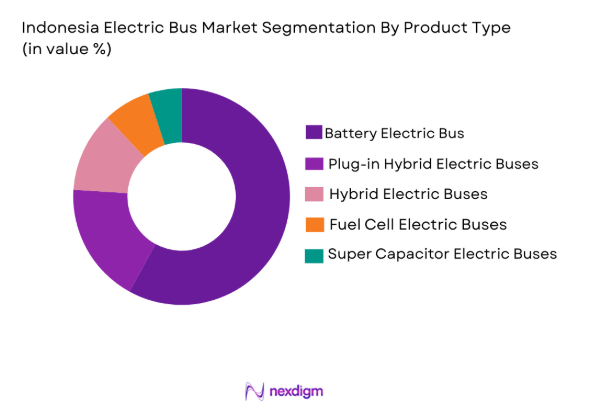
The Indonesia Electric Bus market is segmented by product type into Battery Electric Buses (BEBs), Plug-in Hybrid Electric Buses (PHEBs), Hybrid Electric Buses (HEBs), Fuel Cell Electric Buses (FCEBs), and Super Capacitor Electric Buses. Recently, Battery Electric Buses (BEBs) have had a dominant market share due to their increasing demand driven by government subsidies and incentives. This sub-segment has seen rapid growth owing to BEBs’ lower operational costs, zero emissions, and compatibility with the country’s growing electric vehicle infrastructure. The government’s support, such as tax rebates and infrastructure funding, has further bolstered BEBs’ dominance, making them the most preferred choice for public transport operators and municipalities seeking to reduce their carbon footprint.
By Platform Type:
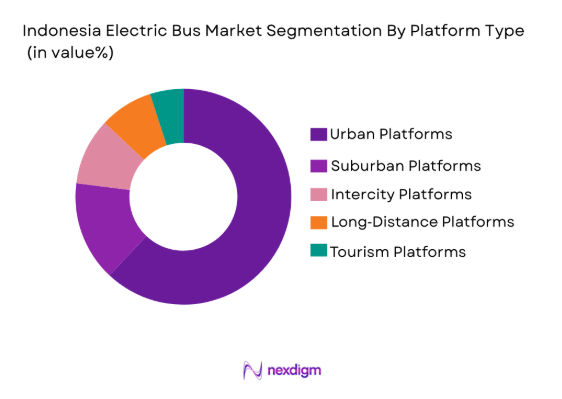
The Indonesia Electric Bus market is segmented by platform type into Urban Platforms, Suburban Platforms, Intercity Platforms, Long-Distance Platforms, and Tourism Platforms. Recently, Urban Platforms have had a dominant market share due to the higher demand for public transport solutions in densely populated cities like Jakarta. This demand is driven by government efforts to reduce congestion and pollution in urban areas. The growing trend towards electrifying public transport fleets in cities has led to a surge in the adoption of electric buses for urban commuting, supported by favorable regulations and policies aimed at increasing the use of environmentally friendly transport options.
Competitive Landscape
The competitive landscape of the Indonesia Electric Bus market is characterized by the presence of several established players and new entrants. Major players are driving consolidation through partnerships and acquisitions, while the government’s push for clean transport solutions fosters innovation in electric bus technologies. Companies are focusing on reducing the cost of electric buses through advancements in battery technologies and production processes. The influence of these major players continues to shape the market, ensuring ongoing competition and driving down the prices of electric buses for consumers.
| Company Name | Establishment Year | Headquarters | Technology Focus | Market Reach | Key Products | Revenue | Additional Market Parameter |
| BYD | XXXX | China | ~ | ~ | ~ | ~ | ~ |
| Volvo Group | XXXX | Sweden | ~ | ~ | ~ | ~ | ~ |
| Proterra | XXXX | USA | ~ | ~ | ~ | ~ | ~ |
| Xiamen King Long | XXXX | China | ~ | ~ | ~ | ~ | ~ |
| MAN Truck & Bus | XXXX | Germany | ~ | ~ | ~ | ~ | ~ |
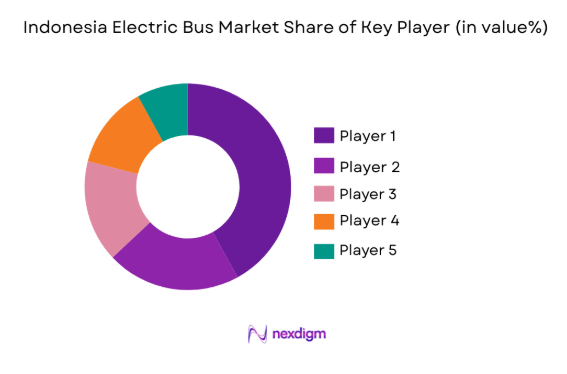
Indonesia Electric Bus Market Analysis
Growth Drivers
Government Incentives:
Government incentives have been pivotal in driving the growth of the Indonesia Electric Bus market. These incentives include tax rebates, subsidies for fleet owners, and funding for infrastructure development such as charging stations. With the country’s increasing commitment to reducing air pollution and carbon emissions, these incentives have been essential in making electric buses more affordable for public transport companies and municipalities. Additionally, these incentives support the growth of the electric vehicle ecosystem, making it easier for consumers to transition from traditional fuel-powered buses to electric buses. This financial support plays a critical role in overcoming the high initial capital investment of electric buses, making them more accessible to a wider market. As Indonesia continues to focus on reducing its carbon footprint, the government’s commitment to supporting the transition to electric buses is expected to drive the market even further. Moreover, the electrification of public transportation is aligned with global environmental goals, increasing the urgency and support for such initiatives. The development of electric bus fleets in cities across the country further amplifies the influence of government policies and their effectiveness in accelerating market adoption.
Technological Advancements:
Advancements in electric bus technologies, particularly improvements in battery efficiency and fast-charging capabilities, are further driving the growth of the Indonesia Electric Bus market. These innovations are helping to address previous limitations such as range anxiety and long charging times, making electric buses more practical for everyday use. The development of longer-lasting batteries, along with the growth of charging infrastructure, allows electric buses to cover greater distances and operate more efficiently in urban environments. Moreover, these technological improvements are lowering the overall operational costs, which, combined with government incentives, make electric buses an increasingly attractive option for fleet owners and public transport operators. As the technology evolves, the market for electric buses is expected to expand, providing greater opportunities for adoption across Indonesia.
Market Challenges
High Initial Investment Costs:
Despite the advantages of electric buses, high initial investment costs remain one of the primary challenges hindering widespread adoption. The cost of electric buses is significantly higher than their diesel counterparts, making it a barrier for many public transport operators, especially in emerging economies like Indonesia. This high upfront cost includes the purchase of electric buses, the installation of charging stations, and the maintenance of the entire electric bus fleet. Public transport companies, often operating on tight budgets, find it challenging to finance the initial cost, even with government incentives. The lack of sufficient charging infrastructure in many regions further compounds this challenge, as operators must invest in building new infrastructure or rely on limited charging stations. Moreover, the long-term economic benefits of electric buses, such as lower operational and maintenance costs, are not always immediately apparent, making it difficult for stakeholders to justify the initial investment. Until the cost of electric buses decreases and infrastructure expands, this challenge will continue to affect the market’s growth potential.
Operational Challenges and Maintenance Complexity:
In addition to high upfront costs, the operational complexities and maintenance requirements of electric buses pose a challenge. Unlike traditional diesel buses, electric buses require specific training for drivers and maintenance personnel to manage the specialized systems. The repair and replacement of battery packs can be expensive, and the availability of skilled technicians for electric bus maintenance remains limited in some regions. Additionally, the lack of standardized technology and infrastructure across different regions can create inefficiencies and maintenance delays. These operational challenges can hinder the widespread adoption of electric buses, especially in cities and areas without the necessary technical resources or infrastructure to support their upkeep. This presents a barrier to growth, as public transport operators may hesitate to invest in such a fleet due to concerns about operational disruptions and high service costs.
Opportunities
Expansion of Electric Bus Fleets:
One of the significant opportunities in the Indonesia Electric Bus market is the expansion of electric bus fleets in urban areas. As cities like Jakarta work towards reducing air pollution and addressing urban congestion, the adoption of electric buses presents a viable solution. Government policies and environmental regulations are pushing for the electrification of public transport, providing a fertile ground for the market to expand rapidly. The need for cleaner, more efficient public transport systems is growing, especially in large urban areas, which continue to experience rapid population growth. Electric buses offer a sustainable alternative to traditional diesel-powered buses, offering reduced emissions and lower operating costs. Additionally, the adoption of electric buses is expected to increase with the construction of new bus rapid transit (BRT) systems and improvements in transportation infrastructure. This market opportunity aligns with the government’s efforts to meet sustainability goals, further accelerating the demand for electric buses in the country. The expansion of electric bus fleets presents a long-term growth opportunity for the market.
Integration with Smart City Initiatives:
An emerging opportunity in the Indonesia Electric Bus market lies in the integration of electric buses into the broader smart city development plans. Many cities in Indonesia are focusing on developing smart cities, incorporating sustainable, tech-driven solutions to manage traffic, pollution, and energy consumption. Electric buses, with their low emissions and compatibility with clean energy sources, are an ideal fit for these smart city initiatives. The integration of electric buses with other smart infrastructure, such as IoT-enabled traffic management systems and renewable energy-powered charging stations, can further enhance their appeal. Additionally, smart city policies often come with significant government backing and funding, which will help accelerate the deployment of electric bus fleets. This presents an opportunity for the market to grow beyond traditional public transportation, becoming a key component of the overall smart city infrastructure.
Future Outlook
The Indonesia Electric Bus market is expected to grow significantly over the next five years, driven by technological advancements, increased government support, and the continued push for sustainable urban transport solutions. The market is anticipated to see rapid growth as electric buses become a more common mode of public transport in urban centers. Key drivers include improvements in battery technology, which will lead to longer-range electric buses, and enhanced charging infrastructure to support the adoption of electric vehicles. Additionally, the government’s continued commitment to reducing carbon emissions and promoting clean energy will further propel the market’s growth. As public awareness and infrastructure investments increase, the adoption of electric buses is likely to become a core component of the country’s sustainable transport strategy.
Major Players
- BYD
- Volvo Group
- Proterra
- Xiamen King Long
- MAN Truck & Bus
- Geely
- Lion Electric
- Ebusco
- New Flyer
- Wrightbus
- Foton Motor
- Siemens Mobility
- Tata Motors
- Dongfeng Motor Corporation
- Yutong
Key Target Audience
- Investments and venture capitalist firms
- Government and regulatory bodies
- Public transport operators
- Private fleet operators
- Transport infrastructure developers
- Manufacturers of electric buses
- Battery and charging infrastructure providers
- Environmental and sustainability organizations
Research Methodology
Step 1: Identification of Key Variables
This step involves identifying the key factors influencing the electric bus market in Indonesia, including government policies, infrastructure growth, and technological advancements. These variables are essential for understanding the dynamics of the market.
Step 2: Market Analysis and Construction
A comprehensive analysis is conducted to determine market size, growth trends, and the competitive landscape. This stage helps in understanding the key drivers, challenges, and opportunities within the market.
Step 3: Hypothesis Validation and Expert Consultation
Industry experts, government officials, and key stakeholders are consulted to validate assumptions and hypotheses. This ensures that the research is based on real-world data and expert insights.
Step 4: Research Synthesis and Final Output
The research findings are synthesized to produce the final output, which includes detailed market insights, forecasts, and strategic recommendations.

- Executive Summary
- Research Methodology (Definitions, Scope, Industry Assumptions, Market Sizing Approach, Primary & Secondary Research Framework, Data Collection & Verification Protocol, Analytic Models & Forecast Methodology, Limitations & Research Validity Checks)

- Market Definition and Scope
- Value Chain & Stakeholder Ecosystem
- Regulatory / Certification Landscape
- Sector Dynamics Affecting Demand
- Strategic Initiatives & Infrastructure Growth

- Growth Drivers
Government incentives for electric mobility
Rising environmental concerns and emission regulations
Development of electric vehicle charging infrastructure
Increasing adoption of sustainable transport solutions
Technological advancements in battery life and charging speeds - Market Challenges
High initial investment costs
Limited charging infrastructure
Battery life and efficiency concerns
Regulatory and policy challenges
Public perception and awareness issues - Market Opportunities
Collaborations between local governments and OEMs
Rise in electric vehicle production and supply chain improvements
Growing focus on renewable energy integration with electric buses - Trends
Increased investment in electric bus fleet expansion
Advances in fast-charging technology
Integration of autonomous driving technology in electric buses
Shift toward renewable energy-powered electric buses
Collaborations for shared mobility and fleet management - Government Regulations & Defense Policy
Electric vehicle emission standards
Government subsidies for electric bus purchases
Policy shifts towards clean energy and electric public transport - SWOT Analysis
- Stakeholder and Ecosystem Analysis
- Porter’s Five Forces Analysis
- Competition Intensity and Ecosystem Mapping

- By Market Value, 2020-2025
- By Installed Units, 2020-2025
- By Average System Price, 2020-2025
- By System Complexity Tier, 2020-2025

- By System Type (In Value%)
Battery Electric Buses
Plug-in Hybrid Electric Buses
Hybrid Electric Buses
Fuel Cell Electric Buses
Super Capacitor Electric Buses - By Platform Type (In Value%)
Urban Platforms
Suburban Platforms
Intercity Platforms
Long-Distance Platforms
Tourism Platforms - By Fitment Type (In Value%)
OEM Electric Buses
Retrofit Electric Buses
Custom Electric Buses
Standard Electric Buses
Modified Electric Buses - By EndUser Segment (In Value%)
Public Transport Operators
Private Fleet Operators
Tourism and Leisure Operators
Government & Municipalities
Logistics and Freight Transport Operators - By Procurement Channel (In Value%)
Direct Procurement from OEMs
Government & Municipal Tenders
Private Sector Procurement
Leasing & Financing
Third-party Distributors - By Material / Technology (in Value%)
Lithium-Ion Batteries
Solid-State Batteries
Fuel Cell Technology
Super Capacitors
Electric Drive Systems

- Market structure and competitive positioning
- Market share snapshot of major players
- CrossComparison Parameters (System Type, Platform Type, EndUser Segment, Procurement Channel, Technology, Price, Brand Recognition, Customer Loyalty)
- SWOT Analysis of Key Competitors
- Pricing & Procurement Analysis
- Key Players
BYD
Volvo Group
Nissan Motor Co.
Proterra
Xiamen King Long
MAN Truck & Bus
Geely
Lion Electric
Ebusco
Siemens Mobility
Tata Motors
Dongfeng Motor Corporation
New Flyer
Wrightbus
Foton Motor

- Growing interest from urban and suburban transport operators
- Government incentives boosting fleet procurement
- Private sector adoption driven by cost savings
- Tourism and leisure operators seeking eco-friendly transport solutions

- Forecast Market Value, 2026-2035
- Forecast Installed Units, 2026-2035
- Price Forecast by System Tier, 2026-2035
- Future Demand by Platform, 2026-2035


 Request a Sample
 Ask for Customization
 Get a Quote
 Enquire Now