
 Download PDF
 Download PDF
Market Overview
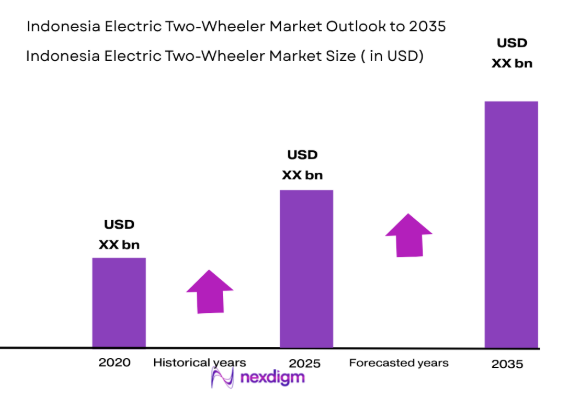
The Indonesia electric two-wheeler market is experiencing robust growth, driven by rising demand for sustainable and cost-effective transportation options. Market size is estimated at over USD ~ billion, supported by government incentives, the increasing adoption of electric vehicles, and growing awareness about environmental concerns. The push for electric vehicles (EVs) is aided by policies aimed at reducing emissions, reducing the country’s dependence on fossil fuels, and making eco-friendly transportation more accessible to a larger population. Government-backed subsidies and incentives are further promoting the transition from conventional to electric two-wheelers.
The dominant cities within the Indonesian market include Jakarta, Surabaya, and Bali, where urbanization is accelerating demand for more affordable transportation alternatives. Jakarta, as the capital, leads in terms of infrastructure, government policies, and consumer adoption, positioning it as the most significant player in the market. Surabaya and Bali follow closely with increasing investments in EV infrastructure and supportive local government measures. The dominance of these cities is due to their growing urban populations, economic importance, and the need for environmentally friendly transportation solutions.
Market Segmentation
By Product Type:
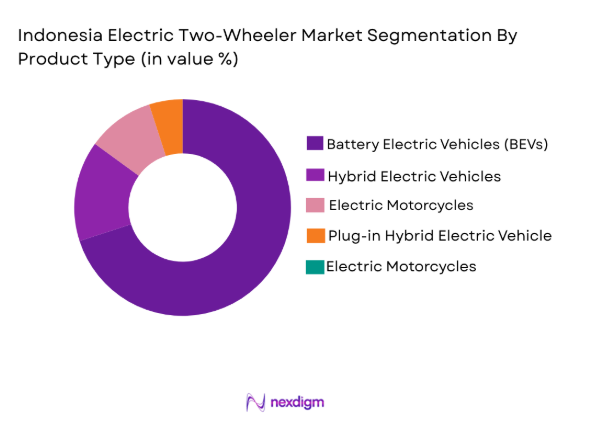
Indonesia’s electric two-wheeler market is segmented by product type into battery electric vehicles (BEVs), hybrid electric vehicles (HEVs), and plug-in hybrid electric vehicles (PHEVs). Recently, BEVs have seen a significant share of the market due to their affordability, lower operational costs, and improved technology. The increasing adoption of these vehicles can be attributed to advancements in battery technologies, such as lithium-ion batteries, that offer longer range and faster charging times. Additionally, BEVs align with Indonesia’s green initiatives and growing demand for environmentally friendly solutions, thus leading the market.
By Platform Type:
The electric two-wheeler market in Indonesia is segmented by platform type into urban platforms, rural platforms, and off-road platforms. Urban platforms dominate the market due to rapid urbanization, traffic congestion, and rising fuel prices in cities like Jakarta. As urban populations continue to expand, the demand for more efficient and affordable transportation options grows, making electric two-wheelers an ideal solution. Additionally, the availability of charging infrastructure in urban areas makes electric vehicles a convenient option for daily commutes. 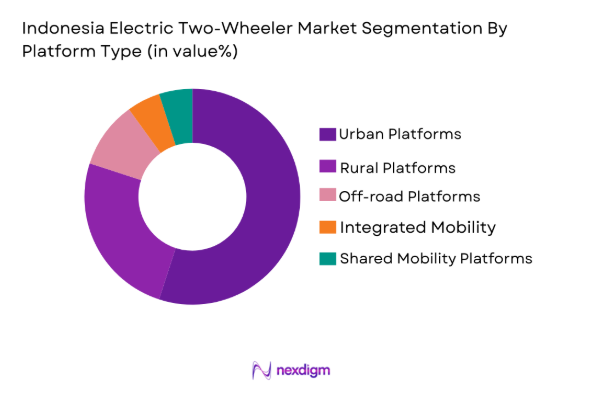
Competitive Landscape
The competitive landscape of the Indonesia electric two-wheeler market is driven by a mix of local and international players. These companies are investing heavily in research and development to offer advanced battery technology, more affordable models, and improved infrastructure. Consolidation in the market is observed with local manufacturers forming partnerships with international brands to leverage their technological expertise. Major players are focusing on offering competitive pricing, expanding their product offerings, and working on government collaborations to ensure their products meet regulatory standards.
| Company Name | Establishment Year | Headquarters | Technology Focus | Market Reach | Key Products | Revenue | Additional Parameter |
| NIU Technologies | 2014 | Beijing, China | ~ | ~ | ~ | ~ | ~ |
| Gogoro | 2011 | Taipei, Taiwan | ~ | ~ | ~ | ~ | ~ |
| Hero Electric | 2007 | India | ~ | ~ | ~ | ~ | ~ |
| Yadea | 2001 | Zhejiang, China | ~ | ~ | ~ | ~ | ~ |
| Ather Energy | 2013 | Bangalore, India | ~ | ~ | ~ | ~ | ~ |
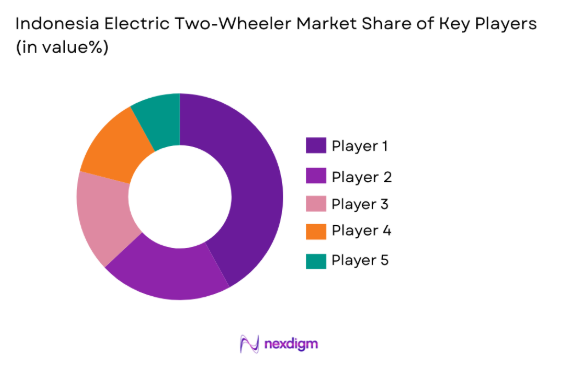
Indonesia Electric Two-Wheeler Market Analysis
Growth Drivers
Government incentives:
The growing presence of government incentives plays a crucial role in the expansion of the Indonesia electric two-wheeler market. These incentives come in the form of tax rebates, direct subsidies for manufacturers, and funding for the development of charging infrastructure. The Indonesian government has recognized the need for eco-friendly transport solutions and has rolled out several programs to encourage EV adoption. These programs reduce the financial burden on consumers, making electric two-wheelers more accessible. Additionally, the Indonesian government’s goal to cut emissions and become less dependent on fossil fuels further supports the growing EV market. The consistent policy backing boosts confidence among investors and helps foster innovation in the industry. The government is also keen on establishing a robust EV infrastructure, including charging stations, making the transition to electric two-wheelers smoother for users.
Technological advancements:
Advances in battery technology are also a key driver of the market’s growth. Improvements in lithium-ion batteries, which power most of the electric two-wheelers, have led to extended driving ranges, shorter charging times, and improved overall efficiency. These technological breakthroughs make electric two-wheelers more attractive to consumers, who are often concerned about range anxiety and the availability of charging stations. As battery performance continues to improve, the cost of production decreases, making these vehicles more affordable. Furthermore, technological innovations in electric drivetrains have contributed to the growth of high-performance models, attracting a wider range of consumers. Manufacturers are continuously developing smarter and more efficient EV systems, addressing barriers such as the initial higher costs compared to conventional fuel-powered vehicles. These advancements are expected to continue driving market expansion in the coming years.
Market Challenges
High initial cost of electric two-wheelers:
One of the major challenges faced by the electric two-wheeler market in Indonesia is the high initial cost of these vehicles compared to traditional fuel-powered alternatives. Although the price gap has been narrowing with technological advancements, electric two-wheelers remain a significant investment for consumers. The affordability of electric two-wheelers is a key concern for middle-income consumers, who make up a large portion of the population in Indonesia. Despite government incentives and subsidies, the high upfront cost remains a barrier to broader market adoption. Moreover, while the operating cost of electric two-wheelers is significantly lower than traditional vehicles, the initial investment still discourages potential buyers. Manufacturers are working on reducing production costs, but until prices come down further, the high initial cost will remain a substantial challenge for widespread adoption. The perception that electric two-wheelers are expensive continues to hinder their growth in the market.
Limited charging infrastructure:
Another challenge facing the growth of the electric two-wheeler market in Indonesia is the limited charging infrastructure. While urban areas like Jakarta are seeing improvements, many regions still lack sufficient charging stations to support electric vehicles. The absence of widespread and easily accessible charging points in rural areas limits the reach and usability of electric two-wheelers. Consumers are often hesitant to invest in electric vehicles without a reliable charging network, as the lack of charging stations causes inconvenience and range anxiety. Although the government has initiated programs to address this gap, the pace of infrastructure development is slow, especially in smaller cities and rural regions. Without substantial investment in expanding the charging network, electric two-wheelers may struggle to gain widespread adoption, limiting the growth potential of the market.
Opportunities
Government-led initiatives:
The Indonesian government’s commitment to sustainability and its focus on reducing emissions presents significant opportunities for the electric two-wheeler market. With the rise in environmental consciousness, the government is providing substantial subsidies and incentives for electric vehicle adoption. These initiatives are not only focused on consumers but also on manufacturers and companies to encourage local production and innovation in the EV space. The government’s long-term commitment to developing green policies and renewable energy infrastructure creates a favorable market environment for electric two-wheelers. Opportunities exist for manufacturers to capitalize on these initiatives by introducing affordable electric models and expanding their offerings. Furthermore, government programs to enhance EV infrastructure, such as the expansion of charging stations, will significantly boost the market’s growth. This support will be crucial in driving consumer adoption and promoting the transition to electric two-wheelers, presenting a major growth opportunity.
Growing demand for last-mile delivery solutions:
The increasing demand for efficient last-mile delivery solutions offers a lucrative opportunity for the electric two-wheeler market. E-commerce growth in Indonesia has led to an increased need for delivery services, and electric two-wheelers are an ideal solution for this segment due to their low operating costs and ability to navigate congested urban areas. Electric scooters, in particular, are gaining traction in the delivery sector due to their ability to reduce delivery times and lower fuel expenses. As more businesses look for sustainable and cost-effective solutions, electric two-wheelers are becoming the preferred choice for last-mile delivery. This shift toward electric delivery vehicles offers substantial growth potential for electric two-wheeler manufacturers. Companies that focus on developing specialized electric two-wheelers for logistics and last-mile delivery can capture a significant share of this emerging market, driving demand for electric two-wheelers in the commercial sector.
Future Outlook
The future of the Indonesia electric two-wheeler market looks promising, driven by government policies aimed at reducing emissions and increasing support for green transportation solutions. With technological advancements, especially in battery and charging infrastructure, the market is expected to witness steady growth. The adoption of electric two-wheelers will continue to be bolstered by lower operating costs and greater environmental awareness. Government initiatives, along with a growing shift toward urbanization and sustainable mobility, will fuel demand for electric two-wheelers over the next five years. As infrastructure improves and consumer acceptance grows, Indonesia is likely to become a key player in the global electric two-wheeler market.
Major Players
- NIU Technologies
- Gogoro
- Hero Electric
- Yadea
- Ather Energy
- Revamp Moto
- Green Motion
- Super Soco
- Vespa (Piaggio Group)
- SangYoung Motor
- BMW Motorrad
- Govecs AG
- Zongshen Industrial Group
- Energica Motor Company
- Mahindra Electric
Key Target Audience
- Investments and venture capitalist firms
- Government and regulatory bodies
- Electric vehicle manufacturers
- E-commerce companies
- Logistics and delivery services
- Fleet operators
- Urban mobility startups
- Green energy solutions providers
Research Methodology
Step 1: Identification of Key Variables
Identify the key market variables that drive market growth, including product types, consumer trends, and government policies.
Step 2: Market Analysis and Construction
Analyze market trends, customer preferences, and economic factors to construct a comprehensive market model.
Step 3: Hypothesis Validation and Expert Consultation
Validate the hypotheses with industry experts and stakeholders through consultations and feedback.
Step 4: Research Synthesis and Final Output
Synthesize the data gathered from various sources to produce the final market report and forecasts.

- Executive Summary
- Research Methodology (Definitions, Scope, Industry Assumptions, Market Sizing Approach, Primary & Secondary Research Framework, Data Collection & Verification Protocol, Analytic Models & Forecast Methodology, Limitations & Research Validity Checks)

- Market Definition and Scope
- Value Chain & Stakeholder Ecosystem
- Regulatory / Certification Landscape
- Sector Dynamics Affecting Demand
- Strategic Initiatives & Infrastructure Growth

- Growth Drivers
Government subsidies and incentives
Increased adoption of eco-friendly vehicles
Rising fuel prices and the shift to electric mobility
Urbanization and changing transportation needs
Technological advancements in battery storage - Market Challenges
High upfront costs of electric two-wheelers
Limited charging infrastructure
Range anxiety and consumer concerns
Battery performance and longevity issues
Regulatory and policy barriers - Market Opportunities
Government-led initiatives to promote electric vehicles
Growing demand for last-mile delivery solutions
Technological innovations in battery and charging systems - Trends
Rise of shared and rental electric two-wheelers
Increasing focus on sustainability and environmental impact
Integration of AI and IoT in electric vehicle management
Shift towards affordable and efficient electric two-wheelers
Collaboration between automakers and tech firms for advancements - Government Regulations & Defense Policy
Incentives for electric vehicle adoption
Electric vehicle charging infrastructure regulations
National targets for reducing carbon emissions - SWOT Analysis
- Stakeholder and Ecosystem Analysis
- Porter’s Five Forces Analysis
- Competition Intensity and Ecosystem Mapping

- By Market Value, 2020-2025
- By Installed Units, 2020-2025
- By Average System Price, 2020-2025
- By System Complexity Tier, 2020-2025

- By System Type (In Value%)
Battery Electric Vehicles (BEVs)
Hybrid Electric Vehicles (HEVs)
Plug-in Hybrid Electric Vehicles (PHEVs)
Electric Scooters
Electric Motorcycles - By Platform Type (In Value%)
Urban Platforms
Rural Platforms
Off-road Platforms
Integrated Mobility Solutions
Shared Mobility Platforms - By Fitment Type (In Value%)
On-road Electric Vehicles
Off-road Electric Vehicles
Retrofit Electric Vehicle Kits
Integrated Platform Fitments
Modular Fitments - By EndUser Segment (In Value%)
Individual Consumers
Fleet Operators
Logistics & Delivery Companies
Ride-Sharing Operators
Public Sector / Government Organizations - By Procurement Channel (In Value%)
Direct Purchase from Manufacturers
Dealers & Distributors
Online Platforms
Private Procurement Contracts
Government Tenders - By Material / Technology (in Value%)
Lithium-ion Batteries
Lead-Acid Batteries
Solid-State Batteries
Electric Drivetrain Technology
Energy Management Systems

- Market structure and competitive positioning
- Market share snapshot of major players
- CrossComparison Parameters (System Type, Platform Type, Procurement Channel, EndUser Segment, Fitment Type)
- SWOT Analysis of Key Competitors
- Pricing & Procurement Analysis
- Key Players
NIU Technologies
Gogoro
Hero Electric
Yadea
Zongshen Industrial Group
Energica Motor Company
Mahindra Electric
Ather Energy
Revamp Moto
Green Motion
Super Soco
Vespa (Piaggio Group)
SangYoung Motor
BMW Motorrad
Govecs AG

- Growing interest from individual consumers in eco-friendly transportation
- Increasing demand from fleet operators for cost-effective mobility
- Government initiatives encouraging electric two-wheeler use
- Rising awareness among logistics and delivery companies

- Forecast Market Value, 2026-2035
- Forecast Installed Units, 2026-2035
- Price Forecast by System Tier, 2026-2035
- Future Demand by Platform, 2026-2035


 Request a Sample
 Ask for Customization
 Get a Quote
 Enquire Now