
 Download PDF
 Download PDF
Market Overview
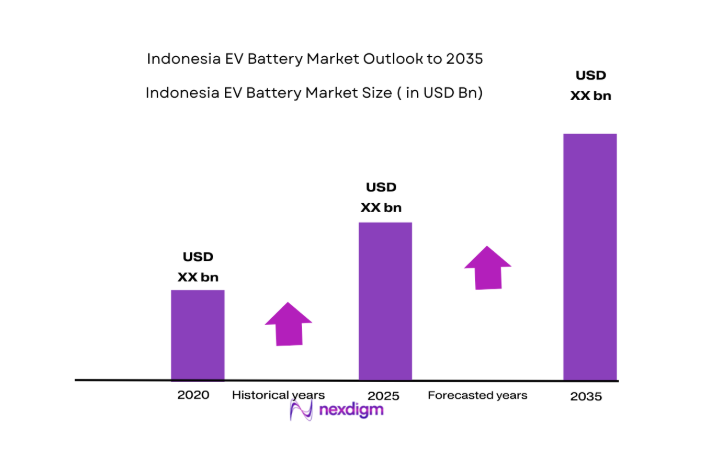
The Indonesia EV Battery Market is projected to experience significant growth, driven by increasing demand for electric vehicles and the push for sustainability. As of recent assessments, the market value is in the range of billions ~ USD, supported by government initiatives to promote clean energy. Key drivers include the growth of electric vehicle adoption, favorable policies, and advancements in battery technology. This is creating a robust environment for the market, where investments in EV infrastructure and local manufacturing are accelerating the pace of development.
The dominant players in the Indonesia EV Battery Market are concentrated in major cities such as Jakarta and Surabaya, where government policies encourage infrastructure development and electric vehicle usage. These cities are seeing a rapid increase in electric vehicle adoption, driven by incentives such as tax rebates, and advancements in charging infrastructure. As a result, these cities are setting the pace for the nationwide transition toward electric vehicles and their corresponding battery requirements.
Market Segmentation
By Product Type
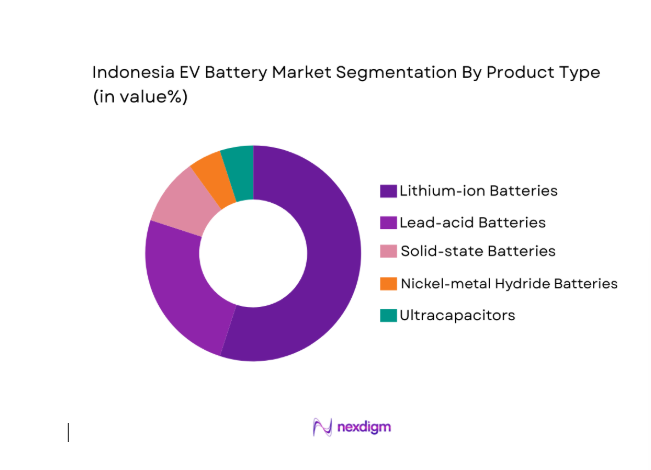
Indonesia’s EV Battery Market is segmented by product type into various sub-segments such as lithium-ion batteries, lead-acid batteries, and solid-state batteries. Among these, lithium-ion batteries have a dominant market share. This dominance is attributed to factors like their superior energy density, longer lifespan, and reduced charging time compared to traditional lead-acid batteries. Furthermore, the growing trend of electric vehicle adoption in Indonesia has increased the demand for lithium-ion batteries, making them the preferred choice for automakers and energy storage systems alike. This shift towards lithium-ion technology is supported by technological advancements and government policies aimed at boosting green energy solutions.
By Platform Type
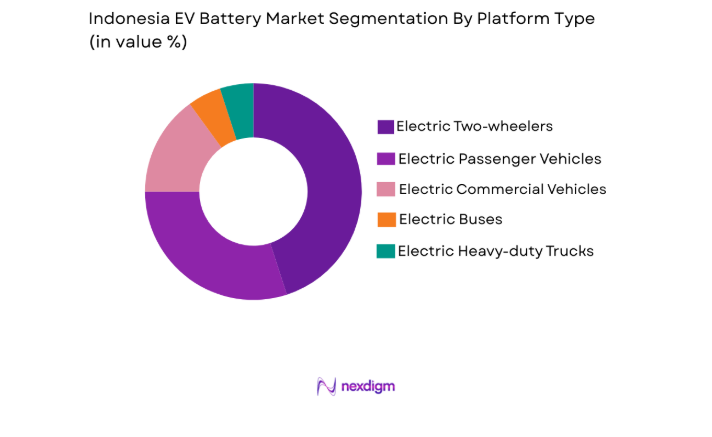
The Indonesia EV Battery Market is segmented by platform type into electric two-wheelers, electric passenger vehicles, and electric commercial vehicles. The electric two-wheeler segment is currently dominating the market due to factors like affordability, convenience, and the growing demand for sustainable urban mobility solutions. Electric two-wheelers are gaining traction in densely populated areas like Jakarta, where they provide an ideal solution for short-distance travel. The government’s push for cleaner modes of transport, combined with the high cost-effectiveness of electric scooters and bikes, has solidified this sub-segment as a dominant force in the market.
Competitive Landscape
The competitive landscape of the Indonesia EV Battery Market is characterized by a mix of global and local players vying for market share. The market is consolidating, with key players focusing on technological innovations and cost-effective solutions to capture the growing demand. International players like LG Energy Solution, Panasonic, and CATL are prominent in the market, while local manufacturers are increasingly entering the space to meet local demand. These companies are also collaborating with governments and vehicle manufacturers to strengthen their market position.
| Company Name | Establishment Year | Headquarters | Technology Focus | Market Reach | Key Products | Revenue | Local Manufacturing Capabilities |
| LG Energy Solution | 1947 | Seoul, South Korea | ~ | ~ | ~ | ~ | ~ |
| Panasonic Corporation | 1918 | Osaka, Japan | ~ | ~ | ~ | ~ | ~ |
| CATL | 2011 | Ningde, China | ~ | ~ | ~ | ~ | ~ |
| BYD | 1995 | Shenzhen, China | ~ | ~ | ~ | ~ | ~ |
| A123 Systems | 2001 | Michigan, USA | ~ | ~ | ~ | ~ | ~ |
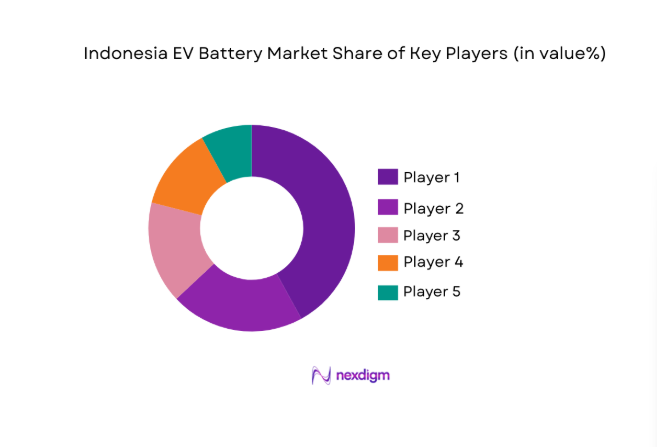
Indonesia EV Battery Market Analysis
Growth Drivers
Government Incentives for EV Adoption
Government initiatives have been a major growth driver for the EV battery market in Indonesia. These policies include tax breaks, incentives for electric vehicle manufacturing, and subsidies for electric vehicle buyers. Additionally, the government is investing heavily in charging infrastructure to make electric vehicles more accessible. With more consumer-friendly policies and growing awareness of environmental sustainability, demand for electric vehicles and their respective batteries is expected to increase significantly. This governmental support has been critical in making EVs an appealing choice for both manufacturers and consumers.
Technological Advancements in Battery Efficiency
Technological innovations in battery efficiency, such as improvements in lithium-ion technology, are crucial growth drivers in the Indonesia EV Battery Market. Advancements in energy density, fast charging capabilities, and longer battery life have made EV batteries more attractive to consumers. Furthermore, improvements in solid-state batteries and other emerging technologies promise to further enhance battery performance, reducing costs and improving overall vehicle efficiency. This technological evolution is creating a more favorable environment for EV adoption and will continue to drive the demand for EV batteries in the country.
Market Challenges
High Initial Investment in EV Batteries
One of the major challenges facing the Indonesia EV Battery Market is the high initial investment required for the production and installation of batteries. Lithium-ion batteries, which dominate the market, are still expensive to produce, leading to high vehicle costs for consumers. This initial investment is a significant barrier to mass EV adoption in Indonesia, where price sensitivity is a key factor in consumer purchasing decisions. The high cost of batteries also limits the growth of EV infrastructure, making it harder for businesses to deploy electric vehicles on a large scale.
Limited Charging Infrastructure
Despite government efforts to boost EV adoption, Indonesia still faces significant challenges in terms of EV charging infrastructure. The lack of widespread and accessible charging stations, especially in rural areas, is hindering the growth of the EV market. Consumers are often hesitant to purchase electric vehicles due to the uncertainty of charging availability, particularly for long-distance travel. This challenge is compounded by the high cost of installing charging stations, which deters private and public investments in the sector.
Opportunities
Growing Demand for Sustainable Battery Solutions
The increasing focus on sustainability and the transition to greener energy sources presents a significant opportunity for the EV battery market in Indonesia. As the government pushes for stricter emissions regulations and environmental awareness rises among consumers, the demand for sustainable energy solutions is growing. EV batteries, especially those with a lower environmental impact, are in high demand. Furthermore, innovations in battery recycling and second-life applications for used batteries provide an opportunity to create a circular economy for EV batteries, enhancing sustainability and reducing waste.
Expansion of EV Charging Networks
As the demand for electric vehicles continues to rise, the expansion of EV charging networks in Indonesia offers a promising growth opportunity for the EV battery market. The government and private sector are working together to address the lack of charging infrastructure, with plans to build more charging stations across the country. This growth in infrastructure will not only encourage more consumers to adopt electric vehicles but will also provide opportunities for local and international players to invest in charging solutions and services, creating a win-win situation for both the EV and charging sectors.
Future Outlook
The future outlook for the Indonesia EV Battery Market looks promising, with expected growth driven by technological advancements, government policies, and increasing consumer demand. Over the next five years, the market will likely see a continued rise in electric vehicle adoption, supported by improved battery technologies, such as solid-state batteries and better recycling processes. The expansion of charging infrastructure, coupled with favorable government incentives, will further boost market growth. As the government ramps up its commitment to sustainability, the market will evolve with greater emphasis on reducing environmental impacts, providing significant opportunities for both local and global players.
Major Players
- LG Energy Solution
- Panasonic Corporation
- CATL
- BYD
- A123 Systems
- SK Innovation
- Guoxuan
- Tesla
- Fujian Nanping Electric
- Jiangsu Lishen Battery
- Contemporary Amperex Technology Co.
- China National Petroleum Corporation (CNPC)
- Toshiba Corporation
- Hitachi Chemical Company
- EnerSys
Key Target Audience
- Investments and venture capitalist firms
- Government and regulatory bodies
- Automotive manufacturers
- Electric vehicle infrastructure providers
- Battery manufacturers
- Energy storage system developers
- Electric vehicle fleet operators
- Charging infrastructure companies
Research Methodology
Step 1: Identification of Key Variables
We identify key variables influencing market dynamics, including market size, growth drivers, and technological developments.
Step 2: Market Analysis and Construction
The market is analyzed using primary and secondary data sources to create a comprehensive model of the industry landscape.
Step 3: Hypothesis Validation and Expert Consultation
Experts are consulted to validate assumptions and refine market forecasts based on real-world insights.
Step 4: Research Synthesis and Final Output
The research findings are synthesized into a final output, providing actionable insights and recommendations for stakeholders.

- Executive Summary
- Research Methodology (Definitions, Scope, Industry Assumptions, Market Sizing Approach, Primary & Secondary Research Framework, Data Collection & Verification Protocol, Analytic Models & Forecast Methodology, Limitations & Research Validity Checks)

- Market Definition and Scope
- Value Chain & Stakeholder Ecosystem
- Regulatory / Certification Landscape
- Sector Dynamics Affecting Demand
- Strategic Initiatives & Infrastructure Growth

- Growth Drivers
Government Incentives for EV Adoption
Rising Consumer Demand for Electric Vehicles
Expansion of EV Charging Infrastructure
Technological Advancements in Battery Efficiency
Increase in Environmental Awareness - Market Challenges
High Initial Investment in EV Batteries
Limited Charging Infrastructure
Concerns Over Battery Life and Performance
Supply Chain Disruptions for Raw Materials
Environmental Impact of Battery Disposal - Market Opportunities
Growing Demand for Sustainable Battery Solutions
Advancements in Solid-State Battery Technology
Expansion of EV Charging Networks - Trends
Shift Towards Lithium-Ion and Solid-State Batteries
Rise in Battery Recycling Initiatives
Increase in Battery-as-a-Service (BaaS) Models
Government Initiatives for EV Battery Manufacturing
Technological Innovations in Fast-charging Batteries - Government Regulations & Defense Policy
Incentives for EV Battery Manufacturers
Import Tariffs on Raw Materials
Policies for Recycling EV Batteries - SWOT Analysis
- Stakeholder and Ecosystem Analysis
- Porter’s Five Forces Analysis
- Competition Intensity and Ecosystem Mapping

- By Market Value, 2020-2025
- By Installed Units, 2020-2025
- By Average System Price, 2020-2025
- By System Complexity Tier, 2020-2025

- By System Type (In Value%)
Lithium-ion Batteries
Lead-acid Batteries
Solid-state Batteries
Nickel-metal Hydride (NiMH) Batteries
Ultracapacitors - By Platform Type (In Value%)
Electric Two-wheelers
Electric Passenger Vehicles
Electric Commercial Vehicles
Electric Buses
Electric Heavy-duty Trucks - By Fitment Type (In Value%)
OEM Batteries
Aftermarket Batteries
Integrated Battery Packs
Modular Battery Solutions
Battery-as-a-Service (BaaS) - By EndUser Segment (In Value%)
OEM Manufacturers
Battery Manufacturers
Electric Vehicle Owners
Fleet Operators
Government & Public Transport Agencies - By Procurement Channel (In Value%)
Direct Procurement
OEM Procurement
Distributors
E-commerce Channels
Third-party Platforms - By Material / Technology (In Value%)
Lithium
Cobalt
Nickel
Graphite
Solid-State Technologies

- Market structure and competitive positioning
Market share snapshot of major players - Cross Comparison Parameters (System Type, Platform Type, Procurement Channel, End User Segment, Fitment Type)
- SWOT Analysis of Key Competitors
- Pricing & Procurement Analysis
- Key Players
LG Energy Solution
Samsung SDI
Panasonic Corporation
CATL
BYD
A123 Systems
SK Innovation
Guoxuan
Tesla
Fujian Nanping Electric
Jiangsu Lishen Battery
Contemporary Amperex Technology Co.
China National Petroleum Corporation (CNPC)
Toshiba Corporation
Hitachi Chemical Company

- Growing Adoption of EVs by Fleet Operators
- Government Policies Supporting EV Manufacturers
- Technological Advancements Driving EV Battery Efficiency
- Consumer Preferences Shifting Towards Eco-friendly Batteries

- Forecast Market Value, 2026-2035
- Forecast Installed Units, 2026-2035
- Price Forecast by System Tier, 2026-2035
- Future Demand by Platform, 2026-2035


 Request a Sample
 Ask for Customization
 Get a Quote
 Enquire Now