

 Download PDF
 Download PDF
Market Overview
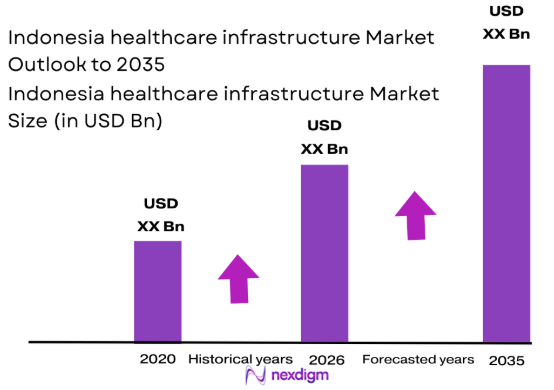
The Indonesia healthcare infrastructure market is experiencing significant growth, driven by both government and private sector investments aimed at improving healthcare services. The market is expected to reach USD ~ billion, reflecting the government’s commitment to improving healthcare facilities, technological infrastructure, and accessibility. Investments are being directed into hospital construction, healthcare IT systems, diagnostic equipment, and telemedicine platforms. With rising healthcare needs, Indonesia is seeing a sharp increase in demand for advanced infrastructure, digital health services, and medical devices, which will fuel further market expansion.
The country’s major cities, particularly Jakarta, Surabaya, and Bali, are leading in terms of healthcare infrastructure development. Jakarta, as the capital, remains the hub for advanced medical facilities, while Surabaya, as the second-largest city, is experiencing growing demand for medical technologies. Bali has also witnessed a surge in medical tourism, driving investments in world-class healthcare facilities. These cities benefit from a combination of urbanization, economic growth, and a rise in disposable income, creating a demand for more sophisticated healthcare infrastructure across the nation.
Market Segmentation
By Product Type
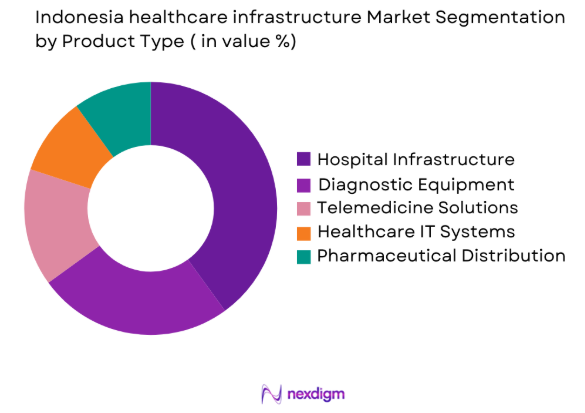
The Indonesia healthcare infrastructure market is segmented by product type into hospital infrastructure, diagnostic equipment, telemedicine solutions, healthcare IT systems, and pharmaceutical distribution. Recently, hospital infrastructure has garnered the largest market share due to the increasing demand for healthcare services and the government’s focus on expanding the healthcare network. The growth of the middle class, coupled with the government’s initiatives to modernize healthcare facilities, has spurred significant investments in building and upgrading hospitals to cater to a growing urban population.
By Platform Type
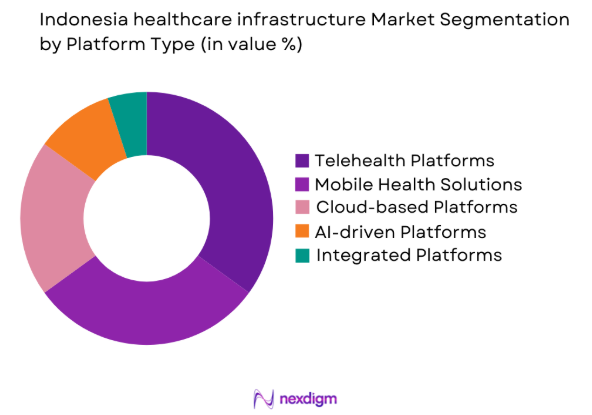
The market is segmented by platform type into mobile health solutions, cloud-based platforms, telehealth platforms, AI-driven platforms, and integrated platforms. Telehealth platforms have gained dominance due to the growing demand for remote healthcare solutions, driven by the need for increased accessibility, especially in rural areas. Telehealth offers efficient healthcare services at lower costs and allows patients to consult doctors remotely, which is particularly crucial in a country like Indonesia, where rural healthcare access is limited.
Competitive Landscape
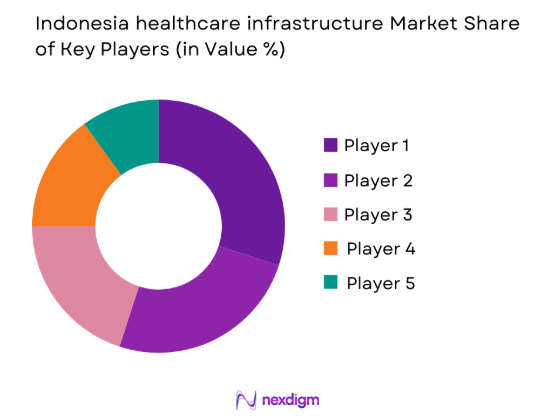
The Indonesia healthcare infrastructure market is highly competitive, with both international and local players contributing to its growth. Major companies are consolidating their positions through partnerships and mergers to enhance service offerings and expand their market reach. Key players are focusing on innovative technologies such as AI, telemedicine, and healthcare IT systems to meet the evolving needs of the market. The competition is also fueled by government incentives, which encourage companies to improve healthcare accessibility, especially in underserved areas.
| Company Name | Establishment Year | Headquarters | Technology Focus | Market Reach | Key Products | Revenue (USD) | Additional Parameter |
| GE Healthcare | 1892 | Chicago, USA | Imaging, Diagnostics | Global | Diagnostic Equipment | 20B | Global Market Leader |
| Siemens Healthineers | 1847 | Erlangen, Germany | Medical Devices | Global | Imaging Systems | 19B | Strong in Diagnostics |
| Medtronic | 1949 | Dublin, Ireland | Medical Devices | Global | Cardiac Equipment | 30B | Leading in Devices |
| Philips Healthcare | 1891 | Amsterdam, Netherlands | Imaging, Healthcare IT | Global | Imaging Solutions | 18B | High-tech Imaging |
| Abbott Laboratories | 1888 | Chicago, USA | Diagnostics, Medical Devices | Global | Diagnostics, Health IT | 45B | Leading in Diagnostics |
Indonesia healthcare infrastructure Market Analysis
Growth Drivers
Technological Advancements in Healthcare
Technological advancements, particularly in AI, telemedicine, and diagnostic devices, have been key drivers of growth in Indonesia’s healthcare infrastructure market. The increasing availability of advanced technologies allows healthcare providers to offer more accurate diagnoses, personalized treatments, and better patient outcomes. Furthermore, the government’s support for digital health initiatives has promoted the widespread adoption of electronic health records and telemedicine platforms. These innovations not only enhance the quality of healthcare services but also help reduce costs by streamlining hospital workflows and enabling remote consultations. By leveraging these technologies, healthcare providers can improve efficiency, reach more patients, and deliver cost-effective solutions, fostering the overall growth of the healthcare infrastructure market in Indonesia.
Increasing Healthcare Investments
Indonesia’s increasing healthcare expenditure is a key driver of market growth. Both public and private investments are significantly contributing to the development of new healthcare facilities and the modernization of existing infrastructure. The government’s commitment to improving healthcare access, particularly in rural areas, has fostered a supportive environment for the growth of hospitals, diagnostic centers, and telemedicine services. This rise in investment is facilitating the construction of advanced facilities, attracting international players to the market, and ensuring the provision of high-quality healthcare services. The government’s focus on expanding healthcare access for all citizens, combined with growing urbanization, is creating a sustainable demand for healthcare services, thus driving the growth of the healthcare infrastructure sector.
Market Challenges
Regulatory Hurdles
Navigating Indonesia’s complex regulatory framework is a major challenge for companies in the healthcare infrastructure sector. The stringent healthcare regulations require strict compliance with both local and international standards. Delays in the approval of new technologies and medical devices, coupled with the frequent updates to regulatory requirements, create significant barriers to market entry. Companies must invest considerable time and resources to ensure their products meet these evolving standards, which can slow down their ability to scale and enter the market quickly. Furthermore, the need to continually adapt to regulatory changes can increase operational costs and delay product launches, making it difficult for businesses to maintain a competitive edge and meet the growing demand for healthcare infrastructure.
High Costs of Healthcare Infrastructure
The high initial capital needed to develop healthcare infrastructure presents a significant challenge in the market. Constructing and maintaining advanced healthcare facilities, especially in remote areas, demands substantial financial investments. In addition to the cost of building hospitals and diagnostic centers, acquiring sophisticated medical equipment such as imaging systems and robotic surgery tools further adds to the financial strain. These high expenses can slow down the pace of growth, particularly in regions where financial resources are limited. For healthcare providers and developers, securing funding and managing the costs of both infrastructure and equipment may hinder their ability to rapidly expand services. This financial challenge can impact the accessibility and affordability of healthcare, especially in underserved areas.
Opportunities
Expansion of Telemedicine Services
A major opportunity in the Indonesia healthcare infrastructure market is the growth of telemedicine services. The increasing demand for accessible healthcare, especially in rural areas, has fueled the need for telehealth platforms that allow remote consultations with doctors. Government support, through regulatory frameworks and funding, is further boosting investments in telemedicine. This support encourages healthcare providers to adopt digital solutions, enabling them to expand their reach, cut costs, and improve access to medical services. As a result, telemedicine presents a valuable opportunity for both established players and new entrants, driving innovation and improving healthcare accessibility for underserved populations across the country.
Government Initiatives for Rural Healthcare Development
The Indonesian government has launched various initiatives to enhance healthcare access in rural areas, offering substantial opportunities for infrastructure development. Key programs include expanding healthcare facilities, providing subsidies for medical equipment, and supporting the adoption of healthcare IT systems. These efforts aim to bridge the healthcare gap between urban and rural regions. With increased funding for rural healthcare projects, businesses in the healthcare infrastructure sector can capitalize on this vast untapped market. This growth is expected to improve healthcare outcomes for underserved populations, driving significant demand for infrastructure, technology, and services in these areas. This focus on rural healthcare expansion presents a promising avenue for future investments and growth.
Future Outlook
The Indonesia healthcare infrastructure market is expected to experience significant growth over the next five years, driven by continued investments from the government and private sector. The expansion of telemedicine services, coupled with advancements in healthcare technology, will enhance accessibility and efficiency in the sector. With the government’s continued focus on rural healthcare development, there will be substantial opportunities for companies to expand their operations and contribute to improving healthcare standards across the country. Regulatory support and technological innovation will further shape the market’s future, ensuring its growth and sustainability.
Major Players
- GE Healthcare
- Siemens Healthineers
- Medtronic
- Philips Healthcare
- Abbott Laboratories
- Johnson & Johnson
- Roche Diagnostics
- Baxter International
- Stryker
- Hitachi Medical
- Toshiba Medical
- Boston Scientific
- Varian Medical
- Olympus Corporation
- Carestream Health
Key Target Audience
- Investments and venture capitalist firms
- Government and regulatory bodies
- Healthcare providers
- Insurance companies
- Technology developers
- Medical equipment suppliers
- Pharmaceutical distributors
- Construction companies
Research Methodology
Step 1: Identification of Key Variables
The initial step in the research process involves identifying key market variables such as technological trends, regulatory frameworks, and healthcare expenditure patterns.
Step 2: Market Analysis and Construction
In this step, market data is analyzed and segmented based on various factors such as product type, platform type, and regional dynamics to construct a comprehensive market profile.
Step 3: Hypothesis Validation and Expert Consultation
The hypotheses formed based on initial data are validated through consultations with market experts and key stakeholders within the healthcare infrastructure industry.
Step 4: Research Synthesis and Final Output
The research findings are synthesized into a final report, which includes detailed market insights, growth drivers, challenges, opportunities, and competitive analysis.

- Executive Summary
- Research Methodology (Definitions, Scope, Industry Assumptions, Market Sizing Approach, Primary & Secondary Research Framework, Data Collection & Verification Protocol, Analytic Models & Forecast Methodology, Limitations & Research Validity Checks)

- Market Definition and Scope
- Value Chain & Stakeholder Ecosystem
- Regulatory / Certification Landscape
- Sector Dynamics Affecting Demand
- Strategic Initiatives & Infrastructure Growth

- Growth Drivers
Increased Healthcare Expenditure
Rising Demand for Quality Healthcare
Government Support for Health Infrastructure - Market Challenges
Regulatory Challenges in Healthcare
Infrastructure Development Delays
High Initial Capital Investment - Market Opportunities
Expansion of Telemedicine Services
Integration of AI in Healthcare
Government Initiatives for Rural Healthcare - Trends
Adoption of AI and Automation
Rise of Telemedicine and E-health
Growth of Public-Private Partnerships - Government Regulations
- SWOT Analysis of Key Competitors
- Porter’s Five Forces

- By Market Value, 2020-2025
- By Installed Units, 2020-2025
- By Average Syste Price, 2020-2025
- By System Complexity Tier, 2020-2025

- By System Type (In Value%)
Hospital Infrastructure
Diagnostic Equipment
Telemedicine Solutions
Healthcare IT Systems
Pharmaceutical Distribution - By Platform Type (In Value%)
Mobile Health Solutions
Cloud-based Platforms
Telehealth Platforms
AI-driven Platforms
Integrated Platforms - By Fitment Type (In Value%)
On-premise Solutions
Cloud-based Solutions
Modular Solutions
Integrated Solutions
Remote Solutions - By End User Segment (In Value%)
Public Hospitals
Private Healthcare Providers
Diagnostic Centers
Government Health Agencies
Insurance Companies - By Procurement Channel (In Value%)
Direct Procurement
Government Tenders
Private Sector Procurement
Distributor Networks
Online Procurement Platforms

- Market Share Analysis
- Cross Comparison Parameters (System Type, Platform Type, Procurement Channel, End User Segment, Fitment Type, Market Size, Growth Rate, Technological Innovation, Regulatory Environment, Cost Efficiency)
- SWOT Analysis of Key Competitors
- Pricing & Procurement Analysis
- Key Players
Indohealth
Alkes
Medtronic Indonesia
Philips Healthcare
GE Healthcare
Siemens Healthineers
Stryker Indonesia
Johnson & Johnson
Fresenius Medical Care
Schneider Electric
Roche Diagnostics
Abbott Laboratories
Hikma Pharmaceuticals
Novartis Indonesia
Sanofi Indonesia

- Growth of Public Health Initiatives
- Private Healthcare Providers Expanding Reach
- Government Funding for Infrastructure
- Increased Insurance Adoption in Healthcare

- Forecast Market Value, 2026-2035
- Forecast Installed Units, 2026-2035
- Price Forecast by System Tier, 2026-2035
- Future Demand by Platform, 2026-2035


 Request a Sample
 Ask for Customization
 Get a Quote
 Enquire Now