

 Download PDF
Market Overview
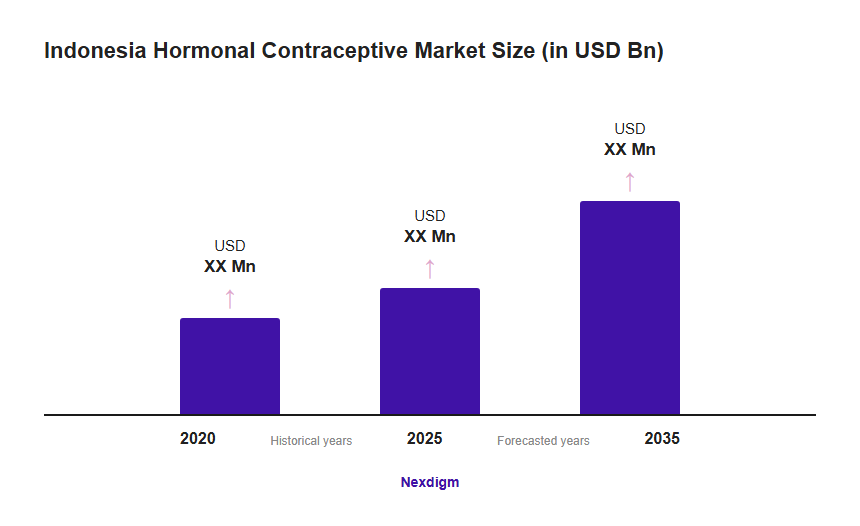
Indonesia’s oral contraceptive market sits within a large national contraception sector, but publicly available sources do not provide a consistently defined, audited revenue figure for oral contraceptive pills alone. An IQVIA-based investment study estimated the 2023 Indonesian market potential for sex-hormone and contraceptive tablets at approximately ~ billion, with a three-year CAGR of 9% from 2021 to 2023. This category is broader than oral contraceptives alone and should not be treated as an OC-only valuation.
Market Segmentation
By Product Type
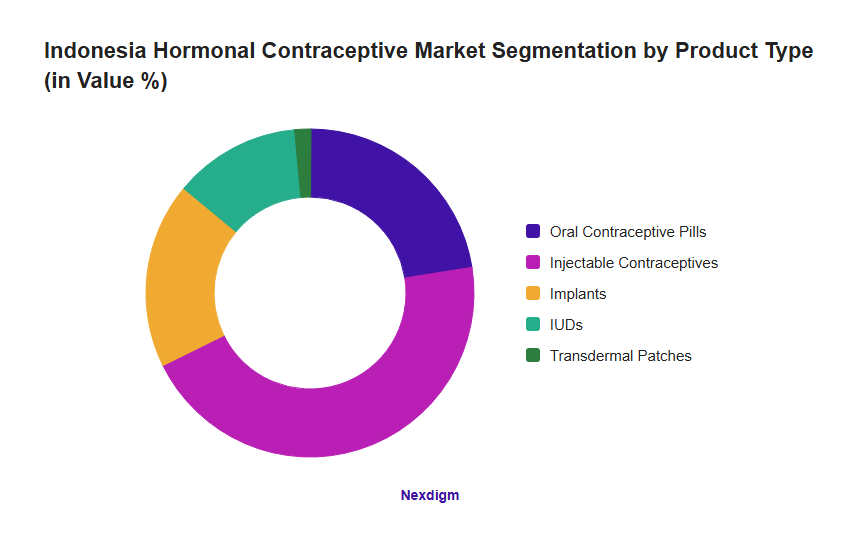
The Indonesian oral contraceptive category can be divided into combined oral contraceptives (COCs), progestin-only pills (POPs), and emerging estrogen-based formulations. COCs combine an estrogen with a progestin and are used for pregnancy prevention and, in appropriate patients, cycle regulation and menstrual symptom management. POPs are an alternative for women who cannot or prefer not to use estrogen-containing products, including some breastfeeding users. DKT Indonesia’s Andalan portfolio includes several OC pill types, including formulations with additional iron and options positioned for breastfeeding mothers. Bayer’s registered Indonesian portfolio includes Microgynon (levonorgestrel/ethinylestradiol) and Yasmin (drospirenone/ethinylestradiol).
By Distribution Channel
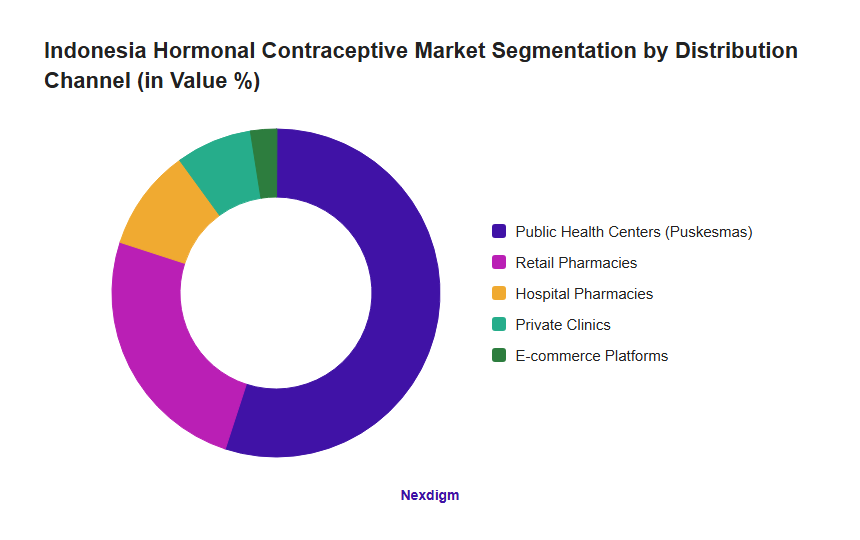
Indonesia’s OC distribution ecosystem includes midwives, public health centres (Puskesmas), retail pharmacies, hospitals, general practitioners and obstetrician-gynaecologists. BPS-based reporting for March 2024 indicates that midwives were the most frequently reported source of contraception, followed by Puskesmas and pharmacies. This highlights the importance of primary-care and community-based access, while pharmacies remain relevant for private-sector pill access and repeat purchases. For prescription hormonal products, however, channel choice must also reflect local prescribing and dispensing rules. The published figures cover contraception sources generally and should not be interpreted as OC-specific sales-channel revenue.
Competitive Landscape
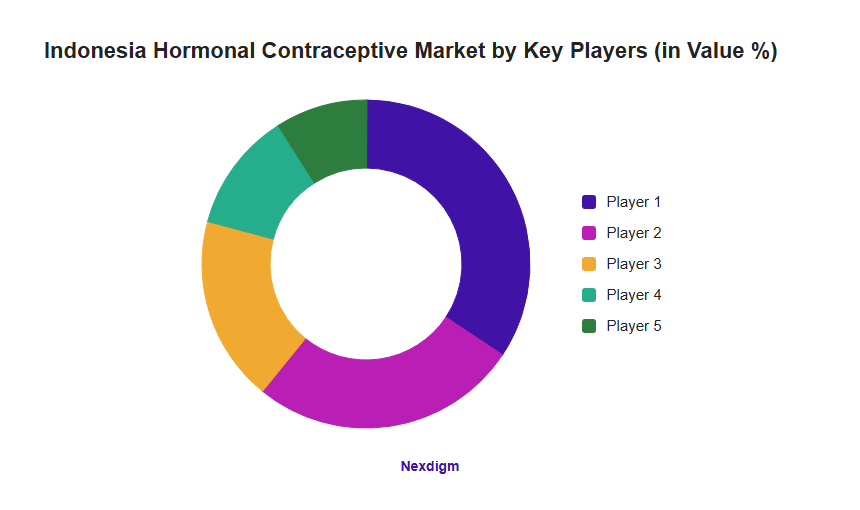
The Indonesian oral contraceptive market includes multinational pharmaceutical companies with established hormonal brands and social-marketing organizations with broad contraceptive access networks. Bayer has identifiable registered combined-pill products, including Microgynon and Yasmin. DKT Indonesia has developed the Andalan brand and reports five OC pill types in its local portfolio, including options positioned for breastfeeding mothers and menstrual or androgen-related concerns. Other pharmaceutical companies and distributors may participate in the wider hormonal contraceptive supply chain, but their presence should not automatically be interpreted as evidence of a leading daily-OC portfolio. The emerging E4/DRSP segment could introduce a new basis for differentiation, particularly through its estrogen profile and clinical evidence relating to dysmenorrhea.
| Company | Establishment Year | Headquarters | Core Curricular Offered | Campus Footprint in Indonesia | Fee Positioning | Digital Learning Stack Maturity | University Pathway Strength | Boarding Capability |
| PT Kalbe Farma Tbk | 1966 | Jakarta, Indonesia | Oral pills and injectable hormonal solutions | Nationwide distribution across major Indonesian provinces | Mid-market | Advanced integrated supply chain and tele-consultation | Strong academic research and medical training partnerships | Not Applicable |
| Bayer Indonesia | 1957 | Jakarta, Indonesia | Long-acting reversible contraceptives and implants | Strategic presence in Tier 1 urban hospitals | Premium | High-maturity global digital health enterprise | Global clinical trial and research integration | Not Applicable |
| PT Kimia Farma Tbk | 1817 | Jakarta, Indonesia | Generic contraceptive tablets and hormone injections | Extensive network of government-contracted pharmacies | Budget | Moderate digital pharmacy and kiosk infrastructure | Public sector policy alignment and research | Not Applicable |
| PT Darya-Varia Laboratoria Tbk | 1976 | Jakarta, Indonesia | Hormonal birth control and reproductive supplements | Strong penetration in West and Central Java | Mid-market | Modern CRM and field-force digital automation | Collaboration with domestic pharmacy schools | Not Applicable |
| PT Soho Global Health Tbk | 1946 | Jakarta, Indonesia | Diverse oral contraceptive and hormone range | Broad national distribution via medical representatives | Mid-market | Developing omnichannel distribution tech stack | Strong professional healthcare provider training programs | Not Applicable |
Indonesia Hormonal Contraceptive Market Analysis
Growth Drivers
Government-Led Family Planning Initiatives
Indonesia’s family-planning infrastructure remains a key demand foundation for oral contraceptives. Public-sector access through midwives and Puskesmas creates opportunities to reach women who may otherwise face affordability or geographic barriers. BPS data show that pills remained the second most commonly reported contraceptive method after injectables in 2024, accounting for 18.09% of method use among current contraceptive users in the surveyed population. DKT Indonesia’s collaboration with the Ministry of Health and its Andalan social-marketing network also illustrates the role of provider training and product distribution in expanding access. For OC manufacturers, the opportunity is not limited to increasing pill adoption: reliable supply, counselling on correct daily use, side effects and missed pills, and appropriate referral pathways are central to sustained use.
Rising Attention to Menstrual Health and Dysmenorrhea
Dysmenorrhea creates an adjacent clinical need that may broaden awareness of hormonal treatment options. Indonesian studies report a substantial burden among adolescent populations, with one 2025 study finding that 92.5% of its convenience-sampled participants experienced menstrual pain and a 2026 Yogyakarta school-based study reporting a prevalence of 73.3%. These studies are not nationally representative, but they indicate that menstrual pain can affect daily functioning and that self-management is common. In suitable patients, combined oral contraceptives may be considered as part of clinical management, alongside other approaches such as NSAIDs and non-pharmacological measures. Greater awareness, accurate diagnosis and access to qualified healthcare professionals could increase informed discussion of OCs for both contraception and menstrual symptom management.
Market Challenges
Affordability, Adherence and Continuity of Use
Daily oral contraception requires consistent adherence, which can be difficult for users with irregular routines, limited access to counselling or concerns about side effects. Unlike long-acting methods, pills require repeated monthly use and reliable resupply. Missed tablets, discontinuation and switching can reduce real-world effectiveness and weaken repeat demand. Publicly available Indonesian data identify the overall contraceptive method mix and sources of contraception, but do not provide a sufficiently detailed national breakdown of OC continuation, adherence or discontinuation by brand and formulation. Manufacturers and providers therefore need to address practical adherence barriers through clear patient information, counselling, refill access and appropriate follow-up, rather than relying on product promotion alone.
Clinical Screening, Safety Perceptions and Misinformation
Estrogen-containing contraceptives are not suitable for every patient. Clinical screening is important because eligibility depends on individual health history and risk factors, and some users may require a progestin-only or non-hormonal alternative. Concerns about weight change, bleeding patterns, fertility after discontinuation and thromboembolic risk can also influence willingness to initiate or continue treatment. For E4/DRSP, the distinction between a potentially more favourable hemostatic biomarker profile and proven reductions in clinical thromboembolic events must be communicated carefully. The current evidence base does not establish comparative clinical VTE risk with certainty. Medical education, transparent product information and evidence-based counselling will therefore be important to adoption.
Opportunities
Positioning Oral Contraceptives Within Integrated Menstrual-Health Care
The high reported burden of dysmenorrhea among Indonesian adolescent study populations creates an opportunity for stronger menstrual-health education and clinical pathways. OC manufacturers can support evidence-based education for healthcare professionals and users on the distinction between primary dysmenorrhea, secondary causes of menstrual pain and symptoms that require further investigation. For suitable patients, hormonal contraception may be one of several management options. This opportunity should be approached through clinician-led education and responsible product information, rather than implying that all menstrual pain should be treated with contraceptives. Partnerships with gynaecologists, primary-care providers, midwives and adolescent-health programmes could improve recognition, counselling and referral for persistent or severe symptoms.
Strengthening Pharmacy and Digital Refill Access
Pharmacies represented 12.91% of reported contraception sources in the BPS-based March 2024 summary, while midwives and Puskesmas together represented a much larger share. This indicates that pharmacy access is an established, but not exclusive, part of Indonesia’s contraceptive distribution system. Digital health services and online pharmacy infrastructure could potentially improve access to consultation, reminders and repeat refills for women already using daily OCs. Such services need to operate within Indonesian rules governing prescription medicines, clinical assessment and medicine delivery. For manufacturers, partnerships with legitimate pharmacy and telehealth providers could support continuity of use and patient education, especially in urban areas where digital access is more developed.
Future Outlook
The Indonesian oral contraceptive market is expected to develop through 2035, supported by continued demand for reversible contraception, wider awareness of reproductive health and growing attention to menstrual disorders such as dysmenorrhea. Conventional combined and progestin-only pills are likely to remain important options, while improved counselling, pharmacy access and digital health services may support treatment continuity and informed product selection. Estetrol/drospirenone (E4/DRSP) presents a potential opportunity to differentiate the COC category through its newer estrogen profile and clinical evidence relating to contraception and dysmenorrhea management. However, its Indonesian market potential will depend on BPOM approval, local commercial availability, affordability, prescriber acceptance and further clinical evidence. Although international studies have reported promising findings for E4/DRSP, including improvements in dysmenorrhea symptoms and differences in selected hemostatic markers, these findings should not be interpreted as proof of superior real-world safety. Overall, market development will be shaped by the balance between established OC brands, patient access, clinical suitability and the successful introduction of differentiated formulations. A reliable 2026–2035 CAGR for Indonesia’s daily oral contraceptive market cannot currently be established from the available public data.
Major Players
- PT Kalbe Farma Tbk
- Bayer Indonesia
- PT Kimia Farma Tbk
- PT Darya-Varia Laboratoria Tbk
- PT Soho Global Health Tbk
- Dexa Medica
- PT Phapros Tbk
- Pfizer Indonesia
- PT Merck Tbk
- PT Tempo Scan Pacific Tbk
- PT Bio Farma
- PT Ferron Par Pharmaceuticals
- Novartis Indonesia
- PT Guardian Pharmatama
- PT Sanofi-Aventis Indonesia
Key Target Audience
-
Oral contraceptive manufacturers(Bayer AG and other manufacturers of combined and progestin-only oral contraceptives)
-
Contraceptive social-marketing organizations (DKT Indonesia and its Andalan brand network)
-
Estetrol developers and licence holders (Companies involved in E4/DRSP development, licensing, registration and potential Indonesian market entry)
-
Government and regulatory bodies (National Population and Family Planning Board (BKKBN), Ministry of Health and Indonesian Food and Drug Authority)
-
Healthcare providers (Obstetricians and gynaecologists, general practitioners, midwives, pharmacists and reproductive-health clinics)
-
Hospitals and public healthcare facilities (Hospitals, Puskesmas and other primary-care facilities providing family-planning and menstrual-health services)
-
Retail pharmacy chains and distributors (Pharmaceutical wholesalers, community pharmacies and licensed medicine-delivery providers)
-
Digital health platforms (Telehealth and e-pharmacy providers supporting consultation, prescription management and repeat medicine access)
-
Women’s-health and adolescent-health organizations (Organizations working on menstrual-health education, dysmenorrhea awareness and access to reproductive-health services)
-
Investors and pharmaceutical partners (Investors, contract manufacturers and licensing partners assessing the commercial potential of differentiated hormonal products)
Research Methodology
Step 1: Identification of Key Variables
The research begins by defining the Indonesian oral contraceptive market around daily combined oral contraceptives, progestin-only pills and emerging E4/DRSP formulations. Emergency contraceptive pills are tracked as an adjacent category rather than combined with routine daily OC demand. Key variables include contraceptive method use, product formulation, price, prescription and dispensing pathways, access to healthcare providers, and the prevalence and management of dysmenorrhea. The research also distinguishes contraceptive use from non-contraceptive therapeutic use, since a pill prescribed for pregnancy prevention may also provide menstrual symptom benefits in appropriate patients.
Step 2: Market Analysis and Construction
The market analysis uses publicly available BPS contraceptive-use data, published Indonesian clinical studies, BPOM product-registration records, company portfolio information and available market research. The 2023 IQVIA-based estimate for sex-hormone and contraceptive tablets is used only as a broader category reference, not as a direct estimate of the daily-OC market. Product-level analysis distinguishes COCs, POPs and E4/DRSP. Distribution analysis considers the reported sources of contraception, including midwives, Puskesmas, pharmacies and hospitals. Where revenue, price or unit-sales data are unavailable, the report identifies the gap rather than assigning unsupported market shares.
Step 3: Hypothesis Validation and Expert Consultation
The principal hypotheses concern the continuing role of daily OCs in Indonesia, the potential contribution of dysmenorrhea awareness to treatment discussions, and the opportunity for E4/DRSP as a differentiated COC. These hypotheses would require validation through interviews with gynaecologists, reproductive-health specialists, midwives, pharmacists, pharmaceutical distributors, procurement teams and regulatory experts. Expert consultation should examine product preference, adherence barriers, affordability, clinical eligibility, patient concerns, and the likely requirements for introducing a new estrogen-based formulation. E4-related discussions should distinguish evidence from clinical trials and biomarker studies from established real-world clinical outcomes.
Step 4: Research Synthesis and Final Output
The final synthesis combines market-use indicators, product-registration evidence, clinical literature and company portfolio analysis to assess the current Indonesian OC environment and its potential development through 2035. Scenario analysis should be used to assess the impact of a potential E4/DRSP launch, including alternative assumptions for regulatory timing, pricing, market access and physician adoption. Dysmenorrhea should be modelled as a related therapeutic opportunity rather than automatically counted as additional contraceptive demand. A quantified 2026–2035 forecast should only be finalized after obtaining a consistent OC-specific sales baseline and validating the main assumptions with industry participants.

- Executive Summary
- Research Methodology (Defined Hormonal Contraceptive Scope, BKKBN Annual Report Analysis, BPOM Drug Registration Assessment, Bottom-Up Pharmacy Sales Calculation, Top-Down Public Procurement Modeling, Midwife Practice Surveying Methods, Retail Chain Revenue Verification, Regional Demand Sensitivity Modeling, Stakeholder Interview Data Triangulation, Regulatory Forecast Impact Assessment, Growth Rate Normalization Analysis, Market Limitation and Risk Adjustment)

- Definition and Scope
- Market Evolution and Industry Genesis
- Indonesia Oral Contraceptive Pill Market Dynamics
- Injectable Hormonal Contraceptive Regulatory Framework
- BKKBN Public Health Procurement Infrastructure
- Private Sector Distribution Channel Integration
- Hormonal Implant Adoption in Rural Provinces

- Growth Drivers (Government-Led Family Planning Initiatives, Urbanization and Rising Female Labor Participation)
- Market Challenges (Cultural and Religious Barriers to Access, Complex Regulatory and Import Logistics)
- Market Opportunities (Expansion into Tier-II and Tier-III Urban Centers, Public-Private Partnership for Digital Health Integration)
- Market Trends (Long-Acting Preference, Digital Pharmacy Adoption, BKKBN Integration, Self-Injection Empowerment)
- Government Regulations
- SWOT Analysis
- Porter’s Five Forces Analysis
- PESTLE Analysis

- By Market Value (2020-2025)
- By Annual Treatment Cycles Sold (2020-2025)
- By Average Pharmacy Transaction Price (2020-2025)

- By Hormonal Contraceptive Product Category (In Value %)
- Combined Oral Contraceptives
- Monophasic Pills
- Biphasic Pills
- Triphasic Pills
- Continuous Regimen Pills
- Progestin-Only Injectables
- Depot Medroxyprogesterone Acetate DMPA-IM
- DMPA-SC Subcutaneous Injectables
- Contraceptive Implants
- Single-rod Etonogestrel Implants
- Two-rod Levonorgestrel Implants
- Emergency Contraceptives
- Levonorgestrel Single-dose Tablets
- Ulipristal Acetate Tablets
- By Population Demographic Segment (In Value %)
- Urban Reproductive Age Population
- Rural Reproductive Age Population
- Postpartum Women
- Adolescent Users
- By Distribution Channel (In Value %)
- Public Sector Clinics Puskesmas
- Private Hospital Pharmacies
- Retail Drugstores Apotek
- Independent Midwife Practices
- By Price Tier (In Value %)
- Subsidized Public Supply
- Mid-market Commercial
- Premium International Brand
- By Geography (In Value %)
- Java-Bali Region
- Sumatra Region
- Kalimantan Region
- Sulawesi and Eastern Indonesia
- By Prescription Status (In Value %)
- Prescription Only
- Over-the-Counter Pharmacist Assisted

- Market Share of Major Players
- Domestic versus Multinational Manufacturer Competition
- Public Sector Procurement versus Retail Market
- Midwife-Led versus Physician-Led Channel Competition
- Branded versus Generic Contraceptive Competition
- Cross Comparison Parameters (Portfolio Breadth in Hormonal Delivery, BKKBN Government Tender Participation History, Supply Chain Reach in Outer Islands, Training Support for Independent Midwives, Compliance with BPOM Distribution Regulations, Digital Health Service Platform Integration, R&D Pipeline for Long-Acting Reversibles)
- Competitive Product Benchmarking (Active Hormonal Ingredient Strength, Standardized Packaging Shelf Life, Patient Instruction Labeling Compliance, Administration Device Ergonomics, BPOM Registration Status and Validity, Retail Price per Monthly Cycle)
- Financial and Operational Parameters
- SWOT Analysis of Major Players
- Detailed Profiles of Major Companies
- PT Kimia Farma Tbk (1817, Jakarta) – Andalan, Kala
- PT Bayer Indonesia (1957, Jakarta) – Yasmin, Diane-35
- PT Organon Pharma Indonesia (2021, Jakarta) – Implanon, Cerazette
- PT Dipa Healthcare (1954, Jakarta) – Cyclogynon, Gynovin
- PT Pfizer Indonesia (1969, Jakarta) – Depo-Provera
- PT Tunggal Idaman Abdi (1987, Jakarta) – Andalan Injeksi, Andalan Pil
- PT Kalbe Farma Tbk (1966, Jakarta) – Mycrogynon
- PT Tanabe Indonesia (1961, Jakarta) – Marvelon

- Average Annual Contraceptive Cycle Consumption
- Switching Rate Between Hormonal Methods
- Brand Loyalty Levels in Oral Pills
- Usage Barrier Prevalence in Rural Areas
- Puskesmas versus Retail Accessibility Metrics
- Adolescent First-Time User Penetration Rates
- Out-of-Pocket Expenditure per Monthly Cycle

- By Market Value (2026-2035)
- By Annual Treatment Cycles Sold (2026-2035)
- By Average Pharmacy Transaction Price (2026-2035)


 Request a Sample
 Ask for Customization
 Get a Quote
 Enquire Now
