
 Download PDF
 Download PDF
Market Overview
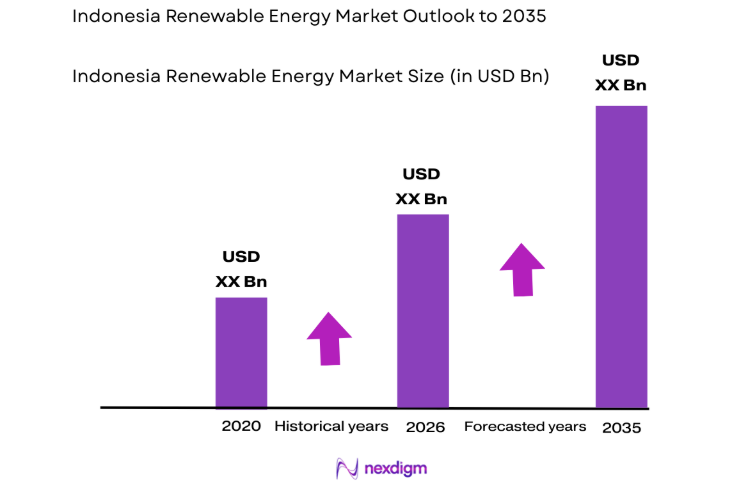
The Indonesia Renewable Energy market is expected to witness substantial growth, driven by the government’s commitment to renewable energy and climate goals. The market size is projected at USD ~ billion, with growth primarily driven by solar, wind, and hydropower initiatives. Key drivers include the nation’s renewable energy targets, technological advancements, and increasing investment in energy infrastructure. The transition from fossil fuels to renewables, spurred by environmental goals and energy diversification, is another major growth factor.
Major cities such as Jakarta, Surabaya, and Batam are leading the renewable energy initiatives due to their proximity to industrial hubs, growing energy demand, and robust infrastructure. These cities are central to the development and deployment of large-scale renewable energy projects, including solar farms and wind power plants. The government’s support and the country’s push for renewable energy capacity expansion are key contributors to the dominance of these regions in the market.
Market Segmentation
By Energy Source
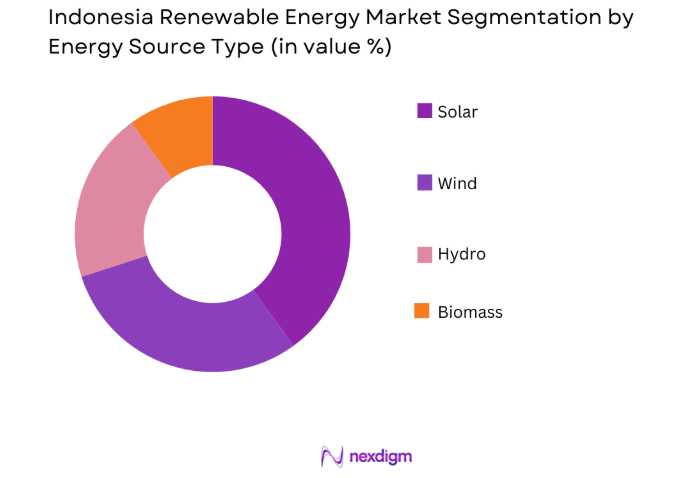
The Indonesia Renewable Energy market is segmented by energy source into solar, wind, hydro, and biomass. Recently, solar energy has taken a dominant share due to significant government investment in solar farm projects and the decreasing cost of solar technology. With its high potential in sunny regions across the country, solar has emerged as the top renewable energy choice. The increasing push towards carbon-neutral power generation and favorable government policies have reinforced solar’s market leadership.
By Application
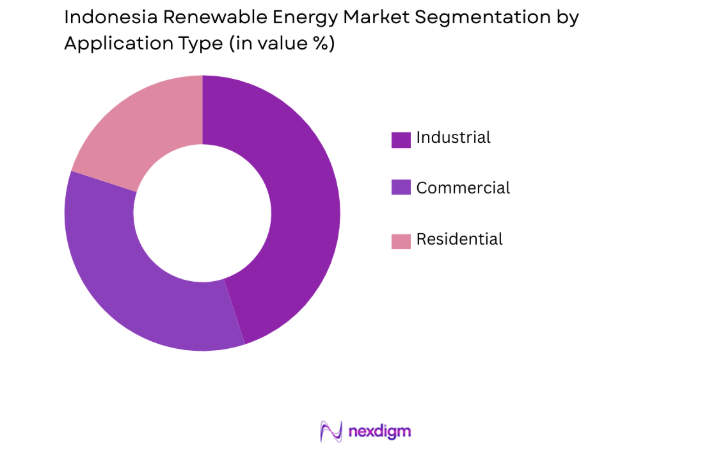
The market is also segmented by application into residential, commercial, and industrial sectors. The industrial sector dominates the market share, driven by increasing demand for renewable energy solutions to reduce operational costs and meet sustainability goals. Large industrial companies are adopting renewable energy technologies to power their operations, especially in manufacturing zones and urban centers. Government incentives and corporate sustainability mandates are key drivers of the industrial sector’s growth.
Competitive Landscape
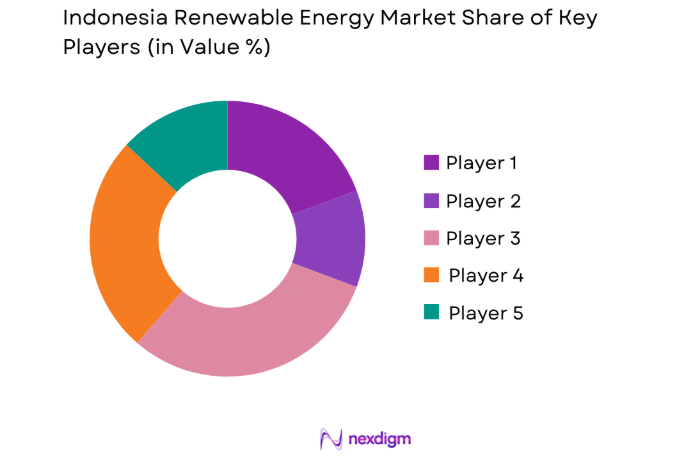
The competitive landscape of Indonesia’s renewable energy market is marked by both international and domestic players collaborating on large-scale projects. Leading firms in solar and wind energy development include global giants such as Ørsted, First Solar, and local companies like PLN (Perusahaan Listrik Negara) and Adaro Energy. These companies, along with others, play a crucial role in expanding the renewable energy capacity and bringing innovative technologies to the market. The market has seen significant consolidation, especially among solar EPC (engineering, procurement, and construction) players, as they seek to capture larger shares of the growing market.
| Company Name | Establishment Year | Headquarters | Technology Focus | Market Reach | Key Products | Revenue | Market-Specific Focus |
| Ørsted | 1972 | Denmark | ~ | ~ | ~ | ~ | ~ |
| First Solar | 1999 | USA | ~ | ~ | ~ | ~ | ~ |
| PLN | 1945 | Indonesia | ~ | ~ | ~ | ~ | ~ |
| Adaro Energy | 2004 | Indonesia | ~ | ~ | ~ | ~ | ~ |
| Trina Solar | 1997 | China | ~ | ~ | ~ | ~ | ~ |
Indonesia Renewable Energy Market Analysis
Growth Drivers
Government Renewable Energy Policies
The Indonesian government’s focus on achieving its renewable energy targets plays a pivotal role in the market’s growth. By 2025, Indonesia aims to achieve 23% of its energy from renewable sources, a key policy that is accelerating investments in solar, wind, and hydro energy. Government-backed financial incentives, including tax rebates and subsidies for renewable energy projects, are driving the deployment of renewable energy technologies. The strong policy framework, including long-term goals to reduce carbon emissions, makes the renewable energy sector an attractive investment for both domestic and international stakeholders.
Technological Advancements in Clean Energy
The rapid advancements in renewable energy technology, particularly in solar power, have contributed significantly to the growth of the market. The cost of solar panels and other clean energy technologies has fallen drastically, making renewable energy more affordable and accessible. In addition, wind and hydropower technologies have evolved to become more efficient and scalable, allowing Indonesia to harness its natural resources more effectively. The growing emphasis on innovation, coupled with government incentives, has created a thriving environment for renewable energy adoption.
Market Challenges
Grid Infrastructure and Energy Distribution
Despite the growing investments in renewable energy, Indonesia faces significant challenges with its grid infrastructure. The lack of a smart grid system and inefficient energy distribution networks hinder the smooth integration of renewable energy sources, especially from decentralized systems like solar power. The current grid system is not optimized to handle intermittent energy supply from renewable sources, creating challenges for grid stability and energy storage. As a result, the government faces the dual challenge of upgrading the grid while also ensuring that energy is distributed efficiently across the country.
Regulatory and Bureaucratic Challenges
One of the key barriers to the rapid deployment of renewable energy projects in Indonesia is the complex regulatory and permitting processes. Obtaining permits for large-scale renewable projects such as solar farms and wind plants can take time due to bureaucratic hurdles, and land acquisition for these projects is often a lengthy process. This slow pace of approval and the fragmented regulatory framework create delays in project implementation, slowing the overall growth of the renewable energy sector. Streamlining the regulatory processes and improving transparency would help accelerate the growth of the renewable energy market.
Opportunities
Corporate Sustainability Initiatives
As global pressure for sustainability increases, corporations are adopting renewable energy solutions to meet their environmental, social, and governance (ESG) targets. In Indonesia, this trend is becoming more prominent, particularly in the manufacturing and commercial sectors, where companies seek to power their operations with renewable energy. Large firms are increasingly integrating solar energy into their supply chains, which offers a significant opportunity for EPC players to provide solutions tailored to the needs of corporations. The growing demand for corporate sustainability initiatives presents a lucrative opportunity for renewable energy providers to engage with the private sector.
Off-Grid Solar Solutions for Remote Areas
One of the key opportunities in Indonesia lies in the expansion of off-grid solar systems, particularly in remote and rural areas that lack access to the national grid. With over 12,000 islands, Indonesia has vast areas where the cost of grid infrastructure development is prohibitive. Off-grid solar solutions, including solar mini-grids and standalone solar home systems, provide an affordable and reliable alternative to traditional energy sources. The government’s push for rural electrification, coupled with falling solar system costs, has created a ripe environment for off-grid solar solutions, presenting substantial growth potential for the renewable energy market.
Future Outlook
The future of Indonesia’s renewable energy market is promising, with strong government support and growing investment in clean energy technologies. Over the next five years, solar energy is expected to remain the dominant source of renewable energy, aided by decreasing costs and the continued development of large-scale solar projects. Wind and hydro power will also see considerable growth, especially in regions with untapped potential. Additionally, technological advancements in energy storage and grid integration are expected to improve, addressing the grid challenges and facilitating the transition to a more sustainable energy mix.
Major Players
- Ørsted
- First Solar
- Trina Solar
- PLN
- Adaro Energy
- Yingli Solar
- JinkoSolar
- Longi Green Energy
- SMA Solar Technology
- JA Solar
- Canadian Solar
- Hanwha Q Cells
- Risen Energy
- Sharp Solar
- REC Solar
Key Target Audience
- Investments and venture capitalist firms
- Government and regulatory bodies
- Solar energy developers
- EPC contractors
- Commercial solar energy users
- Residential solar system providers
- Industrial energy consumers
Research Methodology
Step 1: Identification of Key Variables
The research identifies key drivers, technological innovations, and government policies that influence Indonesia’s renewable energy market.
Step 2: Market Analysis and Construction
Comprehensive data is collected through industry reports, expert interviews, and government publications to build a model of the market.
Step 3: Hypothesis Validation and Expert Consultation
Experts in renewable energy, government officials, and project developers are consulted to validate the hypotheses and assumptions.
Step 4: Research Synthesis and Final Output
The gathered data is synthesized into actionable insights, providing a clear understanding of the renewable energy market in Indonesia.

- Executive Summary
- Research Methodology (Definitions, Scope, Industry Assumptions, Market Sizing Approach, Primary & Secondary Research Framework, Data Collection & Verification Protocol, Analytic Models & Forecast Methodology, Limitations & Research Validity Checks)

- Market Definition and Scope
- Value Chain & Stakeholder Ecosystem
- Regulatory / Certification Landscape
- Sector Dynamics Affecting Demand

- Growth Drivers
Government incentives and regulatory support for renewable energy
Increasing demand for cleaner energy solutions
Technological advancements reducing energy production costs - Market Challenges
High initial capital investments for renewable energy projects
Intermittency of renewable energy sources
Insufficient energy storage infrastructure - Market Opportunities
Integration of renewable energy with energy storage systems
Increasing investments in renewable energy infrastructure
Rising adoption of microgrids and decentralized energy solutions - Trends
Growth in hybrid energy solutions combining renewable and conventional energy
Advancements in solar and wind turbine efficiency - Government Regulations
Renewable energy policies and targets
Carbon pricing and emission regulations
Subsidies and tax incentives for clean energy projects - SWOT Analysis
- Porter’s Five Forces

- By Market Value, 2020-2025
- By Installed Units, 2020-2025
- By Average System Price, 2020-2025
- By System Complexity Tier, 2020-2025

- By System Type (In Value%)
Wind Power
Solar Power
Hydropower
Biomass Energy
Geothermal Energy - By Platform Type (In Value%)
Offshore Platforms
Onshore Platforms
Hybrid Platforms
Distributed Energy Platforms - By Fitment Type (In Value%)
Residential Installations
Commercial Installations
Industrial Installations
Utility-Scale Installations - By End User Segment (In Value%)
Government
Commercial
Industrial

- Market Share Analysis
- Cross Comparison Parameters (System type, End-user segment, Platform type, Market value, Installed units, Average system price, Government incentives)
- SWOT Analysis of Key Competitors
- Pricing & Procurement Analysis
- Key Players
Ormat Technologies
General Electric
Siemens Gamesa
Vestas Wind Systems
Nordex SE
Suzlon Energy
First Solar
Canadian Solar
Trina Solar
SMA Solar Technology
JinkoSolar
SunPower Corporation
Enphase Energy
Sungrow Power Supply
PowerChina

- Increased government and corporate investments in renewable energy
- Residential sector driving solar adoption with lower installation costs
- Growing adoption of energy storage in industrial and commercial sectors
- Integration of renewable energy in government infrastructure projects

- Forecast Market Value, 2026-2035
- Forecast Installed Units, 2026-2035
- Price Forecast by System Tier, 2026-2035
- Future Demand by Platform, 2026-2035


 Request a Sample
 Ask for Customization
 Get a Quote
 Enquire Now