

 Download PDF
Market Overview
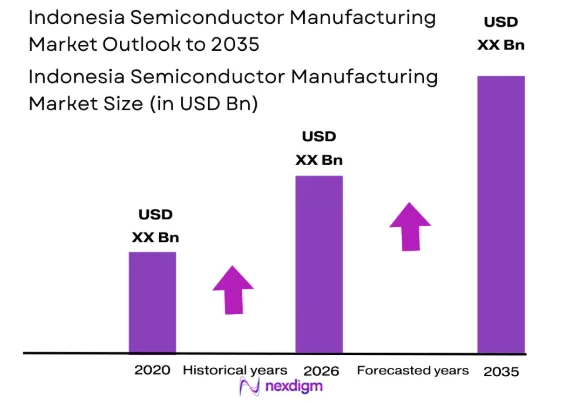
The Indonesia Semiconductor Manufacturing Market is valued at USD ~ billion, with robust growth driven by increased demand for electronic products, automotive innovations, and government initiatives. The rise in consumer electronics, IoT devices, and smart technologies is propelling semiconductor manufacturing across various sectors, including automotive and telecommunications. As industries integrate AI, 5G, and high-performance computing, the semiconductor industry plays a vital role in meeting these technological advancements. Investments in local manufacturing and infrastructure development have helped increase production capacity, driving the market’s positive growth trajectory.
Indonesia’s semiconductor manufacturing market is dominated by cities such as Jakarta, Surabaya, and Batam, which offer robust industrial infrastructure and connectivity. The government’s push for Industry 4.0 has led to the establishment of key production facilities and supported market growth. Jakarta serves as the central hub for key players, while Surabaya and Batam are emerging as key manufacturing and export zones due to their proximity to international trade routes and skilled labor. These cities are crucial to the expansion of Indonesia’s semiconductor ecosystem, driving both production and innovation.
Market Segmentation
By Product Type
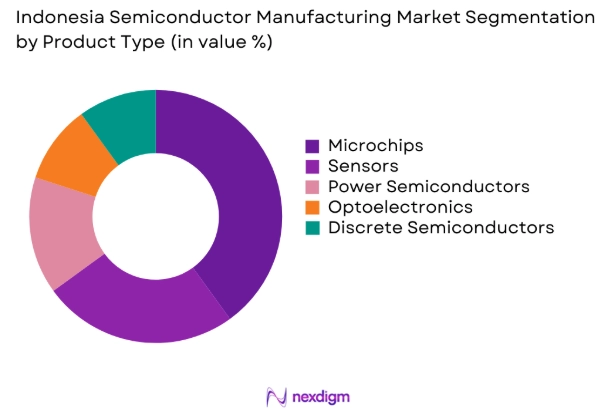
The Indonesia Semiconductor Manufacturing Market is segmented by product type into microchips, sensors, power semiconductors, optoelectronics, and discrete semiconductors. Recently, microchips have a dominant market share due to the increasing demand for smart electronics and the automotive industry’s shift toward more sophisticated computing technologies. The integration of AI, IoT, and 5G technologies into consumer devices is fueling the demand for microchips, ensuring their dominance in the semiconductor sector.
By Platform Type
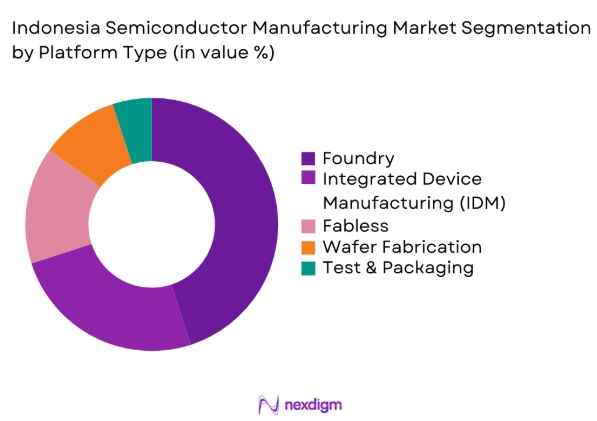
The market is segmented by platform type into foundry, integrated device manufacturing (IDM), fabless, wafer fabrication, and test & packaging. Recently, the foundry platform has dominated the market share as it serves as the backbone for outsourced semiconductor manufacturing. Foundries provide the necessary infrastructure for companies to produce semiconductors without owning the technology and equipment, enabling companies to expand rapidly without heavy investment in facilities.
Competitive Landscape
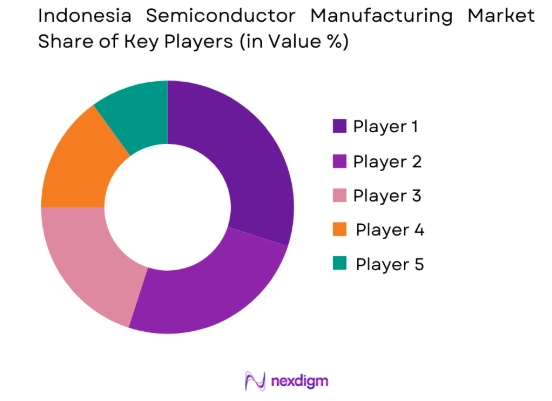
The competitive landscape of the Indonesia Semiconductor Manufacturing Market shows a dynamic mix of local players and global semiconductor giants, which are continually expanding their production capacity. Major players like PT Samsung Electronics Indonesia, TSMC, and Intel Corporation play pivotal roles in driving innovation and manufacturing capacity. The market also sees increasing consolidation, as companies are seeking to acquire new technologies and expand their market reach. This competitiveness fosters innovation and enhances the technological edge of Indonesia’s semiconductor manufacturing capabilities.
| Company Name | Establishment Year | Headquarters | Technology Focus | Market Reach | Key Products | Revenue | Additional Parameter |
| PT Samsung Electronics Indonesia | 1995 | Jakarta, Indonesia | ~ | ~ | ~ | ~ | ~ |
| TSMC | 1987 | Taiwan | ~ | ~ | ~ | ~ | ~ |
| Intel Corporation | 1968 | USA, California | ~ | ~ | ~ | ~ | ~ |
| GlobalFoundries | 2009 | USA, New York | ~ | ~ | ~ | ~ | ~ |
| Micron Technology | 1978 | USA, Idaho | ~ | ~ | ~ | ~ | ~ |
Indonesia Semiconductor Manufacturing Market Analysis
Growth Drivers
Government Support for Semiconductor Industry
The Indonesian government has been instrumental in fostering the growth of the semiconductor manufacturing sector through various strategic initiatives, including subsidies, tax incentives, and infrastructure investments. These policies have helped make it more viable for semiconductor companies to expand their operations and enhance production capabilities, particularly in sectors such as smart electronics and automotive systems. The creation of special economic zones has further bolstered the industry by offering improved logistics, better connectivity, and additional tax benefits. These government-supported measures are designed to attract both domestic and international semiconductor companies, providing them with a more favorable business environment to innovate and scale their operations, which in turn drives further growth in Indonesia’s semiconductor market.
Technological Advancements in Semiconductor Manufacturing
The ongoing advancements in semiconductor technologies are driving significant market growth in Indonesia. Emerging technologies such as AI, machine learning, and IoT are increasing the demand for more powerful and efficient semiconductor chips. The shift toward electric vehicles (EVs) and autonomous vehicles further amplifies this need, as these innovations require advanced semiconductors for power management, motor control, and battery systems. Additionally, the rapid deployment of 5G networks is creating a strong demand for high-performance chips to support faster communication, enhanced connectivity, and the development of next-generation devices. As these technologies continue to evolve, the semiconductor market in Indonesia is expected to experience sustained growth, with increasing investments in manufacturing capabilities to meet these technological demands.
Market Challenges
High Capital Investment
A major challenge for the Indonesian semiconductor market is the substantial capital investment needed to establish and operate semiconductor manufacturing plants. The high costs associated with building and maintaining fabrication plants (fabs), along with the requirement for advanced machinery and cutting-edge technology, present a significant barrier for local players. Even with government incentives aimed at encouraging industry growth, the large initial investment and ongoing operational expenses can limit the ability of companies to scale effectively. This financial burden often prevents smaller or emerging companies from entering or expanding in the market, making it difficult for them to compete with established global players who have greater resources for investing in state-of-the-art manufacturing facilities.
Supply Chain Issues
The semiconductor manufacturing industry in Indonesia depends significantly on a global supply chain for critical raw materials and components. Geopolitical tensions, trade restrictions, and the COVID-19 pandemic have highlighted the vulnerabilities within this supply chain. Delays in the availability of key materials, such as rare earth metals and silicon wafers, have caused production bottlenecks. These disruptions have impacted the ability of semiconductor manufacturers to maintain consistent production schedules, ultimately affecting their capacity to meet market demand. The reliance on international suppliers for these essential materials makes the industry susceptible to global events, underscoring the need for more resilient supply chain strategies to ensure a stable manufacturing process and timely delivery of semiconductor products.
Opportunities
Emerging Demand for Electric Vehicles
The growing demand for electric vehicles (EVs) offers a substantial opportunity for the semiconductor manufacturing market in Indonesia. EVs rely on a variety of semiconductor components, including those for power management, battery management systems, and motor control. As the Indonesian government pushes for more sustainable transportation solutions, the demand for EVs is expected to increase, which in turn will drive the need for advanced semiconductor components. With the expansion of the EV market, semiconductor manufacturers in Indonesia will benefit from rising demand for efficient, high-performance chips. This growth is supported by government incentives and investments aimed at promoting cleaner transportation options, making the EV sector a key driver for the country’s semiconductor manufacturing industry.
Expansion of 5G Networks
The rollout of 5G technology presents a significant opportunity for Indonesia’s semiconductor manufacturing sector. As 5G adoption accelerates, there is an increasing demand for high-performance semiconductors that are capable of supporting 5G devices, base stations, and communication infrastructure. The Indonesian government’s strong focus on promoting 5G technology, along with ongoing investments in network expansion, is expected to further fuel the need for advanced semiconductors. These semiconductors are essential for efficient communication, networking, and mobile devices. With the rapid growth in 5G applications, the semiconductor manufacturing industry in Indonesia is poised for long-term growth, driven by the demand for more capable, high-speed components that meet the requirements of 5G networks.
Future Outlook
The future outlook for the Indonesia semiconductor manufacturing market is promising, with continued investments in R&D, expansion of semiconductor facilities, and a growing demand for semiconductors in emerging industries such as electric vehicles and 5G networks. The market is expected to experience steady growth, driven by technological advancements and government initiatives aimed at boosting the local semiconductor industry. Over the next five years, Indonesia will continue to expand its position as a key player in the semiconductor manufacturing space, particularly in response to the demand for advanced consumer electronics and smart devices.
Major Players
- PT Samsung Electronics Indonesia
- TSMC
- Intel Corporation
- GlobalFoundries
- Micron Technology
- STMicroelectronics
- Qualcomm Incorporated
- NXP Semiconductors
- Broadcom Inc.
- Texas Instruments
- MediaTek Inc.
- Renesas Electronics Corporation
- Applied Materials, Inc.
- Kioxia Corporation
- Infineon Technologies
Key Target Audience
- Investments and venture capitalist firms
- Government and regulatory bodies
- Semiconductor manufacturers
- Automotive industry
- Electronics manufacturers
- Telecommunication companies
- Healthcare technology providers
- Smart device manufacturers
Research Methodology
Step 1: Identification of Key Variables
Identification of key drivers, trends, challenges, and market segments influencing the Indonesia semiconductor market.
Step 2: Market Analysis and Construction
Analysis of current market size, growth potential, and segmentation to build an accurate representation of the market.
Step 3: Hypothesis Validation and Expert Consultation
Engagement with industry experts to validate assumptions and refine the market analysis based on their feedback.
Step 4: Research Synthesis and Final Output
Synthesis of all research findings and insights into a comprehensive market report to guide strategic decision-making.

- Executive Summary
- Research Methodology (Definitions, Scope, Industry Assumptions, Market Sizing Approach, Primary & Secondary Research Framework, Data Collection & Verification Protocol, Analytic Models & Forecast Methodology, Limitations & Research Validity Checks)

- Market Definition and Scope
- Value Chain & Stakeholder Ecosystem
- Regulatory / Certification Landscape
- Sector Dynamics Affecting Demand
- Strategic Initiatives & Infrastructure Growth

- Growth Drivers
Rising Demand for Consumer Electronics
Advancements in Automotive Technologies
Government Incentives for Semiconductor Manufacturing - Market Challenges
High Capital Investment Requirements
Supply Chain Vulnerabilities
Technological Complexity and Integration - Market Opportunities
Emerging Demand for Semiconductor Components in 5G
Growth in Electric Vehicle Production
Integration of AI and IoT in Semiconductor Manufacturing - Trends
Miniaturization of Semiconductor Devices
Rise of Semiconductor Manufacturing Automation
Shift Towards Sustainable Semiconductor Production - Government Regulations
- SWOT Analysis of Key Competitors
- Porter’s Five Forces

- By Market Value, 2020-2025
- By Installed Units, 2020-2025
- By Average System Price, 2020-2025
- By System Complexity Tier, 2020-2025

- By System Type (In Value%)
Semiconductor Fabrication Equipment
Wafer Processing Equipment
Test & Inspection Equipment
Assembly & Packaging Equipment
Other System Types - By Platform Type (In Value%)
Foundry Platforms
Integrated Device Manufacturing (IDM) Platforms
Fabless Platforms
Wafer Fabrication Platforms
Test & Packaging Platforms - By Fitment Type (In Value%)
On-premise Solutions
Cloud-based Solutions
Hybrid Solutions
Integrated Solutions
Modular Solutions - By End User Segment (In Value%)
Consumer Electronics
Automotive
Telecommunications
Industrial Applications
Healthcare - By Procurement Channel (In Value%)
Direct Procurement
Distributor/Reseller Channels
E-commerce Platforms
Government Procurement
Private Sector Procurement

- Market Share Analysis
- Cross Comparison Parameters (Product Type, Platform Type, End User Segment, Procurement Channel, Fitment Type, Technological Advancements, Regional Demand Variations, Market Entry Barriers, Regulatory Impact, Supply Chain Dynamics)
- SWOT Analysis of Key Competitors
- Pricing & Procurement Analysis
- Key Players
PT Samsung Electronics Indonesia
Intel Corporation
TSMC Indonesia
PT STMicroelectronics
Micron Technology
Qualcomm Incorporated
NXP Semiconductors
GlobalFoundries
Broadcom Inc.
Texas Instruments
MediaTek Inc.
Renesas Electronics Corporation
Applied Materials, Inc.
Kioxia Corporation
Infineon Technologies

- High Growth in Consumer Electronics Demand
- Rising Automotive Production Demands
- Increasing Application of Semiconductors in Industrial Automation
- Rapid Adoption of Telecommunication Infrastructure

- Forecast Market Value, 2026-2035
- Forecast Installed Units, 2026-2035
- Price Forecast by System Tier, 2026-2035
- Future Demand by Platform, 2026-2035


 Request a Sample
 Ask for Customization
 Get a Quote
 Enquire Now