

 Download PDF
 Download PDF
Market Overview
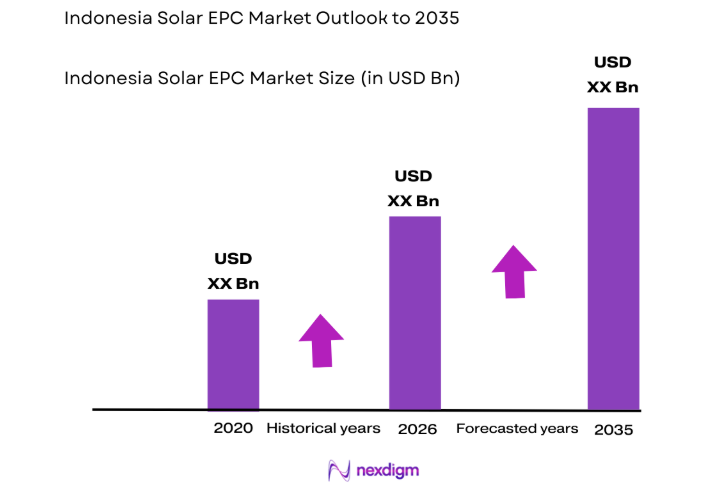
The Indonesia Solar EPC market is poised for rapid expansion, with a projected market size of USD ~ billion, driven by increased government initiatives for clean energy generation and the nation’s ambitious renewable energy goals. The growth is fueled by the demand for solar power plants and the accelerating transition towards renewable energy sources. Government incentives, infrastructure development, and a shift towards sustainable energy are critical factors in the market’s expansion, alongside improving solar technologies.
Key cities like Jakarta, Surabaya, and Batam are leading in the development of solar energy projects, supported by their robust infrastructure and industrial base. These cities have become central hubs for solar energy deployment due to the government’s renewable energy targets and favorable policies that encourage investment in clean energy solutions. Additionally, areas with high sunlight exposure and increasing power demand are witnessing accelerated solar EPC market growth.
Market Segmentation
By System Type
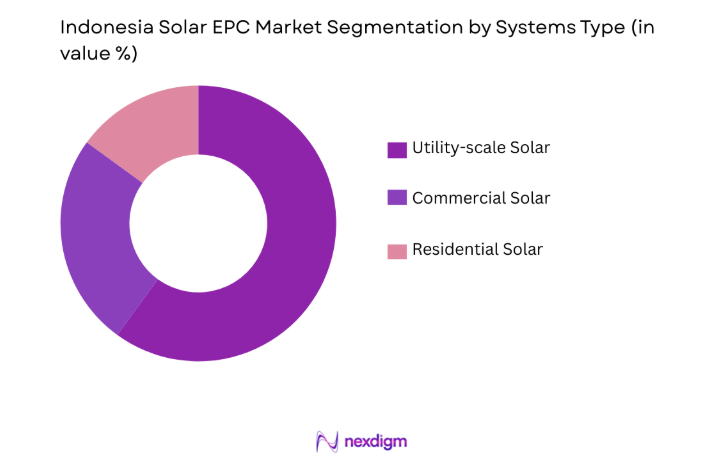
The Indonesia Solar EPC market is segmented by system type into utility-scale, commercial, and residential solar projects. Recently, utility-scale solar projects have dominated the market due to their ability to meet large-scale energy demands and contribute to grid stability. The expansion of solar farms to meet Indonesia’s energy goals and the increasing demand for electricity have been key drivers. Utility-scale projects benefit from government incentives and subsidies, making them a more attractive investment for developers and investors.
By Installation Type
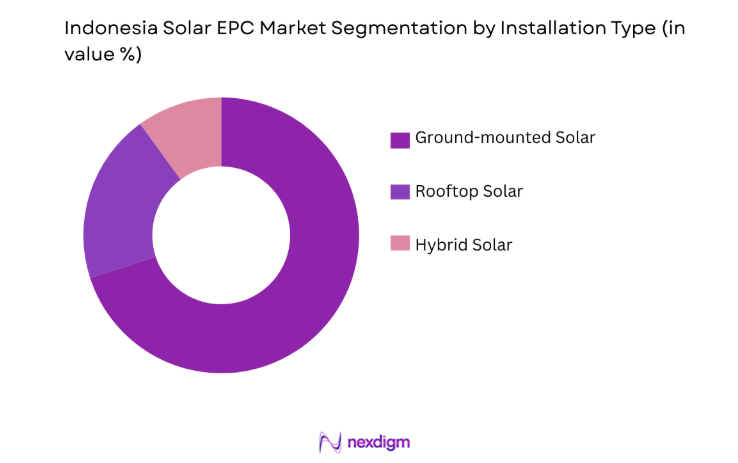
The market is also segmented by installation type into rooftop, ground mounted, and hybrid installations. Ground-mounted solar installations dominate the market, primarily driven by the availability of land for large-scale projects. These installations are preferred for utility-scale solar farms due to their efficiency, scalability, and ability to generate significant power output. With Indonesia’s increasing focus on renewable energy and solar farm development, the ground-mounted segment remains the leader in the solar EPC space.
Competitive Landscape
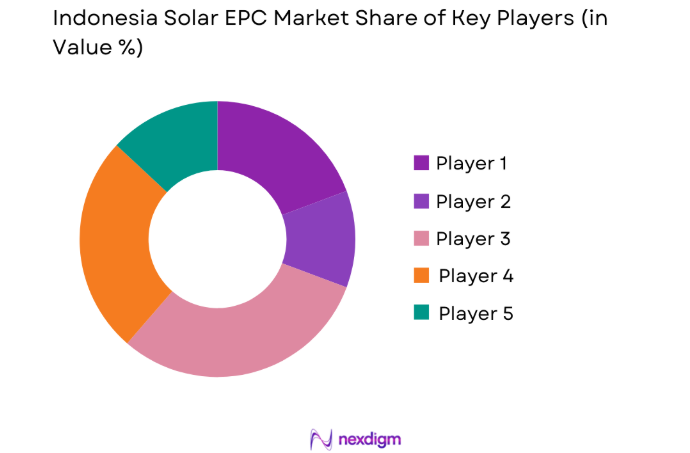
The competitive landscape of the Indonesia Solar EPC market is characterized by a mix of international and local players. Large EPC contractors such as SunPower, First Solar, and Trina Solar, along with local companies like PT. PLN and Adaro Power, dominate the market by providing comprehensive solar solutions for utility-scale projects. The market is witnessing increasing consolidation, with partnerships and collaborations aimed at increasing project execution capacity and meeting Indonesia’s renewable energy targets.
| Company Name | Establishment Year | Headquarters | Technology Focus | Market Reach | Key Products | Revenue | Market-Specific Focus |
| SunPower | 1985 | USA | ~ | ~ | ~ | ~ | ~ |
| First Solar | 1999 | USA | ~ | ~ | ~ | ~ | ~ |
| Trina Solar | 1997 | China | ~ | ~ | ~ | ~ | ~ |
| PT. PLN (Persero) | 1945 | Indonesia | ~ | ~ | ~ | ~ | ~ |
| Adaro Power | 2004 | Indonesia | ~ | ~ | ~ | ~ | ~ |
Indonesia Solar EPC Market Analysis
Growth Drivers
Government Renewable Energy Targets
The Indonesian government has set ambitious renewable energy targets, aiming for 23% of total energy consumption from renewables by 2025. This target includes a significant role for solar energy, positioning the solar EPC market for sustained growth. The government’s commitment to meeting this target through financial incentives, tax breaks, and policy support has accelerated the adoption of solar technologies. With increasing investments in solar infrastructure and the government’s focus on reducing carbon emissions, the solar EPC market continues to benefit from these favorable regulatory measures.
Declining Costs of Solar Technologies
The continued decrease in the cost of solar technology, including photovoltaic panels and associated components, has made solar energy more accessible and economically viable in Indonesia. As solar technology becomes more affordable, the demand for solar EPC services is increasing, especially for utility-scale and commercial solar installations. The decline in costs has encouraged private sector involvement and government-backed solar initiatives, further stimulating the market’s growth. Additionally, technological advancements have led to more efficient systems, which have contributed to reducing the overall cost of energy generation from solar power.
Market Challenges
Regulatory Hurdles and Bureaucratic Processes
Despite favorable government policies, the Indonesia solar EPC market faces challenges related to regulatory barriers and complex bureaucratic processes. Permitting and land acquisition for solar projects can be slow and cumbersome, particularly in rural and remote areas. These delays, compounded by regulatory inconsistencies, hinder the speed at which solar energy projects can be deployed. Additionally, while the government supports solar energy, the local regulatory framework lacks clear, standardized guidelines for solar energy projects, which can cause confusion among developers and investors.
Grid Infrastructure and Connectivity Limitations
Indonesia’s grid infrastructure faces challenges in accommodating the influx of solar power, especially from decentralized sources like residential and commercial installations. The lack of sufficient grid capacity and the need for upgrades to facilitate the integration of renewable energy into the national grid pose significant barriers. The decentralized nature of solar power generation makes it difficult to ensure a stable, consistent power supply without significant infrastructure improvements. The lack of smart grid technologies further exacerbates this issue, slowing the adoption of solar energy in some regions.
Opportunities
Expansion of Distributed Solar Systems
As the cost of solar energy continues to decline, there is significant potential for the expansion of distributed solar systems, including rooftop solar and small-scale installations. This trend is particularly strong in urban areas such as Jakarta, where space constraints make rooftop solar a viable option for homeowners and businesses. With increasing government incentives and financing options, the distributed solar segment is expected to grow rapidly. This growth presents a key opportunity for solar EPC providers to offer tailored solutions for residential and commercial clients, thus diversifying their revenue streams.
Corporate Sustainability Initiatives
Many large corporations in Indonesia are shifting towards sustainability by incorporating renewable energy into their operations. This trend is driving demand for solar energy solutions in commercial and industrial sectors, where companies are adopting solar energy as part of their corporate responsibility and cost-saving measures. The growing trend of green energy certifications and sustainability reporting is expected to drive further growth in the solar EPC market, as companies seek to meet their environmental, social, and governance (ESG) goals. This shift presents an opportunity for EPC contractors to target large commercial and industrial clients.
Future Outlook
The future outlook for Indonesia’s Solar EPC market is positive, with continued growth expected over the next five years. This growth will be driven by the Indonesian government’s renewable energy targets, ongoing technological advancements, and increasing private sector involvement in large-scale solar projects. Furthermore, the growing interest in corporate sustainability and the development of smart grid technologies will contribute to the market’s expansion. With the right infrastructure and policy support, Indonesia’s solar EPC market is set for long-term growth as the country accelerates its transition to a sustainable energy future.
Major Players
- SunPower
- First Solar
- Trina Solar
- PT. PLN (Persero)
- Adaro Power
- Yingli Solar
- JinkoSolar
- Longi Green Energy
- SMA Solar Technology
- JA Solar
- Canadian Solar
- Hanwha Q Cells
- Risen Energy
- Sharp Solar
- REC Solar
Key Target Audience
- Investments and venture capitalist firms
- Government and regulatory bodies
- Solar energy developers
- EPC contractors
- Commercial solar energy users
- Residential solar system providers
- Industrial energy consumers
Research Methodology
Step 1: Identification of Key Variables
The research identifies key market drivers, regulatory frameworks, and technological trends that shape the Solar EPC market in Indonesia.
Step 2: Market Analysis and Construction
Data collection is carried out through industry reports, government publications, and expert opinions to build a comprehensive market model.
Step 3: Hypothesis Validation and Expert Consultation
The validity of assumptions is tested through consultations with key stakeholders, including government bodies, solar developers, and EPC companies.
Step 4: Research Synthesis and Final Output
The collected data and insights are synthesized to provide a clear, detailed report on the Indonesia Solar EPC market, focusing on key trends, challenges, and opportunities.

- Executive Summary
- Research Methodology (Definitions, Scope, Industry Assumptions, Market Sizing Approach, Primary & Secondary Research Framework, Data Collection & Verification Protocol, Analytic Models & Forecast Methodology, Limitations & Research Validity Checks)

- Market Definition and Scope
- Value Chain & Stakeholder Ecosystem
- Regulatory / Certification Landscape
- Sector Dynamics Affecting Demand

- Growth Drivers
Government incentives and policy support for solar projects
Increasing demand for clean energy and environmental concerns
Declining costs of solar panel installation - Market Challenges
High initial capital investment for large-scale projects
Technical challenges related to solar panel efficiency
Regulatory hurdles and inconsistent policies across regions - Market Opportunities
Integration of solar energy with energy storage systems
Growing adoption of solar energy in off-grid areas
Expansion of solar infrastructure with government support - Trends
Increased focus on energy independence and decentralization
Rising demand for floating solar power plants - Government Regulations
Renewable energy policies and subsidies
Tax incentives for solar energy adoption
Regulations on solar panel manufacturing and importation - SWOT Analysis
- Porter’s Five Forces

- By Market Value, 2020-2025
- By Installed Units, 2020-2025
- By Average System Price, 2020-2025
- By System Complexity Tier, 2020-2025

- By System Type (In Value%)
Utility-Scale Solar Systems
Commercial Solar Systems
Residential Solar Systems
Off-Grid Solar Systems
Hybrid Solar Systems - By Platform Type (In Value%)
Grid-Connected Solar Systems
Off-Grid Solar Systems
Hybrid Solar Systems
Floating Solar Systems - By Fitment Type (In Value%)
On-roof Solar Installations
Ground-mounted Solar Installations
Building Integrated Solar Installations
Floating Solar Installations - By End User Segment (In Value%)
Commercial Sector
Industrial Sector
Residential Sector

- Market Share Analysis
- Cross Comparison Parameters (System type, Platform type, End-user segment, Fitment type, Market value, Installed units, Average system price)
- SWOT Analysis of Key Competitors
- Pricing & Procurement Analysis
- Key Players
First Solar
SunPower Corporation
SMA Solar Technology
Trina Solar
Canadian Solar
Jinko Solar
Longi Solar
Risen Energy
JA Solar
REC Solar
Wuxi Suntech
Sharp Solar
Sungrow Power Supply
Enphase Energy
SolarEdge Technologies

- Commercial sector leading the demand for large-scale solar installations
- Government initiatives supporting the industrial sector’s solar adoption
- Residential demand driven by falling system costs
- Growing interest in decentralized and off-grid solutions

- Forecast Market Value, 2026-2035
- Forecast Installed Units, 2026-2035
- Price Forecast by System Tier, 2026-2035
- Future Demand by Platform, 2026-2035


 Request a Sample
 Ask for Customization
 Get a Quote
 Enquire Now