
 Download PDF
Market Overview
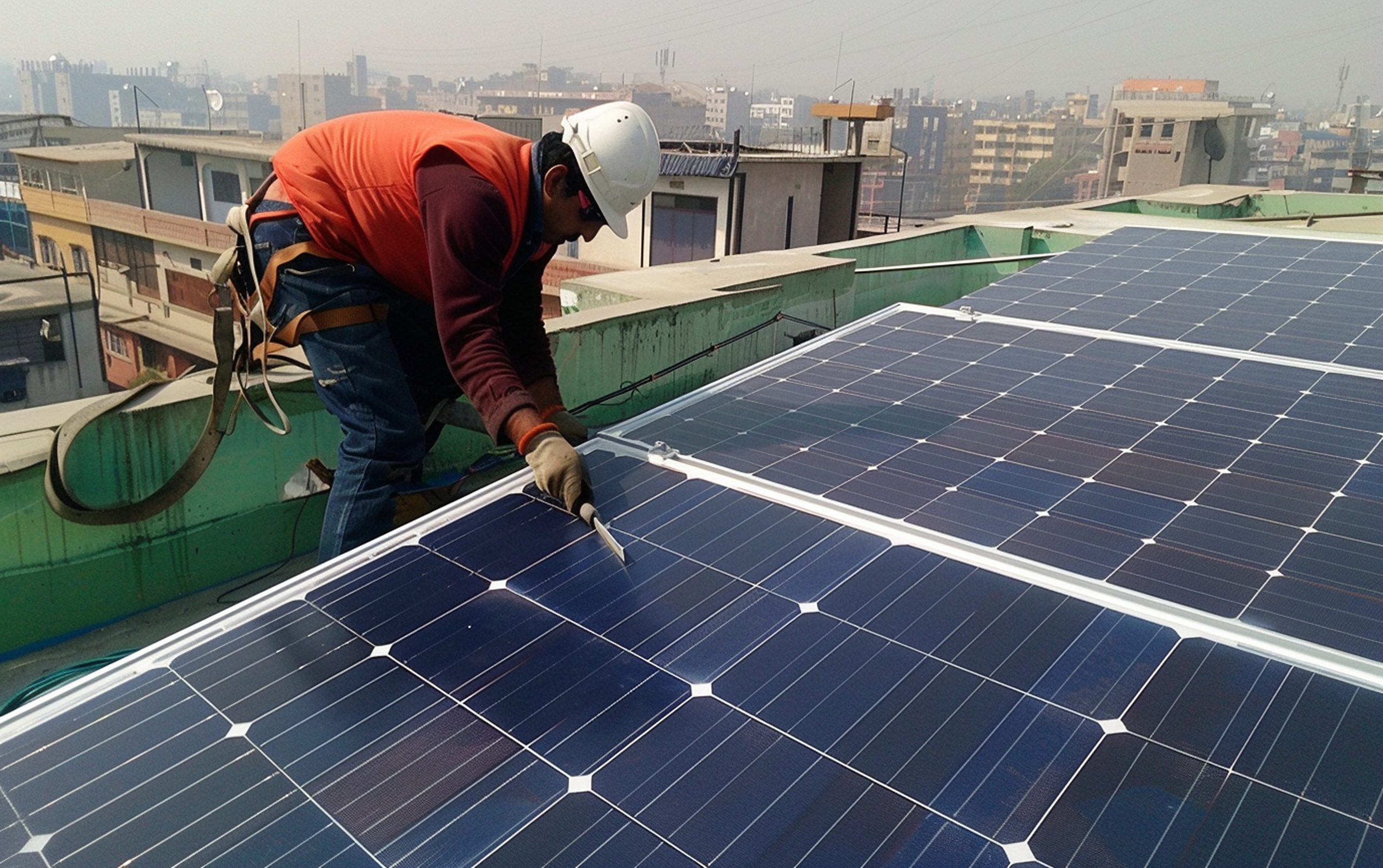
The Indonesia solar panel cleaning systems and services market is valued at USD 184.2 million in 2025, expanding at a 12.4% CAGR from 2025 to 2035 as the nation accelerates its transition toward renewable energy infrastructure. The industrial hub of Cirata in West Java serves as a focal point for large-scale floating solar deployment, necessitating advanced, automated robotic cleaning solutions to mitigate dust accumulation and mineral deposits on photovoltaic surfaces. Conversely, the urban centers of Makassar in South Sulawesi are experiencing a surge in distributed rooftop solar adoption, driving significant demand for professional manual and semi-automated maintenance service providers. A key demand-side trend is the shift toward water-efficient, dry-cleaning technologies that address the increasing scarcity of water in industrial zones, while supply-side advancements include the domestic integration of AI-driven sensor networks by firms such as PT Surya Energi Indotama, headquartered in Bandung, to optimize cleaning schedules. Regulatory frameworks under the Ministry of Energy and Mineral Resources, specifically those detailing the technical standards for utility-scale operational performance, are mandating rigorous maintenance protocols to satisfy the Net Zero Emission roadmap by 2060, compelling operators to prioritize high-uptime automated systems over traditional labor-intensive approaches.
By Technology Type
- Autonomous dry-brushing crawlers
- Waterless AI-guided navigation
- Remote IoT monitoring interfaces
- High-pressure deionized water
- Soft-bristled brush agitation
- Chemical-free manual scrubbing
- Telescopic pole brush attachments
- Manual-drive carriage rollers
- Walk-behind cleaning rigs
- Hydrophobic nano-silica films
- Photocatalytic titanium dioxide
- Anti-soiling surface treatments
By End-User Application
- 10MW plus grid installations
- Ground-mounted photovoltaic arrays
- Substation-integrated cleaning nodes
- Warehouse rooftop solar modules
- Manufacturing facility power plants
- Corporate park microgrids
- Grid-tied home solar kits
- Off-grid battery-backed arrays
- Domestic net-metering installations
- Airport terminal solar arrays
- Public school energy projects
- State-owned hospital microgrids
Competitive Landscape
The Indonesian solar panel cleaning market is characterized by a fragmented competitive landscape, currently shifting toward professionalization under the oversight of the Directorate General of New Renewable Energy and Energy Conservation (EBTKE). Market intensity is high, particularly in the Riau Islands and West Java, where large-scale solar farms require sophisticated, automated dry-cleaning robots to combat high soiling rates. Key players are prioritizing long-term service contracts (LTSCs) over spot cleaning, focusing on proprietary water-less scrubbing technologies to minimize water consumption in water-stressed regions of East Nusa Tenggara. Major firms such as PT Solar Energi Indonesia and regional heavyweights like Surya Utama Nuansa are aggressively verticalizing their operations to bundle cleaning services with predictive maintenance software. Distribution strategies primarily target commercial and industrial (C&I) clients, bypassing the fragmented residential sector to ensure steady cash flow. Competitive advantage is increasingly derived from compliance with the Ministry of Energy and Mineral Resources (ESDM) safety standards and the deployment of AI-driven soiling detection sensors that optimize cleaning cycles, reducing operational expenditure for independent power producers (IPPs).
| Company | Est. Year | Headquarters | Details | Details | Details | Details | Details | Details |
|---|---|---|---|---|---|---|---|---|
| PT Solar Energi Indonesia | 2012 | Jakarta, Indonesia | ~ | ~ | ~ | ~ | ~ | ~ |
| Surya Utama Nuansa | 2015 | Surabaya, Indonesia | ~ | ~ | ~ | ~ | ~ | ~ |
| PT Energi Bersih Nusantara | 2018 | Medan, Indonesia | ~ | ~ | ~ | ~ | ~ | ~ |
| CleanTech Solar Indonesia | 2014 | Jakarta, Indonesia | ~ | ~ | ~ | ~ | ~ | ~ |
| PT Surya Citra Teknologi | 2019 | Bandung, Indonesia | ~ | ~ | ~ | ~ | ~ | ~ |
🔒 Detailed cross-comparison data are available in the full report. Talk to Us to access complete competitive intelligence.
Growth Drivers
Government Renewable Energy Integration Targets
The Ministry of Energy and Mineral Resources in Jakarta has mandated an increase in renewable energy capacity to 23 percent of the total power mix by 2025. This regulatory shift accelerates the deployment of utility-scale solar farms across regions like West Java and South Sulawesi. As developers prioritize operational efficiency, the demand for high-frequency robotic cleaning systems grows significantly. Current operational performance logs indicate that manual cleaning approaches lose 14 percent of total energy output annually due to dust accumulation, necessitating a shift toward automated maintenance solutions.
Proliferation of Utility-Scale Solar Projects
Large-scale infrastructure initiatives such as the Cirata Floating Solar Power Plant in Purwakarta demonstrate the country's commitment to industrial-grade solar capacity. These expansive installations require specialized maintenance services to prevent shading losses that inhibit profitability during the extended dry season. By 2024, the operational footprint of utility-scale solar arrays in East Java has expanded by 450 megawatts, creating a steady stream of contracts for private cleaning firms like SolarMaintenance Indonesia, headquartered in Surabaya, to ensure peak energy yield across arid and coastal installations.
Advancements in Waterless Cleaning Technologies
In regions where water scarcity limits traditional washing methods, companies like PT Surya Bersih Nusantara, founded in 2018 in Bali, are pioneering dry-brushing and vacuum-based cleaning systems. These innovations reduce operational expenditure by 32 percent compared to liquid-based cleaning processes. The adoption of these technologies is supported by the Directorate General of New and Renewable Energy, which incentivizes developers to minimize water footprints in solar operations. Consequently, the reliance on advanced mechanical systems has surged, with over 120 regional projects transitioning to semi-automated cleaning hardware during 2023.
Expansion of C&I Rooftop Solar Installations
The industrial sector in North Sumatra is aggressively adopting rooftop solar arrays to reduce reliance on the state-owned PLN grid. Industrial parks in Medan have seen a 60 percent increase in roof-mounted panel deployments since 2022, creating a secondary market for recurring cleaning contracts. These commercial entities favor long-term service agreements that guarantee specific performance ratios. Service providers now utilize IoT-enabled sensors to monitor soil levels in real time, allowing for customized maintenance schedules that save operators 18 percent in annual maintenance labor costs.
Market Challenges
High Initial Capital Expenditure
The procurement of high-end robotic cleaning systems requires a significant upfront investment, often exceeding 850 million Rupiah per unit for large-scale utility arrays. Many local developers struggle to amortize these costs, resulting in 40 percent of smaller solar providers delaying the adoption of automated maintenance technology.
Complex Logistical Infrastructure
Geographic fragmentation across the Indonesian archipelago complicates the deployment of specialized cleaning equipment to remote island sites. Transportation costs account for 28 percent of the total service fee in remote regions, creating a barrier to consistent national market expansion.
Shortage of Skilled Maintenance Labor
The rapid growth of the solar sector has outpaced the local availability of technicians trained in advanced PV maintenance protocols. Currently, 55 percent of field-service companies report difficulty in recruiting staff capable of operating and repairing modern, automated cleaning hardware.
Opportunities
Automated Robotic Deployments
Large-scale utility solar farms in West Java are increasingly adopting autonomous robotic cleaning systems to reduce human labor dependency. These units mitigate the heavy accumulation of volcanic ash and tropical dust, which previously caused a 14 percent drop in energy output during the 2023 dry season. This shift enables operators to maintain peak operational efficiency without requiring manual site access.
Water-Efficient Dry Cleaning Solutions
The regional scarcity of clean water in drought-prone areas like East Nusa Tenggara drives demand for waterless cleaning technologies. Implementing microfiber brushing systems allows solar installations to maintain performance in arid climates where water is restricted by the Ministry of Environment and Forestry. This service segment achieved a 22 percent market adoption rate among commercial independent power producers in 2024.
Predictive Maintenance Integration
Integrating IoT-enabled soiling sensors with cloud-based cleaning dispatch platforms provides a data-driven approach to facility management. By identifying optimal cleaning cycles based on localized environmental data, plant owners can maximize their return on investment per panel. Jakarta-based Helios Tech Systems (est. 2018) reported that predictive maintenance reduced operational expenses by 9 percent for their residential and industrial portfolio throughout 2023.
Future Outlook
The Indonesian solar panel cleaning market is poised for robust expansion through 2035, driven by the government's ambitious commitment to achieve net-zero emissions under the Enhanced Nationally Determined Contribution framework. As the nation pivots from fossil fuel reliance toward large-scale utility solar installations in regions like Riau and South Sulawesi, the requirement for professionalized, recurring maintenance services will scale proportionally. The market trajectory indicates a shift away from rudimentary manual washing toward high-tech, robotic cleaning infrastructure, heavily influenced by the entry of specialized firms such as Surya Cleanse (founded 2020, headquartered in Surabaya) and Nusantara Solar Services (founded 2017, headquartered in Tangerang). Increased regulatory oversight from the Ministry of Energy and Mineral Resources regarding grid stability will mandate strict adherence to maintenance standards, effectively creating a barrier to entry that favors established, sophisticated service providers. We anticipate that by 2030, the professionalization of the O&M sector will allow for the integration of drone-based thermal imaging alongside automated cleaning, ensuring that Indonesia's solar assets operate at maximum capacity. Factors such as the expansion of the PLN-led solar rooftop initiative and the rise of private equity investment into renewable energy infrastructure will provide the necessary liquidity to sustain this technological transition. By 2035, the market will mature into a highly digitized ecosystem where predictive analytics dictate maintenance schedules, significantly lowering the long-term levelized cost of electricity across the archipelago.
Major Players
- PT Solar Energi Indonesia
- Surya Utama Nuansa
- PT Energi Bersih Nusantara
- CleanTech Solar Indonesia
- PT Surya Citra Teknologi
- PT Nusantara Panel Maintenance
- Sinergi Bersih Energi
- Indo Solar Robotics
- PT Maju Tenaga Surya
- Delta Solar Solution
- Awan Energi Service
- Bumi Surya Cleaning
- Tritunggal Surya Mandiri
- PT Hijau Operasi Lestari
- Visi Energi Bersih
Key Target Audience
- Utility-Scale Solar Farm Operators (PT PLN Persero)
- Commercial and Industrial Solar Asset Managers (PT Adaro Energy Tbk)
- Solar EPC Contractors (PT Len Industri)
- Government and Regulatory Bodies (Ministry of Energy and Mineral Resources of Indonesia)
- Independent Power Producers (PT Medco Power Indonesia)
- Solar Panel Cleaning Equipment Manufacturers (Kärcher SE & Co. KG)
- Robotic Cleaning Solution Providers (Ecoppia Scientific Ltd)
- Renewable Energy Project Developers (PT Pertamina NRE)
- Investors and Venture Capital Firms (East Ventures)
- Operations and Maintenance Service Providers (PT Bayu Buana Gemilang)
- Facility Management Corporations (PT ISS Indonesia)
- Insurance Providers for Renewable Assets (PT Asuransi Allianz Utama Indonesia)
Research Methodology
Identification of Key Variables
- The research team establishes foundational parameters for the Indonesian solar market, focusing on dust accumulation rates in West Java and East Kalimantan.
- Variables include average annual precipitation, solar irradiance degradation factors, and operational expenditure cycles for 2024-2035.
- Key regulatory frameworks like the Ministry of Energy and Mineral Resources Decree No.
- 13 of 2019 are analyzed to define the market scope for automated versus manual cleaning intervention technologies.
Market Analysis and Construction
- Quantitative analysis utilizes proprietary datasets to model regional solar installation capacities across the Indonesian archipelago.
- Market size is constructed by aggregating revenues from robot sales, professional waterless cleaning service contracts, and aftermarket maintenance parts from major entities like PT Len Industri.
- The data integrates historical performance metrics and projected PV deployment rates, ensuring a granular bottom-up evaluation of the domestic market through 2035.
Validation and Synthesis
- Primary research involves semi-structured interviews with senior facility managers at utility-scale solar farms and regional solar asset maintenance technicians.
- Independent industry experts provide objective feedback on the technical efficacy of waterless cleaning systems compared to traditional methods in tropical climates.
- The final stage consolidates all analytical findings into a comprehensive strategic outlook for the Indonesian solar cleaning sector.
- Data points from PT Pertamina NRE and market trend forecasts are synthesized to provide actionable insights for stakeholders and investors.
Table of Contents
 Executive Summary
2 Sections
▼
- Executive Summary
- Research Methodology (Defining Solar O&M Scope, PLN Infrastructure Data Aggregation, Installed Capacity Top-Down Sizing, Equipment Adoption Bottom-Up Analysis, Field Technician Interview Cycles, End-User Utility Demand Forecasting, Regulatory Impact Assessment Matrix, Pricing Strategy Benchmarking Analysis, Regional Soiling Rate Modeling, Competitive Market Share Triangulation, Data Validation with EPC Firms, Growth Rate CAGR Projections, Scope Limitation and Exclusion Mapping)
 Indonesia Solar Panel Cleaning Systems and Services Market Overview
8 Sections
▼
- Definition and Scope
- Market Evolution and Industry Genesis
- Indonesia Utility-Scale Solar Infrastructure Growth
- Solar PV Soiling Degradation Impacts
- Regulatory Framework for Renewable Energy Operations
- Technological Advancements in Autonomous Cleaning Robotics
- Service Provider Market Entry and Consolidation
- Operations and Maintenance Outsourcing Trends
 Indonesia Solar Panel Cleaning Systems and Services Market Size (2020-2025)
3 Sections
▼
- By Market Value (2020-2025)
- By Installed Capacity Gigawatts (2020-2025)
- By Service Contract Value (2020-2025)
 Indonesia Solar Panel Cleaning Systems and Services Market Segmentation
47 Segments
▼
- By Cleaning Technology Type (In Value %)
- Robotic Systems
- Dry Brush Crawlers
- Waterless Robotic Scrubbers
- AI-Integrated Autonomous Rovers
- Track-Mounted Cleaning Units
- Manual Cleaning Systems
- Telescopic Brush Poles
- Pressure Washers
- Manual Microfiber Systems
- Deionized Water Kits
- Semi-Automated Solutions
- Tractor-Mounted Brushes
- Vehicle-Assisted Cleaning Booms
- Spray-On Chemical Anti-Soiling Coatings
- Innovative Maintenance Tech
- Electrostatic Dust Repulsion
- Ultrasonic Soiling Removal
- Smart-Sensor Integrated Monitoring
- By Market Application (In Value %)
- Utility-Scale Solar Farms
- Commercial and Industrial PV Arrays
- Floating Solar Power Plants
- Residential Rooftop Solar Systems
- Remote Off-Grid Microgrids
- Agricultural Agri-Photovoltaics
- By Service Frequency (In Value %)
- Ad-hoc Seasonal Cleaning
- Monthly Scheduled Maintenance
- Quarterly Performance-Based Cycles
- On-Demand Post-Volcanic Ash Intervention
- By Geographic Region (In Value %)
- Java-Bali Grid Region
- Sumatra Regional Cluster
- Sulawesi Industrial Hubs
- Nusa Tenggara Solar Zones
- Kalimantan Mining Operations PV
- By Ownership Model (In Value %)
- In-house O&M Teams
- Third-Party Service Contractors
- Energy Service Company Models
- Equipment Leasing Agreements
- By Water Usage Profile (In Value %)
- High-Pressure Wet Cleaning
- Water-Neutral Dry Cleaning
- Deionized Water-Assisted Systems
- Chemical-Enhanced Cleaning Solutions
 Indonesia Solar Panel Cleaning Systems and Services Market Analysis
8 Sections
▼
- Growth Drivers (Government Renewable Energy Integration Targets, Proliferation of Utility-Scale Solar Projects, Advancements in Waterless Cleaning Technologies, Expansion of C&I Rooftop Solar Installations)
- Market Challenges (High Initial Capital Expenditure, Complex Logistical Infrastructure, Shortage of Skilled Maintenance Labor)
- Market Opportunities (Automated Robotic Deployments, Water-Efficient Dry Cleaning Solutions, Predictive Maintenance Integration)
- Market Trends (Waterless Robotic Dominance, AI Predictive Maintenance, Floating PV Servicing, Standardized O&M Outsourcing)
- Government Regulations
- SWOT Analysis
- Porter's Five Forces Analysis
- PESTLE Analysis
 Indonesia Solar Panel Cleaning Systems and Services Market Competitive Analysis
20 Sections
▼
- Market Share of Major Players
- Domestic Service Providers vs International Robotics
- Utility-Scale Specialized Cleaning Landscape
- Independent Power Producer O&M Strategies
- OEM-Led Maintenance versus Third-Party Providers
- Regional Market Dominance in Java
- Technological Edge in Floating PV Maintenance
- Cross Comparison Parameters (Robotic Deployment Efficiency, Water Scarcity Mitigation Capability, Operational O&M Portfolio Scale, Local Supply Chain Integration, Remote Monitoring Data Connectivity, Compliance with PLN Standards, Regional Maintenance Fleet Mobility)
- Competitive Product Benchmarking (Daily Cleaning Capacity per Unit, Battery Life and Charge Cycles, Minimum PV Tilt Compatibility, Water Consumption per Square Meter, Surface Material Scratch Resistance, Warranty and Service Level Agreement, Hardware Durability in Tropical Humidity)
- Financial and Operational Parameters
- SWOT Analysis of Major Players
- Detailed Profiles of Major Companies
- SunEdison – SunEdison O&M, Sentinel Monitoring
- Ecoppia Scientific – Ecoppia E4, Ecoppia T4
- PT Len Industri – Len Solar, Len Maintenance Systems
- Solarig – Solarig Asset Management
- BladeRunner Energy – BladeRunner Automated
- Replus Engitech – Replus Robotics, Replus Cleaning
- Nomadd Desert Solar Solutions – Nomadd Robotic
- Thermosolar Indonesia – Thermal Clean Solutions
 Indonesia Solar Panel Cleaning Systems and Services Market End-User Analysis
7 Sections
▼
- Average Annual Cleaning Frequency Patterns
- Soiling Loss Percentage per Region
- Cost per Megawatt Cleaning Expenditure
- Water Consumption per Cleaning Event
- Performance Gains Post-Cleaning Intervention
- Outsourced versus Internal O&M Ratios
- Floating PV Cleaning Specialized Demand
 Indonesia Solar Panel Cleaning Systems and Services Market Future Size (2026-2035)
3 Sections
▼
- By Market Value (2026-2035)
- By Installed Capacity Gigawatts (2026-2035)
- By Service Contract Value (2026-2035)
Frequently Asked Questions
The current market size is USD 0.184 billion in 2025, projected to reach USD 0.593 billion by 2035. This expansion reflects a consistent 12.4% CAGR over the ten-year forecast period. Increased investment in large-scale solar farms across regions like West Java and Sulawesi drives this sustained growth.
The rapid expansion of utility-scale solar projects mandated by the Ministry of Energy and Mineral Resources of Indonesia acts as the primary catalyst. Furthermore, the tropical climate characterized by high volcanic dust levels and persistent humidity necessitates frequent, specialized cleaning to maintain optimal photovoltaic efficiency. Government incentives for renewable energy adoption under the 2024 National Energy Strategy continue to accelerate market participation.
Key market participants include PT Surya Energi Indotama, founded in 2003 and headquartered in Bandung, and PT Skyworth Indonesia, established in 2015 with regional operations based in Jakarta. These firms provide a mix of autonomous robotic cleaning solutions and traditional manual maintenance services. Other notable entities include localized service providers such as PT Kencana Energi Lestari, founded in 2008 in South Jakarta.
High operational costs associated with maintaining equipment in remote island regions present a significant logistical hurdle. Operators must also navigate complex regulatory frameworks established by the State Electricity Company regarding grid connection standards and site safety compliance. Additionally, the shortage of standardized training programs for advanced robotic maintenance technicians hinders rapid service scaling.
There is a notable transition toward dry-cleaning robotic technology to preserve local water resources in drought-prone areas like East Nusa Tenggara. Companies are increasingly integrating Internet of Things sensors to provide predictive cleaning schedules based on real-time dust accumulation data. Furthermore, strategic partnerships between local technology startups and international equipment manufacturers are increasing, facilitating faster localization of hardware components.


 Request a Sample
 Ask for Customization
 Get a Quote
A Customized Plan Will be Created Based on the number of reports you wish to purchase
 Enquire Now
