
 Download PDF
 Download PDF
Market Overview
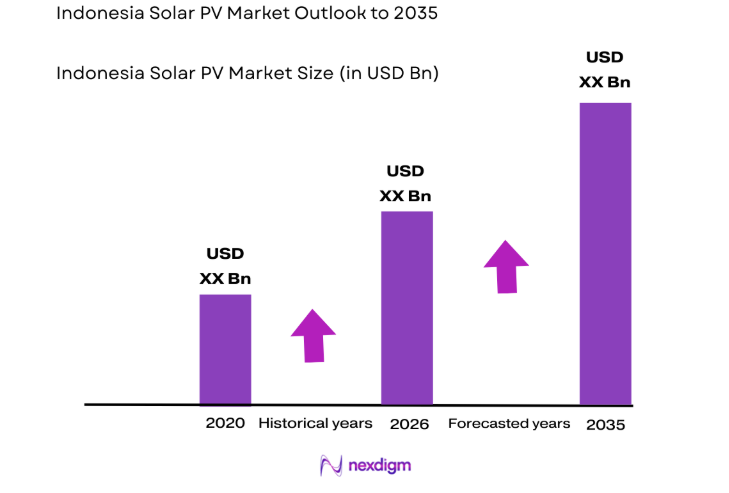
The Malaysia Solar PV market is valued at approximately USD ~ billion based on a recent historical assessment, with growth driven by the government’s focus on increasing renewable energy capacity and reducing reliance on fossil fuels. Malaysia has set ambitious targets for renewable energy integration, with a significant focus on solar power. The increasing affordability of solar PV systems, along with government incentives, is propelling market growth, making solar energy an attractive option for both residential and commercial sectors.
Kuala Lumpur, Johor Bahru, and Penang are central to the growth of the Malaysia Solar PV market. Kuala Lumpur plays a pivotal role in policy-making, while Johor Bahru’s proximity to Singapore contributes to growing investments in renewable energy infrastructure. Penang’s expanding manufacturing sector has further propelled solar energy adoption, as businesses look for ways to reduce energy costs. These regions are crucial in driving solar PV growth across Malaysia.
Market Segmentation
By Application Type
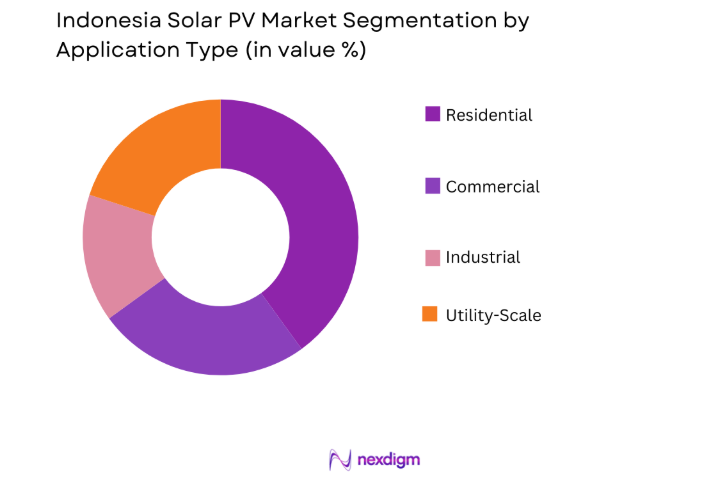
The Malaysia Solar PV market is segmented by application type into residential, commercial, industrial, and utility-scale applications. Recently, residential applications have dominated the market share due to the rising interest among homeowners in reducing energy bills and adopting environmentally friendly energy solutions. The government’s Net Energy Metering (NEM) program has made it easier for homeowners to install solar panels, contributing to the rapid adoption of residential solar systems. Malaysia’s high solar potential and supportive policies further enhance the attractiveness of residential solar energy solutions.
By Product Type
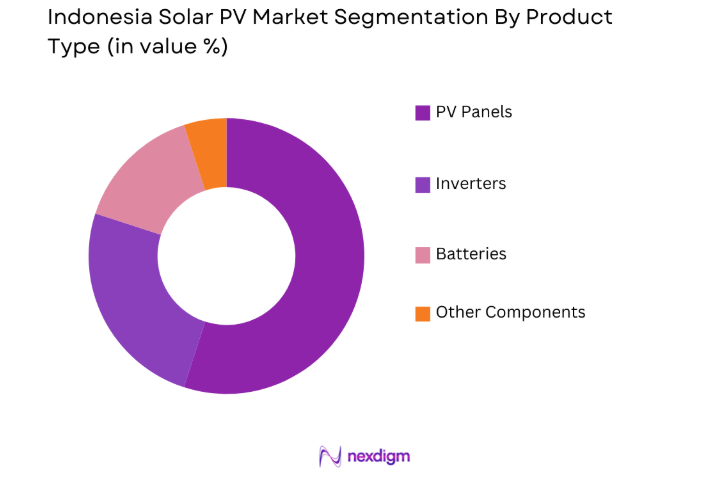
The Malaysia Solar PV market is also segmented by product type into photovoltaic (PV) panels, inverters, batteries, and other system components. Recently, PV panels have had the dominant market share, driven by technological advancements and cost reductions in solar panel manufacturing. As PV panels continue to decrease in cost and increase in efficiency, they have become the primary component in most solar installations, from residential to utility-scale projects. The cost-competitiveness and improvements in PV technology have made it the preferred choice for solar systems in Malaysia.
Competitive Landscape
The competitive landscape of the Malaysia Solar PV market is characterized by a combination of local and international players. Major international firms like Trina Solar, JinkoSolar, and First Solar lead in terms of product offerings and technology innovation. At the same time, local players such as TNB Renewables and Malakoff Corporation are increasing their market presence by developing large-scale solar projects and leveraging local knowledge. With the government’s push for solar adoption, the competition is intensifying, with both local and international companies vying for market share in Malaysia’s expanding solar PV sector.
| Company Name | Establishment Year | Headquarters | Technology Focus | Market Reach | Key Products | Revenue | Market-Specific Focus |
| Trina Solar | 1997 | Changzhou, China | ~ | ~ | ~ | ~ | ~ |
| JinkoSolar | 2006 | Shanghai, China | ~ | ~ | ~ | ~ | ~ |
| First Solar | 1999 | Tempe, USA | ~ | ~ | ~ | ~ | ~ |
| TNB Renewables | 1997 | Kuala Lumpur, Malaysia | ~ | ~ | ~ | ~ | ~ |
| Malakoff Corporation | 1975 | Kuala Lumpur, Malaysia | ~ | ~ | ~ | ~ | ~ |
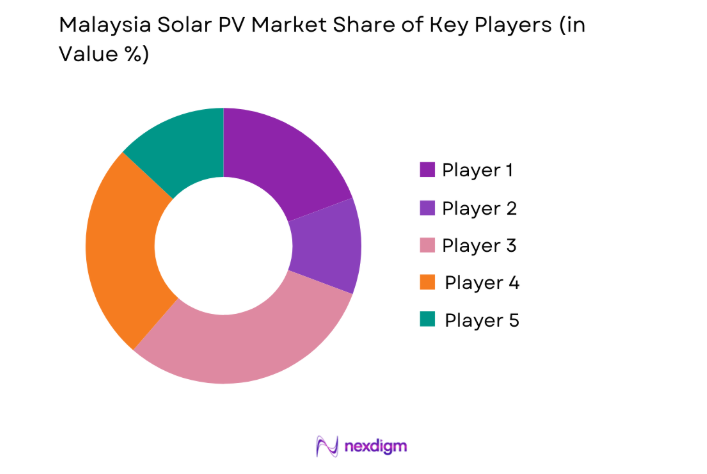
Malaysia Solar PV Market Analysis
Growth Drivers
Government Incentives and Renewable Energy Policies
The Malaysia Solar PV market is significantly driven by government policies aimed at increasing the share of renewable energy in the national grid. The government has introduced various incentives such as the Net Energy Metering (NEM) program and the Feed-in Tariff (FiT) scheme to encourage solar energy adoption. These policies not only make solar installations more affordable but also reduce the payback period for consumers. Malaysia’s commitment to achieving a 20% renewable energy mix by 2025 has led to a favorable regulatory environment, which continues to drive the growth of the solar PV market. As the government aims to reduce carbon emissions and achieve energy independence, policies supporting solar energy are expected to continue driving the adoption of solar PV systems across residential, commercial, and industrial sectors.
Declining Solar PV System Costs
A significant driver for the growth of the Malaysia Solar PV market is the consistent decline in the cost of solar PV systems, particularly solar panels and inverters. The global reduction in solar module prices, along with technological advancements in solar energy, has made solar PV systems more affordable for consumers. Malaysia, with its abundant sunlight and favorable climate for solar energy generation, benefits from these cost reductions. As solar energy becomes increasingly cost-competitive compared to conventional energy sources, more homeowners, businesses, and government institutions are adopting solar PV solutions. The decreasing cost of solar energy, combined with government incentives, is expected to continue fueling the market’s growth in the coming years.
Market Challenges
High Initial Investment and Financing Barriers
One of the key challenges facing the Malaysia Solar PV market is the high initial investment required for solar systems, particularly for residential and small commercial applications. Despite the long-term cost savings that solar PV systems provide, the upfront costs associated with purchasing and installing solar panels, inverters, and batteries can be prohibitive for many consumers. While government subsidies and financial incentives help mitigate this challenge, the cost of financing for smaller consumers remains an obstacle. Without continued improvements in financing options and further cost reductions, many potential solar customers may delay or forgo solar installations, limiting the market’s growth potential.
Grid Integration and Infrastructure Challenges
The integration of solar energy into Malaysia’s existing grid infrastructure presents another challenge for the growth of the solar PV market. Malaysia’s electricity grid was originally designed to accommodate power generated from conventional fossil fuels and may require significant upgrades to handle the fluctuating nature of solar energy. As more solar systems are integrated into the grid, issues such as intermittency and grid stability arise, requiring advanced solutions such as energy storage systems and smart grids. The high cost of energy storage and the lack of widespread storage infrastructure may slow the adoption of solar PV systems, particularly for commercial and utility-scale projects.
Opportunities
Expansion of Solar Power in Rural and Remote Areas
One of the key opportunities for the Malaysia Solar PV market is the expansion of solar power in rural and remote areas. Malaysia’s rural regions, particularly on islands and in remote areas, often face challenges in accessing electricity due to the high cost of extending the traditional power grid. Solar PV systems offer an affordable and reliable alternative, especially when combined with energy storage solutions. Government programs and incentives aimed at rural electrification, combined with falling solar installation costs, present a significant opportunity for expanding solar energy access in these underserved regions. As rural electrification programs continue to expand, the adoption of solar PV in these areas will contribute significantly to Malaysia’s renewable energy targets.
Growing Demand for Solar-plus-Storage Solutions
As Malaysia moves towards greater renewable energy integration, the growing demand for solar-plus-storage solutions presents a significant opportunity. The combination of solar power generation and energy storage systems, such as batteries, can provide a reliable and continuous power supply, even when solar generation is intermittent. With Malaysia’s growing demand for clean, reliable energy and the falling cost of energy storage systems, solar-plus-storage solutions are becoming an increasingly attractive option for both residential and commercial sectors. The development of affordable and efficient energy storage technologies is expected to be a key enabler of the solar PV market’s growth, particularly for consumers seeking energy independence and businesses looking to reduce energy costs.
Future Outlook
The Malaysia Solar PV market is poised for continued growth in the next five years, driven by government policies supporting renewable energy, declining costs of solar technology, and an increasing demand for clean energy solutions. The expansion of solar energy in residential, commercial, and utility-scale applications is expected to accelerate as the country works toward its renewable energy goals. Technological advancements in solar and energy storage, coupled with improved financing options, will drive further adoption, positioning solar energy as a key contributor to Malaysia’s energy mix in the coming years.
Major Players
- Trina Solar
- JinkoSolar
- First Solar
- TNB Renewables
- Malakoff Corporation
- Canadian Solar
- Longi Green Energy
- REC Group
- Yingli Solar
- First Solar
- Vestas
- Huawei
- Siemens Gamesa
- Enel Green Power
- JA Solar
Key Target Audience
- Investments and venture capitalist firms
- Government and regulatory bodies
- Solar panel manufacturers
- Commercial and industrial property owners
- Residential property developers
- Energy storage companies
- Solar EPC solution providers
Research Methodology
Step 1: Identification of Key Variables
Identify key market drivers, barriers, and trends impacting the solar PV market, including government policies, technological advancements, and energy demand.
Step 2: Market Analysis and Construction
Analyze market data, growth patterns, and government policies to develop a detailed market model for the solar PV sector in Malaysia.
Step 3: Hypothesis Validation and Expert Consultation
Engage with industry experts, solar developers, and policymakers to validate assumptions and ensure accuracy in market forecasts.
Step 4: Research Synthesis and Final Output
Synthesize findings into a comprehensive report, providing actionable insights and strategic recommendations for stakeholders in the solar PV market.

- Executive Summary
- Research Methodology (Definitions, Scope, Industry Assumptions, Market Sizing Approach, Primary & Secondary Research Framework, Data Collection & Verification Protocol, Analytic Models & Forecast Methodology, Limitations & Research Validity Checks)

- Market Definition and Scope
- Value Chain & Stakeholder Ecosystem
- Regulatory / Certification Landscape
- Sector Dynamics Affecting Demand

- Growth Drivers
Government incentives for solar PV
Declining cost of solar panels
Rising demand for renewable energy - Market Challenges
Limited grid infrastructure
High capital investment
Regulatory and policy issues - Market Opportunities
Rising private sector participation
International collaborations and partnerships
Technological advancements - Trends
Growth in rooftop solar installations
Integration of energy storage with solar systems - Government Regulations
Renewable energy policies
Net metering regulations
Solar energy financing schemes - SWOT Analysis
- Porter’s Five Forces

- By Market Value, 2020-2025
- By Installed Units, 2020-2025
- By Average System Price, 2020-2025
- By System Complexity Tier, 2020-2025

- By System Type (In Value%)
Utility-Scale Solar Installations
Residential Solar Systems
Commercial Solar Systems
Solar Thermal Systems
Hybrid Solar Systems - By Platform Type (In Value%)
On-Grid Solar Systems
Off-Grid Solar Systems
Hybrid Solar Systems
Roof-Top Solar Systems - By Fitment Type (In Value%)
Residential Fitments
Commercial Fitments
Industrial Fitments
Utility Fitments - By End User Segment (In Value%)
Residential Sector
Commercial Sector
Industrial Sector

- Market Share Analysis
- Cross Comparison Parameters (Efficiency, Performance, Government Incentives, Cost, Technological Integration, Market Penetration, Innovation)
- SWOT Analysis of Key Competitors
- Pricing & Procurement Analysis
- Key Players
First Solar
Sungrow Power Supply Co.
JinkoSolar
Trina Solar
Vestas Wind Systems
Canadian Solar
LONGi Green Energy
SMA Solar Technology
Enphase Energy
Risen Energy
LONGi Solar
JA Solar
GCL-Poly Energy
Hanwha Q CELLS
Sharp Solar

- Growth in demand for residential solar
- Government-driven solar adoption
- Emerging commercial and industrial markets
- Public-private collaborations for energy storage

- Forecast Market Value, 2026-2035
- Forecast Installed Units, 2026-2035
- Price Forecast by System Tier, 2026-2035
- Future Demand by Platform, 2026-2035


 Request a Sample
 Ask for Customization
 Get a Quote
 Enquire Now