
 Download PDF
 Download PDF
Market Overview
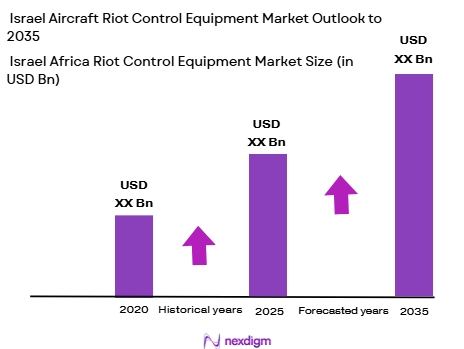
The Israel Africa Riot Control Equipment market is valued at approximately USD~ million in 2024, driven by increasing political instability and public protests across several African nations. The demand for riot control equipment, such as tear gas, rubber bullets, and water cannons, is rising, particularly in regions experiencing frequent unrest and civil disturbances. Countries like Nigeria, South Africa, and Egypt are key drivers due to their higher political activity and frequent public demonstrations, which require effective crowd control methods.
Nigeria, South Africa, and Egypt are the dominant players in the Africa Riot Control Equipment market. These countries have large urban populations and face frequent social unrest, leading to higher demand for riot control solutions. In Nigeria, political protests and security concerns have made it a major consumer of riot control equipment, while South Africa’s history of civil protests contributes to its steady demand. Egypt’s political instability, particularly following the Arab Spring, positions it as a key market for such equipment. The strategic location and political significance of these nations further amplify their dominance in the region
Market Segmentation
By System Type
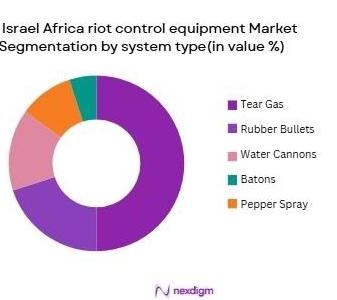
The Israel Africa Riot Control Equipment market is segmented by system type into tear gas, rubber bullets, water cannons, batons, and pepper spray. Tear gas has the largest share in the market due to its widespread use in crowd control, particularly in areas with high protest activities. Governments and law enforcement agencies prefer tear gas for its effectiveness in dispersing crowds with minimal long-term harm. Tear gas is often the first choice for crowd control operations due to its efficiency and cost-effectiveness.
By Platform Type
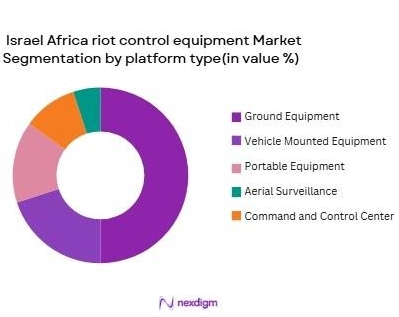
The market is also segmented by platform type into ground equipment, vehicle-mounted equipment, portable equipment, aerial surveillance, and command and control centers. Ground equipment holds a dominant share in the market due to its versatility and direct use in controlling crowds. Vehicle-mounted equipment, such as water cannon trucks, is also widely used in urban areas for large-scale crowd management. However, ground-based systems are often preferred due to their affordability and flexibility in various crowd control scenarios.
Competitive Landscape
The Israel Africa Riot Control Equipment market is dominated by a few key players, including Israeli Military Industries, Riot Control Technologies Ltd, and Harris Security Solutions. These companies are known for their advanced, non-lethal crowd control systems and have established a strong presence in the African market due to their reputation for reliability and efficiency. The competition is fierce among local and international firms, with companies focusing on innovation, particularly in non-lethal equipment to address ethical concerns surrounding riot control.
| Company | Establishment Year | Headquarters | MRO Services | Fleet Size | Service Locations | Key Customers |
| Israeli Military Industries | 1933 | ~ | ~ | ~ | ~ | ~ |
| Riot Control Technologies Ltd | 1995 | ~ | ~ | ~ | ~ | ~ |
| Harris Security Solutions | 1985 | ~ | ~ | ~ | ~ | ~ |
| Combined Systems Inc. | 1991 | ~ | ||||
| The Safariland Group | 1969 | ~ | ~ | ~ | ~ | ~ |
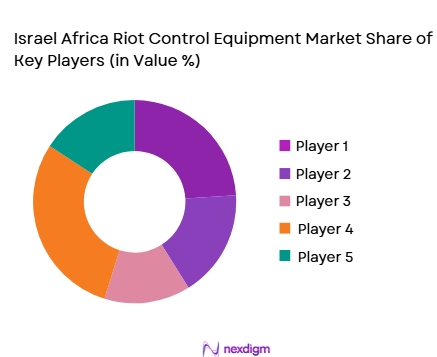
Israel Africa Riot Control Equipment Market Analysis
Growth Drivers
Urbanization
Indonesia’s urban population has reached ~ of the total population in 2024. This rapid urbanization, particularly in cities like Jakarta, Surabaya, and Bandung, has led to increased pollution from transportation, construction, and industrial activities. These urban centers are facing air quality challenges, driving the need for advanced air quality monitoring systems to track pollutants such as PM2.5 and NO2. The growing urban population heightens the importance of implementing real-time air monitoring technologies to mitigate health risks associated with air pollution.
Industrialization
Indonesia’s industrial sector contributes ~ to its GDP, with key industries like manufacturing, mining, and energy production driving pollution in urban areas. In 2024, major industrial hubs, such as Jakarta and Surabaya, face significant air pollution due to emissions from factories and power plants. As industrial activity increases, air quality monitoring systems become essential to monitor emissions and ensure compliance with environmental regulations. The demand for such monitoring systems is growing as industrialization intensifies and environmental concerns rise.
Restraints
High Initial Costs
The initial cost of air quality monitoring systems remains a significant barrier in Indonesia. In 2024, the cost of setting up a monitoring station, including sensors and data analysis tools, ranges from USD ~to USD ~. These high upfront costs are prohibitive, particularly for smaller municipalities and rural areas, which limits the widespread adoption of air quality monitoring systems. The financial burden of installation, combined with ongoing maintenance and calibration costs, hinders market expansion outside major cities.
Technical Challenges
Indonesia faces significant technical challenges in deploying and maintaining air quality monitoring systems. In 2024, a large percentage of air quality monitoring stations face issues with sensor accuracy, calibration, and data integration. Inconsistent or faulty data can undermine the effectiveness of air quality management efforts, leading to inefficiencies in environmental decision-making. Technical issues, such as outdated sensors and poor data transmission, continue to affect the reliability of air quality data across the country.
Opportunities
Technological Advancements
Technological advancements in air quality monitoring, such as IoT-based sensors, present significant opportunities for market growth in Indonesia. IoT technology allows for real-time, remote monitoring of air quality and reduces the cost of setting up and maintaining monitoring stations. In 2024, several Indonesian cities have already begun adopting IoT-based solutions for air quality monitoring, enabling better coverage and more accurate data collection. These advancements are expected to lower costs and improve the efficiency of air quality monitoring systems across the country.
International Collaborations
Indonesia has increasingly engaged in international collaborations to enhance its air quality monitoring systems. In 2024, the government collaborated with the United Nations Environment Programme (UNEP) and the World Bank to expand its air quality monitoring network and improve data accuracy. These collaborations provide access to advanced monitoring technologies, technical expertise, and funding, facilitating the development of a more robust and comprehensive air quality monitoring infrastructure across the country.
Future Outlook
Over the next decade, the Israel Africa Riot Control Equipment market is expected to experience steady growth. This growth will be driven by increasing political instability and protests in African countries, as well as the growing need for law enforcement agencies to maintain public order. The adoption of advanced, non-lethal riot control equipment, such as drones for crowd surveillance and water cannons for large-scale crowd control, will also play a significant role in shaping the market. Technological innovations in equipment, particularly with an emphasis on safety and human rights considerations, will further support the market expansion.
Major Players
- Israeli Military Industries
- Riot Control Technologies Ltd
- Harris Security Solutions
- Combined Systems Inc.
- The Safariland Group
- Ballistic Bodyguard
- Knight’s Armament Company
- Smith & Wesson
- Armament Systems and Procedures (ASP)
- Uniquorn Riot Gear
- Blackwater Security
- Defence Technologies
- Safeguard Security Systems
- Lenco Armored Vehicles
- Riot Shield Systems
Key Target Audience
- Investments and venture capitalist firms
- Government and regulatory bodies
- Law enforcement agencies in Africa
- Private security firms operating in high-risk areas
- Military forces in Africa
- Non-governmental organizations (NGOs) involved in conflict zones
- International defense contractors
- Homeland security agencies
Research Methodology
Step 1: Identification of Key Variables
The initial phase involves identifying key variables such as geopolitical factors, the frequency of civil unrest, and technological advancements in riot control. This phase relies on extensive desk research from reliable secondary sources, including government reports and industry publications, to define these market drivers.
Step 2: Market Analysis and Construction
This phase compiles historical data on riot control trends, examining the deployment of riot control systems in African nations, their procurement, and regional demand patterns. The analysis focuses on understanding how various socio-political conditions influence the demand for these systems across the continent.
Step 3: Hypothesis Validation and Expert Consultation
Market hypotheses are validated through consultations with industry experts, including government officials, law enforcement agencies, and private security firms. These discussions help ensure that the underlying assumptions are accurate and aligned with the current market conditions.
Step 4: Research Synthesis and Final Output
The final phase involves synthesizing the data collected and refining the analysis to provide a comprehensive market report. This process ensures that all insights are verified, relevant, and actionable for stakeholders, and provides a clear view of the future trends and opportunities in the market.

- Executive Summary
- Research Methodology (Definitions, Scope, Industry Assumptions, Market Sizing Approach, Primary & Secondary Research Framework, Data Collection & Verification Protocol, Analytic Models & Forecast Methodology, Limitations & Research Validity Checks)

- Market Definition and Scope
- Value Chain & Stakeholder Ecosystem
- Regulatory / Certification Landscape
- Sector Dynamics Affecting Demand
- Strategic Initiatives & Infrastructure Growth

- Growth Drivers
Increasing demand for security measures in politically unstable regions
Government investments in public safety and law enforcement capabilities
Technological advancements improving the effectiveness of riot control equipment - Market Challenges
Ethical concerns and human rights issues surrounding riot control methods
High costs of procuring and maintaining advanced riot control systems
Regulatory restrictions on the use of certain crowd control technologies - Market Opportunities
Expanding demand from private security firms in urban and industrial areas
International collaborations for improved security technology in Africa
Technological innovation in non-lethal riot control equipment - Trends
Growing adoption of less lethal technologies in riot control
Increasing integration of AI and data analytics in crowd management systems
Rising use of drones and unmanned aerial vehicles (UAVs) for surveillance - Government regulations
Aviation safety and maintenance standards compliance
Environmental regulations impacting MRO processes
Government incentives for the aviation sector - SWOT analysis
Strength: Strong government focus on improving national security
Weakness: High dependency on international suppliers for advanced equipment
Opportunity: Expanding markets for crowd control solutions in Africa
Threat: Regulatory restrictions affecting operational flexibility - Porters 5 forces
Threat of new entrants: Low
Bargaining power of suppliers: High
Bargaining power of buyers: Moderate
Threat of substitute products: Low
Industry rivalry: High

- By Market Value, 2020-2025
- By Installed Units, 2020-2025
- By Average System Price ,2020-2025
- By System Complexity Tier ,2020-2025

- By System Type (In Value%)
Tear Gas
Rubber Bullets
Water Cannons
Batons
Pepper Spray - By Platform Type (In Value%)
Ground Equipment
Vehicle Mounted Equipment
Portable Equipment
Aerial Surveillance
Command and Control Centers - By Fitment Type (In Value%)
OEM Parts
Aftermarket Parts
Retrofit Solutions
Refurbishment Services
Upgrade Kits - By EndUser Segment (In Value%)
Law Enforcement Agencies
Military Forces
Private Security Firms
Government Agencies
Non-Governmental Organizations - By Procurement Channel (In Value%)
Direct Procurement
Government Bidding
Third-Party Suppliers
Online Procurement
Service Contracts

- Cross Comparison Parameters (Market Share, Technological Innovation, Cost Efficiency, Regional Presence, Customer Service)
- SWOT Analysis of Key Competitors
- Key Players
Israeli Military Industries
Riot Control Technologies Ltd
Defence Technologies
Harris Security Solutions
Harris Corporation
Combined Systems Inc.
TearGasTech
The Safariland Group
Smith & Wesson
Armament Systems and Procedures (ASP)
Unicorns Riot Gear
Knight’s Armament Company
Ballistic Bodyguard
Crowd Control Solutions
Blackwater Security

- Growing focus on law enforcement modernization across Africa
- Private security firms adopting advanced equipment for crowd control
- Increasing government spending on riot control systems
- Non-governmental organizations (NGOs) advocating for safer crowd management

- Forecast Market Value ,2026-2035
- Forecast Installed Units ,2026-2035
- Price Forecast by System Tier ,2026-2035
- Future Demand by Platform ,2026-2035


 Request a Sample
 Ask for Customization
 Get a Quote
 Enquire Now