

 Download PDF
 Download PDF
Market Overview
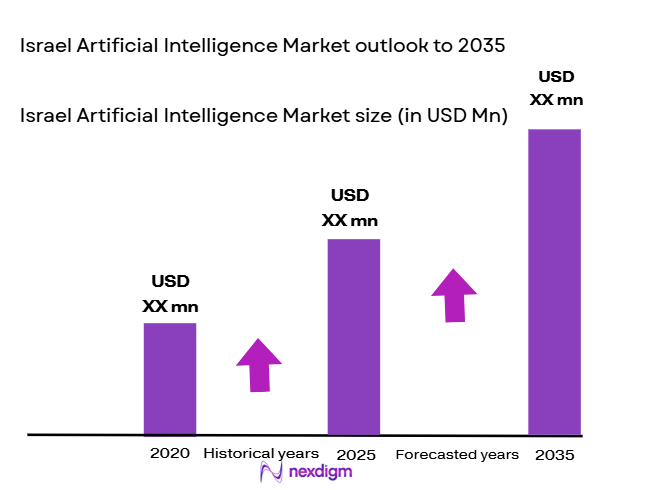
The Israel artificial intelligence market has experienced significant growth, with an estimated market size of USD ~ billion in recent assessments. This market is driven by the country’s thriving tech ecosystem, supported by a strong network of startups, advanced research institutions, and a government that fosters innovation. Additionally, the demand for AI in sectors such as defense, healthcare, and manufacturing has been a key factor, alongside increasing investments from both public and private sectors to accelerate AI technology adoption.
Israel remains a dominant player in the artificial intelligence space, with Tel Aviv and Jerusalem being major hubs for AI research and development. These cities benefit from robust technological infrastructures, a highly skilled workforce, and close ties between the private sector and the military. Furthermore, Israel’s defense sector has played a vital role in advancing AI, driving innovation in security and intelligence. The country’s leadership in AI is underpinned by its ability to leverage cutting-edge technologies and foster collaboration across industries and academia.
Market Segmentation
By Product Type
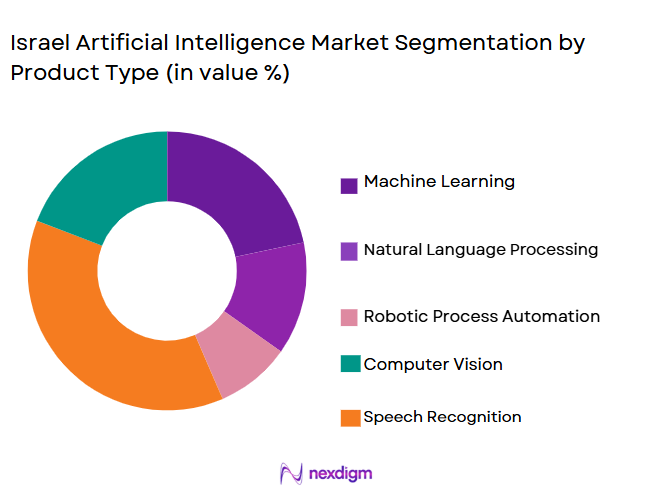
The Israel artificial intelligence market is segmented by product type into machine learning, natural language processing (NLP), computer vision, speech recognition, and robotic process automation (RPA). Recently, machine learning has emerged as the dominant sub-segment due to the increasing demand for data-driven decision-making, automation, and predictive analytics. The growth of big data and cloud technologies, combined with Israel’s strong technological expertise in AI, has propelled machine learning to the forefront, making it the most widely adopted AI solution across various industries, including healthcare, finance, and manufacturing.
By Platform Type
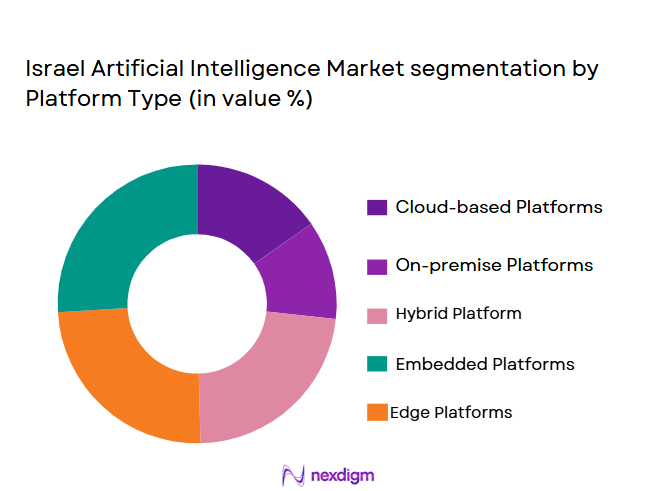
The market for artificial intelligence in Israel is divided by platform type into cloud-based platforms, on-premise platforms, hybrid platforms, embedded platforms, and edge platforms. Among these, cloud-based platforms have gained significant traction, dominating the market share due to their flexibility, scalability, and cost-effectiveness. Cloud platforms enable businesses to leverage AI capabilities without the need for large capital expenditures in infrastructure, making it a popular choice for both startups and established enterprises looking to integrate AI into their operations.
Competitive Landscape
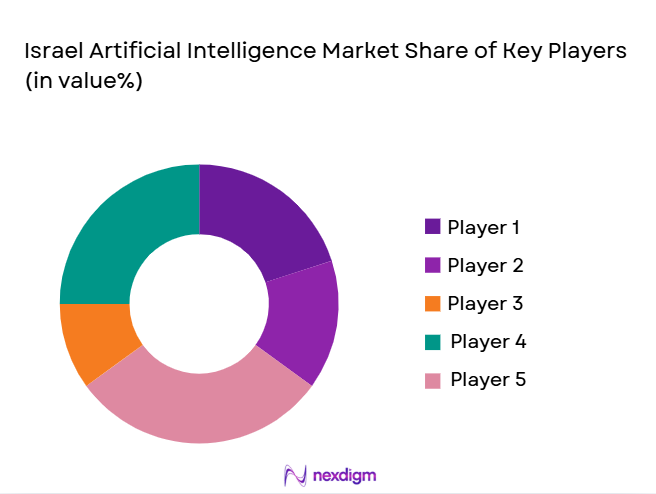
The Israeli artificial intelligence market is highly competitive, marked by the presence of several key players that are focused on developing cutting-edge AI solutions. This competitive landscape is characterized by both local startups and global corporations competing for market share in areas such as healthcare, cybersecurity, and autonomous vehicles. Consolidation in the market is expected as large tech companies partner with or acquire smaller firms to enhance their AI capabilities. Leading players are focused on advancing their technological offerings and expanding their reach into international markets.
| Company Name | Establishment Year | Headquarters | Technology Focus | Market Reach | Key Products | Revenue (USD) | Additional Parameter |
| Intel Corporation | 1968 | Santa Clara, USA | ~ | ~ | ~ | ~ | ~ |
| IBM Corporation | 1911 | Armonk, USA | ~ | ~ | ~ | ~ | ~ |
| Google LLC | 1998 | Mountain View, USA | ~ | ~ | ~ | ~ | ~ |
| Microsoft Corporation | 1975 | Redmond, USA | ~ | ~ | ~ | ~ | ~ |
| Mobileye | 1999 | Jerusalem, Israel | ~ | ~ | ~ | ~ | ~ |
Israel artificial intelligence Market Analysis
Growth Drivers
Increasing Demand for Automation
Automation in various industries such as manufacturing, healthcare, and defense is a significant driver of AI adoption. The rapid growth of AI technologies, particularly machine learning and robotic process automation, has enabled businesses to automate repetitive tasks, optimize production processes, and enhance service delivery. This demand for automation is particularly pronounced in Israel, where the government and private sector are both focused on leveraging AI to improve operational efficiency and foster innovation across industries.
Strong Government Support for AI Research
The Israeli government has been at the forefront of supporting AI research and innovation. Through public investments, incentives for AI startups, and collaborations between academic institutions and the private sector, the government is actively fostering an environment conducive to AI development. This support has led to increased innovation and growth within the AI market, making Israel a global leader in AI research and deployment, especially in areas such as defense and cybersecurity.
Market Challenges
Data Privacy and Security Concerns
As AI technologies become more integrated into everyday life, data privacy and security concerns have emerged as significant challenges. In Israel, where the AI sector is closely linked to defense and security applications, there is an increased focus on ensuring that AI technologies comply with strict regulations regarding data protection. This concern over privacy and data integrity has slowed the adoption of AI solutions in certain sectors, particularly in the healthcare and financial industries, where sensitive data is involved.
Talent Shortage in AI Development
Despite Israel’s strong tech ecosystem, there is a growing demand for AI talent that exceeds the supply. The rapid advancement of AI technologies has created a gap between the skills required by companies and the availability of qualified professionals. As a result, businesses face difficulties in recruiting top-tier talent to develop and implement AI solutions. This talent shortage poses a barrier to the country’s AI market growth and presents challenges for businesses that wish to scale their AI capabilities.
Opportunities
Expansion of AI in Healthcare
The integration of AI in healthcare is an emerging opportunity, particularly in medical diagnostics, personalized treatment plans, and drug development. In Israel, where the healthcare sector is highly advanced, AI can be utilized to streamline medical processes, enhance patient outcomes, and reduce costs. This presents a significant market opportunity for AI companies focused on healthcare, with the potential for breakthroughs in clinical research and patient care management.
AI for Cybersecurity
Israel’s expertise in cybersecurity and its reputation as a global leader in the field presents a unique opportunity for AI integration in cybersecurity solutions. With the increasing number of cyberattacks and data breaches, AI can be leveraged to detect and mitigate security threats more effectively. This trend is expected to drive the adoption of AI-based security systems in both government and private sectors, opening up new avenues for market growth in the cybersecurity space.
Future Outlook
The future of the artificial intelligence market in Israel is poised for significant growth, driven by advancements in machine learning, deep learning, and natural language processing. Over the next five years, technological innovations, coupled with strong government support and an increase in AI-driven startups, will continue to propel the market forward. The demand for AI across key sectors such as defense, healthcare, and finance is expected to rise, creating new opportunities for market expansion. Additionally, the increasing focus on AI ethics and regulatory frameworks will shape the market landscape.
Major Players
• IBM Corporation
• Google LLC
• Microsoft Corporation
• Mobileye
• Amazon Web Services
• Qualcomm Technologies
• Apple Inc.
• NVIDIA Corporation
• SAP SE
• Oracle Corporation
• Salesforce.com
• Palantir Technologies
• Baidu Inc.
• Tencent Holdings
Key Target Audience
• Government and regulatory bodies
• Technology developers and suppliers
• AI and machine learning experts
• Healthcare providers and hospitals
• Financial institutions
• Cybersecurity companies
• Telecommunications companies
Research Methodology
Step 1: Identification of Key Variables
The first step involves identifying key market variables such as product types, platforms, and consumer preferences that influence market trends and dynamics.
Step 2: Market Analysis and Construction
Comprehensive analysis of historical data, market trends, and competitive landscape is conducted to construct a reliable model for forecasting market growth.
Step 3: Hypothesis Validation and Expert Consultation
Expert opinions and feedback from industry professionals are used to validate hypotheses and ensure the accuracy of market projections.
Step 4: Research Synthesis and Final Output
Data is synthesized into a comprehensive report, providing actionable insights and forecasts that align with market dynamics and future growth trends.

- Executive Summary
- Israel Artificial Intelligence Research Methodology
(Definitions, Scope, Industry Assumptions, Market Sizing Approach, Primary & Secondary Research Framework, Data Collection & Verification Protocol, Analytic Models & Forecast Methodology, Limitations & Research Validity Checks)

- Market Definition and Scope
- Value Chain & Stakeholder Ecosystem
- Regulatory / Certification Landscape
- Sector Dynamics Affecting Demand
- Strategic Initiatives & Infrastructure Growth

- Growth Drivers
Rising Demand for Automation
Government Initiatives & Investments in AI
Increase in AI-powered Startups - Market Challenges
High Initial Investment Costs
Data Privacy and Security Concerns
Lack of Skilled Workforce - Market Opportunities
Expansion of AI in Healthcare
Increased AI Applications in Smart Cities
Growth in AI-powered Consumer Products - Trends
Advancement in Deep Learning Technologies
Adoption of AI in Edge Computing
AI-Enabled Robotics in Industrial Automation - Government Regulations & Defense Policy
AI Ethics & Regulatory Framework Development
Data Protection Regulations Impacting AI Growth
Incentives for AI Startups and Innovation - SWOT Analysis (Capability Strengths, Cost Vulnerabilities, Competitive Pressures)
Porter’s Five Forces (Procurement Power, Supplier Concentration, Substitutes, Barriers to Entry)

- By Market Value, 2020-2025
- By Installed Units, 2020-2025
- By Average System Price, 2020-2025
- By System Complexity Tier, 2020-2025

- By System Type (In Value%)
Machine Learning
Natural Language Processing
Robotic Process Automation
Computer Vision
Speech Recognition - By Platform Type (In Value%)
Cloud-based Platforms
On-premise Platforms
Hybrid Platforms
Embedded Platforms
Edge Platforms - By Fitment Type (In Value%)
Software Integration
Hardware Integration
Cloud Integration
API Integration
Custom AI Solutions - By EndUser Segment (In Value%)
Manufacturing
Healthcare
Finance
Retail
Transportation - By Procurement Channel (In Value%)
Direct Sales
Third-party Resellers
Online Platforms
OEM Partnerships
System Integrators

- Market Share Analysis
- Cross Comparison Parameters
(Pricing Strategies, Research & Development Investment, Customer Base, Geographic Presence, Technological Advancements) - SWOT Analysis of Key Competitors
- Pricing & Procurement Analysis
- Key Players
Intel Corporation
IBM Corporation
Google LLC
Microsoft Corporation
Amazon Web Services
NVIDIA Corporation
Qualcomm Technologies
C3.ai, Inc.
Rafael Advanced Defense Systems
Elbit Systems Ltd.
Verint Systems Inc.
Mobileye
Check Point Software Technologies
Tadiran Group
Vayeca Technologies

- Demand from Autonomous Vehicles Industry
- Healthcare AI Applications for Diagnostics
- AI for Financial Fraud Detection
- Adoption of AI in Supply Chain Optimization

- Forecast Market Value, 2026-2035
- Forecast Installed Units, 2026-2035
- Price Forecast by System Tier, 2026-2035
- Future Demand by Platform, 2026-2035


 Request a Sample
 Ask for Customization
 Get a Quote
 Enquire Now