
 Download PDF
 Download PDF
Market Overview
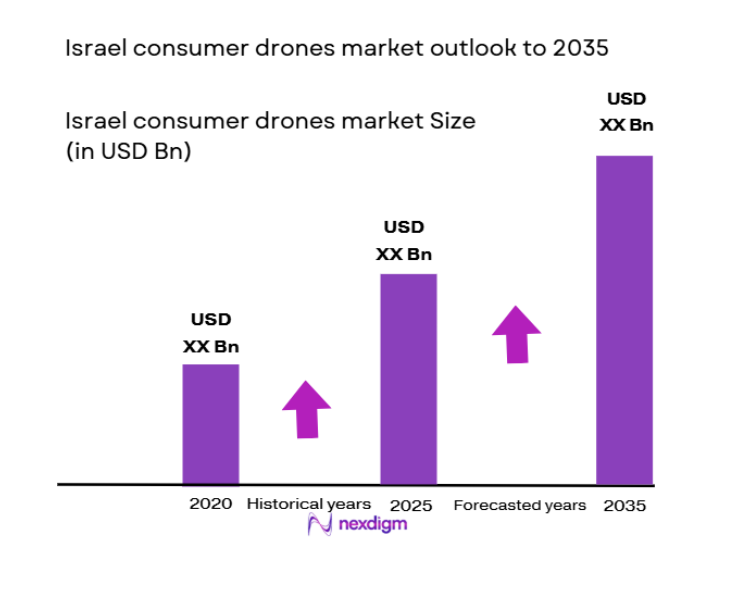
Based on a recent historical assessment, the Israel consumer drones market is valued at USD ~ billion, driven by increasing demand from recreational users, content creators, and hobbyists. The market has seen a rapid shift toward higher-quality camera drones and autonomous flight systems, with improved affordability making drones more accessible to the mass market. Innovation in drone technology, including AI-driven autonomous systems and advanced imaging, continues to expand the market’s reach and capabilities.
Based on a recent historical assessment, Tel Aviv and Herzliya dominate the Israel consumer drones market due to their robust tech ecosystems, high concentration of tech startups, and large consumer bases. These cities are home to key drone developers and serve as hubs for the recreational drone community. The presence of tech-centric infrastructure, such as digital content creation and film production industries, further strengthens their position in driving the adoption of consumer drones across Israel.
Market Segmentation
By Product Type
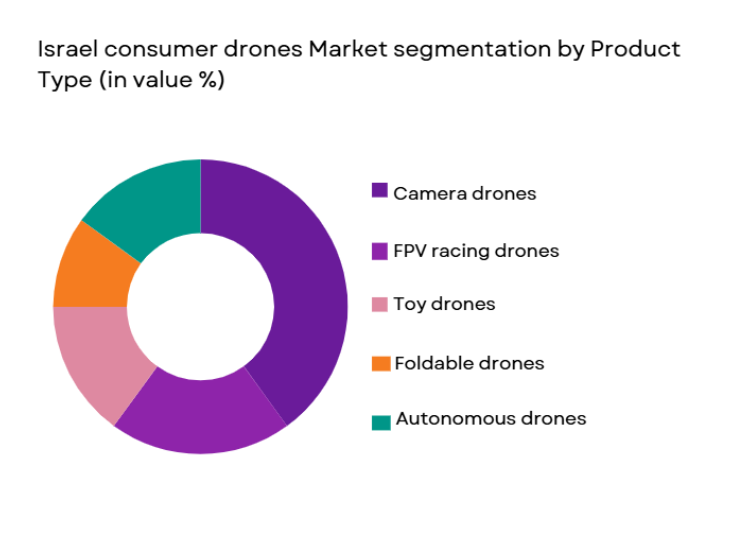
Israel consumer drones market is segmented by product type into camera drones, FPV racing drones, toy drones, foldable drones, and autonomous drones. Recently, camera drones have a dominant market share due to the growing demand for aerial photography and videography among content creators, hobbyists, and influencers. These drones are popular for their high-resolution cameras, easy-to-use flight controls, and relatively affordable pricing. Technological advancements in camera stabilization, imaging sensors, and battery life have further contributed to their widespread adoption, making them an essential tool for both professional and recreational drone operators.
By End User
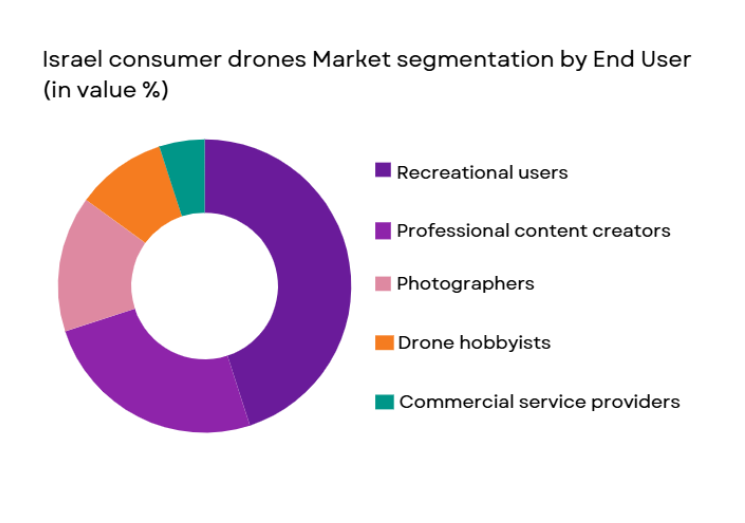
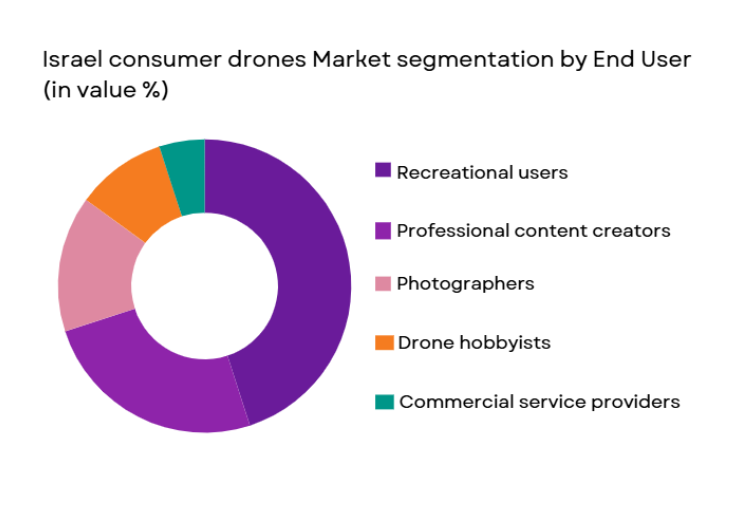
Israel consumer drones market is segmented by end user into recreational users, professional content creators, photographers, drone hobbyists, and commercial service providers. Recently, recreational users have held a dominant market share due to the increasing popularity of drones for leisure activities such as aerial photography, social media content creation, and personal exploration. The affordability of entry-level drones, combined with social media trends and accessible drone technology, has significantly expanded the market’s reach among casual and first-time users. This segment continues to grow as technological improvements and regulatory easing make drones more appealing to everyday consumers.
Competitive Landscape
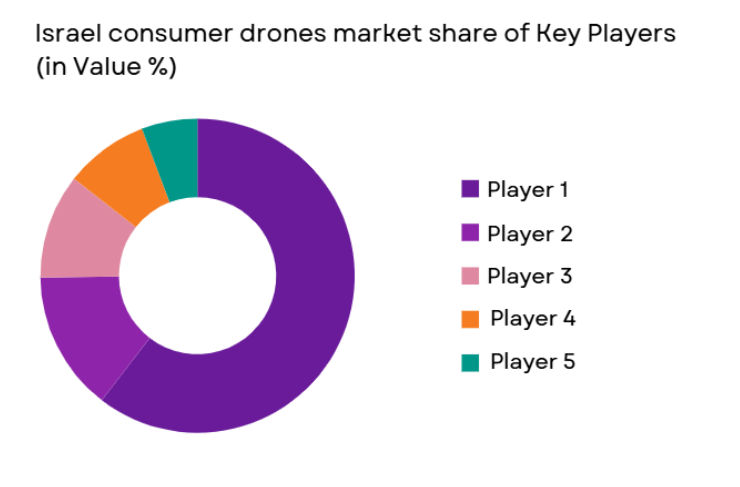
The Israel consumer drones market is characterized by moderate competition, with a mix of established international brands and local manufacturers. Major players in the market have consolidated their positions through product innovation, strong brand recognition, and a focus on consumer-centric features like ease of use, portability, and advanced imaging. Local companies are contributing to the growth of the sector by developing customized drones that cater to the unique preferences of Israeli consumers.
| Company Name | Establishment Year | Headquarters | Technology Focus | Market Reach | Key Products | Revenue | Product Innovation |
| DJI Israel | 2006 | Tel Aviv, Israel | ~ | ~ | ~ | ~ | ~ |
| Parrot Israel | 1994 | Herzliya, Israel | ~ | ~ | ~ | ~ | ~ |
| Skydio Israel | 2014 | Tel Aviv, Israel | ~ | ~ | ~ | ~ | ~ |
| Hubsan Israel | 2009 | Tel Aviv, Israel | ~ | ~ | ~ | ~ | ~ |
| Ehang Israel | 2014 | Tel Aviv, Israel | ~ | ~ | ~ | ~ | ~ |
Israel Consumer Drones Market Analysis
Growth Drivers
Technological Advancements in Consumer Drone Systems
Technological advancements in consumer drone systems are a significant driver of market growth in Israel. The integration of improved camera systems, longer battery life, and enhanced flight stability features has made drones more appealing to both hobbyists and content creators. The development of AI and autonomous flight systems has expanded the capabilities of consumer drones, allowing for safer, more efficient, and automated operations. Drones that can capture high-quality footage with minimal user input are becoming increasingly popular, especially among social media influencers and videographers, driving the market further. Furthermore, the addition of GPS-based navigation, collision avoidance, and obstacle detection systems has contributed to making drones more accessible to beginners, allowing them to operate with greater confidence.
Government Support and Regulatory Easing
Government support and regulatory easing play an important role in promoting the growth of Israel’s consumer drone market. Recent changes in drone-related policies, such as streamlined certification processes and the introduction of more relaxed airspace restrictions, have encouraged consumers to invest in drones. The Civil Aviation Authority of Israel has introduced frameworks to regulate consumer drone use, while simultaneously fostering innovation and ensuring safety standards. These favorable regulatory changes provide a stable environment for both manufacturers and users, thereby driving market expansion. Additionally, initiatives to promote drone technology for both recreational and professional applications have contributed to the overall development of the market.
Market Challenges
Regulatory Hurdles and Airspace Restrictions
Regulatory hurdles and airspace restrictions present significant challenges for the growth of the Israel consumer drones market. Although regulations have eased in recent years, many areas, particularly urban zones, are still subject to strict flying restrictions due to safety and privacy concerns. These limitations reduce the available operating areas for drones, which can be particularly restrictive for recreational users who wish to fly in more populated areas. Additionally, drone operators must navigate a complex set of rules regarding registration, flight altitude, and proximity to airports. These factors pose barriers to wider adoption, especially for new users who are unfamiliar with the regulatory environment.
High Initial Investment Costs
High initial investment costs remain a key challenge for Israel’s consumer drone market. While prices for entry-level drones have become more affordable, high-end models with advanced features such as superior cameras, AI-powered flight systems, and extended battery life still require significant financial investment. As a result, many potential consumers may hesitate to purchase premium drones, particularly those with less disposable income. Furthermore, additional costs for accessories such as extra batteries, replacement parts, and extended warranties contribute to the overall expense. This high cost of ownership can be a deterrent, limiting the growth potential of the market among certain segments.
Opportunities
Growth in Drone-Based Content Creation
The increasing popularity of drone-based content creation presents a significant opportunity in the Israel consumer drones market. Content creators, particularly those in photography, videography, and social media, are increasingly relying on drones to capture high-quality footage that would otherwise be difficult to achieve using traditional equipment. As the demand for aerial footage continues to rise, especially on platforms like Instagram, YouTube, and TikTok, drones are becoming an essential tool for professionals and hobbyists alike. This trend has resulted in the expansion of both the recreational and professional segments of the market. The affordability and accessibility of drones with advanced imaging capabilities will continue to drive the growth of content creation, further fueling the demand for consumer drones.
Adoption of Drones in Educational and STEM Fields
The adoption of drones in educational and STEM (Science, Technology, Engineering, and Mathematics) fields offers a promising growth opportunity for the Israel consumer drones market. Educational institutions, both at the high school and university levels, are increasingly incorporating drones into their curricula to teach students about robotics, engineering, and data science. This trend is supported by the growing recognition of drones as valuable learning tools that encourage creativity, innovation, and problem-solving. As more schools and universities adopt drone-based educational programs, demand for affordable and user-friendly drones will continue to rise. This segment presents an untapped opportunity for drone manufacturers to target educational institutions and STEM-focused consumers, thereby expanding the market base.
Future Outlook
Over the next five years, the Israel consumer drones market is expected to experience steady growth, driven by continued technological advancements, expanding content creation needs, and a more favorable regulatory environment. Increased demand for autonomous drone capabilities, improved camera systems, and better integration with mobile applications will contribute to this growth. As drones become more integrated into everyday life for recreational, professional, and educational purposes, the market is poised to become a significant segment within the global UAV landscape.
Major Players
- DJI Israel
- Parrot Israel
- Skydio Israel
- Hubsan Israel
- Ehang Israel
- Yuneec Israel
- Autel Robotics Israel
- PowerVision Israel
- Walkera Israel
- BetaFPV Israel
- iFlight Israel
- Ryze Tech Israel
- Hover Camera Israel
- Xiro Israel
- Airdog Israel
Key Target Audience
- Drone enthusiasts
- Content creators and videographers
- Photography professionals
- Educational institutions
- Government regulatory bodies
- Startups in UAV development
- Technology-focused consumers
- Commercial drone service providers
Research Methodology
Step 1: Identification of Key Variables
Identification of key variables such as product types, technology, user demographics, and market size was carried out through secondary research and analysis of industry reports.
Step 2: Market Analysis and Construction
Market construction was achieved by gathering data from primary sources including consumer surveys, industry interviews, and financial reports from major drone manufacturers in Israel.
Step 3: Hypothesis Validation and Expert Consultation
Validation of hypotheses was performed through consultations with UAV industry experts, consumer behavior analysts, and drone regulatory bodies in Israel.
Step 4: Research Synthesis and Final Output
The final research report was synthesized to ensure that all findings were aligned, actionable, and accurately represented market dynamics, trends, and opportunities.

- Executive Summary
- Research Methodology (Definitions, Scope, Industry Assumptions, Market Sizing Approach, Primary & Secondary Research Framework, Data Collection & Verification Protocol, Analytic Models & Forecast Methodology, Limitations & Research Validity Checks)

- Market Definition and Scope
- Value Chain & Stakeholder Ecosystem
- Regulatory / Certification Landscape
- Sector Dynamics Affecting Demand
- Strategic Initiatives & Infrastructure Growth

- Growth Drivers
Rising consumer interest in aerial photography and videography
Strong domestic innovation and electronics ecosystem
High smartphone penetration enabling app-based drone control
Growth of social media and digital content creation
Increasing affordability of entry-level and mid-range drones - Market Challenges
Stringent airspace and flight regulations for civilian drones
Privacy and data protection concerns among consumers
Limited flight zones in dense urban environments
Short battery life and payload limitations
High replacement and maintenance costs for premium models - Market Opportunities
Expansion of drone racing and FPV communities
Integration of AI features for autonomous consumer flight
Growth of educational and STEM-focused drone adoption - Trends
Increasing demand for foldable and portable drone designs
Rising popularity of FPV and immersive flying experiences
Enhanced obstacle avoidance and safety features
Integration of cloud-based video storage and editing
Localization of software features for regulatory compliance - Government Regulations & Defense Policy
Civil aviation authority oversight on consumer drone usage
Mandatory registration and licensing frameworks
Alignment of consumer drone rules with national security policy - SWOT Analysis
- Stakeholder and Ecosystem Analysis
- Porter’s Five Forces Analysis
- Competition Intensity and Ecosystem Mapping

- By Market Value, 2020-2025
- By Installed Units, 2020-2025
- By Average System Price, 2020-2025
- By System Complexity Tier, 2020-2025

- By System Type (In Value%)
Camera drones
FPV racing drones
Toy and entry-level drones
Foldable portable drones
Smart autonomous consumer drones - By Platform Type (In Value%)
Multi-rotor drones
Quadcopters
Hexacopters
Micro drones
Nano drones - By Fitment Type (In Value%)
Factory-integrated camera systems
Modular camera payload drones
Software-enhanced flight control drones
AI-assisted navigation drones
App-controlled consumer drones - By EndUser Segment (In Value%)
Recreational hobbyists
Professional content creators
Photography and videography enthusiasts
Educational and training users
Consumer technology adopters - By Procurement Channel (In Value%)
Online direct-to-consumer platforms
Consumer electronics retailers
Specialty drone stores
Brand-authorized distributors
E-commerce marketplaces - By Material / Technology (in Value %)
AI-enabled flight stabilization
Advanced imaging sensors
Lightweight composite frames
GPS and obstacle avoidance systems
Mobile application integration

- Market structure and competitive positioning
- Market share snapshot of major players
- CrossComparison Parameters (Product portfolio diversity, Camera resolution capability, Autonomous flight features, Software ecosystem strength, Regulatory compliance readiness, Pricing competitiveness, Brand recognition, After-sales support quality, Distribution network strength)
- SWOT Analysis of Key Players
- Pricing & Procurement Analysis
- Key Players
DJI Israel
Parrot Israel
Autel Robotics Israel
Skydio Israel
Yuneec Israel
Holy Stone Israel
Hubsan Israel
Xiaomi Drone Division
PowerVision Israel
Walkera Israel
BetaFPV Israel
iFlight Israel
Emax Israel
Ryze Tech Israel
Hover Camera Israel

- Consumers prioritize ease of use and automated flight modes
- High demand for high-resolution cameras and stabilization
- Growing awareness of regulatory compliance among hobbyists
- Preference for compact drones suitable for travel and recreation

- Forecast Market Value, 2026-2035
- Forecast Installed Units, 2026-2035
- Price Forecast by System Tier, 2026-2035
- Future Demand by Platform, 2026-2035


 Request a Sample
 Ask for Customization
 Get a Quote
 Enquire Now