
 Download PDF
 Download PDF
Market Overview
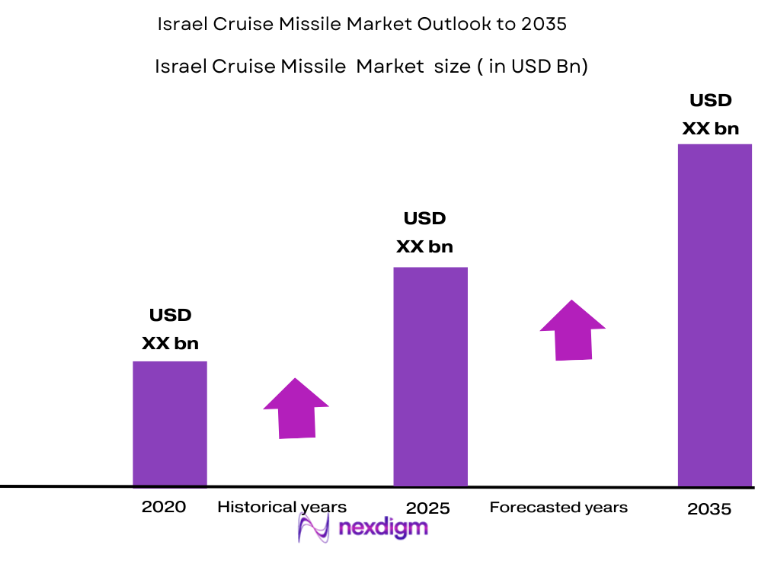
The Israel Cruise Missile market is valued at over USD ~ billion, driven by increasing defense spending and the growing demand for advanced missile systems in the Middle East. This growth is supported by the development of cutting-edge cruise missile technologies, including long-range capabilities and precision guidance systems. Geopolitical tensions and the need for enhanced defense systems in the region are key drivers of this market expansion. Moreover, Israel’s advanced aerospace and defense capabilities significantly contribute to the market’s growth. Israel maintains a dominant position in the global cruise missile market, driven by its advanced military infrastructure and technological expertise in missile systems. The country’s strategic location in the Middle East and strong defense policies support its leadership role. Israel’s defense collaborations with international partners, as well as its emphasis on research and development, further consolidate its dominance. This, coupled with Israel’s reputation for innovation in defense technologies, continues to strengthen its position in the market.
Market Segmentation
By Product Type
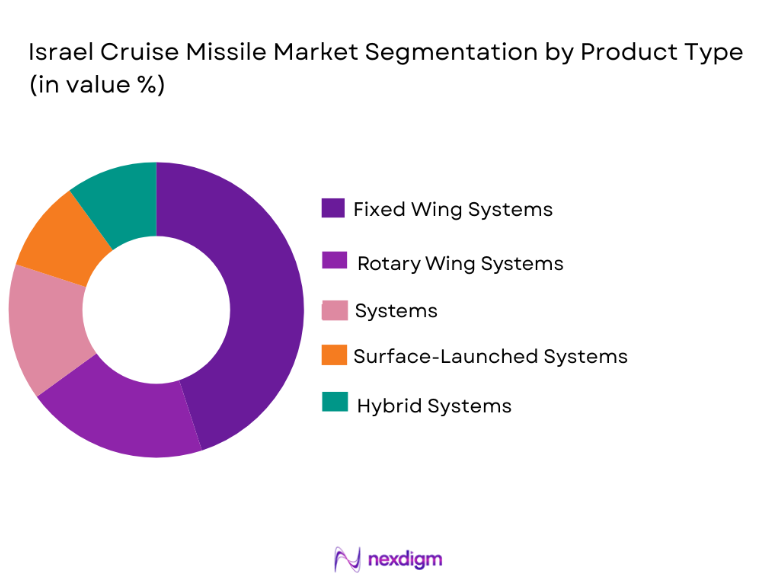
The Israel Cruise Missile market is segmented by product type into fixed-wing systems, rotary-wing systems, submarine-launched systems, surface-launched systems, and hybrid systems. Fixed-wing systems currently hold a dominant market share due to their versatility and effectiveness in long-range strikes. These systems are equipped with advanced navigation and guidance technologies, enabling them to target both stationary and moving threats with high accuracy. The demand for fixed-wing systems is further driven by their integration into various military platforms, such as fighter jets, bombers, and reconnaissance aircraft, making them a preferred choice for defense forces.
By Platform Type
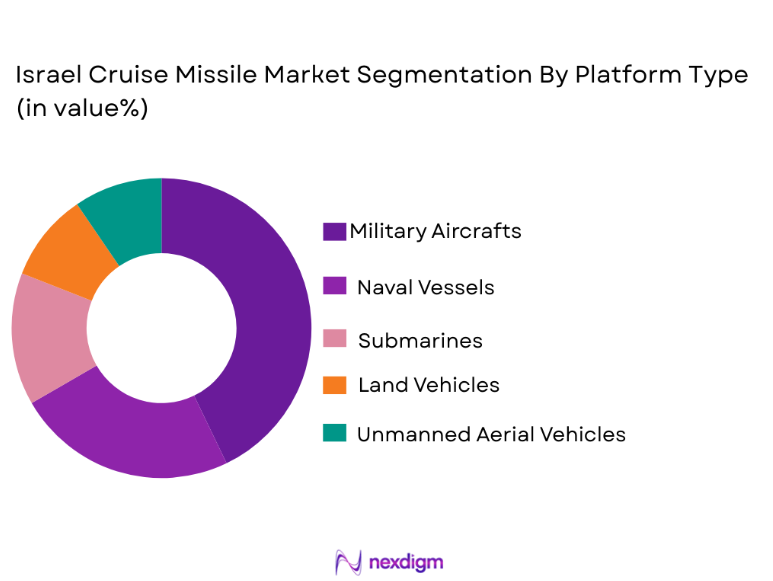
The market is also segmented by platform type into military aircraft, naval vessels, submarines, land vehicles, and unmanned aerial vehicles (UAVs). Military aircraft dominate the market due to their high operational versatility and ability to launch cruise missiles during both air-to-ground and air-to-air operations. Aircrafts equipped with cruise missiles provide long-range strike capabilities that are essential for precision targeting modern warfare. The increasing investments in next-generation fighter jets and bombers further strengthen the dominance of this platform.
Competitive Landscape
The Israel Cruise Missile market is characterized by strong competition among a few major players, with significant consolidation in the sector. Leading companies are enhancing their product offerings by focusing on advanced missile technologies, such as extended range and precision-guided systems. Additionally, these players are forming strategic partnerships with governments and defense contractors to maintain market leadership. Israel’s established defense industry, along with global collaborations, strengthens its competitive position in the international market.
|
Company Name |
Establishment Year | Headquarters | Technology Focus | Market Reach | Key Products | Revenue | Additional Parameter |
| Rafael Advanced Defense Systems | 1948 | Haifa, Israel | ~ | ~
|
~
|
~
|
~
|
| Israel Aerospace Industries (IAI) | 1953 | Lod, Israel | ~
|
~
|
~
|
~
|
~
|
| Elbit Systems | 1966 | Haifa, Israel | ~
|
~
|
~
|
~
|
~
|
| Lockheed Martin | 1912 | Bethesda, USA | ~
|
~
|
~
|
~
|
~
|
| Raytheon Technologies | 2020 | Waltham, USA | ~ | ~ | ~ | ~ | ~ |
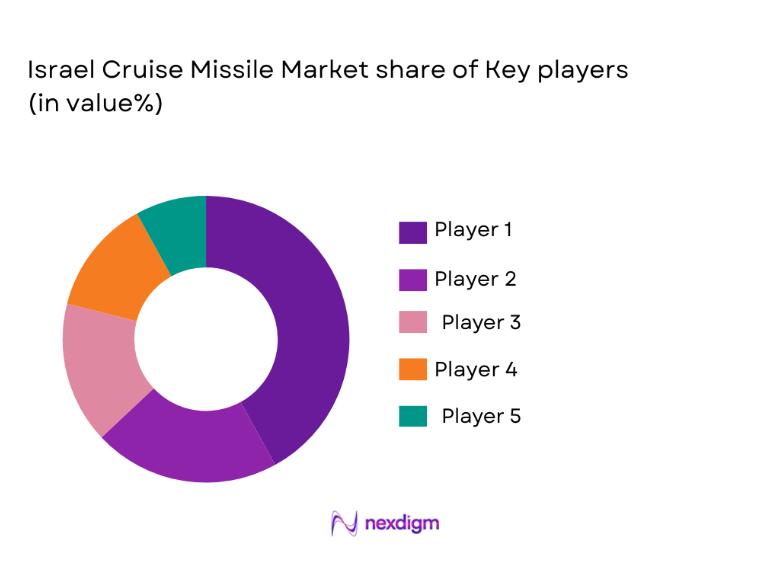
Israel Cruise Missile Market Analysis
Growth Drivers
Increased defense budgets in the Middle East
The Middle East’s defense budgets have seen significant growth due to geopolitical tensions and security concerns in the region. Countries in this area are focusing on enhancing their defense capabilities, particularly missile systems, to strengthen national security. Israel, with its advanced missile technologies, is well-positioned to meet the growing demand. The increased defense spending from regional nations boosts the market for Israel’s cruise missile systems, creating new opportunities for exports and collaborations in the region.
Technological advancements in missile systems
Technological innovation is a key driver for the growth of the Israel Cruise Missile market. Advancements in missile guidance systems, range, and stealth capabilities are enhancing the effectiveness and precision of Israel’s cruise missiles. The integration of AI and machine learning in missile navigation and targeting systems is improving mission success rates and operational flexibility. These technological improvements not only make Israel’s missiles more attractive to military forces but also create a competitive edge in the global defense market, driving demand for advanced missile systems.
Market Challenges
High costs of development and production
The cost of developing and producing advanced cruise missile systems remains a significant challenge. These systems are complex, involving cutting-edge technologies such as long-range capabilities, precision guidance, and stealth features. The high development and manufacturing costs limit accessibility for smaller defense forces and nations with constrained budgets. Additionally, the maintenance of these systems requires substantial financial investment, which adds to the overall cost burden on military organizations. These high costs present a challenge for widespread adoption, particularly for smaller and developing countries.
Geopolitical instability affecting defense exports
Geopolitical tensions and instability can disrupt the market for cruise missiles, especially in regions with sensitive defense situations. Export restrictions and arms control regulations make it difficult for certain countries to acquire advanced missile technologies. Countries experiencing political instability or facing sanctions may be excluded from accessing Israel’s advanced defense technologies. This challenge impacts the overall market growth by limiting the reach of missile systems and hindering potential sales to new customers in conflict-prone areas.
Opportunities
Expansion of missile defense systems in allied countries
Israel’s cruise missile technology presents significant opportunities for expansion, particularly in allied countries in the Middle East, Europe, and beyond. As geopolitical tensions rise globally, defense forces are increasingly focused on bolstering their defense systems, and missile defense systems are seen as essential to ensuring national security. Israel’s innovative cruise missile systems, known for their precision, range, and reliability, are well-positioned to meet the needs of these countries. Furthermore, the growing trend of defense collaborations and strategic partnerships between Israel and countries like the United States, India, and various NATO members offers considerable growth potential for Israeli manufacturers. With many countries looking to modernize their defense fleets and enhance their missile capabilities, Israel could expand its influence and increase market share in these regions.
Integration of AI in missile navigation systems
One of the key trends shaping the Israel Cruise Missile market is the integration of artificial intelligence (AI) and machine learning algorithms in missile guidance and navigation systems. AI-enhanced systems improve the missile’s ability to target threats with greater precision, even in complex environments. The trend towards AI integration is expected to drive the development of more sophisticated and autonomous cruise missile systems, making them faster, more accurate, and harder to intercept. This trend is transforming the way military forces approach missile warfare and is helping Israel maintain its technological edge in the global defense market. Furthermore, AI is enhancing decision-making capabilities during missions, enabling the launch of missiles with improved timing and effectiveness. This trend is expected to increase the adoption of Israel’s cruise missile technology across global defense sectors.
Future Outlook
The future outlook for the Israel Cruise Missile market is promising, with expected growth driven by advancements in missile technologies and increasing defense budgets worldwide. Over the next few years, Israel is likely to continue its focus on developing advanced cruise missile systems, including hypersonic and AI-powered models. The growing demand for precision-guided weapons, coupled with Israel’s strong defense alliances and expanding geopolitical influence, will contribute to the market’s expansion. Furthermore, regulatory support for defense exports and the increasing importance of missile defense systems in modern warfare will drive demand across both military and commercial platforms.
Major Players
- Rafael Advanced Defense Systems
- Israel Aerospace Industries (IAI)
- Elbit Systems
- Lockheed Martin
- Raytheon Technologies
- Boeing
- General Dynamics
- Thales Group
- MBDA
- L3 Technologies
- BAE Systems
- Northrop Grumman
- Kongsberg Gruppen
- Saab Group
- Honeywell Aerospace
Key Target Audience
- Investments and venture capitalist firms
- Government and regulatory bodies
- Aerospace defense contractors
- Military and defense agencies
- Defense equipment manufacturers
- International defense ministries
- Security forces and agencies
- Aerospace companies
Research Methodology
Step 1: Identification of Key Variables
Identify and define key variables impacting the cruise missile market, such as technological advancements, geopolitical factors, and military spending.
Step 2: Market Analysis and Construction
Conduct comprehensive market analysis to understand market drivers, customer preferences, and competition in the cruise missile sector.
Step 3: Hypothesis Validation and Expert Consultation
Validate market hypotheses through consultations with defense experts, engineers, and strategic consultants in the missile defense industry.
Step 4: Research Synthesis and Final Output
Synthesize findings from analysis and expert input to produce a detailed, actionable market report tailored to the needs of stakeholders.

- Executive Summary
- Research Methodology (Definitions, Scope, Industry Assumptions, Market Sizing Approach, Primary & Secondary Research Framework, Data Collection & Verification Protocol, Analytic Models & Forecast Methodology, Limitations & Research Validity Checks)

- Market Definition and Scope
- Value Chain & Stakeholder Ecosystem
- Regulatory / Certification Landscape
- Sector Dynamics Affecting Demand
- Strategic Initiatives & Infrastructure Growth

- Growth Drivers
Increasing defense budgets in the Middle East
Technological advancements in missile guidance systems
Rising geopolitical tensions and regional security concerns
Military modernization programs in Israel
Regulatory focus on missile defense systems - Market Challenges
High costs of development and production of cruise missiles
Technological limitations in long-range missile systems
Geopolitical instability affecting defense exports
Maintenance and operational costs for advanced systems
Regulatory hurdles in missile technology proliferation - Market Opportunities
Expansion of missile defense systems in allied countries
Rising demand for multi-role, versatile cruise missiles
Technological innovations in stealth and range capabilities - Trends
Growing focus on precision-guided munitions
Integration of AI in missile navigation systems
Rising demand for air-launched cruise missiles
Increase in joint defense initiatives and collaborations
Development of hypersonic cruise missiles - Government Regulations & Defense Policy
National security policies driving defense investments
International arms control agreements shaping missile exports
Government regulations on advanced missile technologies - SWOT Analysis
- Stakeholder and Ecosystem Analysis
- Porter’s Five Forces Analysis
- Competition Intensity and Ecosystem Mapping

- By Market Value, 2020-2025
- By Installed Units, 2020-2025
- By Average System Price, 2020-2025
- By System Complexity Tier, 2020-2025

- By System Type (In Value%)
Fixed Wing Systems
Rotary Wing Systems
Submarine-Launched Systems
Surface-Launched Systems
Hybrid Systems - By Platform Type (In Value%)
Military Aircrafts
Naval Vessels
Submarines
Land Vehicles
Unmanned Aerial Vehicles (UAVs) - By Fitment Type (In Value%)
OEM Fitment
Aftermarket Fitment - By End User Segment (In Value%)
Military Forces
Defense Contractors
Private Aerospace Companies
Government Agencies
Security Forces - By Procurement Channel (In Value%)
Direct Purchase
Third-Party Procurement
OEM Distribution
Government Procurement
Military Procurement - By Material / Technology (in Value%)
Solid Propellant Systems
Turbojet Technology
Scramjet Technology
Guided Systems
Advanced Warhead Materials

- Market structure and competitive positioning
- Market share snapshot of major players
- Cross Comparison Parameters (System Type, Platform Type, Procurement Channel, Material / Technology, Fitment Type, End User, Pricing Strategy, Regional Presence, Customer Base, R&D Investment)
- SWOT Analysis of Key Competitors
- Pricing & Procurement Analysis
- Key Players
Rafael Advanced Defense Systems
Israel Aerospace Industries (IAI)
Elbit Systems
Lockheed Martin
Northrop Grumman
Raytheon Technologies
Boeing
General Dynamics
Thales Group
MBDA
Saab Group
Kongsberg Gruppen
L3 Technologies
Bae Systems
Honeywell Aerospace

- Increasing demand from military forces for advanced missile systems
- Focus on regional defense contractors and collaborations
- Government-driven defense contracts enhancing growth prospects
- Rising investments from private aerospace companies

- Forecast Market Value, 2026-2035
- Forecast Installed Units, 2026-2035
- Price Forecast by System Tier, 2026-2035
- Future Demand by Platform, 2026-2035


 Request a Sample
 Ask for Customization
 Get a Quote
 Enquire Now