
 Download PDF
Market Overview
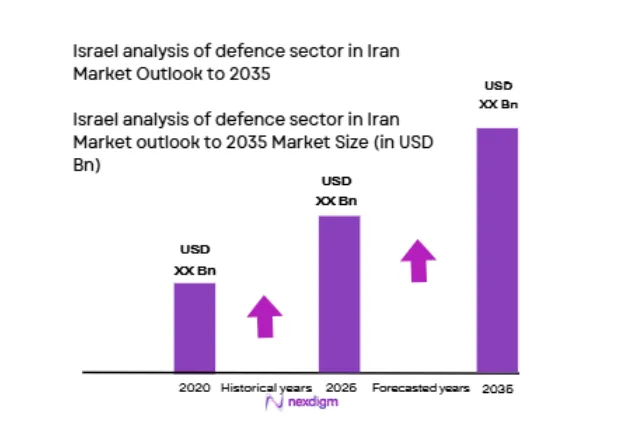
The defense sector in Israel and Iran has seen dynamic shifts in recent years, driven by factors such as regional conflicts, technological advancements, and defense spending. Based on a recent historical assessment, the market is valued at USD ~ billion, largely influenced by military investments and the strategic importance of defense technologies. Israel’s significant defense export activities and Iran’s focus on enhancing its military capabilities further support the growing demand for advanced weaponry, surveillance systems, and cyber defense technologies.
The dominance of Israel in defense exports can be attributed to its advanced technological capabilities, strategic alliances with Western nations, and a robust defense industry. Iran, on the other hand, is increasing its self-reliance in defense production, particularly in missile technology and air defense systems, due to sanctions and regional security concerns. The demand for advanced defense systems in both countries is driven by geopolitical instability and their strategic military goals.
Market Segmentation
By Product Type
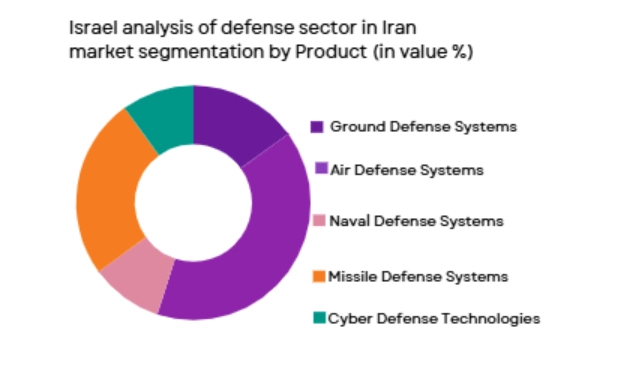
Israel defense sector is segmented by product type into ground defense systems, air defense systems, naval defense systems, missile defense systems, and cyber defense technologies. Recently, air defense systems have gained a dominant market share due to increasing investments in missile defense technologies, particularly given the regional missile threats. Israel’s advanced Iron Dome system and missile interception technologies have played a significant role in driving demand. This sub-segment is expected to maintain dominance with the growing focus on countering missile threats, especially with Iran’s advancements in missile technology.
By Platform Type
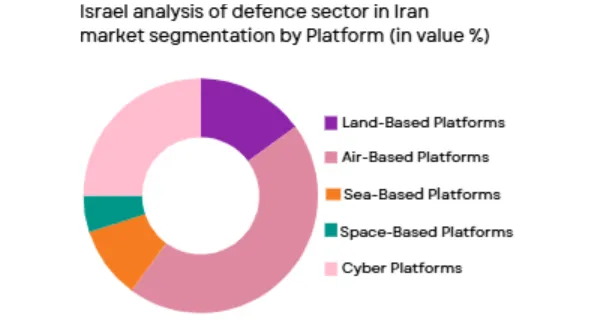
The Israel defense sector is segmented by platform type into land-based platforms, air-based platforms, sea-based platforms, space-based platforms, and cyber platforms. Air-based platforms, such as fighter jets and unmanned aerial vehicles (UAVs), have a dominant market share due to Israel’s strong aerospace sector and advanced air defense technologies. These platforms are integral to Israel’s military strategy, which focuses heavily on air superiority and intelligence-gathering capabilities, enabling dominance in the defense space.
Competitive Landscape
The competitive landscape of the defense sector in Israel and Iran is characterized by a mix of state-owned enterprises, private contractors, and international defense players. Israel’s defense market is highly consolidated with a few major players dominating the landscape, while Iran’s defense market is expanding with local manufacturers increasingly taking up the defense requirements due to sanctions and political isolation. Both countries focus heavily on innovation, leading to a competitive environment where technological advancements are the key differentiators.
| Company Name | Establishment Year | Headquarters | Technology Focus | Market Reach | Key Products | Revenue | Additional Parameter |
| Elbit Systems | 1966 | Haifa, Israel | ~ | ~ | ~ | ~ | ~ |
| Israel Aerospace Industries (IAI) | 1953 | Lod, Israel | ~ | ~ | ~ | ~ | ~ |
| Rafael Advanced Defense Systems | 2002 | Haifa, Israel | ~ | ~ | ~ | ~ | ~ |
| IMI Systems | 1933 | Ramat HaSharon | ~ | ~ | ~ | ~ | ~ |
| Iran Electronics Industries | 1981 | Tehran, Iran | ~ | ~ | ~ | ~ | ~ |
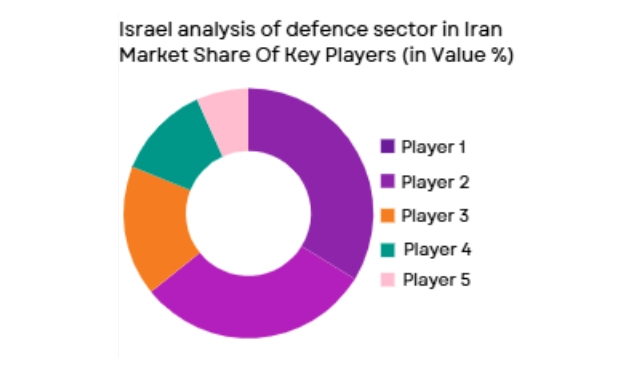
Israel Defense Sector in Iran Market Analysis
Growth Drivers
Technological Innovation
Israel’s dominance in the defense market is significantly driven by technological innovation, particularly in areas such as missile defense, UAVs, and cybersecurity. The continuous improvement of systems like Iron Dome, David’s Sling, and missile interception technologies has helped Israel maintain a competitive edge. Moreover, Israel’s robust defense R&D investments ensure that its products stay ahead of global trends, attracting international interest and strategic partnerships. The continuous evolution of cyber warfare capabilities has also opened new growth avenues, positioning Israel as a leader in the cybersecurity defense sector. The integration of AI and machine learning into defense systems further strengthens its capabilities, providing a significant advantage in the global defense landscape.
Regional Instability and Security Concerns
The ongoing geopolitical tensions in the Middle East, particularly with Iran’s expanding military capabilities, are significant growth drivers for the defense sector in Israel. The region’s instability, exacerbated by threats from groups like Hezbollah and the expansion of Iran’s missile and nuclear programs, has led to an increased demand for advanced air and missile defense systems. The strategic importance of Israel in countering regional threats from state and non-state actors has solidified its role as a key player in the defense market. With heightened security concerns, there is a sustained investment in defensive technologies, including border security systems and missile defense solutions, creating long-term market growth.
Market Challenges
Technological Sanctions
One of the primary challenges faced by Iran’s defense sector is the technological sanctions imposed by various international bodies. These sanctions limit Iran’s access to advanced military technologies and defense systems from global suppliers, forcing the country to rely on domestic production. While this has spurred local innovation, it has also constrained Iran’s ability to modernize its defense infrastructure rapidly. Despite significant efforts in self-reliance, Iran’s technological limitations in areas such as air defense, missile systems, and UAVs have hindered its overall defense capabilities, requiring heavy investments in R&D.
Defense Budget Constraints
For Israel, the defense budget has traditionally been a challenge, especially as military spending has to compete with other national priorities. While Israel’s military budget is substantial, the rising costs of advanced technologies and defense systems, along with the growing need for modernization, create fiscal pressures. This budgetary constraint can limit the extent to which Israel can maintain and develop its defense systems, particularly in the face of competing global defense needs and political pressures. Managing this balance between technological advancements and budget constraints remains a key challenge.
Opportunities
Cyber Defense Advancements
One of the key opportunities in the defense sector in both Israel and Iran lies in the growing demand for advanced cyber defense systems. As both nations face increasing cyber threats, the need for robust cybersecurity technologies in military operations is critical. Israel, with its leadership in cybersecurity technologies, has significant opportunities to expand its defense exports in this domain. On the other hand, Iran, despite facing limitations in other defense technologies, has a chance to build its cyber defense capabilities, leveraging domestic expertise and resources. The global shift towards cybersecurity as an integral part of defense strategies presents a substantial growth opportunity for both countries.
Advanced Missile Defense Systems
As missile threats become increasingly sophisticated in the region, both Israel and Iran have an opportunity to enhance their missile defense capabilities. Israel’s Iron Dome and David’s Sling systems already provide robust defense against missile attacks, and there is potential for further innovation and sales expansion in the global market. Similarly, Iran’s missile program is developing rapidly, and there is an opportunity for the country to focus on enhancing its missile defense systems to ensure regional security. This ongoing demand for advanced missile defense solutions presents long-term opportunities for both nations to strengthen their military defense frameworks.
Future Outlook
The defense market in Israel and Iran is expected to continue its growth over the next five years, driven by technological advancements, increased defense spending, and strategic military needs. Israel’s focus on technological innovation, particularly in missile defense and cyber security, will likely maintain its leadership in the region. Meanwhile, Iran’s self-reliance efforts and missile technology development will increase its regional military influence. Both countries will continue to prioritize defense innovation as geopolitical instability persists in the Middle East, ensuring a robust demand for advanced defense systems.
Major Players
- Elbit Systems
- Israel Aerospace Industries (IAI)
- Rafael Advanced Defense Systems
- IMI Systems
- Iran Electronics Industries
- Elta Systems
- Orbital ATK
- BAE Systems
- Lockheed Martin
- Northrop Grumman
- Raytheon Technologies
- Boeing
- General Dynamics
- Thales Group
- Leonardo
Key Target Audience
- Investments and venture capitalist firms
- Government and regulatory bodies
- National defense ministries
- Private military contractors
- Aerospace and defense companies
- Cybersecurity firms
- Military R&D organizations
- Intelligence agencies
Research Methodology
Step 1: Identification of Key Variables
The key variables impacting the defense sector are identified through market research, expert opinions, and government reports.
Step 2: Market Analysis and Construction
Data is collected from reliable sources and analyzed to estimate market sizes, trends, and growth forecasts.
Step 3: Hypothesis Validation and Expert Consultation
Experts from the defense industry are consulted to validate the hypotheses formed based on initial data collection.
Step 4: Research Synthesis and Final Output
The gathered data is synthesized, and the final market report is prepared for presentation, highlighting critical insights and strategic recommendations.

- Executive Summary
- Research Methodology (Definitions, Scope, Industry Assumptions, Market Sizing Approach, Primary & Secondary Research Framework, Data Collection & Verification Protocol, Analytic Models & Forecast Methodology, Limitations & Research Validity Checks)

- Market Definition and Scope
- Value Chain & Stakeholder Ecosystem
- Regulatory / Certification Landscape
- Sector Dynamics Affecting Demand
- Strategic Initiatives & Infrastructure Growth

- Growth Drivers
Geopolitical Tensions and Regional Security
Increasing Military Budgets in the Middle East
Technological Advancements in Defense Systems
Strategic Military Partnerships and Alliances
Iran’s Military Expansion and Development - Market Challenges
Sanctions and Political Barriers
High Costs of Defense Innovation
Limited Access to Global Markets
Technological Constraints in Developing Countries
Regional Instability and Its Impact on Defense Spending - Market Opportunities
Expansion of Cyber Defense Systems
Growth of Joint Defense Ventures
Increasing Demand for Advanced Missile Systems - Trends
Increased Use of Autonomous Military Systems
Integration of AI in Military Strategy
Growth of Integrated Defense Solutions
Rise in Space-Based Defense Technology
Shift Toward Multi-Domain Warfare - Government Regulations & Defense Policy
Sanctions and International Arms Embargoes
Government Defense Procurement Policies
Shift Toward Regional Defense Alliances - SWOT Analysis
- Stakeholder and Ecosystem Analysis
- Porter’s Five Forces Analysis
- Competition Intensity and Ecosystem Mapping

- By Market Value, 2020-2025
- By Installed Units, 2020-2025
- By Average System Price, 2020-2025
- By System Complexity Tier, 2020-2025

- By System Type (In Value%)
Ground Defense Systems
Air Defense Systems
Naval Defense Systems
Cyber Defense Technologies
Missile Defense Systems - By Platform Type (In Value%)
Land-Based Platforms
Air-Based Platforms
Sea-Based Platforms
Cyber Platforms
Space-Based Platforms - By Fitment Type (In Value%)
Retrofit Systems
New Installation Systems
Upgraded Systems
Integrated Systems
Modular Defense Solutions - By End-user Segment (In Value%)
National Defense Forces
Private Defense Contractors
Cybersecurity Firms
Intelligence Agencies
Research Institutions - By Procurement Channel (In Value%)
Government Contracts
Private Sector Procurement
International Collaborations
Indirect Procurement Channels
Direct Defense Procurement - By Material / Technology (in Value%)
Advanced Weaponry Technologies
AI and Machine Learning in Defense
Space Defense Technologies
Missile Technology
Cyber Defense Infrastructure

- Market structure and competitive positioning
Market share snapshot of major players - Cross Comparison Parameters (Platform Type, Procurement Channel, System Type, Material/Technology, Market Value)
- SWOT Analysis of Key Competitors
- Pricing & Procurement Analysis
- Key Players
Elbit Systems
Israel Aerospace Industries
Rafael Advanced Defense Systems
IMI Systems
IAI Malat
Shahak Industries
C4I Technologies
Magal Security Systems
Opgal
SIBAT
Rada Electronic Industries
Aeronautics Defense Systems
Tadiran Group
Heron Systems
Cyberbit

- Impact of Military Spending on National Defense Forces
- Growing Demand for Advanced Cybersecurity Solutions
- Private Sector Participation in Military Projects
- Role of Intelligence Agencies in Defense Innovation

- Forecast Market Value, 2026-2035
- Forecast Installed Units, 2026-2035
- Price Forecast by System Tier, 2026-2035
- Future Demand by Platform, 2026-2035


 Request a Sample
 Ask for Customization
 Get a Quote
 Enquire Now