
 Download PDF
 Download PDF
Market Overview
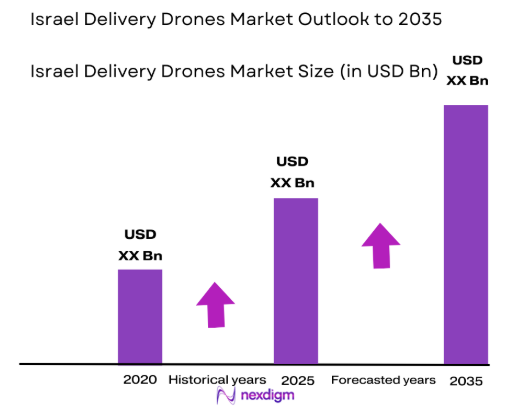
The Israel Delivery Drones Market is valued at approximately USD ~ billion, driven by increased demand for autonomous delivery solutions, especially in urban areas. This market is expanding due to technological advancements in drone technology, especially in navigation systems, and regulatory frameworks that are becoming more supportive of drone delivery services. These factors combined have made delivery drones a viable solution for businesses looking to streamline last-mile delivery operations, especially in the wake of the global e-commerce boom.
The dominant cities in the Israel Delivery Drones Market are Tel Aviv and Jerusalem, which are central hubs for technological innovation. Israel’s strong focus on high-tech research and development, alongside government support for drone adoption, contributes to its position as a leader in drone technology. Furthermore, Israel’s unique geographical conditions, including compact urban areas and advanced infrastructure, make it an ideal testing ground for delivery drones, leading to further industry growth.
Market Segmentation
By Product Type
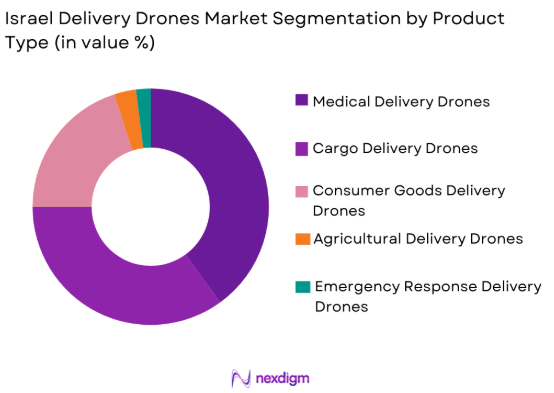
The Israel Delivery Drones Market is segmented by product type into medical delivery drones, cargo delivery drones, and consumer goods delivery drones. Recently, medical delivery drones have dominated the market share due to the increasing demand for faster and more reliable delivery of medical supplies, especially in remote and hard-to-reach areas. The COVID-19 pandemic further emphasized the need for contactless, rapid medical deliveries, propelling the demand for this sub-segment. Additionally, the efficiency and life-saving potential of medical delivery drones have made them highly sought after by healthcare providers and governmental organizations.
By Platform Type
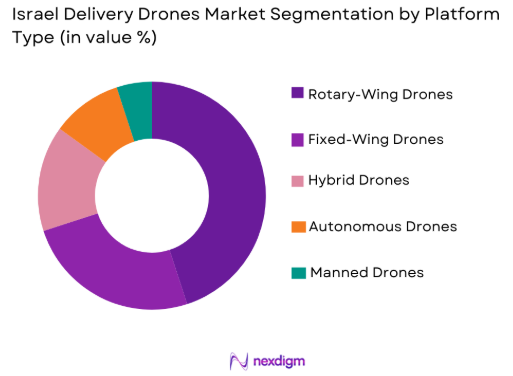
The Israel Delivery Drones Market is segmented by platform type into fixed-wing drones, rotary-wing drones, hybrid drones, autonomous drones, and manned drones. Recently, rotary-wing drones have dominated the market share due to their ability to take off and land vertically, making them ideal for urban environments with limited space for traditional runway-based operations. These drones can navigate complex terrains and are highly adaptable to various delivery applications, from consumer goods to medical supplies. Their versatility and efficiency in short-distance deliveries in densely populated areas have contributed to their dominance in the market. Moreover, advancements in battery technology and autonomous flight systems have further enhanced the capabilities of rotary-wing drones, making them increasingly reliable for commercial use.
Competitive Landscape
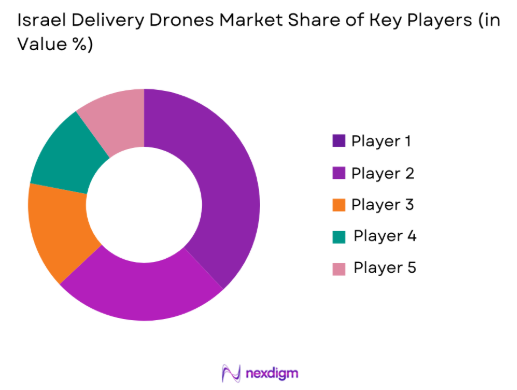
The competitive landscape of the Israel Delivery Drones Market is shaped by a mix of established aerospace companies and innovative startups. The presence of global players, combined with local government support for drone technology, fosters a dynamic competitive environment. Major players dominate the market through technology patents, partnerships with logistics companies, and infrastructure developments. Market consolidation is expected to continue as large firms collaborate with startups to expand their market offerings and technological capabilities.
| Company Name | Establishment Year | Headquarters | Technology Focus | Market Reach | Key Products | Revenue (USD) | Key Partnership |
| Israel Aerospace Industries | 1953 | Tel Aviv | ~ | ~ | ~ | ~ | ~ |
| Flytrex | 2013 | Herzliya | ~ | ~ | ~ | ~ | ~ |
| Percepto | 2014 | Petah Tikva | ~ | ~ | ~ | ~ | ~ |
| Matternet | 2011 | Tel Aviv | ~ | ~ | ~ | ~ | ~ |
| Urban Aeronautics | 2016 | Tel Aviv | ~ | ~ | ~ | ~ | ~ |
Israel Delivery Drones Market Analysis
Growth Drivers
Technological Advancements in Drone Systems
The growth of the Israel Delivery Drones Market is significantly driven by continuous advancements in drone technology. The introduction of autonomous navigation systems, AI, and advanced sensors has allowed drones to operate more safely and efficiently, even in challenging urban environments. This evolution has made drones more reliable for various delivery services, especially in metropolitan areas with complex infrastructure. As the technology behind drones improves, operational costs decrease, making it an attractive option for delivery services looking to reduce time and expenses. Furthermore, advancements in battery technology are helping extend the flight range of drones, allowing for long-distance deliveries. As these technological improvements become more widely available, the cost-effectiveness and efficiency of drones will continue to drive market growth. With improved connectivity and communication systems, drones are now better equipped to handle a variety of delivery tasks, from consumer goods to medical supplies, broadening their applications in the logistics industry.
Regulatory Support and Integration with Existing Infrastructure
Another key driver for the growth of the Israel Delivery Drones Market is the growing regulatory support and integration with existing infrastructure. Governments, particularly in Israel, are increasingly recognizing the potential of drones for improving delivery services and addressing logistical challenges. To ensure safe drone operations, regulatory bodies are establishing clear frameworks that allow drones to integrate smoothly into urban airspaces. In Israel, this regulatory environment is enabling pilot projects and large-scale commercial drone operations, with clear guidelines on air traffic management and drone safety. As regulations become more defined and supportive of drone operations, companies will be more inclined to adopt this technology. Additionally, regulatory support is promoting the development of infrastructure such as drone hubs and charging stations, which further facilitates the integration of delivery drones into existing logistics systems. This supportive regulatory framework is essential for building trust among stakeholders and driving market adoption.
Market Challenges
High Initial Investment and Maintenance Costs
One of the major challenges facing the Israel Delivery Drones Market is the high initial investment required for acquiring and maintaining drones. While the technology is advancing rapidly, drones with autonomous navigation and high payload capacities are expensive. The cost of purchasing a fleet of drones for commercial use can be prohibitive, especially for small businesses or startups that lack the financial resources to make such an investment. Moreover, maintaining these drones, including regular servicing, battery replacements, and system upgrades, adds an ongoing financial burden. These expenses can deter smaller companies from entering the market, limiting the growth potential for drone delivery services. In addition, regulatory compliance and certification requirements add to the overall cost of operations, making it harder for businesses to achieve profitability in the short term. The high upfront costs and continuous maintenance requirements remain a significant challenge that may slow down the adoption of drones for delivery services.
Limited Battery Life and Payload Capacity
Another critical challenge for the Israel Delivery Drones Market is the limitation in battery life and payload capacity. While drones have made significant strides in terms of technology, the current battery systems still pose significant restrictions. The limited battery life impacts the operational range of drones, preventing them from making long-distance deliveries, especially in areas with low population density. This limitation means that drones are primarily suited for short-range deliveries, such as last-mile delivery within urban areas. In addition, the payload capacity of many drones remains insufficient for transporting larger or heavier items, limiting the types of goods that can be delivered using this technology. Although improvements in battery efficiency and payload capabilities are being pursued, they are not yet at a level that can fully meet the growing demand for diverse delivery services. As the market matures, overcoming these challenges will be crucial to expanding the range and applications of delivery drones.
Opportunities
Expansion of Drone Delivery Networks in Urban Areas
One of the key opportunities in the Israel Delivery Drones Market is the expansion of drone delivery networks, particularly in urban areas. With the rapid rise in e-commerce and consumer demand for faster deliveries, delivery drones are becoming a critical component of last-mile delivery solutions. Urban areas, which often face severe traffic congestion, are ideal environments for drone deliveries, as drones can bypass road traffic and deliver goods directly to consumers more efficiently. As cities become more accepting of drone operations, the infrastructure for supporting drone networks, such as dedicated landing zones, drone hubs, and charging stations, is also expected to grow. In Israel, cities like Tel Aviv are already leading the way with drone delivery initiatives, setting a blueprint for other urban areas around the world. Expanding these networks could significantly reduce delivery times, improve operational efficiency, and decrease costs for logistics companies, making it a lucrative opportunity for the market.
Collaborations with E-commerce Giants
The Israel Delivery Drones Market also stands to benefit from collaborations with major e-commerce giants. As online retail continues to grow, e-commerce companies are looking for innovative ways to streamline their delivery operations and meet customer expectations for faster delivery times. Partnerships between drone manufacturers and e-commerce platforms like Amazon, Walmart, and others are expected to accelerate the adoption of drone technology for last-mile delivery. These collaborations could lead to large-scale integration of drone fleets into existing logistics systems, allowing for quicker and more cost-effective deliveries. In Israel, such partnerships could be instrumental in expanding the market, as e-commerce giants are already exploring drone technology for delivery purposes. By leveraging drone technology, e-commerce companies can address key challenges like delivery bottlenecks, high transportation costs, and consumer demand for rapid shipping. This collaboration offers a significant growth opportunity for both drone manufacturers and e-commerce players, driving market expansion.
Future Outlook
Over the next five years, the Israel Delivery Drones Market is expected to witness strong growth, driven by technological advancements in drone systems and increasing demand for faster, cost-effective delivery services. The market will benefit from continued regulatory support, enabling smoother integration of drones into airspace, particularly in urban environments. Moreover, the rise of e-commerce and consumer expectations for faster deliveries will further fuel market demand. Additionally, technological innovations in battery life, payload capacity, and drone autonomy will significantly improve operational efficiencies, contributing to a positive market outlook.
Major Players
- Israel Aerospace Industries
- Flytrex
- Percepto
- Matternet
- Urban Aeronautics
- Zipline
- EHang
- Drone Delivery Canada
- Airbus
- UPS
- Amazon Prime Air
- Skyports
- Dronedek
- Swarm Technologies
- Swoop Aero
Key Target Audience
- Investments and venture capitalist firms
- Government and regulatory bodies
- Aerospace and defense companies
- E-commerce companies
- Logistics companies
- Delivery service providers
- Healthcare providers
- Drone manufacturers
Research Methodology
Step 1: Identification of Key Variables
The first step involves identifying the critical variables influencing the Israel Delivery Drones Market, such as regulatory policies, technological advancements, and consumer behavior.
Step 2: Market Analysis and Construction
Market segmentation is performed based on product type, platform type, and end-user segment, and the data is analyzed to develop a clear understanding of the market landscape.
Step 3: Hypothesis Validation and Expert Consultation
This step includes validating the hypothesis using interviews with industry experts, key players, and stakeholders in the Israel Delivery Drones Market.
Step 4: Research Synthesis and Final Output
The final step involves synthesizing the collected data and presenting the research findings in a comprehensive report, focusing on market trends, growth drivers, challenges, and opportunities.

- Executive Summary
- Research Methodology (Definitions, Scope, Industry Assumptions, Market Sizing Approach, Primary & Secondary Research Framework, Data Collection & Verification Protocol, Analytic Models & Forecast Methodology, Limitations & Research Validity Checks)

- Market Definition and Scope
- Value Chain & Stakeholder Ecosystem
- Regulatory / Certification Landscape
- Sector Dynamics Affecting Demand
- Strategic Initiatives & Infrastructure Growth

- Growth Drivers
Increasing Demand for Efficient Last-Mile Delivery
Technological Advancements in Drone Capabilities
Rising Adoption of Drones in Healthcare and Emergency Services - Market Challenges
High Initial Investment and Maintenance Costs
Regulatory Barriers and Airspace Management
Technological and Operational Limitations in Urban Environments - Market Opportunities
Partnerships with E-commerce Giants for Last-Mile Solutions
Expansion of Drone Delivery Services in Remote Areas
Increased Government Support for Drone-based Infrastructure - Trends
Growing Investment in Drone Research and Development
Expansion of Drone Delivery Networks in Urban Areas
Increased Focus on Drone Safety and Autonomous Operations - Government Regulations
Regulations for Drone Flight and Airspace Management
Safety Standards for Drone Operations
Government Initiatives to Promote Drone Innovation

- By Market Value, 2020-2025
- By Installed Units, 2020-2025
- By Average System Price, 2020-2025
- By System Complexity Tier, 2020-2025

- By System Type (In Value%)
Cargo Delivery Drones
Medical Delivery Drones
Consumer Goods Delivery Drones
Agricultural Delivery Drones
Emergency Response Delivery Drones - By Platform Type (In Value%)
Fixed-Wing Drones
Rotary-Wing Drones
Hybrid Drones
Autonomous Drones
Manned Drones - By Fitment Type (In Value%)
Electric-Powered Drones
Hybrid-Powered Drones
Solar-Powered Drones
Fuel Cell-Powered Drones
Integrated Drones - By End User Segment (In Value%)
Retailers
Healthcare Providers
Logistics & Distribution Companies
Government Agencies
Emergency Services - By Procurement Channel (In Value%)
Direct Sales
Online Marketplaces
Government Tenders
Private Sector Procurement
Third-Party Distributors

- Market Share Analysis
- Cross Comparison Parameters (System Type, Platform Type, End-User Segment, Procurement Channel, Material/Technology, System Complexity Tier, Pricing Strategy, Technology Adoption, Innovation Rate)
- SWOT Analysis of Key Competitors
- Pricing & Procurement Analysis
- Porter’s Five Forces
- Key Players
Israel Aerospace Industries
Urban Aeronautics
Flytrex
Skyports
Percepto
AeroVironment
Elbit Systems
Rivada Networks
Matternet
Zion Medical
Horizon Aircraft
Ehang
Wingcopter
Zipline
Ascent Aerosystems

- Retailers’ Need for Efficient, Cost-Effective Delivery Solutions
- Healthcare Providers’ Adoption of Drones for Urgent Deliveries
- Logistics Companies’ Integration of Drones for Faster Delivery
- Government Agencies’ Involvement in Drone Regulation and Testing

- Forecast Market Value, 2026-2035
- Forecast Installed Units, 2026-2035
- Price Forecast by System Tier, 2026-2035
- Future Demand by Platform, 2026-2035


 Request a Sample
 Ask for Customization
 Get a Quote
 Enquire Now