
 Download PDF
 Download PDF
Market Overview
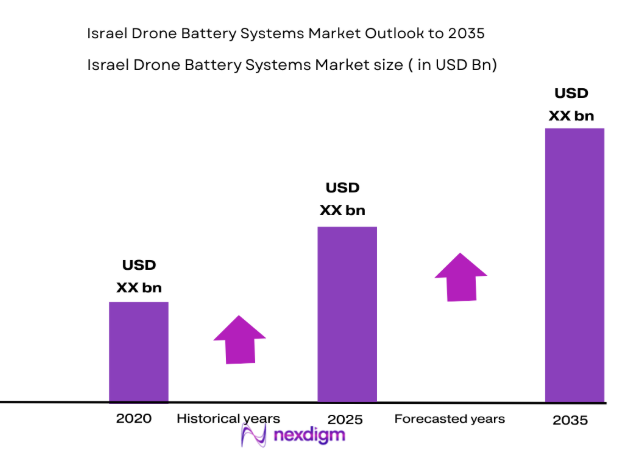
The Israel drone battery systems market is valued at approximately USD ~ million, driven by the increasing use of drones in defense, commercial logistics, and agriculture. The market’s growth is propelled by advancements in battery technology, particularly in energy density, flight time, and charging speed. Additionally, the shift towards autonomous systems and longer-duration missions further fuels the demand for more efficient and powerful battery solutions tailored for drone applications.
Israel’s leadership in the drone sector is supported by its strong defense industry, technological infrastructure, and government support for UAV research. Cities such as Tel Aviv and Haifa are key hubs for drone technology and battery innovation, benefiting from Israel’s position as a global leader in defense and aerospace. The country’s extensive investment in R&D and favorable regulatory environment enhances its dominance in the drone battery systems market.
Market Segmentation
By Product Type:
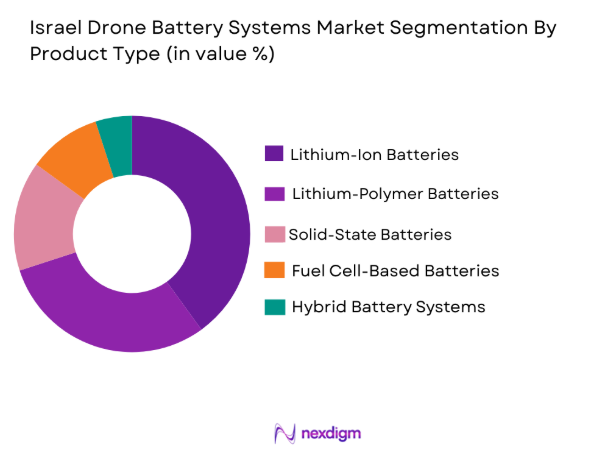
The Israel drone battery systems market is segmented by product type into lithium-ion batteries, lithium-polymer batteries, solid-state batteries, fuel cell-based batteries, and hybrid battery systems. Recently, lithium-ion batteries have dominated the market due to their higher energy density, longer lifespan, and relatively lower cost compared to other battery types. These batteries are widely used in a variety of drone applications, from military UAVs to commercial logistics of drones. Lithium-ion technology continues to lead because of its established performance in drone systems, efficient power management, and scalability across different drone platforms, driving their widespread adoption.
By Platform Type:
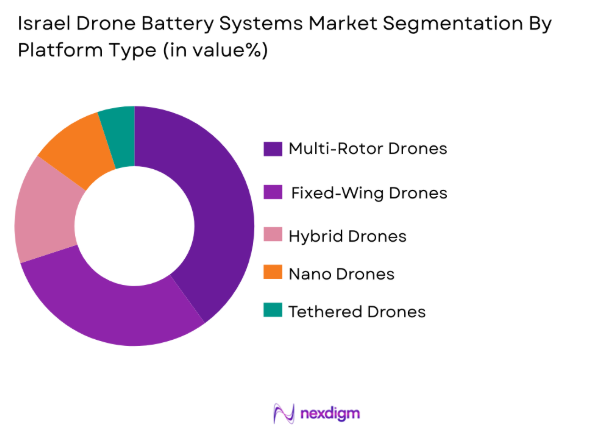
The Israel drone battery systems market is also segmented by platform type into fixed-wing drones, multi-rotor drones, hybrid drones, nano drones, and tethered drones. Recently, multi-rotor drones have gained significant market share due to their popularity in commercial and defense applications, such as surveillance, cargo transport, and reconnaissance. These drones require batteries with high energy density to ensure long flight times and high payload capacity. The demand for multi-rotor drones is driven by their ability to operate in urban areas, maneuver in tight spaces, and handle complex tasks, further increasing the demand for high-performance battery systems.
Competitive Landscape
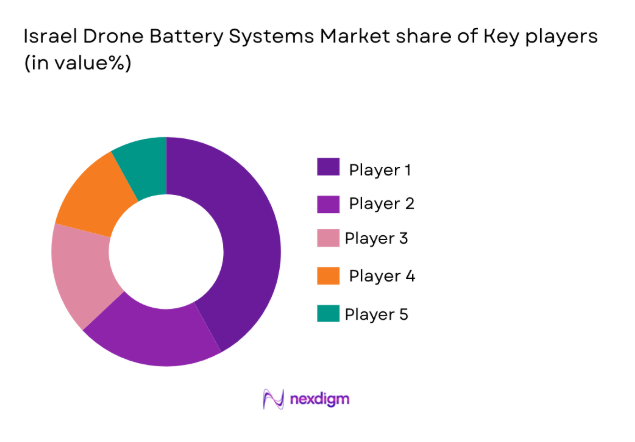
The competitive landscape of Israel’s drone battery systems market is shaped by a mix of well-established players and innovative startups focusing on battery technology and performance enhancement. Companies are vying for market leadership by advancing energy efficiency, extending flight durations, and developing specialized battery solutions for military, logistics, and commercial drones. The market is also marked by strategic collaborations between technology providers, defense contractors, and government entities to develop next-generation battery technologies.
|
Company Name |
Establishment Year | Headquarters | Technology Focus | Market Reach | Key Products | Revenue | Key Technology |
| Elbit Systems | 1966 | Haifa, Israel | ~ | ~ | ~
|
~
|
~
|
| Aeronautics | 1997 | Tel Aviv, Israel | ~
|
~
|
~
|
~
|
~
|
| Airobotics | 2014 | Tel Aviv, Israel | ~
|
~
|
~
|
~
|
~
|
| Quantum Systems | 2012 | Tel Aviv, Israel | ~
|
~
|
~
|
~
|
~
|
| Urban Aeronautics | 2005 | Tel Aviv, Israel | ~
|
~
|
~
|
~
|
~
|
Israel Drone Battery Systems Market Analysis
Growth Drivers
Advancements in Energy-Dense Batteries:
A major growth driver for Israel’s drone battery systems market is the continual advancement in battery technologies, particularly in increasing energy density and improving charging times. These improvements are crucial for enabling longer flight times and higher payload capacities, which are essential for both military and commercial drone applications. As drones are increasingly used for critical applications, such as surveillance, cargo delivery, and precision agriculture, the demand for batteries that offer higher energy output with reduced weight is rising. The development of new battery chemistries, including solid-state and lithium-sulfur batteries, is expected to play a major role in enhancing drone performance. These innovations allow for more efficient and durable batteries, reducing the operational costs and environmental impact associated with current battery technologies. With Israel’s investment in research and development, particularly in the defense sector, these advancements are expected to contribute significantly to the growth of the drone battery systems market.
Government Support for UAV Technology:
Another key growth driver is the Israeli government’s substantial investment in UAV technology and its integration into both defense and commercial sectors. As Israel’s defense forces increasingly rely on UAVs for surveillance, reconnaissance, and combat missions, the need for reliable, long-duration battery systems has surged. The Israeli government supports UAV development through funding and regulation, ensuring that innovations in drone battery systems are rapidly adopted and scaled for commercial use. In addition to military applications, drones are becoming more popular in logistics, environmental monitoring, and agriculture. The government’s role in providing infrastructure for drone operations, along with favorable policies, is accelerating the adoption of UAV technology across various industries, further driving demand for high-performance batteries.
Market Challenges
Regulatory Challenges:
One of the main challenges facing Israel’s drone battery systems market is the complex regulatory framework surrounding drone operations. Although Israel has made significant progress in establishing itself as a leader in drone technology, the regulations governing the use of drones, especially in urban areas, remain restrictive. There are specific rules around airspace, battery usage, and operational limits that drone operators must comply with. These regulations, while important for safety, can slow the adoption of drones in the logistics and transportation sectors. Additionally, compliance with these regulations often requires extensive certification processes for drone batteries, which can add delays and costs for manufacturers. Overcoming regulatory barriers will require further collaboration between government agencies, regulators, and industry stakeholders to ensure that both innovation and safety are balanced.
Cost of Advanced Batteries:
The high cost of advanced batteries, such as solid-state and hybrid systems, is another significant challenge for the growth of Israel’s drone battery systems market. While these batteries offer substantial performance benefits, they come with a higher price tag compared to traditional lithium-ion batteries. This price disparity is a concern for commercial drone operators and manufacturers who need to balance performance with affordability. The production costs for advanced battery technologies, including materials, manufacturing processes, and research and development, are still high, making them less accessible to smaller companies or startups in the drone industry. As demand for drones increases, there will be a need for cost-effective battery solutions to ensure that the technology is scalable and economically viable for widespread use.
Opportunities
Development of Solid-State Batteries:
One of the most promising opportunities for Israel’s drone battery systems market is the development of solid-state batteries. These batteries offer superior energy density, faster charging times, and improved safety compared to conventional lithium-ion batteries. Solid-state technology eliminates the use of liquid electrolytes, making the batteries less prone to overheating and improving overall safety. As the demand for drones capable of longer flight times and carrying heavier payloads grows, solid-state batteries are seen as the next breakthrough. Israel’s robust research and development ecosystem, particularly in defense and aerospace, positions it well to lead in the commercialization of solid-state batteries for drone applications. The successful development and mass production of solid-state batteries will create significant market opportunities for Israeli drone manufacturers, positioning them at the forefront of global drone technology.
Expansion of Drone Applications in Urban Air Mobility:
Another exciting opportunity lies in the development of urban air mobility (UAM), which is becoming an increasingly important area for drone manufacturers. UAM applications, such as cargo and passenger drones, require powerful, reliable, and efficient battery systems capable of supporting longer flights and heavy payloads. Israel’s drone industry is well-equipped to capitalize on this trend, with advancements in battery technology enabling longer, more efficient flights. The Israeli government’s investment in smart city projects and urban infrastructure, combined with drone technology’s role in last-mile delivery and air transportation, is expected to drive demand for specialized battery systems designed for UAM applications. As UAM solutions gain traction globally, Israel’s leadership in drone battery systems will position the country to be a key player in the development and commercialization of electric vertical takeoff and landing (eVTOL) vehicles and other urban air mobility solutions.
Future Outlook
The future outlook for Israel’s drone battery systems market is highly optimistic, with continued technological advancements expected to drive significant growth. The demand for high-performance batteries for both military and commercial drones will increase as applications expand in logistics, agriculture, defense, and urban air mobility. Innovations in battery technology, such as solid-state and hybrid batteries, will lead to improved drone capabilities, including longer flight durations and higher payload capacities. Government support for drone infrastructure and the growing use of drones for environmental and logistical purposes will further bolster market growth.
Major Players
- Enerflight Technologies
- BatteryTech Israel
- HelioCell Energy Systems
- UAV Power Solutions Ltd
- Advanced Drone Power Inc
- Isrion Battery Systems
- QuantumCell Technologies
- UrbanVolt UAV Batteries
- AeroEnergy Israel
- DroneCell Power Solutions
- NextGen Battery Dynamics
- IonCore Israel
- VoltAero Energy Systems
- SkyCharge Battery Tech
- IonPro UAV Solutions
Key Target Audience
- Investments and venture capitalist firms
- Government and regulatory bodies
- Military and defense contractors
- Commercial drone service providers
- Agricultural firms
- Infrastructure monitoring agencies
- Technology integration companies
- Smart city development firms
Research Methodology
Step 1: Identification of Key Variables
The first step involves identifying key variables, including drone battery performance metrics, technological innovations, and regulatory factors affecting market growth.
Step 2: Market Analysis and Construction
In this step, detailed market analysis is conducted to build a comprehensive model that reflects current trends, challenges, and growth opportunities.
Step 3: Hypothesis Validation and Expert Consultation
Hypotheses are validated through consultations with industry experts, manufacturers, and government officials to ensure the accuracy and applicability of the findings.
Step 4: Research Synthesis and Final Output
The final step involves synthesizing research findings into a structured report that provides actionable insights, forecasts, and recommendations for stakeholders.

- Executive Summary
- Research Methodology
(Definitions, Scope, Industry Assumptions, Market Sizing Approach, Primary & Secondary Research Framework, Data Collection & Verification Protocol, Analytic Models & Forecast Methodology, Limitations & Research Validity Checks)

- Market Definition and Scope
- Value Chain & Stakeholder Ecosystem
- Regulatory / Certification Landscape
- Sector Dynamics Affecting Demand
- Strategic Initiatives & Infrastructure Growth

- Growth Drivers
Advancements in High-Energy Density Cells
Rising Demand for Longer Flight Times
Government and Defense Investment in UAV Capabilities
Expansion of Commercial Drone Applications
Integration of Smart Battery Management Technologies - Market Challenges
Thermal Runaway and Safety Risks
High Production Costs of Advanced Batteries
Supply Chain Constraints for Critical Materials
Standardization and Certification Issues
Battery Lifecycle and Disposal Issues - Market Opportunities
Development of Solid-State Battery Commercialization
Partnerships for Next-Gen Battery R&D
Adoption in Urban Air Mobility Battery Solutions - Trends
Shift Toward High-Density Energy Storage
AI-Driven Battery Management Systems
Modular and Swappable Battery Designs
Focus on Rapid Charging Technologies
Use of Alternative Chemistries for Performance - Government Regulations & Defense Policy
Standards for UAV Battery Safety
Export Control Policies on Sensitive Battery Tech
Government Incentives for Clean Energy Battery R&D - SWOT Analysis
- Stakeholder and Ecosystem Analysis
- Porter’s Five Forces Analysis
- Competition Intensity and Ecosystem Mapping

- By Market Value, 2020-2025
- By Installed Units, 2020-2025
- By Average System Price, 2020-2025
- By System Complexity Tier, 2020-2025

- By System Type (In Value%)
Lithium Polymer Batteries
Lithium-Ion Batteries
Solid-State Batteries
Fuel Cell Based Batteries
Hybrid Battery Systems - By Platform Type (In Value%)
Fixed-Wing Drone Batteries
Multi-Rotor Drone Batteries
VTOL Drone Batteries
Hybrid Platform Batteries
Nano/Micro Drone Batteries - By Fitment Type (In Value%)
OEM Installed Batteries
Retrofit Battery Systems
On-Premise Battery Solutions
Cloud Managed Battery Solutions
Integrated Battery Management Systems - By EndUser Segment (In Value%)
Military and Defense
Commercial Logistics
Agriculture and Surveying
Urban Air Mobility
Industrial Inspection Services - By Procurement Channel (In Value%)
Direct OEM Procurement
Government Tenders
Private Sector Contracts
Third-Party Distributors
Online Platform Purchases - By Material / Technology (in Value %)
Graphene Enhanced Cells
Cobalt-Free Cells
High-Density Lithium Cells
Thermal Management Technologies
Battery Management Systems

- Market structure and competitive positioning
- Market share snapshot of major players
- Cross Comparison Parameters (System Type, Platform Type, End-user Segment, Procurement Channel, Material/Technology, Battery Chemistry, Energy Density, Thermal Management)
- SWOT Analysis of Key Competitors
- Pricing & Procurement Analysis
- Key Players
Ener flight Technologies
Battery Tech Israel
Helio Cell Energy Systems
UAV Power Solutions Ltd
Advanced Drone Power Inc
Isrion Battery Systems
Quantum Cell Technologies
Urban Volt UAV Batteries
Aero Energy Israel
Drone Cell Power Solutions
NextGen Battery Dynamics
Ion Core Israel
Volt Aero Energy Systems
Sky Charge Battery Tech

- Military Requirements for Extended Endurance UAVs
- Commercial Logistics Pursuit of Longer Range Drones
- Agriculture Deployment for Precision Battery Operations
- Urban Air Mobility Demands High-Performance Batteries

- Forecast Market Value, 2026-2035
- Forecast Installed Units, 2026-2035
- Price Forecast by System Tier, 2026-2035
- Future Demand by Platform, 2026-2035


 Request a Sample
 Ask for Customization
 Get a Quote
 Enquire Now