
 Download PDF
 Download PDF
Market Overview
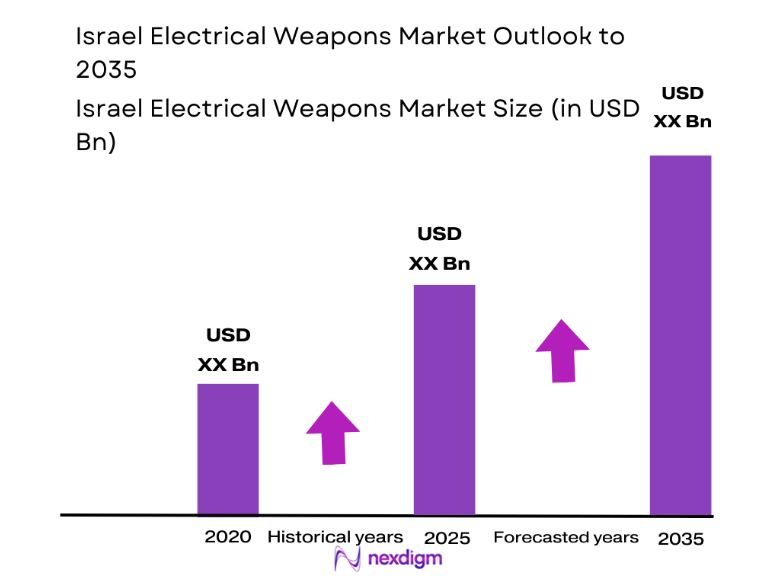
The Israel Electrical Weapons market is valued at approximately USD ~ billion, driven by rapid advancements in defense technologies and growing demand for non-lethal and directed energy weapons. The market is expected to expand as military forces and defense contractors adopt more advanced electrical weapon systems, which offer precision and cost-effective solutions for modern warfare. Furthermore, the market growth is bolstered by increased defense spending and technological innovations in electromagnetic and directed energy systems.
Israel remains a dominant player in the development and deployment of electrical weapons due to its strong defense sector, advanced research capabilities, and geopolitical factors. The country’s emphasis on technological superiority and security has led to significant investments in high-tech defense solutions, including electrical weapons. Israel’s strategic position in the Middle East and its collaboration with global defense companies have further solidified its leadership in this field.
Market Segmentation
By Product Type
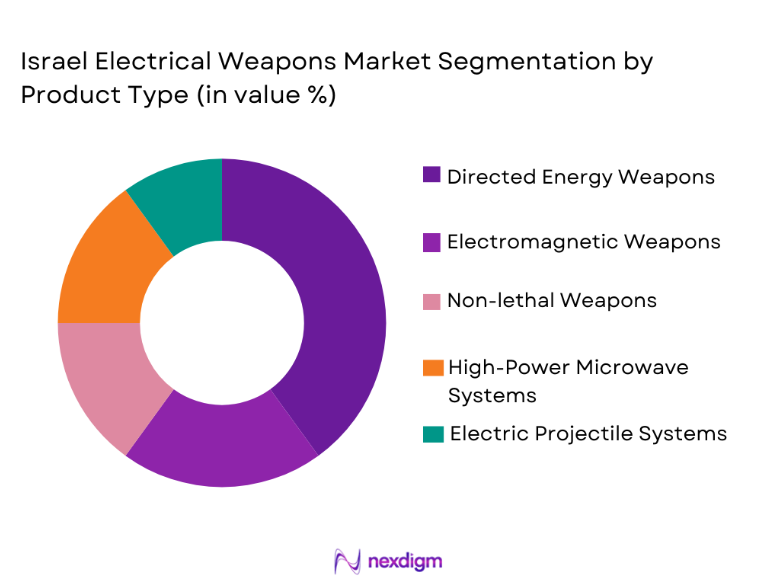
Israel Electrical Weapons market is segmented by product type into Directed Energy Weapons, Electromagnetic Weapons, Non-lethal Weapons, High-Power Microwave Systems, and Electric Projectile Systems. Recently, Directed Energy Weapons have a dominant market share due to their ability to offer highly precise and scalable solutions for defense applications. This sub-segment’s growth is propelled by increasing interest from military forces and defense contractors who prefer advanced systems capable of neutralizing threats without causing collateral damage. The demand for non-lethal weapons, primarily for crowd control and law enforcement applications, also contributes significantly to this segment’s dominance.
By Platform Type
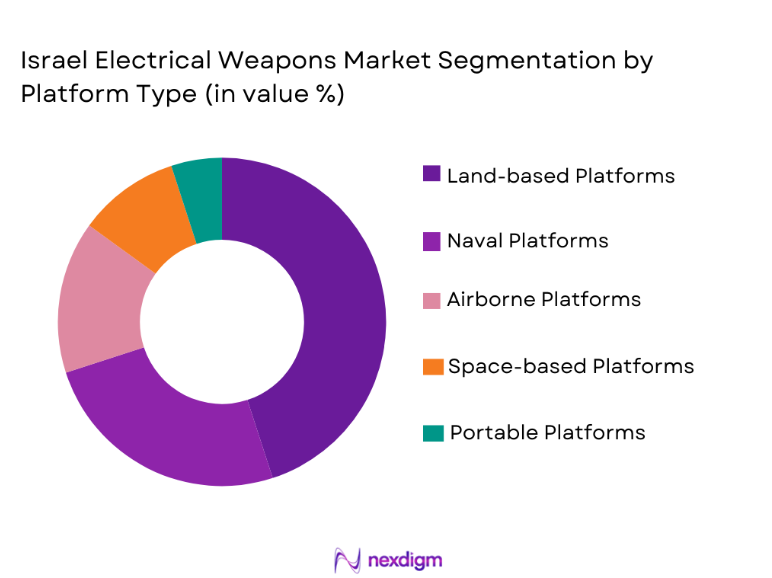
Israel Electrical Weapons market is segmented by platform type into Land-based Platforms, Naval Platforms, Airborne Platforms, Space-based Platforms, and Portable Platforms. Land-based Platforms dominate the market due to their broader deployment across military units, including ground forces and defense contractors. These systems are often used for perimeter defense and countermeasure applications in combat zones. Furthermore, advancements in land-based platform integration with existing military infrastructure have made them the most cost-effective and scalable option in the market, contributing to their dominance.
Competitive Landscape
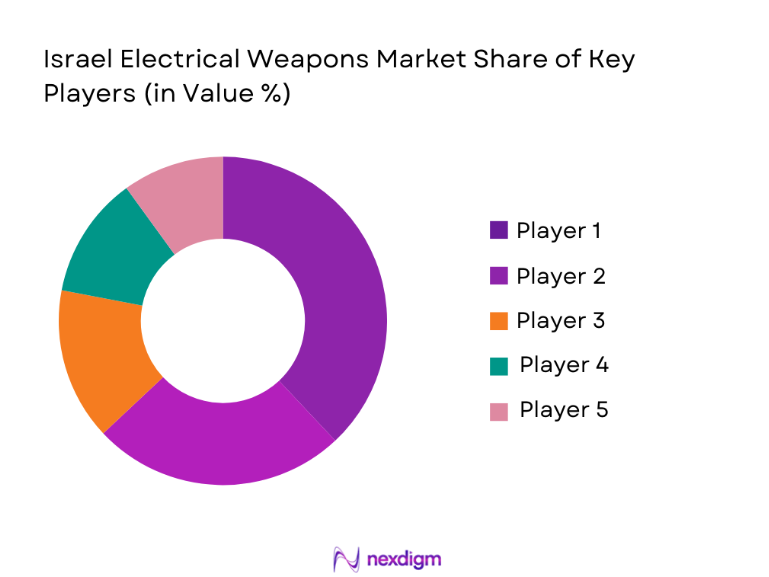
The competitive landscape in the Israel Electrical Weapons market is highly concentrated, with several large players leading the market. Major companies are investing in research and development to create advanced, scalable, and cost-efficient electrical weapon systems. Consolidation is common as companies collaborate with defense agencies and international partners to strengthen their technological capabilities. Market leaders benefit from strong government ties, ongoing defense contracts, and global reach. These factors have allowed the leading players to maintain significant influence over market trends and product developments.
| Company Name | Establishment Year | Headquarters | Technology Focus | Market Reach | Key Products | Revenue (USD) | Additional Market-Specific Parameter
|
| Rafael Advanced Defense Systems | 1958 | Haifa, Israel | ~
|
~
|
~
|
~
|
~
|
| Elbit Systems | 1966 | Haifa, Israel | ~ | ~
|
~
|
~
|
~
|
| Israel Aerospace Industries | 1953 | Lod, Israel | ~ | ~
|
~
|
~
|
~
|
| IMI Systems | 1933 | Ramat HaSharon, Israel | ~ | ~
|
~
|
~
|
~
|
| Lockheed Martin | 1912 | Bethesda, US | ~ | ~
|
~
|
~
|
~
|
Israel Electrical Weapons Market Analysis
Growth Drivers
Increased Demand for Non-lethal Weapons
The growing preference for non-lethal weapons across military and law enforcement sectors is one of the primary growth drivers for the Israel Electrical Weapons market. This demand stems from the need for crowd control and less destructive methods to neutralize targets, particularly in urban warfare and riot control situations. Non-lethal weapons, including electromagnetic and directed energy systems, offer an efficient way to incapacitate targets without causing lasting harm. The rise in civil unrest globally has led to an uptick in the use of these systems, as governments and security agencies aim to manage situations without escalating violence. Additionally, advancements in non-lethal technology have improved the effectiveness and safety of these weapons, encouraging more widespread adoption. Their increasing use in peacekeeping operations and urban defense scenarios is expected to fuel continued market growth. The rise in demand for these systems further aligns with global efforts to minimize harm in conflict zones and maintain order with minimal loss of life. As such, non-lethal systems are expected to witness sustained demand over the coming years, significantly contributing to the market’s overall growth.
Technological Advancements in Directed Energy
The development and application of directed energy systems are major growth drivers in the Israel Electrical Weapons market. These technologies, such as high-energy lasers and microwave weapons, are gaining traction for their precision and effectiveness in neutralizing threats at various distances. Directed energy systems offer numerous advantages over conventional weapons, including reduced operational costs, the ability to disable targets without physical contact, and a lower risk of collateral damage. Moreover, these systems are being integrated into multiple platforms, from land-based vehicles to airborne systems, increasing their flexibility and range of application. Technological advancements, including improvements in beam control, power generation, and system integration, are expected to drive innovation within the market. As defense forces and contractors focus on next-generation weaponry, the demand for directed energy systems is likely to grow, making this technology a key contributor to market expansion.
Market Challenges
High Development Costs
The Israel Electrical Weapons market faces challenges due to the high development costs associated with advanced electrical weapons technologies. The significant investment required for research, testing, and manufacturing is a major barrier for many companies looking to enter the market. These costs are particularly high for directed energy systems, which require cutting-edge technology and extensive resources to develop and deploy. As a result, only large defense contractors and governments with substantial funding capabilities can afford to bring these systems to market. Additionally, the long development cycles and the need for continuous innovation further compound the financial strain on organizations. Despite these hurdles, the market continues to see growth, driven by government defense budgets and collaborations with international partners. Nevertheless, high development costs remain a critical challenge for new entrants, limiting market accessibility and innovation to a select few. This challenge necessitates strategic partnerships and government backing for many companies to survive in this competitive landscape.
Regulatory and Security Concerns
Regulatory and security concerns represent another major challenge for the Israel Electrical Weapons market. The deployment of electrical weapons, especially directed energy and electromagnetic systems, raises significant questions about their use in combat and civilian applications. Governments and international organizations are increasingly focused on regulating the development, testing, and deployment of such weapons, which could slow market progress. The global nature of the defense market also requires compliance with export control laws and international agreements, which vary by region and weapon type. These regulations can complicate the export and integration of electrical weapons, as countries must navigate complex legal frameworks before deploying these systems. Furthermore, the evolving nature of these technologies creates challenges in determining appropriate oversight measures and ensuring that they are used in accordance with international law. As a result, companies operating in this space must balance technological innovation with compliance, which can be a time-consuming and costly process.
Opportunities
Expansion of Military Modernization Programs
One of the key opportunities for the Israel Electrical Weapons market is the ongoing expansion of military modernization programs worldwide. As countries seek to modernize their defense capabilities, there is a growing emphasis on the development of advanced weapons systems, including electrical weapons. Directed energy and electromagnetic systems offer military forces the ability to neutralize threats at a distance with high precision, making them highly attractive for defense contractors and governments alike. In addition, these systems provide cost-effective alternatives to traditional weaponry by reducing ammunition usage and maintenance requirements. As nations increasingly focus on enhancing their defense capabilities with cutting-edge technologies, the demand for electrical weapons is expected to surge, creating significant growth opportunities for both established and emerging players in the market. This trend is particularly evident in countries with ongoing military conflicts or heightened security concerns, as they prioritize the development of advanced, efficient weapon systems to strengthen national defense.
Collaboration with Private Tech Firms
Another significant opportunity lies in the potential for collaboration between defense contractors and private technology firms. With the rapid advancements in AI, machine learning, and energy storage, private tech firms offer valuable expertise that can accelerate the development of next-generation electrical weapons. Partnerships with these firms can enhance the capabilities of directed energy systems and improve their efficiency, scalability, and integration with existing defense infrastructure. As governments increasingly seek to integrate commercial technologies into their defense systems, defense contractors are presented with opportunities to collaborate with tech firms to create more advanced, cost-effective solutions. These collaborations can help drive innovation and reduce time-to-market for new electrical weapon technologies, allowing companies to stay ahead of the competition. This opportunity is expected to grow as the defense industry becomes more open to adopting civilian innovations and integrating them into military applications.
Future Outlook
The future of the Israel Electrical Weapons market looks promising, with strong growth expected over the next five years. Technological advancements in directed energy and electromagnetic systems are expected to drive innovation and increase market penetration. Additionally, as geopolitical tensions rise and defense budgets expand globally, the demand for advanced weaponry, including electrical weapons, is set to grow. Technological developments in AI, energy storage, and materials science are likely to further enhance the capabilities of these weapons, making them more effective and efficient. Governments are also expected to provide regulatory support to facilitate the integration of these technologies into military forces, driving demand and creating new opportunities for growth.
Major Players
- Rafael Advanced Defense Systems
- Elbit Systems
- Israel Aerospace Industries
- IMI Systems
- Lockheed Martin
- Northrop Grumman
- Boeing
- Raytheon Technologies
- General Dynamics
- L3 Technologies
- Thales Group
- BAE Systems
- Leonardo
- Harris Corporation
- Saab Group
Key Target Audience
- Investments and venture capitalist firms
- Government and regulatory bodies
- Military forces
- Defense contractors
- Security and defense equipment manufacturers
- Aerospace and defense technology firms
- Private security firms
- Research institutions
Research Methodology
Step 1: Identification of Key Variables
Key market variables are identified, focusing on product types, technological advancements, and regulatory environments. Research includes understanding demand trends and technological capabilities of electrical weapons.
Step 2: Market Analysis and Construction
In-depth market analysis is conducted using primary and secondary research, examining industry reports, government publications, and expert opinions to construct an accurate market overview.
Step 3: Hypothesis Validation and Expert Consultation
Hypotheses are validated through expert consultations with industry leaders, government officials, and technology developers. This ensures the data is accurate and reliable.
Step 4: Research Synthesis and Final Output
The research is synthesized into a comprehensive report that presents the market analysis, competitive landscape, and future outlook. Insights are cross-checked for consistency and completeness.

- Executive Summary
- Research Methodology (Definitions, Scope, Industry Assumptions, Market Sizing Approach, Primary & Secondary Research Framework, Data Collection & Verification Protocol, Analytic Models & Forecast Methodology, Limitations & Research Validity Checks)

- Market Definition and Scope
- Value Chain & Stakeholder Ecosystem
- Regulatory / Certification Landscape
- Sector Dynamics Affecting Demand
- Strategic Initiatives & Infrastructure Growth

- Growth Drivers
Technological Advancements in Directed Energy
Increasing Geopolitical Tensions
Growing Demand for Non-lethal Weapons - Market Challenges
High Development Costs
Technological Integration Issues
Regulatory Restrictions on Weapon Deployment - Market Opportunities
Rise in Military Modernization Programs
Expansion of Defense Collaborations
Emerging Demand for Non-lethal Crowd Control Systems - Trends
Increased Use of Autonomous Weaponry
Integration of AI in Weapon Systems
Shift Toward Miniaturization of Electrical Weapons - Government Regulations
Export Control Policies
Defense Security Protocols
National Defense Spending Regulations

- By Market Value, 2020-2025
- By Installed Units, 2020-2025
- By Average System Price, 2020-2025
- By System Complexity Tier, 2020-2025

- By System Type (In Value%)
Directed Energy Weapons
Electromagnetic Weapons
Non-lethal Weapons
High-Power Microwave Systems
Electric Projectile Systems - By Platform Type (In Value%)
Land-based Platforms
Naval Platforms
Airborne Platforms
Space-based Platforms
Portable Platforms - By Fitment Type (In Value%)
On-premise Systems
Vehicle-mounted Systems
Handheld Systems
Modular Systems
Integrated Systems - By EndUser Segment (In Value%)
Military Forces
Defense Contractors
Government Agencies
Private Security Firms
Research Institutions - By Procurement Channel (In Value%)
Direct Procurement
Government Tenders
Private Sector Procurement
Third-party Distributors
Online Bidding Platforms

- Market Share Analysis
- CrossComparison Parameters (System Type, Platform Type, Procurement Channel, EndUser Segment, Fitment Type, Regulatory Factors, Technological Integration, Pricing Strategy, Development Timelines, R&D Investments)
- SWOT Analysis of Key Competitors
- Pricing & Procurement Analysis
- Porter’s Five Forces
- Key Players
Lockheed Martin
Raytheon Technologies
Elbit Systems
Israel Aerospace Industries
IMI Systems
Rafael Advanced Defense Systems
Northrop Grumman
General Dynamics
L3 Technologies
Saab Group
Thales Group
BAE Systems
Leonardo
Boeing
Harris Corporation

- Military Forces’ Growing Demand for Electrical Weapons
- Defense Contractors’ Role in Weapon Development
- Government Agencies’ Regulatory and Procurement Influence
- Private Security Firms’ Adoption of Non-lethal Systems

- Forecast Market Value, 2026-2035
- Forecast Installed Units, 2026-2035
- Price Forecast by System Tier, 2026-2035
- Future Demand by Platform, 2026-2035


 Request a Sample
 Ask for Customization
 Get a Quote
 Enquire Now