
 Download PDF
 Download PDF
Market Overview
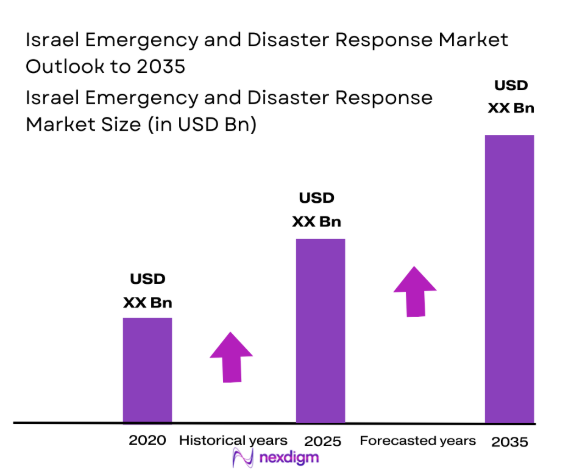
The Israel Emergency and Disaster Response Market has been growing steadily, with the market size expected to reach approximately USD ~ billion based on a recent historical assessment. This growth is driven by the increasing frequency of natural disasters, such as earthquakes and floods, which demand rapid and coordinated responses from both governmental and non-governmental organizations. Moreover, advancements in technology, including drones, AI, and satellite communication systems, are significantly enhancing the capabilities of emergency and disaster response systems, making them more efficient and responsive to crises.
Israel, a global leader in emergency and disaster management, benefits from its advanced infrastructure and strategic location in the Middle East. The country’s government, military forces, and private sectors have established strong networks for coordinating disaster responses. Israeli cities, including Tel Aviv and Jerusalem, are prominent centers for innovation and technology in this market. Israel’s well-developed healthcare infrastructure, coupled with its world-class expertise in disaster response systems, has placed it at the forefront of global disaster management, attracting attention from countries worldwide seeking to replicate its success.
Market Segmentation
By Product Type:
The Israel Emergency and Disaster Response market is segmented by product type into several sub-segments. Recently, command and control systems have a dominant market share due to their pivotal role in coordinating emergency responses efficiently. The demand for real-time monitoring, decision-making, and communication systems has surged, driven by Israel’s emphasis on situational awareness in disaster management. These systems are integral to emergency services’ ability to operate effectively in complex, high-pressure environments. They allow for quick coordination among multiple agencies and ensure that resources are deployed in the most efficient manner possible. The advanced technology used in these systems, including AI and machine learning for predictive analysis, further boosts their market presence.

By Platform Type:
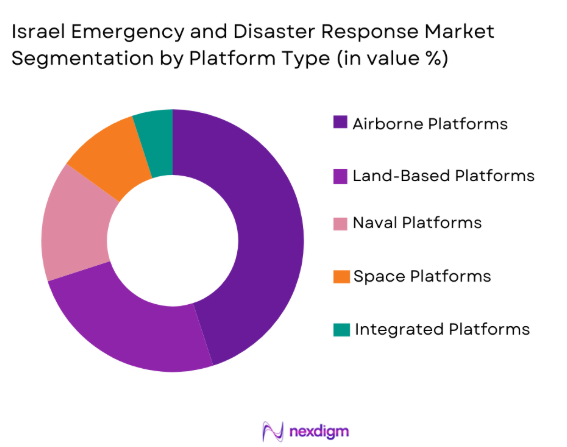
The Israel Emergency and Disaster Response market is segmented by platform type into various sub-segments. Recently, airborne platforms have had a dominant market share due to their ability to provide rapid aerial surveillance and assess damage in real-time. These platforms, including drones and helicopters, are instrumental in responding to large-scale disasters where ground access may be difficult or impossible. Their ability to cover vast areas quickly and relay live data back to command centers significantly enhances response times and decision-making processes. Airborne platforms are increasingly being integrated with advanced technologies like AI, enabling them to autonomously detect critical areas and provide actionable insights to response teams.
Competitive Landscape
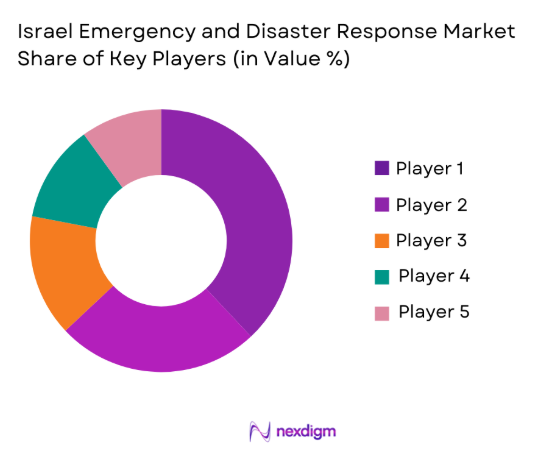
The competitive landscape of the Israel Emergency and Disaster Response market is marked by consolidation, with several major players dominating the industry through advanced technologies and strategic partnerships. The government’s involvement in disaster response has also encouraged collaboration between public and private sectors, further enhancing the market’s competitiveness. The influence of major players like Rafael Advanced Defense Systems and Israel Aerospace Industries is particularly strong, with their innovations shaping the industry and setting new benchmarks in disaster management capabilities.
| Company Name | Establishment Year | Headquarters | Technology Focus | Market Reach | Key Products | Revenue | Additional Parameter |
| Rafael Advanced Defense Systems | 1958 | Haifa, Israel | ~ | ~ | ~ | ~ | ~ |
| Israel Aerospace Industries | 1953 | Tel Aviv, Israel | ~ | ~ | ~ | ~ | ~ |
| Elbit Systems | 1966 | Haifa, Israel | ~ | ~ | ~ | ~ | ~ |
| Motorola Solutions | 1928 | Schaumburg, USA | ~ | ~ | ~ | ~ | ~ |
| Thales Group | 2000 | Paris, France | ~ | ~ | ~ | ~ | ~ |
Israel Emergency and Disaster Response Market Analysis
Growth Drivers
Increased Frequency of Natural Disasters:
The increased frequency and intensity of natural disasters have become a key growth driver in the Israel Emergency and Disaster Response market. As global climate change exacerbates weather patterns, Israel has witnessed more frequent occurrences of extreme weather events, including floods, storms, and earthquakes. These disasters require immediate and coordinated responses from local, regional, and national agencies, thereby driving the demand for advanced emergency management systems. Israel’s geographic location in a disaster-prone region makes it essential to be prepared for a variety of crises, further pushing the need for innovative disaster response technologies. The Israeli government’s commitment to preparedness and resilience is another significant driver, as they continue to allocate funding to enhance disaster management systems, equipment, and technologies. Additionally, Israel’s experience with military-style crisis management, utilizing cutting-edge technology, has influenced its approach to civilian disaster response, encouraging investment in AI, automation, and real-time communication systems. This trend is expected to continue, with the market expanding to meet the growing demand for state-of-the-art disaster management solutions.
Technological Advancements in Disaster Response:
The continuous technological advancements in the Israel Emergency and Disaster Response market are shaping its growth trajectory. Innovations in AI, machine learning, and robotics are revolutionizing the way disaster response teams assess, manage, and respond to emergencies. AI-driven predictive analytics help authorities make informed decisions in real-time, optimizing resource allocation and prioritizing areas in need. The integration of drones and autonomous vehicles for search and rescue operations has enhanced the efficiency and speed of response efforts, particularly in hard-to-reach areas. Israel’s focus on integrating IoT devices and sensors into its disaster response infrastructure is another critical factor, as these technologies offer real-time data collection and monitoring, improving situational awareness. The use of satellite-based communication systems, which ensure seamless connectivity in areas with damaged infrastructure, further strengthens the country’s disaster resilience. As technological advancements continue, they will further streamline operations, reduce response times, and ultimately improve the effectiveness of emergency management efforts.
Market Challenges
High Capital Expenditure in Emergency Systems:
One of the primary challenges in the Israel Emergency and Disaster Response market is the high capital expenditure required for the deployment of advanced emergency systems. The initial investment for implementing sophisticated command and control systems, surveillance technologies, and communication platforms can be substantial. Although the long-term benefits of these systems, such as improved operational efficiency and reduced response times, outweigh the costs, the upfront financial burden can deter some organizations, especially smaller entities, from adopting such technologies. Additionally, the costs associated with maintaining and upgrading these systems over time further exacerbate this challenge. Despite government support and funding, public-private partnerships play a crucial role in ensuring that necessary investments are made to bolster Israel’s emergency preparedness. The financial barrier posed by high capital expenditure remains a significant challenge for the market, especially during periods of economic uncertainty.
Cybersecurity Risks in Disaster Response Systems:
As emergency response systems in Israel become increasingly reliant on digital technologies, the risk of cybersecurity threats grows. Disaster management systems that rely on cloud platforms, communication networks, and IoT devices are particularly vulnerable to cyberattacks, which could compromise the integrity and functionality of these critical systems. Cybersecurity breaches in disaster response could lead to the disruption of communication channels, delay in response times, and even the manipulation of critical data, such as damage reports or casualty counts. The Israeli government and defense sector have been actively addressing this challenge by enhancing the security measures of their disaster response infrastructure. However, as the sophistication of cyberattacks increases, ensuring robust cybersecurity across all platforms remains a formidable challenge. The market must continue to invest in cybersecurity solutions and risk management strategies to protect the integrity of disaster response systems.
Opportunities
Integration of AI and Machine Learning in Disaster Management:
The integration of AI and machine learning technologies in disaster management presents significant opportunities for the Israel Emergency and Disaster Response market. These technologies enable more accurate prediction models and better decision-making capabilities, which are crucial during emergencies. AI-powered systems can analyze large volumes of data in real-time to identify patterns and trends, assisting emergency teams in prioritizing resources and actions. Furthermore, machine learning algorithms can continually improve response strategies by learning from past events, making future responses more efficient and effective. The widespread adoption of AI and machine learning in Israel’s disaster response infrastructure offers immense potential for the market to grow, driving investments in these technologies and encouraging their incorporation into public and private sector disaster management strategies. As Israel continues to lead in technological innovation, the country is well-positioned to become a global hub for AI-powered disaster management solutions.
Expansion into Emerging Markets:
The Israel Emergency and Disaster Response market has significant growth potential in emerging markets, where the demand for disaster management technologies is increasing rapidly. Many developing countries face challenges such as frequent natural disasters, inadequate infrastructure, and lack of advanced technology to respond effectively. Israel’s experience in managing complex disasters and its cutting-edge technology solutions make it well-suited to assist these countries in building resilient emergency response systems. Through strategic partnerships and technology transfers, Israel can leverage its expertise to address the unique needs of emerging markets. The expansion of Israel’s emergency and disaster response solutions into regions such as Africa, Southeast Asia, and Latin America offers vast opportunities for market growth. As governments and organizations in these regions prioritize disaster preparedness and response, Israel’s market players can provide the technological expertise and solutions needed to enhance disaster resilience and response capabilities.
Future Outlook
The Israel Emergency and Disaster Response market is poised for steady growth over the next five years, driven by continued technological advancements, government support, and increasing demand for efficient disaster management systems. Innovations in AI, machine learning, and robotics are expected to enhance operational efficiency, allowing response teams to act more quickly and effectively. The adoption of advanced communication systems, including satellite and drone technology, will ensure seamless coordination in disaster-affected areas. Additionally, the market will benefit from supportive government policies and public-private partnerships, facilitating investments in critical infrastructure. As climate change continues to drive the frequency and intensity of natural disasters, the demand for advanced emergency management solutions will rise, further expanding the market’s potential.
Major Players
- Rafael Advanced Defense Systems
- Israel Aerospace Industries
- Elbit Systems
- Motorola Solutions
- Thales Group
- BAE Systems
- General Electric
- Harris Corporation
- Rockwell Collins
- Lockheed Martin
- Honeywell
- Siemens
- Northrop Grumman
- Leonardo
- L3 Technologies
Key Target Audience
- Investments and venture capitalist firms
- Government and regulatory bodies
- Emergency response agencies
- Military and defense contractors
- Technology developers and integrators
- Public safety organizations
- International disaster relief organizations
- Risk management and disaster preparedness consultants
Research Methodology
Step 1: Identification of Key Variables
We begin by identifying the key variables that influence the market, including technological advancements, regulatory frameworks, and demand-side factors such as population growth and disaster frequency.
Step 2: Market Analysis and Construction
A thorough analysis is conducted to assess the market size, growth patterns, and segmentation, leveraging both primary and secondary data sources, including government reports and industry studies.
Step 3: Hypothesis Validation and Expert Consultation
We validate our hypotheses through consultations with industry experts, government officials, and key players in the emergency response sector to ensure accuracy and relevance in our analysis.
Step 4: Research Synthesis and Final Output
After synthesizing the data and expert insights, we compile the findings into a comprehensive report, highlighting key trends, challenges, opportunities, and strategic recommendations for market participants.

- Executive Summary
- Research Methodology (Definitions, Scope, Industry Assumptions, Market Sizing Approach, Primary & Secondary Research Framework, Data Collection & Verification Protocol, Analytic Models & Forecast Methodology, Limitations & Research Validity Checks)

- Market Definition and Scope
- Value Chain & Stakeholder Ecosystem
- Regulatory / Certification Landscape
- Sector Dynamics Affecting Demand
- Strategic Initiatives & Infrastructure Growth

- Growth Drivers
Rising Frequency of Natural Disasters
Technological Advancements in Disaster Management
Increased Government Investment in Emergency Services
Expanding Use of AI and IoT for Real-time Data
Growing Public-Private Partnerships - Market Challenges
High Initial Investment in Emergency Systems
Technological Integration and Interoperability Issues
Regulatory and Compliance Barriers
Public Resistance to New Technologies
Lack of Skilled Personnel - Market Opportunities
Expansion of Disaster Management Solutions in Emerging Markets
Integration of AI and Machine Learning in Response Operations
Growing Demand for Autonomous and Robotic Systems - Trends
Increased Use of Drone Technology in Disaster Response
Expansion of AI-driven Decision Support Systems
Growing Focus on Cybersecurity for Emergency Systems
Shift Towards Cloud-based Solutions in Emergency Management
Increased Collaboration Between Governments and NGOs - Government Regulations & Defense Policy
Data Protection and Privacy Regulations
Government Funding and Grants for Emergency Technologies
Public Safety and Crisis Management Policies - SWOT Analysis
- Stakeholder and Ecosystem Analysis
- Porter’s Five Forces Analysis
- Competition Intensity and Ecosystem Mapping

- By Market Value, 2020-2025
- By Installed Units, 2020-2025
- By Average System Price, 2020-2025
- By System Complexity Tier, 2020-2025

- By System Type (In Value%)
Command and Control Systems
Surveillance and Reconnaissance Systems
Communication Systems
Disaster Management Software
Response and Recovery Equipment - By Platform Type (In Value%)
Land Platforms
Airborne Platforms
Naval Platforms
Space Platforms
Integrated Platforms - By Fitment Type (In Value%)
On-premise Solutions
Cloud-based Solutions
Hybrid Solutions
Modular Solutions
Integrated Solutions - By EndUser Segment (In Value%)
Military Forces
Government Agencies
Non-governmental Organizations (NGOs)
Private Sector / Technology Firms
Emergency Response Units - By Procurement Channel (In Value%)
Direct Procurement
Government Tenders
Private Sector Procurement
Online Bidding Platforms
Third-party Distributors - By Material / Technology (in Value%)
Artificial Intelligence
Satellite Communication Systems
Robotics and Automation
Internet of Things (IoT)
Geospatial Technology

- Market structure and competitive positioning
- Market share snapshot of major players
- CrossComparison Parameters (System Type, Platform Type, Procurement Channel, EndUser Segment, Fitment Type)
- SWOT Analysis of Key Players
- Pricing & Procurement Analysis
- Key Players
Rafael Advanced Defense Systems
Elbit Systems
Israel Aerospace Industries
Motorola Solutions
Honeywell
Siemens
Rockwell Collins
Bosch
Caterpillar
Thales Group
Northrop Grumman
General Electric
Sikorsky Aircraft
Lockheed Martin
Boeing

- Increasing Demand for Advanced Emergency Systems in Military Forces
- Government Agencies’ Growing Focus on Technological Solutions
- NGOs Focusing on Scalability and Cost-efficiency in Response
- Private Sector’s Increasing Role in Disaster Management

- Forecast Market Value, 2026-2035
- Forecast Installed Units, 2026-2035
- Price Forecast by System Tier, 2026-2035
- Future Demand by Platform, 2026-2035


 Request a Sample
 Ask for Customization
 Get a Quote
 Enquire Now