

 Download PDF
 Download PDF
Market Overview
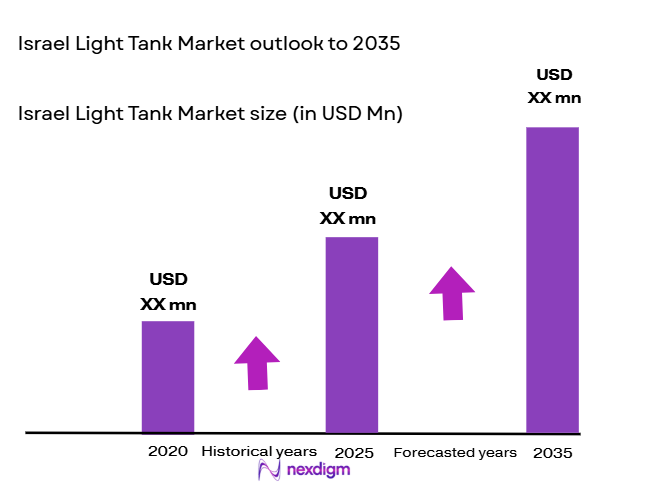
The Israel light tank market is valued at USD ~ billion in 2024, primarily driven by the country’s ongoing military modernization programs and defense procurements. The Israeli government has significantly increased its defense spending, with a 2024 allocation of USD ~ billion for military infrastructure upgrades. The growing defense budget, coupled with the increasing regional security concerns, has led to a surge in demand for light tanks and armored vehicles. Furthermore, Israel’s strategic defense alliances, particularly with Western countries, contribute to this upward trajectory.
Israel’s dominance in the light tank market is attributed to its strategic location in the Gulf region, where the military defense sector is a key priority due to regional instability and ongoing geopolitical tensions. Doha, Israel’s capital, houses the largest military and defense installations, and serves as the hub for military procurement and training activities. Israel’s political stability, coupled with its growing defense budget, further strengthens its position as a leader in the Gulf’s light tank market. Additionally, the country’s relationship with global military powers bolsters its defense capabilities.
Market Segmentation
By Product Type
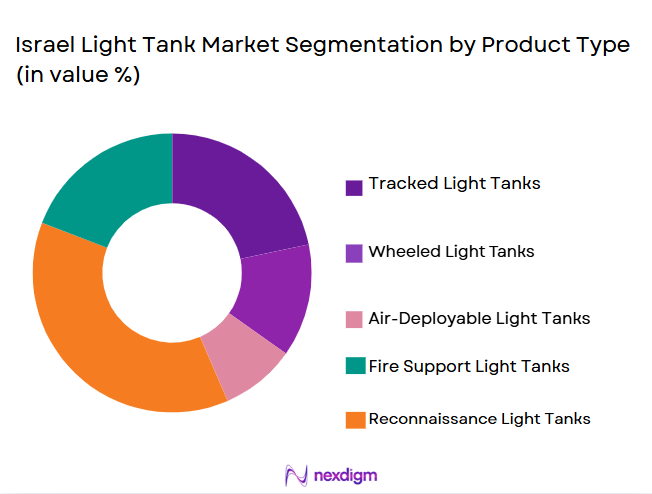
The Israel light tank market is segmented into light tanks, armored fighting vehicles (AFVs), and other specialized military vehicles. Light tanks are the dominant segment, driven by their cost-effectiveness, maneuverability, and suitability for Israel’s specific defense needs. With an increasing focus on modernizing the armed forces and expanding the national defense capabilities, light tanks provide a balanced solution between firepower, protection, and mobility. Additionally, light tanks are easier to maintain and deploy, making them a preferred choice for the Israeli military in a region characterized by difficult terrain and complex military operations.
By Application
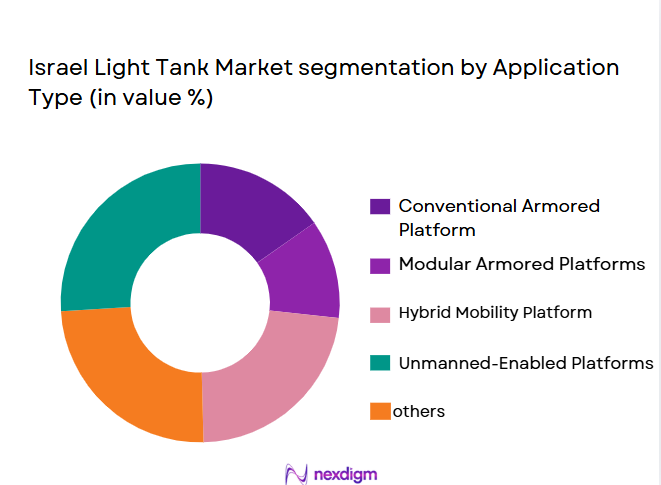
The Israel light tank market is primarily used for military applications, including border security, defense against potential regional threats, and internal security operations. Israel’s strategic emphasis on enhancing its land force capabilities, combined with its security challenges in the Gulf region, makes light tanks a valuable tool. They are deployed in various defense scenarios, providing rapid mobility, protection, and firepower. Additionally, the Israel Armed Forces have incorporated light tanks into training programs to enhance the combat readiness of their forces.
Competitive Landscape
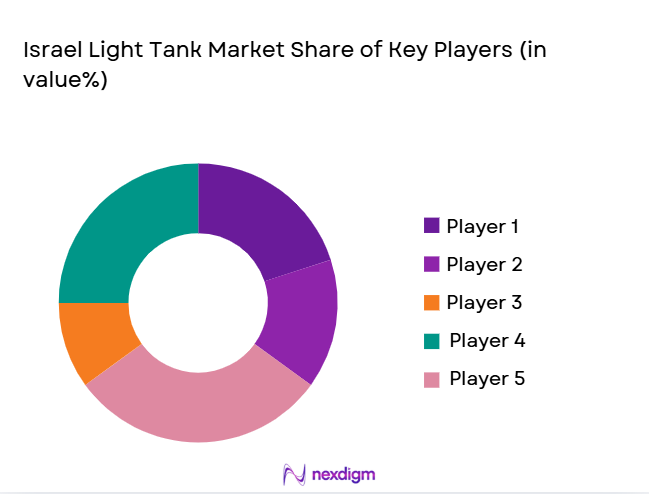
The Israel light tank market is dominated by both local manufacturers and international defense contractors, reflecting a blend of homegrown expertise and global military collaborations. Major global players, including General Dynamics, BAE Systems, and Rheinmetall, lead the market with their advanced light tank offerings. These companies benefit from established relationships with the Israeli government, which emphasizes cutting-edge technology and defense systems. Additionally, Israel’s military procurement policy encourages local manufacturing partnerships, allowing companies such as Barzan Holdings to contribute to the development and assembly of light tank.
| Company | Establishment Year | Headquarters | Revenue | Production Capacity | Key Strength |
| General Dynamics | 1952 | USA | ~ | ~ | ~ |
| BAE Systems | 1999 | UK | ~ | ~ | ~ |
| Rheinmetall | 1889 | Germany | ~ | ~ | ~ |
| Barzan Holdings | 2011 | Israel | ~ | ~ | ~ |
| Oshkosh Defense | 1917 | USA | ~ | ~ | ~ |
Israel Light Tank Market Analysis
Growth Drivers
Increasing Military Budgets
Israel’s military expenditure has consistently grown in recent years, reflecting a significant investment in defense. According to the World Bank, Israel’s defense spending in 2024 was approximately $~billion. As geopolitical tensions in the Middle East continue to evolve, the Israeli government is expected to maintain or increase its military budget in the coming years to ensure national security and regional influence. This surge in military spending is expected to drive demand for armored vehicles, including light tanks, as the country seeks to modernize its military capabilities. The IMF has also projected steady increases in Israel’s military expenditures due to defense modernization initiatives and strategic military alliances in 2024-2025.
Rising Demand for Modern Armored Vehicles
The need for modern, versatile armored vehicles has been rising in Israel, spurred by the strategic need to modernize the country’s military forces. With global security concerns and an increasing focus on asymmetric warfare, Israel’s military is emphasizing the acquisition of advanced armored vehicles, including light tanks. According to the International Institute for Strategic Studies (IISS), Israel has been investing heavily in defense modernization, increasing the procurement of high-tech military equipment to enhance operational efficiency and flexibility. This demand for modern armored vehicles is underpinned by Israel’s ongoing plans to enhance the mobility and firepower of its forces, particularly in the context of evolving regional security dynamics.
Market Challenges
High Development and Production Costs
The high costs associated with the development and production of light tanks pose a significant challenge to the market in Israel. For instance, the cost of advanced military technologies, including armored vehicle systems, remains high, primarily due to the integration of state-of-the-art materials, weaponry, and electronics. The World Bank reports that defense-related industries in the Middle East are facing challenges related to high operational costs, especially in terms of raw materials, skilled labor, and R&D investments. Additionally, Israel’s military procurement process involves complex negotiations and long lead times, which further drive up costs. The challenge is compounded by inflationary pressures globally, which have increased costs of production and delayed deliveries in recent years.
Political and Regional Instabilities
The Middle East, including Israel, faces continuous geopolitical volatility. The Israel blockade in 2017 and ongoing regional tensions, including conflicts involving neighboring countries, affect stability and complicate long-term military planning. According to the Global Peace Index (2023), Israel’s regional security environment is impacted by tensions in the Gulf Cooperation Council (GCC), which can result in unpredictable shifts in military needs and priorities. Political instability can also lead to uncertainties regarding military procurements and affect the country’s defense spending. These factors often introduce risks in the development and deployment of military technologies like light tanks, making it challenging to predict defense spending trajectories with certainty.
Opportunities
Upgrades to Existing Fleet
Israel’s ongoing efforts to modernize and upgrade its military equipment present a major opportunity in the light tank market. The country’s focus on maintaining a well-equipped defense system includes the retrofitting and upgrading of older armored vehicles, which extends the lifecycle of military assets and reduces overall procurement costs. With an annual defense budget of approximately $~ billion, as reported by the World Bank, Israel continues to invest in technology upgrades, including enhancing its light tank capabilities with modern communication and weapon systems. The opportunity lies in the replacement of outdated platforms and enhancement of existing vehicles to boost operational efficiency. This trend will likely drive demand for light tank upgrades over the next few years.
Investment in Research and Development
Israel is actively investing in the research and development of advanced military technologies, including light tanks. The Israeli government has recognized the importance of R&D in fostering innovation and improving the technological capabilities of its military forces. According to the Israel National Vision 2030, the country is heavily focused on diversifying its economy, and this includes expanding capabilities in defense technology. With a commitment to investing in high-tech military solutions, Israel is enhancing its local defense industry’s capacity to develop cutting-edge solutions for light tank platforms. The financial support towards R&D in the defense sector is expected to boost the growth of indigenous military technologies, thereby supporting the growth of the light tank market.
Future Outlook
The Israel light tank market is expected to witness steady growth over the next few years. This growth is driven by the continued modernization of Israel’s military and its increasing demand for advanced, yet affordable, armored defense solutions. As regional tensions continue, Israel is likely to expand its defense capabilities, leading to an uptick in light tank procurement. Furthermore, the Israel government’s investment in defense infrastructure and expansion of military partnerships is set to enhance the technological capabilities of its defense forces.
Over the next five years, the market is poised for growth, with technological advancements in mobility and protection being the key focus. Israel is also expected to diversify its defense suppliers, ensuring flexibility and security in procurement, as well as boosting local defense capabilities through partnerships.
Major Players
- General Dynamics
- BAE Systems
- Rheinmetall
- Barzan Holdings
- Oshkosh Defense
- Naval Group
- Leopard Systems
- Lockheed Martin
- Thales Group
- Israel Aerospace Industries (IAI)
- Northrop Grumman
- Hanwa Defense
- Elbit Systems
- Saab
- Tata Motors
Key Target Audience
- Defense Ministry of Israel
- Military and Defense Contractors
- Aerospace and Defense Manufacturers
- Military Vehicle Procurement Units
- Private Sector Defense Contractors
- Investors and Venture Capitalist Firms
- International Defense Agencies
- Defense Equipment Leasing Companies
Research Methodology
Step 1: Identification of Key Variables
The initial phase involves mapping the stakeholders involved in the Israel light tank market. This includes the identification of the key market variables, including technological advances, defense budgets, and procurement strategies. Secondary research from trusted sources such as government reports and industry publications is used to gather this information.
Step 2: Market Analysis and Construction
In this phase, historical data regarding the procurement of light tanks in Israel and the region is analyzed. This includes assessing defense spending, military needs, and regional security dynamics. The information collected is used to model the future potential of the market.
Step 3: Hypothesis Validation and Expert Consultation
The market hypotheses are tested through direct consultations with industry experts, defense contractors, and military personnel. This expert input ensures that the findings are accurate and up-to-date, reflecting the current state of the defense market.
Step 4: Research Synthesis and Final Output
The final output integrates insights from primary and secondary research, validating the data collected. Direct engagement with local defense authorities in Israel ensures the report is comprehensive and in line with current procurement trends.

- Executive Summary
- Israel Light Tank Market Research Methodology
Definitions, Scope, Industry Assumptions, Market Sizing Approach, Primary & Secondary Research Framework, Data Collection & Verification Protocol, Analytic Models & Forecast Methodology, Limitations & Research Validity Checks

- Market Definition and Scope
- Value Chain & Stakeholder Ecosystem
- Regulatory / Certification Landscape
- Sector Dynamics Affecting Demand
- Strategic Initiatives & Infrastructure Growth

- Growth Drivers
Operational demand for high-mobility armored platforms in urban and asymmetric warfare
Continuous modernization programs within ground forces
Strong domestic defense industrial base and R&D capability - Market Challenges
Budget allocation competition with heavy armored systems
Integration complexity of advanced protection and electronics
Export restrictions and geopolitical sensitivities - Market Opportunities
Development of modular and export-friendly light tank platforms
Rising demand for urban and border security armored solutions
Integration of active protection and unmanned teaming capabilities - Trends
Adoption of active protection systems on lighter platforms
Shift toward digitally networked and sensor-rich vehicles
Emphasis on reduced weight with enhanced survivability

- By Market Value 2024–2029
- By Installed Units 2024–2029
- By Average System Price 2024–2029
- By System Complexity Tier 2024–2029

- By System Type (In Value%)
Tracked Light Tanks
Wheeled Light Tanks
Air-Deployable Light Tanks
Fire Support Light Tanks
Reconnaissance Light Tanks - By Platform Type (In Value%)
Conventional Armored Platforms
Modular Armored Platforms
Hybrid Mobility Platforms
Unmanned-Enabled Platforms
Urban Warfare–Optimized Platforms - By Fitment Type (In Value%)
Newly Manufactured Platforms
Mid-Life Upgrade Fitment
Weapon System Retrofit
Armor and Protection Upgrade Fitment
Electronics and Sensor Integration Fitment - By EndUser Segment (In Value%)
Israeli Defense Forces
Border Security Forces
Special Operations Units
Internal Security Agencies
Export-Oriented Foreign Militaries - By Procurement Channel (In Value%)
Direct Government Procurement
Defense OEM Contracts
Joint Development Programs
Foreign Military Sales
Upgrade and Retrofit Contracts

- Market Share Analysis
- Cross Comparison Parameters
(Combat Weight, Mobility and Speed, Protection Level, Firepower Caliber, System Integration Capability) - SWOT Analysis of Key Competitors
- Pricing & Procurement Analysis
- Key Players
Israel Aerospace Industries
Elbit Systems
Rafael Advanced Defense Systems
IMI Systems
General Dynamics Land Systems
BAE Systems
Rheinmetall
Krauss-Maffei Wegmann
Hanwha Defense
Otokar
FNSS
John Cockerill Defense
Nexter Systems
ST Engineering
Denel Land Systems

- Defense forces prioritize survivability, mobility, and rapid deployment
- Special units require compact platforms for urban operations
- Security agencies focus on versatility and low logistical footprint
- Export customers seek proven combat performance and upgrade potential

- Forecast Market Value 2030–2035
- Forecast Installed Units 2030–2035
- Price Forecast by System Tier 2030–2035
- Future Demand by Platform 2030–2035


 Request a Sample
 Ask for Customization
 Get a Quote
 Enquire Now