

 Download PDF
 Download PDF
Market Overview
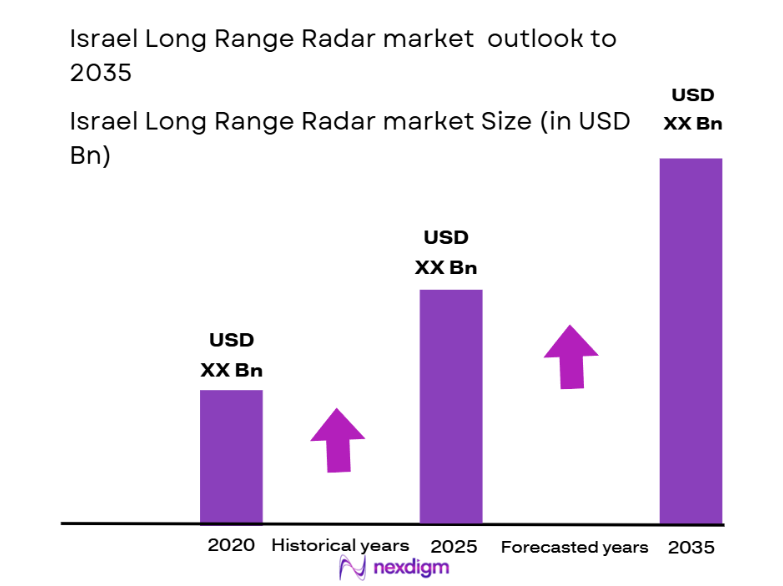
Based on a recent historical assessment, the Israel Long Range Radar market has reached a significant size, with the market value anticipated to be approximately USD ~ billion by the end of the year. This growth is largely driven by increasing defense budgets, modernization of surveillance systems, and the rising demand for advanced radar technologies in military and civil applications. Additionally, the demand for highly sophisticated radar systems, particularly for border and airspace security, continues to escalate as defense forces and government agencies emphasize the need for comprehensive surveillance systems.
Israel, a key player in the global defense technology sector, dominates the long-range radar market due to its robust defense sector and innovative technology developments. Key cities such as Tel Aviv, Haifa, and Eilat house the headquarters of major defense firms, which contribute significantly to the growth of the radar market. The country’s strategic location in the Middle East and its security concerns have also spurred significant investments in radar technology and infrastructure development. Israel’s highly advanced technological landscape and its commitment to defense modernization further enhance its dominant position.
Market Segmentation
By Product Type
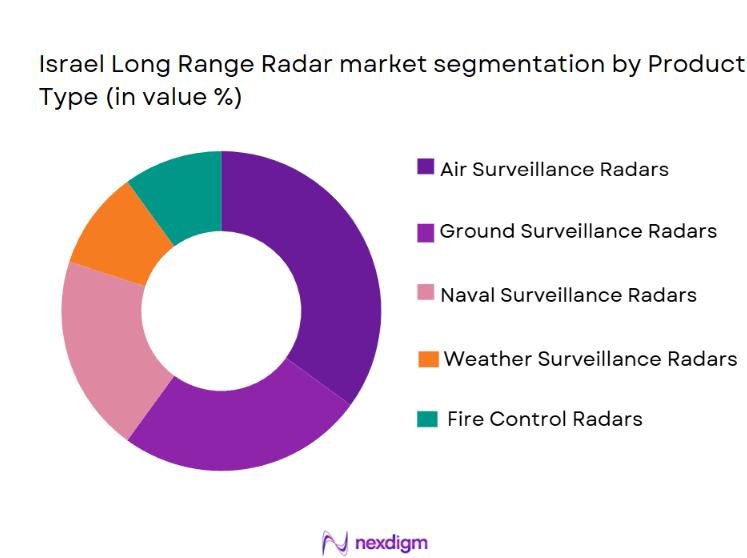
The Israel Long Range Radar market is segmented by product type into air surveillance radars, ground surveillance radars, naval surveillance radars, weather surveillance radars, and fire control radars. Recently, air surveillance radars have a dominant market share due to increasing demand from military, aviation, and border control applications. The growing need for enhanced airspace security, particularly in areas with high air traffic or near sensitive borders, has made air surveillance radars a critical technology. Moreover, advancements in radar technology, such as improved detection capabilities and longer-range detection, continue to fuel the adoption of air surveillance radars in both defense and civilian applications.
By Platform Type
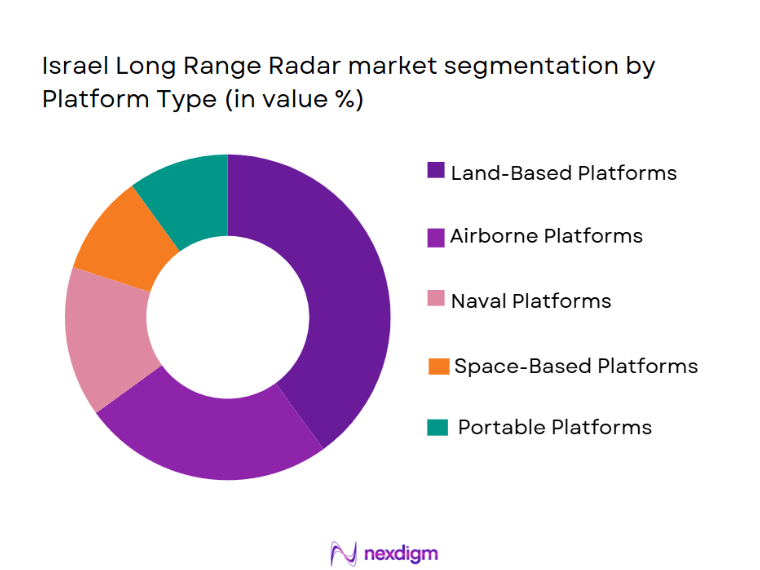
The Israel Long Range Radar market is segmented by platform type into land-based platforms, airborne platforms, naval platforms, space-based platforms, and portable platforms. Recently, land-based platforms have dominated the market share due to their versatility and widespread use in defense applications. The increasing demand for fixed-site surveillance systems for perimeter defense, border security, and early warning systems has significantly contributed to the dominance of land-based platforms. These platforms offer cost-effective solutions and ease of deployment, making them the preferred choice in both military and homeland security sectors.
Competitive Landscape
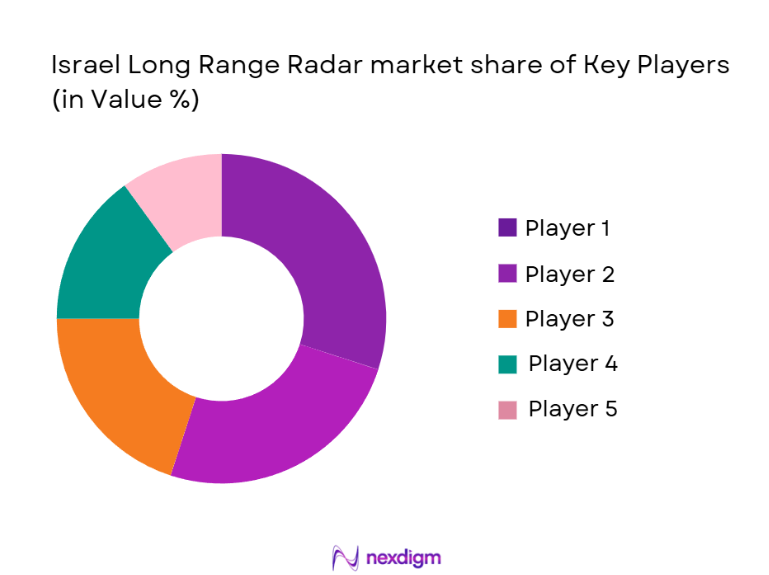
The Israel Long Range Radar market is characterized by the presence of several key players that have a substantial influence on market trends. The competitive landscape is evolving as companies focus on enhancing radar technology, improving system integration capabilities, and expanding their market presence through strategic partnerships. The increasing consolidation of defense firms, along with growing investment in radar research and development, strengthens the market position of major players. These companies are also investing in advanced radar solutions for both military and civilian applications, driving overall market growth.
| Company Name | Establishment Year | Headquarters | Technology Focus | Market Reach | Key Products | Revenue | Additional Parameter |
| Elbit Systems | 1966 | Haifa, Israel | ~ | ~ | ~ | ~ | ~ |
| IAI (Israel Aerospace Industries) | 1953 | Tel Aviv, Israel | ~ | ~ | ~ | ~ | ~ |
| Rafael Advanced Defense Systems | 1958 | Haifa, Israel | ~ | ~ | ~ | ~ | ~ |
| Elta Systems | 1967 | Ashdod, Israel | ~ | ~ | ~ | ~ | ~ |
| Magal Security Systems | 1971 | Yehud, Israel | ~ | ~ | ~ | ~ | ~ |
Israel Long Range Radar Market Analysis
Growth Drivers
Rising Defense Budgets
The Israel Long Range Radar market is significantly influenced by the continuous rise in defense budgets, particularly in countries in the Middle East. As security threats evolve and geopolitical tensions increase, governments are allocating larger portions of their budgets toward enhancing defense capabilities. Israel, which has long been a leader in defense technology, is one of the major beneficiaries of this trend, with its substantial investments in radar systems. The expansion of military spending is reflected in modernization efforts, which demand more advanced radar technologies for air defense, border protection, and missile detection. The critical need for effective surveillance and detection systems is a key driver in the market, particularly as regional conflicts and defense needs grow. Furthermore, the integration of radar systems into unmanned aerial vehicles (UAVs) and other autonomous systems is expected to drive even higher demand for these advanced technologies. As Israel and its neighboring countries continue to focus on bolstering their defense infrastructure, the long-range radar market is set to experience sustained growth.
Technological Advancements
Advancements in radar technology play a pivotal role in the growth of the Israel Long Range Radar market. The continuous development of more advanced, high-performance radar systems hasopened upnew opportunities in defense, aerospace, and weather monitoring. Radar systems have evolved to incorporate cutting-edge technologies such as artificial intelligence (AI), machine learning, and improved signal processing, enhancing detection capabilities and operational efficiency. These advancements allow for greater precision in tracking, early threat detection, and real-time monitoring, which is crucial in defense and aerospace applications. The integration of AI and radar systems for autonomous monitoring is another factor driving the market forward. The increased use of radar in both military and civilian sectors, including border surveillance and weather forecasting, continues to be a significant growth driver. Moreover, radar systems’ ability to provide multi-dimensional coverage and improve overall situational awareness has further reinforced their demand across various sectors, making technological advancements a major catalyst for market growth.
Market Challenges
High Initial Costs
One of the primary barriers to widespread adoption in the Israel Long Range Radar market is the high initial cost associated with the development, procurement, installation, and maintenance of radar systems. Advanced radar technology requires significant investments in R&D and infrastructure, which can result in steep upfront costs for governments, defense agencies, and commercial users. While the long-term benefits of radar systems—such as enhanced security and monitoring—often justify the expenditure, the initial capital outlay can be prohibitive, particularly for smaller defense budgets. Moreover, the ongoing maintenance and upgrading costs of radar systems can create further financial strain, especially as newer generations of radar technology continue to evolve. These factors can limit market growth in regions with limited financial resources, and are a significant challenge to broader adoption across defense and civilian sectors. Addressing cost-effective solutions while maintaining technological innovation will be essential to ensuring continued growth in the Israel Long Range Radar market.
Regulatory Barriers
Another significant challengeimpactingthe Israel Long Range Radar market is the stringent regulatory environment surrounding the export and deployment of radar technologies. Many advanced radar systems, particularly those used in military and defense applications, are subject to strict international trade regulations and national security controls. Export controls, which govern the transfer of radar technology to foreign countries, can delay or hinder market expansion, especially in regions with high demand for such systems. Additionally, regulatory hurdles related to the integration of radar technologies with other defense systems, as well as certifications for new technologies, add complexity to the market. Countries outside Israel often impose barriers on radar technology transfers due to concerns over sensitive military equipment falling into the wrong hands, or as part of broader international defense agreements. These regulatory issues can result in long approval processes for market entry, limiting the ability of companies to expand rapidly into new international markets.
Opportunities
Integration with Autonomous Systems
The integration of long-range radar systems with autonomous platforms presents a significant opportunity for market growth. As defense and aerospace sectors increasingly adopt unmanned aerial systems (UAS) and other autonomous vehicles, there is a growing demand for radar systems that can be seamlessly integrated into these platforms. Autonomous systems, such as drones and unmanned aerial vehicles, benefit greatly from radar technology, which provides enhanced surveillance, tracking, and real-time decision-making capabilities. The ability of radar to detect and track targets at long ranges, even in challenging environments, is crucial to the success of these platforms. Furthermore, as countries look to expand their unmanned fleets, radar systems will become a vital component in ensuring the safety and effectiveness of these operations. The integration of radar with autonomous platforms also opens up opportunities for new applications in military, security, and even commercial sectors, such as logistics and agriculture, where autonomous systems are becoming increasingly common. This trend is expected to drive significant demand for radar systems in the coming years.
Increasing Civilian Applications
The demand for long-range radar systems is also growing in civilian sectors, which presents new market opportunities. Radar technology, traditionally associated withdefenseapplications, is increasingly being adopted for civilian purposes such as air traffic control, weather monitoring, and disaster management. As air traffic continues to rise globally, the need for more advanced and reliable air traffic control systems is critical. Radar provides a safe and efficient method for managing airspace and ensuring aircraft separation, especially in busy airports and congested air corridors. Similarly, weather monitoring systems that utilize radar are essential for improving forecasting accuracy and early warning capabilities for natural disasters such as hurricanes and tornadoes. Additionally, radar technology is being explored for use in automotive applications, including autonomous vehicles, where it plays a critical role in collision avoidance and navigation. The growing reliance on radar for these civilian applications provides a new growth trajectory for the Israel Long Range Radar market, expanding its reach beyond military and defense sectors.
Future Outlook
The Israel Long Range Radar market is expected to grow significantly over the next five years, driven by ongoing advancements in radar technology and increased defense and security spending in the region. Technological innovations, such as the integration of AI and machine learning into radar systems, will enable enhanced surveillance capabilities and broaden the application range of long-range radars. Additionally, growing demand for border and airspace security will continue to shape the market. Regulatory support and investment in advanced radar infrastructure will also play a critical role in driving market growth.
Major Players
- Elbit Systems
- IAI (Israel Aerospace Industries)
- Rafael Advanced Defense Systems
- Elta Systems
- Magal Security Systems
- TopSky
- Controp Precision Technologies
- Aeronautics Defense Systems
- PLP Radar
- AeroNet
- Innonix Technologies
- ThetaRay
- Systematic Inc.
- Reutech Radar Systems
- Mercator Radar Solutions
- Leonardo DRS
Key Target Audience
- Investments and venture capitalist firms
- Government and regulatory bodies
- Defense contractors and integrators
- Aerospace and aviation authorities
- Border security agencies
- Homeland security organizations
- Military forces
- Commercial aviation operators
Research Methodology
Step 1: Identification of Key Variables
This step involves defining and identifying the key market variables that influence the growth and dynamics of the Israel Long Range Radar market, such as market size, segmentation, and competitive landscape.
Step 2: Market Analysis and Construction
In this phase, extensive market analysis is conducted using both primary and secondary data sources, and the market structure is built, focusing on key segments, growth drivers, and challenges.
Step 3: Hypothesis Validation and Expert Consultation
After market construction, hypotheses are validated through consultations with industry experts and market leaders to ensure the findings are accurate and reflective of current trends.
Step 4: Research Synthesis and Final Output
The final output synthesizes all the research and insights gathered, presenting a comprehensive report on the Israel Long Range Radar market, highlighting key trends, forecasts, and competitive strategies.

- Executive Summary
- Research Methodology (Definitions, Scope, Industry Assumptions, Market Sizing Approach, Primary & Secondary Research Framework, Data Collection & Verification Protocol, Analytic Models & Forecast Methodology, Limitations & Research Validity Checks)

- Market Definition and Scope
- Value Chain & Stakeholder Ecosystem
- Regulatory / Certification Landscape
- Sector Dynamics Affecting Demand
- Strategic Initiatives & Infrastructure Growth

- Growth Drivers
Increasing Security & Defense Budget Allocations
Rising Demand for Advanced Surveillance Systems
Technological Advancements in Radar Systems - Market Challenges
High Initial Investment Costs
Regulatory Hurdles for Export
Technological Complexity and Integration Challenges - Market Opportunities
Growing Threat of Cybersecurity Attacks
Expansion of Smart Defense Solutions
Integration with AI and Machine Learning for Improved Surveillance - Trends
Miniaturization of Radar Systems
Adoption of 5G for Radar Systems
Shift Towards Multirole Surveillance Systems - Government Regulations
National Defense Procurement Regulations
International Trade Compliance for Radar Technologies
Radar Licensing and Export Control Policies

- By Market Value 2020-2025
- By Installed Units 2020-2025
- By Average System Price 2020-2025
- By System Complexity Tier 2020-2025

- By System Type (In Value%)
Air Surveillance Radars
Ground Surveillance Radars
Naval Surveillance Radars
Weather Surveillance Radars
Fire Control Radars - By Platform Type (In Value%)
Land-based Platforms
Airborne Platforms
Naval Platforms
Space-based Platforms
Portable Platforms - By Fitment Type (In Value%)
New Installations
Upgrades & Retrofits
Modifications
Replacements
Repairs & Maintenance - By EndUser Segment (In Value%)
Military & Defense
Aerospace & Aviation
Marine & Naval
Weather Forecasting Agencies
Government & Homeland Security - By Procurement Channel (In Value%)
Direct Procurement from Manufacturers
Procurement via Government Tenders
Procurement through System Integrators
Procurement via Third-Party Distributors
Online Direct Sales

- Market Share Analysis
- CrossComparison Parameters (System Type, Platform Type, Procurement Channel, EndUser Segment, System Complexity)
- SWOT Analysis of Key Competitors
- Pricing & Procurement Analysis
- Porter’s Five Forces
- Key Players
Elbit Systems
IAI (Israel Aerospace Industries)
Rafael Advanced Defense Systems
Elta Systems
Gilat Satellite Networks
Magal Security Systems
TopSky
Controp Precision Technologies
Avnon Group
Gadot Group
Aeronautics Defense Systems
PLP Radar
AeroNet
Innonix Technologies
ThetaRay

- Military and Defense
- Airports and Aviation Security
- Weather Agencies
- Homeland Security Forces

- Forecast Market Value 2026-2035
- Forecast Installed Units 2026-2035
- Price Forecast by System Tier 2026-2035
- Future Demand by Platform 2026-2035


 Request a Sample
 Ask for Customization
 Get a Quote
 Enquire Now