
 Download PDF
 Download PDF
Market Overview
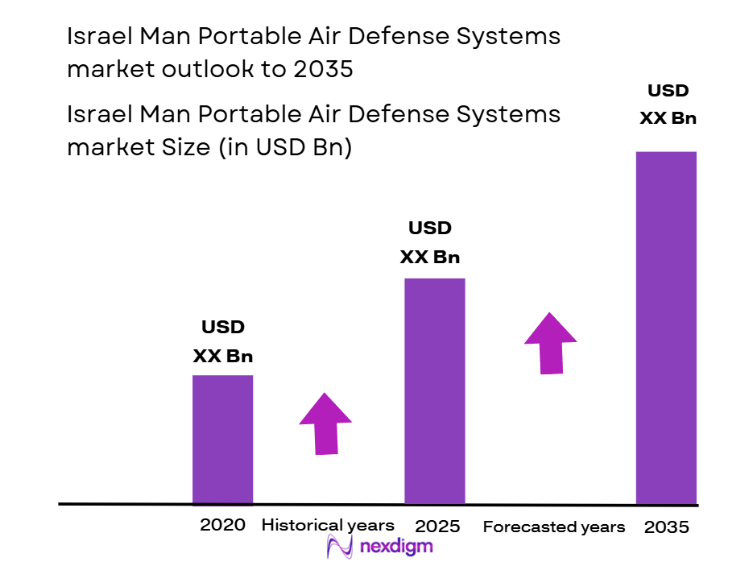
The Israel Man Portable Air Defense Systems (MANPADS) market is poised for substantial growth in the coming years, with an estimated market size of USD ~ billion based on a recent historical assessment. This growth is primarily driven by increasing defense budgets across nations, rising geopolitical tensions, and the rapid advancement in air defense technologies. As more nations enhance their defense capabilities, the demand for advanced portable air defense systems is anticipated to rise, further fueling the market expansion. Additionally, governments are investing heavily in modernizing military equipment, which is a key factor in the growth of this sector.
Countries such as Israel, the United States, and Russia are expected to remain dominant players in the market due to their well-established defense industries, advanced technological capabilities, and a history of investing in air defense systems. Israel, in particular, continues to innovate in air defense solutions, leveraging its technological prowess and strategic location to remain at the forefront. Other significant countries include European nations and key Middle Eastern players, where regional security concerns continue to drive investments in defense infrastructure and the adoption of advanced air defense systems.
Market Segmentation
By Product Type
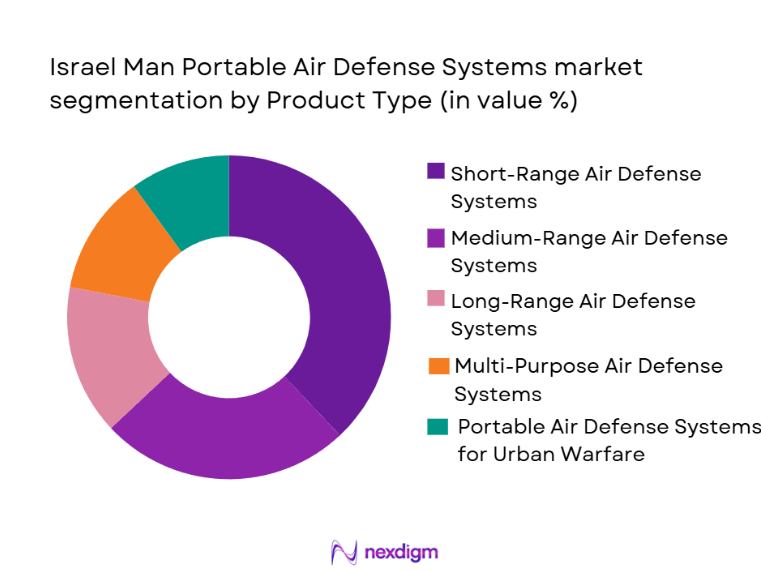
The Israel Man Portable Air Defense Systems market is segmented by product type into short-range air defense systems, medium-range air defense systems, long-range air defense systems, multi-purpose air defense systems, and portable air defense systems for urban warfare. Recently, short-range air defense systems have dominated the market share due to their versatility, cost-effectiveness, and higher adoption rates across military forces globally. Their ease of deployment and adaptability for various tactical operations make them a preferred choice for many countries looking to strengthen their defense systems.
By Platform Type
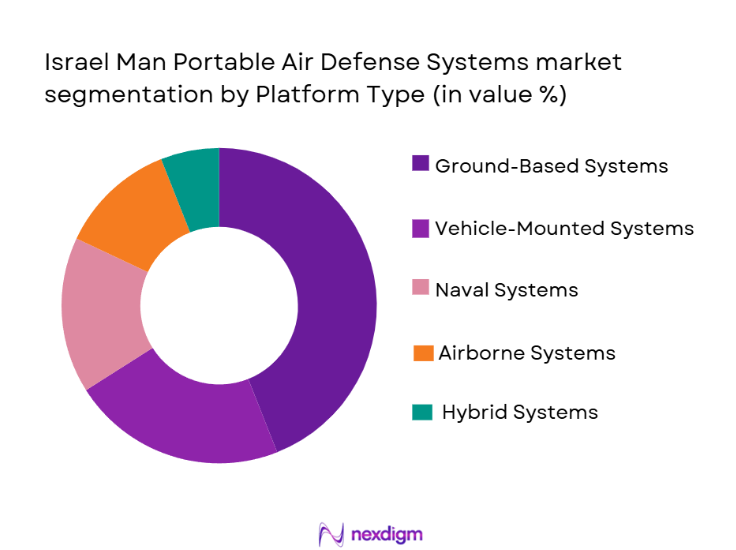
The Israel Man Portable Air Defense Systems market is segmented by platform type into ground-based systems, vehicle-mounted systems, naval systems, airborne systems, and hybrid systems. Ground-based systems dominate the market due to their widespread deployment in various military operations and their ability to effectively counter low-altitude aerial threats. These systems offer flexibility in deployment and are widely used across both military and homeland security sectors, making them the primary choice for most defense agencies globally.
Competitive Landscape
The competitive landscape of the Israel Man Portable Air Defense Systems market is characterized by significant consolidation and the presence of key players who are actively innovating to maintain their market positions. Major companies are focusing on advanced technologies and are engaging in strategic partnerships to enhance their product portfolios and market reach. The influence of these large players is evident in both product development and market expansion efforts.
| Company Name | Establishment Year | Headquarters | Technology Focus | Market Reach | Key Products | Revenue (USD) |
| Rafael Advanced Defense Systems | 1987 | Israel | ~ | ~ | ~ | ~ |
| Elbit Systems | 1966 | Israel | ~ | ~ | ~ | ~ |
| Israel Military Industries (IMI) | 1933 | Israel | ~ | ~ | ~ | ~ |
| IAI (Israel Aerospace Industries) | 1953 | Israel | ~ | ~ | ~ | ~ |
| Raytheon Technologies | 1922 | USA | ~ | ~ | ~ | ~ |
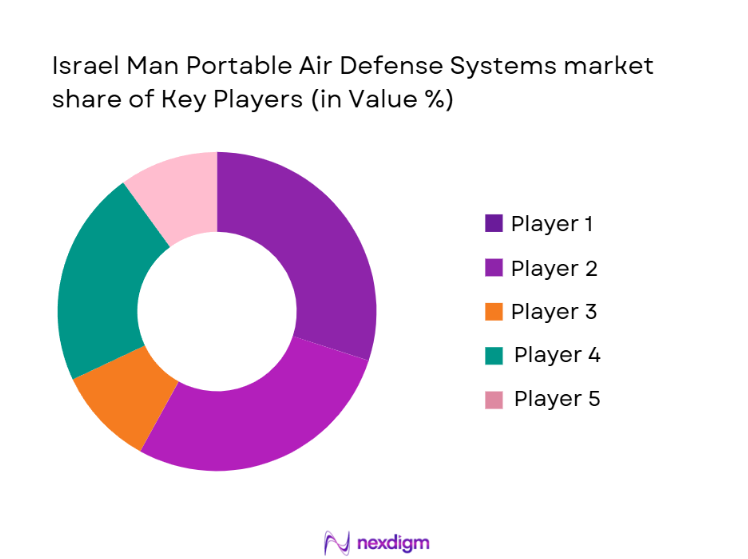
Israel Man Portable Air Defense Systems Market Analysis
Growth Drivers
Increased defense spending
The global increase in defense budgets, particularly in countries like Israel, the United States, and Russia, is a major growth driver for the Israel Man Portable Air Defense Systems market. Nations are prioritizing the modernization of their defense forces, including the acquisition of advanced air defense technologies to address evolving threats. This trend is expected to continue, as regional instability in the Middle East and other areas fuels demand for advanced defense systems. Furthermore, geopolitical uncertainties prompt nations to safeguard their airspace, increasing investments in both short- and medium-range defense systems, which contributes to market expansion.
Technological Advancements
The constant advancements in air defense technology play a significant role in driving the market growth. Innovations such as improved missile guidance systems, compact and mobile defense solutions, and better countermeasure capabilities have made man-portable air defense systems more efficient and cost-effective. The integration of artificial intelligence (AI) and machine learning (ML) with air defense systems enhances targeting precision and decision-making, which is becoming a critical feature in modern defense operations. As technology continues to evolve, it opens up opportunities for more advanced, versatile, and effective portable defense solutions, driving greater adoption globally.
Market Challenges
High cost of advanced systems
One of the significant challenges faced by the Israel Man Portable Air Defense Systems market is the high cost of advanced air defense systems. While these systems offer exceptional performance, their prices can be prohibitive for many countries, especially those with limited defense budgets. The high cost of production and procurement is a barrier for smaller nations that seek to bolster their defense capabilities. This challenge forces many countries to either delay procurement or focus on lower-cost alternatives, which affects the overall market growth in some regions.
Integration with Existing Systems
Another major challenge lies in integrating new air defense systems with existing infrastructure. Many countries with older defense systems face difficulties when attempting to integrate newer, more advanced portable air defense systems. The compatibility issues between new technologies and legacy systems often require significant adjustments or additional infrastructure investments. This can increase the overall cost of adoption and slow down the pace of technological modernization in the defense sector, ultimately hindering the rapid growth of the market.
Opportunities
Expansion into emerging markets
There is a significant opportunity for growth in emerging markets where defense spending is on the rise due to increasing security concerns. Countries in regions like Asia-Pacific, Africa, and Latin America are expanding their military budgets, leading to greater investments in advanced air defense technologies. The growing geopolitical tensions, particularly in the Middle East and Eastern Europe, present opportunities for manufacturers of Israel Man Portable Air Defense Systems to expand their reach. As these nations prioritize security enhancements, the demand for portable air defense systems is expected to grow, presenting lucrative opportunities for market players.
Adoption of hybrid systems
The shift towards hybrid air defense systems represents another significant opportunity for market growth. These systems combine multiple defense capabilities into a single, integrated solution, offering greater flexibility and efficiency. Hybrid systems that combine short-range, medium-range, and long-range capabilities in a portable form factor are gaining traction among military forces due to their versatility. The growing demand for such multi-purpose systems is creating new opportunities for companies to innovate and expand their product offerings, which is expected to drive market growth over the coming years.
Future Outlook
The future outlook for the Israel Man Portable Air Defense Systems market over the next five years is positive, with the market expected to experience steady growth. Technological developments, particularly in miniaturization, artificial intelligence, and enhanced targeting systems, will drive demand for more advanced systems. Regulatory support and rising defense budgets across various nations will further fuel the market’s expansion. Additionally, the increasing geopolitical tensions, particularly in volatile regions, are likely to push countries to invest in more sophisticated defense solutions, thus supporting the demand for portable air defense systems.
Major Players
- Rafael AdvancedDefenseSystems
- Elbit Systems
- Israel Military Industries (IMI)
- IAI (Israel Aerospace Industries)
- Raytheon Technologies
- Lockheed Martin
- Northrop Grumman
- MBDA
- Saab AB
- BAE Systems
- General Dynamics
- Thales Group
- Kongsberg Gruppen
- L3 Technologies
- Babcock International
Key Target Audience
- Investments and venture capitalist firms
- Government and regulatory bodies
- Defense contractors
- Homeland security agencies
- Military forces
- Private security firms
- Aerospace and defense companies
- Suppliers of military hardware
Research Methodology
Step 1: Identification of Key Variables
This step involves determining the key factors influencing market dynamics, including technological advancements, defense spending, geopolitical factors, and demand-side behavior. These variables guide the market model construction.
Step 2: Market Analysis and Construction
In this step, a comprehensive market analysis is conducted using both qualitative and quantitative techniques to understand the size, segmentation, and trends affecting the market. This forms the foundation for building the market forecast.
Step 3: Hypothesis Validation and Expert Consultation
Experts in the field, including defense analysts and industry leaders, are consulted to validate hypotheses and provide additional insights into the market. Their inputs ensure the accuracy and reliability of the market data.
Step 4: Research Synthesis and Final Output
All research findings are synthesized into a final report, providing actionable insights, market size estimates, and forecasts, along with an analysis of trends, opportunities, and challenges in the Israel Man Portable Air Defense Systems market.

- Executive Summary
- Research Methodology (Definitions, Scope, Industry Assumptions, Market Sizing Approach, Primary & Secondary Research Framework, Data Collection & Verification Protocol, Analytic Models & Forecast Methodology, Limitations & Research Validity Checks)

- Market Definition and Scope
- Value Chain & Stakeholder Ecosystem
- Regulatory / Certification Landscape
- Sector Dynamics Affecting Demand
- Strategic Initiatives & Infrastructure Growth

- Growth Drivers
Rising geopolitical tensions and regional conflicts
Technological advancements in air defense systems
Increased defense budgets by governments - Market Challenges
High cost of advanced air defense systems
Integration issues with existing defense platforms
Challenges in countering increasingly sophisticated aerial threats - Market Opportunities
Adoption of mobile and compact defense systems
Strategic collaborations with private sector
Expanding defense budgets across developing regions - Trends
Miniaturization of air defense systems
Integration with artificial intelligence and autonomous systems
Focus on interoperability with other defense systems - Government Regulations
Strict export regulations for defense technology
Mandatory testing and certification processes
Increased defense spending by governments for technological upgrades

- By Market Value 2020-2025
- By Installed Units 2020-2025
- By Average System Price 2020-2025
- By System Complexity Tier 2020-2025

- By System Type (In Value%)
Short-Range Air Defense Systems
Medium-Range Air Defense Systems
Long-Range Air Defense Systems
Multi-purpose Air Defense Systems
Portable Air Defense Systems for Urban Warfare - By Platform Type (In Value%)
Ground-Based Systems
Vehicle-Mounted Systems
Naval Systems
Airborne Systems
Hybrid Systems - By Fitment Type (In Value%)
Handheld Systems
Vehicle Integration
Aircraft Integration
Base Installation Systems
Modular Fitments - By EndUser Segment (In Value%)
Military Applications
Homeland Security Agencies
Private Security Providers
Government Defense Forces
Private Contractors - By Procurement Channel (In Value%)
Direct Procurement from Manufacturers
Defense Contracts via Government Agencies
Public Auctions
Partnerships with Private Contractors
Supplier Agreements

- Market Share Analysis
- CrossComparison Parameters (System Type, Platform Type, Procurement Channel, Fitment Type, EndUser Segment)
- SWOT Analysis of Key Competitors
- Pricing & Procurement Analysis
- Porter’s Five Forces
- Key Players
Rafael Advanced Defense Systems
Elbit Systems
Israel Military Industries (IMI) Systems
IAI (Israel Aerospace Industries)
Saab AB
Thales Group
Raytheon Technologies
Lockheed Martin
Northrop Grumman
MBDA Missile Systems
Kongsberg Gruppen
L3 Technologies
Bae Systems
General Dynamics
BAE Systems

- Military Forces and Government Defense Agencies
- Private Sector Contractors
- Homeland Security Applications
- Emerging Markets for Air Defense Systems

- Forecast Market Value 2026-2035
- Forecast Installed Units 2026-2035
- Price Forecast by System Tier 2026-2035
- Future Demand by Platform 2026-2035


 Request a Sample
 Ask for Customization
 Get a Quote
 Enquire Now