
 Download PDF
 Download PDF
Market Overview
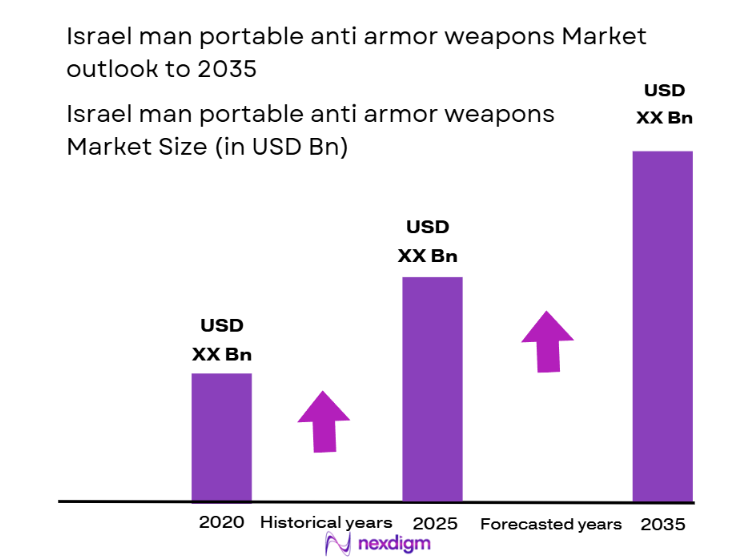
The Israel man portable anti-armor weapons market has experienced significant growth in recent years, with a market size estimated at USD ~ billion. The demand for these systems is primarily driven by the increasing military engagements in the Middle East, Israel’s strategic defense investments, and the ongoing technological advancements in portable weaponry. Key market drivers include the need for enhanced mobility, precision, and the ability to counter advanced armored threats, with significant investment from both government and defense sectors. Based on a recent historical assessment, the market size is expected to reach USD ~ billion, driven by both domestic demand and regional defense contracts, highlighting continued growth opportunities.
Countries such as Israel, the United States, and several European nations dominate the market due to their robust defense budgets and continuous development of advanced military technology. Israel, in particular, leads the market due to its expertise in defense innovation and strategic importance in the Middle East. Additionally, significant procurement by allied nations such as the U.S., which relies on Israel for specialized defense systems, has bolstered the market further. These nations benefit from technological advancements, strong defense collaborations, and heightened security demands in volatile geopolitical environments.
Market Segmentation
By Product Type
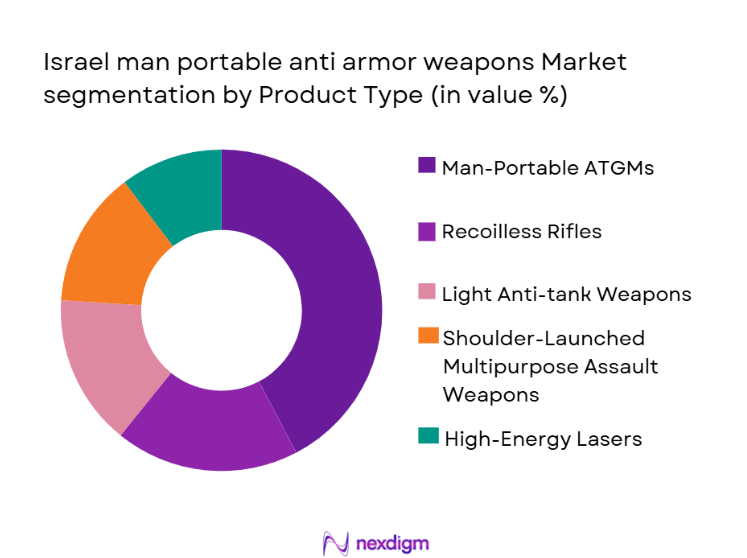
The Israel man portable anti-armor weapons market is segmented by product type into man-portable anti-tank guided missiles (ATGMs), recoilless rifles, light anti-tank weapons (LAW), shoulder-launched multipurpose assault weapons (SMAWs), and high-energy lasers. Recently, man-portable ATGMs have a dominant market share due to factors such as their advanced targeting capabilities, high accuracy, and efficiency in countering modern armored vehicles. The versatility of ATGMs, including their application across multiple platform types, and the growing demand for precision-guided munitions have positioned this sub-segment as the market leader, supported by strong technological developments and defense contracts.
By Platform Type
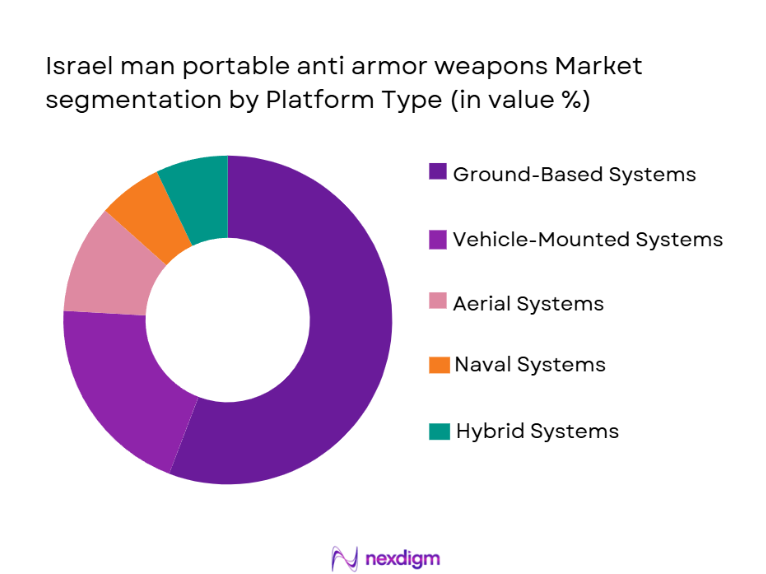
The market for Israel man portable anti-armor weapons is segmented by platform type into ground-based systems, vehicle-mounted systems, aerial systems, naval systems, and hybrid systems. Ground-based systems dominate the market due to their widespread use in infantry operations, offering superior mobility and flexibility in various combat situations. Their ability to be easily deployed and utilized by individual soldiers in the field makes them highly effective for both conventional and asymmetric warfare scenarios. This adaptability and ease of integration into existing defense strategies have contributed to their leading position in the market.
Competitive Landscape
The competitive landscape of the Israel man portable anti-armor weapons market is characterized by strong consolidation among major defense contractors and government-backed research entities. Several key players, such as Rafael Advanced Defense Systems and Elbit Systems, play a significant role in the development and deployment of cutting-edge technologies. These companies continue to innovate and enhance their product offerings, with strategic partnerships and defense contracts from both domestic and international governments bolstering their market positions. The competition is largely influenced by technological advancements, regulatory approval processes, and long-term defense strategies of countries in the Middle East and beyond.
| Company Name | Establishment Year | Headquarters | Technology Focus | Market Reach | Key Products | Revenue (USD Billion) | Additional Market Parameter |
| Rafael Advanced Defense Systems | 1958 | Israel | ~ | ~ | ~ | ~ | ~ |
| Elbit Systems | 1966 | Israel | ~ | ~ | ~ | ~ | ~ |
| IMI Systems | 1933 | Israel | ~ | ~ | ~ | ~ | ~ |
| General Dynamics | 1899 | USA | ~ | ~ | ~ | ~ | ~ |
| Lockheed Martin | 1995 | USA | ~ | ~ | ~ | ~ | ~ |
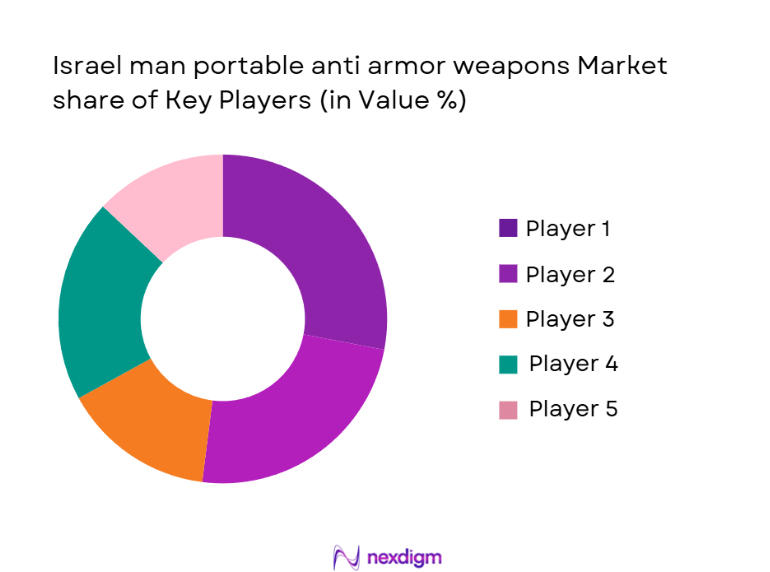
Israel Man Portable Anti Armor Weapons Market Analysis
Growth Drivers
Technological Advancements
Technological advancements in the field of portable anti-armor weapons are a major growth driver in the Israel man portable anti-armor weapons market. Over the years, there has been a significant push towards developing systems that can accurately target and disable modern armored vehicles with greater precision and effectiveness. The development of advanced guidance systems, such as infrared homing and laser targeting, has enabled these weapons to be more efficient in real combat scenarios. These innovations have also led to the development of multi-role systems that can be used in a variety of operational environments, enhancing their overall utility and demand across various military sectors. Furthermore, advancements in miniaturization have allowed these systems to be more compact and lighter, increasing mobility and ease of deployment for soldiers in the field. As a result, the demand for advanced man-portable anti-armor weapons is expected to grow, especially from countries seeking to upgrade their defense capabilities in response to emerging security threats.
Military Modernization Programs
Military modernization programs in countries such as Israel, the United States, and other global defense powers are another significant growth driver for the man portable anti-armor weapons market. These countries have been investing heavily in modernizing their defense arsenals, recognizing the importance of enhancing the capabilities of infantry and specialized units. This includes equipping soldiers with state-of-the-art portable weapon systems capable of countering modern threats like heavily armored vehicles and drones. Furthermore, the increasing frequency of military conflicts, particularly in the Middle East, has accelerated defense procurement processes. Nations involved in these modernization programs often prioritize upgrading their anti-armor capabilities, which directly boosts the demand for advanced portable weapons. As military forces continue to invest in new technologies to maintain their strategic advantage, the market for man-portable anti-armor weapons is expected to experience sustained growth over the coming years.
Market Challenges
High Development and Maintenance Costs
One of the major challenges faced by the Israel man portable anti-armor weapons market is the high cost of developing and maintaining these advanced systems. The development of sophisticated anti-armor weapons involves significant investments in research and development, as well as the need for continuous testing and refinement. These costs can be a barrier to entry for smaller defense contractors and can limit the number of companies capable of competing in this space. Additionally, once these systems are deployed, the maintenance costs for advanced weapons can be substantial due to the need for specialized training, spare parts, and long-term support. This increases the overall cost for defense agencies, particularly in countries with limited defense budgets, thus slowing the pace of procurement. Despite these challenges, the ongoing demand for more effective weaponry in modern warfare continues to drive innovation and efforts to reduce costs over time.
Regulatory and Export Barriers
Another significant challenge for the Israel man portable anti-armor weapons market is the stringent regulatory environment surrounding arms exports and defense procurement. Many countries have strict regulations governing the sale and export of advanced weaponry, including anti-armor systems, due to concerns over international security and potential misuse. These regulations often involve long approval processes and compliance with international treaties such as the Arms Trade Treaty, which can slow down the commercialization of these systems. For Israel, navigating these regulatory frameworks is particularly complex, as it is required to adhere to both domestic laws and international arms export controls. Furthermore, political tensions in the Middle East can affect the ability of Israeli manufacturers to secure defense contracts with certain countries, limiting market opportunities and forcing companies to focus on a smaller pool of potential clients.
Opportunities
Emerging Markets Demand
Emerging markets, particularly in Asia and Africa, present significant opportunities for growth in the Israel man portable anti-armor weapons market. Many countries in these regions are increasing their defense budgets in response to growing security concerns, including rising conflicts and the need to modernize their military arsenals. This is driving the demand for advanced weapon systems capable of countering armored threats. Israel, with its reputation for producing high-quality defense technology, is well-positioned to capitalize on this growing demand. Countries seeking to upgrade their defense capabilities often look to procure weapons that are compact, effective, and cost-efficient, all of which are characteristics of Israel’s man-portable anti-armor systems. As these markets continue to develop and strengthen their defense forces, Israeli companies are likely to see increased opportunities for sales and collaborations in these regions.
Partnerships with Allied Nations
Strategic partnerships with allied nations, particularly in Europe and North America, offer another promising opportunity for the Israel man portable anti-armor weapons market. As geopolitical tensions rise, countries are increasingly looking to strengthen their military alliances and procure advanced weaponry from trusted allies. Israel has long been a key partner in defense contracts with nations such as the United States, the United Kingdom, and France, which frequently purchase Israeli defense technologies. These partnerships provide Israeli companies with access to larger defense budgets and expanded market opportunities. Additionally, these alliances often involve joint research and development efforts, allowing Israel to share the costs of innovation while also gaining valuable insights and technologies from its partners. With the growing need for modern, reliable, and efficient weapon systems, these collaborations are expected to further fuel the market’s growth.
Future Outlook
Over the next five years, the Israel man portable anti-armor weapons market is expected to continue its growth trajectory, fueled by technological advancements and increasing military demand. Innovations in missile guidance systems, weapon miniaturization, and increased precision will likely enhance the effectiveness of these weapons. Regulatory frameworks will also evolve, with stronger international defense collaborations supporting the export of these systems. In addition, military forces worldwide will continue to prioritize modernizing their arsenals, particularly to counter advanced armored threats. As geopolitical tensions persist and new threats emerge, the demand for these advanced defense systems is anticipated to remain strong.
Major Players
- Rafael Advanced Defense Systems
- Elbit Systems
- IMI Systems
- General Dynamics
- Lockheed Martin
- Northrop Grumman
- Raytheon
- Thales Group
- BAE Systems
- Leonardo S.p.A.
- Kongsberg Gruppen
- Saab Group
- L3 Technologies
- Boeing
- MBDA
Key Target Audience
- Investments and venture capitalist firms
- Government and regulatory bodies
- Defense contractors and manufacturers
- Military and defense forces
- Special forces units
- Private security firms
- Defense research and development agencies
- Procurement departments in defense ministries
Research Methodology
Step 1: Identification of Key Variables
The initial phase involves identifying key variables influencing the Israel man portable anti-armor weapons market, including technological advancements, regulatory constraints, and military procurement trends.
Step 2: Market Analysis and Construction
This step includes gathering data on historical trends, current market status, and forecasting future developments in the market, focusing on geographical demand and emerging technologies.
Step 3: Hypothesis Validation and Expert Consultation
In this phase, assumptions about market dynamics are tested through consultations with defense industry experts and stakeholders, ensuring accuracy in projections.
Step 4: Research Synthesis and Final Output
The final step synthesizes all research findings into a comprehensive report, providing insights and recommendations for stakeholders in the Israel man portable anti-armor weapons market.

- Executive Summary
- Research Methodology (Definitions, Scope, Industry Assumptions, Market Sizing Approach, Primary & Secondary Research Framework, Data Collection & Verification Protocol, Analytic Models & Forecast Methodology, Limitations & Research Validity Checks)

- Market Definition and Scope
- Value Chain & Stakeholder Ecosystem
- Regulatory / Certification Landscape
- Sector Dynamics Affecting Demand
- Strategic Initiatives & Infrastructure Growth

- Growth Drivers
Increasing Global Conflicts and Military Engagements
Advancements in Weapon Technology
Rising Defense Budgets in Israel and Allied Nations - Market Challenges
High Cost of Development and Maintenance
Technological Integration Complexities
Geopolitical and Regulatory Barriers - Market Opportunities
Growing Demand from Emerging Markets
Increased Defense Collaboration with Global Allies
Development of Next-Generation Weapon Systems - Trends
Adoption of Smart and Precision-Guided Munitions
Miniaturization and Lightweight Weapon Systems
Shift Towards Multi-Role and Versatile Platforms - Government Regulations
Arms Control Regulations and Compliance
Export Controls on Advanced Weaponry
Defense Procurement Guidelines

- By Market Value 2020-2025
- By Installed Units 2020-2025
- By Average System Price 2020-2025
- By System Complexity Tier 2020-2025

- By System Type (In Value%)
Man-Portable Anti-Tank Guided Missiles (ATGMs)
Recoilless Rifles
Light Anti-Tank Weapons (LAW)
Shoulder-Launched Multipurpose Assault Weapons (SMAWs)
High-Energy Lasers - By Platform Type (In Value%)
Ground-Based Systems
Vehicle-Mounted Systems
Aerial Systems
Naval Systems
Hybrid Systems - By Fitment Type (In Value%)
Shoulder-Mounted Systems
Vehicle-Mounted Systems
Multi-Role Systems
Portable / Handheld Systems
Remote Systems - By EndUser Segment (In Value%)
Military Forces
Paramilitary Organizations
Specialized Security Forces
Defense Contractors
Government Agencies - By Procurement Channel (In Value%)
Direct Government Procurement
Private Military Contractors
Defense Alliances & Partnerships
Local Defense Manufacturers
International Procurement

- Market Share Analysis
- CrossComparison Parameters (Technology Advancement, Weapon Range, System Cost, Regional Deployment, End User Adoption)
- SWOT Analysis of Key Competitors
- Pricing & Procurement Analysis
- Porter’s Five Forces
- Key Players
Rafael Advanced Defense Systems
Israel Military Industries (IMI)
Elbit Systems
SABCA
General Dynamics
BAE Systems
Northrop Grumman
Lockheed Martin
Raytheon
Thales Group
Leonardo S.p.A.
Kongsberg Gruppen
Boeing
L3 Technologies
Saab Group

- Demand from Middle Eastern and North African Military Forces
- Increasing Security Needs of Paramilitary Organizations
- Shift Towards Advanced, Multi-Role Systems for Special Forces
- Growing Investment in Defense Infrastructure by Government Agencies

- Forecast Market Value 2026-2035
- Forecast Installed Units 2026-2035
- Price Forecast by System Tier 2026-2035
- Future Demand by Platform 2026-2035


 Request a Sample
 Ask for Customization
 Get a Quote
 Enquire Now