

 Download PDF
 Download PDF
Market Overview
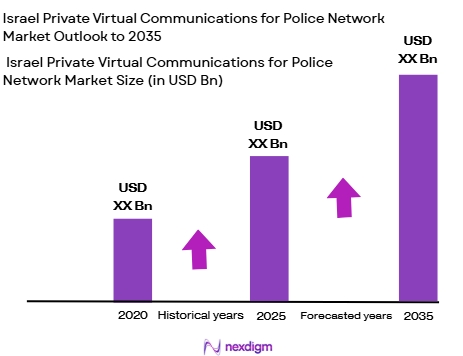
The Israel private virtual communications for police network market is currently experiencing significant growth, driven by the increasing demand for secure communication systems within law enforcement. Based on a recent historical assessment, the market size for 2024 is projected to reach USD ~ million, reflecting a growing focus on enhancing the capabilities of police forces through digital and secure communication networks. This growth is supported by the need for advanced communication tools to facilitate real-time operations and improve coordination in critical situations.
Israel, known for its advanced technology infrastructure, leads the market due to its focus on national security and the development of cutting-edge communication technologies. The country’s emphasis on cybersecurity, coupled with strong government support for law enforcement modernization, has positioned Israel as a dominant player in the sector. Key cities such as Tel Aviv and Jerusalem are at the forefront of technological adoption, with continuous investments in infrastructure to meet the evolving needs of police communication systems.
Market Segmentation
By Product Type
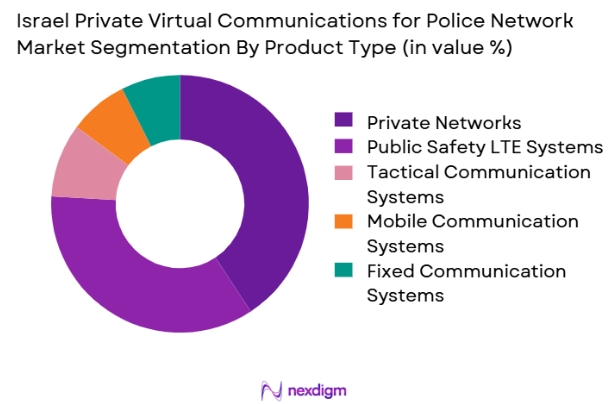
Israel private virtual communications for police network market is segmented by product type into private networks, public safety LTE systems, tactical communication systems, mobile communication systems, and fixed communication systems. Recently, private networks have a dominant market share due to factors such as demand patterns, brand presence, infrastructure availability, and consumer preference. Private networks are increasingly favored as they offer secure, reliable, and independent communication channels that are crucial for police operations, especially in areas with potential security threats. The demand for private networks is expected to continue growing as law enforcement agencies prioritize confidentiality and operational efficiency. The adoption of private networks is further fueled by advancements in communication technologies and the increasing need for secure real-time communication during critical events.
By Platform Type
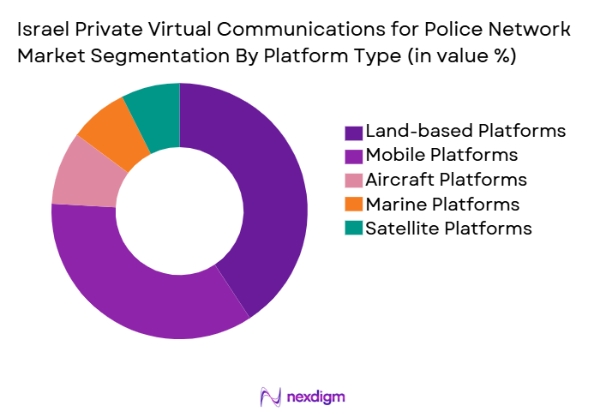
Israel private virtual communications for police network market is segmented by platform type into land-based platforms, mobile platforms, aircraft platforms, marine platforms, and satellite platforms. Land-based platforms dominate the market share due to the widespread deployment of communication networks on the ground for police forces. Land-based platforms are particularly crucial for day-to-day police operations, offering more stable, long-range communication that is essential for maintaining control and coordination across cities and municipalities. The dominance of land-based platforms is driven by their adaptability to various environments and their ability to seamlessly integrate with existing infrastructure. Mobile platforms are also seeing growth due to their ability to provide flexibility and mobility for law enforcement officers in the field, although land-based systems remain the most critical for large-scale communication.
Competitive Landscape
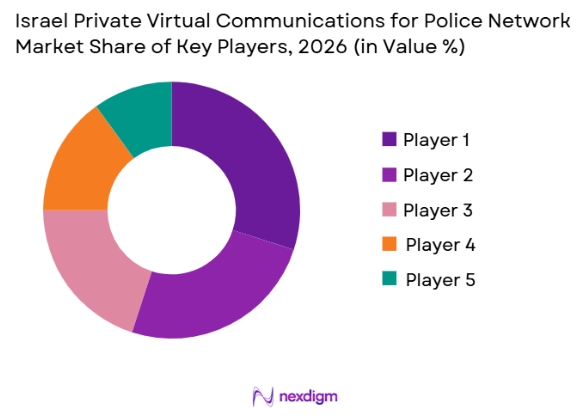
The competitive landscape of Israel’s private virtual communications for police network market is characterized by a mix of global tech companies and local defense contractors. Major players in the sector include companies specializing in secure communications, cyber defense, and technology infrastructure. Consolidation within the market is expected as both government and private sectors look to partner with top-tier communication providers to develop more advanced and integrated solutions. Companies are increasingly focusing on offering customizable and secure systems that align with the specific needs of law enforcement agencies. Key players are also expanding their market reach by forming strategic partnerships with international firms to strengthen their capabilities in providing secure communication solutions.
| Company Name | Establishment Year | Headquarters | Technology Focus | Market Reach | Key Products | Revenue | Additional Parameter |
| Motorola Solutions | 1928 | Schaumburg, USA | ~ | ~ | ~ | ~ | ~ |
| Thales Group | 2000 | Paris, France | ~ | ~ | ~ | ~ | ~ |
| Elbit Systems | 1966 | Haifa, Israel | ~ | ~ | ~ | ~ | ~ |
| Rafael Advanced Defense Systems | 1958 | Haifa, Israel | ~ | ~ | ~ | ~ | ~ |
| L3Harris Technologies | 1895 | Melbourne, USA | ~ | ~ | ~ | ~ | ~ |
Israel Private Virtual Communications for Police Network Market Analysis
Growth Drivers
Government Investment in Law Enforcement Infrastructure
Government investment in law enforcement infrastructure plays a significant role in driving the demand for private virtual communications for police networks. As security concerns grow globally, especially regarding terrorism and civil unrest, police departments require more secure, reliable, and technologically advanced communication systems. These systems are necessary to coordinate operations effectively, ensuring public safety. Governments have recognized the importance of digital transformation in law enforcement and are allocating significant funds to modernize their communication infrastructures. For example, Israel has continuously increased its defense and internal security budgets, prioritizing the development of advanced communication systems for its police forces. This government-backed growth is expected to remain a key factor in the expansion of the market, as further investments in technology continue to support the transition to digital, secure communication solutions.
Technological Advancements in Secure Communication
Technological advancements in secure communication systems are another major growth driver in the Israel private virtual communications for police network market. Innovations in 5G, LTE, and private networking technologies have made it possible for law enforcement agencies to deploy more reliable and secure communication systems. These technologies ensure real-time data sharing, enabling police officers to respond faster and more effectively during critical situations. Moreover, advancements in encryption and cybersecurity technologies help safeguard sensitive data from cyber threats. The integration of AI and machine learning into communication systems further enhances the capabilities of law enforcement agencies, making their operations more efficient. As these technologies become more advanced and affordable, their adoption in the police sector is expected to increase, driving the overall growth of the market.
Market Challenges
High Cost of Implementation and Maintenance
One of the major challenges facing the Israel private virtual communications for police network market is the high cost of implementation and maintenance. Setting up a secure communication system requires substantial investment in both infrastructure and technology. These systems often require specialized equipment, software, and extensive training for law enforcement personnel, which can be expensive. Furthermore, maintaining these systems involves ongoing costs for cybersecurity updates, network upgrades, and hardware replacements. While the benefits of these communication systems are clear, the initial and ongoing expenses present a financial challenge for many police forces. This barrier can slow down the adoption of private virtual communications, particularly in regions with limited budgets for law enforcement modernization.
Regulatory and Legal Barriers
Another significant challenge in the market is the regulatory and legal barriers related to the deployment of private communication networks. In many countries, including Israel, laws governing spectrum allocation and licensing can delay the deployment of new communication technologies. These regulations can also affect the adoption of private communication systems, as governments need to ensure that these systems comply with national security standards and privacy laws. Additionally, the complexity of international regulations can make it challenging for companies to expand their solutions globally, limiting their market reach. Navigating these legal and regulatory challenges requires careful planning and coordination between private companies and government agencies.
Opportunities
Integration of IoT and AI in Communication Systems
The integration of Internet of Things (IoT) and Artificial Intelligence (AI) into communication systems presents a significant opportunity for the Israel private virtual communications for police network market. IoT technology enables real-time data collection and sharing from a wide range of sensors and devices, while AI can be used to analyze this data and provide actionable insights for law enforcement agencies. For example, AI can help predict crime patterns, improve decision-making, and optimize resource allocation. IoT devices such as body cameras, drones, and sensors can be integrated into communication networks, enhancing situational awareness and improving the response time of police forces. As these technologies continue to evolve and become more integrated into police operations, they present substantial growth opportunities for the market.
International Expansion and Collaboration
International expansion and collaboration with foreign governments and law enforcement agencies also offer significant opportunities for growth. Israel has a well-established reputation for developing advanced security and defense technologies, including secure communication systems. As a result, Israeli companies are increasingly seeking to collaborate with international police forces and governmental organizations to expand their market reach. By providing secure, customized communication solutions to global law enforcement agencies, these companies can tap into new markets and increase their revenue streams. Additionally, cross-border collaborations can help address global security challenges and foster knowledge-sharing between nations. This opportunity for international growth is expected to drive further demand for Israel’s private virtual communications systems for police networks.
Future Outlook
The future outlook for the Israel private virtual communications for police network market appears promising, with significant growth expected over the next five years. As technological advancements continue, communication systems for law enforcement will become increasingly sophisticated, incorporating 5G, IoT, and AI to improve operational efficiency and public safety. Moreover, growing government investment and regulatory support will further fuel the demand for secure communication networks. The market will likely see increased adoption of integrated communication solutions that offer real-time data sharing, enhanced security, and faster response times. The increasing focus on cybersecurity and data protection will continue to drive innovation in this space, creating new opportunities for companies in the market.
Major Players
- Motorola Solutions
- Thales Group
- Elbit Systems
- Rafael Advanced Defense Systems
- L3Harris Technologies
- Cisco Systems
- Huawei Technologies
- NEC Corporation
- General Dynamics
- Raytheon Technologies
- Lockheed Martin
- Airbus Defence and Space
- BAE Systems
- ZTE Corporation
- Boeing
Key Target Audience
- Investments and venture capitalist firms
- Government and regulatory bodies
- Ministry of Public Security (Israel)
- Israel Police
- National Security Agencies
- Private Communication Providers
- Security and Defense Contractors
- Telecom Operators
Research Methodology
Step 1: Identification of Key Variables
The first step involves identifying the key market variables that influence the development and adoption of private virtual communication systems for police networks, including technology, market trends, and regulations.
Step 2: Market Analysis and Construction
A comprehensive market analysis is performed, examining historical data, current market conditions, and potential growth factors to construct accurate market models and forecasts.
Step 3: Hypothesis Validation and Expert Consultation
The next step involves validating hypotheses through consultations with industry experts, government representatives, and key market players to ensure the accuracy of the findings.
Step 4: Research Synthesis and Final Output
The final step involves synthesizing the data and expert insights to generate a comprehensive market report, providing actionable insights for stakeholders.

- Executive Summary
- Research Methodology: (Definitions, Scope, Industry Assumptions, Market Sizing Approach, Primary & Secondary Research Framework, Data Collection & Verification Protocol, Analytic Models & Forecast Methodology, Limitations & Research Validity Checks)

- Market Definition and Scope
- Value Chain & Stakeholder Ecosystem
- Regulatory / Certification Landscape
- Sector Dynamics Affecting Demand
- Strategic Initiatives & Infrastructure Growth

- Growth Drivers
Increased Investment in Public Safety Infrastructure
Rising Demand for Secure Communication Networks in Law Enforcement
Technological Advancements in Communication Protocols - Market Challenges
High Initial Setup and Maintenance Costs
Regulatory Hurdles for Licensing and Spectrum Allocation
Security Concerns and Risk of Cyber Attacks - Market Opportunities
Advancements in 5G and IoT for Communication Networks
Integration of Artificial Intelligence in Police Networks
Rising Adoption of Virtualized Communication Systems - Trends
Growing Use of Cloud-based Communication Systems
Shift Towards Integrated Communication Platforms
Increasing Adoption of Data Analytics in Communication Networks - Government Regulations
Spectrum Licensing and Regulation
Compliance with National Security and Data Privacy Laws
Policies on Cross-Border Communication Systems - SWOT analysis
- Porters 5 forces

- By Market Value 2020-2025
- By Installed Units 2020-2025
- By Average System Price 2020-2025
- By System Complexity Tier 2020-2025

- By System Type (In Value%)
Private Networks
Public Safety LTE Systems
Tactical Communication Systems
Mobile Communication Systems
Fixed Communication Systems - By Platform Type (In Value%)
Land-based Platforms
Mobile Platforms
Aircraft Platforms
Marine Platforms
Satellite Platforms - By Fitment Type (In Value%)
Vehicle-mounted Systems
Portable Systems
Fixed Stationary Systems
Body-worn Devices
Aerial Systems - By End-User Segment (In Value%)
Police Forces
National Security Agencies
Border Patrol Services
Emergency Services
Private Security Agencies - By Procurement Channel (In Value%)
Direct Government Procurement
Public-Private Partnerships
OEMs and Tier Suppliers
B2B Sales
Online & Third-Party Vendors

- Cross Comparison Parameters: (Technology Adoption, Regulatory Compliance, Market Reach, Security Capabilities, Cost Efficiency)
- SWOT Analysis of Key Competitors
- Pricing & Procurement Analysis
- Porter’s Five Forces
- Key Players
Motorola Solutions
Thales Group
Elbit Systems
Rafael Advanced Defense Systems
General Dynamics
L3Harris Technologies
Raytheon Technologies
Northrop Grumman
Lockheed Martin
Huawei Technologies
Cisco Systems
Boeing
NEC Corporation
Samsung Electronics
ZTE Corporation

- Law Enforcement Demand for Secure Communication
- National Security and Defense Applications
- Integration with Other Public Safety Systems
- Usage of Virtual Communications in Crisis Management

- Forecast Market Value 2026-2035
- Forecast Installed Units 2026-2035
- Price Forecast by System Tier 2026-2035
- Future Demand by Platform 2026-2035


 Request a Sample
 Ask for Customization
 Get a Quote
 Enquire Now