

 Download PDF
 Download PDF
Market Overview
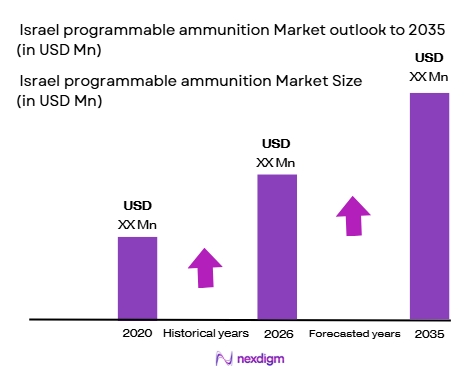
The Israel programmable ammunition market has experienced notable growth, driven by advancements in defense technologies and increased military spending. Based on a recent historical assessment, the market size for 2024 is expected to reach USD~ million. The growing demand for precision-guided munitions and advancements in smart ammunition technologies are key factors driving this expansion. Israel, with its leading defense technologies and strategic focus on innovation, has emerged as a significant player in this field, influencing both regional and global trends.
Israel stands out as a leader in the development and deployment of programmable ammunition due to its advanced military technology and government-backed defense initiatives. The country’s emphasis on cutting-edge defense systems, including its focus on smart munitions for enhanced precision and efficiency, positions it at the forefront of this market. Tel Aviv, home to several defense contractors, and Jerusalem are key hubs for innovation, driving both domestic and international demand for Israel’s programmable ammunition solutions.
Market Segmentation
By Product Type
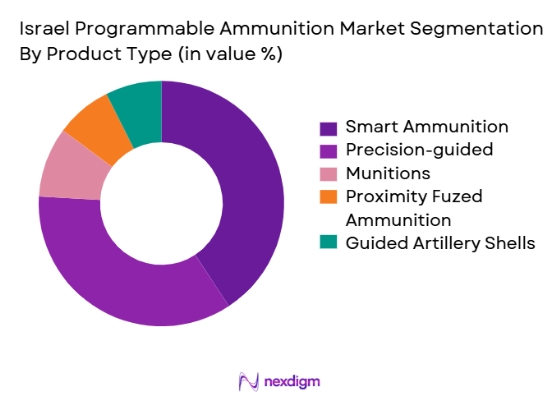
The Israel programmable ammunition market is segmented by product type into smart ammunition, precision-guided munitions (PGMs), proximity fuzed ammunition, and guided artillery shells. Recently, smart ammunition has a dominant market share due to its ability to provide advanced targeting and enhanced accuracy during combat operations. The demand for smart ammunition has been significantly influenced by military modernization programs, with Israel investing heavily in these technologies to maintain its defense capabilities. Smart ammunition, equipped with programmable features, allows for real-time targeting and increased operational flexibility. As military forces worldwide adopt advanced technologies to improve accuracy and effectiveness, the preference for smart ammunition continues to rise.
By Platform Type
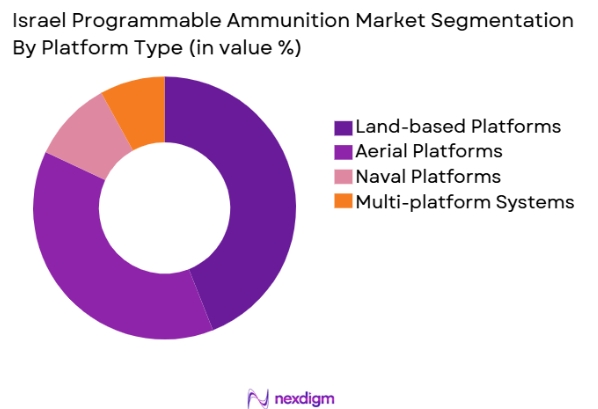
The Israel programmable ammunition market is segmented by platform type into land-based platforms, aerial platforms, naval platforms, and multi-platform systems. Land-based platforms dominate the market share due to the high demand for ammunition in ground operations, including both defense and offense in military operations. Israel’s defense forces prioritize land-based platforms for the majority of combat scenarios, requiring reliable and precise ammunition systems. The significant focus on land-based combat systems is attributed to Israel’s strategic defense approach, as ground forces play a central role in regional security. Aerial platforms are also gaining traction, but land-based systems remain the most critical, driving their dominance in the market
Competitive Landscape
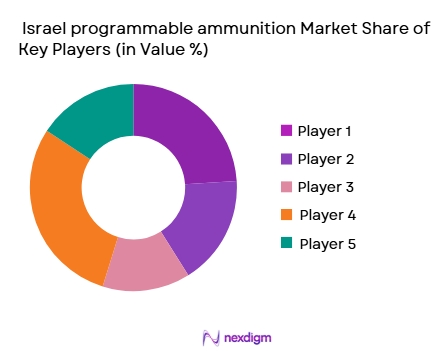
The competitive landscape of the Israel programmable ammunition market is characterized by the dominance of key players who are driving technological advancements and market innovation. Israel’s defense industry is heavily consolidated, with a few large companies leading the way in the development and production of programmable ammunition systems. These companies are backed by strong government support and ongoing research and development initiatives. Collaboration between defense contractors and the Israeli government continues to fuel innovation and maintain Israel’s competitive edge in the global defense market.
| Company Name | Establishment Year | Headquarters | Technology Focus | Market Reach | Key Products | Revenue | Additional Market-Specific Parameter |
| Rafael Advanced Defense Systems | 1958 | Haifa, Israel | ~ | ~ | ~ | ~ | ~ |
| Elbit Systems | 1966 | Haifa, Israel | ~ | ~ | ~ | ~ | ~ |
| Israel Military Industries (IMI) | 1933 | Ramat Hasharon, Israel | ~ | ~ | ~ | ~ | ~ |
| IAI (Israel Aerospace Industries) | 1953 | Lod, Israel | ~ | ~ | ~ | ~ | ~ |
| Nammo | 1998 | Raufoss, Norway | ~ | ~ | ~ | ~ | ~ |
Israel programmable ammunition Market Analysis
Growth Drivers
Technological Advancements in Ammunition Systems
Technological advancements in ammunition systems, especially in the fields of precision and programmability, are driving the growth of the Israel programmable ammunition market. As military forces seek to enhance the effectiveness and efficiency of their operations, the demand for ammunition capable of being programmed for specific targets and mission parameters continues to rise. Smart munitions equipped with sensors, guidance systems, and real-time targeting features have revolutionized military operations, allowing for precision strikes with minimal collateral damage. This shift towards more advanced, intelligent ammunition systems is a key growth driver for the market, particularly as defense budgets continue to rise globally. The ability to adapt to changing combat conditions and provide real-time adjustments in the field has made programmable ammunition increasingly essential for modern military forces. Israel, as a leader in defense technology, has been at the forefront of developing such advanced munitions, contributing significantly to the global growth of the sector.
Increased Military Modernization and Defense Spending
Increased military modernization and defense spending, particularly in Israel and other regions with heightened security concerns, is fueling the demand for programmable ammunition. Governments around the world are investing in advanced technologies to enhance their military capabilities and maintain a strategic advantage. The rising need for high-tech weaponry and ammunition that can adapt to diverse combat situations has led to significant investments in programmable ammunition. For example, Israel’s defense expenditure has been consistently high, supporting the development of state-of-the-art weapons and munitions. This trend is mirrored globally, with several nations prioritizing defense spending in response to security threats. The ongoing drive for modernization, coupled with a growing focus on precision warfare, positions programmable ammunition as a key component of future military arsenals, further accelerating its market growth.
Market Challenges
High Research and Development Costs
High research and development costs associated with programmable ammunition represent a significant challenge in the market. Developing advanced, precision-guided munitions requires substantial financial investment in technology, testing, and innovation. This high cost of innovation can be a barrier for smaller companies or countries with limited defense budgets to enter or expand within the programmable ammunition market. The complexity of developing smart munitions that are reliable, accurate, and cost-effective further increases R&D expenditures. Additionally, maintaining and upgrading existing ammunition systems to incorporate new technologies and features involves ongoing investment. As a result, the cost of development and deployment of programmable ammunition remains a key challenge, particularly for emerging defense markets or smaller defense contractors. The expense associated with producing high-quality, technologically advanced munitions may limit the pace of growth in certain regions or lead to delays in adoption.
Regulatory and Export Restrictions
Regulatory and export restrictions also pose challenges to the growth of the Israel programmable ammunition market. While Israel is a major player in defense exports, the global trade of advanced military technologies, including programmable ammunition, is highly regulated. Restrictions on the export of such high-tech munitions, coupled with international arms control agreements, can limit the ability of Israeli manufacturers to expand their market reach. These regulations are particularly stringent in countries that are members of international defense and trade treaties, which can prevent Israel from accessing certain global markets. Furthermore, the complexity of navigating these legal frameworks, combined with geopolitical tensions, often slows down the export process and can delay the adoption of new ammunition systems in international markets. These regulatory barriers remain a significant obstacle to the broader adoption of Israel’s advanced ammunition technologies.
Opportunities
Global Expansion of Precision-Guided Munitions
One of the primary opportunities in the Israel programmable ammunition market is the global expansion of precision-guided munitions (PGMs). As military forces worldwide increasingly seek to reduce collateral damage and enhance operational precision, the demand for PGMs is growing. Israel, with its extensive experience in developing PGMs, is well-positioned to capitalize on this trend. As defense spending rises globally, especially in regions with ongoing conflicts or rising security threats, the need for precise, reliable, and programmable ammunition systems will increase. Israel’s established reputation in defense technology and its ability to provide customizable solutions for different military requirements make it an attractive partner for international defense agencies. The expansion of PGMs into new markets, particularly in Asia, Europe, and the Middle East, presents a significant growth opportunity for Israeli manufacturers of programmable ammunition.
Collaborations with International Defense Contractors
Collaborations with international defense contractors present another major opportunity for growth in the Israel programmable ammunition market. Many countries are increasingly looking to collaborate with defense technology providers to modernize their military forces and improve their weapons systems. Israel’s established defense contractors, such as Rafael Advanced Defense Systems and Elbit Systems, have extensive experience in developing and deploying programmable ammunition systems and are well-positioned to form partnerships with international firms. These collaborations can take the form of joint ventures, technology transfers, or co-development agreements, which enable Israel’s defense industry to access new markets and expand its global footprint. By leveraging Israel’s technological expertise and reputation for high-quality, reliable defense products, these partnerships can provide mutual benefits and accelerate the global adoption of programmable ammunition systems.
Future Outlook
The future outlook for the Israel programmable ammunition market is highly promising, with significant growth expected over the next five years. As military forces continue to prioritize precision and smart technologies, the demand for programmable ammunition will likely increase. Advancements in sensor technology, guidance systems, and artificial intelligence will enhance the capabilities of programmable munitions, making them even more effective in modern combat scenarios. Regulatory support and the growing focus on military modernization will further accelerate this trend, positioning Israel as a key player in the global defense market.
Major Players
- Rafael Advanced Defense Systems
- Elbit Systems
- Israel Military Industries
- Israel Aerospace Industries
- Nammo
- Lockheed Martin
- Raytheon Technologies
- Northrop Grumman
- General Dynamics
- BAE Systems
- Thales Group
- L3Harris Technologies
- Rheinmetall
- Saab
- Leonardo
Key Target Audience
- Investments and venture capitalist firms
- Government and regulatory bodies
- Defense contractors
- Military agencies
- Aerospace and defense manufacturers
- Weapon systems integrators
- Defense technology suppliers
- Strategic defense partners
Research Methodology
Step 1: Identification of Key Variables
Identification of the key variables that drive the market for programmable ammunition, including technological trends, military demands, and defense spending patterns.
Step 2: Market Analysis and Construction
Market data is collected and analyzed, constructing a model that factors in historical performance, future projections, and market forces.
Step 3: Hypothesis Validation and Expert Consultation
Validation of hypotheses regarding market dynamics through consultations with industry experts, defense officials, and leading manufacturers.
Step 4: Research Synthesis and Final Output
Synthesis of research findings into a comprehensive report, providing actionable insights for stakeholders in the defense and ammunition markets.

- Executive Summary
- Research Methodology(Definitions, Scope, Industry Assumptions, Market Sizing Approach, Primary & Secondary Research Framework, Data Collection & Verification Protocol, Analytic Models & Forecast Methodology, Limitations & Research Validity Checks)

- Market Definition and Scope
- Value Chain & Stakeholder Ecosystem
- Regulatory / Certification Landscape
- Sector Dynamics Affecting Demand
- Strategic Initiatives & Infrastructure Growth

- Growth Drivers
Technological advancements in guided ammunition systems
Rising defense budgets and military modernization
Strategic defense partnerships - Market Challenges
High costs of development and production
Integration challenges with existing systems
Regulatory and compliance issues in international markets - Market Opportunities
Emerging demand from non-state military actors
Growing demand for multi-role ammunition systems
Development of advanced materials and propulsion technologies - Trends
Increase in autonomous weapons integration
Shift towards precision targeting technologies
Growing interest in cross-domain firepower - Government regulations
Export control regulations
Military technology security protocols
International arms trade compliance - SWOT analysis
- Porters 5 forces

- By Market Value 2020-2025
- By Installed Units 2020-2025
- By Average System Price 2020-2025
- By System Complexity Tier 2020-2025

- By System Type (In Value%)
Smart projectiles
Guided munitions
Artillery shells
Tank ammunition
Air-launched munitions - By Platform Type (In Value%)
Land-based platforms
Airborne platforms
Naval platforms
Multi-platform systems
Portable launchers - By Fitment Type (In Value%)
Integrated ammunition systems
Modular fitments
Fixed installation systems
Custom fitments
Universal fitments - By EndUser Segment (In Value%)
Military defense forces
Defense contractors
Aerospace & defense agencies
Security agencies
Specialized defense units - By Procurement Channel (In Value%)
Direct government contracts
Defense contractors
OEMs (Original Equipment Manufacturers)
Third-party suppliers
International military cooperation

- Cross Comparison Parameters(Cost, Technological innovation, System integration, Performance, Reliability Technological innovation, System integration, Performance, Reliability, Manufacturing scalability, Precision, Operational efficiency,)
- SWOT Analysis of Key Competitors
- Pricing & Procurement Analysis
- Key Players
Elbit Systems
Rafael Advanced Defense Systems
IAI (Israel Aerospace Industries)
IMI Systems
Sikorsky Aircraft
General Dynamics Ordnance and Tactical Systems
Lockheed Martin
Northrop Grumman
Raytheon Technologies
Boeing
Saab
BAE Systems
L3 Technologies
Thales Group
Diehl Defence

- Increased demand for versatile munitions in defense forces
- Investment in next-generation military capabilities
- Focus on high-precision targeting systems
- Growing defense exports to international allies

- Forecast Market Value 2026-2035
- Forecast Installed Units 2026-2035
- Price Forecast by System Tier 2026-2035
- Future Demand by Platform 2026-2035


 Request a Sample
 Ask for Customization
 Get a Quote
 Enquire Now